Languages
15Φορτέτζα Ρεθύμνου Audio Guide
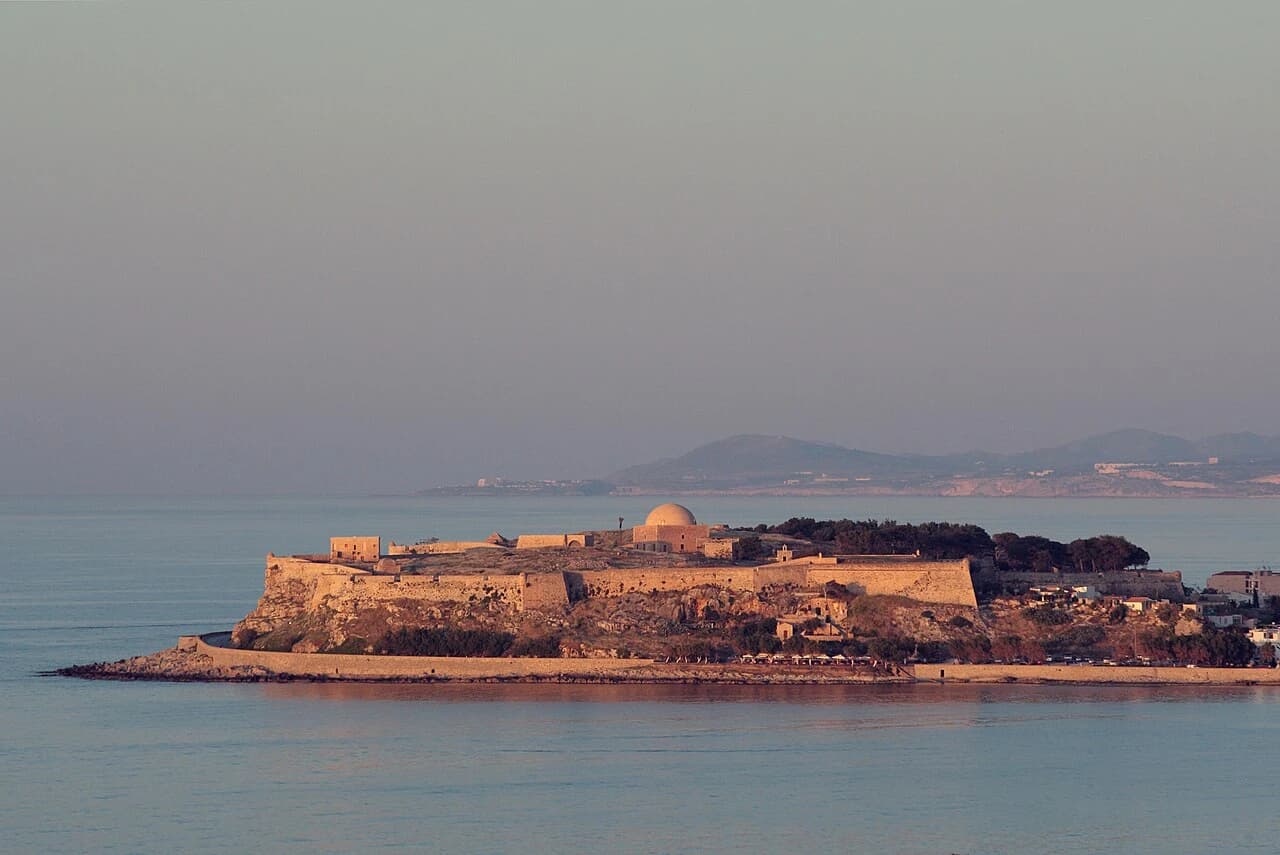
Φορτέτζα Ρεθύμνου is an archaeological site in Rethymno, Greece. Explore it with Stanza's guided offline audio tour — narrated in 15 languages.
Quick Facts
25
Stops
15
Languages
100%
Offline
📍 Rethymno, Greece · 35.3721°N, 24.4708°E
About Φορτέτζα Ρεθύμνου
The Fortezza is a massive 16th-century Venetian citadel built to protect the city of Rethymno from pirate raids and Ottoman threats. It remains one of the most prominent landmarks in Crete, featuring preserved fortifications and the historic Sultan Ibrahim Mosque within its walls.
This self-guided audio tour features 25 narrated stops organized across 6 sections, including The Fortezza Main Entrance, The Artillery Store, Church of Ayios Theodoros, Bastion of Ayios Nikolaos Twin Buildings, Eastern Powder Magazine, Mosque of Sultan Ibrahim Han. As a fortress, Φορτέτζα Ρεθύμνου offers a unique cultural experience in the heart of Rethymno, Greece.
The Stanza audio guide is available in 15 languages and works entirely offline — download the complete tour including audio narration, maps, and images before your visit. As you walk through Φορτέτζα Ρεθύμνου, GPS-triggered narration plays automatically at each point of interest.
Last updated:
What you will hear
The Fortezza Main Entrance
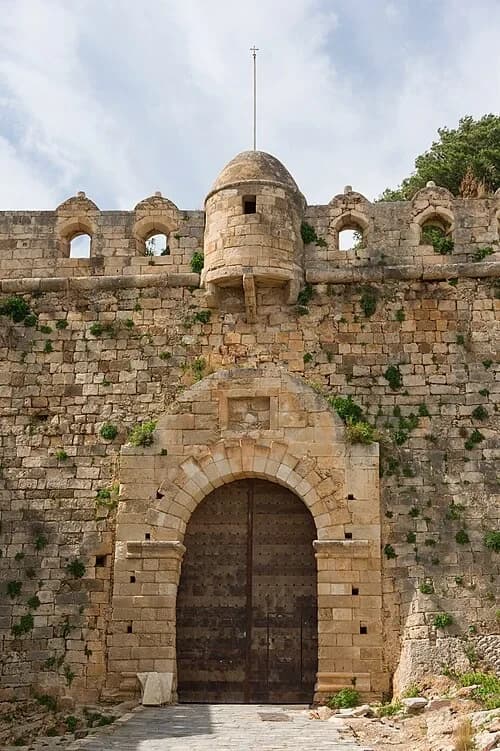
Start your journey at the massive eastern gate of the 16th-century Venetian citadel, designed to protect the city from Ottoman expansion.
The Main Entrance
This massive arched gateway was once the only way into the heart of the fortress. If you look at the square recessed area directly above the arch, you are seeing a scar of history. This space originally held a marble relief of the winged Lion of Saint Mark, the proud symbol of the Venetian Republic. Following the Ottoman conquest in the mid-17th century, the emblem was hacked away as a symbolic act of erasing the previous rulers' presence. The heavy, iron-studded doors were constructed to withstand the force of battering rams, securing the garrison from direct assault. Beyond the doors, the entrance path continues as a steep, curved ramp. This was not a design flaw but a clever defensive tactic. The curve prevented invaders from having a clear line of sight into the interior, making it impossible to charge quickly or fire projectiles effectively into the courtyard. Every element of this gate was engineered to force an enemy into a slow, vulnerable position, buying the defenders valuable time to react from the heights above.
The Artillery Store
This sturdy stone building served as the central armory, housing the heavy cannons and munitions required to defend the southern ramparts.
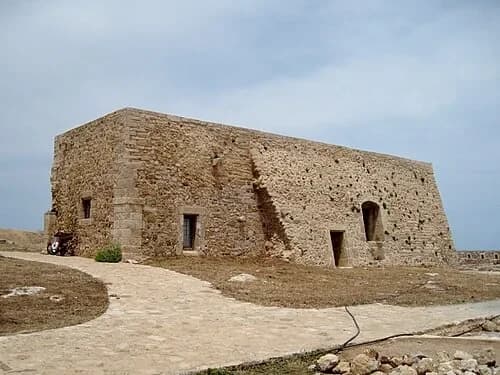
The Artillery Store
This blocky, unadorned structure played a critical role in the fort's defense as an armory for heavy artillery. Its walls are notably thick and feature a distinct slope at the base, an engineering choice intended to absorb the massive kinetic energy of incoming enemy cannonballs during a siege. Inside, the space was packed with spare barrels, heavy wheels, and the specialized tools required to maintain the citadel’s defensive battery. Unlike residential buildings, you will notice the windows here are few, small, and set very high in the walls. These were not meant for surveillance; their primary purpose was to provide constant ventilation. Proper airflow was essential to keep gunpowder dry and stable, as even a small amount of moisture could render the fort's entire ammunition supply useless. During active combat, this store was a hive of activity, with crews rushing to replace damaged parts while the ramparts above thundered with fire. The building stands as a reminder of the logistical complexity involved in maintaining a 16th-century military outpost, where the preservation of equipment was just as vital as the bravery of the soldiers.
Church of Ayios Theodoros
A small, resilient place of worship that represents the enduring Orthodox faith during the various occupations of the fortress.
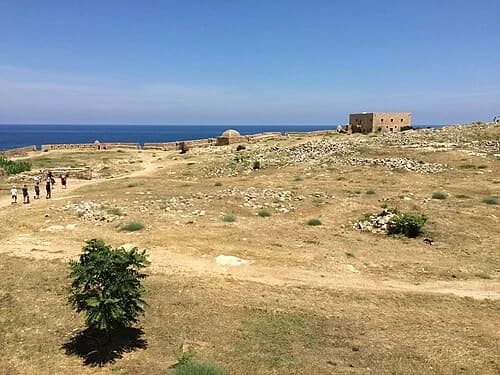
The Hill of Paleokastro
Standing here, you can see the vast, rocky expanse that makes up the interior of the Fortezza. In the late 16th century, Venetian planners envisioned this hilltop as a safe haven where the entire population of Rethymno could live during times of war. However, the local citizens had different ideas. They preferred the convenience and commerce of their homes down by the harbor and largely refused to relocate to this exposed, windswept plateau. Consequently, the Fortezza never became the bustling town the Italians had planned, remaining instead a quiet military garrison populated mostly by soldiers and officials. Long before the Venetians laid a single stone here, this hill was home to the ancient city of Rithymna. While little remains of that era, you are walking on ground that has been inhabited and contested for thousands of years. The contrast between the ambitious urban plans of the Renaissance and the stubborn reality of the local population created this unique environment—a fortress city that was almost entirely empty of civilians. Today, the wide-open spaces offer a sense of the sheer scale required to protect a strategic Mediterranean port.
Bastion of Ayios Nikolaos Twin Buildings
These symmetrical structures were vital for the garrison stationed at the easternmost point of the fortress defenses.
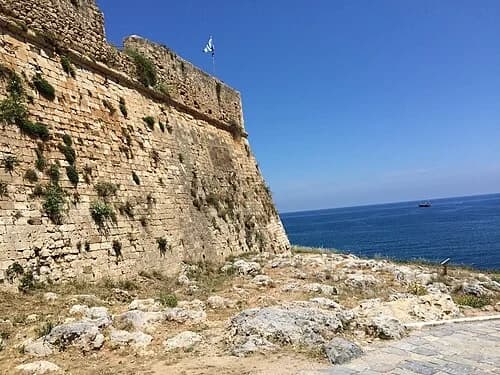
The Sea Ramparts
Looking out over the northern edge of the fortress, the walls drop straight down toward the Mediterranean Sea. This section of the ramparts was a direct result of the most terrifying event in Rethymno’s history. In 1538, the legendary privateer turned Ottoman admiral, Hayreddin Barbarossa, launched a brutal raid that burned the city to the ground. The Venetians responded by constructing these massive sea-facing defenses to ensure such a catastrophe could never happen again. The walls were engineered with such strength and height that they successfully deterred future naval assaults. When the Ottoman forces finally returned to capture the city in 1646, they recognized that the sea ramparts were virtually impregnable. Instead of a naval landing, they launched their primary attack from the landward side, where the terrain was more favorable for a siege. The stones you see here represent the peak of 16th-century military architecture, designed to stare down the most powerful fleets of the era. Their sheer verticality made scaling from ships impossible, forcing any would-be conquerors to reconsider their strategy.
Eastern Powder Magazine
Strategically placed away from residential zones, these thick-walled bunkers were designed to contain accidental explosions.
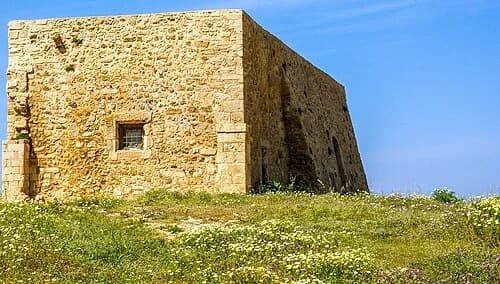
Fortress Guard Post
Notice the sloped stone section at the base of this building, a feature known in military engineering as a scarp. This angle was a cutting-edge innovation at the time the fort was built. By angling the lower portion of the wall, engineers ensured that any cannonball striking the base would be deflected upward and away from the building rather than punching directly through the masonry. This simple geometric trick significantly increased the lifespan of the structures under fire. This specific building functioned as the central hub for the officers responsible for the daily security of the citadel. From here, they coordinated the shifts of the sentries stationed in the corner guardiolas and ensured that the massive gates were securely locked every day at sunset. It was a place of constant vigilance, where the logistical details of defending thousands of feet of ramparts were managed. The presence of the officers here ensured that the garrison remained disciplined and prepared for a surprise attack, maintaining the readiness that allowed the Fortezza to hold out for weeks during the eventual Ottoman siege.
Mosque of Sultan Ibrahim Han
Originally the Venetian Cathedral of San Nicolo, this structure was converted into a mosque after the Ottoman conquest in 1646.
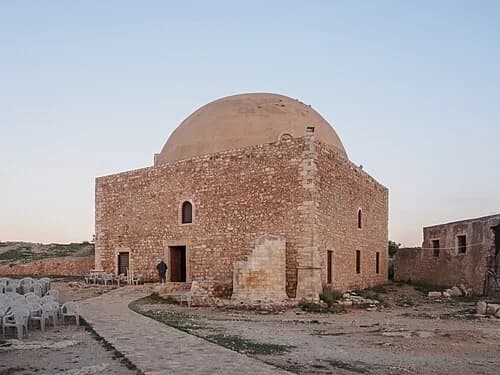
Mosque of Sultan Ibrahim Han
This building serves as a clear illustration of the dramatic shifts in Cretan history. Originally, it stood as the Venetian Cathedral of San Nicolo, the primary site of Catholic worship within the fortress. However, history took a sharp turn in 1646 when the Ottoman Turks captured the citadel. To establish their new religious and political authority, they immediately converted the cathedral into a mosque, naming it in honor of Sultan Ibrahim Han. The most visible change they made was the addition of the massive dome, which remains one of the largest architectural features on the island. The Ottomans were remarkably efficient at adapting existing religious spaces to fit their needs, often completing such transformations within weeks of a conquest. By utilizing the existing walls of the cathedral, they created a space that signaled the arrival of a new era while retaining the structural core of the previous one. This layering of Christian and Islamic architecture created a unique hybrid that dominates the skyline of the interior plateau, marking the exact moment when Rethymno transitioned from Venetian to Ottoman rule.
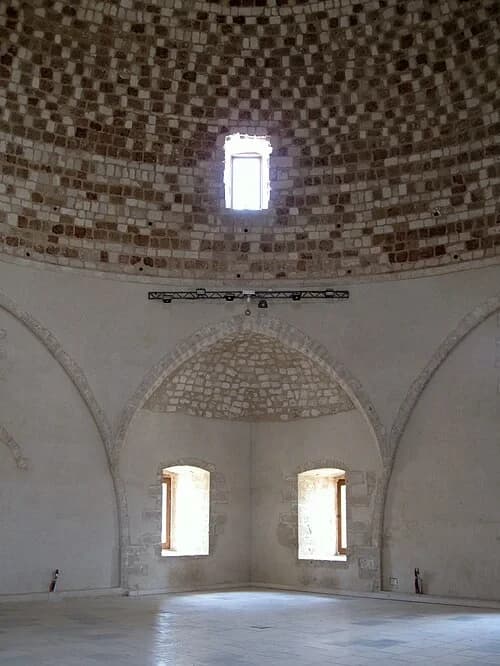
The Great Dome
Step inside the former mosque and look straight up to appreciate the engineering of the great dome. It is constructed from thousands of local stones, meticulously arranged in a geometric pattern that allows the entire structure to be self-supporting without the need for central pillars. This design created a vast, unobstructed space for the congregation below. You will notice a ring of small windows encircling the base of the dome. These were strategically positioned to catch the soft morning light, which would filter through the building and illuminate the rising smoke from hanging oil lamps during early prayers. Beyond its visual impact, the dome was also a masterpiece of acoustic design. Its curved interior surfaces were meant to reflect and carry the voice of the Imam, ensuring that his prayers and sermons reached every person in the hall with clarity. The construction reflects a deep understanding of physics and materials, using the weight of the stones themselves to lock the structure together. Today, it remains a quiet place where the interplay of light and stone provides a sense of the spiritual atmosphere that once filled the hall.
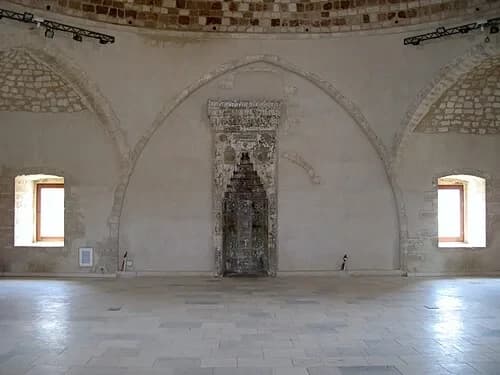
The Prayer Hall
This expansive hall was once a bustling center of religious life, its floors covered in thick, layered carpets to accommodate worshippers. If you examine the walls, you can see a fascinating architectural collision. The lower sections still feature the original pointed arches and windows from the Venetian cathedral's Gothic design. Directly above them, these European elements give way to the circular base and geometric precision of the Ottoman dome. This transition marks the literal meeting point of two different cultures and architectural traditions. The large, open floor plan was a functional necessity for the mosque. It provided the space required for hundreds of men to stand and kneel in synchronized rows during the important Friday prayers. Without the pews or altars found in Western churches, the hall feels exceptionally spacious and airy. This design choice emphasized the communal nature of Islamic worship, where the entire congregation faced the same direction in a unified space. Although the carpets and decorative lamps are long gone, the scale of the hall continues to convey the importance of this site during the centuries of Ottoman occupation.
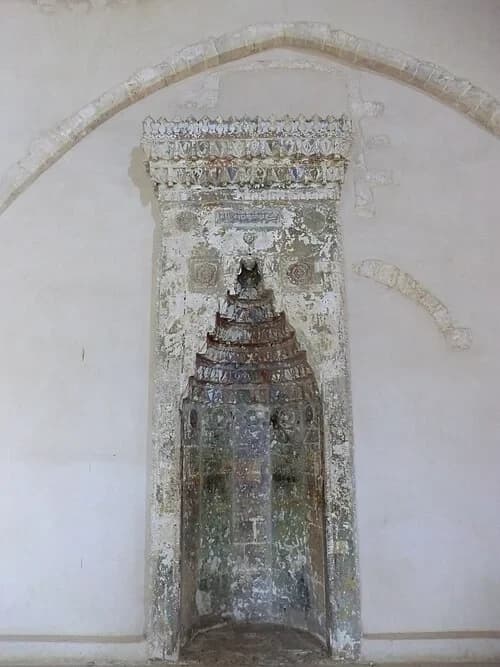
The Mihrab Niche
Look for the ornate, recessed niche built into one of the walls. This is the mihrab, the most sacred feature of any mosque. Its primary purpose is to indicate the qibla, which is the exact direction of Mecca that worshippers must face during prayer. Even after centuries of exposure and wear, the arch of the niche still displays delicate carvings known as muqarnas, or stalactite decoration. This complex, three-dimensional geometric work is a hallmark of Islamic art and was meant to symbolize the infinite nature of creation. What makes this particular mihrab especially interesting is its placement. It was carved directly into the pre-existing stone wall of the former Christian cathedral. This physical intervention in the building’s fabric was a powerful statement of the new religious order. The leader of the prayer would stand here, his voice projecting into the hall as the congregation lined up behind him. While the gold leaf or vibrant paints that might have originally decorated this spot have faded, the architectural detail of the stone remains a testament to the skilled artisans who transformed this space centuries ago.
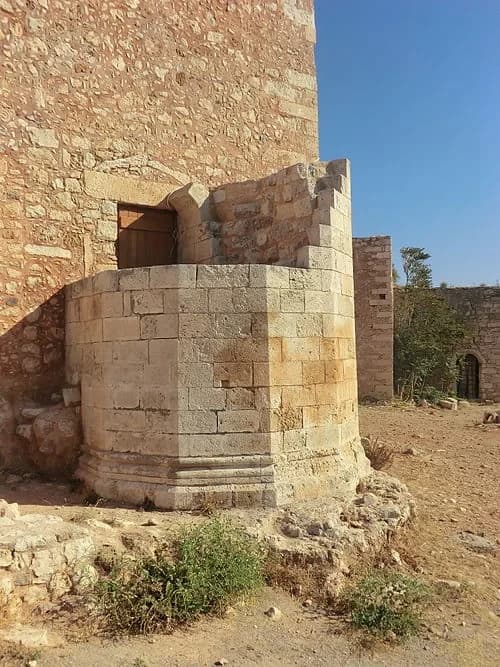
The Minaret Base
Standing just outside the mosque is an octagonal stone stump that often goes unnoticed. This is the surviving base of the minaret. During the Ottoman era, a tall, slender tower rose from this foundation, serving as the platform from which the muezzin would chant the call to prayer five times every day. As the highest point within the citadel, the minaret was a dominant feature of the skyline, visible to sailors many miles out at sea long before they reached the harbor. It served as a clear visual and auditory marker of Ottoman presence on the island. The upper portion of the tower likely stood until the early 20th century, a time of significant political change as Crete moved toward independence and eventual union with Greece. During this transition, many Ottoman-era structures were dismantled or fell into ruin. Today, only this sturdy base remains, providing a clue to the building's former verticality and its role in the daily rhythms of life inside the fortress. It marks the spot where a voice once drifted over the ramparts, signaling the time for the garrison to pause for reflection.
Want to hear the rest?
Download the Stanza app to unlock all 25 stops and the complete guided audio tour.
Frequently Asked Questions
How long does the Φορτέτζα Ρεθύμνου audio tour take?
The Φορτέτζα Ρεθύμνου audio guide includes 25 narrated stops. Most visitors spend 45 minutes to 1.5 hours exploring the complete tour, though you can listen at your own pace and skip or revisit any stop.
Is the Φορτέτζα Ρεθύμνου audio guide available in my language?
Stanza supports 15 languages: English, Spanish, French, German, Italian, Portuguese, Russian, Japanese, Chinese, Korean, Arabic, Hindi, Polish, Dutch, Hebrew. Check the guide in the app to confirm the languages currently available for this tour.
Can I use the audio guide offline at Φορτέτζα Ρεθύμνου?
Yes! Download the complete Φορτέτζα Ρεθύμνου tour — including all audio, maps, and images — before your visit. The Stanza app works completely offline, so you don't need WiFi or mobile data at the venue.
How much does the Φορτέτζα Ρεθύμνου audio guide cost?
The Stanza app is free to download. Free and paid audio guides are available; current prices are shown in the app.
How do I use the Stanza audio guide at Φορτέτζα Ρεθύμνου?
Download the free Stanza app, search for "Φορτέτζα Ρεθύμνου", and download the tour. When you arrive at the venue, the app uses GPS to detect your location and automatically plays the relevant narration as you move between points of interest — completely hands-free.
What makes the Stanza audio guide different from other Φορτέτζα Ρεθύμνου tours?
Stanza offers GPS-triggered narration that plays automatically as you walk through Φορτέτζα Ρεθύμνου — no need to manually select stops. The tour is available in 15 languages, works fully offline, and includes 25 expertly narrated stops with images and historical context.
What other audio guides are available near Φορτέτζα Ρεθύμνου?
Stanza offers multiple audio guides in Rethymno, Greece and nearby areas. After downloading the app, browse the map to discover all available tours near Φορτέτζα Ρεθύμνου. Each guide can be downloaded for offline use.