Stanza · Audio guide
Royal Palace of Gödöllő Audio Guide
A place to remember. A story to take with you.
The Royal Palace of Gödöllő is an imperial and royal Hungarian palace located in the municipality of Gödöllő. It is famous for being a favourite palace of the penultimate Queen of Hungary.
Download Stanza, then search for “Royal Palace of Gödöllő”.
About the tour
One guide. Your kind of visit.
The Royal Palace of Gödöllő is an imperial and royal Hungarian palace located in the municipality of Gödöllő. It is famous for being a favourite palace of the penultimate Queen of Hungary.
Ready when you are.
- 01Get the free Stanza app.
iOS & Android
- 02Find your guide.
“Royal Palace of Gödöllő”
- 03Download before you go.
Works offline
Audio guide / 16 narrated stops
Inside the guide
Get to know a few of the stories before you go. Open a stop to read more.
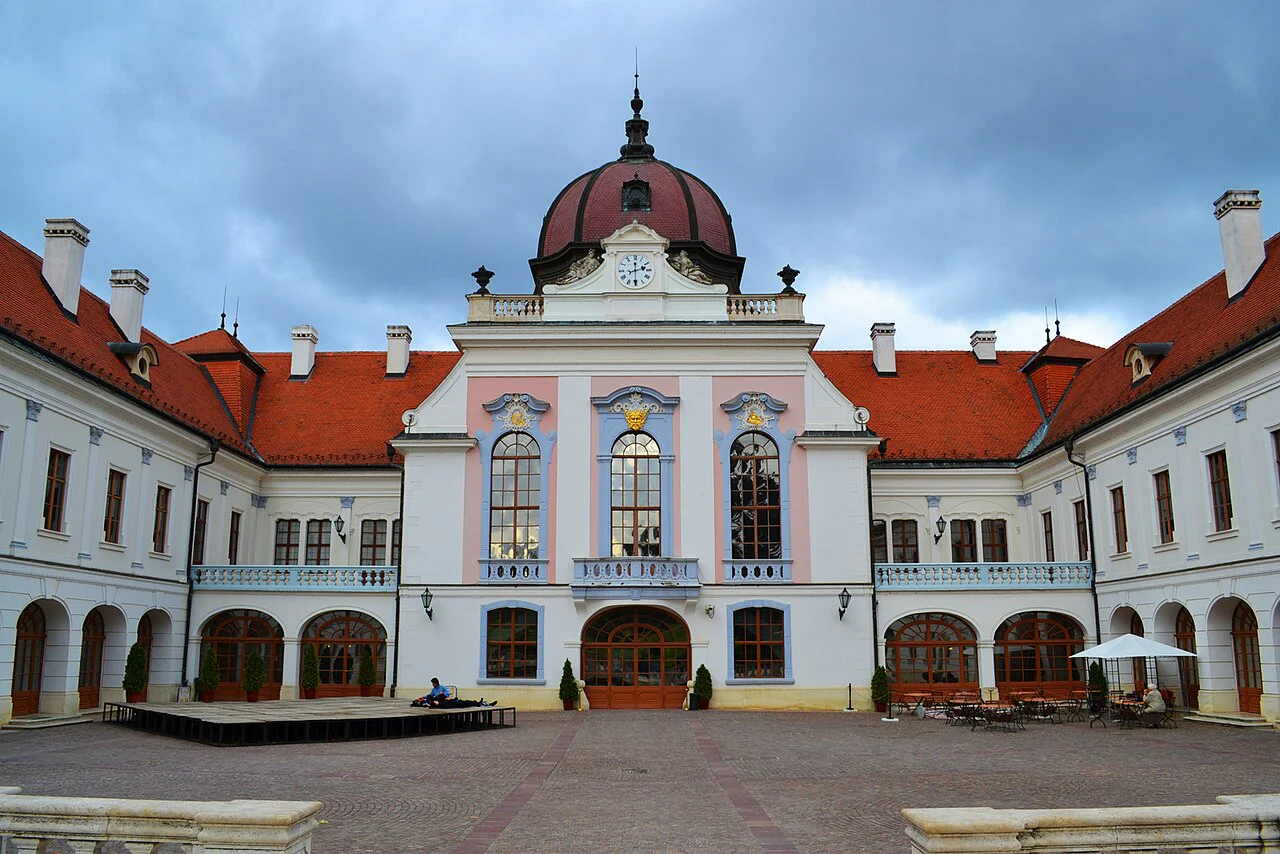
01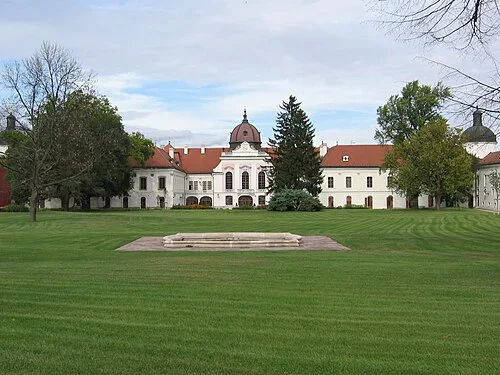 The Cour d'Honneur and Grand Baroque Facade
Arrival: The Double-U Palace from the Park
Welcome to the Royal Palace of Gödöllő, about twenty-five kilometres northeast of Budapest. This is one of the largest and most important monuments of Hungarian palace architecture. It was built for Count Antal Grassalkovich the First, a man of the regrouping Hungarian aristocracy of the eighteenth century. Work began in the seventeen-thirties under András Mayerhoffer, a celebrated builder from Salzburg who worked in the Baroque manner. From the park side, the whole design unfolds at once: a double U shape, eight wings in all, with the cupola rising over the centre. That layout took shape in stages across the eighteenth century. What began as one count's statement of power later became the beloved country retreat of the Hungarian royal family. This tour follows that whole arc, from the count's facade to the royal apartments and the park.
isol · CC BY-SA 3.0
02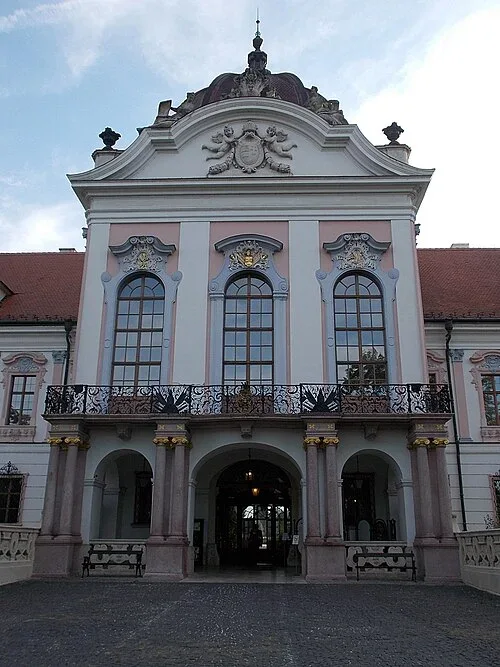 The Cour d'Honneur and Grand Baroque Facade
The Central Avant-Corps and the Grassalkovich Arms
The central projection of the facade is pure self-advertisement. Red marble Ionic columns carry the ground level, and above them a wrought-iron Rococo balcony spans the front. Higher up sit military badges, and crowning everything, the coat of arms of the Grassalkovich family. All of this mattered to the man who built it. Antal Grassalkovich rose from common nobility, first winning the title of baron and then that of count. Architecture was how a man like that told the world who he had become. The monumental symmetry of the front, the measured rhythm of the wings, became so much his signature that people speak of a Grassalkovich style. Behind this stage, later owners would rearrange the scenery to suit themselves.
Photo: Globetrotter19 · CC BY-SA 3.0
03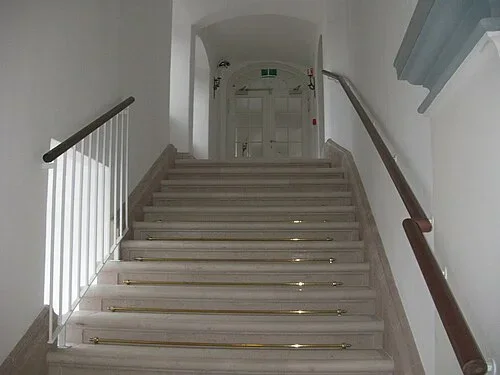 The Ground Floor Vestibule and Grand Staircase
The Service Staircase and the Palace's Rescue
These plain stone steps with their simple handrails were the working stairs of the palace, and they have seen its hardest decades. From 1920 the building served as the retreat of Regent Miklós Horthy. After the Second World War, Soviet troops used the wings as barracks, as storage, even as stables. Part of the building housed a nursing home, and the decorated rooms slowly decayed. Help came late. Monument protection began in 1981, and the heaviest preservation work ran through the early nineties. The last Soviet troops left in 1990, and the palace opened its doors to visitors in 1996. The fine rooms further along this tour are the proof of how far that rescue went.
Listen in the appEstonian Foreign Ministry · CC BY 2.0
04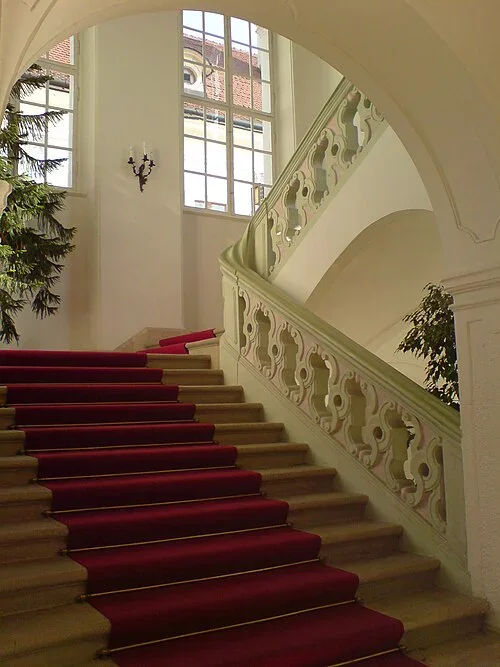 The Ground Floor Vestibule and Grand Staircase
The Grand Staircase
In a Baroque residence, the staircase was the first theatrical moment of any arrival. This one makes the point clearly: a broad flight under a deep red carpet, framed by a carved balustrade with a soft greenish sheen. It marks a social threshold as much as a physical one. Below sits the ground floor, the level of service and everyday business. Above opens the first floor, the representational level where guests were received. Twenty-three rooms up there, nearly a thousand square metres, now hold the palace's interior exhibition. They revive both the royal period and the age of the Grassalkovich family.
Listen in the appPhoto: PodracerHH · CC BY-SA 3.0
05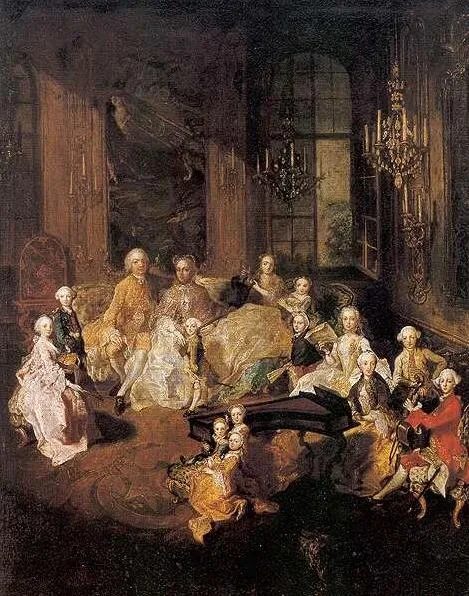 The Grassalkovich Family Memorial Chambers
Maria Theresa and the Grassalkovichs
The Grassalkovich fortune rested on closeness to the Habsburg court, and no figure mattered more than Empress Maria Theresa. Count Antal Grassalkovich was a Royal Septemvir and president of the Hungarian Chamber, and above all a confidant of the empress. In 1751 she came to Gödöllő in person, the great dated moment of that relationship. This family group was painted by Martin van Meytens in 1758. It shows the empress surrounded by her many children in a candlelit interior, the imperial family on display. It is a picture of court life in general, not a record of a room here. But the woman at its centre is the one whose favour lifted the family that built this palace.
Listen in the appMartin van Meytens · Public domain
06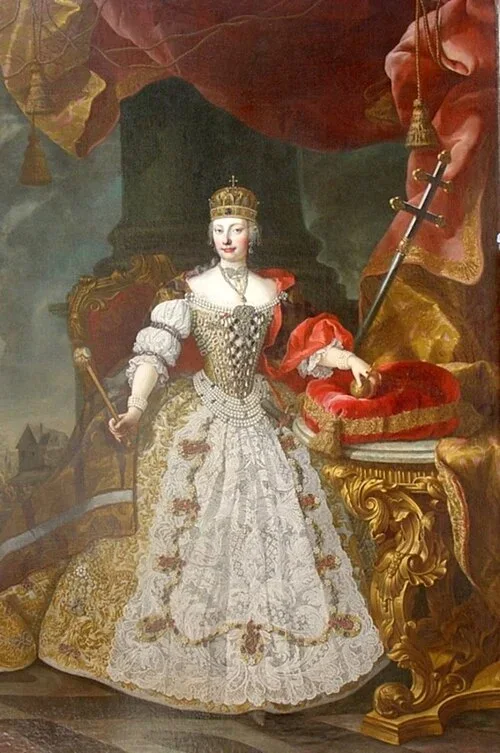 The Grassalkovich Family Memorial Chambers
Maria Theresa as Hungarian Queen
Here Maria Theresa appears in a different role, alone and in state. She wears the Hungarian crown and holds the sceptre and orb, the regalia of the queenship that mattered to this house. It was as queen of Hungary that she ruled over the Hungarian Chamber, the office Grassalkovich led. The empress you heard about visiting Gödöllő in 1751 appears here in the very dress of that Hungarian kingship. Portraits like this presented a Habsburg ruler in deliberately Hungarian royal imagery, gold and crimson and crown.
Listen in the appDaniel Schmidely · Public domain
07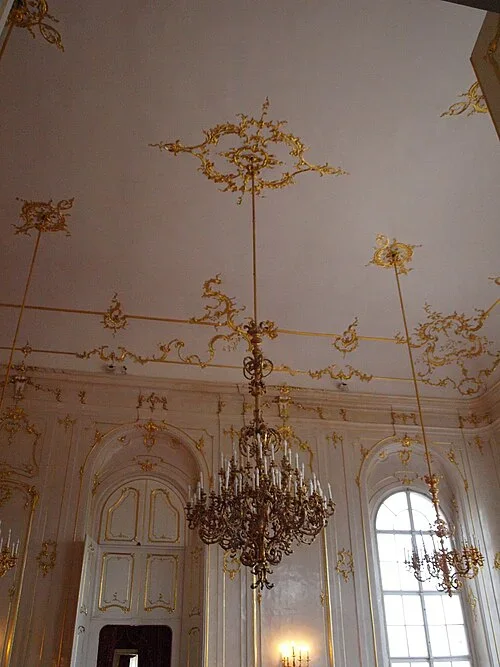 The Grand Hall (Díszterem)
The Grand Hall is the ceremonial heart of the palace, placed on the street front of the central block where no visitor could miss it. It covers about one hundred and seventy square metres. Here the ceiling rises in white and gold, Rococo stucco swirling across it in gilded scrolls and garlands. Great crystal chandeliers hang from that ornament on long gilt stems. In the Grassalkovich era this room held the balls and receptions of a rising dynasty. In the royal decades it served the same purpose for the court. Two eras, one ballroom.
Listen in the appKontiki · CC BY-SA 2.5 hu
08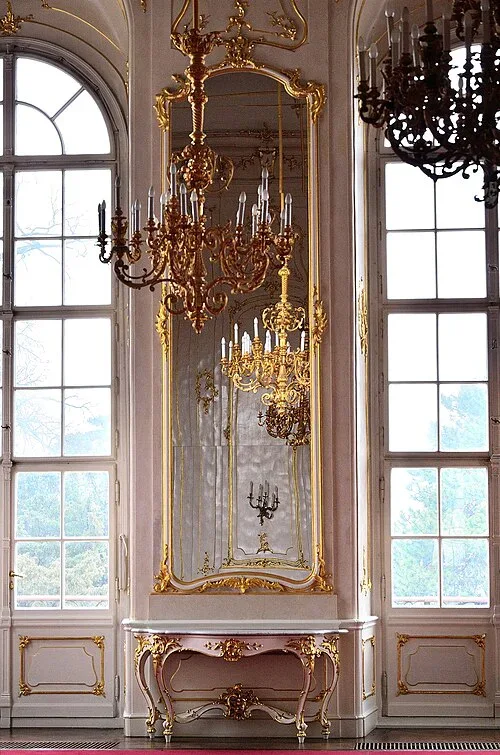 The Grand Hall (Díszterem)
The Grand Hall's Chandeliers and Mirror
Between the tall windows stands a gilt-framed mirror reaching almost to the ceiling, with a pale console table beneath it. Opposite hangs one of the great chandeliers, and the glass catches it whole. In Baroque rooms, mirrors were a trick of light: placed facing candles, they doubled the glow of an evening. The chandelier reflected here burns twice, once in crystal and once in silvered glass. This hall has not gone quiet, either. Today the Grand Hall and the painted foyer are used for all kinds of programmes, tied to the palace's event and gastronomic life.
Listen in the appPhoto: Kontár Csaba Attila · CC BY-SA 3.0
09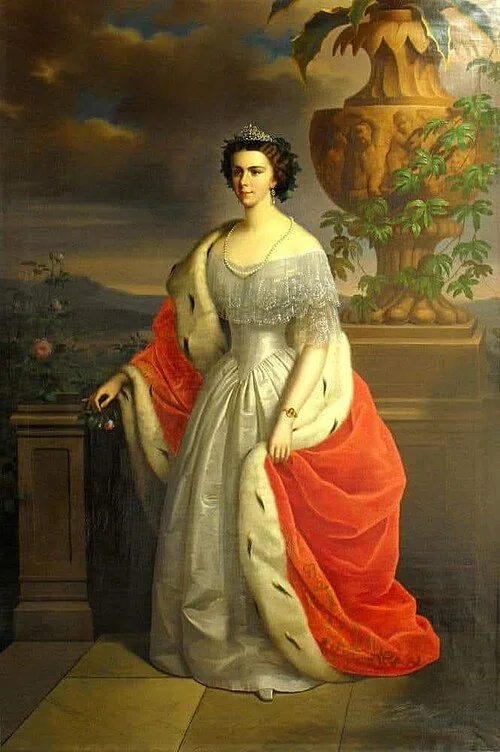 Queen Elisabeth's Private Apartments
Queen Elisabeth of Hungary
A young woman in a white silk gown looks out from this portrait, an ermine-trimmed red mantle over her shoulders and pearls at her throat. She is Queen Elisabeth of Hungary, the empress many people know as Sisi. Her story turned this palace's fate. In 1867, after the Austro-Hungarian Compromise, the Hungarian state bought the Gödöllő estate and gave it to the new king and queen as a coronation gift. Parliament designated it the resting residence of the King of Hungary. Behind the gift lay a wish for reconciliation after the crushed uprising of 1848. Elisabeth took to Hungary as few Habsburgs had. She learned to speak the language fluently, and the Hungarian staff and neighbours of the palace welcomed her warmly. Of all her Hungarian residences, Gödöllő was the one she loved best.
Listen in the appNot mentioned · Public domain
10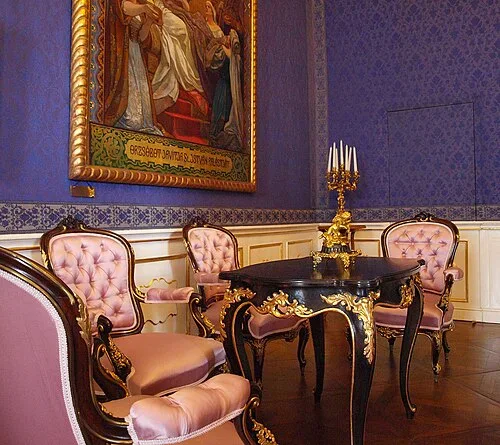 Queen Elisabeth's Private Apartments
The Violet Salon of Queen Elisabeth
Violet-blue wallpaper and pink silk chairs give these rooms their soft, slightly faded charm. This was the queen's own corner of the palace, a refuge far from the rigid etiquette of the Viennese court. She came here to rest in spring and autumn, often with Franz Joseph at her side. The interiors were reconstructed to look as they did around the 1880s, and the result is often praised for its historical exactness. The royal decades ended quietly. After Elisabeth's death in 1898 the palace remained the royal family's residence. Charles IV, the last Habsburg king, was staying here when the monarchy collapsed. His visit ended on the twenty-sixth of October 1918.
Listen in the appKontiki · CC BY-SA 2.5 hu
- 11
The Chapel's High Altar
The Baroque chapel where the household prayed, steps from their own rooms.
- 12
Inside the Palace Chapel
Gilding, balconies and candlelight: a complete Baroque church fitted into a palace wing.
- 13
The Court Theatre Wing
The court theatre in the south wing, and the riding hall where a queen trained with circus riders.
- 14
The Királydomb Pavilion
A 1760s portrait gallery in the park, and the angry day its paintings were slashed.
- 15
The Royal Pavilion Restored
The pavilion renovated, its royal faces surviving only as reproductions.
- 16
The English Park and the Palace Beyond
The wide English park, the queen's memorial, and what the palace means now.
Royal Palace of Gödöllő
Frequently asked questions
How much does the guide cost?
Free app download. Listed guide price: $1.99. Guide price shown in the app. Audio guide only. Venue admission is separate.
Can I listen without internet?
Yes. Download the guide’s audio, images, and maps in the app before your visit. Your downloaded content is then available offline.
Can I listen in my language?
This audio guide is available in 15 languages, including English.
Do I need to follow a schedule?
No. This is a self-guided experience. Choose your stops, pause whenever you like, and return to a story at your own pace.
At your own pace
Explore Royal Palace of Gödöllő.
Download Stanza, then search for “Royal Palace of Gödöllő”.
Free app download · Guide price shown in the app
Keep exploring
Nearby audio guides
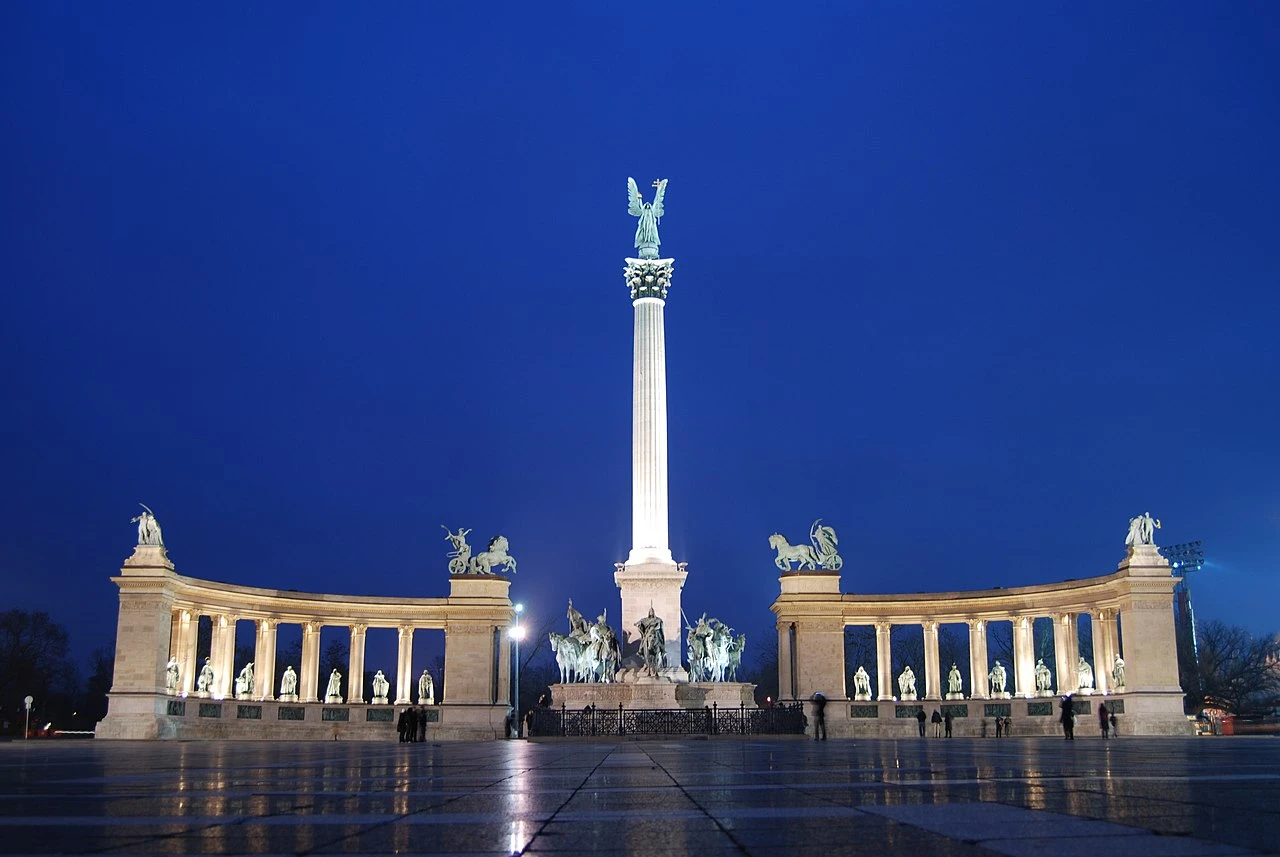
Budapest · 22 km
Millennium Monument
Content & sources
Paul Mannix · CC BY 2.0
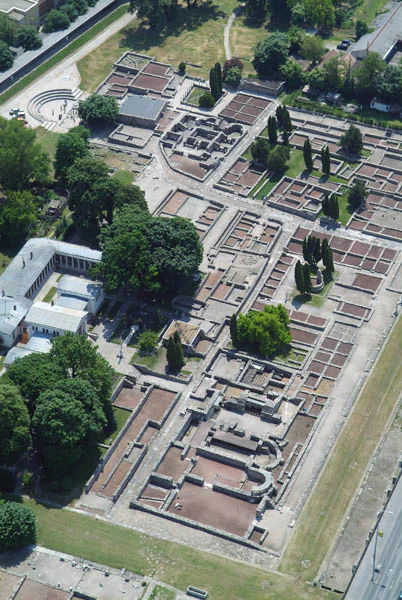
Budapest · 23 km
Aquincum
Content & sources
Photo: Civertan · CC BY 3.0
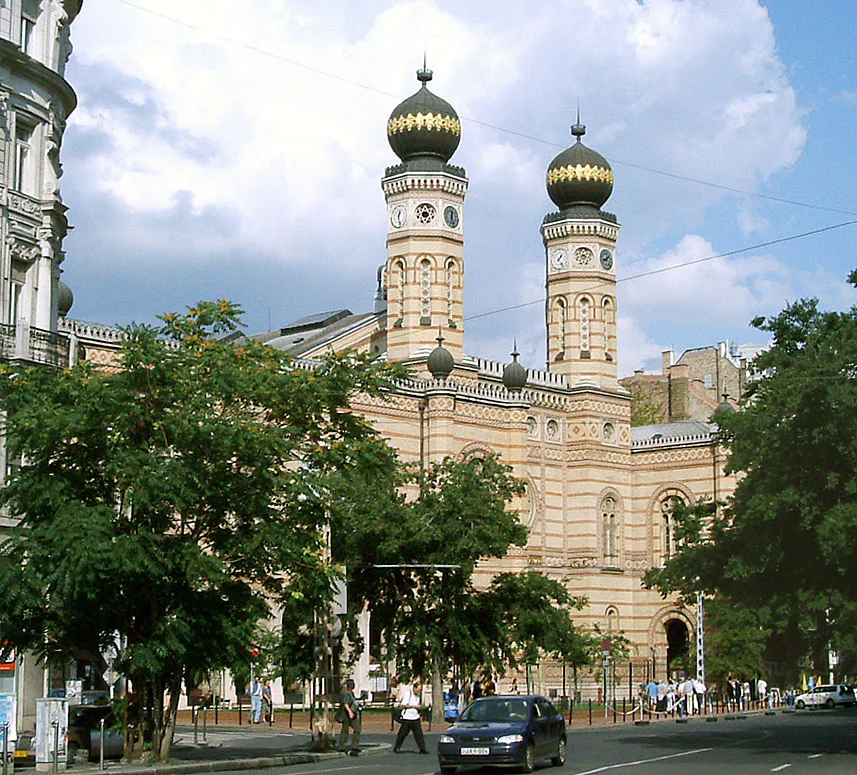
Budapest · 24 km
Dohány Street Synagogue
Content & sources
The original uploader was OsvátA at Hungarian Wikipedia. · CC BY-SA 3.0
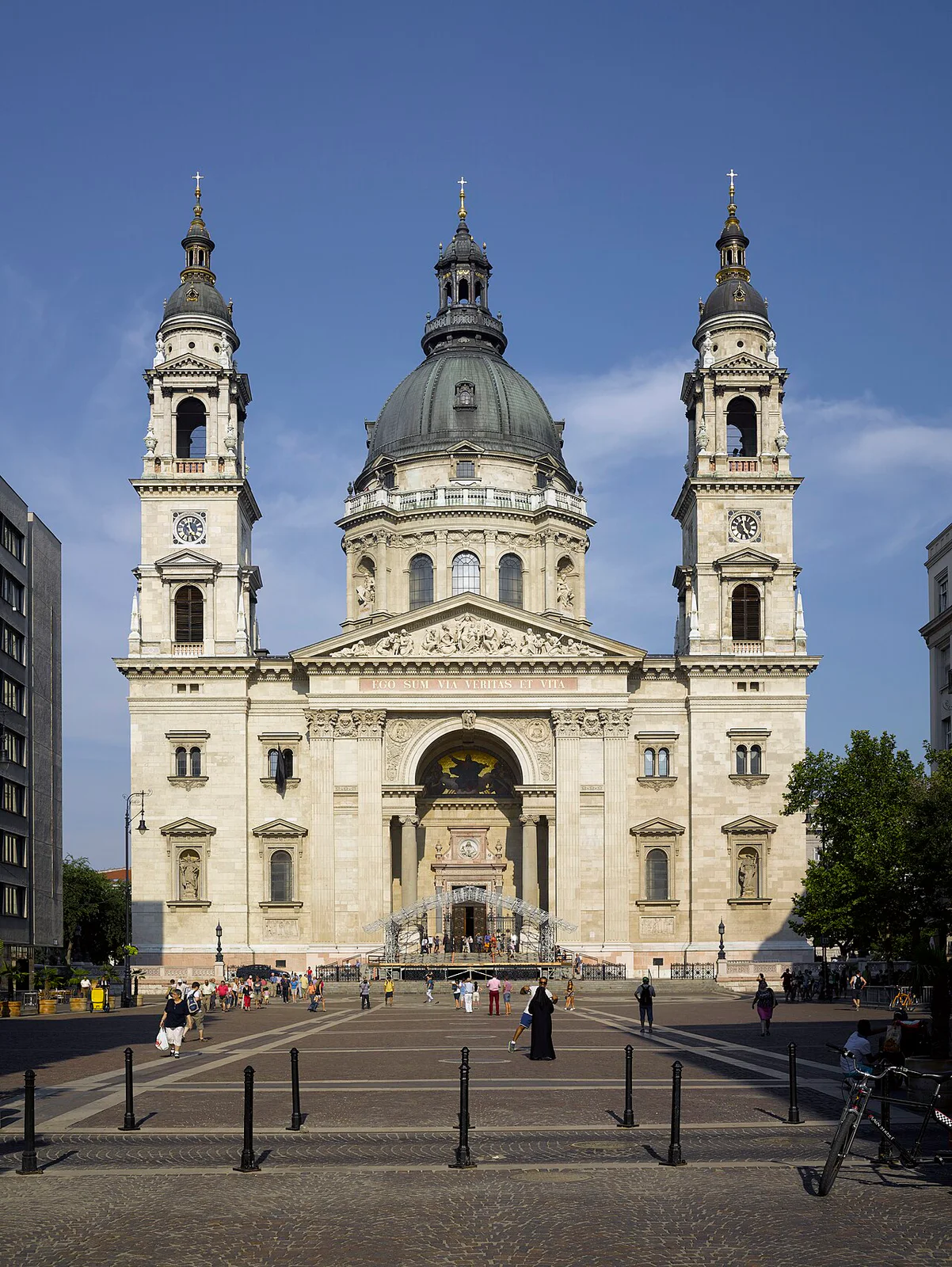
Budapest · 24 km
St. Stephen's Basilica
Content & sources
Photo: Godot13 · Attribution