Stanza · Audio guide
Chand Baori Audio Guide
A place to remember. A story to take with you.
Chand Baori is a stepwell situated in the village of Abhaneri in Rajasthan. It is one of the deepest and largest stepwells in India, featuring 3500 steps that extend 13 stories into the ground.
Download Stanza, then search for “Chand Baori”.
About the tour
One guide. Your kind of visit.
Chand Baori is a stepwell situated in the village of Abhaneri in Rajasthan. It is one of the deepest and largest stepwells in India, featuring 3500 steps that extend 13 stories into the ground.
Ready when you are.
- 01Get the free Stanza app.
iOS & Android
- 02Find your guide.
“Chand Baori”
- 03Download before you go.
Works offline
Audio guide / 8 narrated stops
Inside the guide
Get to know a few of the stories before you go. Open a stop to read more.
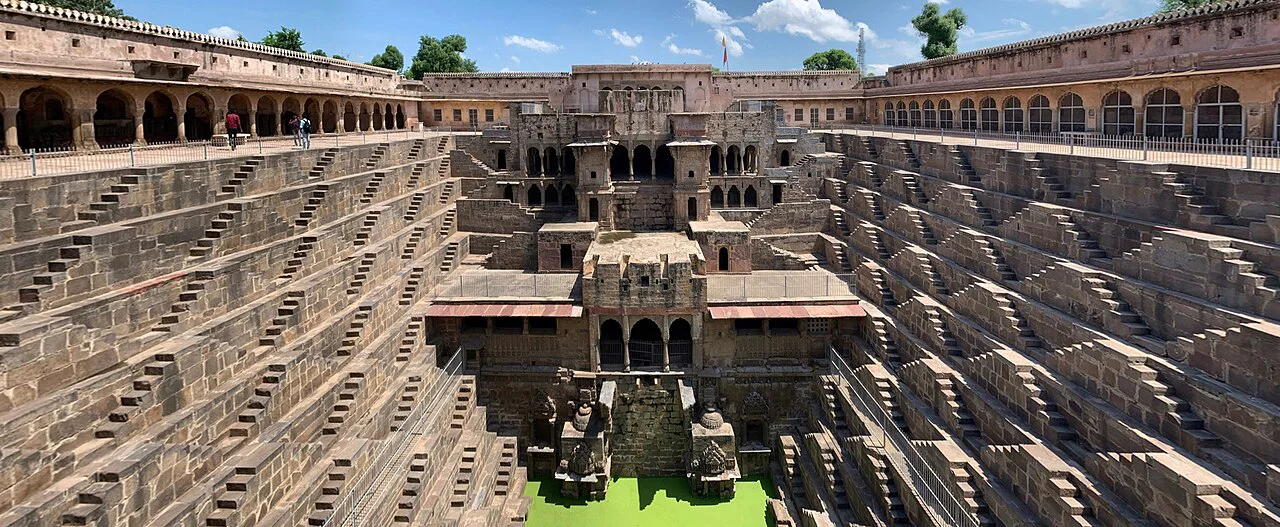
01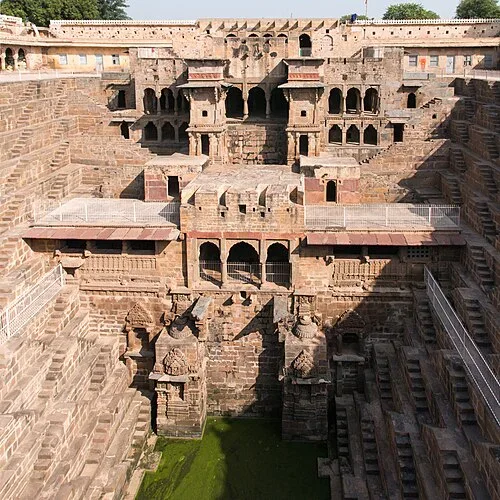 The Geometric Stepwell and Viewing Terrace
Chand Baori: The Great Stepwell of Abhaneri
Welcome to Chand Baori, the great stepwell of Abhaneri, in the dry country of eastern Rajasthan. It was said to be named after Raja Chanda, a local ruler of the Nikumbh dynasty. Work began around the year 800 and the well was essentially finished by about 900. An inscription naming a Raja Chand turned up during excavation and repair work, but the dating still rests largely on the style of its carvings. What is certain is the scale. The well drops roughly thirty metres into the ground, which makes it one of the deepest and largest stepwells in India. Its square shaft widens toward the sky like an upside-down pyramid, built to catch and hold every drop it could. Rajasthan is fiercely arid, and this was the village's answer: a reservoir, a cool refuge in the heat, and a resting place for pilgrims on their way to the nearby temple. Today visitors take in the whole geometry from the upper rim.
Photo: Daniel VILLAFRUELA · CC BY-SA 3.0
02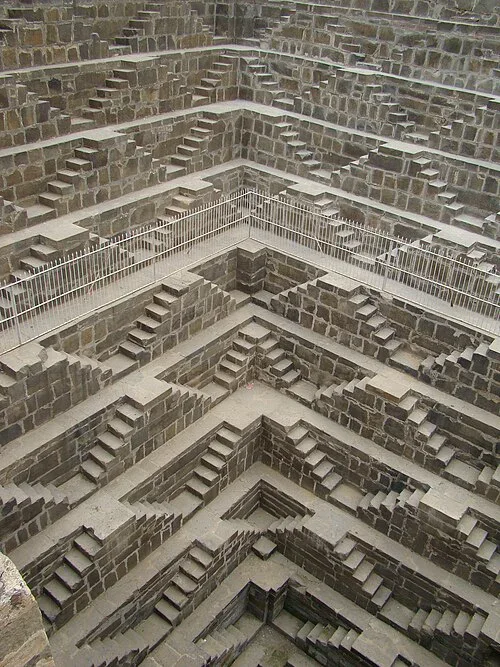 The Geometric Stepwell and Viewing Terrace
The 3,500 Steps
The stairs are the signature of Chand Baori. By one count there are about three and a half thousand of them, narrow and steep, running down thirteen storeys on three sides. Each side is built in double flights, two staircases side by side, meeting at ten landings on the way down. Classical Indian texts on architecture had a name for this inverted-pyramid form: a vijay vapi, a well of victory. The logic of the doubled flights is practical. With so many separate staircases reaching every level, people could get to the water whatever height it stood at, in flood or in drought. There is a local legend about these stairs, told as popular belief rather than fact: that a visitor who walks down cannot retrace the same steps back up, because the repeating pattern plays tricks on the eye. The design found a modern audience too. The 2012 film The Dark Knight Rises used this geometry as the model for its pit-prison set, though the film was not shot here.
Photo: Arpita Roy08 · CC BY-SA 3.0
03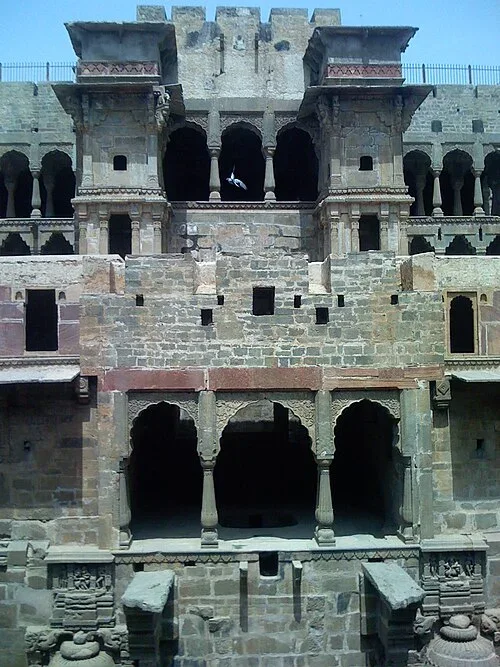 The Royal Pavilion and Subterranean Haveli
The Royal Pavilion
Three sides of Chand Baori are stairs. The fourth, the northern side, is something else entirely. Here the wall carries pillared corridors at several levels, and a haveli, a mansion with resting rooms set aside for the royals. The reason is the air itself. At the bottom of the well it stays about five or six degrees cooler than at the surface, a natural cooling system built into the design. In the hottest months the whole well became a gathering place for the community, and the deep galleries gave the royal household a summer refuge above the water. The site kept growing long after the well was dug. An upper palace was added by the Chauhan rulers, recognizable by the arches they favoured. Centuries of different hands, one structure.
Listen in the appRohit Agarwal · CC BY-SA 4.0
04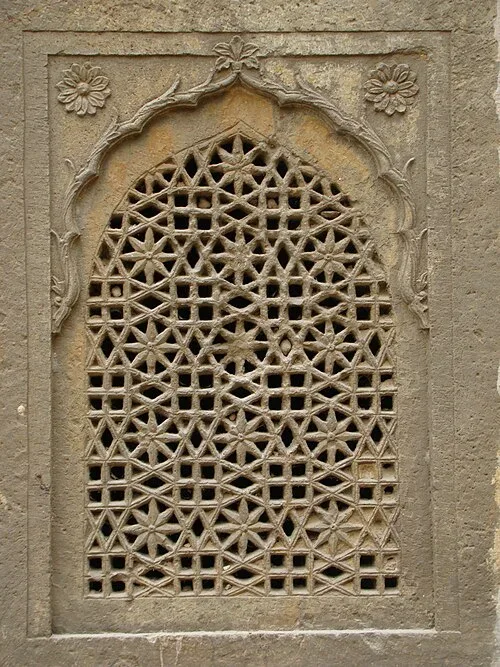 The Royal Pavilion and Subterranean Haveli
The Carved Jali Window
Even the practical parts of this well were finished with fine ornament. The haveli has windows of carved stone jali, a pierced lattice cut from single panels. The arched frame carries floral carving, and inside it the lattice opens into a geometric field of stars and squares. A screen like this did quiet work in a hot country. It let moving air and softened light into the rooms behind it, and it kept the life inside private from the terraces outside. The same carving tradition runs through the whole complex, from these screens to the sculpted panels kept along the arcades around the rim.
Listen in the appPhoto: Arpita Roy08 · CC BY-SA 3.0
05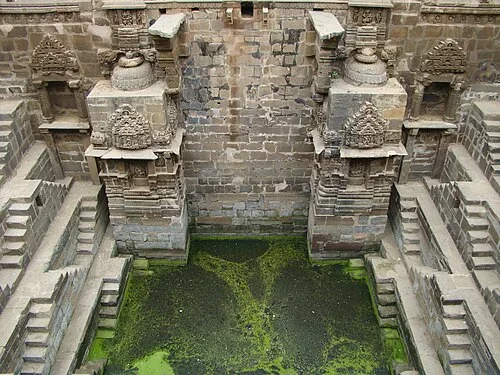 The Ancient Reservoir and Guardian Shrines
The Water at the Bottom
At the base of the shaft lies the tank that made the whole structure work, its water often wearing a coat of green. There was machinery here too. A small room called Anderi Ujala held traditional pulley-like equipment for lifting water up the shaft. The depth of the well left a mark on local imagination. The story goes that it was built by spirits in a single night, and made so deep that anything dropped into it could never be retrieved. That is folklore, not history, but it is a legend that tries to explain what seems almost impossible: a hole in the earth this deep, dug by human hands.
Listen in the appPhoto: Arpita Roy08 · CC BY-SA 3.0
06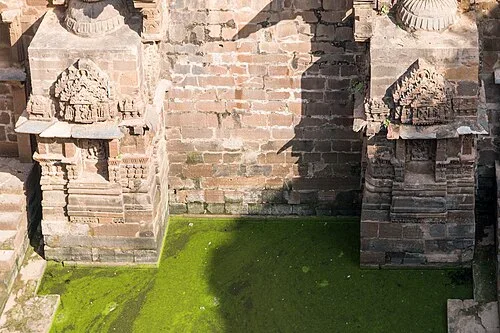 The Ancient Reservoir and Guardian Shrines
The Twin Shrines
A stepwell in India was never only plumbing. On the northern wall of Chand Baori, two projecting offsets hold niches that serve as shrines, set close to the water. The right niche holds Ganesha, the remover of obstacles. The left holds an image of Mahishasuramardini, the goddess Durga in the moment she slays the buffalo demon. The Ganesha shrine is crowned with a chaitya arch, and carved above it is a female dancer with her attendant, with more dancing figures worked around the structure. Deities belonged at a water source for a reason. The well served pilgrims, who quenched their thirst and rested on its steps after long travels, and it played its part in religious and ceremonial life alongside the daily work of drawing water.
Listen in the appPhoto: Daniel VILLAFRUELA · CC BY-SA 3.0
07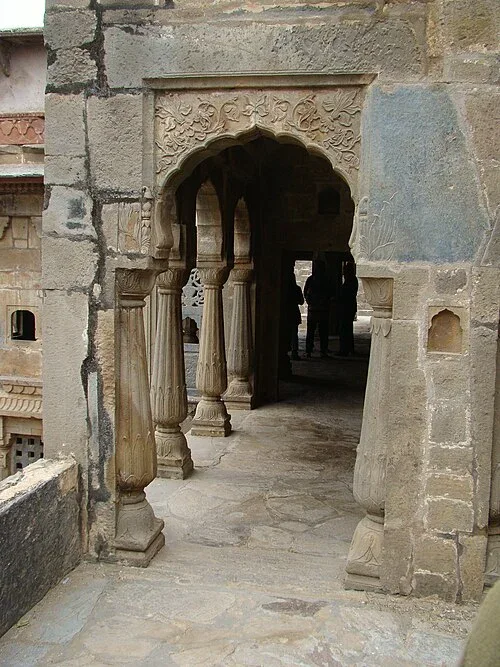 The Perimeter Colonnade and Sculptural Gallery
The Arcade and the Temple's Surviving Stones
The pillared verandah running around the top of the well is recorded as a later addition, one more sign of how long this place stayed in use. Its history is not only one of building. Adjoining the baori stands the Harshat Mata Temple, raised in the seventh and eighth centuries for the goddess of joy. Temple and well formed a single complex, and the temple drew pilgrims of its own. Then came destruction. The temple was damaged and torn down by Mahmud of Ghazni, and its pillars, columns and statues were left scattered. Centuries later the Mughals also damaged the sculptures inside the well itself. Many of the excavated stones from the temple are now kept by the Archaeological Survey of India in the arcades around the well, so the shattered temple and the stepwell shelter each other still.
Listen in the appPhoto: Arpita Roy08 · CC BY-SA 3.0
08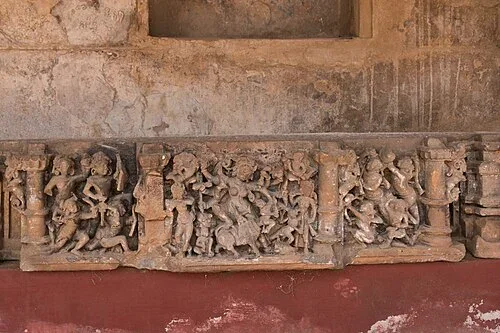 The Perimeter Colonnade and Sculptural Gallery
The Carved Frieze: What Chand Baori Tells Us
This frieze of deities and figures carries the whole story of Chand Baori in one panel. It was carved for a structure whose first job was simply to hold water, yet the work is as fine as any temple's. In early medieval Rajasthan, engineering, worship and art were one undertaking, not separate ones. The well stayed in continuous use into the late medieval period, and along the way it took in many modifications, repairs and reconstructions. So the carving here is the work of many generations of hands, some of them mending what others had made. What the builders and their successors left is a monument to a hard idea: that survival in a harsh landscape could be achieved with beauty, not despite it.
Listen in the appDaniel Villafruela. · CC BY-SA 3.0
Chand Baori
Frequently asked questions
How much does the guide cost?
Free app download. Listed guide price: $0.99. Guide price shown in the app. Audio guide only. Venue admission is separate.
Can I listen without internet?
Yes. Download the guide’s audio, images, and maps in the app before your visit. Your downloaded content is then available offline.
Can I listen in my language?
This audio guide is available in 15 languages, including English.
Do I need to follow a schedule?
No. This is a self-guided experience. Choose your stops, pause whenever you like, and return to a story at your own pace.
At your own pace
Explore Chand Baori.
Download Stanza, then search for “Chand Baori”.
Free app download · Guide price shown in the app
Keep exploring
Nearby audio guides

Jaipur · 75 km
Amber Fort
Content & sources
Jakub Hałun · CC BY-SA 4.0
Jaipur · 76 km
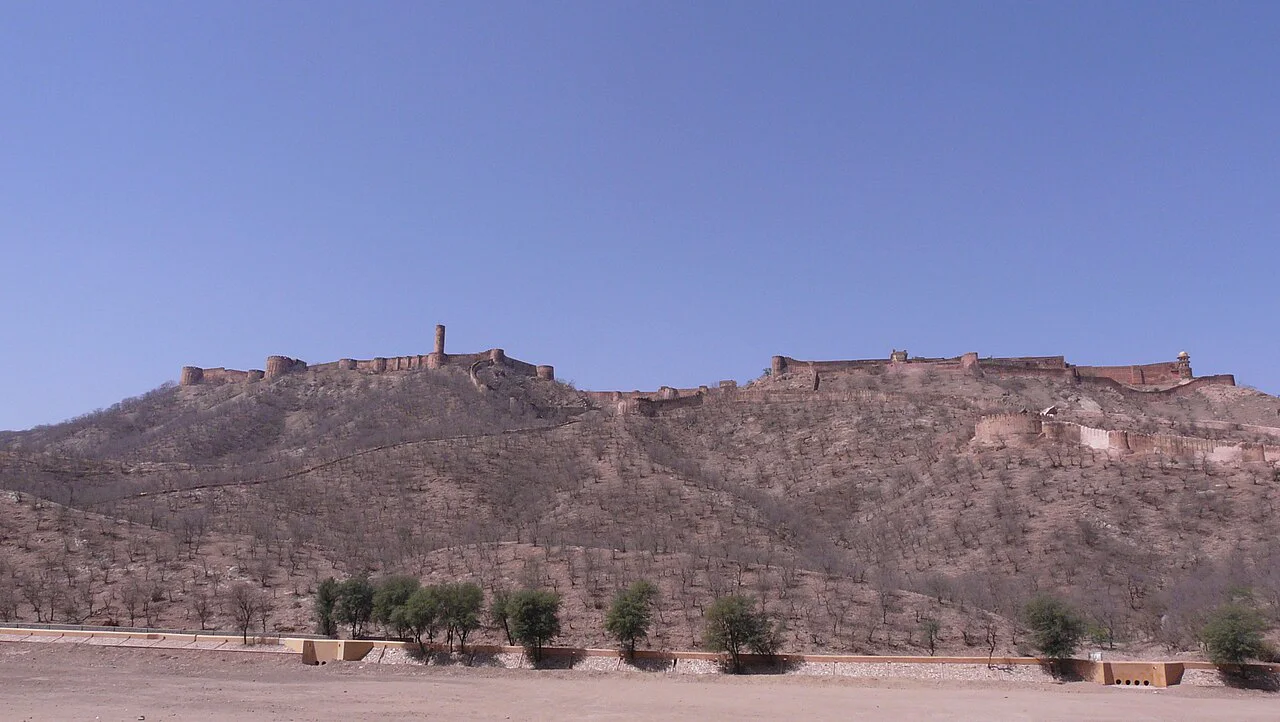
Jaigarh Fort
Content & sources
Ashwin Kumar from Bangalore, India · CC BY-SA 2.0

Jaipur · 78 km
Hawa Mahal
Content & sources
Photo: Chainwit. · CC BY-SA 4.0
Jaipur · 78 km
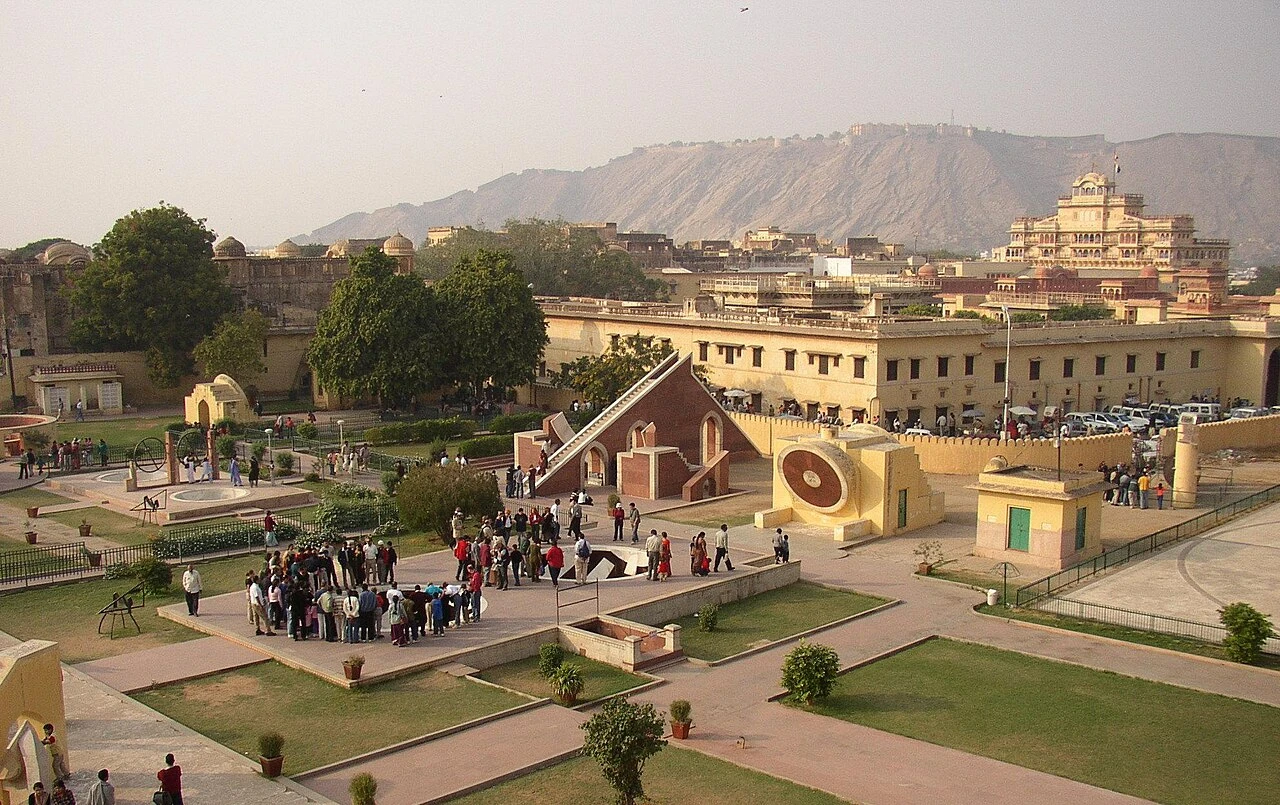
Jantar Mantar, Jaipur
Content & sources
Photo: Knowledge Seeker · Public domain