Stanza · Audio guide
Mahabodhi Temple Audio Guide
A place to remember. A story to take with you.
The Mahabodhi Temple is a restored Buddhist temple in Bodh Gaya, India. It marks the location where the Buddha is said to have attained enlightenment and is the most revered pilgrimage site for Buddhists…
Download Stanza, then search for “Mahabodhi Temple”.
About the tour
One guide. Your kind of visit.
The Mahabodhi Temple is a restored Buddhist temple in Bodh Gaya, India. It marks the location where the Buddha is said to have attained enlightenment and is the most revered pilgrimage site for Buddhists worldwide.
Ready when you are.
- 01Get the free Stanza app.
iOS & Android
- 02Find your guide.
“Mahabodhi Temple”
- 03Download before you go.
Works offline
Audio guide / 12 narrated stops
Inside the guide
Get to know a few of the stories before you go. Open a stop to read more.
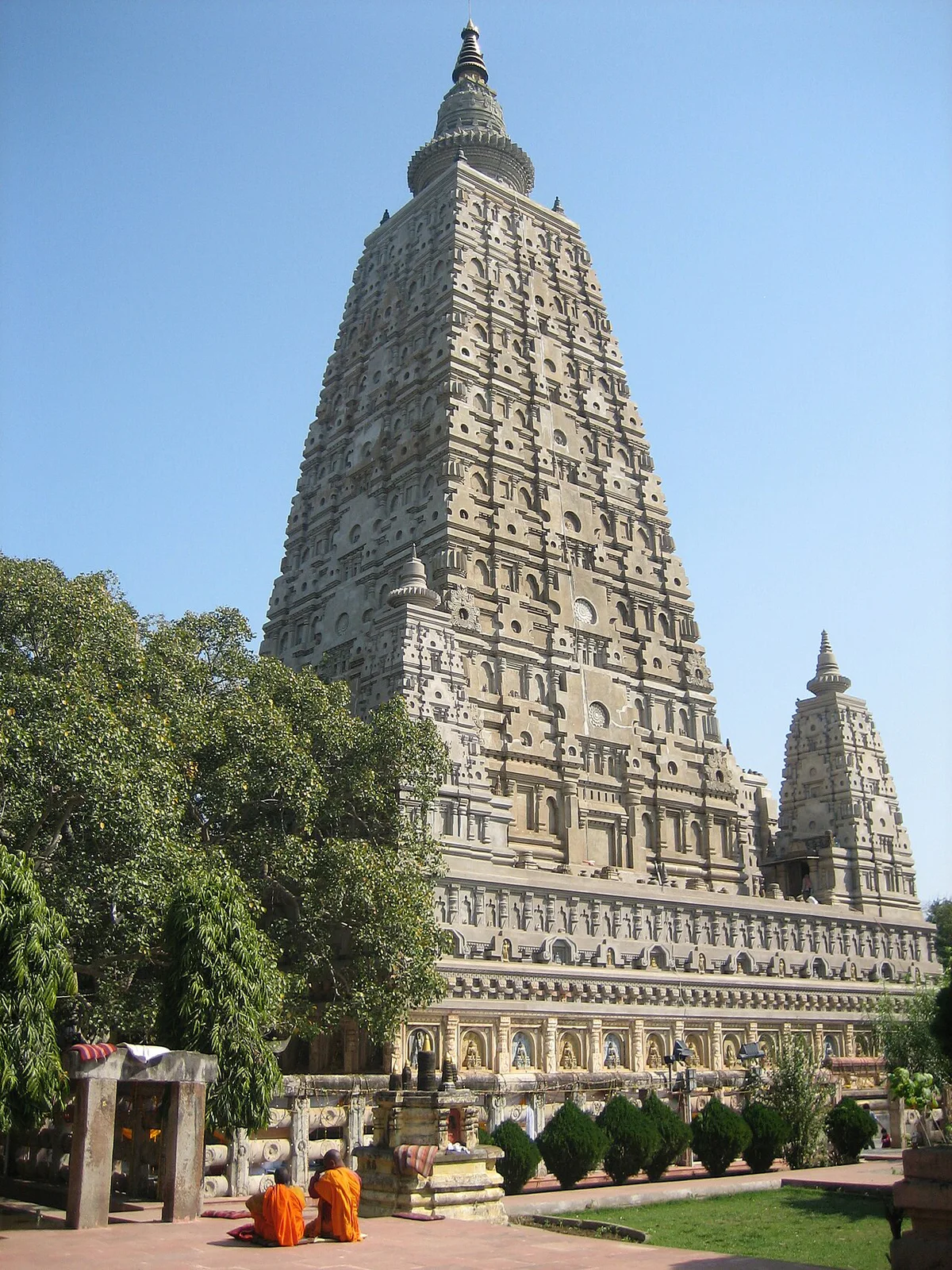
01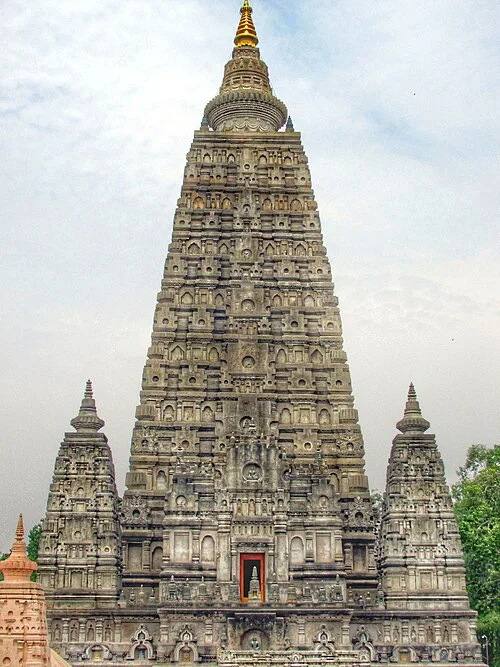 Main Eastern Approach and the Great Shikhara
The Great Shikhara
Welcome to Bodh Gaya, and to the temple Buddhists honour as the holiest site in their world: the place where the Buddha is said to have attained enlightenment. The great tower rising over the grounds is the monument built to mark that moment. It stands about fifty-five metres high, made entirely of brick, and it counts among the oldest brick structures still standing in eastern India. The pyramidal form dates to the Gupta empire, in the fifth and sixth centuries. Its builders worked so well that the temple became a model for later builders. The tall tower type, called a shikhara, became a hallmark of Hindu and Jain temples, and versions of this design travelled abroad, shaping the pagodas of East Asia. Around the central spire cluster four smaller towers in the same style. Much of what stands today took shape during a restoration in the 1880s, led by the archaeologist Alexander Cunningham with his colleague Joseph David Beglar. Yet the restoration worked around far older fabric. A plaque from around the year 200 already shows the temple in its present form, a stepped pyramid crowned by a small stupa. So the silhouette may be several centuries older than the visible brickwork. The whole temple sits within a sunken courtyard, where pilgrims have gathered for well over a thousand years.
Photo: Rahulkumar28 · CC BY-SA 4.0
02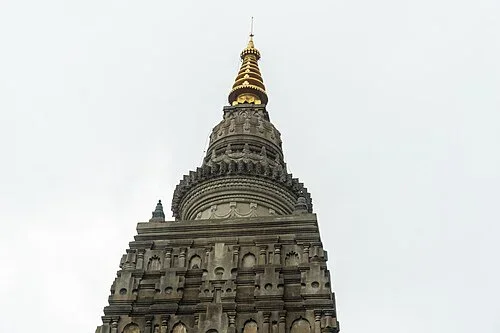 Main Eastern Approach and the Great Shikhara
The Golden Finial
The gold at the very top of the spire is far newer than everything beneath it. In 2013, Thai Buddhists began raising money to gild the upper section of the tower. Their plan needed permission from Indian authorities, and early estimates put the requirement at around two hundred kilograms of gold. The work went ahead under the supervision of the Archaeological Survey of India, after chemical treatment of the top section of the structure. News reports put the finished amount at about two hundred and ninety kilograms, though some accounts counted less. The donations came from Thai devotees, and included gifts attributed to the Thai king. Only the highest portion of the tower was covered, so the gold crowns the ancient brick rather than hiding it. It is a plain statement of living devotion: a monument raised in the Gupta age, still receiving gifts from Buddhists on the far side of the world.
Photo: Sumitsurai · CC BY-SA 4.0
03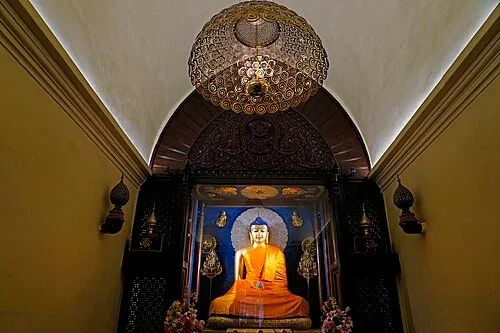 The Inner Sanctum and Gilded Buddha
The Inner Sanctum
Inside the great brick shell, the temple opens into a quiet chamber roofed by a high vault. A golden chandelier hangs above the shrine, and lamps glow along the walls. At the centre sits the Buddha in orange robes, with flowers laid out before him. This room is the living heart of the temple. Monks and pilgrims come here every day to venerate the image, chant, and make offerings, as worshippers have across the site's long and often interrupted history. The temple has been abandoned before, and restored again, yet veneration here has outlasted every upheaval. Of all the chambers in all the temples of the Buddhist world, this modest brick room may be the most visited of them all.
Listen in the appUser: (WT-shared) Manoj nav at wts wikivoyage · Public domain
04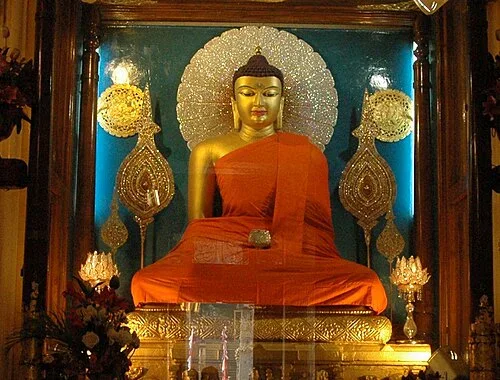 The Inner Sanctum and Gilded Buddha
The Gilded Buddha
The golden figure at the centre of the sanctum has had a long journey of its own. It is a large Buddha of the Pala period, the dynasty that ruled this region in the early centuries of the last millennium. At some earlier stage, the image was likely taken from the sanctum to the residence of the mahant, the Hindu custodian who then held the temple. In 1884, during the colonial restoration of the site, it was brought back and reinstated in the sanctum where it sits today. The work was substantial. The plinth beneath the image was reconstructed at that time, and pieces of a dedicatory inscription were set into their current position. That inscription records the rededication of the image in the thirteenth century by Pithipati Jayasena, a local ruler of Magadha. Since its return the sculpture has been repaired, painted, and gilded, and it stands under active worship. An image that once sat in a private residence now receives pilgrims from every Buddhist country.
Listen in the appUser: (WT-shared) Manoj nav at wts wikivoyage · Public domain
05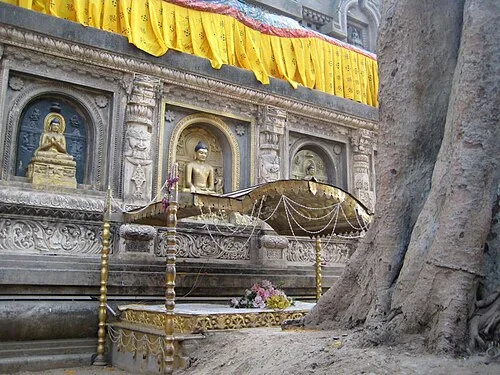 The Sacred Bodhi Tree and Vajrasana
The Vajrasana
The carved stone platform between the temple's western wall and the tree is the most sacred spot in the whole complex. The emperor Ashoka came here around 250 BCE and established a monastery and shrine on the site. The earlier shrine he built has disappeared, but one piece of his work remains. It is the Vajrasana, the Diamond Throne, a stone slab set at the foot of the Bodhi tree to mark the exact place of the awakening. Ashoka had it made between 250 and 233 BCE, and it is worshipped today as the centre of the temple's festivities. Its survival is remarkable. In the twelfth century, Turkic armies invaded Bodh Gaya and destroyed much of the region, and the temple fell into disrepair and was largely abandoned. A Tibetan monk named Dharmasvamin visited in 1234 and left a detailed account. He wrote that monks had to block off the images in the sanctum to protect them from the invaders, whom he called Turushkas. The Diamond Throne, though, was left untouched. The invaders showed no interest in it, and the slab endured where it was first set.
Listen in the appEvan Lovely · CC BY 2.0
06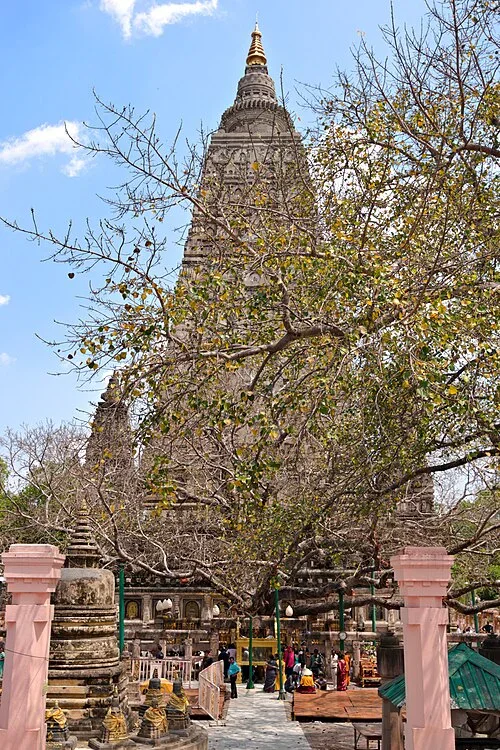 The Sacred Bodhi Tree and Vajrasana
The Bodhi Tree
The story at the heart of this place begins with a young prince who could not look away from suffering. Traditional accounts say that around 589 BCE, Siddhartha Gautama reached the forested banks of the Phalgu river, near the town of Gaya. He sat down in meditation under a peepul tree, the sacred fig that later came to be known as the Bodhi tree. After three days and three nights, according to the Buddhist scriptures, he attained enlightenment and freedom from suffering. The tree standing here is said to be a direct descendant of that original tree, a lineage carried by tradition rather than by any record. The temple was built directly to the east of it, and pilgrims have come to venerate the tree for over two thousand years. The awakening was not the end of his time here. He spent the first week after it seated beneath the tree, and the following weeks unfolded at other spots across these grounds, each one still marked today.
Listen in the appRohit Sharma · CC BY-SA 4.0
07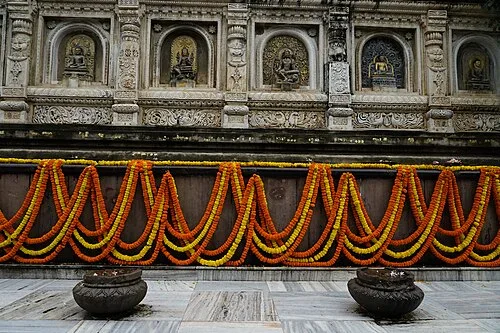 Northern Meditation Stations: Animeshlocha and Chankamana
The Jewel Walk
In the third week after his awakening, tradition says, the Buddha walked back and forth between the Bodhi tree and the stupa nearby. Legend holds that lotus flowers sprang up along his route, so that his bare feet would never touch bare ground. That path gave this spot its name: Ratnachakrama, the jewel walk. The platform here is still dressed for honour, draped in garlands of orange and yellow marigolds with offering pots set before it, a sign that the walk remains a living focus of devotion. The ground holds older evidence too. Archaeological research along the Buddha's walk turned up stone columns with pot-shaped bases, dated to the first century BCE. Alexander Cunningham, who excavated here, matched them quite precisely against the columns shown carved on the ancient railing reliefs. The same walk, marked in stone, in legend, and in flowers.
Listen in the appRohit Sharma · CC BY-SA 4.0
08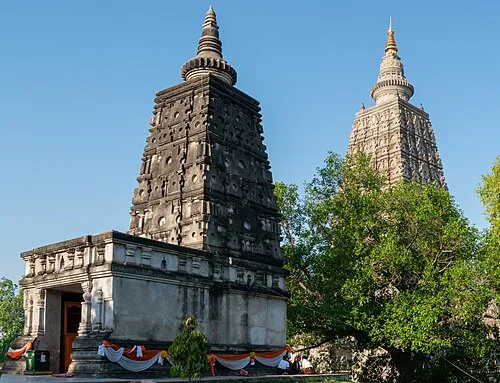 Northern Meditation Stations: Animeshlocha and Chankamana
The Animeshlocha Stupa
The smaller stupa standing near the great tower carries one of the strangest and most tender names on the site. Tradition holds that during the second week, the Buddha remained standing and stared, uninterrupted, at the Bodhi tree. The Sanskrit name of this shrine, Animeshlocha, means the unblinking. A statue of the Buddha stands here with its eyes fixed towards the tree, holding that gaze across the grounds. The shrine sits to the northeast of the main temple, close enough that the two structures share the same view. Behind the great tower, out of sight from here, the tree still grows. The stupa has kept its watch ever since the tradition of the seven weeks took shape, a monument to a week spent doing nothing but looking.
Listen in the appRohit Sharma · CC BY-SA 4.0
09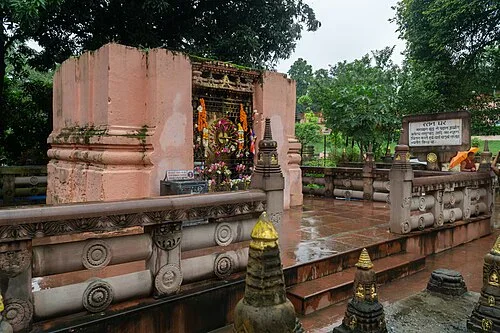 Ratanaghara Chaitya: The Jewel House of Contemplation
The Ratanaghara
The modest shrine among the trees, with small votive stupas ranged before it, marks the fourth week. Tradition places the Buddha during that week at the Ratnagar Chaitya, the jewel house, on the northeast side of the temple. What he contemplated there is not recorded in detail. What matters for these grounds is the pattern: week after week after the awakening had its own marked spot, and the weeks chain together across the complex like stations on a map. This one is easy to overlook beside the great tower. The votive stupas gathered in front of it show that pilgrims have long made their way here all the same.
Listen in the appPhoto: Sumitsurai · CC BY-SA 4.0
10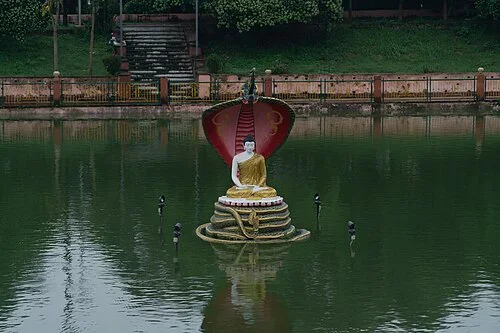 Muchalinda Lake: Sanctuary of the Serpent King
Muchalinda Lake
In the middle of a still green pond sits one of the most striking statues on these grounds: the Buddha, seated calmly, sheltered beneath the great flared hood of a serpent. The story belongs to the sixth week. Tradition says a violent storm broke while the Buddha meditated beside the lotus pond. Muchalinda, king of the serpents, rose from his home to protect him. The legend tells that he wrapped his coils around the body and spread his many hoods above the head, like an umbrella against the rain. The statue in the water shows exactly that moment, the meditating figure ringed by coils beneath the hood. Whether this pond is the very one of the old story, or a later identification within the grounds, people here do not agree. Either way, it has become the place where the tale is told, and it is among the best loved of all the station stories here.
Listen in the appPhoto: Sumitsurai · CC BY-SA 4.0
- 11
The Ancient Railings
Sandstone railings from two thousand years ago, and the gods carved on them.
- 12
Votive Stupas
Gifts from pilgrims across two millennia, and the long fight to return the temple to Buddhist care.
Mahabodhi Temple
Frequently asked questions
How much does the guide cost?
Free app download. Listed guide price: $0.99. Guide price shown in the app. Audio guide only. Venue admission is separate.
Can I listen without internet?
Yes. Download the guide’s audio, images, and maps in the app before your visit. Your downloaded content is then available offline.
Can I listen in my language?
This audio guide is available in 15 languages, including English.
Do I need to follow a schedule?
No. This is a self-guided experience. Choose your stops, pause whenever you like, and return to a story at your own pace.
At your own pace
Explore Mahabodhi Temple.
Download Stanza, then search for “Mahabodhi Temple”.
Free app download · Guide price shown in the app
Keep exploring
Audio guides — India
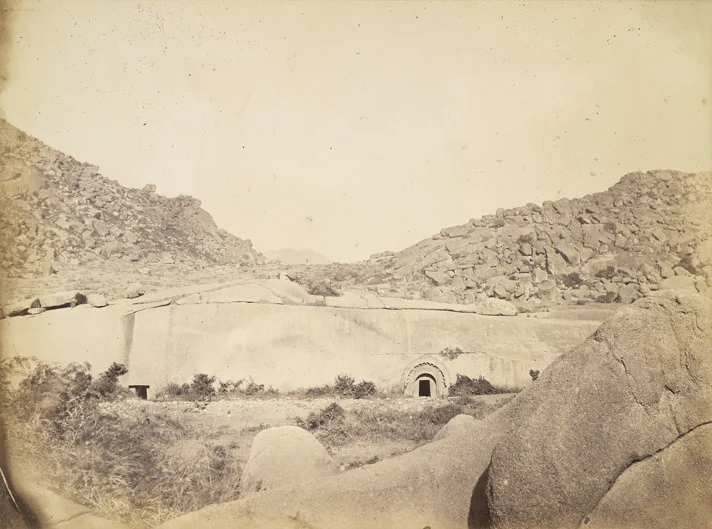
Makhdumpur · 35 km
Barabar Caves
Content & sources
Thomas Fraser Peppé · Public domain
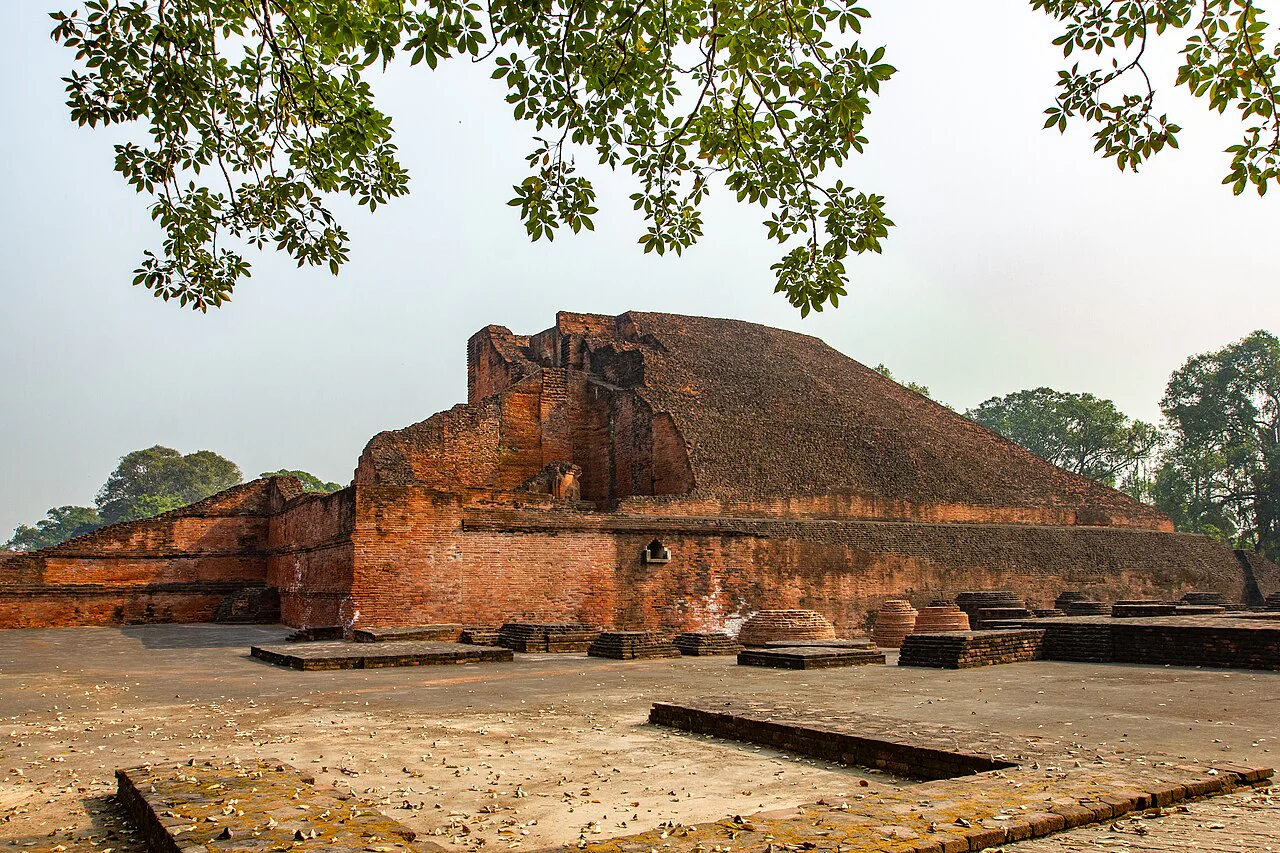
Nalanda · 67 km
Nalanda mahavihara
Content & sources
Photo: Uphogaphy · CC BY-SA 4.0
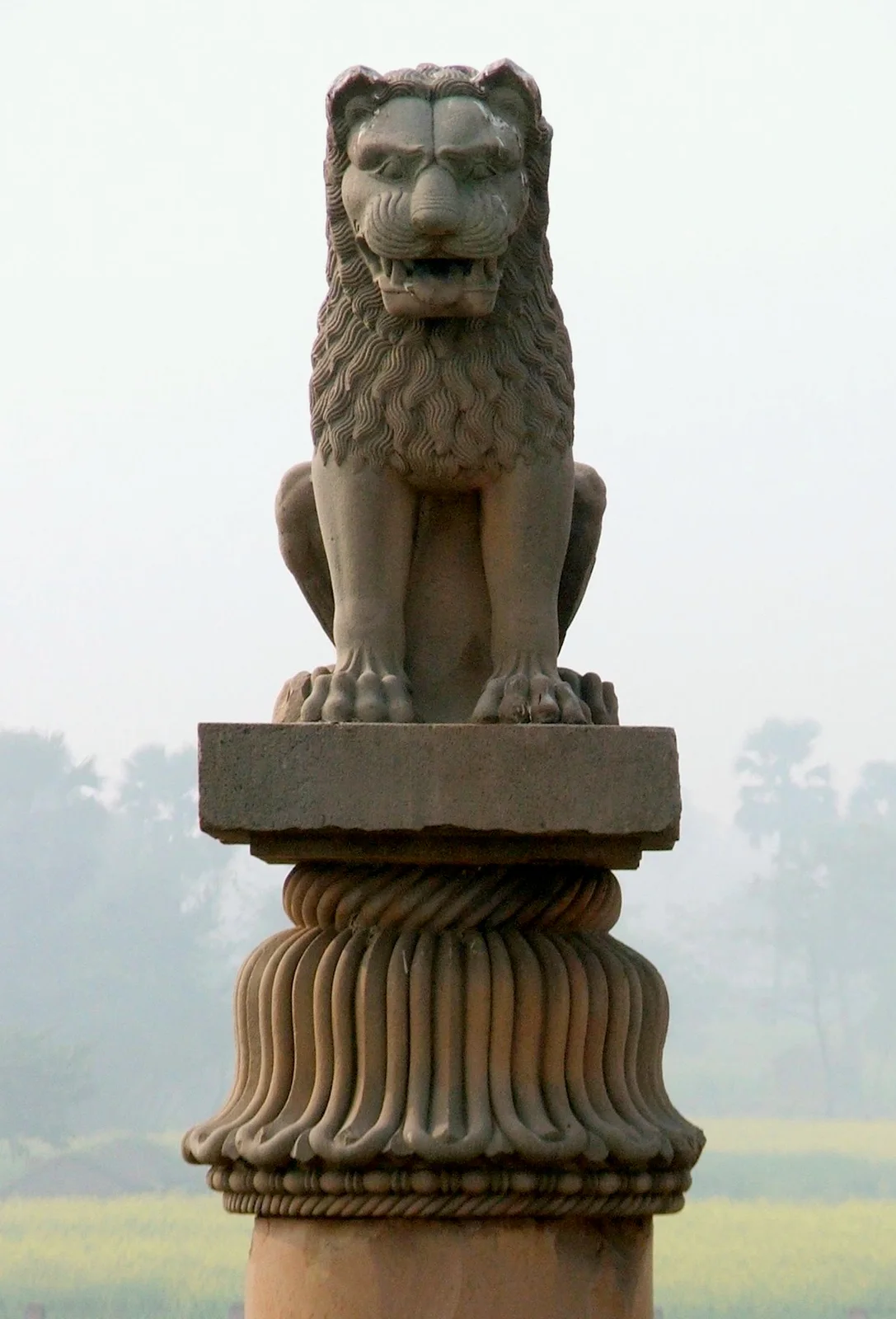
Vaishali · 144 km
Vaishali
Content & sources
mself · CC BY-SA 2.5
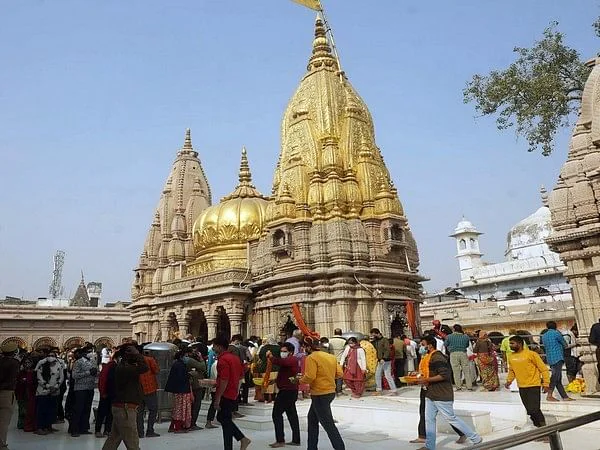
Varanasi
Kashi Vishwanath Temple
Content & sources
Photo: Das740724 · CC BY-SA 4.0