Stanza · Audio guide
Barabar Caves Audio Guide
A place to remember. A story to take with you.
The Barabar Hill Caves are the oldest surviving rock-cut caves in India. They date from the Maurya Empire and contain Ashokan inscriptions.
Download Stanza, then search for “Barabar Caves”.
About the tour
One guide. Your kind of visit.
The Barabar Hill Caves are the oldest surviving rock-cut caves in India. They date from the Maurya Empire and contain Ashokan inscriptions.
Ready when you are.
- 01Get the free Stanza app.
iOS & Android
- 02Find your guide.
“Barabar Caves”
- 03Download before you go.
Works offline
Audio guide / 20 narrated stops
Inside the guide
Get to know a few of the stories before you go. Open a stop to read more.
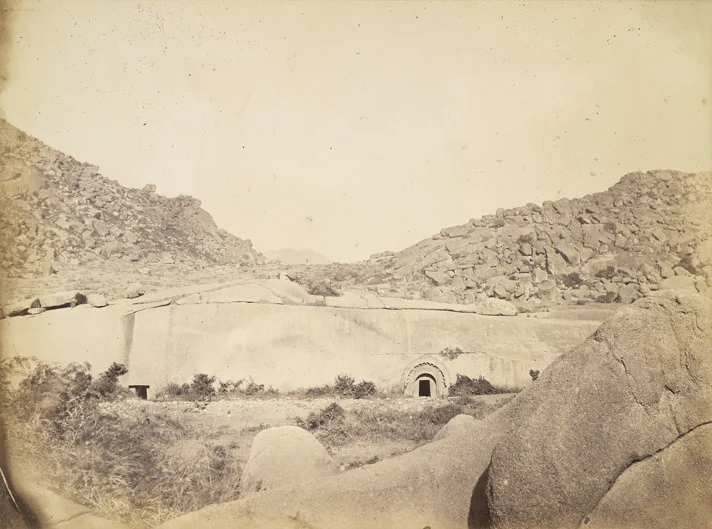
01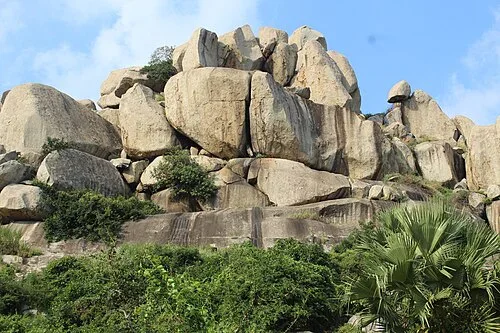 Barabar Hill
Granite rises from the flat plains of southern Bihar in two bare, rounded ridges: Barabar Hill, and Nagarjuni Hill about one and a half kilometres away. Between them they hold the oldest surviving rock-cut caves in India. Barabar Hill holds four of the caves. Nagarjuni holds three more. The chambers were cut deep into the granite in the third century BCE, under the Mauryan emperors. Ashoka commissioned the earliest of them. His grandson Dasharatha later added the caves on Nagarjuni Hill. The caves were dedicated as shelters for ascetics of the Ajivika sect, a hermitage through the rains. The striking thing is how suddenly it all appears. No stone architecture is known in India before the Maurya period. Cutting polished halls out of solid granite began here almost from nothing.
Photo: Abhisal2408 · CC BY-SA 4.0
02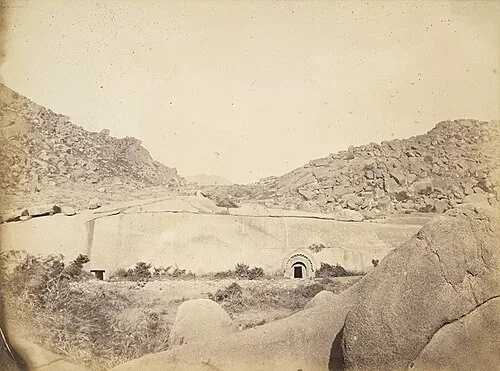 Barabar Hill
Sudama and Lomas Rishi Caves, 1870
Two low doorways in a granite hillside, as they appeared in 1870. Sudama and Lomas Rishi are the two best-known caves on Barabar Hill, and their entrances have changed little since. Through the nineteenth century the site drew a steady trickle of travelers, surveyors and scholars, who came to measure and record the chambers. All of that came long before the hill found a wider audience through fiction. The ridge behind these modest openings hides halls cut well over two thousand years earlier.
Thomas Fraser Peppé · Public domain
03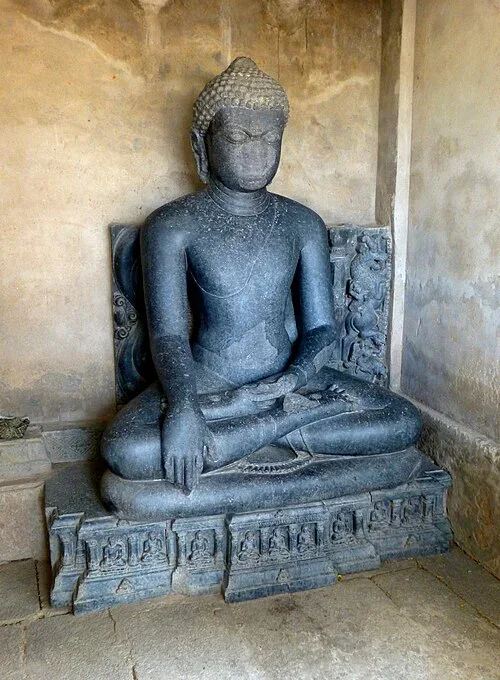 Barabar Hill
Kawa Dol Buddha Statue
A seated Buddha in black stone, hands resting in his lap, on a pedestal carved with rows of small figures. This sculpture belongs to a later chapter of the hill's story. The caves' original ascetic tenants eventually faded away, and other religious traditions left their own marks here. Buddhist and Hindu sculptures and inscriptions from later periods are found across the site. This Buddha is one of them. Exactly when it was carved, and where it first stood, remain open questions.
Listen in the appPhoto Dharma from Penang, Malaysia · CC BY 2.0
04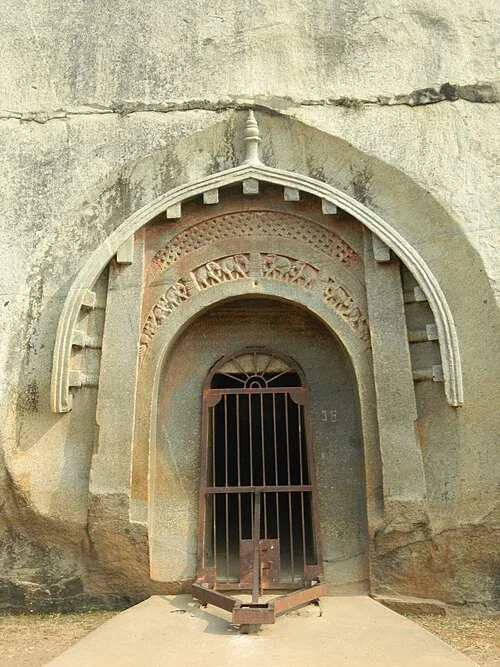 Lomas Rishi Cave
 Entrance
The doorway of the Lomas Rishi Cave is carved straight out of the granite, and it looks like a building made of wood. A curved, ribbed roof-line sweeps up to a finial, imitating the timber architecture of its day. This is the oldest surviving example in India of the ogee-shaped chaitya arch, called the chandrashala. The form was a reproduction in stone of buildings in wood and plant materials, construction that has otherwise rotted away without trace. Here it was made permanent. The chaitya arch became a model for Indian rock-cut architecture for centuries afterwards. Later Buddhist cave builders emulated it, while Hindu and Jain caves largely did not. That has led some to suggest this cave was meant for Buddhists, though no inscription settles the matter. Everything the doorway imitates, the beams and the joinery, survives only because someone cut it into granite.
Listen in the appPhoto: Klaus-Norbert · CC BY 3.0
05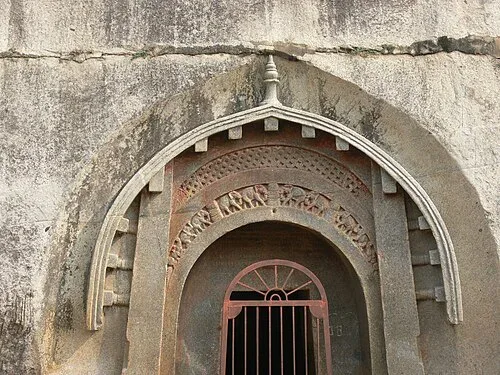 Lomas Rishi Cave
Chaitya Arch Frieze
Along the curved band above the doorway, a line of elephants advances toward stupa emblems. The procession runs along the architrave of the same chaitya arch that makes this facade celebrated. What it shows is the masons at work on a decorative scheme borrowed from wooden buildings. Granite is a punishing stone to carve. Every elephant and every panel of pattern had to be chipped from rock that offers no second chance. That the carvers kept a recognizable, rhythmic row of animals across a curve of granite says a great deal about their skill.
Listen in the appPhoto: Klaus-Norbert · CC BY 3.0
06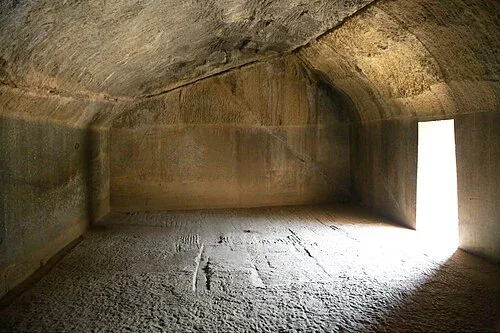 Lomas Rishi Cave
 Interior
Inside, Lomas Rishi is a different cave from its carved front. The chamber follows the same design as the other caves on the hill, but the work stops halfway. The walls are rough, never ground and polished like the halls elsewhere on the hill. The cave also never received a dedicatory inscription. One explanation was that it went unconsecrated simply because it was incomplete. But that theory has a problem. The nearby Visvakarma cave is unfinished too, and Ashoka dedicated it all the same. Consecration could evidently happen while work was still under way. That leaves another possibility open: Lomas Rishi may have been cut after Ashoka's reign entirely. The historian S. P. Gupta even places it under the last Mauryan emperor, Brihadratha, with work stopping abruptly at his assassination in 185 BCE. One detail fits that view: a few rock pikes still stand on the floor, which a few minutes of chipping would have leveled.
Listen in the appDevajyoti Sarkar · CC BY-SA 2.0
07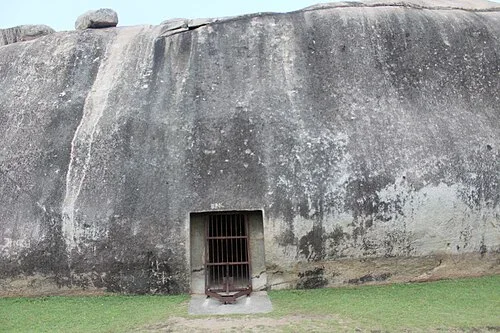 Sudama Cave
 Entrance
Set into the bare southern face of the hill, Sudama Cave opens through a low doorway closed by an iron grille. The tenants these chambers were cut for were not Buddhists and not Jains, but Ajivikas, an order of wandering ascetics. The sect was founded by Makkhali Gosala, a contemporary of both Gautama Buddha and Mahavira, the great teacher of the Jains. The Ajivikas resembled both faiths in many ways, yet their precise identity is not well known. Emperor Ashoka gave this cave to them in the twelfth year of his reign. The inscription at the entrance uses his protocol name, Priyadarsin, meaning he who brings joy. Sources place that year around 261 BCE, though reckonings of Ashoka's reign differ slightly. Of all the caves in the group, Sudama was probably the first one dug.
Listen in the appPhoto: Abhisal2408 · CC BY-SA 4.0
08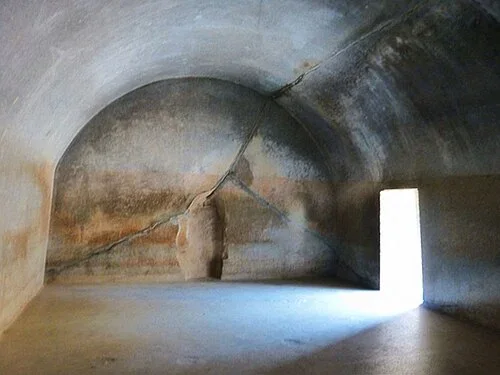 Sudama Cave
 Interior
The walls of this vaulted hall were finished to a mirror shine. Granite is one of the hardest stones there is, and these surfaces were dug out, ground and polished to near perfection. The same finish, known as Mauryan polish, gleams on the pillars and capitals of Ashoka's time. Where the skill came from is a puzzle, because India has no known tradition of stone architecture before this. The leading explanation points to Achaemenid Persia, whose stoneworkers polished on a monumental scale. When Alexander the Great destroyed the Persian empire, Persian and Perso-Greek craftsmen scattered, and their techniques seem to have traveled to India with them. One scholar has also pointed to highly polished stone tools from the region's Neolithic past as a possible local root, though nothing links them directly to these caves. Then the skill was lost. None of the later rock-cut sites, Ajanta among them, ever reproduced these polished surfaces.
Listen in the appArtistically · Public domain
09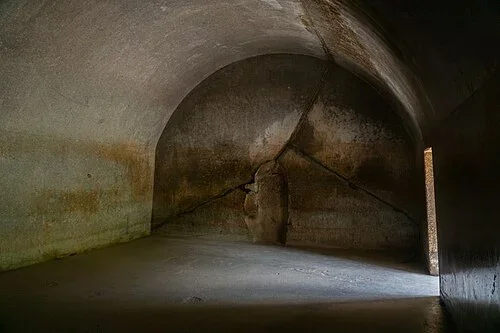 Sudama Cave
 Vaulted Chamber
Sound behaves strangely in Sudama Cave. Beyond a long rectangular hall, a narrow passage leads to a round chamber about six meters across. Its walls are flat planes of polished granite, and they throw the voice back with a pronounced echo, amplifying vibrations and harmonies. An echo like that would have suited chanting, and the ascetics who used the caves may well have sung here. Much later, the caves found a famous literary guest. The English novelist E. M. Forster visited India in 1912 and again in 1921. In A Passage to India, published in 1924, these caves reappear as the fictional Marabar Caves. An ambiguous incident in one of the echoing chambers turns the course of the novel.
Listen in the appPhoto: Sumitsurai · CC BY-SA 4.0
10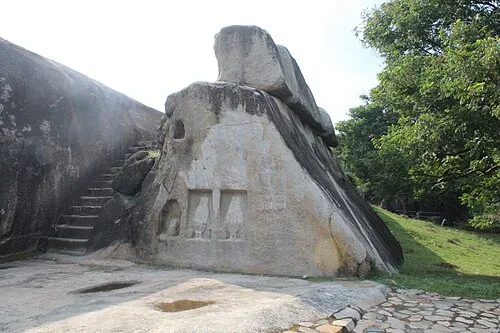 Karan Chaupar Cave
 Entrance
An inscription beside a cave entrance once started a scholarly argument. Karan Chaupar Cave sits on the northern side of Barabar Hill, a single rectangular room with polished surfaces. Outside, immediately to the right of the entrance, runs an inscription of Ashoka from the nineteenth year of his reign, about 250 BCE. E. Hultzsch's translation of 1925 seemed to point to a Buddhist purpose: it appeared to mention vassavasa, the Buddhist practice of retiring indoors for the rainy season. An inverted swastika with an upward arrow at the end of the text looked Buddhist as well. A mound decorated with later Buddhist sculptures near the entrance seemed to confirm it. Then in 2007 the Indologist Harry Falk cleaned the stone and read it afresh. His new reading showed the cave had been dedicated to the Ajivikas, like the other caves on the hill. What the swastika symbol was meant to convey is still debated.
Listen in the appPhoto: Abhisal2408 · CC BY-SA 4.0
- 11
Karan Chaupar Cave Interior
Ashoka's own words explain what these polished halls were built for: shelter through the monsoon.
- 12
Rock-Carved Figures
Weathered figures cut into the rock, traces of the centuries when new faiths took over the hill.
- 13
Visva Jhopa (Visvakarma) Cave
The cave whose inscription records Ashoka's gift, and where rivals later chiselled at the sect's name.
- 14
Gopi Cave (Gopi-ka-Kubha)
The largest cave of the whole complex, dug by Ashoka's grandson for the ascetics his grandfather favored.
- 15
The Climb to Gopi Cave
Bare granite, heat and open country: the landscape that made a cave refuge worth carving.
- 16
Gopi Cave Entrance
A plain trapezoidal doorway that reveals an unusual plan: one hall, rounded at both ends.
- 17
Vadathika Cave Entrance
A small cave hidden in a cleft on the northern face of Nagarjuni Hill.
- 18
Vadathika Cave Inscription
Lines cut into the polished wall by a Maukhari king, centuries after the cave was made.
- 19
Vapiyaka Cave
The 'Well Cave', the last chamber known to have been dedicated to the Ajivikas.
- 20
Vapiyaka Cave Exterior
A quiet hillside doorway, and the long layered life of seven caves in two granite hills.
Barabar Caves
Frequently asked questions
How much does the guide cost?
Free app download. Listed guide price: $2.99. Guide price shown in the app. Audio guide only. Venue admission is separate.
Can I listen without internet?
Yes. Download the guide’s audio, images, and maps in the app before your visit. Your downloaded content is then available offline.
Can I listen in my language?
This audio guide is available in 15 languages, including English.
Do I need to follow a schedule?
No. This is a self-guided experience. Choose your stops, pause whenever you like, and return to a story at your own pace.
At your own pace
Explore Barabar Caves.
Download Stanza, then search for “Barabar Caves”.
Free app download · Guide price shown in the app
Keep exploring
Audio guides — India
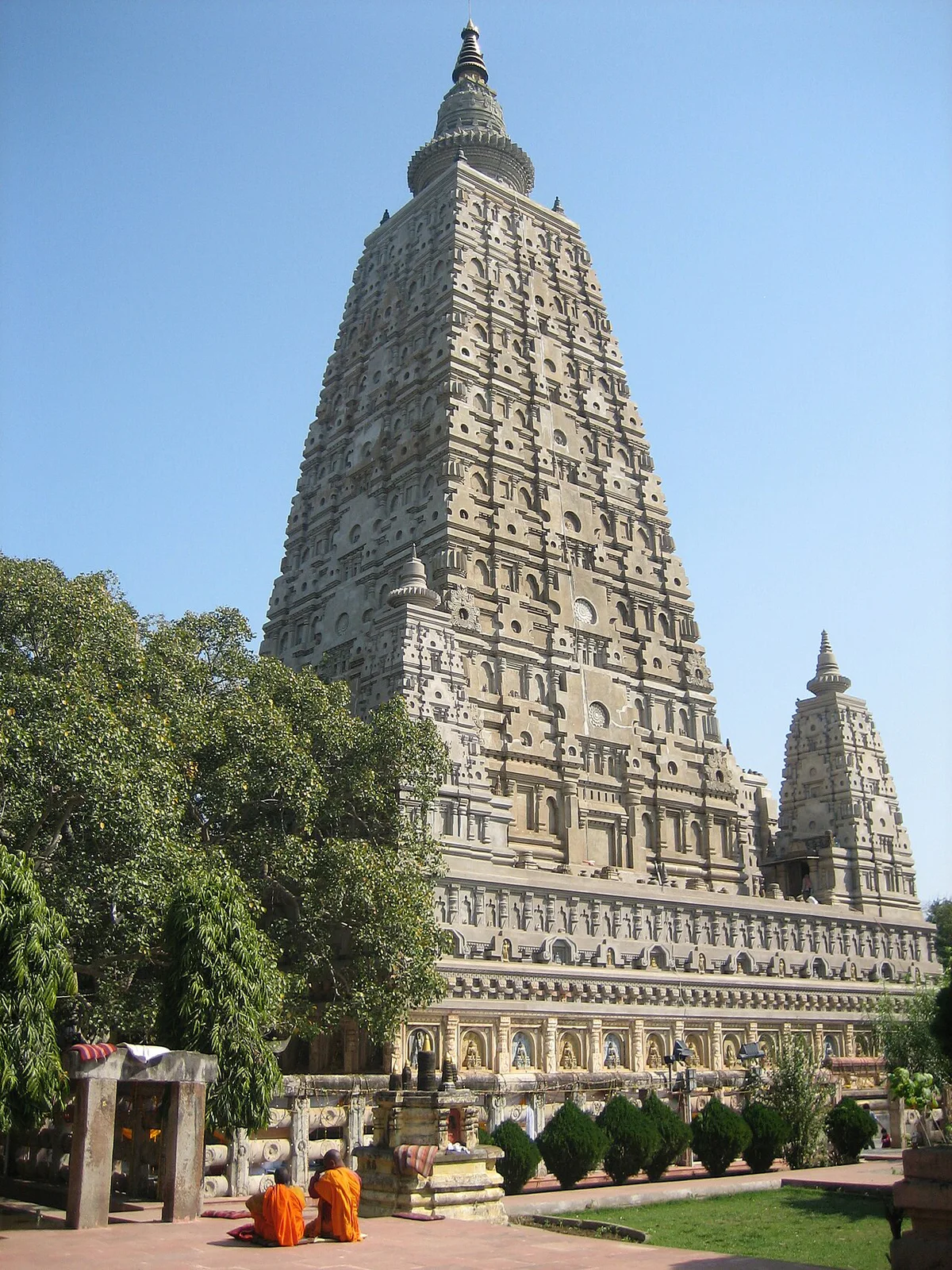
Bodh Gaya · 35 km
Mahabodhi Temple
Content & sources
Photo: Bpilgrim · CC BY-SA 2.5
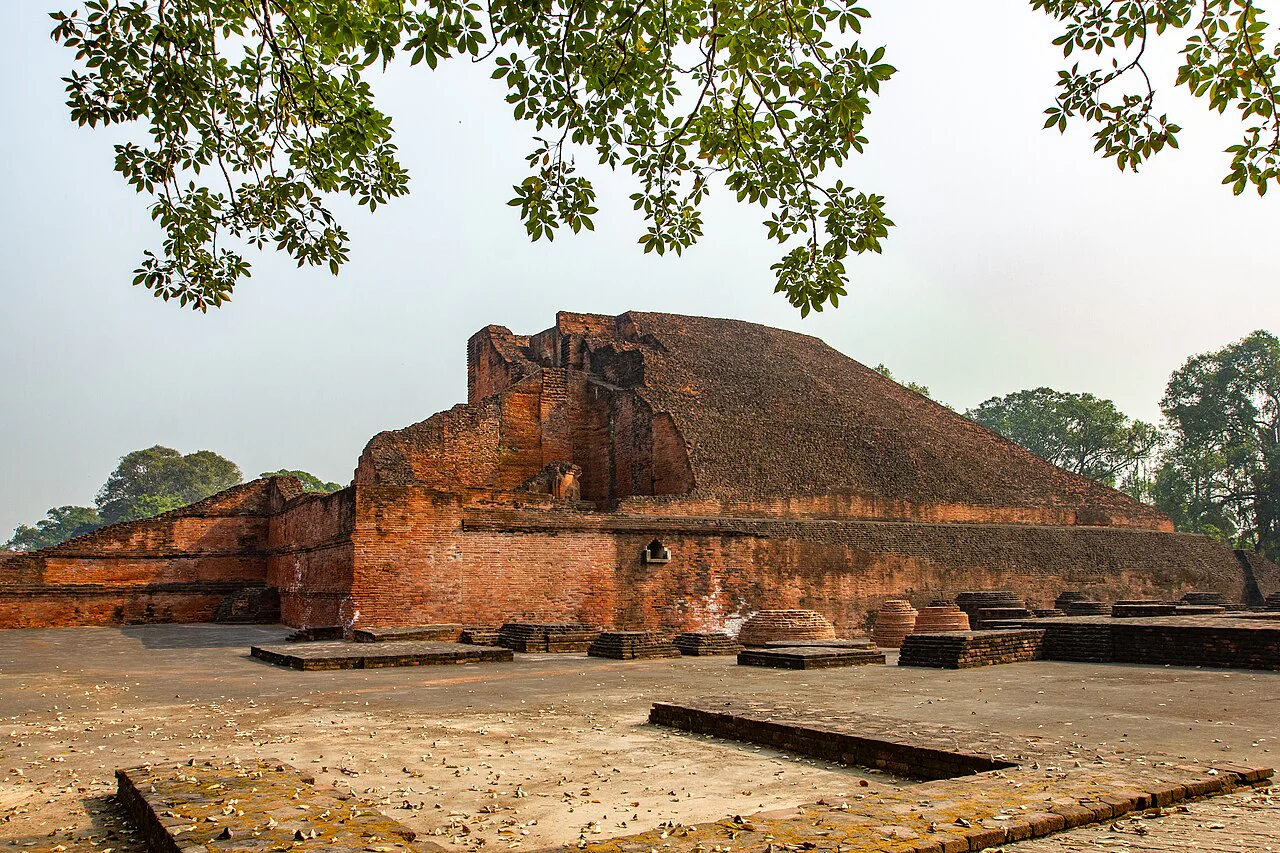
Nalanda · 41 km
Nalanda mahavihara
Content & sources
Photo: Uphogaphy · CC BY-SA 4.0
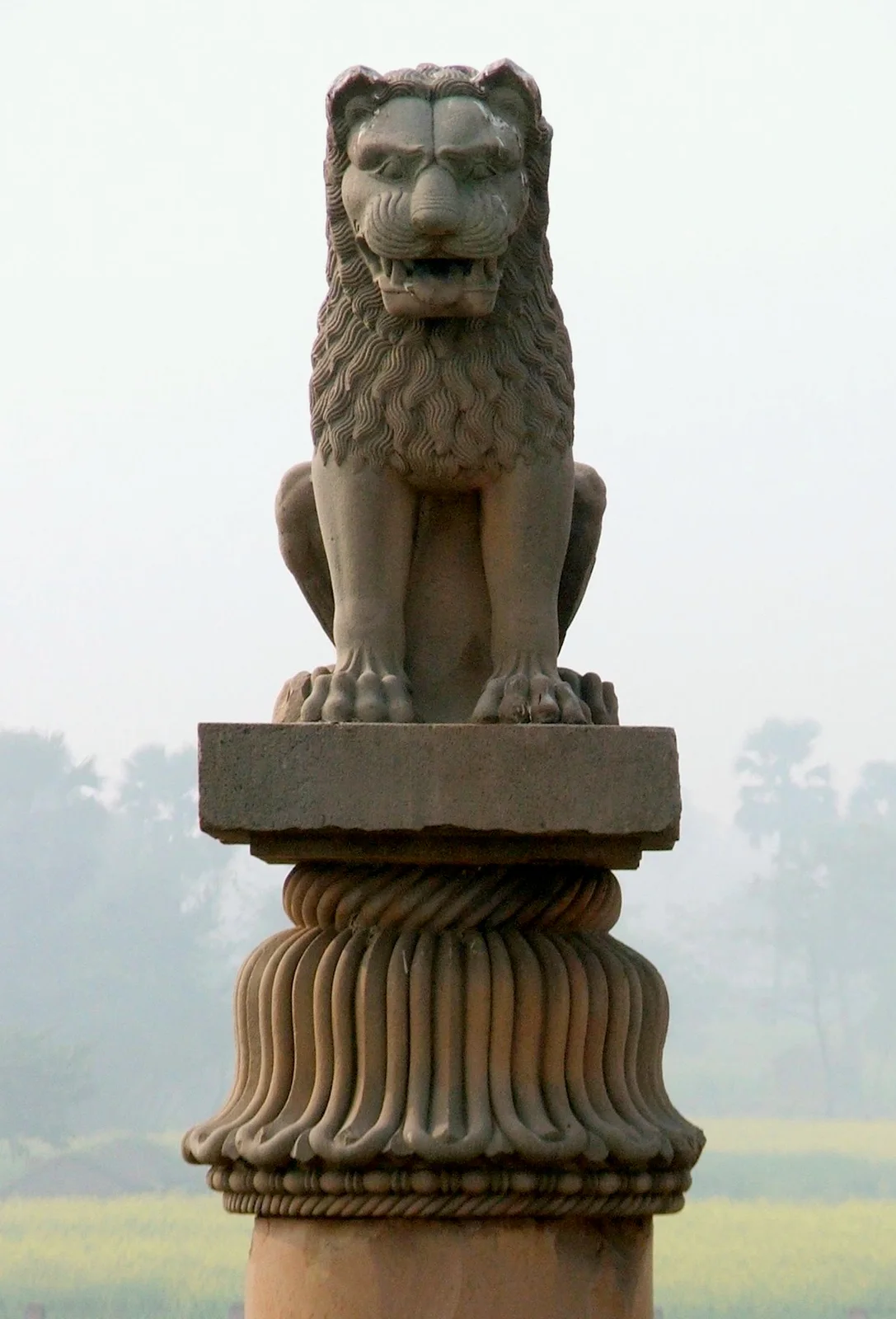
Vaishali · 109 km
Vaishali
Content & sources
mself · CC BY-SA 2.5
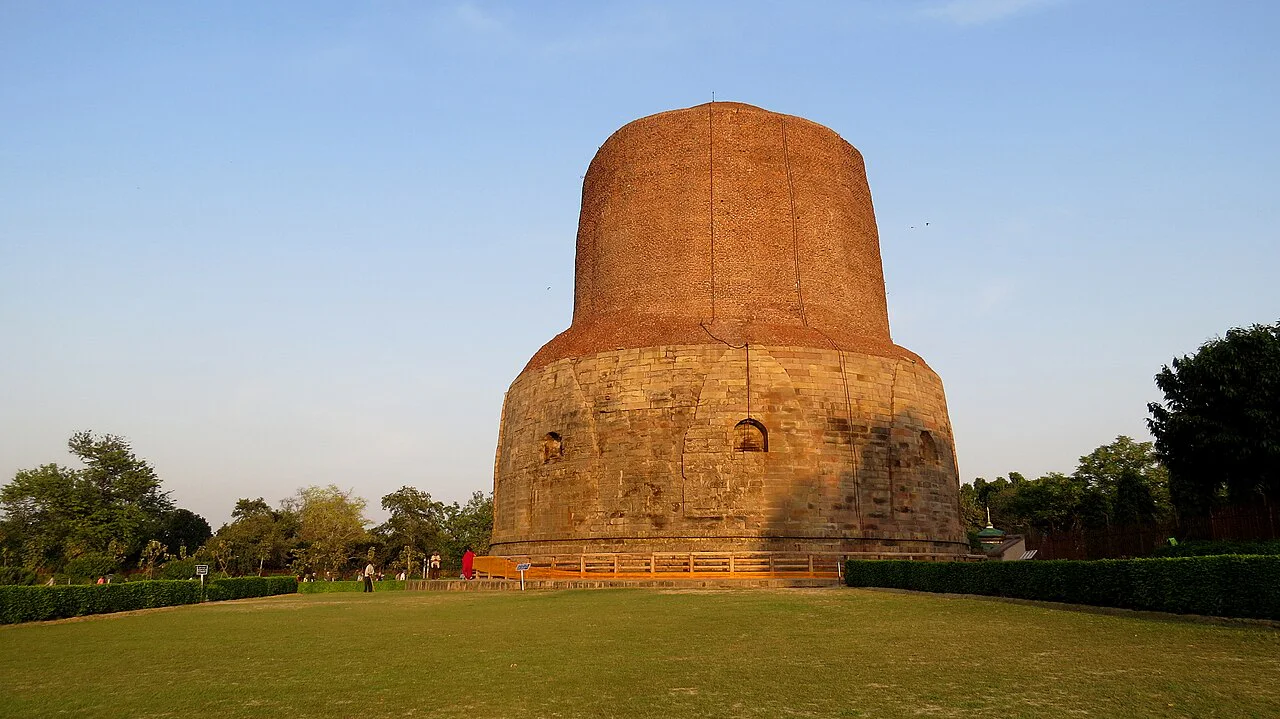
Sarnath
Dhamek Stupa
Content & sources
Photo: Preeti Prajapati · CC BY-SA 4.0