Stanza · Audio guide
Vaishali Audio Guide
A place to remember. A story to take with you.
Vaishali is an ancient city and archaeological site located north of Patna in Bihar, India. It is a significant pilgrimage site for both Jain and Buddhist traditions.
Download Stanza, then search for “Vaishali”.
About the tour
One guide. Your kind of visit.
Vaishali is an ancient city and archaeological site located north of Patna in Bihar, India. It is a significant pilgrimage site for both Jain and Buddhist traditions.
Ready when you are.
- 01Get the free Stanza app.
iOS & Android
- 02Find your guide.
“Vaishali”
- 03Download before you go.
Works offline
Audio guide / 8 narrated stops
Inside the guide
Get to know a few of the stories before you go. Open a stop to read more.
01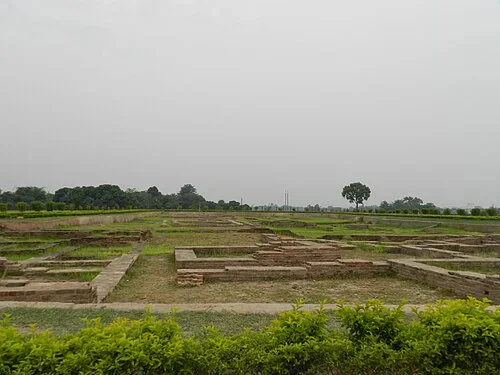 Raja Vishal ka Garh (Ancient Licchavi Citadel)
Raja Vishal ka Garh
Vaishali is an ancient city and archaeological site north of Patna, in Bihar. Buddhists and Jains both treat it as a pilgrimage place. Its ruins spread over a group of modern villages. Around the sixth century BCE, the Licchavis set up their republic here. They faced the rising power of Magadha, to the south of the Ganges. They moved their political centre to Vaishali, making it their largest city, capital and stronghold. Many members of the Videha aristocracy had accepted Licchavi rule. They moved here with the Licchavis, and so joined the ruling aristocratic Assembly. Vaishali was also the capital of the Vajjika League, a union of republics. The League is considered one of the first examples of a republic. The Buddha organised his monastic community, the sangha, on the pattern of Vaishali's democracy. It was here that he first admitted women into the sangha. Mahavira, the twenty-fourth and last Tirthankara of Jainism, was born in Kundagrama. Scholars have identified Kundagrama as a suburb of Vaishali.
Photo: Neilsatyam · CC BY-SA 3.0
02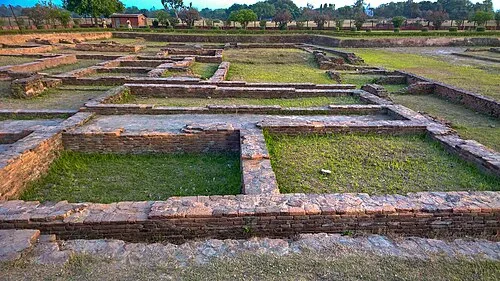 Raja Vishal ka Garh (Ancient Licchavi Citadel)
Raja Vishal ka Garh: Brick Foundations
Local people call this group of ruins Raja Vishal ke Garh, the fort of King Vishal. Rectangular brick walls outline a series of enclosures, with grass growing inside them. A stone course runs along the front edge. The remains are believed to be a citadel, or a palace, from the Vajjika League period. Earlier digs found objects of a pottery type called Northern Black Polished Ware. That pottery period began around 500 BCE. It ended around 200 BCE. The historian Nayanjot Lahiri puts the remains earlier, in the sixth century BCE. The two views do not quite agree. The citadel, and probably Vaishali itself, was deserted by the time of the Later Gupta dynasty, around 600 CE.
Amaan Imam · CC BY-SA 4.0
03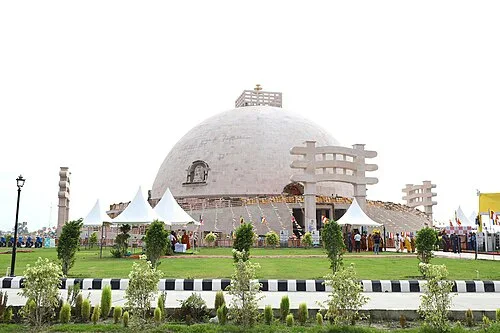 Buddha Samyak Darshan Museum and Memorial Stupa
The Buddha Samyak Darshan Museum and Memorial Stupa is a modern complex, planned as a home for relics of the Buddha. It stands in Vaishali, fifty-five kilometres from Patna. The Bihar state cabinet approved it in 2013. Six years later, in February 2019, Chief Minister Nitish Kumar laid its foundation stone. A large white dome sits on a broad base, set in a green lawn. It is not the same as the older Vaishali Museum. The Archaeological Survey of India set that museum up in 1971 to preserve and display finds from the excavations around the ancient city. A stupa is a domed Buddhist monument. The builders used more than forty thousand sandstone blocks from Rajasthan. They were assembled without modern reinforcements, and the architecture is earthquake-resistant.
Listen in the appInformation and public relations department Government of Bihar · Attribution
04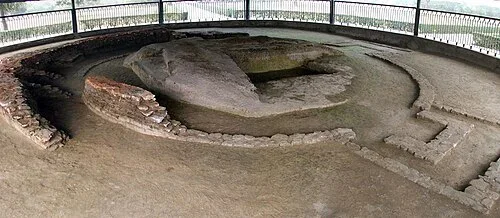 Buddha Relic Stupa
Relic Stupa of Vaishali
After the Buddha's mahaparinirvana, his final departure from the world, the Licchavis, Mallakas and Sakyas all claimed shares of his remains. The Licchavis received one of eight portions. They reverently enclosed it in a stupa, a mound of brick and clay. Tradition holds that it contains the Buddha's ashes. The first structure was about eight metres across at its base. It was later enlarged in four phases. Four platforms were added, pointing toward the compass directions, possibly so that offerings could be placed on them. Archaeologists uncovered the stupa in 1958. Today the circular mound is exposed, with brick walls curving around its edge. The excavators noted that the clay core was older than the Mauryan period. The casket held ashy earth, a piece of gold leaf and a small conch. It also held a copper coin with punch marks and a pair of glass beads. The excavators also found that the relics had been removed at a later date. That would fit a tradition that Ashoka redistributed the Buddha's relics in the third century BCE. The casket has been kept at Patna Museum since 1972.
Listen in the appmyself · CC BY-SA 2.5
05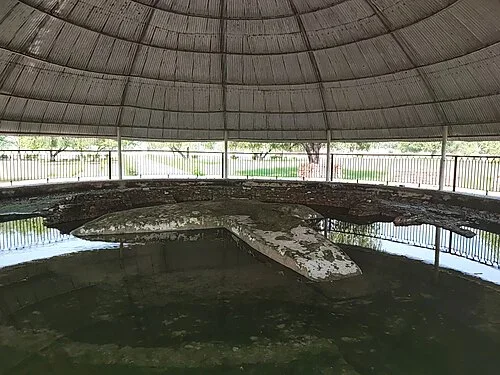 Buddha Relic Stupa
Covered Water Tank by the Relic Stupa
Water fills this round tank, which sits under a roof with ribs that radiate from its centre. A railing runs around the edge, with trees beyond it. A pale stone shape lies partly under the water. The tank is said to be the Abhishek Pushkarini, the coronation tank, and it lies near the Buddha Relic Stupa.
Listen in the appPhoto: Sumitsurai · CC BY-SA 4.0
06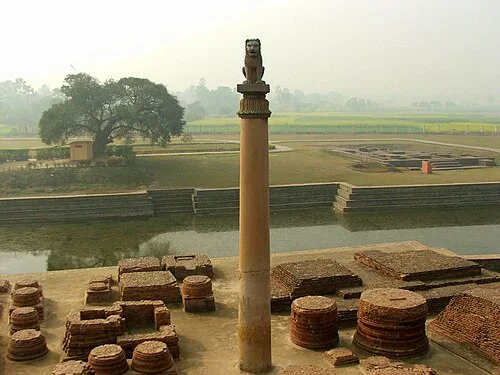 Ashoka Lion Pillar and Kolhua Archaeological Complex
Vaishali Pillar
A column of polished sandstone, about eleven metres tall, is known locally as the Lat. Its shaft rises from a brick base, and the brick foundations of older structures lie around it. Beyond it are a stretch of water, a tree and flat farmland. It is probably one of Ashoka's earliest pillars, dating from the third century BCE. It is also one of the best-preserved of his pillars. Its inscriptions date from the Gupta period. None of them is an edict, a formal announcement from a ruler.
Listen in the appBpilgrim (talk · contribs) · CC BY-SA 2.5
07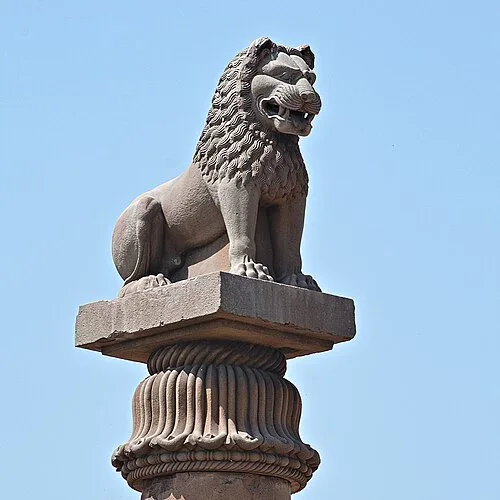 Ashoka Lion Pillar and Kolhua Archaeological Complex
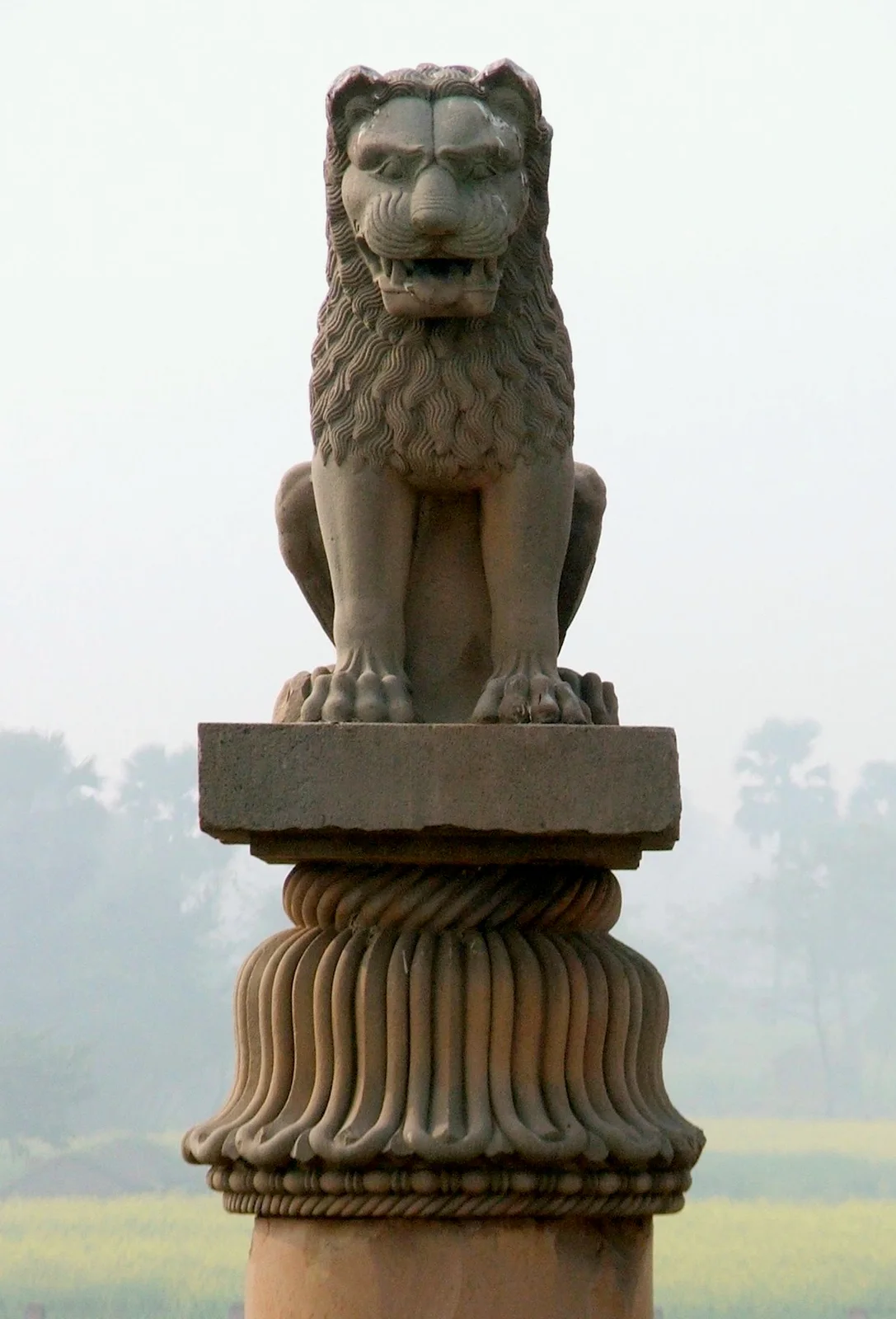
Lion Capital of the Ashokan Pillar
A single Asiatic lion crowns the pillar, seated on a square slab. This top part of a column is called its capital. Its mane is full, and its jaws are open. Below the slab, a bell-shaped base is carved with rows of petals.
Listen in the appRohit Sharma · CC BY-SA 4.0
08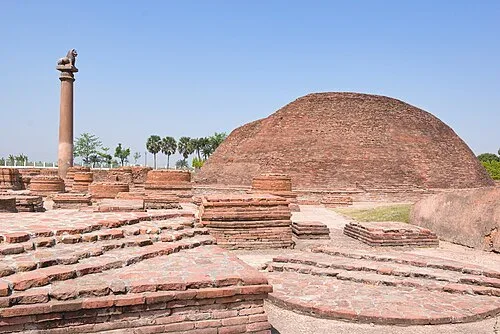 Ashoka Lion Pillar and Kolhua Archaeological Complex
Ananda Stupa, Kolhua
Buddhist tradition tells of a monkey chief who offered honey to the Buddha. A brick stupa was raised to commemorate that offering. It was first built in the Mauryan era. A brick-lined tank called Markat-Hrad is believed to have been dug by monkeys for the Buddha. The large brick dome at Kolhua is known as the Ananda Stupa, beside the Ashokan pillar. Low brick platforms lie around its base, with palm trees behind them. In the Kushan period, a walkway for circling the brick stupa was added. In Gupta times, it was modified once more.
Listen in the appRohit Sharma · CC BY-SA 4.0
Vaishali
Frequently asked questions
How much does the guide cost?
Free app download. Listed guide price: $0.99. Guide price shown in the app. Audio guide only. Venue admission is separate.
Can I listen without internet?
Yes. Download the guide’s audio, images, and maps in the app before your visit. Your downloaded content is then available offline.
Can I listen in my language?
This audio guide is available in 15 languages, including English.
Do I need to follow a schedule?
No. This is a self-guided experience. Choose your stops, pause whenever you like, and return to a story at your own pace.
At your own pace
Explore Vaishali.
Download Stanza, then search for “Vaishali”.
Free app download · Guide price shown in the app
Keep exploring
Audio guides — India
Nalanda · 100 km
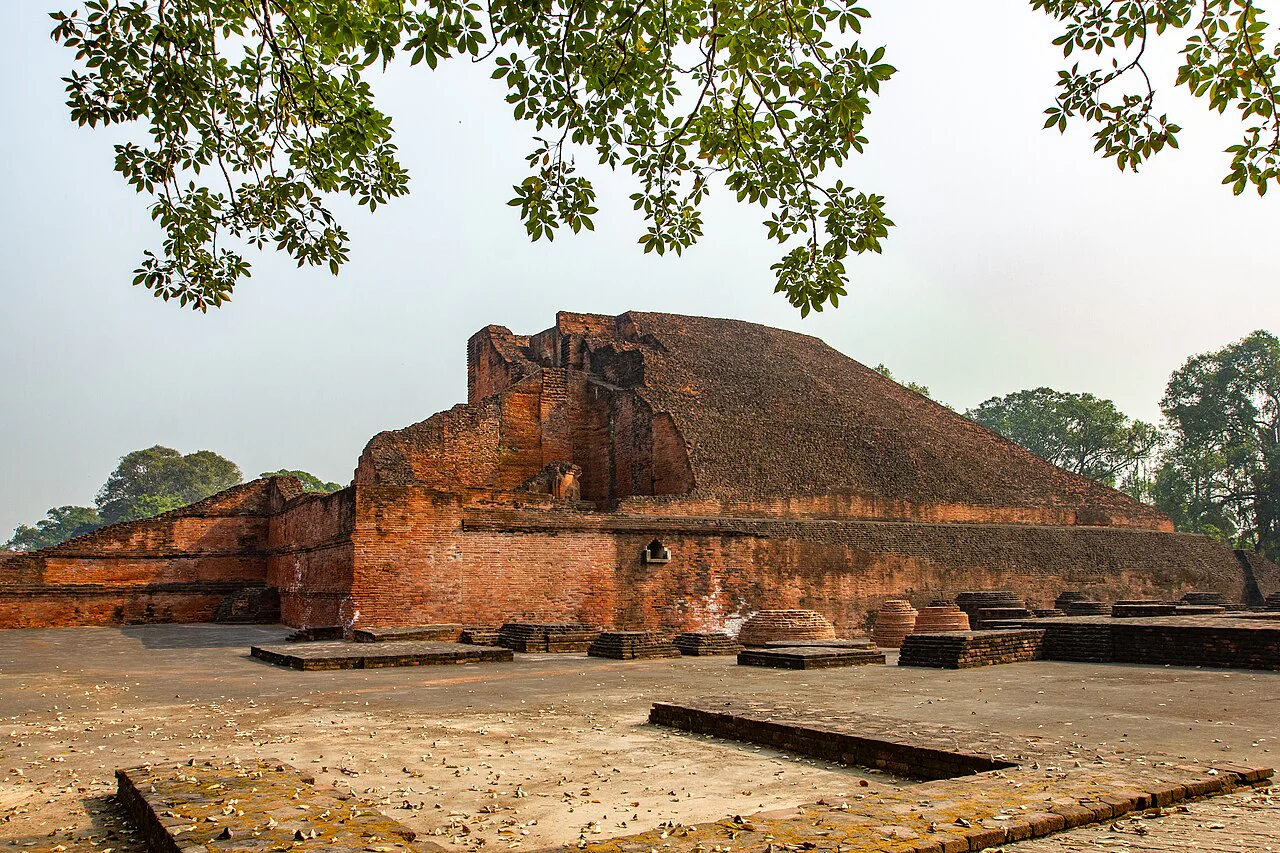
Nalanda mahavihara
Content & sources
Photo: Uphogaphy · CC BY-SA 4.0
Makhdumpur · 109 km
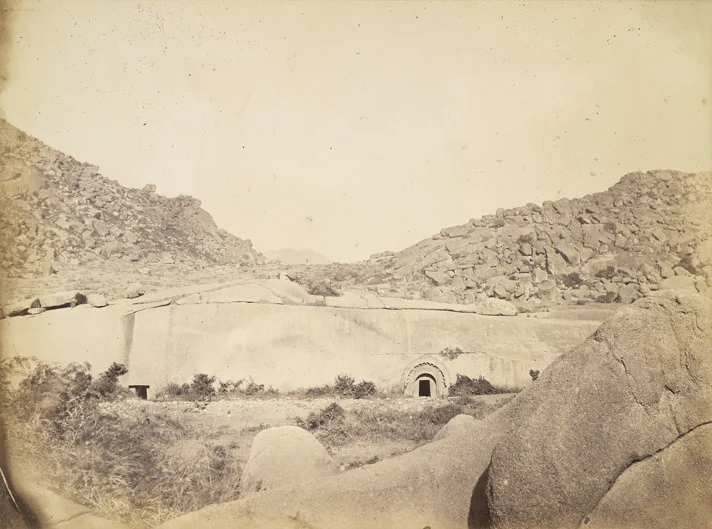
Barabar Caves
Content & sources
Thomas Fraser Peppé · Public domain
Bodh Gaya · 144 km
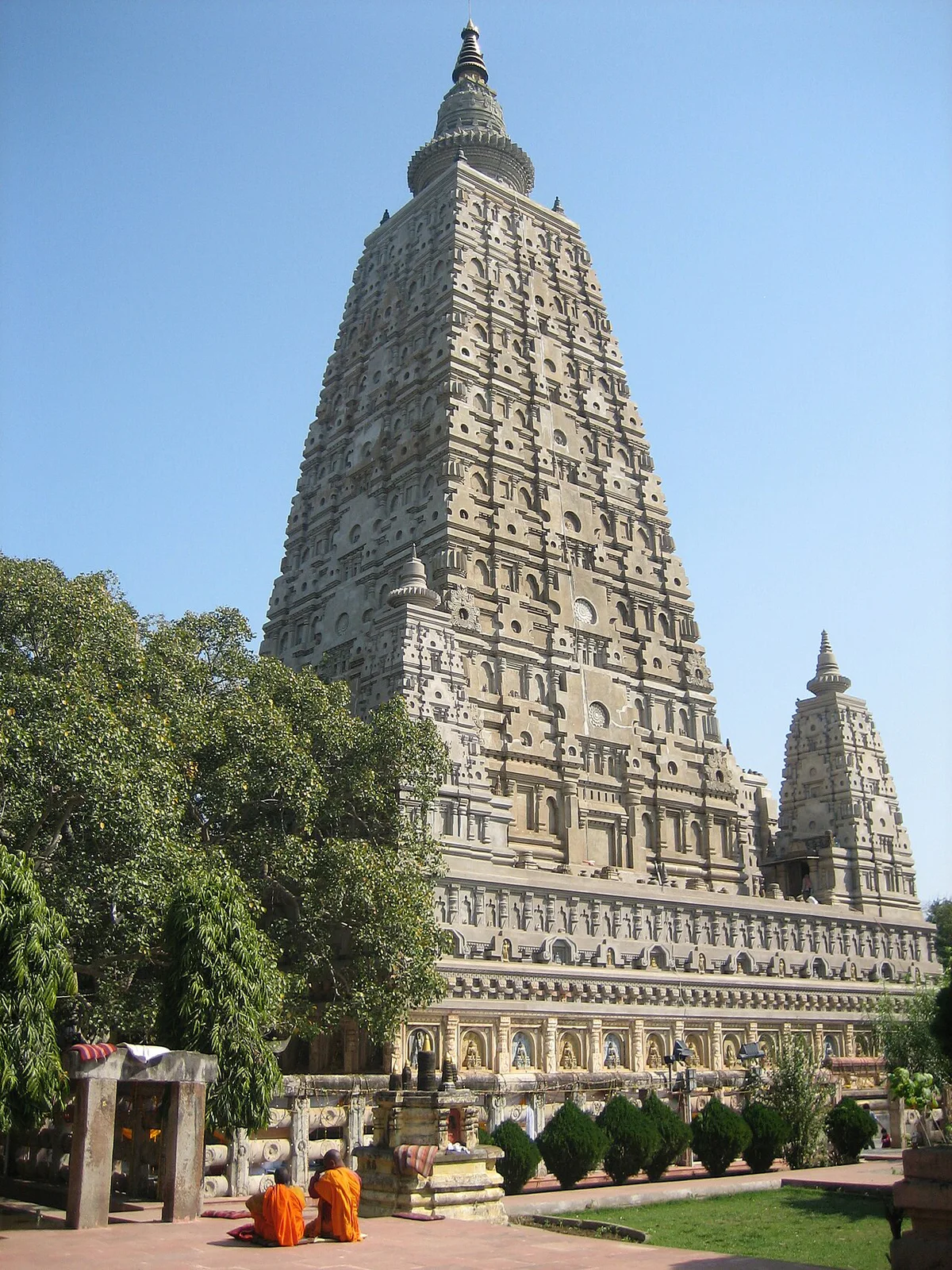
Mahabodhi Temple
Content & sources
Photo: Bpilgrim · CC BY-SA 2.5
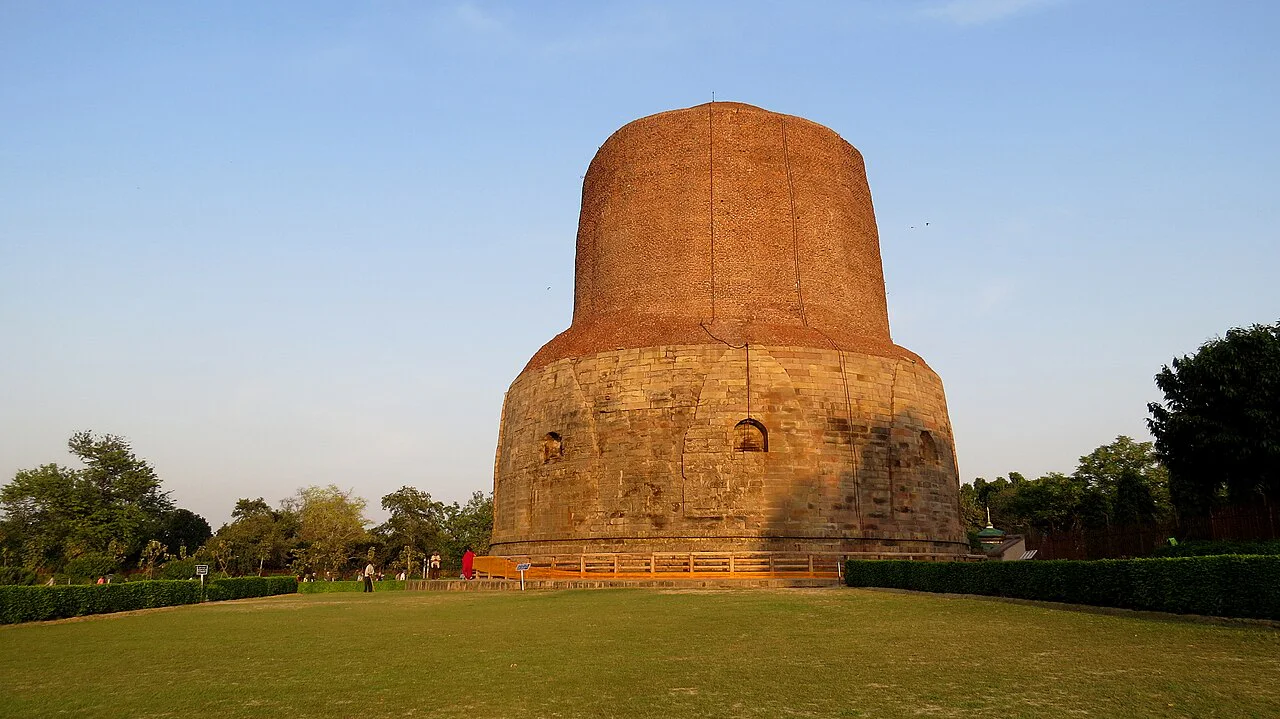
Sarnath
Dhamek Stupa
Content & sources
Photo: Preeti Prajapati · CC BY-SA 4.0