Stanza · Audio guide
Humayun's tomb Audio Guide
A place to remember. A story to take with you.
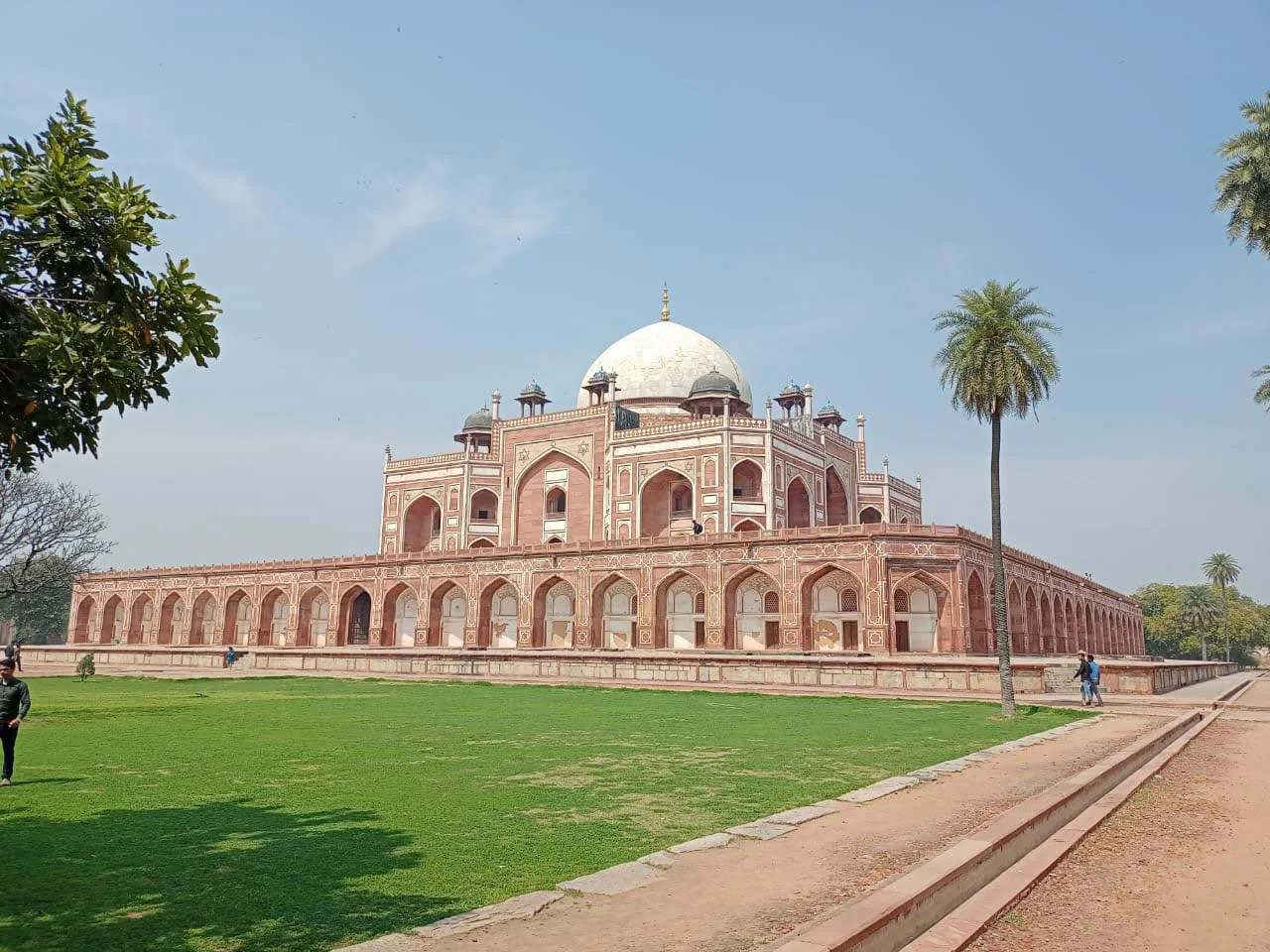
Humayun's tomb is the tomb of the Mughal Emperor Humayun located in Delhi, India. It was the first garden-tomb on the Indian subcontinent and the first structure to use red sandstone at such a scale.
Download Stanza, then search for “Humayun's tomb”.
About the tour
One guide. Your kind of visit.
Humayun's tomb is the tomb of the Mughal Emperor Humayun located in Delhi, India. It was the first garden-tomb on the Indian subcontinent and the first structure to use red sandstone at such a scale.
Ready when you are.
- 01Get the free Stanza app.
iOS & Android
- 02Find your guide.
“Humayun's tomb”
- 03Download before you go.
Works offline
Audio guide / 32 narrated stops
Inside the guide
Get to know a few of the stories before you go. Open a stop to read more.
01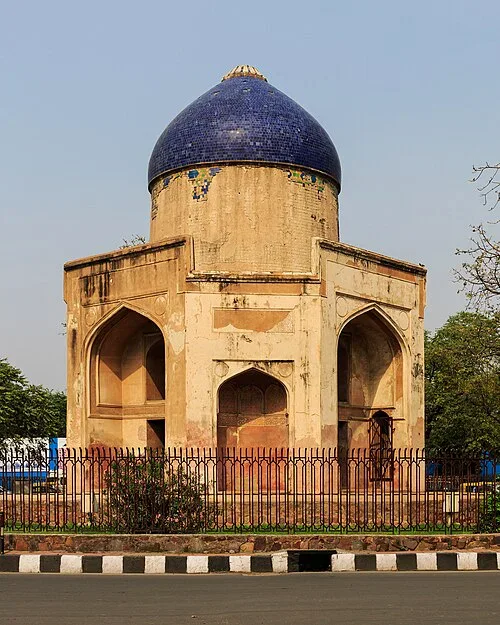 Subz Burz
An octagonal tomb stands on the traffic island outside the complex, its dome sheathed in deep blue tiles. It is thought to date from the early 1530s, before the great Mughal mausoleum nearby was ever conceived. The blue and green glazed tilework on its walls counts among the earliest surviving in Delhi. That matters, because it shows this ground was already a burial place for nobles before any emperor claimed it. Who raised this tomb, and for whom, is not known. It simply stood here first, watching the road while the grander monuments rose around it.
Photo: A.Savin · FAL
02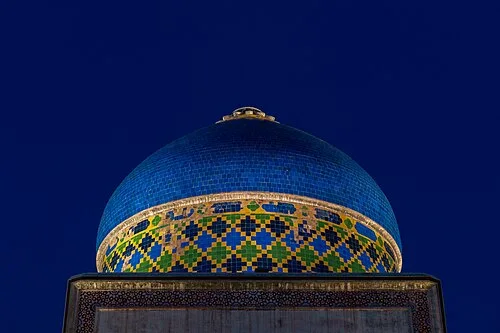 Subz Burz
 Dome Close-Up
The dome's tiles form a repeating star-and-cross pattern, each star a deep blue and the fields around it green and yellow. Near the base of the dome, the pattern opens into bolder diamonds of colour. Glazed tilework of this kind came to India out of the Persian and Timurid world, where dome after dome in Samarkand and beyond wore the same shining skin. Here it survives on a modest noble's tomb, fired piece by piece and set by hand. Each tile had to be cut and coloured before the kiln decided its final shade.
Photo: Arjunfotografer · CC BY-SA 4.0
03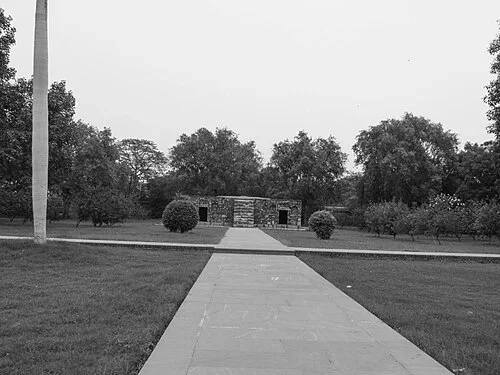 Bu Halima's Tomb
Coming from the west, this is the first garden of the complex, and its tomb is among the plainest here. The woman it commemorates is called Bu Halima, though almost nothing about her survives. Some accounts place her at Humayun's court as a noblewoman, but the record is thin. One odd detail hints at her building's age: the tomb, or the raised platform where it once stood, sits off-centre in the garden. A founder's monument usually holds the middle. Its position suggests it was added to a garden that already existed. Not every grave in this precinct carries a remembered name.
Listen in the appPhoto: Akshatha Inamdar · CC BY-SA 4.0
04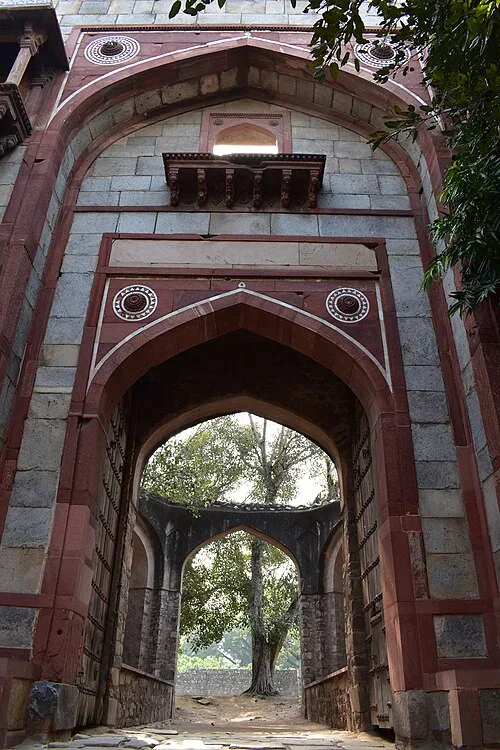 Bu Halima Enclosure Gateway
Arab Sarai and Abadi-Bagh-Buhalima Gateways
This tall arched gateway is one of the thresholds in a chain of walled precincts on the western side, linking the outer entrance to Bu Halima's garden and the Arab Serai beyond. The arch is edged with rubbed red stone, and round decorative medallions sit at its corners. Higher up, a small carved balcony window, a jharokha, projects from the wall. A second arch frames the view through, so the gate reads as a doorway within a doorway. Passing through it means crossing from one enclosure into another, exactly as the precinct's walls intended.
Listen in the appPhoto: Aman Pandey1602 · CC BY-SA 4.0
05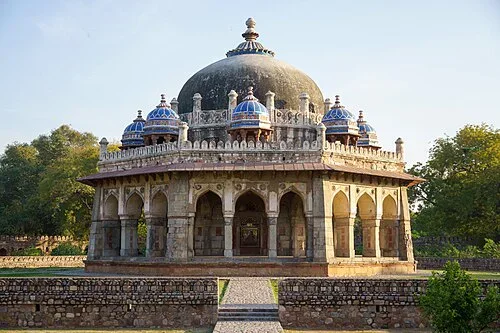 Tomb of Isa Khan
This octagonal tomb was built in 1547, eighteen years before the main mausoleum of the complex. Its occupant, Isa Khan Niyazi, was an Afghan noble at the court of Sher Shah Suri, whose Sur Empire drove the Mughals out of India for a time. The tomb stands in its own octagonal walled garden, raised during Isa Khan's lifetime under Sher Shah's son, Islam Shah. Its shape and proportions belong to the family of Sur-era tombs in Delhi's Lodi Gardens. Yet the idea it carries, a tomb set within a walled garden, reappears at the main mausoleum on a far grander scale. The rivals' builders were watching each other.
Listen in the appPhoto: Arjunfotografer · CC BY-SA 4.0
06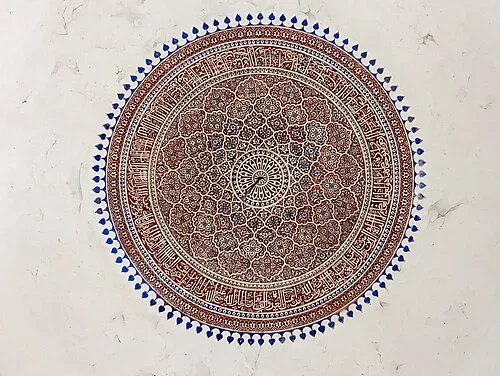 Tomb of Isa Khan
Isa Khan's Tomb — Painted Dome Ceiling
The inside of the dome carries a single great painted medallion, filling the circle from rim to centre. A band of calligraphy runs around its edge, and within it the ornament turns dense and floral, worked in red, white and blue. This is the finished interior of a Sur-era noble's tomb, painted eighteen years before the imperial mausoleum rose nearby. The workmanship shows how polished court decoration already was under the Surs. The words in the calligraphic band are not spelled out for visitors, but the pattern still reads clearly from below.
Listen in the appPhoto: Sourabh.biswas003 · CC BY-SA 4.0
07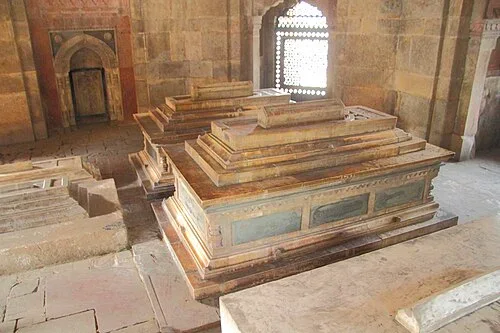 Tomb of Isa Khan
Inside Isa Khan's Tomb
The chamber holds a group of stone gravestones, their surfaces polished and plain. Isa Khan's tomb was built during his own lifetime, and after his death it kept working. It became the burial place of his entire family, a dynastic vault in miniature. The graves carry no names that identify them today, so who lies beneath each stone is uncertain. What is clear is the habit: one noble's tomb became the resting place for a whole line. The same habit, on an imperial scale, would later earn the great mausoleum nearby a name of its own.
Listen in the appPhoto: Rabe! · CC BY-SA 4.0
08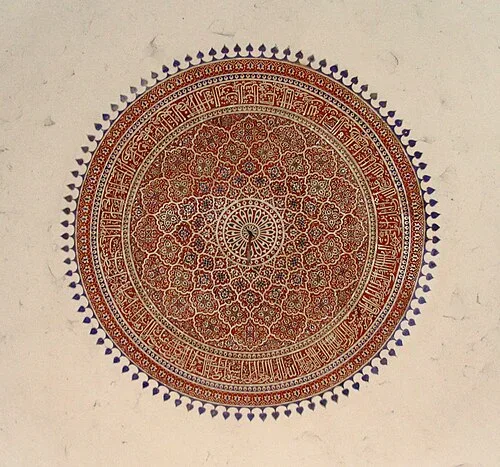 Tomb of Isa Khan
Isa Khan's Tomb — Dome Ceiling, Closer View
Seen head-on, the ceiling medallion resolves into rings, closing on a small central boss. From this angle the painter's discipline shows best, each ring keeping its own width all the way round.
Listen in the appPhoto: Rabe! · CC BY-SA 4.0
09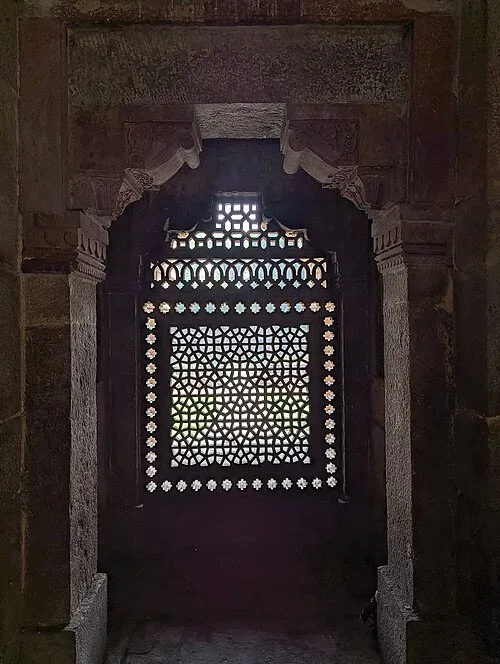 Tomb of Isa Khan
Isa Khan's Tomb — Jali Window
Set into the wall is a jali, a screen of stone pierced into openwork. Against the shadow of the chamber it glows, the pattern a lattice of stars and rosettes edged with small carved flowers. Screens like this did quiet work in Indo-Islamic tombs of the era, breaking harsh sunlight into soft patterns and letting air move through the rooms. The craft did not stop here. At the main mausoleum of the complex, the lattice grows far finer, wrapping whole walls in stone lace.
Listen in the appPhoto: Sourabh.biswas003 · CC BY-SA 4.0
10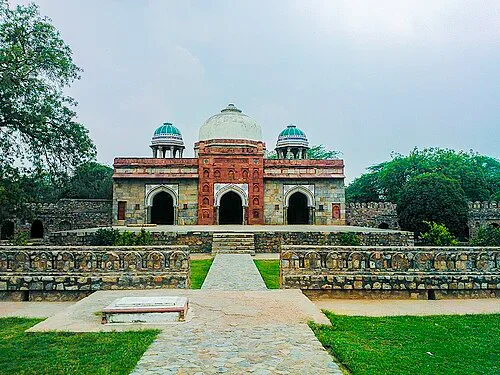 Mosque of Isa Khan
On the western side of Isa Khan's enclosure stands a mosque of three arched bays, built in red sandstone with a dome rising at its centre. It was built around 1547, alongside the tomb itself. That pairing tells the plan of the precinct: prayer belonged to this noble's funerary ground from the very start. The mosque faces his tomb within the octagonal garden wall, so mourners and visitors moved between the two. It remains one of the oldest standing buildings in the whole complex.
Listen in the appNahid Sultan · CC BY-SA 4.0
- 11
Isa Khan's Mosque — Mihrab
The carved mihrab niche of Isa Khan's mosque, which showed worshippers the way to Mecca.
- 12
Arab Sarai Gateway, North Facing
A fourteen-metre portal of red stone and blue tiles that opens the way into the Arab Serai quarter.
- 13
Arab Serai
The walled resthouse Empress Bega Begum built for the people and carts of the tomb-building campaign.
- 14
Inside the Arab Serai
Inside the serai: vaulted bays that sheltered travelers, animals and stores.
- 15
Arab Sarai Gateway, East Facing
The east gateway of 1612, added under Jahangir, opening onto a bazaar for travelers and pilgrims.
- 16
Afsarwala Mosque
A three-bayed mosque of 1566, sharing a raised terrace with the tomb of an unnamed officer.
- 17
Afsarwala Tomb
An octagonal tomb of 1566–67 for a high-ranking officer whose name has not survived.
- 18
Afsarwala Tomb — Facade View
The clean facade of the Afsarwala Tomb, where red sandstone and pale marble echo the imperial palette.
- 19
Bu Halima Gate and the Garden's Fortunes
How the paradise garden decayed into vegetable plots, and how it was twice brought back to life.
- 20
Gateway Detail — Tile Medallion and Jharokha
A blue tile medallion and a carved jharokha balcony that lighten a massive gateway front.
- 21
Humayun's Tomb — The Empress's Commission
How Empress Bega Begum commissioned the first grand garden-tomb on the subcontinent, finished in 1572.
- 22
Humayun's Tomb — Facade and the New Imperial Style
The facade that fused red sandstone with white marble and pointed the way to the Taj Mahal.
- 23
The Charbagh — Paradise in Water and Stone
The walled paradise garden of thirty acres, its water channels vanishing beneath the tomb and rising again beyond it.
- 24
Inside the Mausoleum — The Ninefold Chamber
Beneath the dome, a hidden world of 124 chambers, an emperor's cenotaph, and the riches a merchant saw here in 1611.
- 25
Dormitory of the Mughals and the Fall of the Dynasty
More than a hundred Mughal graves gather here, and in 1857 the last emperor was captured within these walls.
- 26
Barber's Tomb (Nai-ka-Gumbad)
The only other building in the imperial enclosure honours someone important enough to lie beside the emperor, and no one knows who.
- 27
Barber's Tomb — Interior
Two unnamed graves behind a glowing lattice screen, and one watercolour that may point to a foster-brother of the emperor.
- 28
Nila Gumbad
A dome of vivid blue glazed tiles outside the eastern wall, raised by a great courtier for the servant who died beside his son.
- 29
Nila Gumbad — Dome Interior
Looking up into the Blue Dome, where painted plaster lines interlace around a central medallion.
- 30
Bara Batasha
The arcaded tomb of Humayun's grand nephew, its painted walls now facing a car park.
- 31
Bara Batasha — Painted Ceiling
An eight-pointed star in red, white and blue, with flowering arabesques spilling across the plaster.
- 32
Unknown Tomb, Ghaispur
A well-preserved sixteenth-century tomb that has lost even its name, one of the anonymous memorials around the great mausoleum.
Humayun's tomb
Frequently asked questions
How much does the guide cost?
Free app download. Listed guide price: $2.99. Guide price shown in the app. Audio guide only. Venue admission is separate.
Can I listen without internet?
Yes. Download the guide’s audio, images, and maps in the app before your visit. Your downloaded content is then available offline.
Can I listen in my language?
This audio guide is available in 15 languages, including English.
Do I need to follow a schedule?
No. This is a self-guided experience. Choose your stops, pause whenever you like, and return to a story at your own pace.
At your own pace
Explore Humayun's tomb.
Download Stanza, then search for “Humayun's tomb”.
Free app download · Guide price shown in the app
Keep exploring
Nearby audio guides
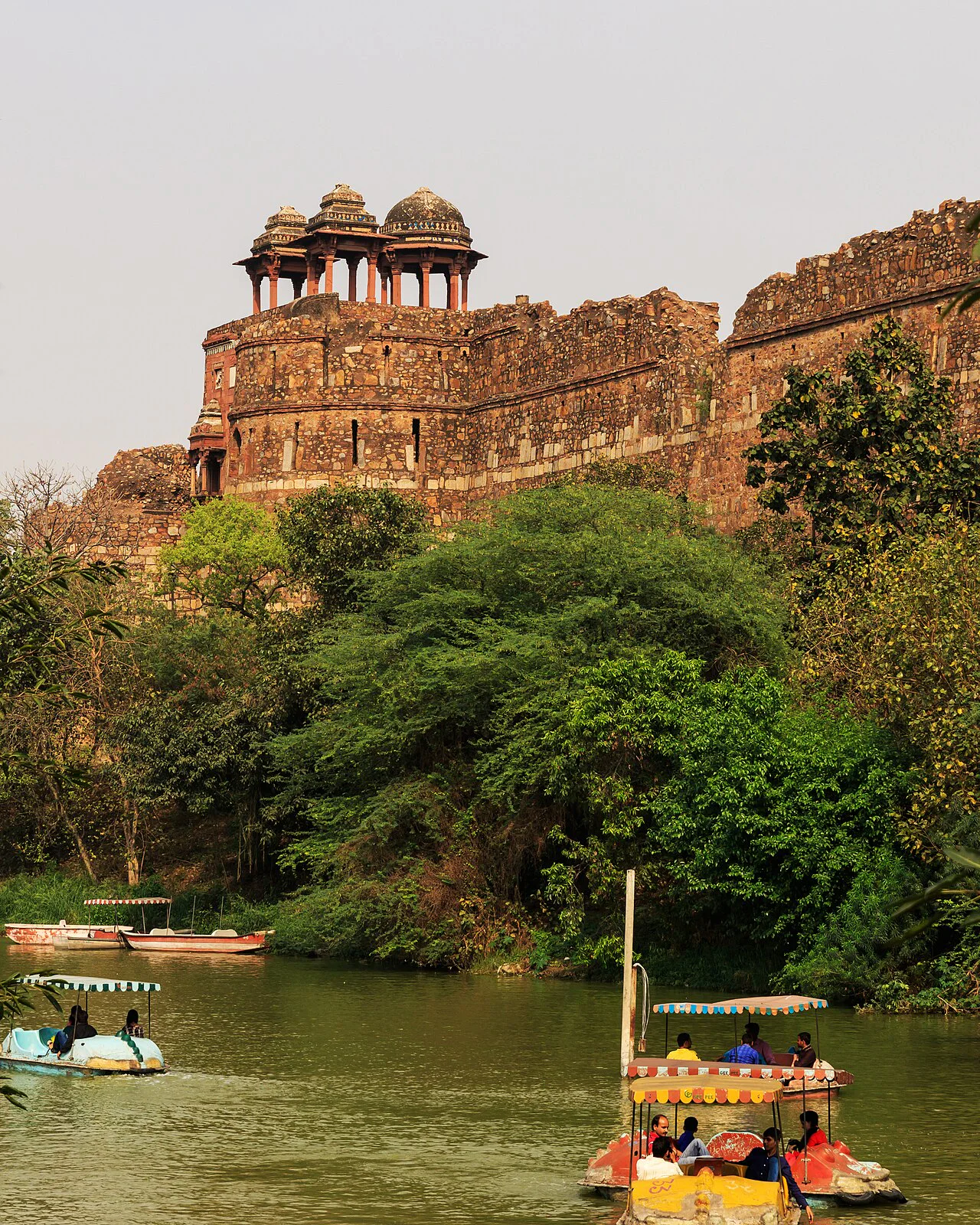
Delhi · 2 km
Purana Qila
Content & sources
Photo: A.Savin · FAL
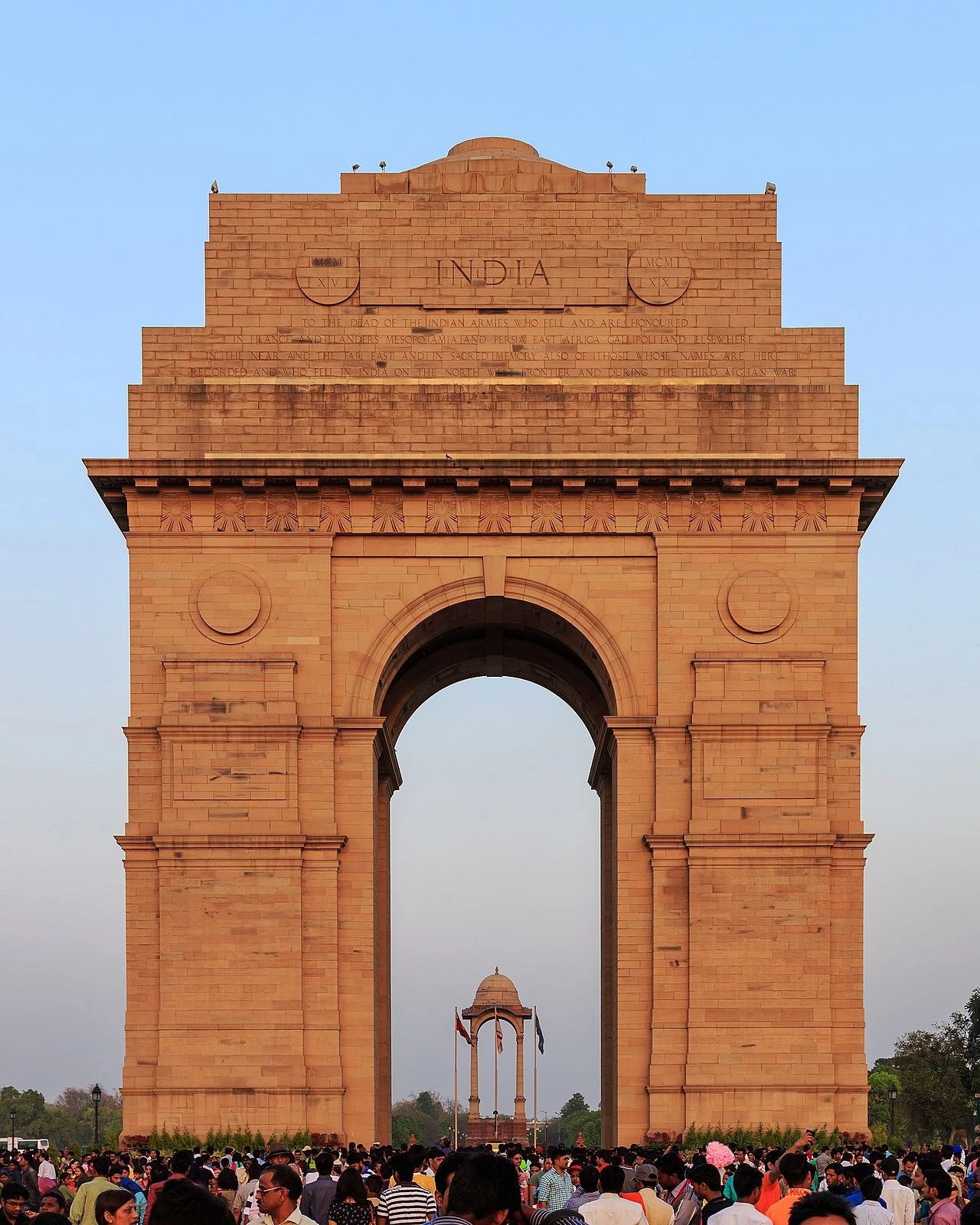
New Delhi · 3 km
India Gate
Content & sources
Photo: A.Savin · FAL
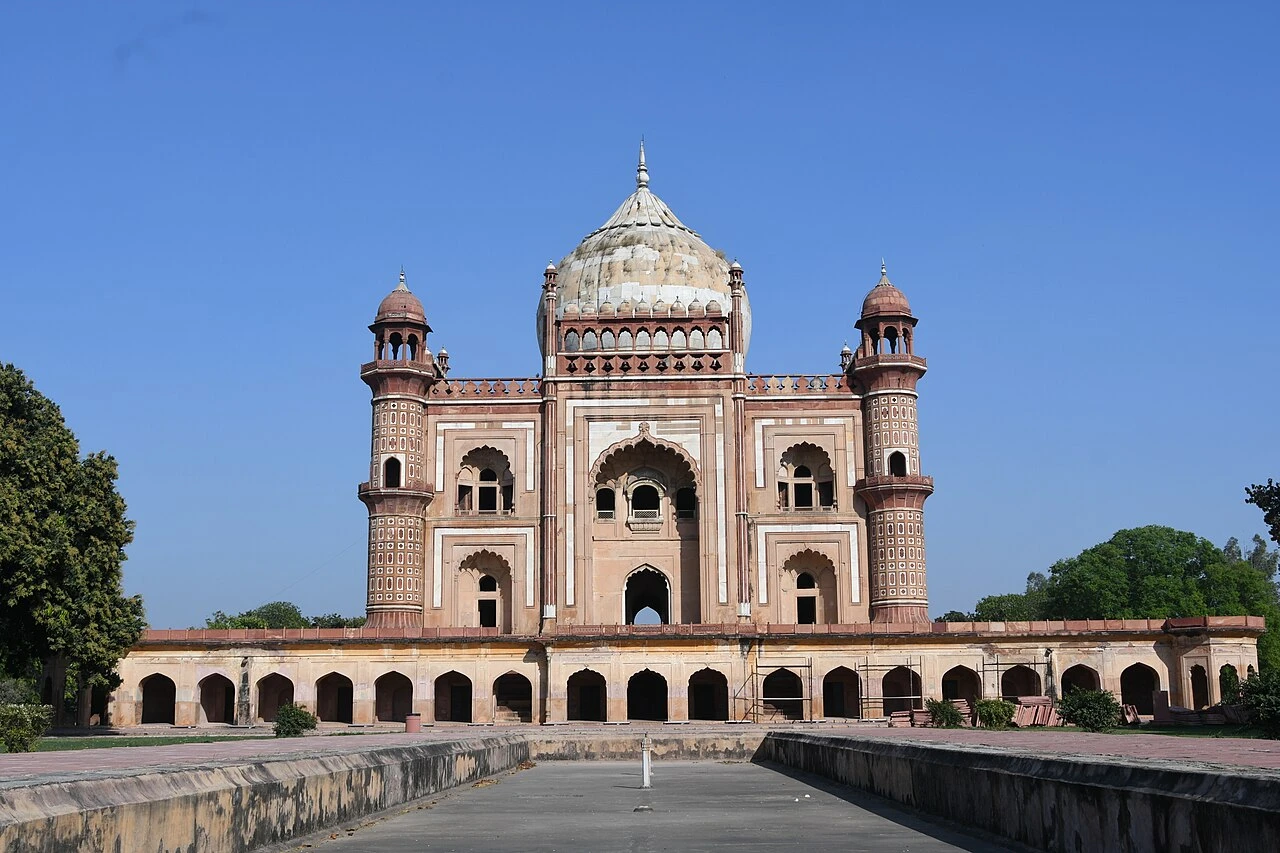
New Delhi · 4 km
Safdarjung's Tomb
Content & sources
Shagil Kannur · CC BY-SA 3.0
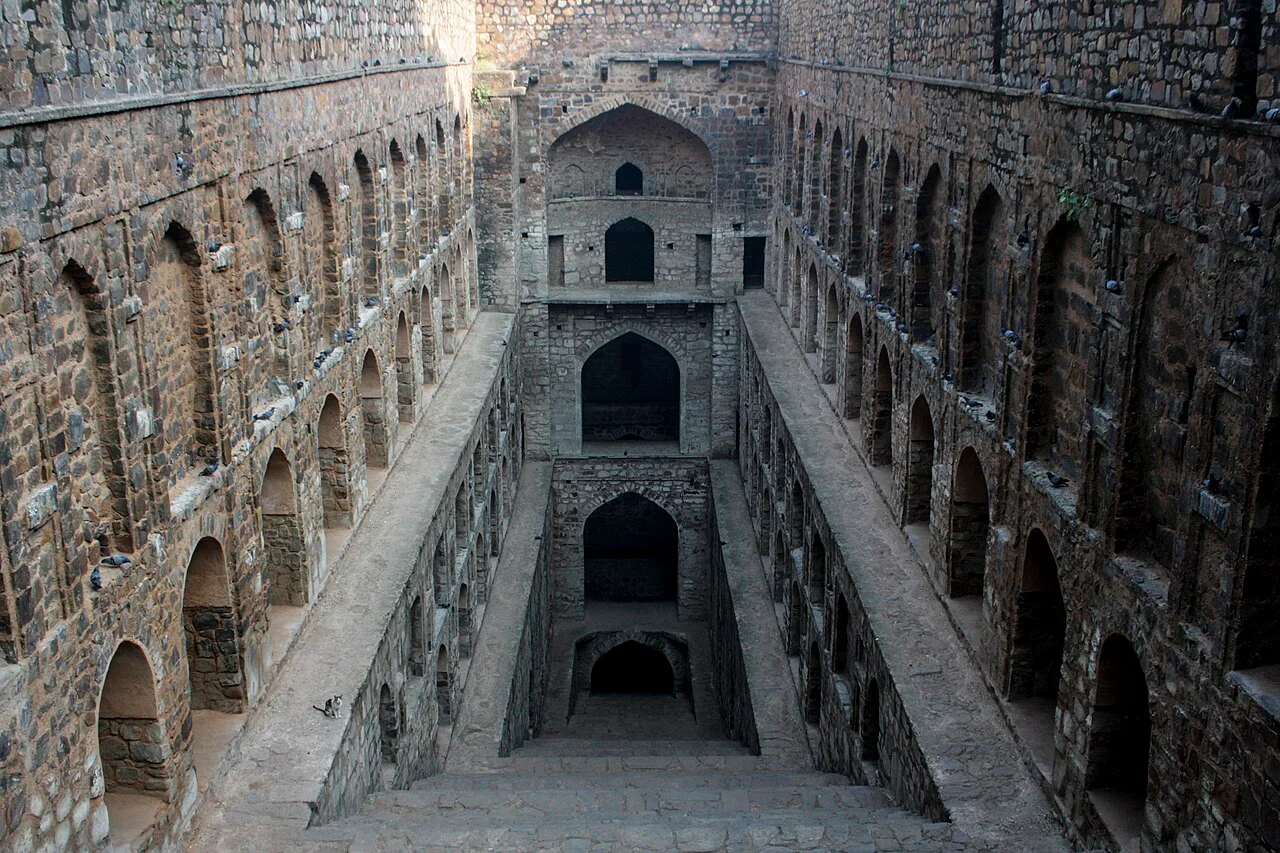
New Delhi · 4 km
Agrasen Ki Baoli
Content & sources
Indrajit Das · CC BY-SA 4.0
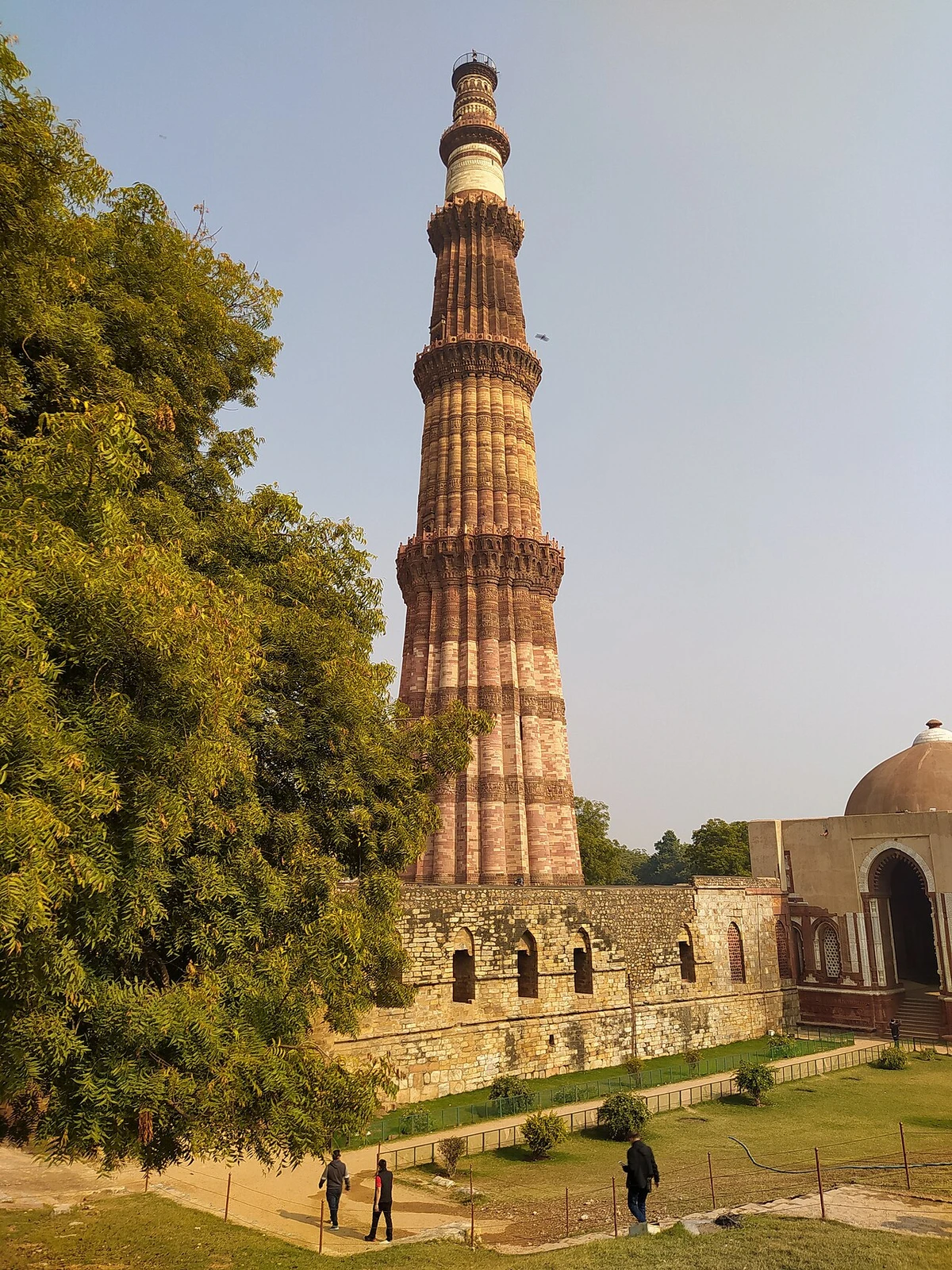
Delhi · 10 km
Qutb Minar
Content & sources
Photo: Akbarzoda · CC BY-SA 4.0