Stanza · Audio guide
Cheraman Juma Mosque Audio Guide
A place to remember. A story to take with you.
The Cheraman Juma Mosque is a mosque located in Kodungallur, India. It is often regarded as the first mosque built in India and the oldest mosque on the Indian subcontinent still in use.
Download Stanza, then search for “Cheraman Juma Mosque”.
About the tour
One guide. Your kind of visit.
The Cheraman Juma Mosque is a mosque located in Kodungallur, India. It is often regarded as the first mosque built in India and the oldest mosque on the Indian subcontinent still in use.
Ready when you are.
- 01Get the free Stanza app.
iOS & Android
- 02Find your guide.
“Cheraman Juma Mosque”
- 03Download before you go.
Works offline
Audio guide / 7 narrated stops
Inside the guide
Get to know a few of the stories before you go. Open a stop to read more.
01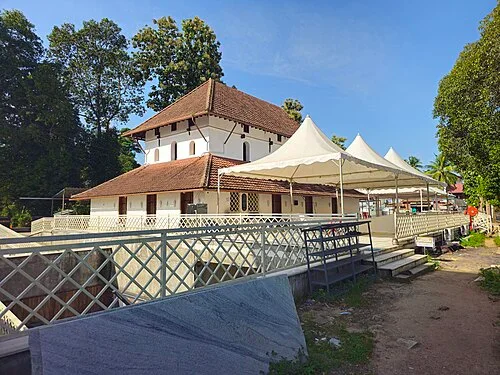 Courtyard and Restored Kerala Facade
The Restored Mosque from the Southwest
Welcome to Cheraman Juma Mosque in Kodungallur, a town on the Kerala coast. By tradition this is India's first mosque, founded in the year 629, and the oldest on the subcontinent still in use. Scholars are more cautious. Judging by its style, some date the building to the fourteenth or fifteenth century instead. The white building with broad sloping tiled roofs is what visitors meet today, and later corridors wrap around its older core. The puzzle worth holding onto is how a mosque said to be founded in the Prophet's lifetime came to look so much like a Kerala temple. The next stops follow that story, from a king's legend to the prayer hall itself.
Photo: Vis M · CC BY-SA 4.0
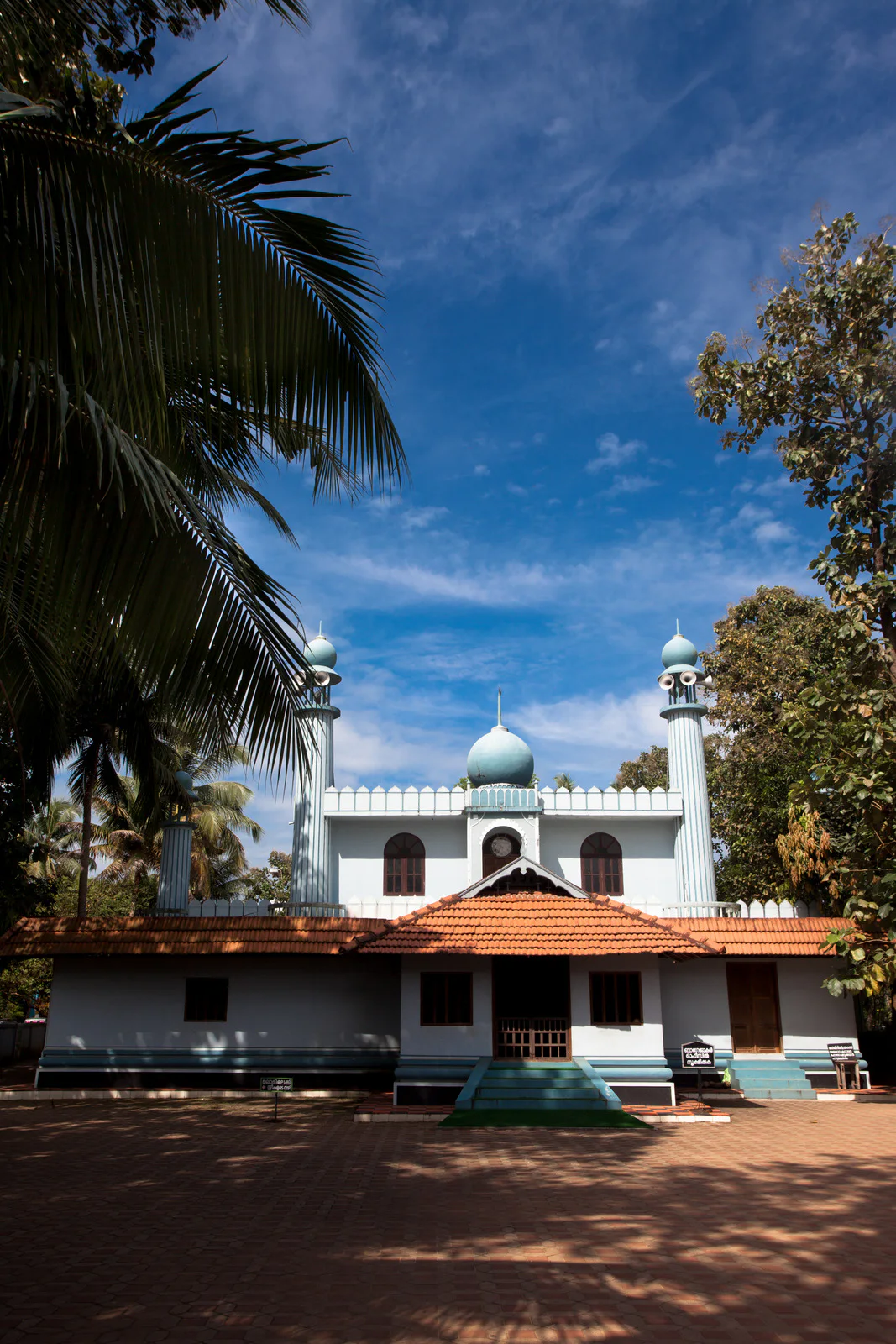
02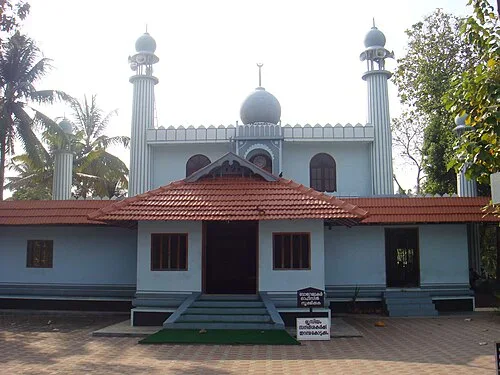 Courtyard and Restored Kerala Facade
The Mosque with Dome and Minarets
For most of recent memory the mosque wore a different face. A central dome rose over the roof, and four slender minarets stood around it. Those came in 1994, on top of concrete corridors and halls added in 1984. The corridors wrapped the old building so completely that almost none of its original exterior could be seen. In 2022 a restoration took the dome and minarets down. The historic Kerala form of timber and tiled roof emerged again, the one shown at the first stop. The building runs about sixty-one metres from end to end, so uncovering it was no small undertaking.
Photo: നിരക്ഷരൻ · CC BY 3.0
03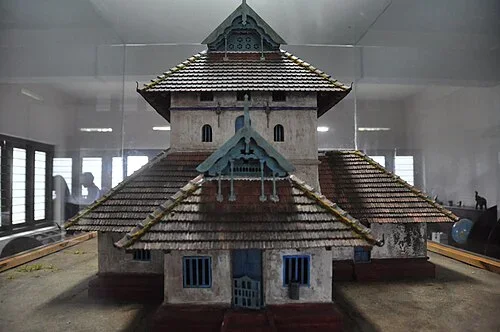 Heritage Display and the Royal Legend
Scale Model and the King's Legend
The old mosque survives in miniature here, a scale model with steep tiered roofs stacked one above the other. Local artisans built mosques the way they built temples, following Kerala's own Vastu Shastra rules, and the model shows it plainly. Now for the legend that belongs to this display. Cheraman Perumal, the last Chera king, is said to have witnessed a supernatural event spoken of in the Quran. The story goes that he travelled to Arabia and embraced Islam at the feet of the Prophet, bringing ginger pickles as a gift for the Prophet and his companions. In the telling, he took the name Tajuddin. Before he died, he sent letters home asking that his new faith be helped along. Malik Bin Dinar, a companion of the Prophet, is said to have answered that call and built this mosque at the Chera king's behest. Historians treat the tale as legend, traced to accounts written much later. Yet the Kerala historian M.G.S. Narayanan pointed out that the king's conversion appears not only in Muslim chronicles but in Hindu ones like the Keralolpatti, which had no reason to invent it.
Listen in the appChalliyan (Dr. Vipin Challiyil) · CC BY-SA 4.0
04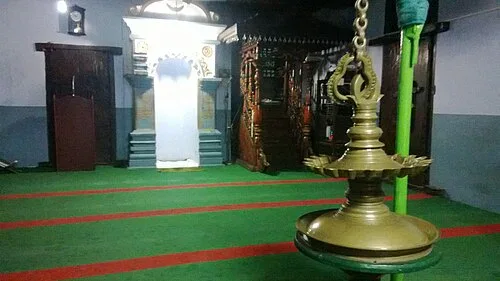 Central Prayer Hall and Brass Lamp
The Prayer Hall and Hanging Lamp
Inside, the mosque feels Keralan rather than Arabian. The structure is timber, the work of local craftsmen, and the carpet underfoot runs green and red. Hanging from a chain in the hall is a traditional brass oil lamp, the kind found in Kerala temples and homes alike. A local custom, people say, invites visitors of every faith to pour a little oil into it. What the model previewed from outside, the interior confirms. This is a house of prayer built by the same hands, in the same language, as the buildings around it.
Listen in the appPhoto: നിരക്ഷരൻ · CC BY-SA 3.0
05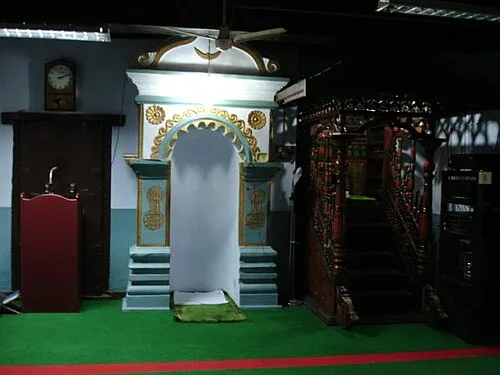 Central Prayer Hall and Brass Lamp
The Qiblah and the Pulpit
At the front of the hall stands the qiblah, the ornate niche that shows worshippers which way to face. Every prayer here is directed toward Mecca, and this carved archway marks that direction. Beside it rises the minbar, a wooden pulpit with steps, traditional in its carving. From its top the sermon is delivered at the Friday congregation. Local tradition holds proudly that this was the second place in the whole world where the Juma prayer was held. What is plain is the continuity. Through every rebuild and restoration, the Friday congregation has kept gathering here, century after century.
Listen in the appSherenk (talk) · CC BY-SA 3.0
06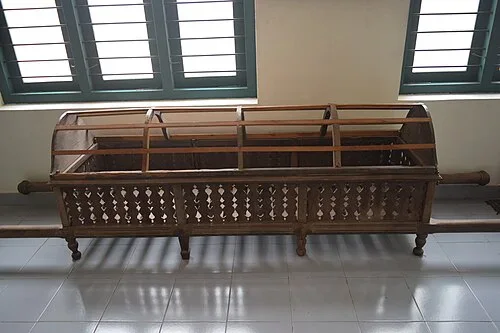 Relics of the Early Community
The Funeral Bier
This carved wooden carrier is a funeral bier, made to carry the dead. Its long poles let bearers share the weight, and the deceased rests within for the funeral prayer before burial. In Kerala's Muslim custom the community carries its own to the grave. A mosque like this is the centre of more than prayer. Births, weddings and deaths all pass through its courtyard. Tradition also places the graves of early Arab companions of Malik Bin Dinar in this corner of Kodungallur, though where exactly is not pointed out. Their community took root, and the Mappila Muslims of this coast have worshipped here ever since.
Listen in the appPhoto: KannanVM · CC BY-SA 4.0
07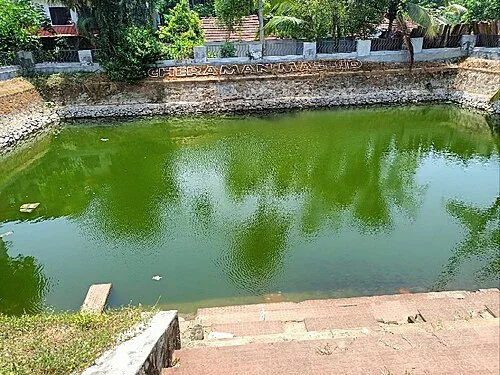 Historic Ablution Pond
The Ablution Pond
Beside the mosque lies a large stepped pond, its green water held by stone banks and wide steps. This is where worshippers perform ablution, washing the hands, face and feet before prayer. Steps lead down to the water on every side, much as they do at Kerala's temple tanks. In the mosque tradition of this region, water and steps belong to the same local building vocabulary as the tiered roofs and the timber hall. A mosque founded, by its own telling, by an Arab and a Chera king ended up speaking entirely in Kerala's accent. That is the quiet achievement of Cheraman Juma Mosque: wholly Islamic and wholly Keralan at once.
Listen in the appPhoto: Abdullanafih · CC BY-SA 4.0
Cheraman Juma Mosque
Frequently asked questions
How much does the guide cost?
Free app download. Listed guide price: $0.99. Guide price shown in the app. Audio guide only. Venue admission is separate.
Can I listen without internet?
Yes. Download the guide’s audio, images, and maps in the app before your visit. Your downloaded content is then available offline.
Can I listen in my language?
This audio guide is available in 15 languages, including English.
Do I need to follow a schedule?
No. This is a self-guided experience. Choose your stops, pause whenever you like, and return to a story at your own pace.
At your own pace
Explore Cheraman Juma Mosque.
Download Stanza, then search for “Cheraman Juma Mosque”.
Free app download · Guide price shown in the app
Keep exploring
Audio guides — India
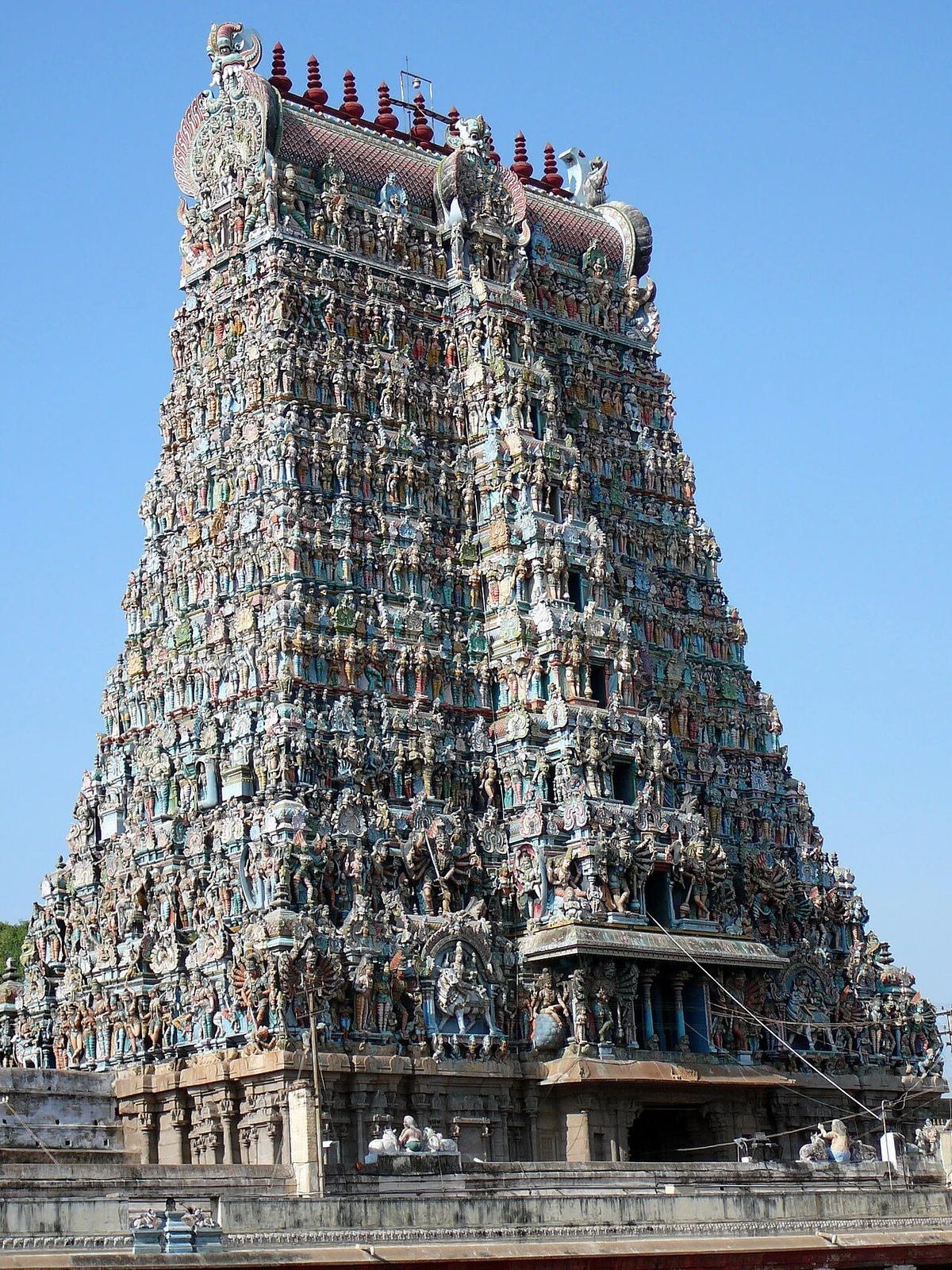
Madurai
Meenakshi Temple
Content & sources
Photo: Kumar Appaiah · CC BY-SA 2.5
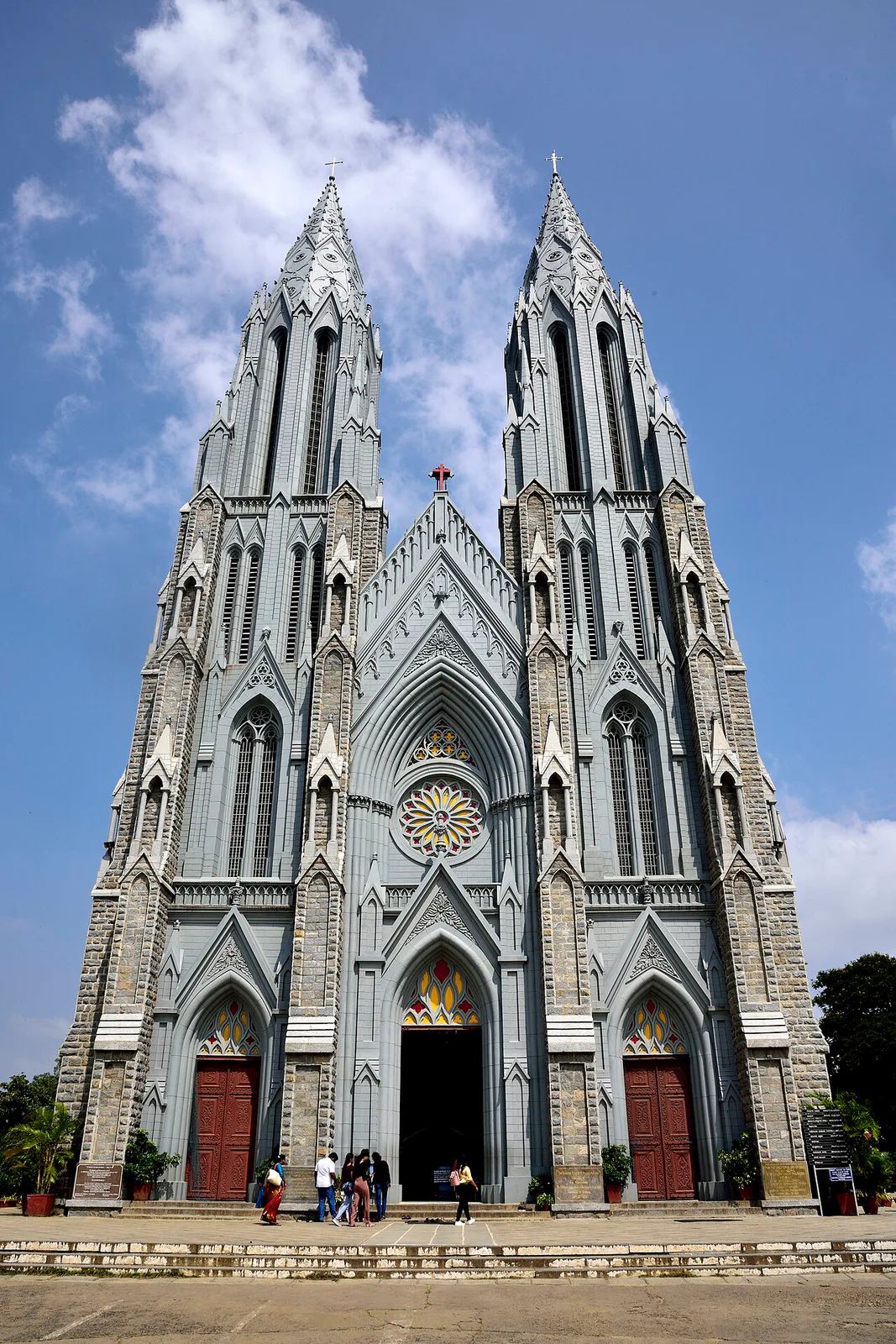
Mysore
St. Philomena's Cathedral, Mysore
Content & sources
Photo: Shashank Mehendale · CC BY-SA 4.0
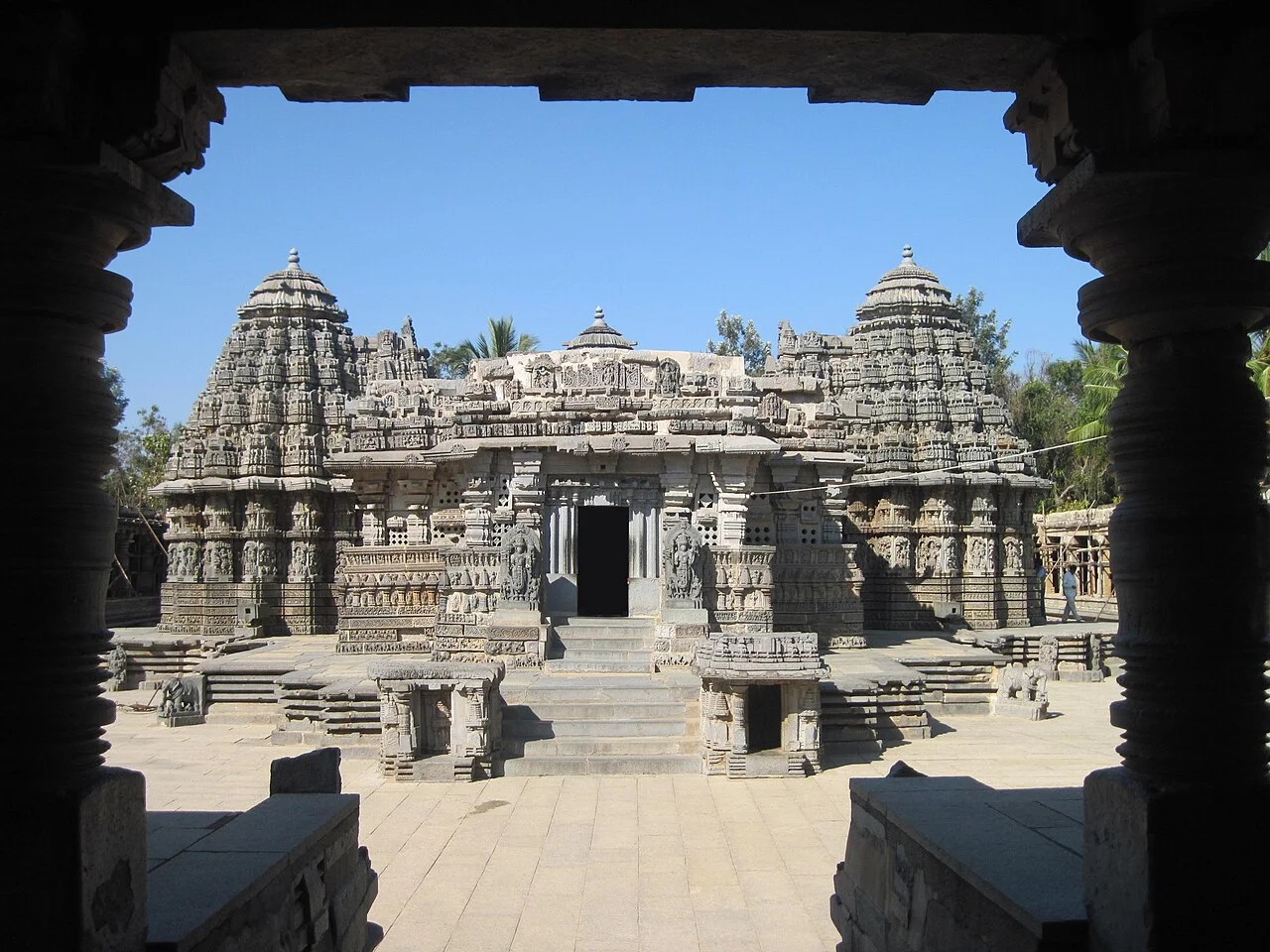
Somanathapura
Chennakeshava Temple, Somanathapura
Content & sources
Vedamurthy J · CC BY-SA 3.0
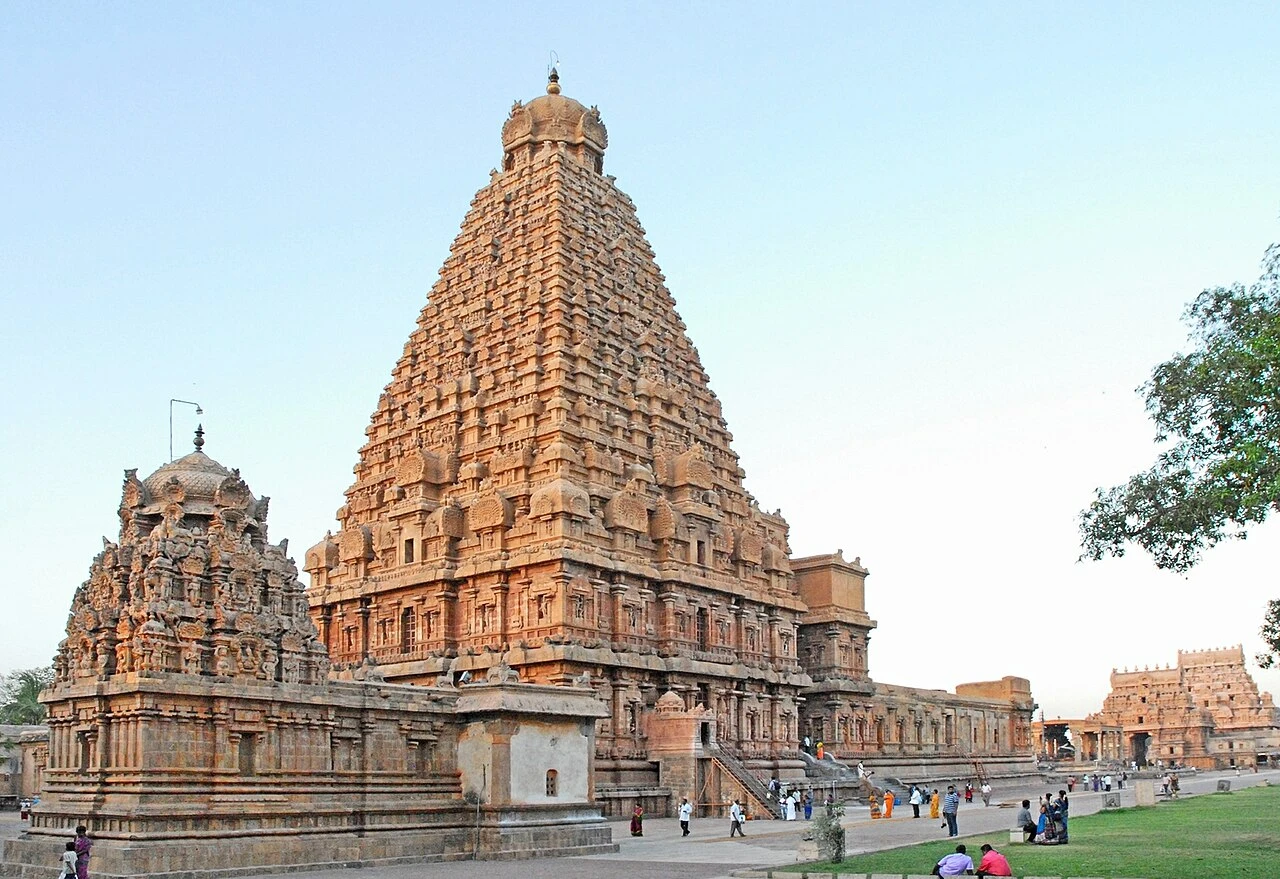
Thanjavur
Brihadisvara Temple
Content & sources
Jean-Pierre Dalbéra from Paris, France · CC BY 2.0