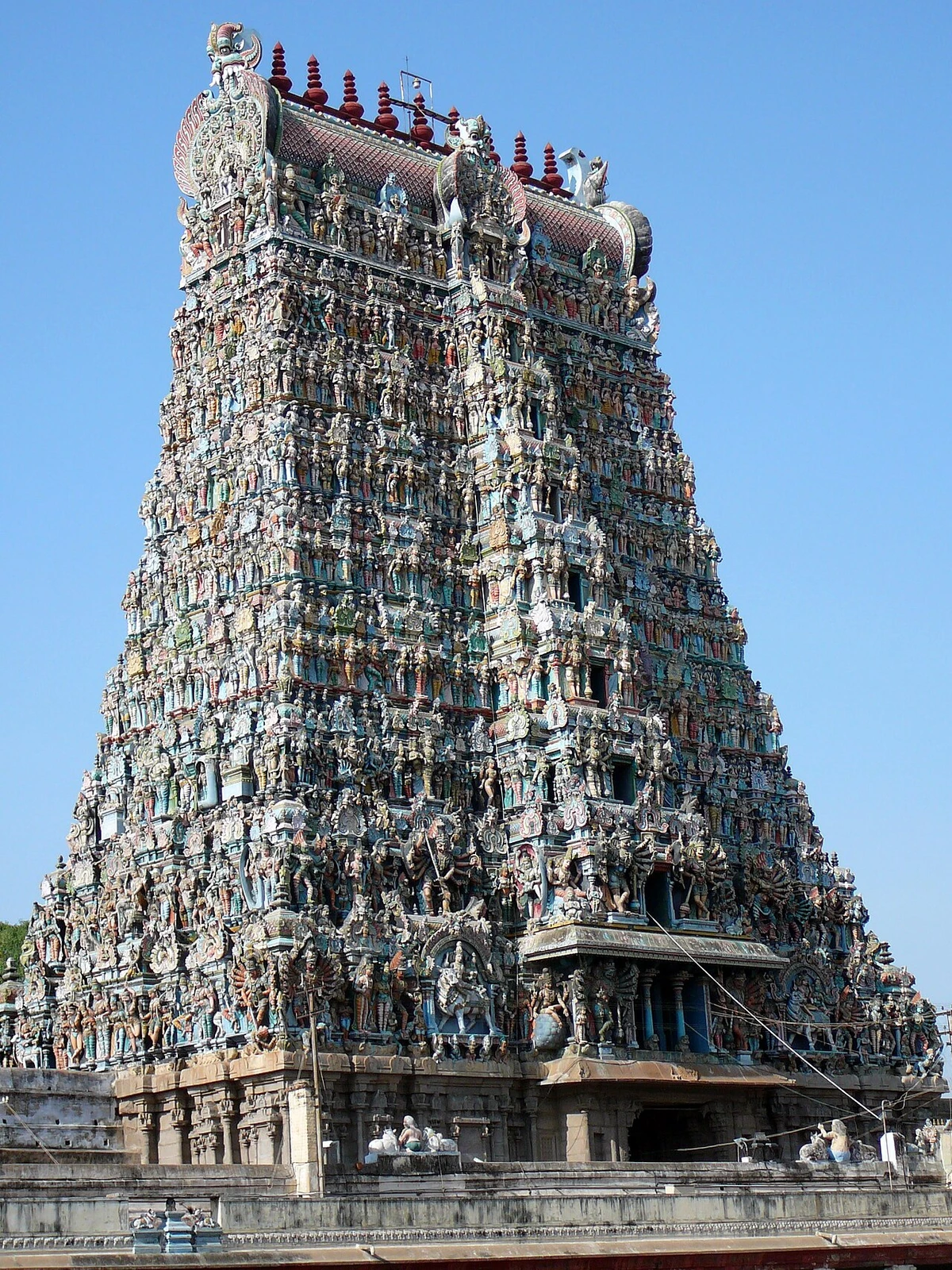
Stanza · Audio guide
Meenakshi TempleAudio guide
A place to remember. A story to take with you.
The Meenakshi Temple is a historic Hindu temple complex located in Madurai, Tamil Nadu, India. It is dedicated to Meenakshi, a form of Parvati, and Sundareswarar, a form of Shiva.
Download Stanza, then search for “Meenakshi Temple”.
About the tour
One guide. Your kind of visit.
The Meenakshi Temple is a historic Hindu temple complex located in Madurai, Tamil Nadu, India. It is dedicated to Meenakshi, a form of Parvati, and Sundareswarar, a form of Shiva.
Ready when you are.
- 01Get the free Stanza app.
iOS & Android
- 02Find your guide.
“Meenakshi Temple”
- 03Download before you go.
Works offline
Audio guide / 22 narrated stops
Inside the guide
Get to know a few of the stories before you go. Open a stop to read more.
01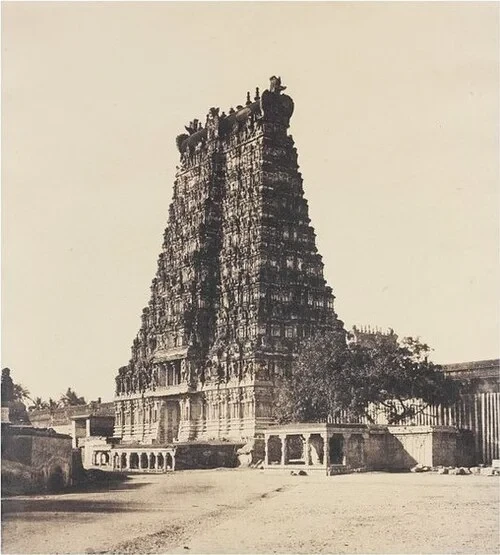 The East Tower: Gateway to MaduraiEast Gopuram of the Great Pagoda
Welcome to one of the most significant spiritual centers in South India. This vintage photograph captures the East Gopuram as it appeared in the 19th century, showing its weathered stone facade and intricate carvings long before modern colorful renovations. It stands as one of the oldest towers in the complex, serving as the main entry point for pilgrims arriving from the center of the city. Notice the tapering, pyramid-like structure composed of multiple tiers, each adorned with hundreds of detailed figures. In this older view, the absence of modern paint reveals the raw masonry and sculptural complexity of the original work. The tower was designed to be a visible landmark from miles away, guiding travelers toward the sacred space. Each level of the tower depicts different layers of the cosmos, populated by gods, celestial beings, and mythical animals. The base of the tower features simpler, larger stone blocks that support the weight of the immense upper tiers, which reach high toward the sky.
Linnaeus Tripe · Public domain
02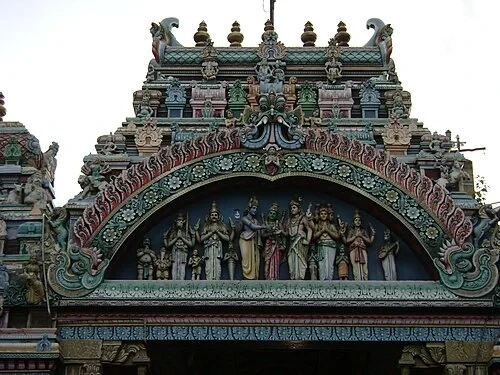 The East Tower: Gateway to MaduraiMeenakshi Temple East Gate
Looking at the crest of a temple gateway, we see a colorful tableau depicting a significant assembly of deities. This pediment, or sikhara detail, shows a row of figures under a decorated arch. Centered within the arch are figures that represent a divine assembly, possibly related to the central legend of the temple's goddess. The vibrant colors—blues, greens, and pinks—are typical of the periodic renovations that maintain the visibility of these stories for the thousands of daily visitors. Flanking the main figures are smaller attendants and guardians, each holding symbolic objects or performing ritual gestures. The archway itself is framed by elaborate scrolling patterns and floral motifs, characteristic of the late Dravidian style. Such gates serve as transitional spaces, preparing worshippers for the sacred atmosphere they find as they move deeper into the complex. Above the arch, tiered decorative elements called kalasams resemble inverted pots, marking the spiritual significance of the entrance and acting as lightning conductors.
Photo: எஸ். பி. கிருஷ்ணமூர்த்தி · CC BY-SA 4.0
03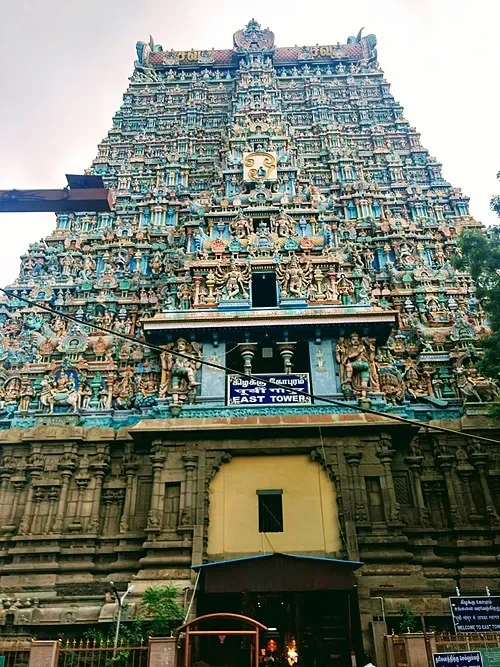 The East Tower: Gateway to MaduraiMadurai Meenakshi Amman Temple
Standing at the base of the towering East Gopuram, its sheer scale and the density of its sculptural ornamentation become overwhelming. This is the main gateway that leads directly into the temple’s inner sanctum area. A blue sign clearly identifies it in multiple languages as the East Tower. The lower section of the tower is constructed from relatively plain, massive stone blocks, providing a stable foundation for the colorful, sculpted tiers above. These tiers are populated by an incredible number of figures—gods, goddesses, demons, and animals—each carved with distinct attributes and weaponry. Two large guardian figures, or dvarapalas, flank the central entrance, standing with intimidating poses to protect the sacred space from negative influences. The East Tower is traditionally the most important of the four main gopurams surrounding the rectangular complex. Look for the small, dark window openings built into the tiers, which were originally designed to provide ventilation for workers during construction and to reduce the overall weight of the massive structure.
Listen in the appPhoto: Arbu bhai · CC BY-SA 4.0
04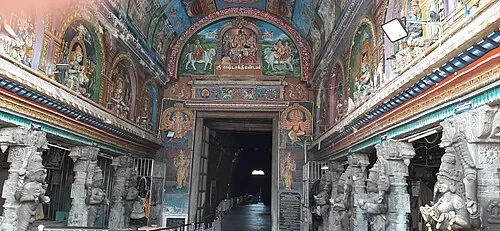 Ashta Shakthi Mandapa: The Hall of Eight PowersAshta Sakthi Mandapam
Entering the temple, we find ourselves in a corridor where every surface, from the ceiling to the walls, is covered in intricate paintings and carvings. This area is known as the Ashta Sakthi Mandapam, a hall dedicated to the eight forms of the goddess Shakti. The ceiling features arched panels depicting various mythological scenes, including deities riding on white bulls. The walls are lined with carved pillars and painted niches that tell the stories of the temple's foundation. High above the central doorway, a panel shows a divine figure flanked by attendants, welcoming pilgrims into the inner precincts. The play of light from modern fixtures highlights the varied textures of the carved stone and the traditional pigments used in the murals. This hall acts as an introductory space where pilgrims can pause and contemplate the many aspects of the goddess before proceeding further. Notice the small bells and hanging lamps that are common features in these transitional temple halls, often rung by devotees to announce their arrival.
Listen in the appPhoto: Sumathy1959 · CC0
05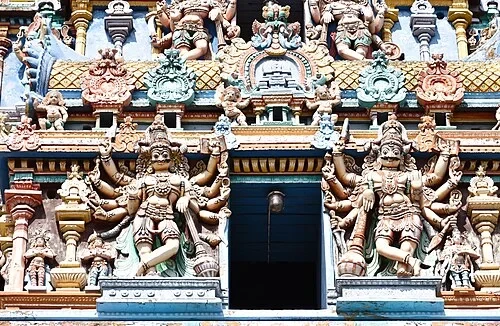 Ashta Shakthi Mandapa: The Hall of Eight PowersMeenakshi Temple Eastern Gopuram
This close-up view of the East Gopuram reveals the fearsome guardian figures that watch over the gateway tiers. These statues, known as dvarapalas, are designed to represent strength, alertness, and protection. These two specific figures are multi-armed, each holding symbolic weapons or ritual objects that signify their divine power. Their bulging eyes, fangs, and aggressive stances were intended to ward off evil and remind visitors of the sanctity of the space beyond. Between them is a dark, rectangular doorway leading into the interior stairs of the tower. Above the guardians, smaller figures of musicians and devotees create a sense of celestial celebration, surrounding the higher levels of the structure. The use of bright white, blue, and gold paint helps these specific features stand out clearly against the bright sky. These sculptural layers act as a visual encyclopedia of Hindu cosmology, telling complex stories through silent stone. A small electric light bulb hangs just above the central doorway, showing how modern utilities are integrated into the ancient structure today.
Listen in the appRichard Mortel from Riyadh, Saudi Arabia · CC BY 2.0
06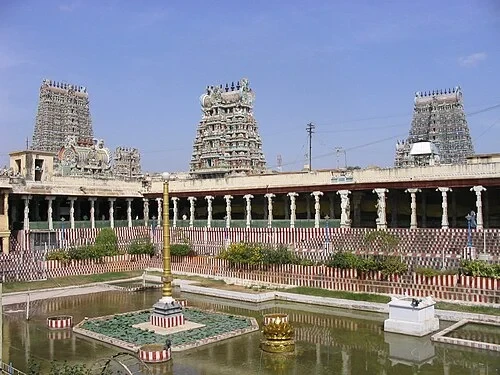 Potramarai Kulam: The Golden Lotus PondGopurams of Meenakshi Temple
From this vantage point near the temple tank, three of the major gopurams rise above the surrounding corridors, defining the city's skyline. The temple complex is organized as a nested series of enclosures, with these massive towers marking the primary entrances to each layer. The towers are spaced widely apart, reflecting the immense size of the 14-acre complex which sits at the heart of Madurai. The corridors in the foreground feature a distinctive red-and-white striped pattern on the lower walls, a traditional marker of sacred sites throughout the state of Tamil Nadu. A golden pillar stands in the center of the water, and the colonnaded walkways provide necessary shade for pilgrims moving between shrines. The varying heights and styles of the towers reflect different periods of construction and patronage by local rulers over several centuries. The flat rooftops between the towers are often used for temple maintenance and offer clear views of the intricate sculptural work that covers every inch of the gateway facades.
Listen in the appPhoto: YashiWong · CC BY-SA 3.0
07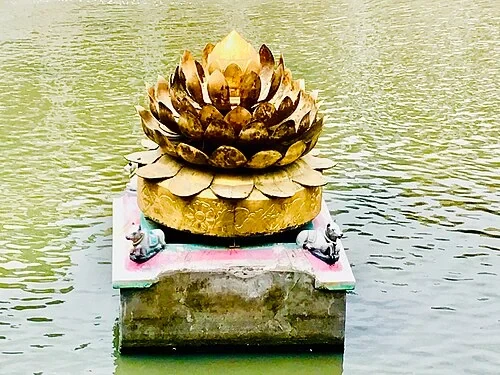 Potramarai Kulam: The Golden Lotus PondThe Golden Lotus Pond
Floating in the center of the temple’s sacred tank is a large, sculpted golden lotus, a symbol of purity and divine birth. The pond itself, known as Porthamarai Kulam, is central to many of the temple's most famous legends and daily rituals. The lotus features multiple layers of metallic petals that catch the sunlight, reflecting off the green-tinted water of the tank. It sits on a simple concrete base flanked by two small, white figures of bulls, which are sacred to the god Shiva. The water in the tank is used by devotees for ritual cleansing and is believed by many to have spiritual properties. Legend says that the tank was created by Lord Shiva himself and that a golden lotus once bloomed here to honor the goddess. This pond has historically been a place where poets and scholars gathered, and it remains a focal point for those seeking a moment of quiet reflection. Tiny ripples in the water around the base suggest the presence of small fish that inhabit the sacred pond.
Listen in the appIM3847 · CC BY-SA 4.0
08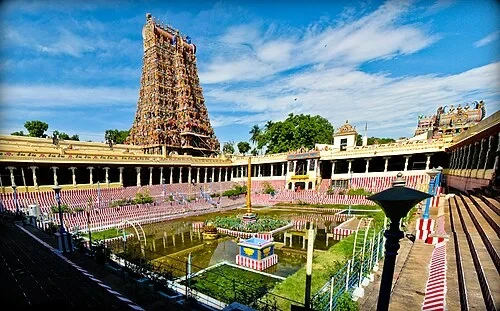 Potramarai Kulam: The Golden Lotus PondThe Temple Tank
The sacred tank, or Teppakulam, serves as a quiet oasis at the heart of the bustling temple complex. It is surrounded by stepped embankments and a wide, covered corridor supported by numerous pillars, providing a place for pilgrims to rest and pray. This wide view shows the relationship between the water and the dominant South Gopuram in the background, which is the tallest of the temple's gateway towers. The striped red-and-white walls lining the pond are a characteristic feature of South Indian temple architecture, signifying the boundary of a holy place. In the center, we can see the golden lotus and a smaller pavilion used during special ceremonies. This area becomes especially active during festivals when deities are taken out on decorated floats. Historically, the pond served as a vital water source for the temple's ritual needs and was a traditional site for literary competitions among scholars. Modern black lampposts line the walkway today, providing illumination for those visiting the water's edge during the evening hours.
Listen in the appPhoto: Surajram · CC BY-SA 3.0
09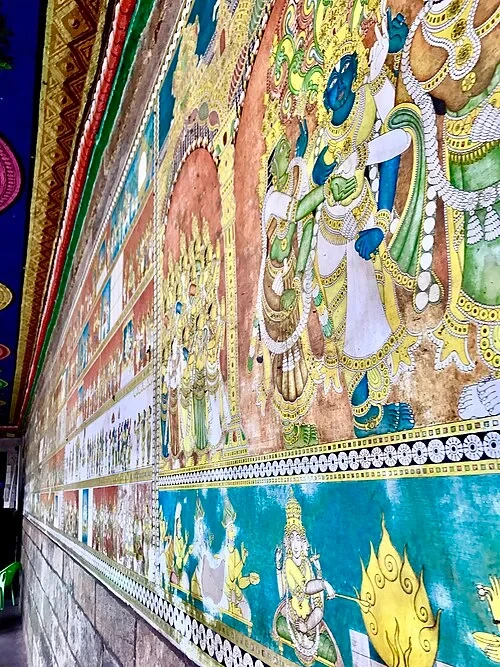 The Thiruvilaiyadal Murals: Sacred Stories in ColorPainted Wall in Meenakshi Amman Temple
Murals along the inner walls depict complex narratives, using a palette of earthy tones and vibrant blues to bring ancient stories to life. These paintings often illustrate the 64 miracles of Lord Shiva, a collection of local legends known as the Thiruvilaiyadal Puranam. This specific section shows a large blue-skinned figure, likely a deity, interacting with other characters in a divine court. Below the main scene, a horizontal band features smaller, repetitive figures engaged in various daily and ritual activities. The lower register shows figures near a fire, perhaps depicting a ritual sacrifice or a scene from a celestial wedding. The artwork is framed by decorative borders with geometric and floral patterns that separate different chapters of the story. These paintings served an educational purpose for centuries, teaching pilgrims about divine deeds and local history before they reached the main shrines. Notice how the paint has faded in certain areas, revealing the texture of the stone or plaster surfaces that have supported these images for generations.
Listen in the appIM3847 · CC BY-SA 4.0
10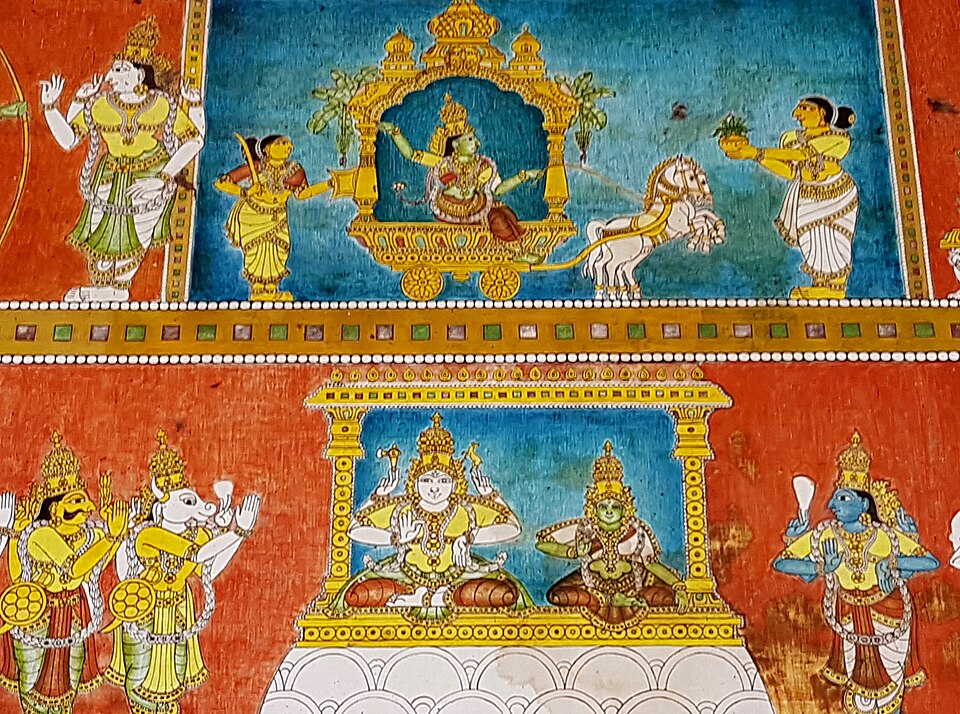 The Thiruvilaiyadal Murals: Sacred Stories in ColorWall Painting in Meenakshi Temple
Two dark, life-sized statues of warriors or guardians stand at the entrance to this inner chamber, flanking a doorway framed in silver. These figures are dvarapalas, traditionally tasked with protecting the deity housed within the small shrine. The figure on the right holds a club and has a focused, watchful expression, symbolizing the vigilance required in a sacred space. Above the doorway, the architecture is richly decorated with painted carvings of smaller deities and colorful, patterned bands. To the left, a sign in Tamil script identifies the specific shrine or the name of the deity honored here. Inside the dark entrance, glimpses of colorful fabrics suggest the presence of a draped deity or a ritual object being prepared for worship. These smaller shrines dedicated to various gods, goddesses, and saints fill the corridors between the main sanctums of Meenakshi and her husband, Shiva. A small flame burns at the base of the entrance, a common offering left by passing worshippers who pause for a moment of prayer.
Listen in the appUnknown
Meenakshi Temple
Frequently asked questions
How much does the guide cost?
Free app download. Listed guide price: $1.99. Guide price shown in the app. Audio guide only. Venue admission is separate.
Can I listen without internet?
Yes. Download the guide’s audio, images, and maps in the app before your visit. Your downloaded content is then available offline.
Can I listen in my language?
Stanza supports 15 languages. Check the app for the languages available for this guide.
Do I need to follow a schedule?
No. This is a self-guided experience. Choose your stops, pause whenever you like, and return to a story at your own pace.
At your own pace
Explore Meenakshi Temple.
Download Stanza, then search for “Meenakshi Temple”.
Free app download · Guide price shown in the app
Keep exploring
Nearby audio guides
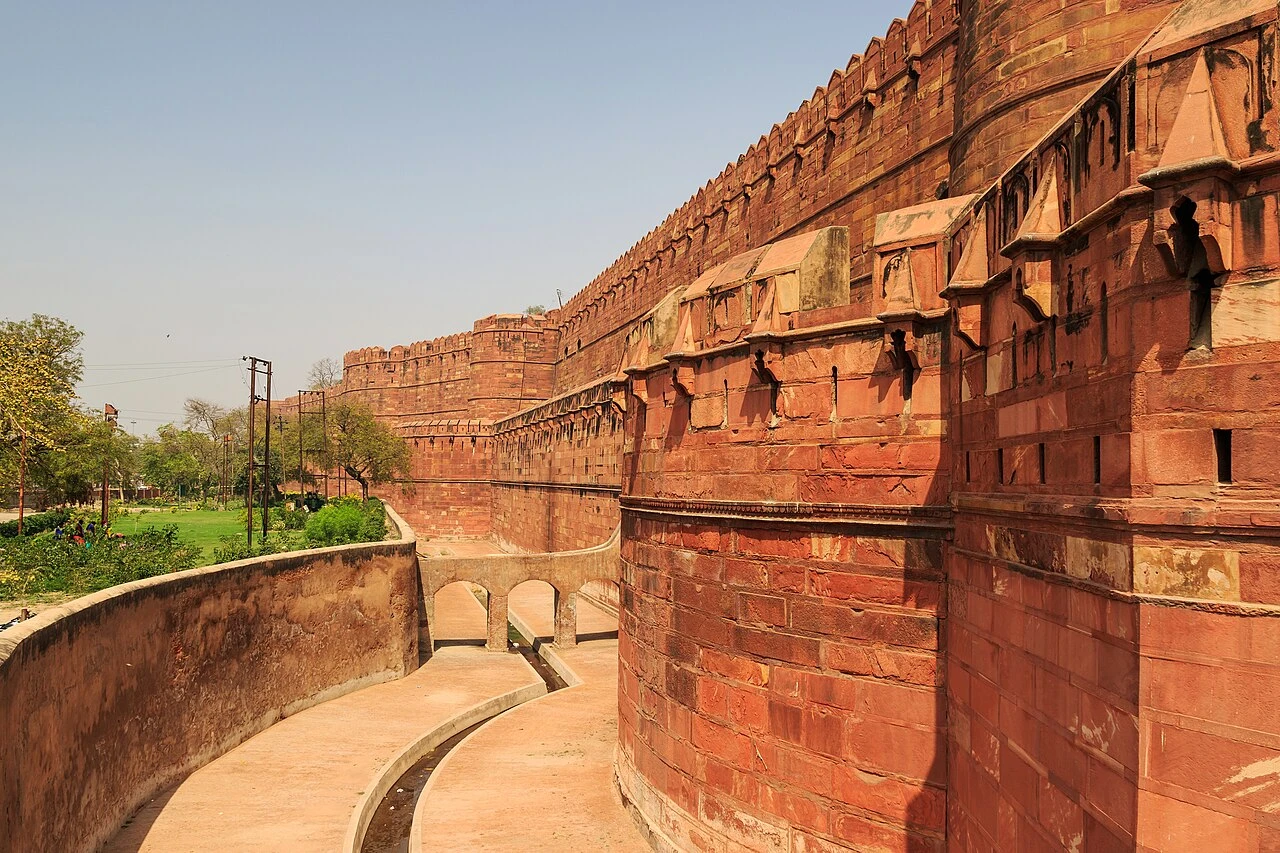
Agra
Agra Fort
Content & sources
Photo: A.Savin · FAL
Jaipur Municipal Corporation
Amber Fort
Content & sources
Jakub Hałun · CC BY-SA 4.0
Thanjavur
Brihadisvara Temple
Content & sources
Jean-Pierre Dalbéra from Paris, France · CC BY 2.0
Hyderabad
Charminar
Content & sources
Gopikrishna Narla · CC BY-SA 3.0