Stanza · Audio guide
St. Philomena's Cathedral, Mysore Audio Guide
A place to remember. A story to take with you.
St. Philomena's Cathedral is a Catholic church and the cathedral of the Diocese of Mysore in India. Constructed in 1936, it is a Neo-Gothic building that ranks as one of the tallest churches in Asia.
Download Stanza, then search for “St. Philomena's Cathedral, Mysore”.
About the tour
One guide. Your kind of visit.
St. Philomena's Cathedral is a Catholic church and the cathedral of the Diocese of Mysore in India. Constructed in 1936, it is a Neo-Gothic building that ranks as one of the tallest churches in Asia.
Ready when you are.
- 01Get the free Stanza app.
iOS & Android
- 02Find your guide.
“St. Philomena's Cathedral, Mysore”
- 03Download before you go.
Works offline
Audio guide / 8 narrated stops
Inside the guide
Get to know a few of the stories before you go. Open a stop to read more.
01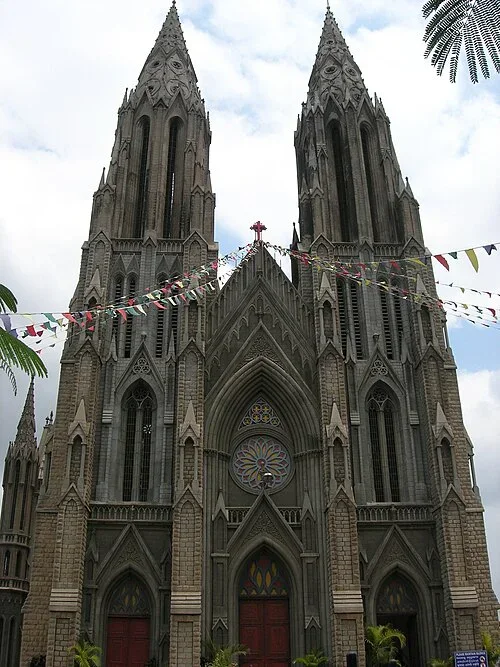 Cathedral Courtyard & Twin Spires
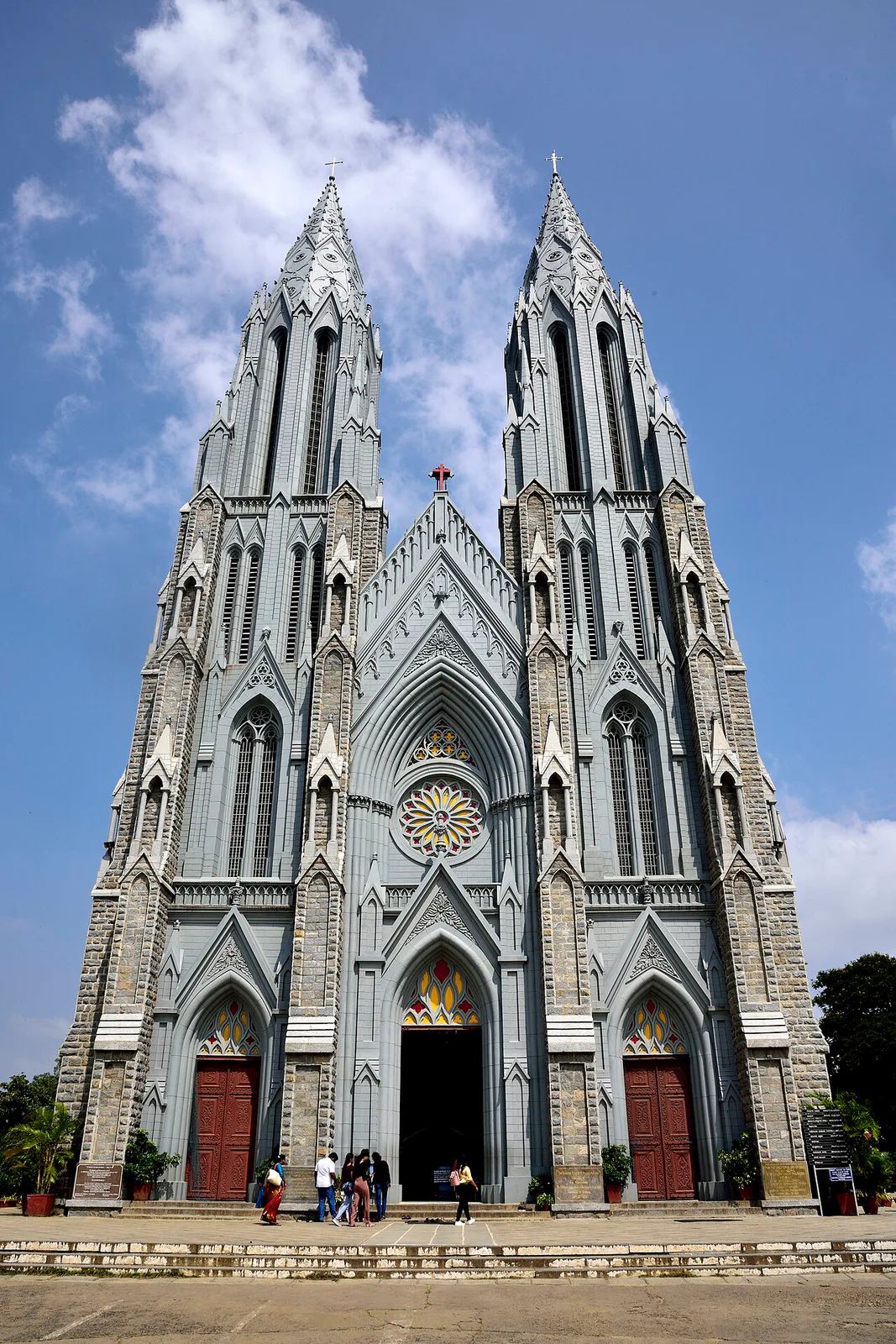
St. Philomena's Cathedral - Facade from the Courtyard
Welcome to St. Philomena's Cathedral, the great Catholic church of Mysore. Its official name is the Cathedral of St. Joseph and St. Philomena, and it serves as the seat of the Diocese of Mysore. The building rose in the Neo-Gothic style, complete in 1936, during the reign of Maharaja Krishnaraja Wadiyar IV. Bishop Rene Feuga supervised the work through to its finish. The result is counted among the tallest churches in Asia. What makes it remarkable is where it stands: a European Gothic cathedral, raised in the heart of a princely Indian state, built as the spiritual home of Mysore's Catholics and in honour of a fourth-century saint. The story of how that came to be unfolds stop by stop, from the towers above the entrance to the chamber beneath the altar.
Photo: Gagan · CC BY-SA 3.0
02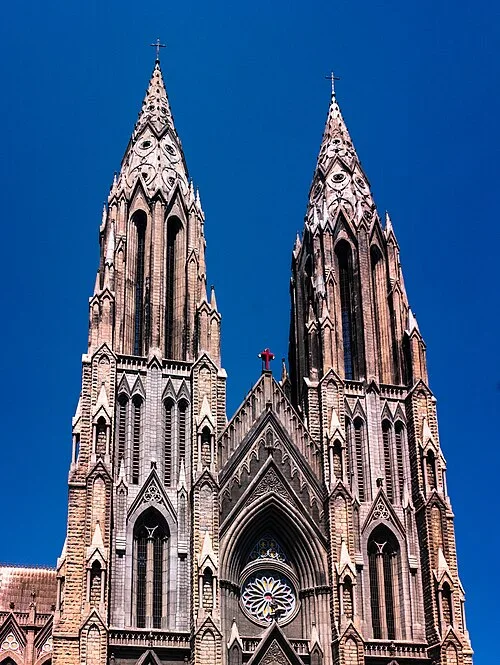 Cathedral Courtyard & Twin Spires
The Twin Spires
Two stone spires rise from the front of the church, slender and tapering to sharp points. They reach 175 feet, about fifty-three metres, into the sky. A Frenchman named Daly designed the church, and he drew his inspiration from Cologne Cathedral in Germany. The family resemblance is easy to hear in those towers, which echo the famous spires of the Rhine. They also recall another distant cousin: the spires of St. Patrick's Cathedral in New York City. So a cathedral in southern Karnataka shares its silhouette with a German landmark and an American one, all speaking the same Gothic language. The deep doorways, the pointed arches and the pinnacles climbing the towers carry that lineage from medieval Europe onto Indian soil.
Photo: Bikashrd · CC BY-SA 4.0
03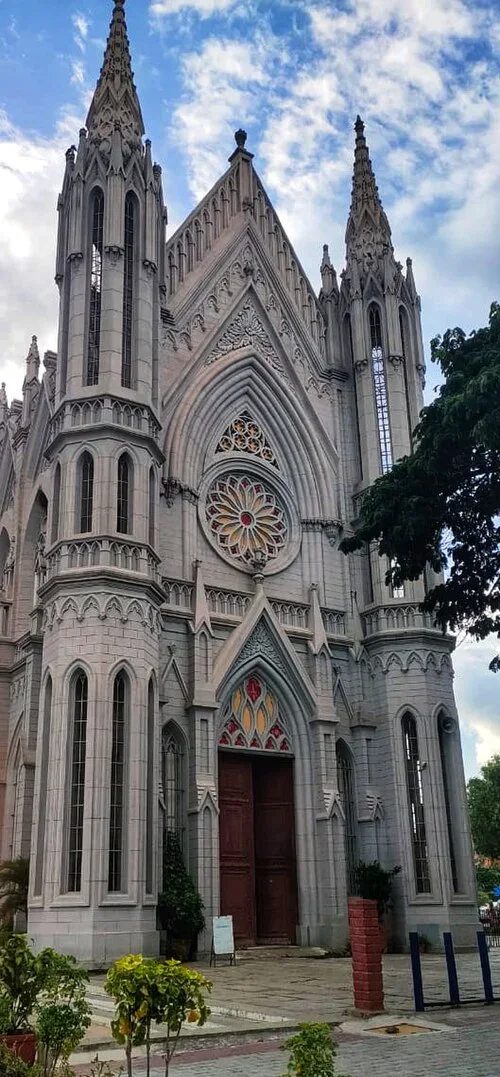 The Grand Entrance Portal
The Entrance Portal and Rose Window
The main entrance gathers the whole facade into one great pointed arch, with a round rose window set above it. This doorway is the newest face of a much older site. A church already stood here in 1843, built during the reign of Maharaja Krishnaraja Wodeyar III and the Commission Rule. When the foundation of the present church was laid in 1933, an inscription recalled that earlier beginning. In the name of that only God, it reads, the universal Lord who creates, protects, and reigns over the universe. It continues: this church is built 1843 years after the incarnation of Jesus Christ, the Enlightenment of the World, as man. Those words carry the voice of the first foundation forward into the second. The congregation of the 1840s prayed in that earlier church on this spot, and worshippers still gather here beneath the rose window's light.
Listen in the appPhoto: Inevitable soul · CC BY-SA 4.0
04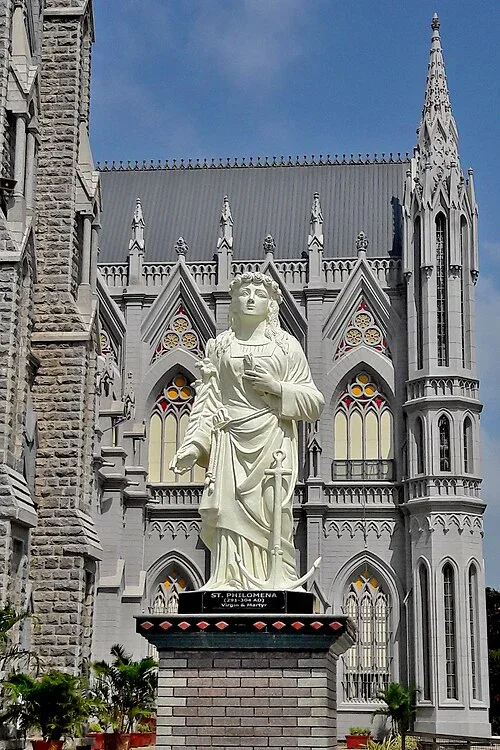 The Grand Entrance Portal
St. Philomena before Her Cathedral
A white statue of St. Philomena stands on its pedestal, the young Virgin and Martyr facing the cathedral raised in her name. The story behind that pairing begins in 1926. T. Thumboo Chetty, private secretary to Maharaja Krishnaraja Wadiyar IV, obtained a relic of the saint from Peter Pisani, the apostolic delegate of the East Indies. The relic passed to Father Cochet, who approached the maharaja and asked his help in building a church to honour St. Philomena. The Maharaja agreed, and on 28 October 1933 he laid the foundation stone himself. That day he spoke of what the church would rest upon. The new church, he said, will be strongly and securely built upon a double foundation, divine compassion and the eager gratitude of men. A Hindu ruler's patronage, joined to a Catholic priest's hope, gave Mysore its cathedral.
Listen in the appPhoto: Shailee Mehendale · CC BY-SA 4.0
05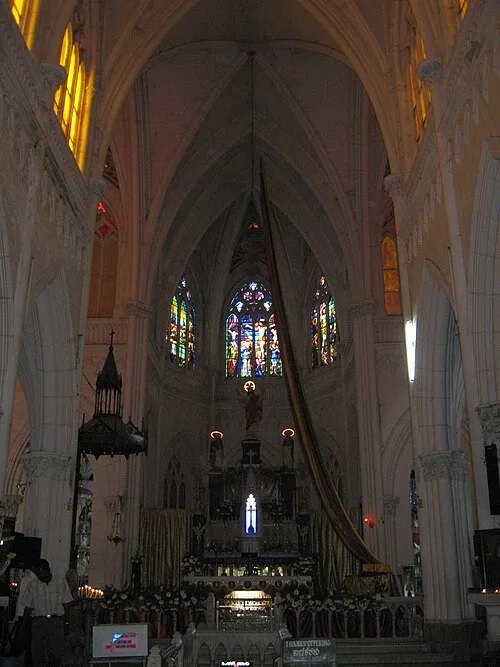 Central Nave & Stained Glass
The Nave - A Church Shaped as a Cross
Inside, the cathedral opens into a long, vaulted hall drawing the eye toward the altar. The floor plan takes the shape of a cross. The long part of the cross is the congregation hall, called the nave, and it can seat up to 800 people. The two arms of the cross are the transepts, the spaces that stretch out sideways. Where the arms meet the long axis stands the crossing, the part holding the altar and the choir. Gothic builders shaped churches this way so the whole building itself made the sign of the cross. Here the geometry is on a grand scale, with high vaulted ceilings lifting the hall above the worshippers gathered in the nave.
Listen in the appPhoto: Uttej41 · CC BY-SA 3.0
06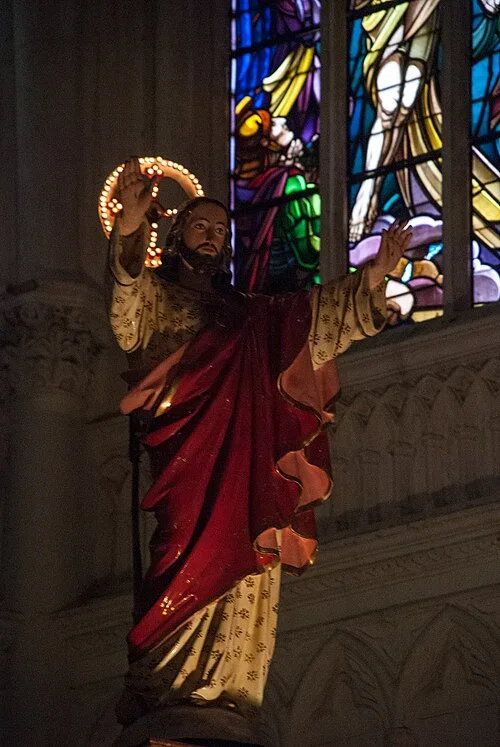 Central Nave & Stained Glass
Stained Glass - The Life of Christ in Colour
Light falls through the windows in deep blues, reds and golds, and beside them a statue of Christ raises a hand in blessing. The stained glass of the nave tells the Gospel story scene by scene. There is the birth of Christ, then the Last Supper, the Crucifixion, the Resurrection and the Ascension. For centuries, such windows served as a story in light, teaching the faith to congregations who followed the pictures along the walls. Between the windows stand figures of carved and painted statuary, points of focus for private prayer. Together the glass and the statues turn the long walk down the nave into a passage through the life of Christ.
Listen in the appPhoto: Bikashrd · CC BY-SA 4.0
07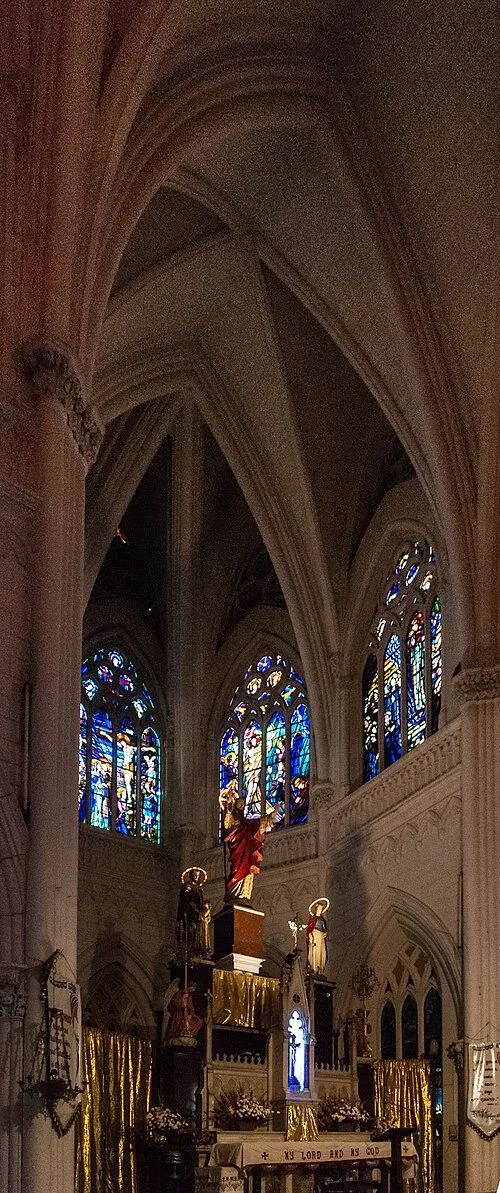 High Altar & Subterranean Crypt
The High Altar and Sanctuary
At the crossing of the cross-shaped plan stands the sanctuary, the heart of the cathedral's worship. This is where the congregation's prayers are led, before the high altar beneath the glowing windows. A detail here sets this Gothic church apart from its European cousins. Some of the female statues are dressed in sarees, the traditional attire of India. The blend is deliberate: European Gothic form carrying local Mysore culture within it. The church is held up as a good example of just this kind of integration. And the sanctuary holds one more secret, because beneath the main altar lies a crypt, the chamber where the cathedral's story truly began.
Listen in the appPhoto: Bikashrd · CC BY-SA 4.0
08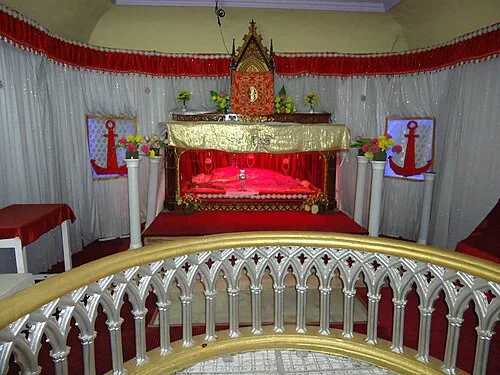 High Altar & Subterranean Crypt
The Crypt of Saint Philomena
Below the main altar lies a catacomb, where the relic of Saint Philomena is preserved alongside her statue. Her story begins far from Mysore, in Rome. On 24 May 1802, the remains of a teenage girl, no older than fourteen, were found in the Catacombs of Saint Priscilla on the Via Salaria. Beside the remains lay a set of tiles bearing a fragmented inscription: LUMENA PAXTE CUM FI. In that order, the words meant nothing. Rearranged, the letters read PAX TECUM FILUMENA, Peace with you, Filumena. The tomb also held symbols of martyrdom and a vessel containing dry blood, taken as the evidence of a martyr's death. From these discoveries it was concluded that a Christian named Filumena, Philomena, was buried there. Tradition holds she was a young Greek princess martyred in the fourth century. From those Roman tiles to this crypt beneath a Mysore altar, her name has travelled a long way, and here it found a cathedral of its own.
Listen in the appHarshitha Kay · CC BY-SA 4.0
St. Philomena's Cathedral, Mysore
Frequently asked questions
How much does the guide cost?
Free app download. Listed guide price: $0.99. Guide price shown in the app. Audio guide only. Venue admission is separate.
Can I listen without internet?
Yes. Download the guide’s audio, images, and maps in the app before your visit. Your downloaded content is then available offline.
Can I listen in my language?
This audio guide is available in 15 languages, including English.
Do I need to follow a schedule?
No. This is a self-guided experience. Choose your stops, pause whenever you like, and return to a story at your own pace.
At your own pace
Explore St. Philomena's Cathedral, Mysore.
Download Stanza, then search for “St. Philomena's Cathedral, Mysore”.
Free app download · Guide price shown in the app
Keep exploring
Audio guides — India
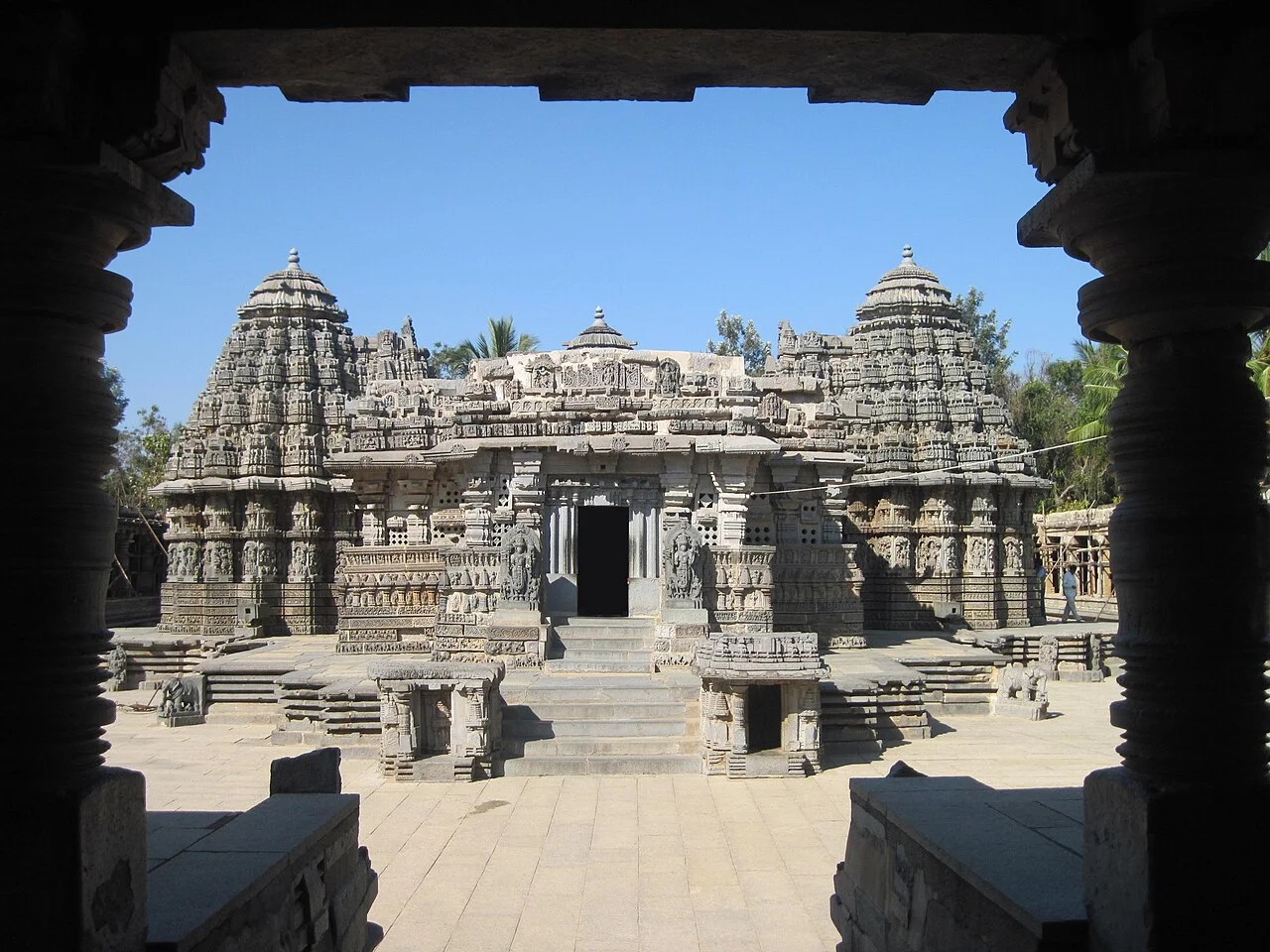
Somanathapura · 25 km
Chennakeshava Temple, Somanathapura
Content & sources
Vedamurthy J · CC BY-SA 3.0
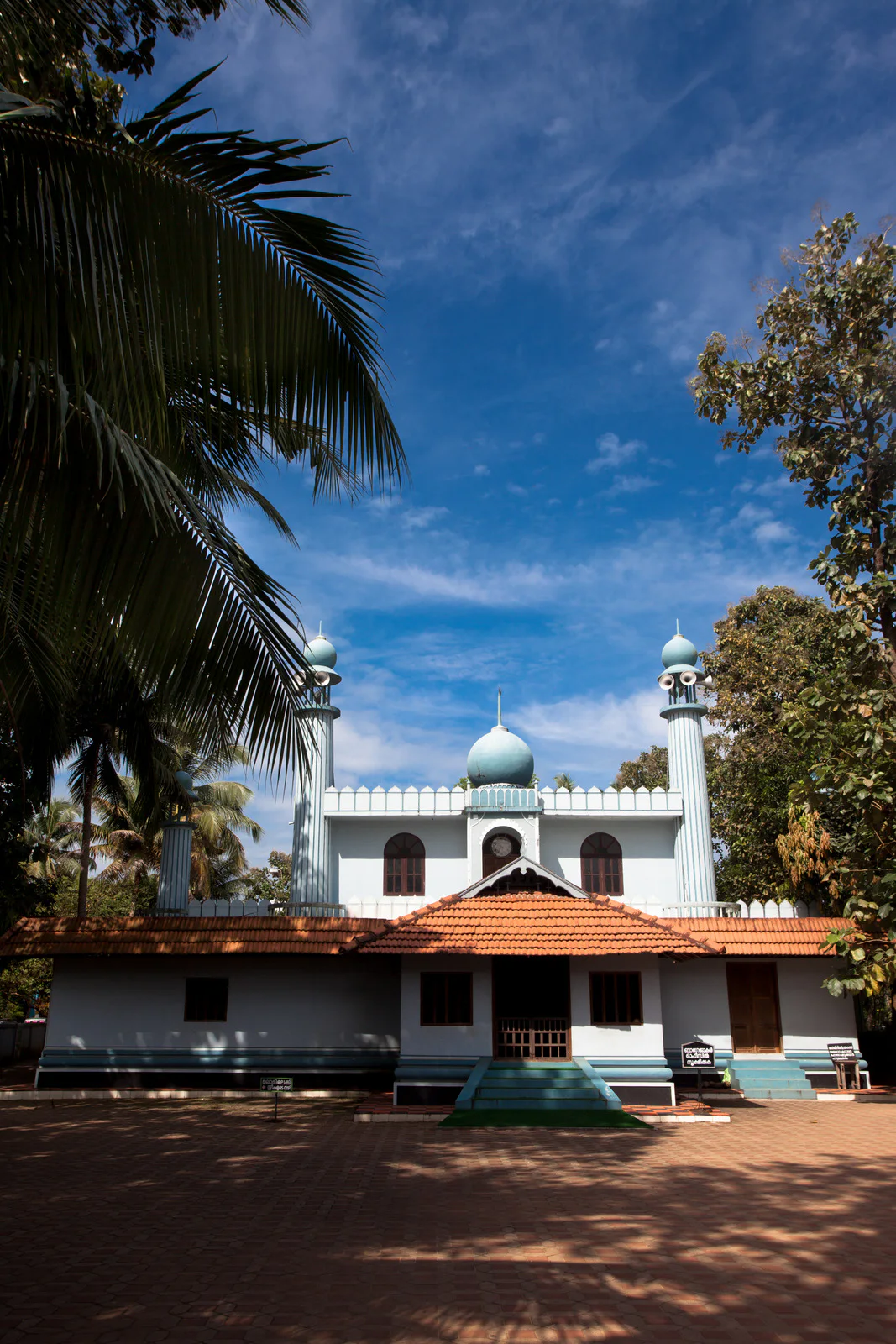
Lokamaleswaram
Cheraman Juma Mosque
Content & sources
Shahinmusthafa · CC BY-SA 3.0
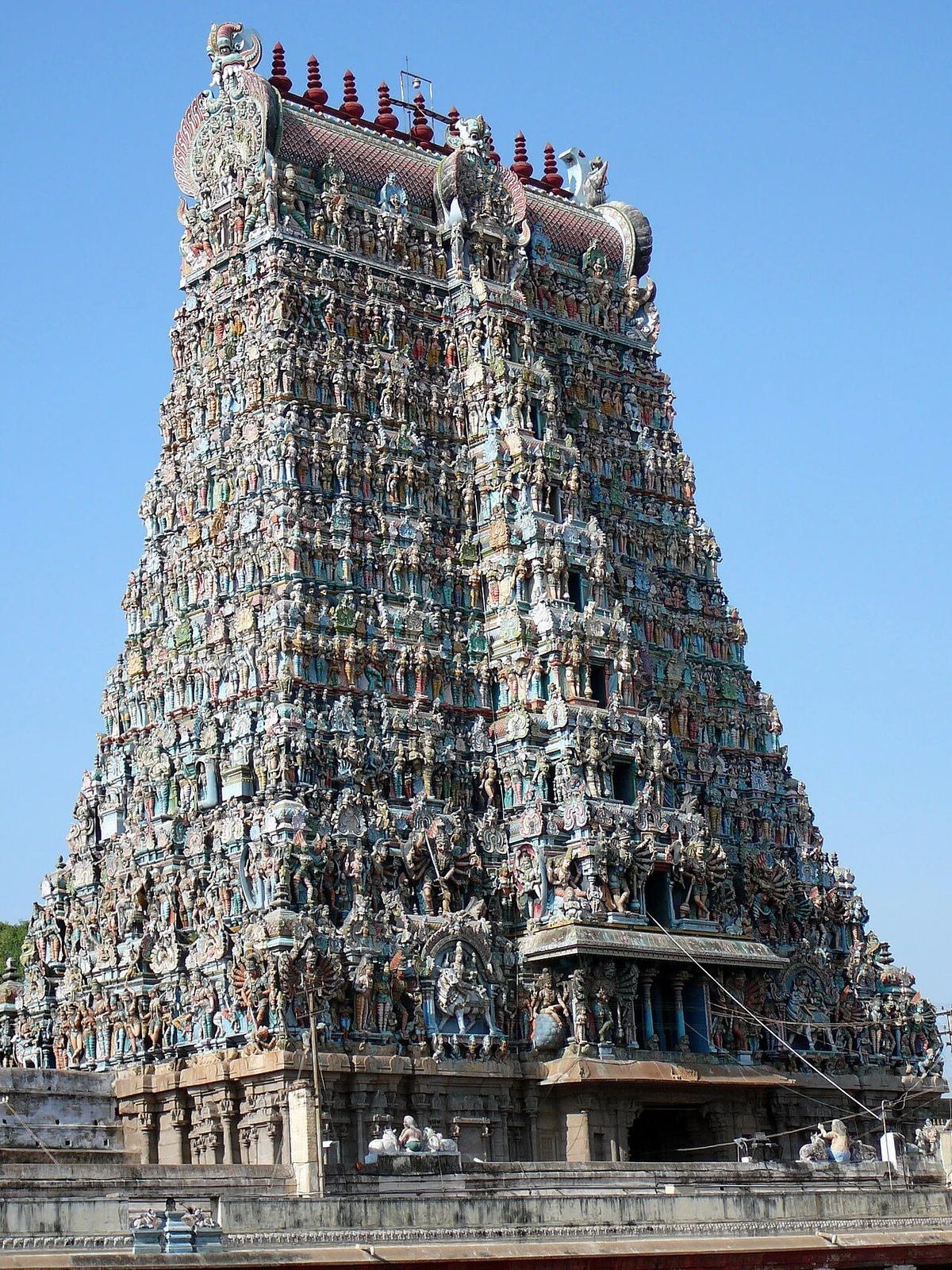
Madurai
Meenakshi Temple
Content & sources
Photo: Kumar Appaiah · CC BY-SA 2.5
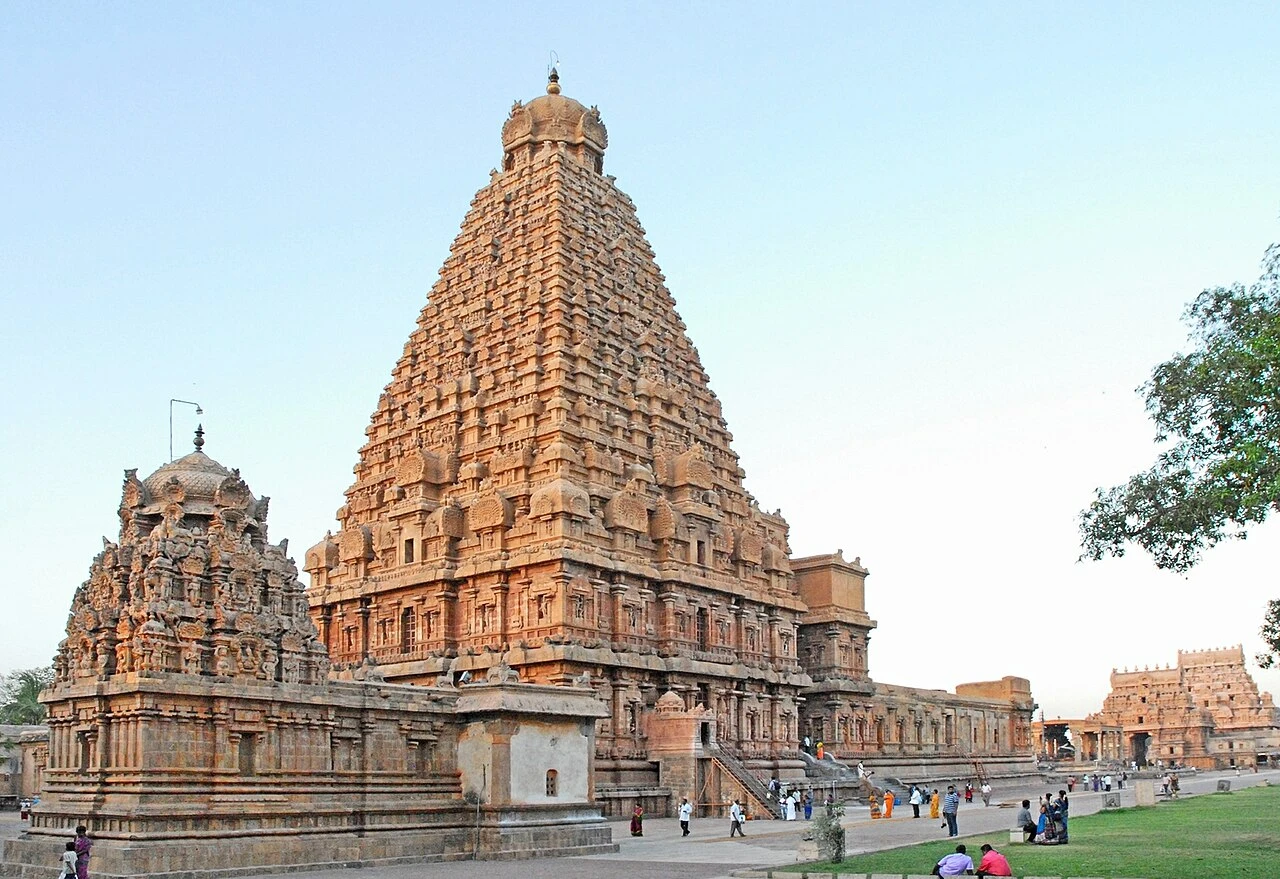
Thanjavur
Brihadisvara Temple
Content & sources
Jean-Pierre Dalbéra from Paris, France · CC BY 2.0