Stanza · Audio guide
Shore Temple Audio Guide
A place to remember. A story to take with you.
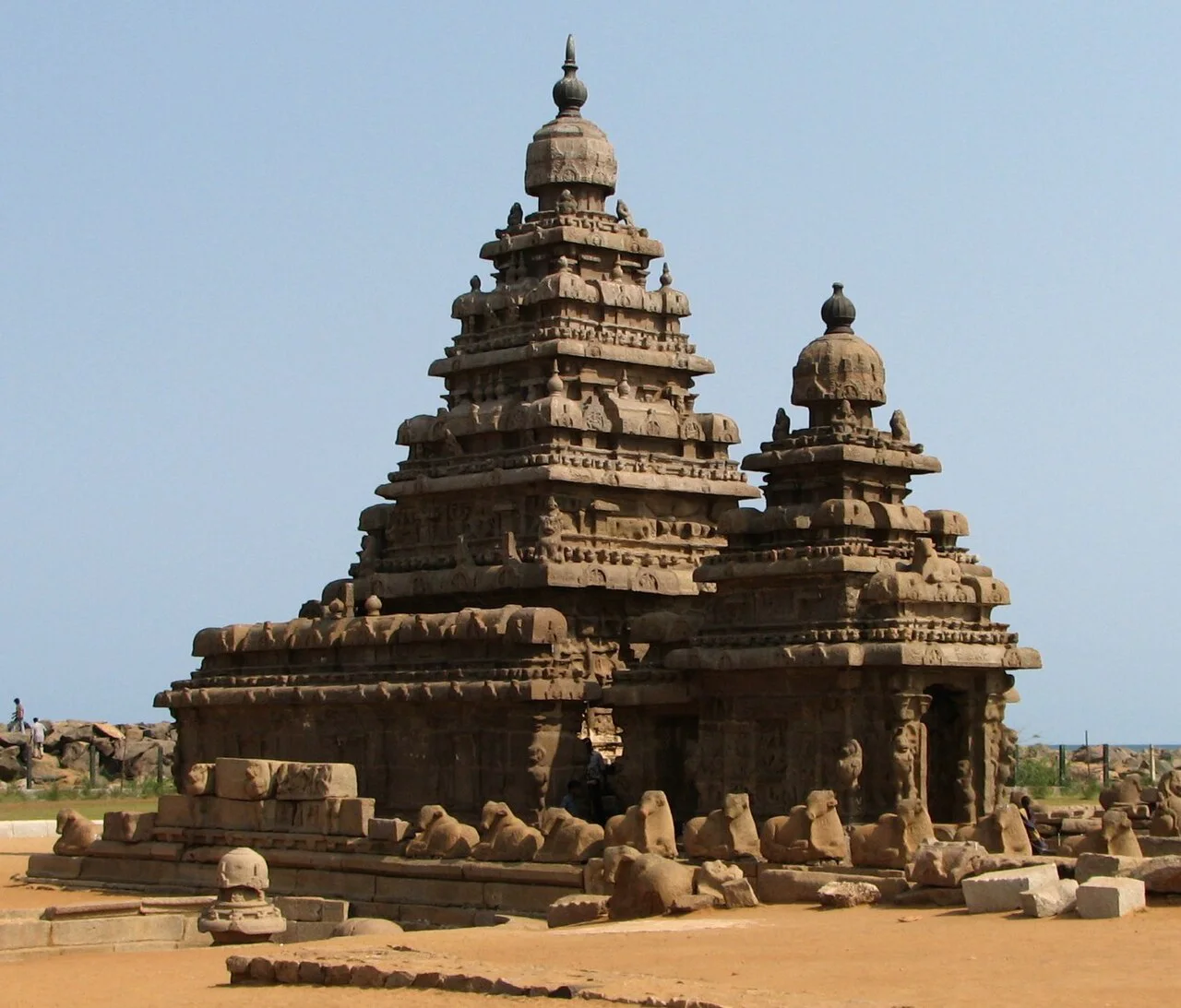
The Shore Temple is a complex of temples and shrines that overlooks the shore of the Bay of Bengal. It is an 8th-century granite block building located in Mahabalipuram.
Download Stanza, then search for “Shore Temple”.
About the tour
One guide. Your kind of visit.
The Shore Temple is a complex of temples and shrines that overlooks the shore of the Bay of Bengal. It is an 8th-century granite block building located in Mahabalipuram.
Ready when you are.
- 01Get the free Stanza app.
iOS & Android
- 02Find your guide.
“Shore Temple”
- 03Download before you go.
Works offline
Audio guide / 10 narrated stops
Inside the guide
Get to know a few of the stories before you go. Open a stop to read more.
01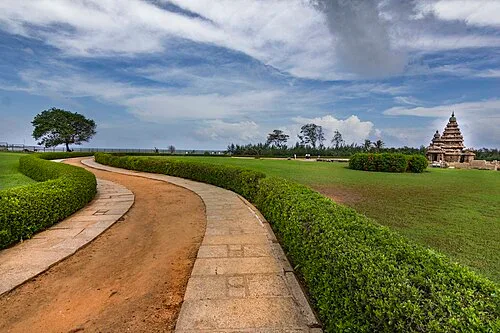 Western Landscaped Gardens
The Western Approach to the Shore Temple
Welcome to the Shore Temple at Mahabalipuram, on the coast of the Bay of Bengal. This path runs through lawns towards the temple towers, and the greenery is new: the Archaeological Survey laid out these gardens and walkways in modern times. The temple itself is not. Work began around the year 700 under King Narasimhavarman the Second, remembered by the title Rajasimha, and the complex was finished about 725. At the time, this shore was a busy port of the Pallava dynasty, and the king raised his temple to face the sea. What makes the place remarkable is the material. Earlier monuments here were carved out of living rock; this one was assembled from cut blocks of granite, raised storey by storey into the pyramidal towers visible from this path. Since 1984, the temple has been part of the Group of Monuments at Mahabalipuram, a UNESCO World Heritage Site. The tour moves through the complex shrine by shrine: a hidden well with a diving boar, a lion with a shrine in its chest, the reclining Vishnu, and the great tower itself.
Photo: RameshM · CC BY-SA 4.0
02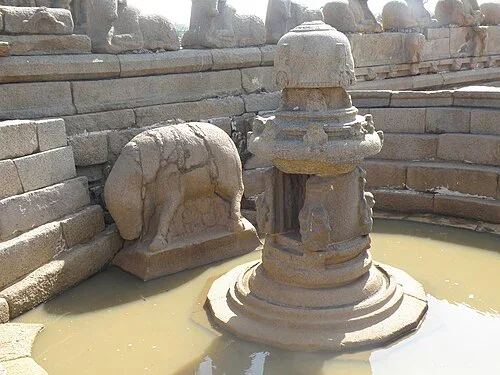 The Miniature Bhuvaraha Well Shrine
The Bhuvaraha Well Shrine
This little shrine went unnoticed for nearly thirteen centuries. In 1990, the Archaeological Survey of India uncovered it: a well with its base cut straight into the bedrock, holding a broken image of the boar god Varaha. The carving itself is older than the temple around it. It dates to the reign of Narasimhavarman Mamalla, who ruled from 638 to 660, and the elliptical well enclosing it was built later, in Rajasimha's time. The bedrock it sits on also carries the reclining Vishnu elsewhere in the complex, so this spot holds some of the oldest work on the site. The image itself is strange. Elsewhere in India, Varaha is shown standing, holding the earth goddess Bhudevi aloft out of the flood. Here he is caught mid-dive, plunging down to rescue her, with no goddess and no ocean carved at all. The base of the sculpture is broken, and the inscription on it carries titles of King Rajasimha.
Photo: BluesyPete · CC BY-SA 3.0
03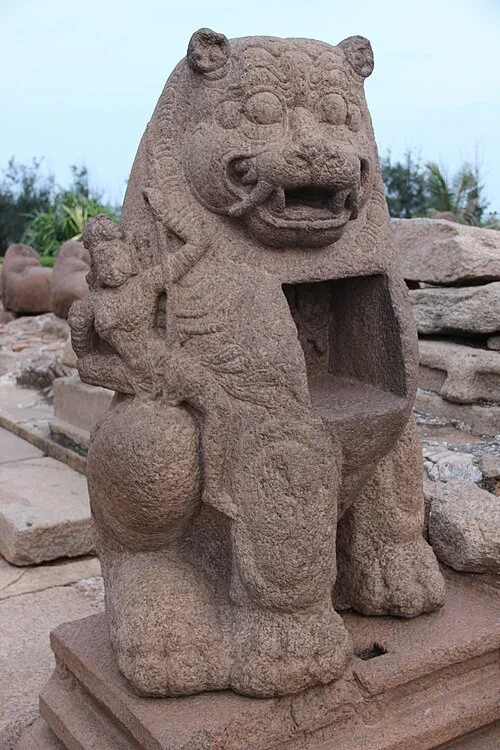 The Monolithic Lion and Durga Sculpture
The Monolith Lion and Durga Shrine
A lion, carved from one massive block of stone, stands inside the temple compound. It is partly sculpted in the round and partly worked in relief, and it does two jobs at once. On its back, the artists carved a miniature image of the goddess Durga in her fierce form as Mahishasuramardini, the slayer of the buffalo demon. And in the lion's torso, the masons cut a square cavity. A small shrine may have stood inside that hollow, though whether anything was ever installed there is a matter of scholarly inference rather than record. The lion itself is understood as Durga's favourite beast. So one stone serves as guardian, pedestal and temple all at once, a beast whose chest is itself a sanctuary.
Listen in the appPhoto: Thamizhpparithi Maari · CC BY-SA 3.0
04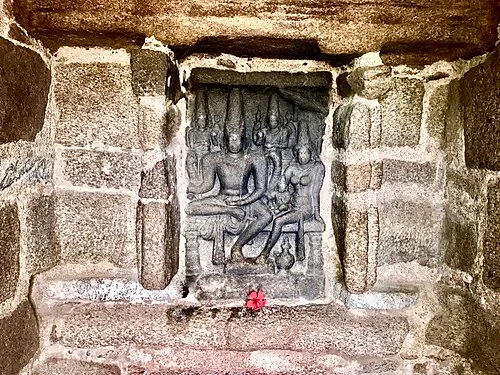 The West-Facing Shiva Shrine
Behind the main temple stands the smaller of the two Shiva shrines, and it faces the wrong way for a temple on an east coast: west, towards the setting sun. It is a double-storeyed structure with a stepped pyramidal tower, crowned by an octagonal shikhara raised over a circular griva, with a kalasa and finial fitted above. Its cornices carry kudus, the horseshoe-arch projections, and small shrines at both levels. In front of the shrine there is no hall, no mandapa; it was probably damaged at some point in the long past. The outside walls hold two striking panels. One shows Ekapadamurti, a one-legged form of Shiva with Brahma and Vishnu emerging from his sides. The other shows Nagaraja, king of serpents, standing beneath a five-hooded serpent. Inside, the back wall of the shrine carries a Somaskanda relief, the seated family image of Shiva that recurs throughout this complex. And the shrine is not a museum piece. A fresh red flower lies before the carved panel, an offering left by a worshipper thirteen centuries after the stone was cut.
Listen in the appIM3847 · CC BY-SA 4.0
05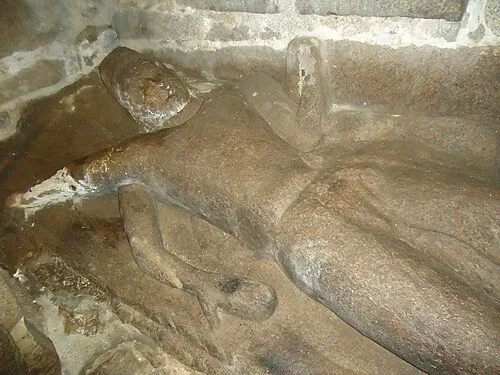 The Central Reclining Vishnu Shrine
The Reclining Vishnu Shrine
Between the two tall Shiva towers sits a small, low shrine, and it is the oldest shrine in the complex. Its inscription, cut in Pallava Grantha script on the lintel, marks it as the first shrine raised here. The figure inside is Vishnu in his Anantashayi form, reclining on the endless serpent Ananta. He has four arms, though the attributes in his hands are damaged. The stone is worn smooth by age and touch. The shrine was built between the two Shiva temples, on the same platform, so Shaiva and Vaishnava worship sat side by side from the start. A detail suggests how the shrine was used: water may have been channelled into the temple, flowing into the Vishnu shrine itself, though that remains a possibility rather than a certainty. Two inscriptions on a slab of the smaller Shiva temple name the three shrines of the complex, and call the whole place Jalashayana, lying in water, a name that fits a temple standing beside the sea. The outer walls carry Vaishnava scenes: Krishna slaying the demon Kesi, Krishna dancing on the serpent Kaliya, and Vishnu riding Garuda to save the elephant Gajendra from a crocodile.
Listen in the appPhoto: Pratapy9 · CC BY-SA 3.0
06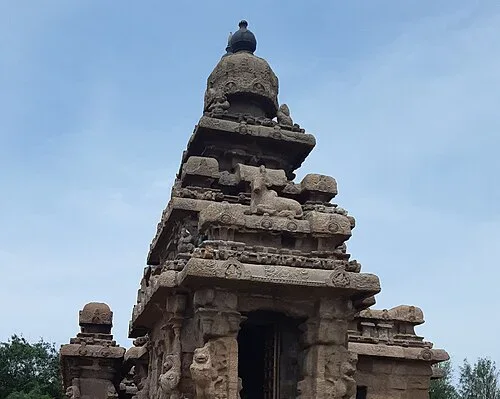 The Main East-Facing Shiva Shrine
The Main Shikhara: From Cave to Structure
This tower marks a turning point. Its granite was hauled from a nearby quarry, and it is the earliest important structural temple in all of South India. The main temple rises in five storeys, some eighteen metres high, on a platform about fifteen metres square. Each tier is distinct, with overhanging eaves that cast dark shadows, and a finial crowns the top, marking it as a completed, working temple. The roofs carry ornamentation like that of the Pancha Rathas, the monolithic chariot-shrines nearby. Seen from the north, the whole complex echoes the form of the Dharmaraja Ratha, one of those carved boulders, as if the builders had translated a sculpture into architecture. The idea outlived its makers. When the Cholas defeated the Pallavas and took over Tamil Nadu, they carried this style forward in the temples they built, and South Indian temple architecture grew from this shore.
Listen in the appGabriele Giuseppini · CC BY 3.0
07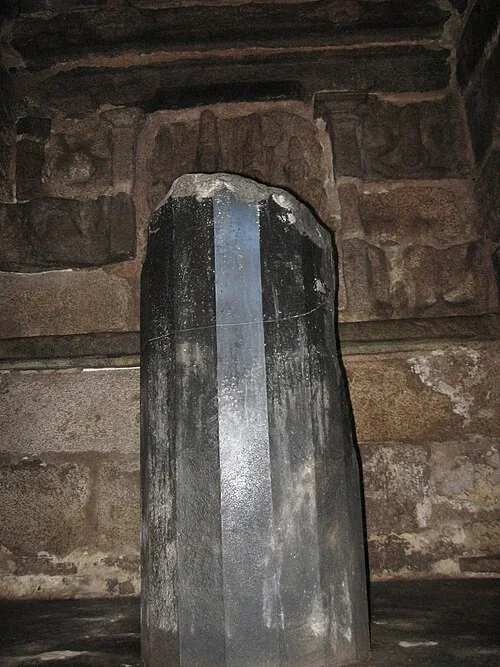 The Main East-Facing Shiva Shrine
The Dharalinga of the East Sanctum
Inside the sanctum of the main, east-facing shrine stands the Dharalinga, and it is cut from a stone unlike the granite all around it: dense, dark basalt. The lingam has sixteen faces, each with slight fluting that rises to form a crown at the top. It stands about 1.8 metres tall, and some thirty centimetres of that length are set into the foundation, anchoring the stone firmly in place. The upper portion is damaged. The carving is in the Rajasimha style, and the sanctum holding it is a square chamber about three and a half metres across. The east-facing orientation was chosen deliberately. The main temple faces east so that the rays of the rising sun fall directly on the deity in the shrine, and every morning for thirteen centuries, dawn has arrived here first.
Listen in the appGabriele Giuseppini · CC BY 3.0
08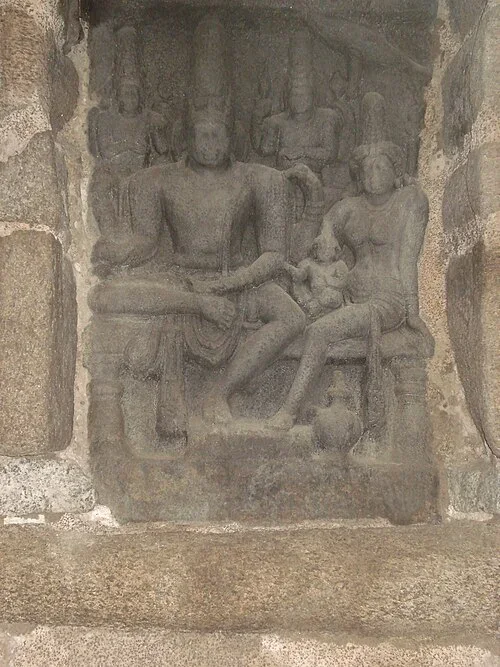 The Main East-Facing Shiva Shrine
The Somaskanda Family Panel
On the interior wall of the main sanctum is the panel that gives these shrines their identity: the Somaskanda. It is a bas-relief built over a stone slab, showing Shiva seated with his consort Uma, also called Parvati, and their child Kartikeya, the Skanda of the panel's name. A god, a goddess and their son, together in one quiet family image. The same composition appears twice more at the entrance porch of this temple, and the west-facing Shiva shrine carries its own panel on the back wall of its sanctum. The type was not invented here. It appears on the nearby Dharmaraja Ratha, carved in the era of Paramesvarvarman, and the Pallava builders carried it from monument to monument. In the half chamber before the sanctum, Brahma is sculpted on the south wall and Vishnu on the north, and a passage runs around the shrine so worshippers can circle it clockwise. But it is the family panel that repeats, shrine after shrine, the signature of the Rajasimha age.
Listen in the appPhoto: Jimmyeager · CC BY-SA 3.0
09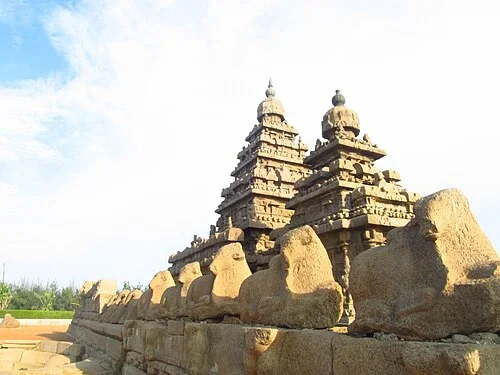 The Nandi-Lined Compound Wall
The compound wall around the temples is a sculpture gallery in its own right. Along its top runs a line of large Nandi figures, the bull that serves as Shiva's mount, carved again and again into the stone. Between them the masons set yalis, the mythical leonine beasts, and Varahas, the boars. The outer walls of the shrines themselves are divided into bays by pilasters, and their lower courses are carved into a series of rearing lions, so the whole enclosure bristles with guardians. The wall had a practical job too. It was built to keep the sand blown in from the sea out of the sacred precinct. And on its topmost layer, the builders cut an inscription in Pallava-Grantha script with a bold claim: it equates the king, Rajasimha, with Arjuna, the great warrior of the epic. A ruler who raised this temple by the sea cast himself in the company of the archer of legend.
Listen in the appPhoto: Arun201181 · CC BY-SA 3.0
10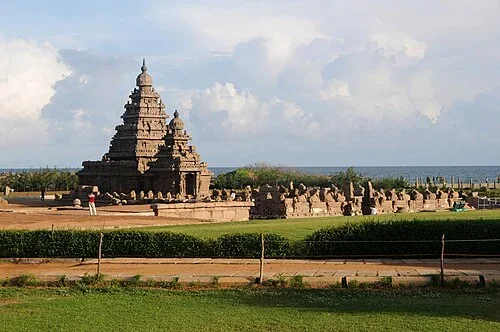 The Sea-Facing Breakwater View
Seven Pagodas: The View from the Sea
European merchants who came to this coast after Marco Polo called the place Seven Pagodas. To seafarers, the word pagoda fitted these tiered towers, and the temple probably served them as a landmark, a fixed point of stone on a flat shore. The belief grew that seven such pagodas stood here, and that six of them lie submerged beneath the sea. In December 2004, the tsunami that struck this coastline gave the legend new life. The temple itself survived with little damage; the water returned to its normal level within minutes, and the foundation on hard granite rock held against the waves. But the receding sea briefly exposed an outline of collapsed structures off the coast, including an old temple built entirely of granite blocks, along with ancient rock sculptures of lions, elephants and peacocks. Whether the seven pagodas ever truly stood remains speculation, renewed but not proven. What is certain is the work of keeping the survivor alive. The Archaeological Survey of India has built a breakwater around the shore and protective groynes along the coast, planted casuarina trees, and treats the salt-laden stone with wallpaper pulp that draws the saline water out, letting the rock breathe. Thirteen hundred years after Rajasimha's builders set their granite blocks above the surf, the temple still faces the sea it was built to greet.
Listen in the apphttps://www.flickr.com/photos/pnglife/ · CC BY-SA 2.0
Shore Temple
Frequently asked questions
How much does the guide cost?
Free app download. Listed guide price: $0.99. Guide price shown in the app. Audio guide only. Venue admission is separate.
Can I listen without internet?
Yes. Download the guide’s audio, images, and maps in the app before your visit. Your downloaded content is then available offline.
Can I listen in my language?
This audio guide is available in 15 languages, including English.
Do I need to follow a schedule?
No. This is a self-guided experience. Choose your stops, pause whenever you like, and return to a story at your own pace.
At your own pace
Explore Shore Temple.
Download Stanza, then search for “Shore Temple”.
Free app download · Guide price shown in the app
Keep exploring
Audio guides — India
Mahabalipuram · 1 km
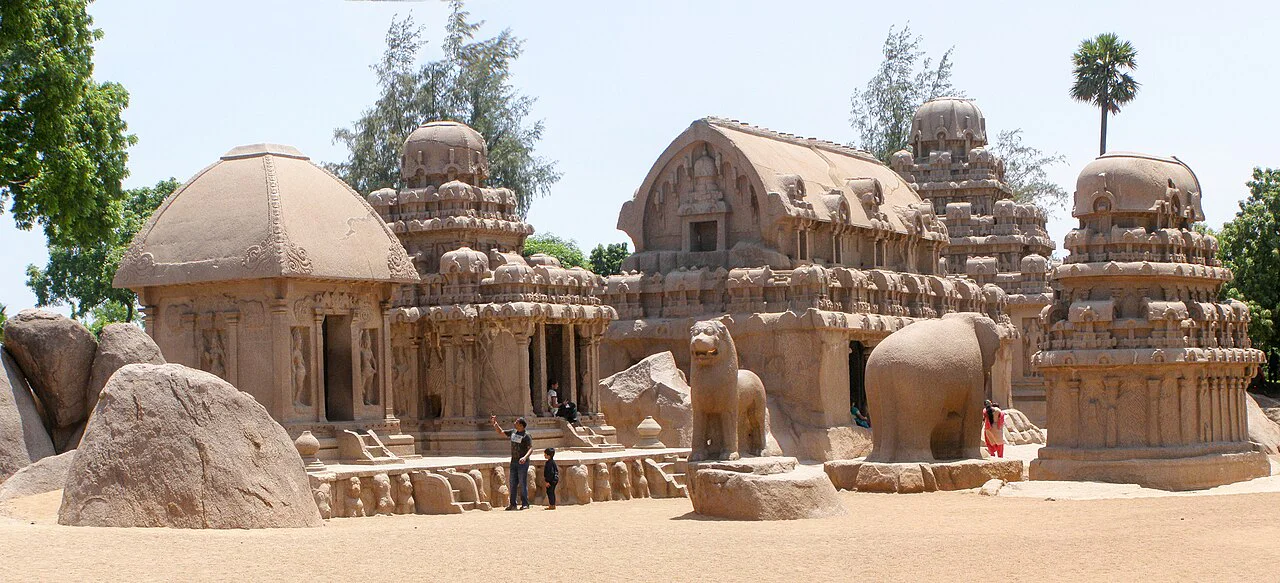
Pancha Rathas
Content & sources
Photo: BluesyPete · CC BY-SA 3.0
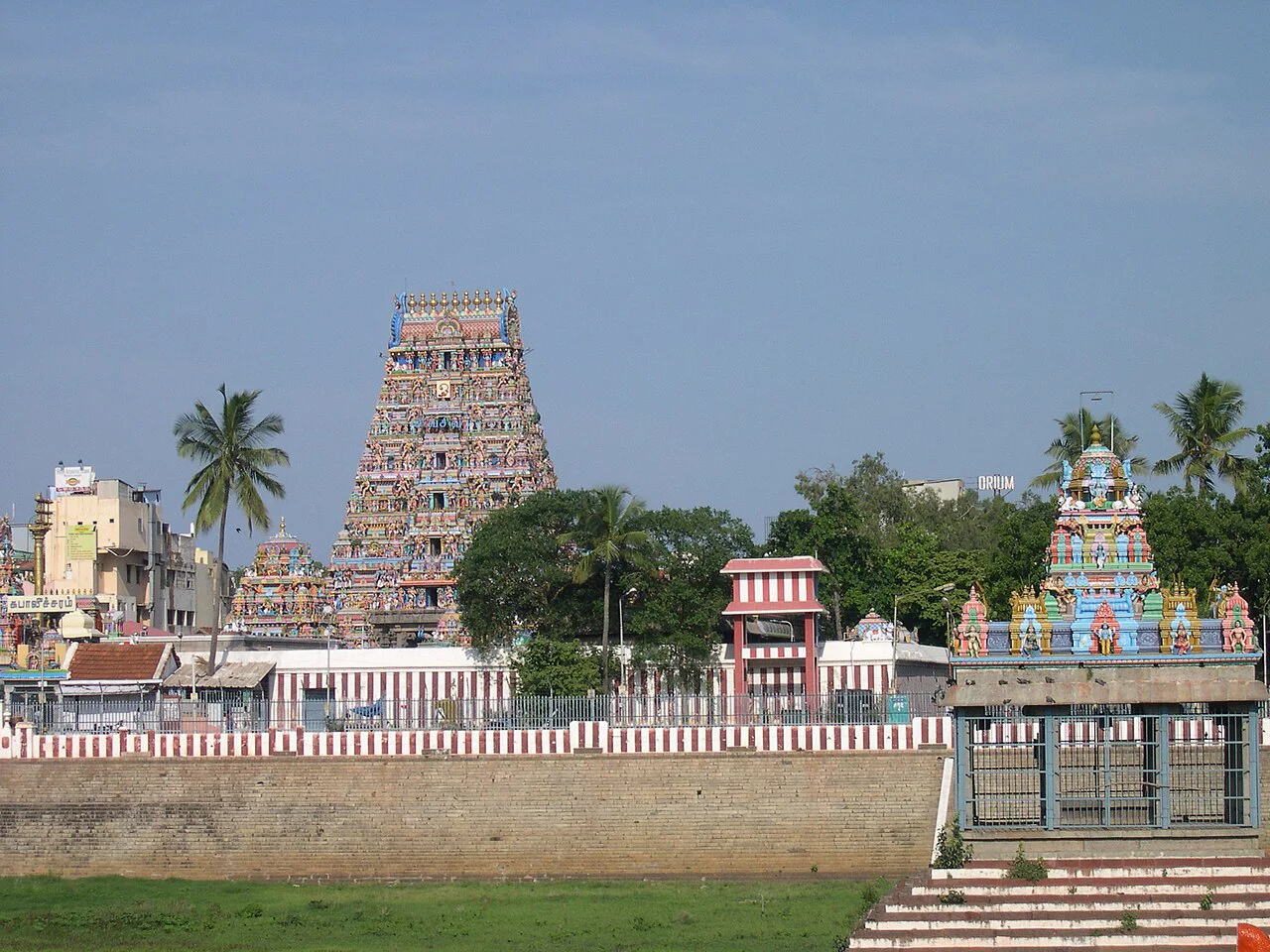
Chennai · 47 km
Kapaleeshwarar Temple
Content & sources
G V Balasubramanian · CC BY-SA 2.0
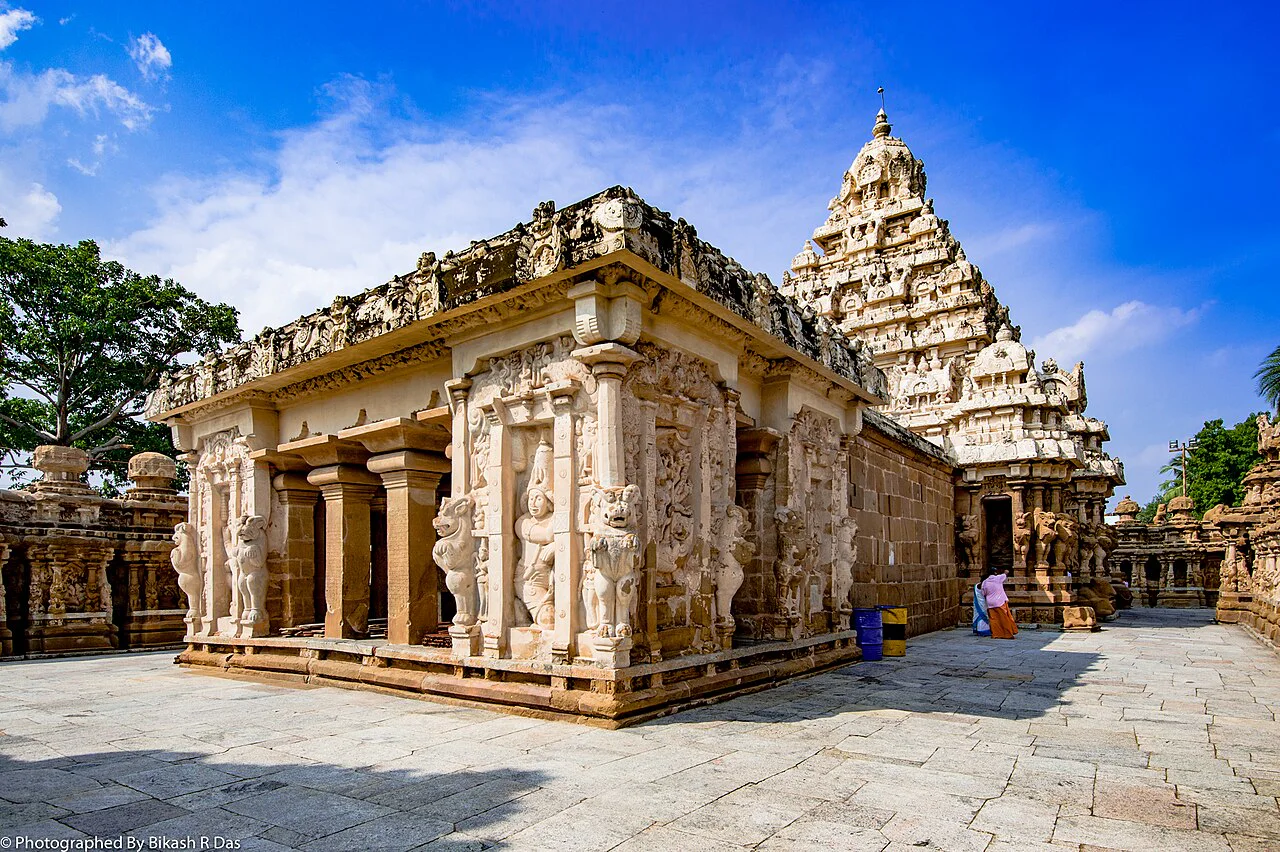
Kanchipuram · 61 km
Kailasanathar Temple, Kanchipuram
Content & sources
Bikash Das from bangalore, india · CC BY 2.0
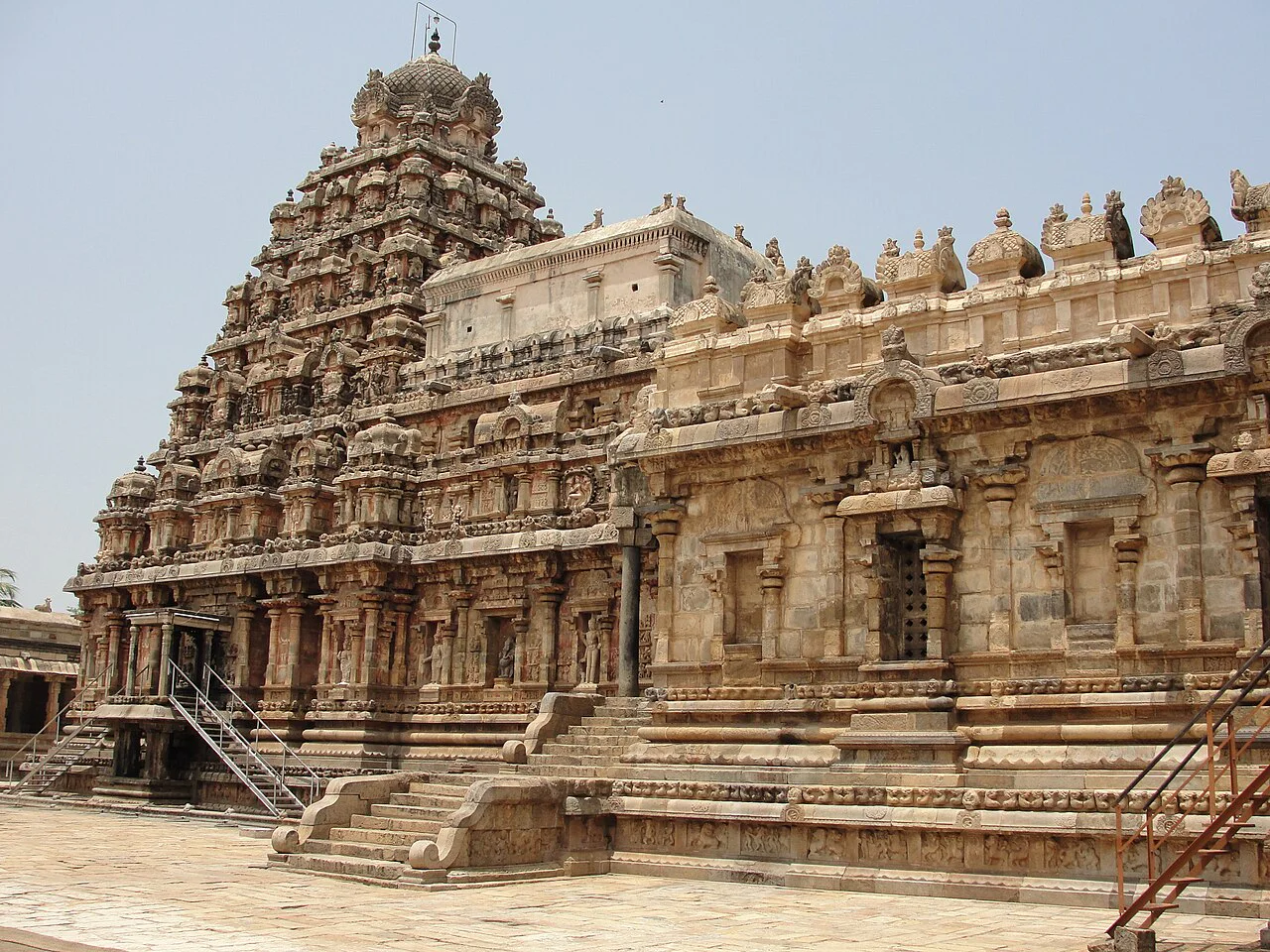
Dharasuram
Airavatesvara Temple
Content & sources
Photo: Thamizhpparithi Maari · CC BY-SA 3.0