Stanza · Audio guide
Trowulan Audio Guide
A place to remember. A story to take with you.
Trowulan is an archaeological site located in the Indonesian province of East Java. It is theorized to be the capital city of the Majapahit Empire, which was described in 14th-century historical sources.
Download Stanza, then search for “Trowulan”.
About the tour
One guide. Your kind of visit.
Trowulan is an archaeological site located in the Indonesian province of East Java. It is theorized to be the capital city of the Majapahit Empire, which was described in 14th-century historical sources.
Ready when you are.
- 01Get the free Stanza app.
iOS & Android
- 02Find your guide.
“Trowulan”
- 03Download before you go.
Works offline
Audio guide / 13 narrated stops
Inside the guide
Get to know a few of the stories before you go. Open a stop to read more.
01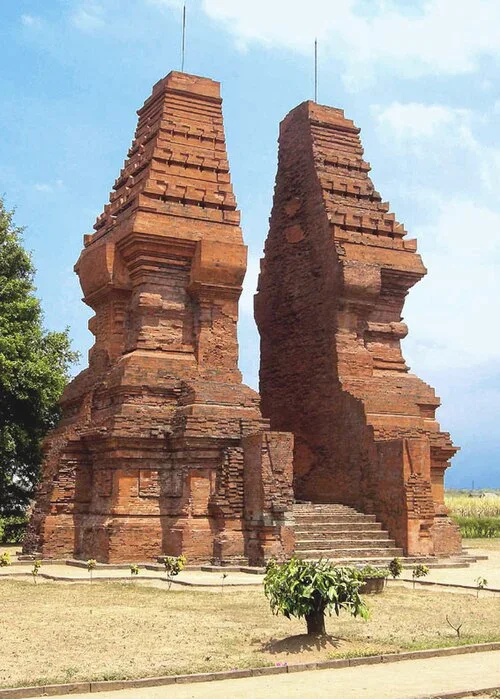 Banyan Tree Split Gate (Wringin Lawang)
Wringin Lawang
Two towers of red brick rise fifteen and a half metres, split down the middle like a mountain cleaved in two. This is Wringin Lawang, a name in Javanese that means the Banyan Tree Gate. It was built in the fourteenth century, when Majapahit ruled much of the Indonesian archipelago. The base alone measures thirteen metres by eleven. Among the split gates of the Majapahit era, this is one of the oldest and largest still standing. Most historians agree it served as the entrance to an important compound in the Majapahit capital. Which compound, nobody knows for certain. The most popular suggestion says it led to the residence of Gajah Mada, the powerful chief minister of Majapahit. That link is local tradition rather than settled fact, but it has followed the gate for a long time.
Original uploader was Gunawan Kartapranata at en.wikipedia · CC BY-SA 3.0
02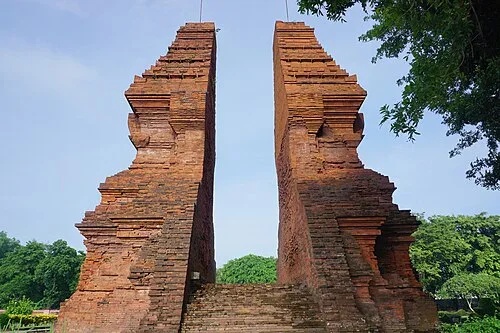 Banyan Tree Split Gate (Wringin Lawang)
Wringin Lawang: The Split Passage
This gate style is called candi bentar, the split gateway. It takes the shape of a Majapahit temple, with three parts: a foot, a body, and a tall roof. Then the whole form is divided evenly into two mirroring halves, leaving a passage through the centre. A stepped base still marks the foot of that passage. There are no doors here, and the gate offered little real defence beyond narrowing the way in. So it probably served a ceremonial and aesthetic purpose, creating a sense of grandeur before entering the next compound. The style may well have first appeared during the Majapahit era. A fifteenth-century Chinese source gives a sense of how guarded the city's heart was. It describes the palace as enclosed by a brick wall more than ten metres high, with a double gate.
Anandajoti Bhikkhu from Sadao, Thailand · CC BY 2.0
03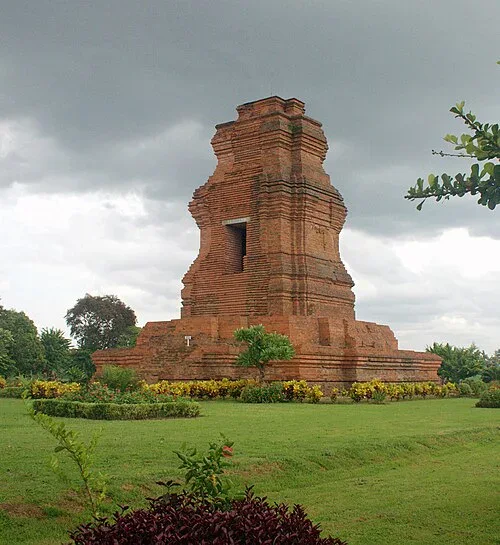 Brahu Temple
Candi Brahu
A tall body of red brick rises about twenty metres above a broad, stepped base, with a dark rectangular opening on its upper face. This is Candi Brahu, in Bejijong village, and it faces west. The sanctuary measures about twenty-two and a half metres long and eighteen metres wide. It was built in Buddhist style, and is usually dated to the fourteenth century, though some argue it is far older than every other temple around Trowulan. The name Brahu may come from wanaru, a sacred building named in the Alasantan inscription, found not far from here. That inscription, dated 939, calls a place of this name a spot where the bodies of kings were burned. Excavators searching the temple's chambers found no trace of royal ash, since the urns had been looted long before restoration work ran from 1990 to 1995. Brahu is also the sole survivor of what was once a cluster of buildings.
Listen in the appGunawan Kartapranata · CC BY-SA 3.0
04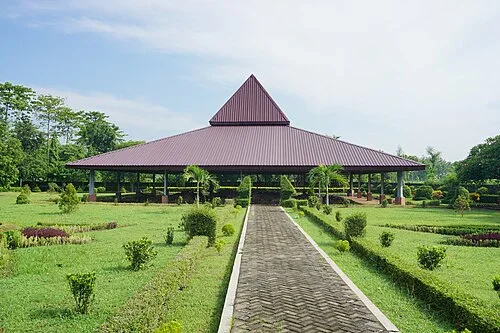 Gentong Temple
Gentong Site Pavilion
A broad pitched roof on wooden posts shelters an open stretch of lawn, reached by a straight paved path between clipped shrubs. This pavilion stands at the Gentong site, a quiet corner of Trowulan, and the site stands at the end of a long story of rediscovery. In the nineteenth century, Sir Thomas Stamford Raffles reported ruins of temples scattered about the country for many miles. Dense teak forest covered much of the region then, making a detailed survey impossible. Raffles was impressed enough to call Trowulan the pride of Java. In 1926 the Dutch architect Henri Maclaine Pont discovered the great brick Segaran pool, which was then buried under dirt and mud. Reconstruction followed some years later, but the pool's original purpose is still debated, with reservoir and bathing places among the theories. In October 2009, Indonesia's Ministry of Culture and Tourism submitted Trowulan to the UNESCO World Heritage list. The ruins keep much of their story to themselves, and scholars are still reading them.
Listen in the appAnandajoti Bhikkhu from Sadao, Thailand · CC BY 2.0
05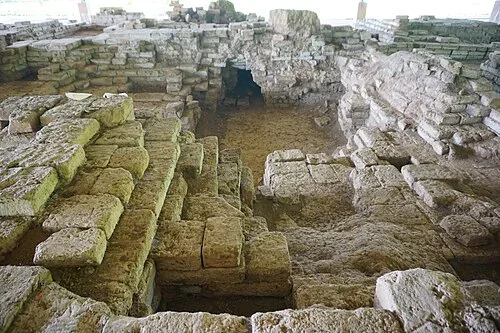 Gentong Temple
Gentong Excavations
Trenches cut into the earth expose stepped platforms of squared blocks, low walls of rubble, and a dark recess at the back. The ground here holds the memory of how the capital ended. In 1478, the city was razed during the invasion of Girindrawardhana, who moved against Kertabhumi. After that blow, Majapahit's capital was moved to Daha, in Kediri. The ruins did not simply sit in the open afterwards. Excavations across Trowulan have shown that parts of the old settlement lie buried under several metres of mud and volcanic debris. Frequent eruptions of nearby Mount Kelud supplied the ash, and the flooding Brantas River supplied the mud. What exactly buried any single trench like this one is hard to say, but the whole site shares that fate.
Listen in the appAnandajoti Bhikkhu from Sadao, Thailand · CC BY 2.0
06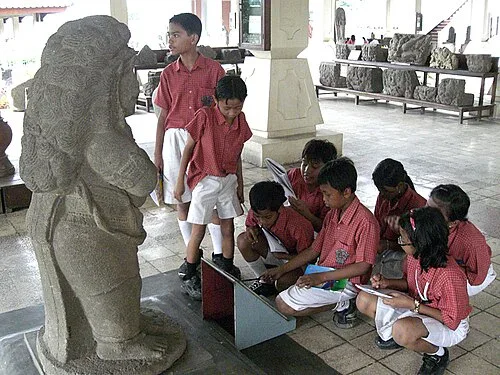 Trowulan Archaeological Museum
Trowulan Museum
Under a high open hall, stone figures stand among shelves of carved fragments, and schoolchildren in red uniforms crowd around a weathered statue. This is the Trowulan Museum, which holds most of the relics found at Trowulan and around it. The finds come from an archaeological zone of roughly one hundred square kilometres, long theorized to be the site of the Majapahit capital, known as Wilwatikta. The empire was founded by Kertarajasa Jayawarddhana, and its capital is described in the fourteenth-century poem Nagarakretagama. Daily life here ran on money, and the money tells its own story. Around the year 1300, Chinese bronze coins became Majapahit's official currency, replacing the gold and silver used for centuries. The coins came in small denominations, well suited to market shopping. One court text, the Nawanatya, records an official whose job was protecting the markets, and whose share was eight thousand cash every day from them. Money even entered childhood habits, in clay piggy banks with a coin slot in the back. The word celengan, still used for a money box in Javanese and Indonesian, comes from celeng, meaning pig. One famous terracotta example from Trowulan is kept in the National Museum in Jakarta.
Listen in the appGunawan Kartapranata · CC BY-SA 3.0
07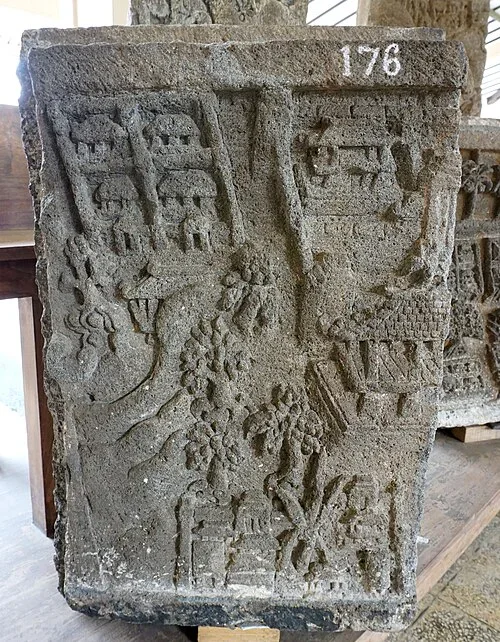 Trowulan Archaeological Museum
Relief Panel of Roofed Houses
Rows of small roofed houses and trees are carved into this heavy stone panel. Temple reliefs from Majapahit rarely show towns, but some sketch settlements as pavilions enclosed within walls. This panel illustrates that idea rather than proving it depicts Trowulan itself. The Nagarakretagama uses the word kuwu for a settlement unit, a group of buildings surrounded by a wall, where many people lived under a nobleman's control. The capital was probably composed of just such units. A book on Majapahit court etiquette defines the capital as the whole area where one can go out without passing through paddy fields. The palace sat at the heart of this pattern, with its main gate in the north wall. Behind that gate came one courtyard after another, crowded with houses, pavilions and waiting halls. Excavated dwellings elsewhere on the site had brick floors, wells and drains, and in some places two or even three layers of buildings lie superimposed.
Listen in the appAnandajoti Bhikkhu from Sadao, Thailand · CC BY 2.0
08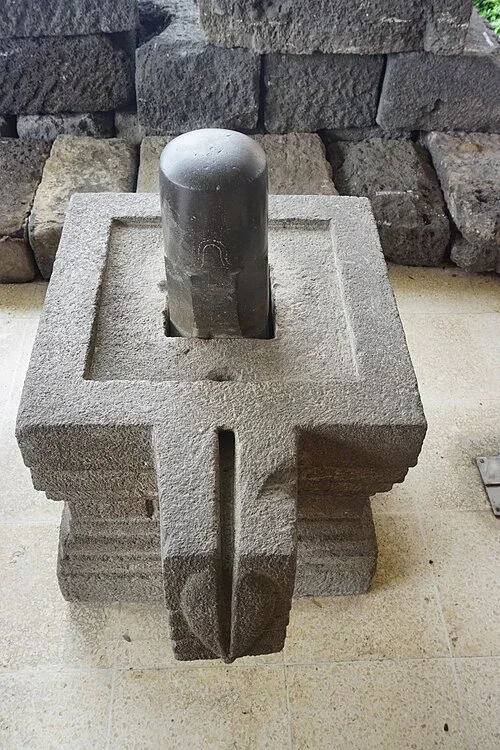 Trowulan Archaeological Museum
Linga and Yoni Stone
A polished cylindrical linga stands in a square yoni base, with a spout-like channel running out from the front. In Hindu temples, the linga set in the yoni represents the god Shiva, and this stone follows that old form. It speaks for one strand of a religiously mixed capital. The poet Prapanca wrote that outside the palace were quarters for Shiva priests, for Buddhists, and for other members of the nobility. Islam had its place too. At the Troloyo hamlet, numerous Islamic tombstones have come to light, most dated between 1350 and 1478. They confirm that a Muslim community was well established in Java by the mid fourteenth century, and that its religion was practised openly within the royal capital itself. Contact reached further still. At the ruin of Menak Jingga, carved ornaments were identified as the qilin, a creature of Chinese myth, which might suggest a strong cultural link with China, especially during the Ming dynasty.
Listen in the appAnandajoti Bhikkhu from Sadao, Thailand · CC BY 2.0
09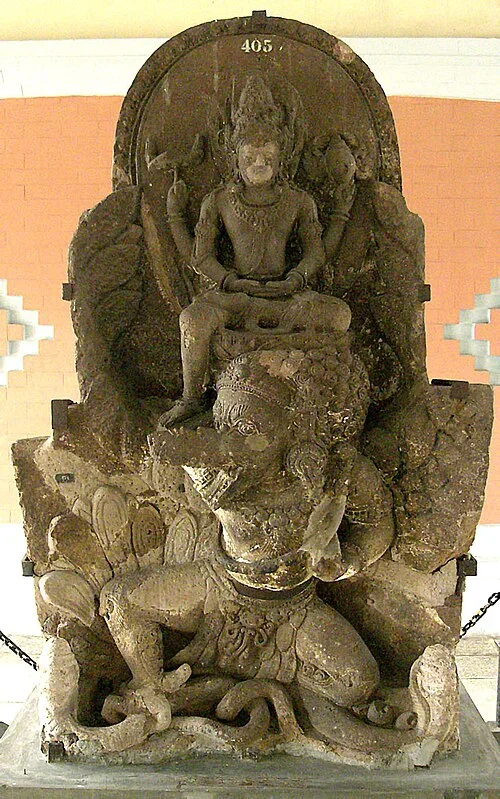 Trowulan Archaeological Museum
Statue of Airlangga as Vishnu on Garuda
A seated figure rests above a crouched figure with a large head, and carved foliage spreads across the base of the stone. This is the famous statue from the Belahan bathing place, often identified as King Airlangga, who ruled in East Java in the eleventh century. He is shown as the god Vishnu, seated on Garuda, the divine eagle, who is the crouching figure below. The statue is older than Majapahit, and it is kept here in the museum.
Listen in the appGunawan Kartapranata · CC BY-SA 3.0
10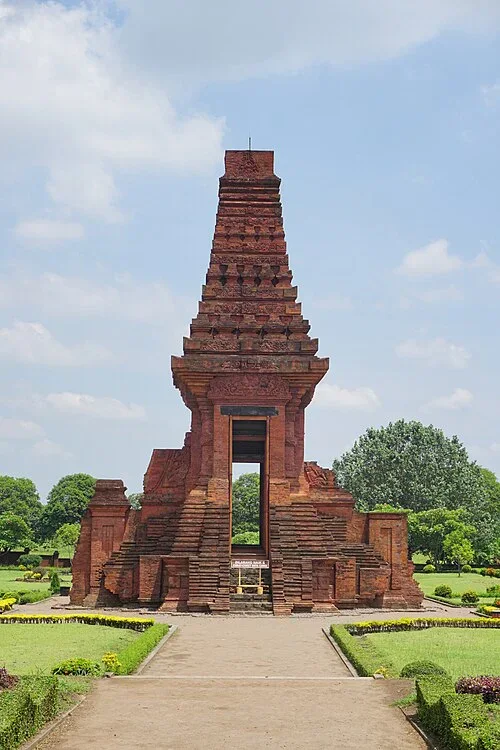 Bajang Ratu Gate
Bajang Ratu Temple Gateway
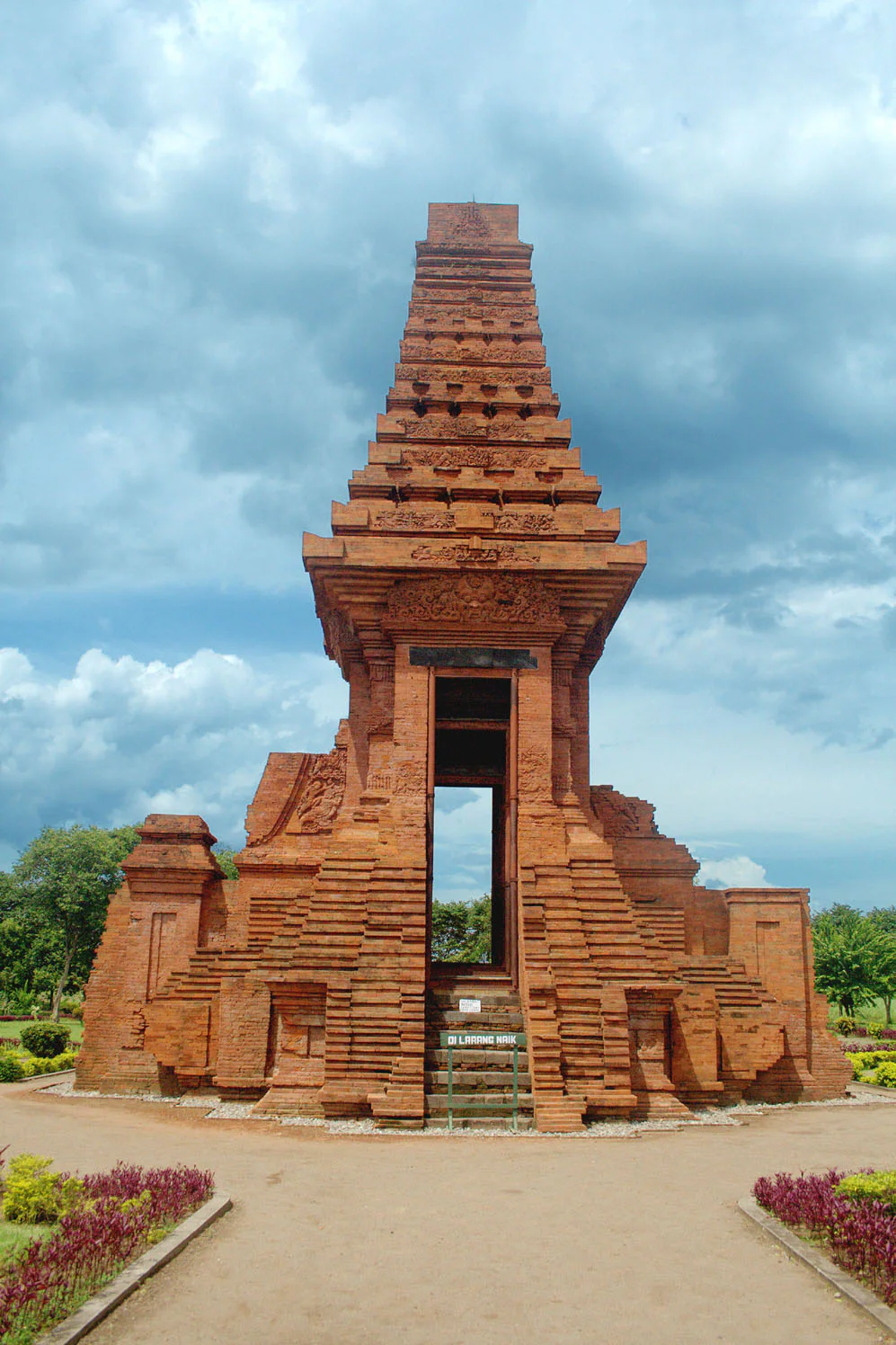
A slender gate of red brick rises sixteen and a half metres, its passage running through the lower body beneath a tall, stepped roof. This is Bajang Ratu, a paduraksa gate, meaning it is roofed, and it dates from the mid fourteenth century, recently restored. The name means dwarf or defective monarch in Javanese, and folk tradition explains it through Jayanegara, the second Majapahit king. As a child, the story goes, he fell from this gate and was left with defects in his body. Another reading takes the name to mean little monarch, since Jayanegara took the throne at a young age. Historians connect the gate with Çrenggapura, a shrine named in the Nagarakretagama and dedicated to Jayanegara after his death in 1328. The connection is suggestive, but not settled.
Listen in the appAnandajoti Bhikkhu from Sadao, Thailand · CC BY 2.0
- 11
Bajang Ratu: Tiered Roof and Brickwork
Close up on the gate's carved brick: stories of Sri Tanjung and the Ramayana, and figures meant to ward off harm.
- 12
Candi Tikus Ritual Bath
A sunken ritual bath named after rats, built as a model of the sacred Mount Meru.
- 13
Carved Stone Ornament Detail
Weathered carved ornaments, a small taste of East Javanese temple decoration.
Trowulan
Frequently asked questions
How much does the guide cost?
Free app download. Listed guide price: $1.99. Guide price shown in the app. Audio guide only. Venue admission is separate.
Can I listen without internet?
Yes. Download the guide’s audio, images, and maps in the app before your visit. Your downloaded content is then available offline.
Can I listen in my language?
This audio guide is available in 15 languages, including English.
Do I need to follow a schedule?
No. This is a self-guided experience. Choose your stops, pause whenever you like, and return to a story at your own pace.
At your own pace
Explore Trowulan.
Download Stanza, then search for “Trowulan”.
Free app download · Guide price shown in the app
Keep exploring
Audio guides — Indonesia
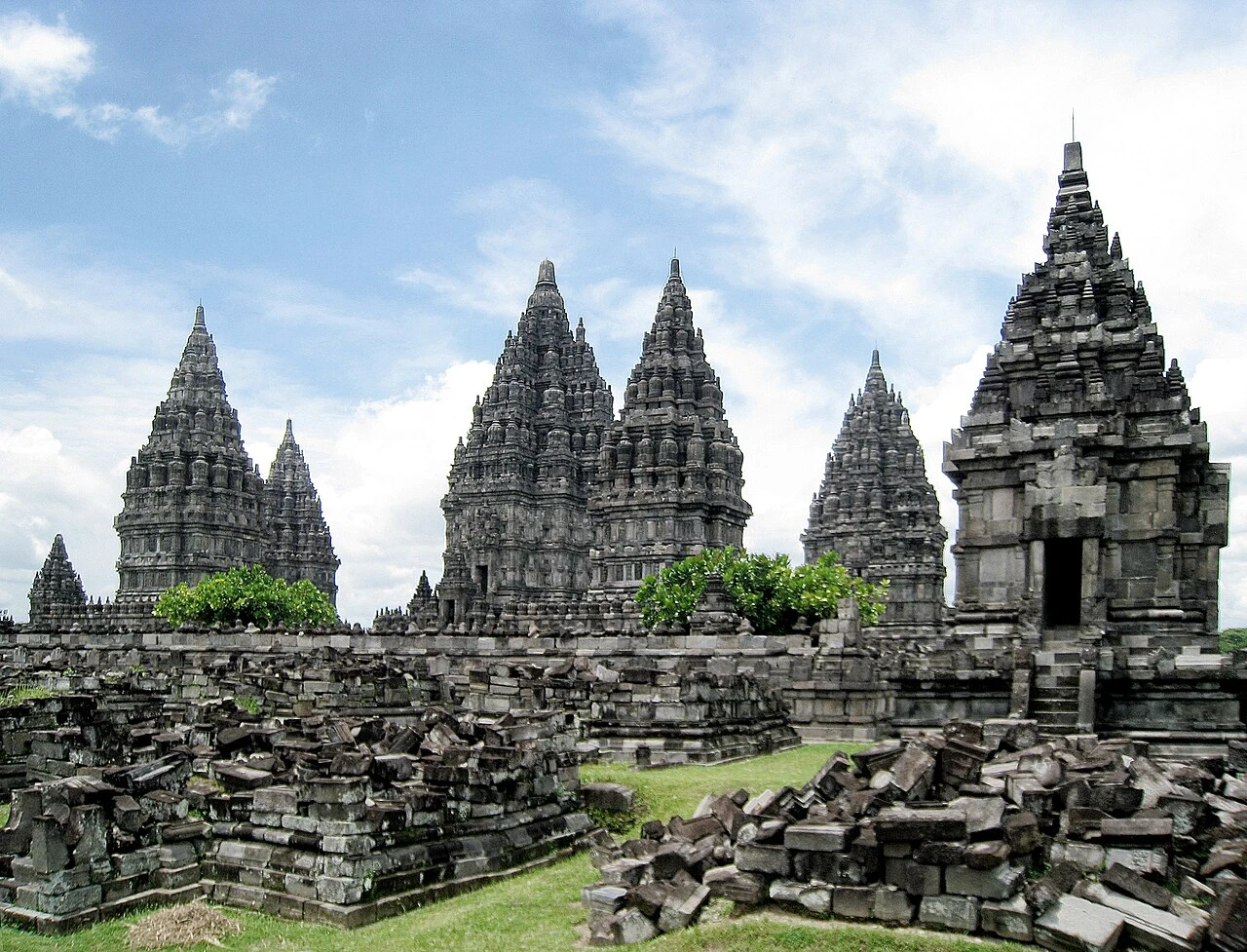
Bokoharjo
Prambanan Temple
Content & sources
Gunawan Kartapranata · CC BY-SA 3.0
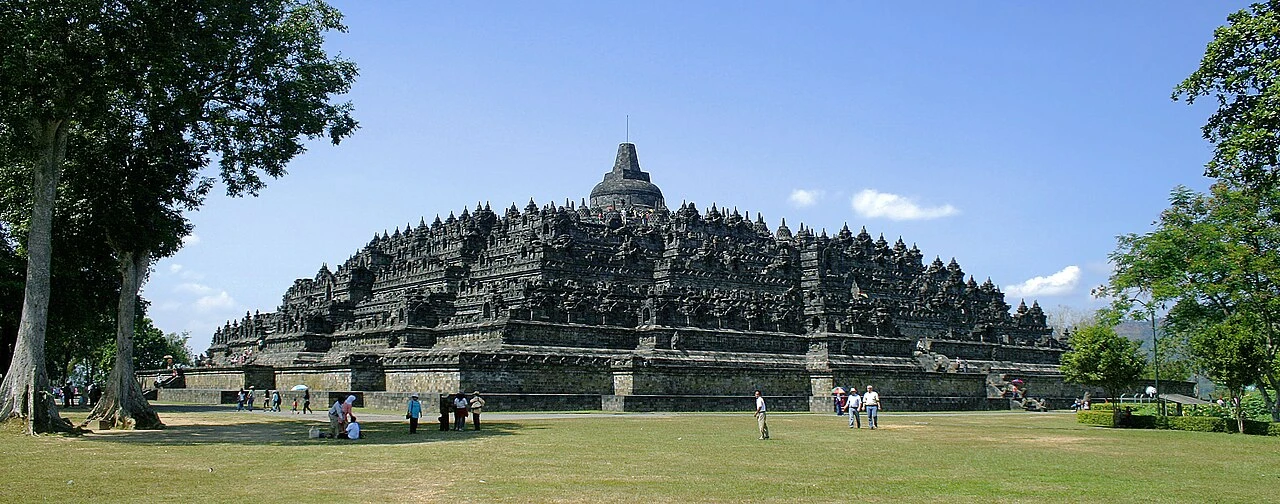
Desa Borobudur
Borobudur
Content & sources
Gunawan Kartapranata · CC BY-SA 3.0
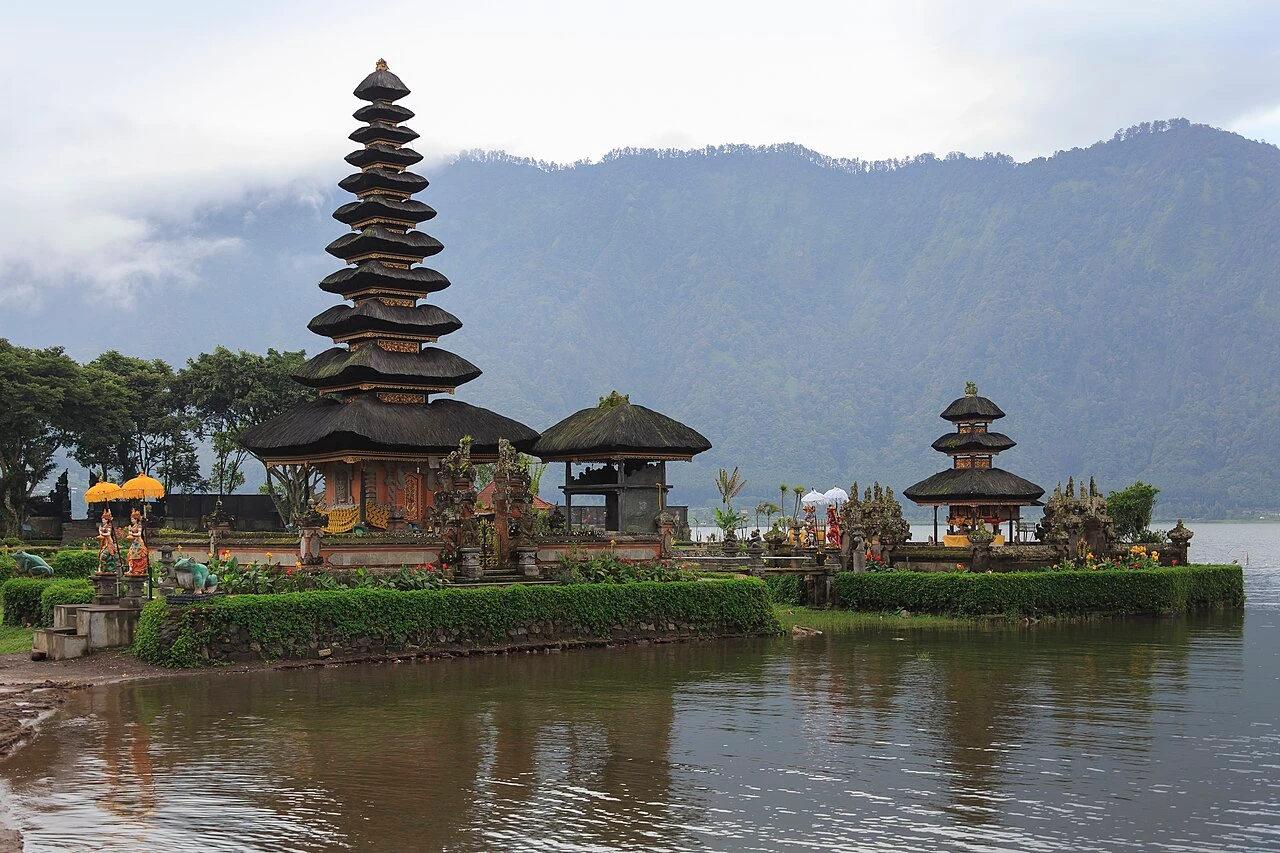
Baturiti
Pura Ulun Danu Bratan
Content & sources
CEphoto, Uwe Aranas · CC BY-SA 3.0
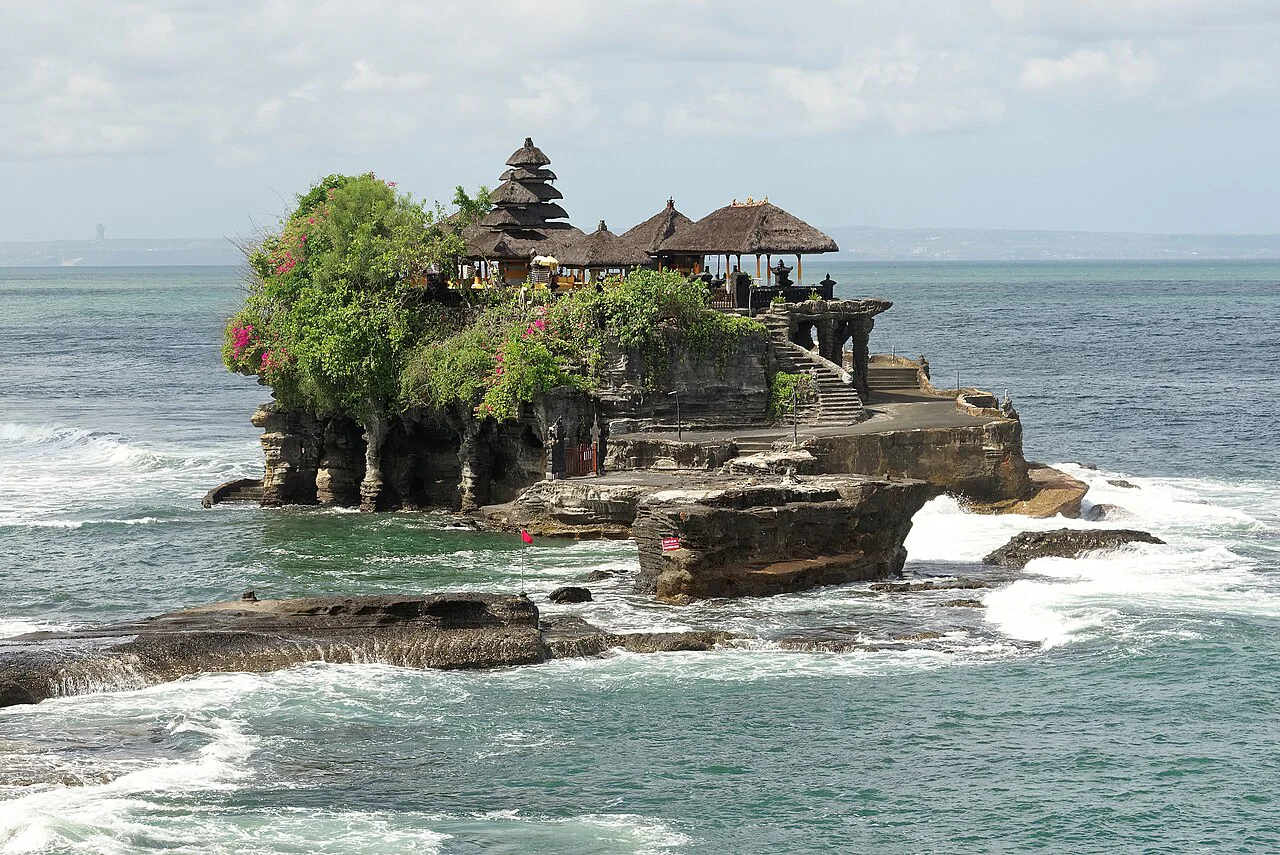
Beraban
Tanah Lot
Content & sources
Jakub Hałun · CC BY-SA 4.0