Stanza · Audio guide
Gunung Padang Audio Guide
A place to remember. A story to take with you.
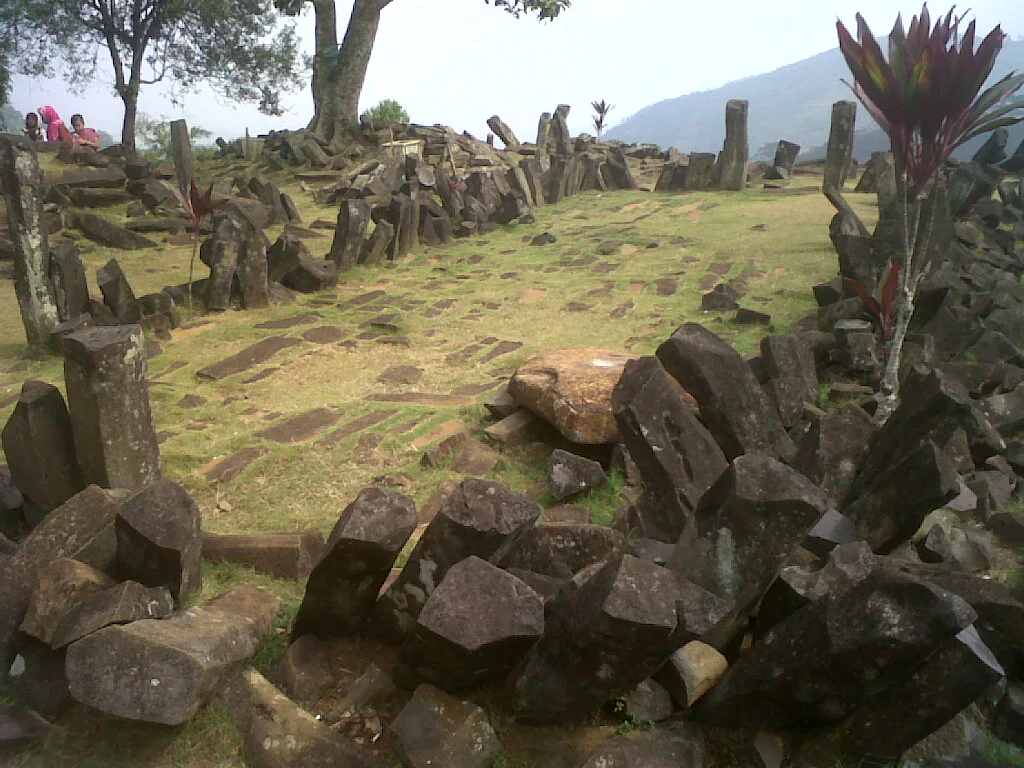
Gunung Padang is an archaeological site located on a hill in West Java, Indonesia. The site consists of five terraces covered with massive hexagonal stone columns of volcanic origin.
Download Stanza, then search for “Gunung Padang”.
About the tour
One guide. Your kind of visit.
Gunung Padang is an archaeological site located on a hill in West Java, Indonesia. The site consists of five terraces covered with massive hexagonal stone columns of volcanic origin.
Ready when you are.
- 01Get the free Stanza app.
iOS & Android
- 02Find your guide.
“Gunung Padang”
- 03Download before you go.
Works offline
Audio guide / 4 narrated stops
Inside the guide
Get to know a few of the stories before you go. Open a stop to read more.
01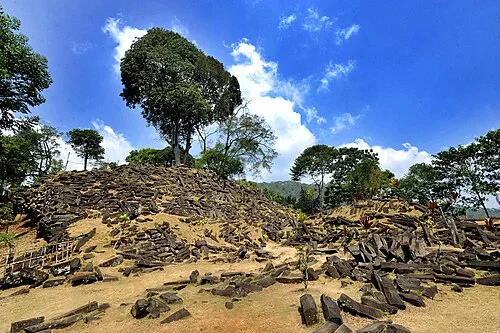 Terrace 1: The Grand Assembly Ground and the Ancient Ascent
Terrace 1: The Grand Assembly Ground
Welcome to Gunung Padang, a stone sanctuary built across the top of an extinct volcano in West Java. The climb here is part of the experience: a central stairway of three hundred and seventy andesite steps, steep enough to lean into, rising about ninety-five metres. At the top, the hill opens into five flat terraces, one above the other, each smaller than the one below. This lowest terrace is the biggest of them all, a broad floor of laid stone where crowds could gather. Together the terraces cover roughly three hectares, which makes this the largest stepped-terrace sanctuary, or punden berundak, in Southeast Asia. In that tradition, the lower terraces belonged to the many, spaces for communal gathering, while the higher ones drew a smaller circle of worshippers. People came here to honour their ancestors, and they kept returning across the centuries. Pottery fragments found at the site date from around the time of Christ, and archaeologists place the structures themselves somewhere between the second and eighth centuries CE. Whichever estimate proves right, this was a place shaped by many generations of hands.
Arie Basuki · CC BY-SA 4.0
02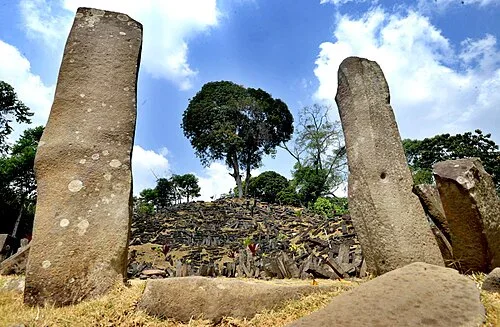 Terrace 2: Hexagonal Volcanic Columns and Singing Lithophones
Terrace 2: Standing Columns of Volcanic Andesite
The stones all around here did not have to be carved into shape. The hilltop is the hardened core of an ancient andesite intrusion, and as that rock cooled, it split into natural columns, many with three to six flat sides. Most run between one and three metres long, like enormous stone logs. The builders simply harvested them. They stacked the columns horizontally to form the retaining walls along each terrace edge, and they stood others upright as free-standing stones, the tall dark monoliths that frame this terrace. Some columns have weathered into a reddish-brown clay, and the crusts that form around them have been mistaken for manmade mortar. They are nothing of the kind, just weathering eating inward from the stone's natural joints. There is another, quieter possibility about these stones. A study from two thousand and eight proposed that some of the megaliths here may have worked as lithophones, rocks that ring when struck. Researchers tested that idea at the site, but which stones, if any, actually served as instruments, and whether any ritual used their sound, remains an open question.
Arie Basuki · CC BY-SA 4.0
03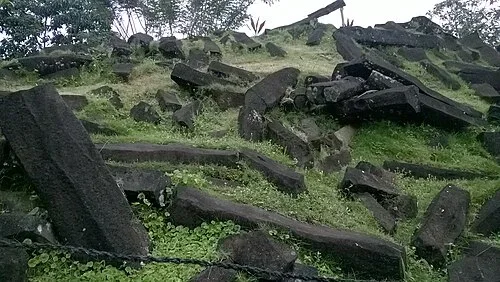 Terraces 3 and 4: Sacred Alignments and Royal Legends
Terraces 3 and 4: The Axis to Mount Gede and the King's Legend
The five terraces line up along a single axis running northwest to southeast, and that line points toward Mount Gede, the great volcano on the horizon. For the Sundanese, volcanoes like Gede have long been sacred places, so many read the alignment as deliberate, though it could simply follow the shape of the hill itself. Local memory keeps its own explanation for the stones. The story goes that King Siliwangi tried to build a palace here in a single night, and these terraces are the work he never finished. The first outside account came from a Dutch visit in 1890, recorded by Rogier Verbeek in his book on Java's antiquities, and Dutch archaeologists noted the site again in 1914. Then it slipped from memory for decades. In 1979 three local farmers, Endi, Soma, and Abidin, reported great heaps of squared stone arranged in stepped levels facing Mount Gede. Their report reached the district culture office, officials came to check, and Indonesia's National Archaeological Research Institute began studying the site that same year. In 2014 the government declared Gunung Padang a National Site Area of twenty-nine hectares.
Listen in the appPhoto: Gilangsmntr · CC BY-SA 4.0
04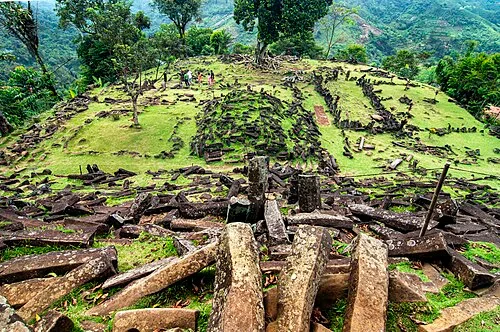 Terrace 5: The Sacred Summit and the Pyramid Debate
Terrace 5: The Sacred Summit and the Age Debate
The top terrace is the smallest of the five, and in the punden berundak tradition the highest tier was the most sacred, reserved for the few. There is a hint of what happened up here in the report from 1890: the visitor that year described small mounds on the terraces, covered and ringed with stones and crowned with pointed stones, which he took to be graves. If so, the dead were honoured here at the very summit, close to the sky. The hill itself has kept its secrets longer. In 2023 the geologist Danny Hilman Natawidjaja published a claim that Gunung Padang is a giant pyramid, its oldest parts built as far back as twenty-seven thousand years ago. Within months the journal's publisher retracted the paper, because the dated soil samples were not tied to anything people had made. Other scientists rejected the claim: the volcanologist Sutikno Bronto concluded that the hill is the neck of an ancient volcano, not a man-made pyramid. Whatever the final answer, this is a monument raised by communities who carried stone up a mountain, terrace by terrace, to reach their ancestors.
Listen in the appPhoto: RaiyaniM · CC BY-SA 4.0
Gunung Padang
Frequently asked questions
How much does the guide cost?
Free app download. Listed guide price: $0.99. Guide price shown in the app. Audio guide only. Venue admission is separate.
Can I listen without internet?
Yes. Download the guide’s audio, images, and maps in the app before your visit. Your downloaded content is then available offline.
Can I listen in my language?
This audio guide is available in 15 languages, including English.
Do I need to follow a schedule?
No. This is a self-guided experience. Choose your stops, pause whenever you like, and return to a story at your own pace.
At your own pace
Explore Gunung Padang.
Download Stanza, then search for “Gunung Padang”.
Free app download · Guide price shown in the app
Keep exploring
Audio guides — Indonesia
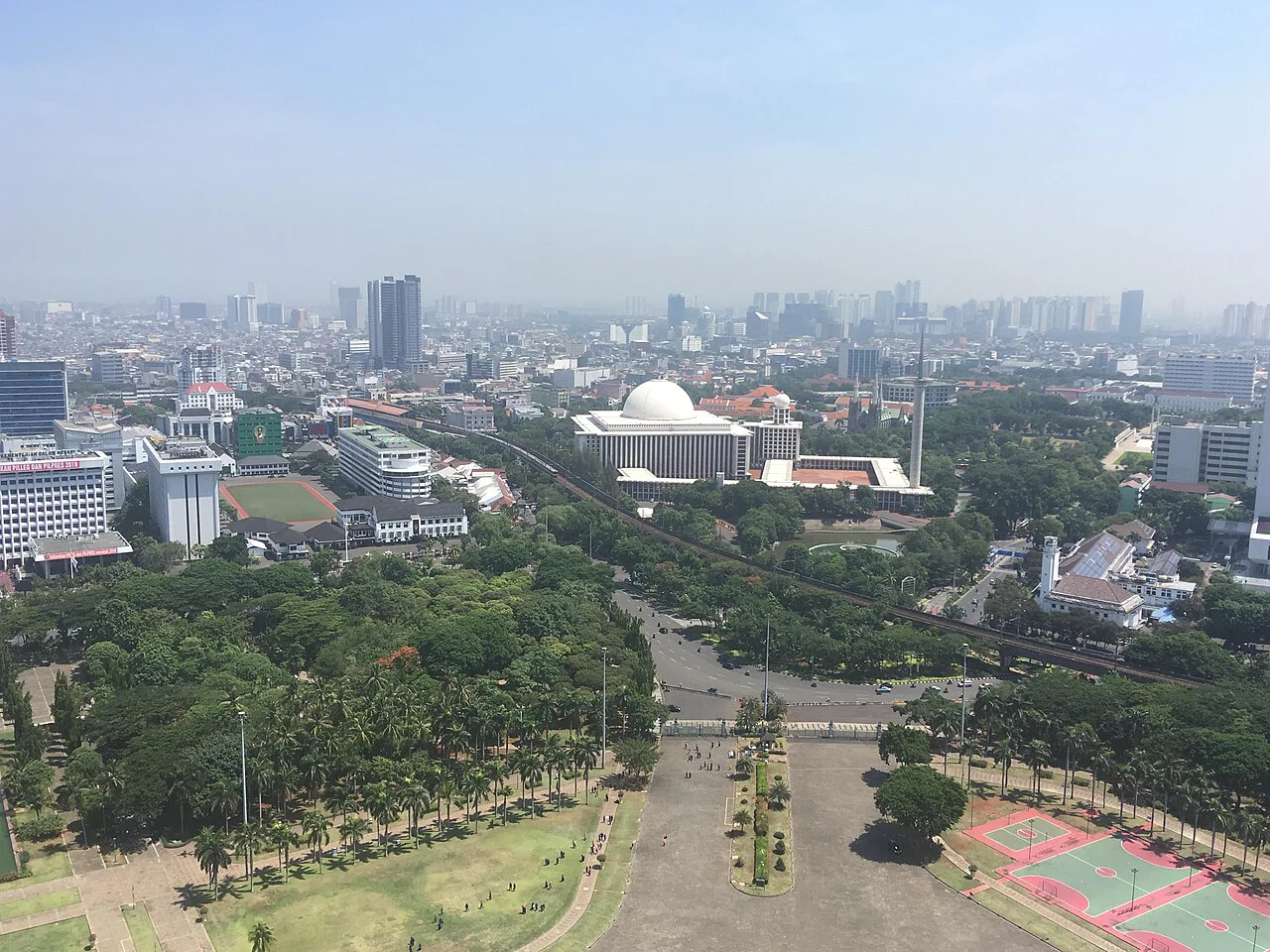
Jakarta · 95 km
Istiqlal Mosque, Jakarta
Content & sources
Photo: Christophe95 · CC BY-SA 4.0
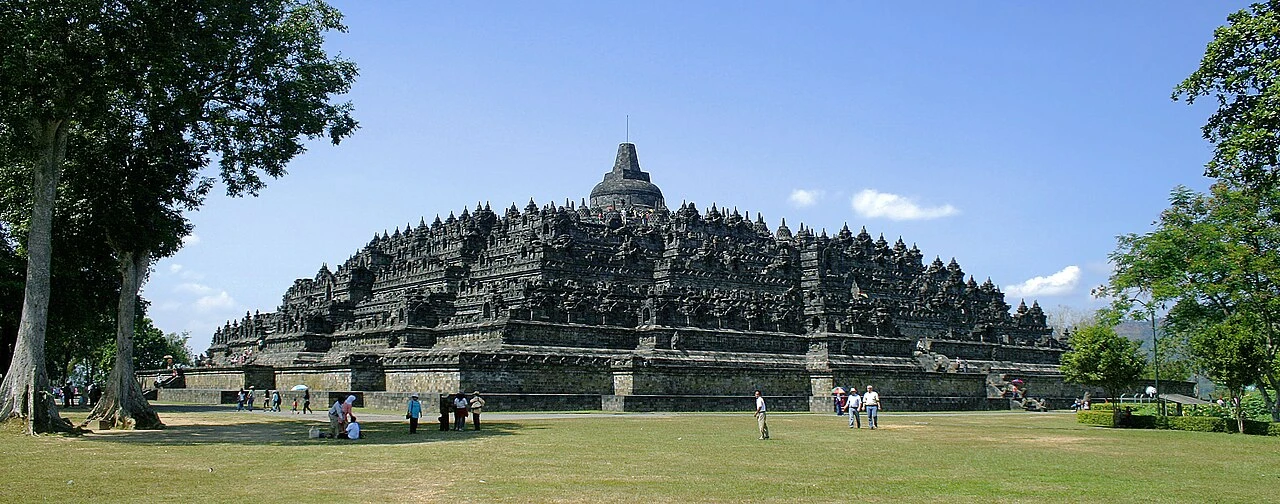
Desa Borobudur
Borobudur
Content & sources
Gunawan Kartapranata · CC BY-SA 3.0
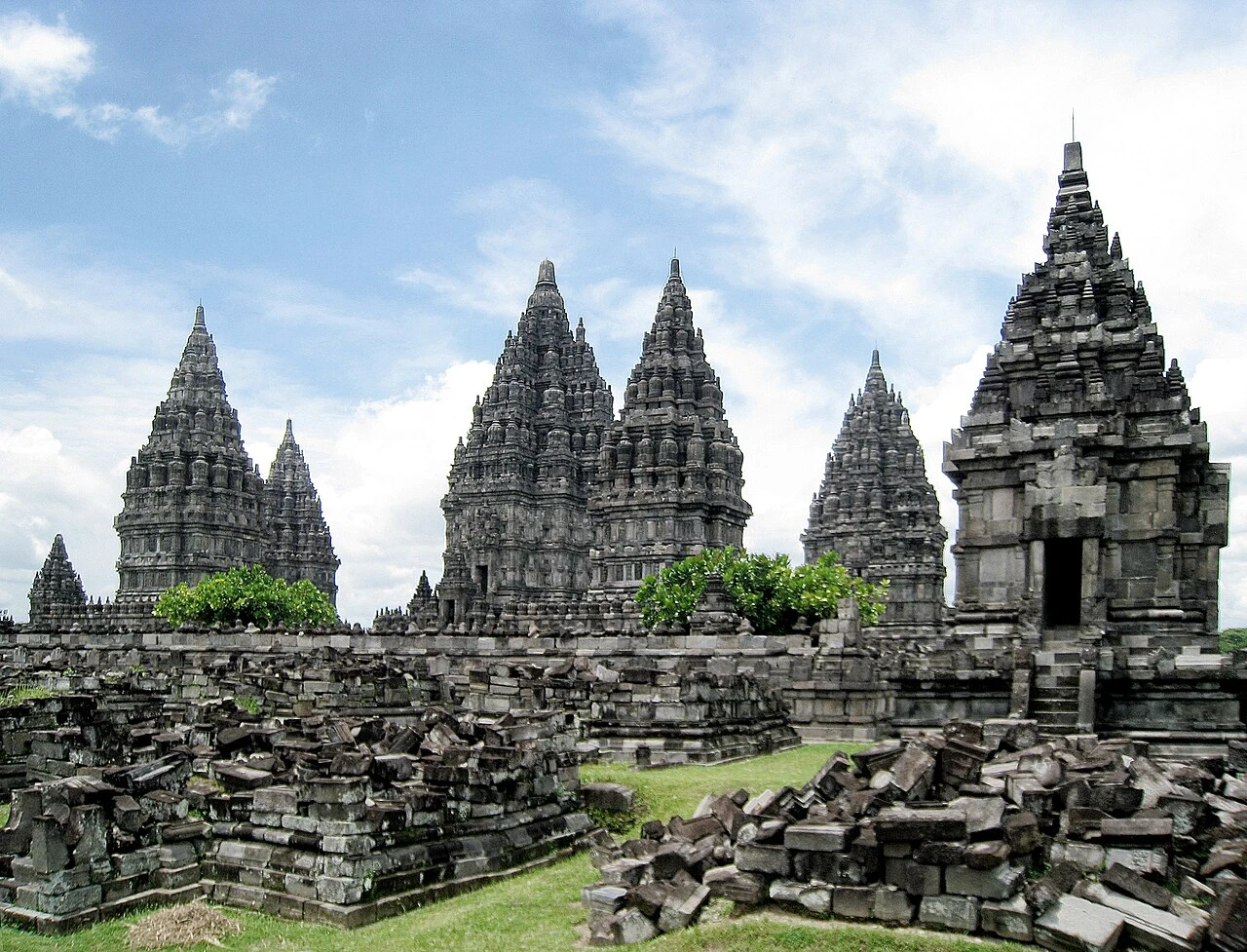
Bokoharjo
Prambanan Temple
Content & sources
Gunawan Kartapranata · CC BY-SA 3.0
Bejijong
Trowulan
Content & sources
Gunawan Kartapranata · CC BY-SA 3.0