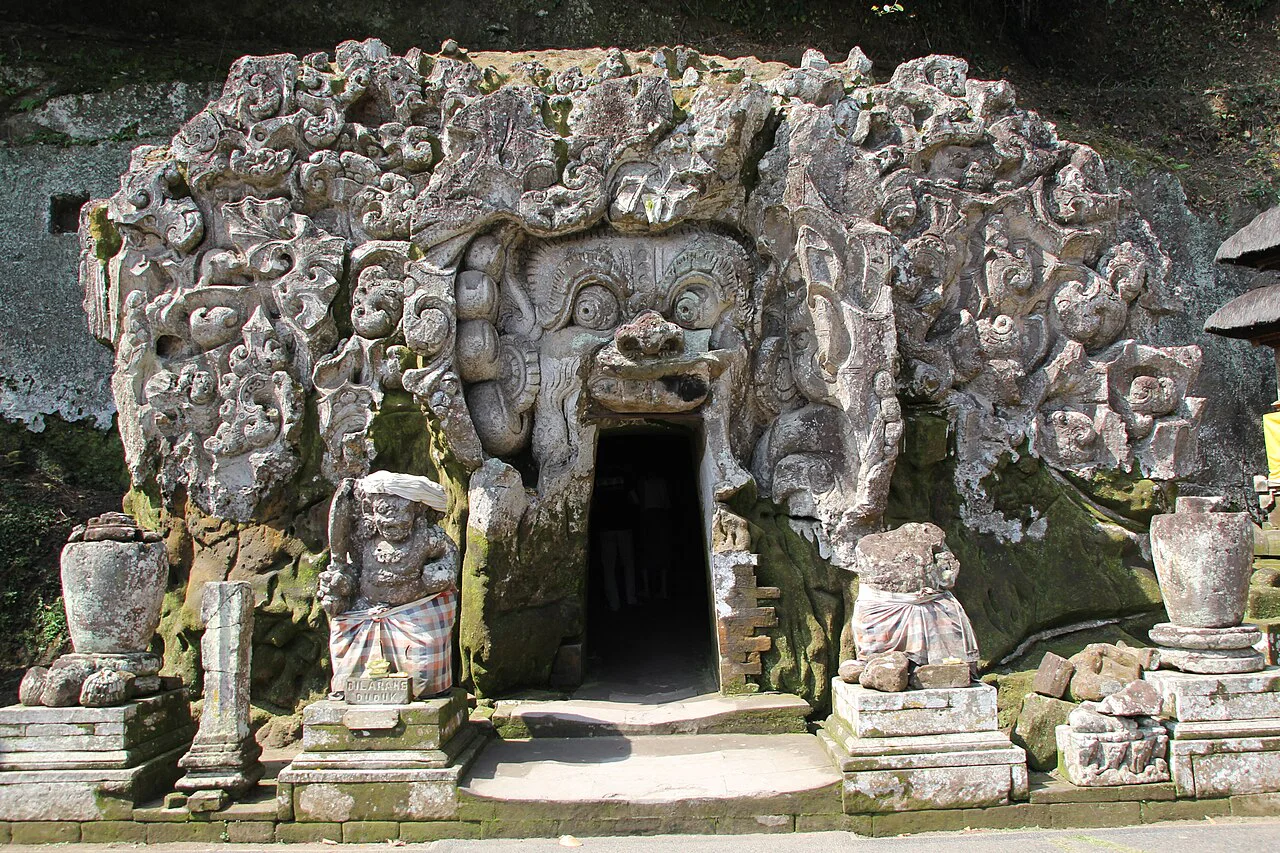
Stanza · Audio guide
Goa Gajah Audio Guide
A place to remember. A story to take with you.
Goa Gajah is a 9th-century sanctuary located in Gianyar, Bali. It is also known as the Elephant Cave and served as a Hindu temple.
Download Stanza, then search for “Goa Gajah”.
About the tour
One guide. Your kind of visit.
Goa Gajah is a 9th-century sanctuary located in Gianyar, Bali. It is also known as the Elephant Cave and served as a Hindu temple.
Ready when you are.
- 01Get the free Stanza app.
iOS & Android
- 02Find your guide.
“Goa Gajah”
- 03Download before you go.
Works offline
Audio guide / 7 narrated stops
Inside the guide
Get to know a few of the stories before you go. Open a stop to read more.
01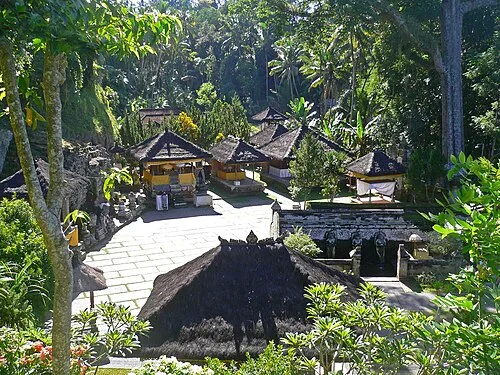 The Descent to the Sanctuary
Arrival: The Courtyard of the Elephant Cave
Welcome to Goa Gajah, the Elephant Cave, a rock-cut sanctuary on the island of Bali, near Ubud. A paved courtyard sits at the centre of the site, sacred bathing pools lie further down, and the cave mouth is set into the cliff face. The only way in is down a long flight of stairs, and that descent was part of the design. This was a sanctuary set apart for spiritual meditation, sacred to Hindus and Buddhists alike. Judging by its style, it probably dates from the 11th century, though some accounts place it earlier. Old Balinese inscriptions never name the site outright, but they come close. Two charters mention a name that reads Er Gajah. One was issued in 1022. The other dates to 1324. Others name a holy place whose title holds the word for elephant. The clearest record is Javanese. In 1365 the poet Mpu Prapanca listed Lwa Gajah, Elephant River, among the Balinese places under Majapahit's rule. Lwa means river, so the old name probably pointed at the stream in front of the sanctuary, the one now called the Petanu.
Eric Bajart · CC BY-SA 3.0
02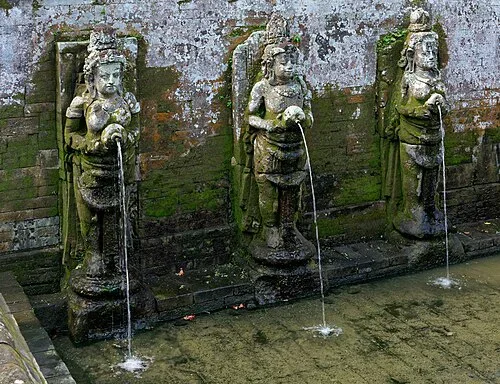 The Sacred Bathing Pools
 (Petirtaan)
Below the cave, three sacred bathing pools line up side by side. Along their edges stand stone figures of heavenly beings, female bidadari and male bidadara, each holding a pitcher at the chest with water spouting from it. Every figure stands on a lotus pedestal, a symbol of the divine realm. The arrangement follows an old Indian idea called Sapta Nadi, the seven holy rivers of India. They are the Ganga, the Sarasvati, the Yamuna, the Godavari, the Sindhu, the Kaveri and the Narmada. Seven spouts were planned, one for each river. Only six figures survive. The one at the middle pool is missing, or has yet to be found. Some suggest it was a spouting Ganesha, a figure found loose at the edge of the cave mouth. For centuries the pools lay buried under earth, and even under newer buildings raised on top. In 1954 a team led by J.L. Krijgman, head of the antiquities office in Bali, excavated the site and reconstructed the pools. Water still flows from the spouts, and the water is still used for purification.
Jakub Hałun · CC BY-SA 4.0
03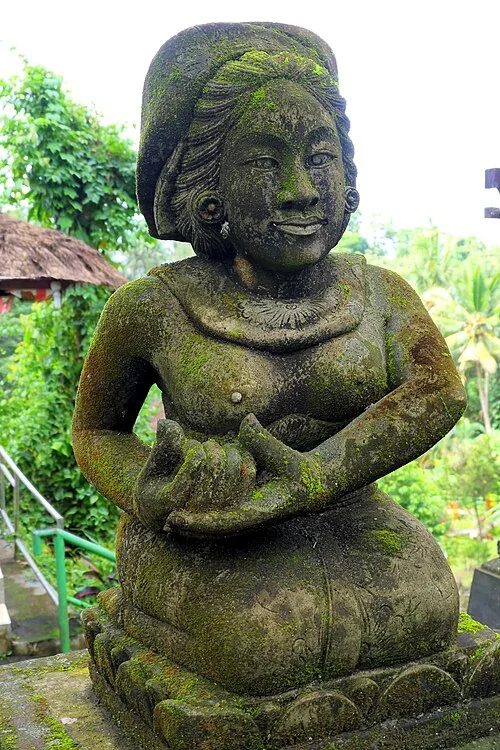 The Statue of Hariti
 (Men Brayut)
A group of ancient statues gathers in front of the cave, among them Hariti, Ganesha and a giant. The moss-covered female figure by the entrance is one of them. Hariti's story is one of the strangest in Buddhist tradition. She began as a demoness with a taste for eating children. Then she learned the Buddha's teaching, and she changed. The child-eater became a loving protector of children. Her statue shows her with three children at each side. Another sits on her lap. In Bali she is remembered under another name, Men Brayut, the mother surrounded by her children. In Java the same figure lives on as Nini Brayut. A tale that began in Buddhist teaching found a second life in Balinese family stories.
Listen in the appPhoto: Anandajoti · CC BY-SA 4.0
04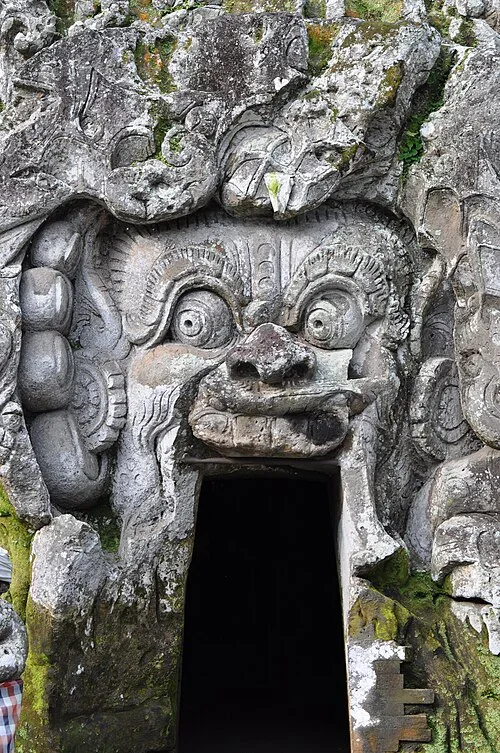 The Menacing Cave Portal
The face carved above the cave mouth is the first thing the cliff offers. The eyes bulge and glance sideways, the brows are coarse, the nose is huge, and a row of teeth sits directly over the doorway. The opening itself is about a metre wide and two metres high. Faces like this are thought to ward off evil spirits, marking the threshold between the ordinary world and the sacred one. The face may even explain the site's name. Some say it resembles an elephant's, which would account for the name Elephant Cave. Others trace the name to the elephant-headed god Ganesha, whose statue waits inside. Balinese folklore tells a third story. The giant Kebo Iwa is said to have clawed the whole cave out of the rock with his fingernails. The cave then slipped from sight for centuries. In 1923 L.C. Heyting, an official of the Dutch colonial administration, reported the statues inside, and the cave came back to light.
Listen in the appAnnette Teng · CC BY 3.0
05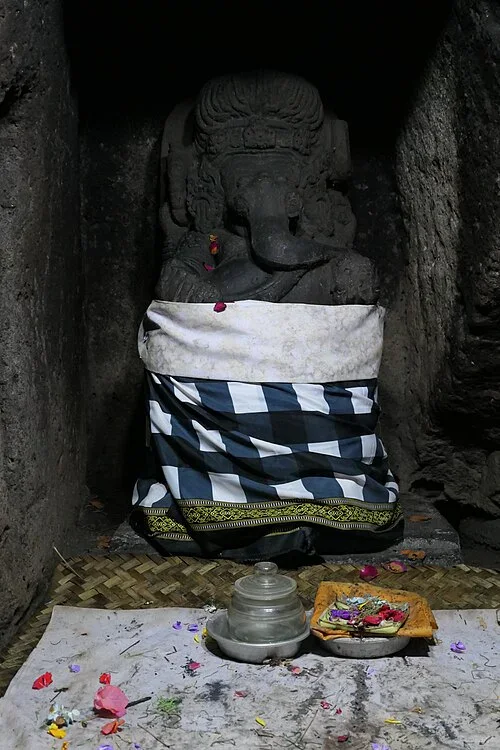 The Cave Interior
Inside the Cave: Ganesha
Inside, the cave is small and dim, and the air usually carries incense smoke. The passage runs a few metres north, then turns into a corridor lying east to west. That corridor stretches about thirteen and a half metres, narrow and low enough to stoop in. Along its north wall are seven niches, cut as places for meditation. The largest faces the entrance, and it holds broken statue fragments, among them pieces of a giant figure and of a Shiva image. At the western end sits Ganesha, the elephant-headed god. The stone figure is wrapped in a black-and-white checkered cloth, and fresh offerings lie before it. Trails of white smoke from burning incense drift through the chamber. Old as the cave is, people still worship here.
Listen in the appPhoto: Anandajoti · CC BY-SA 4.0
06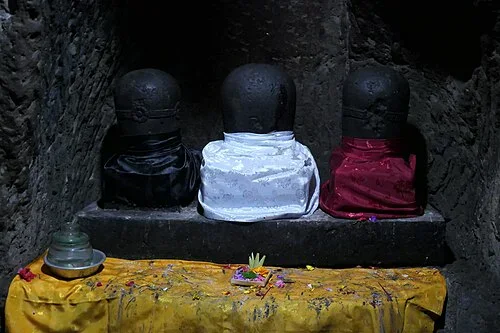 The Cave Interior
Inside the Cave: the Trilingga
At the eastern end of the corridor, three rounded stones stand side by side in a niche. Each is a lingam, the symbol of the god Shiva, set in its own base, the yoni. Three lingams in a row make a trilingga. Each is wrapped in cloth of a different colour, one black, one white, one red. They answer Ganesha at the far western end of the same corridor. One rock-cut corridor, with Shiva's son at one end and Shiva's own symbols at the other.
Listen in the appPhoto: Anandajoti · CC BY-SA 4.0
07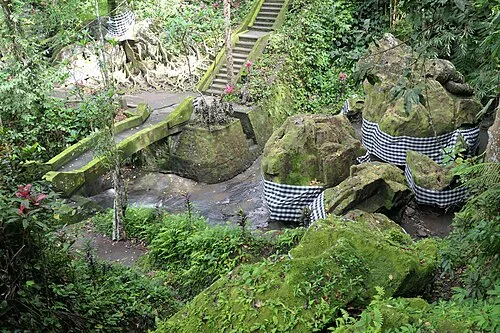 The Southern Buddhist Ravine
The Southern Ravine: Tukad Pangkung
South of the cave, the ground drops into a green valley called Tukad Pangkung. At the bottom of the ravine lies a large carved relief, fallen from the rock wall above. Conrat Spies came across it in 1931. The relief shows a three-branched stupa, carved in stone, lying where it had collapsed. Nearby are more fragments, a second stupa with a single tiered umbrella peak, and the lower part of a Buddha image. A fallen piece of a thirteen-tiered umbrella probably once crowned one of these stupas. Judged by their style, the carvings may be older than the cave itself, perhaps from the early tenth century. Some think the great relief belonged to a temple cut into the cliff, though its original form is unknown. Seen whole, Goa Gajah keeps an unusual balance. The Shivaite cave with its lingams and Ganesha sits uphill, and the Buddhist stupas and images lie in the valley below. One sanctuary, two faiths, sharing the same ground.
Listen in the appPhoto: Anandajoti · CC BY-SA 4.0
Goa Gajah
Frequently asked questions
How much does the guide cost?
Free app download. Listed guide price: $0.99. Guide price shown in the app. Audio guide only. Venue admission is separate.
Can I listen without internet?
Yes. Download the guide’s audio, images, and maps in the app before your visit. Your downloaded content is then available offline.
Can I listen in my language?
This audio guide is available in 15 languages, including English.
Do I need to follow a schedule?
No. This is a self-guided experience. Choose your stops, pause whenever you like, and return to a story at your own pace.
At your own pace
Explore Goa Gajah.
Download Stanza, then search for “Goa Gajah”.
Free app download · Guide price shown in the app
Keep exploring
Nearby audio guides
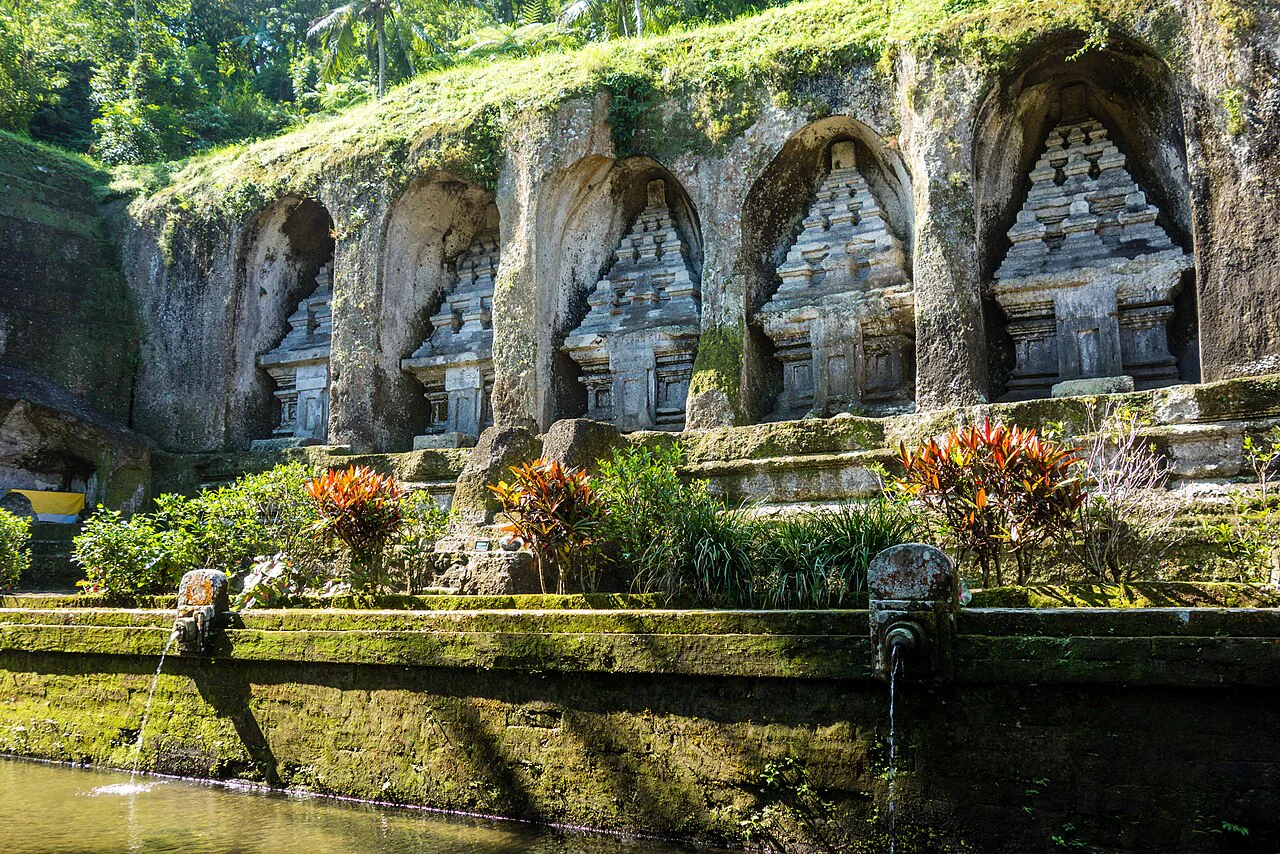
Tampaksiring · 11 km
Gunung Kawi
Content & sources
Visions of Domino · CC BY 2.0
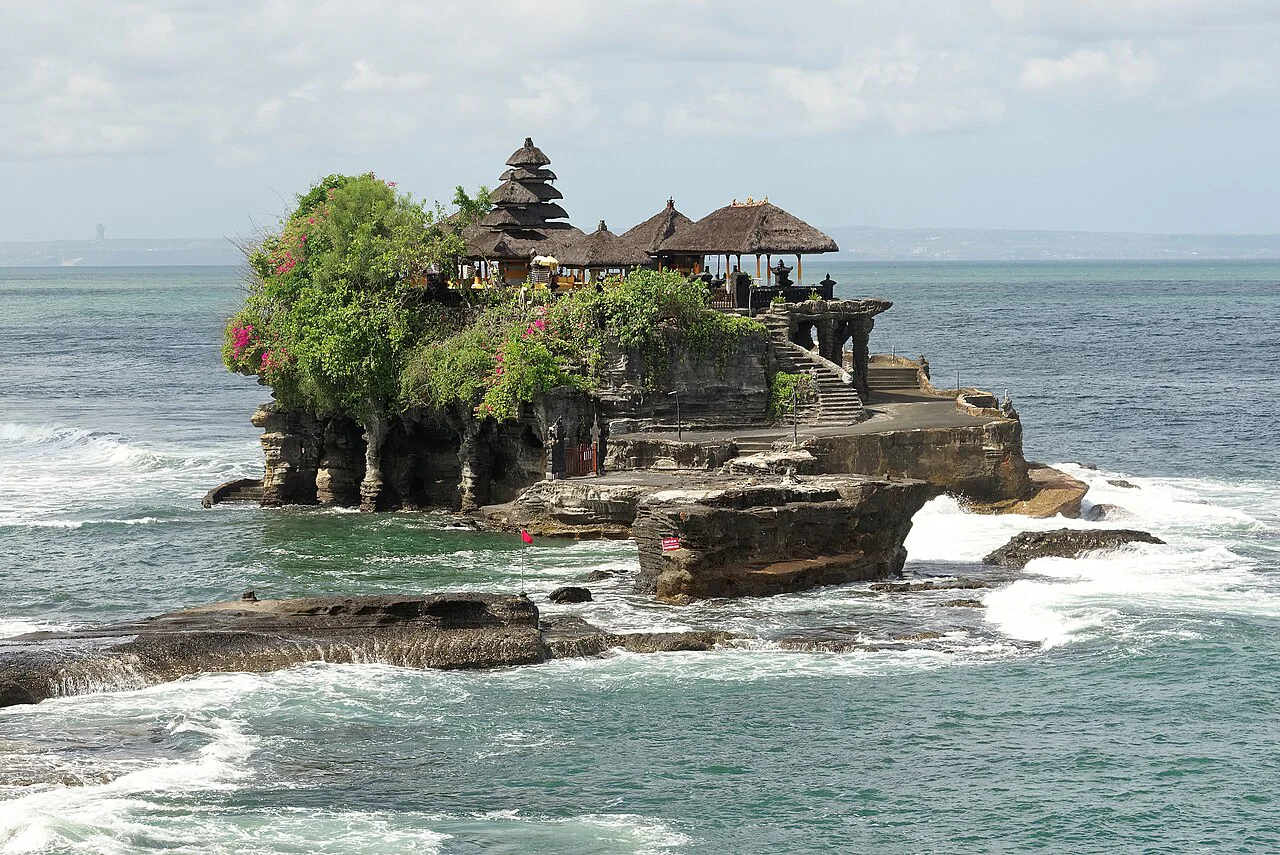
Beraban · 24 km
Tanah Lot
Content & sources
Jakub Hałun · CC BY-SA 4.0
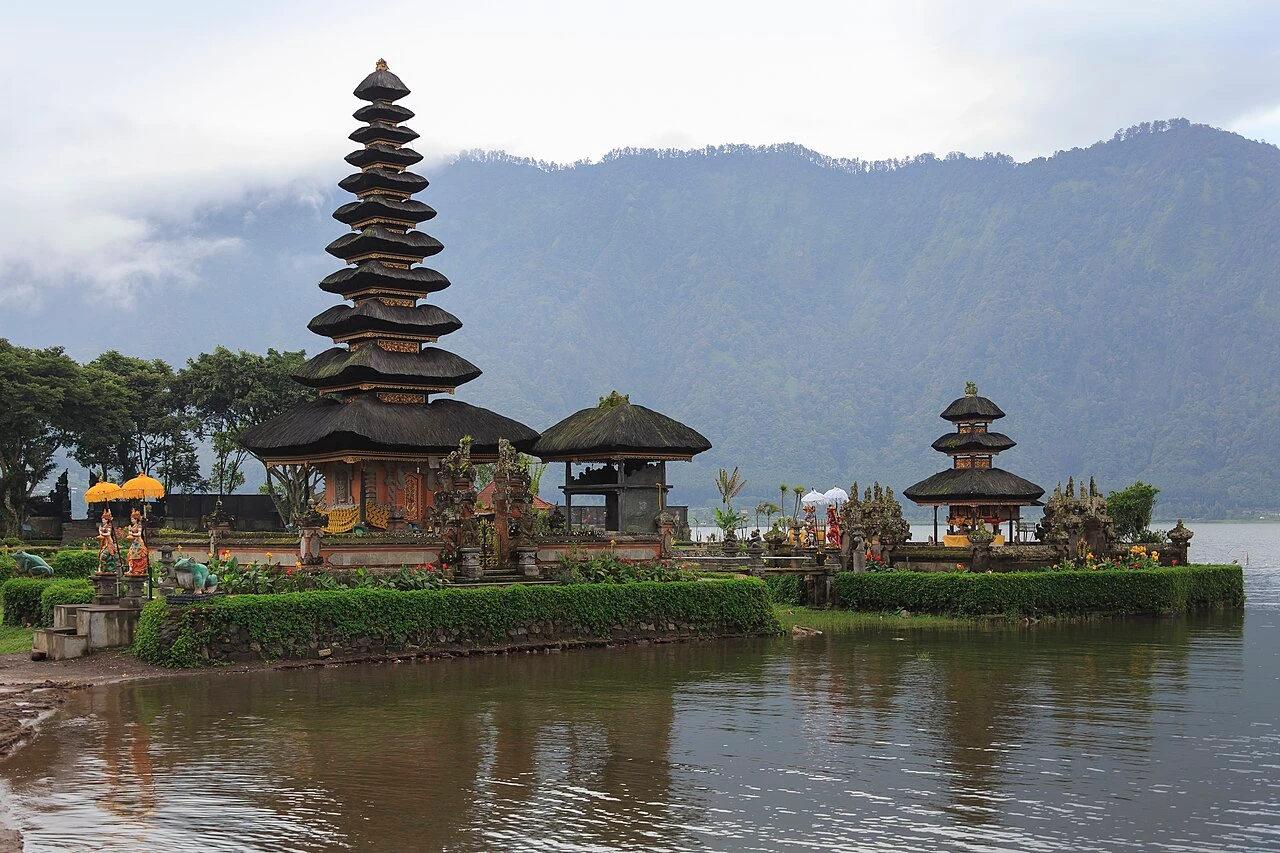
Baturiti · 31 km
Pura Ulun Danu Bratan
Content & sources
CEphoto, Uwe Aranas · CC BY-SA 3.0
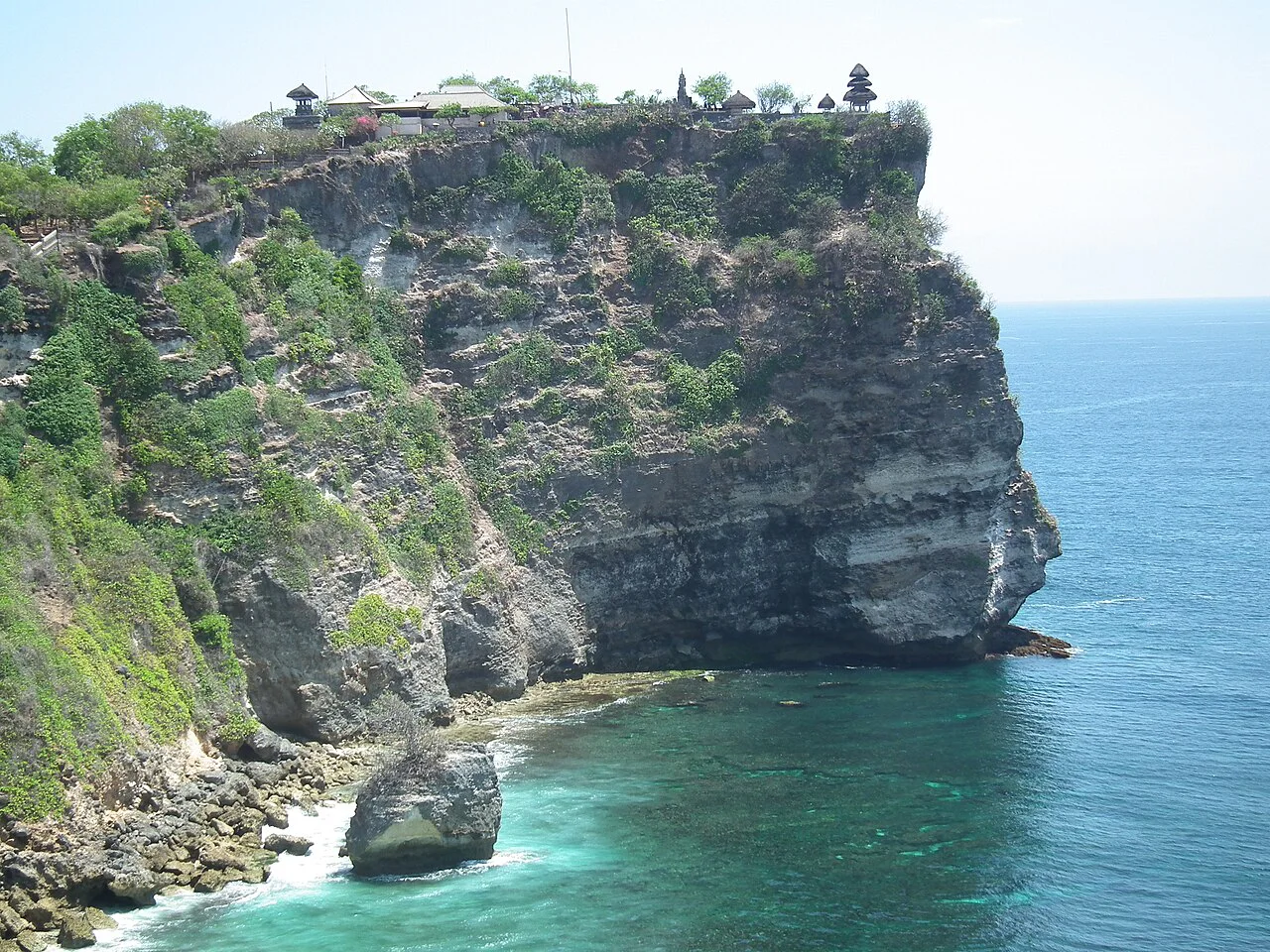
Kuta Selatan · 41 km
Uluwatu Temple
Content & sources
Photo: GeoffClarke · CC BY-SA 3.0