Stanza · Audio guide
Gunung Kawi Audio Guide
A place to remember. A story to take with you.
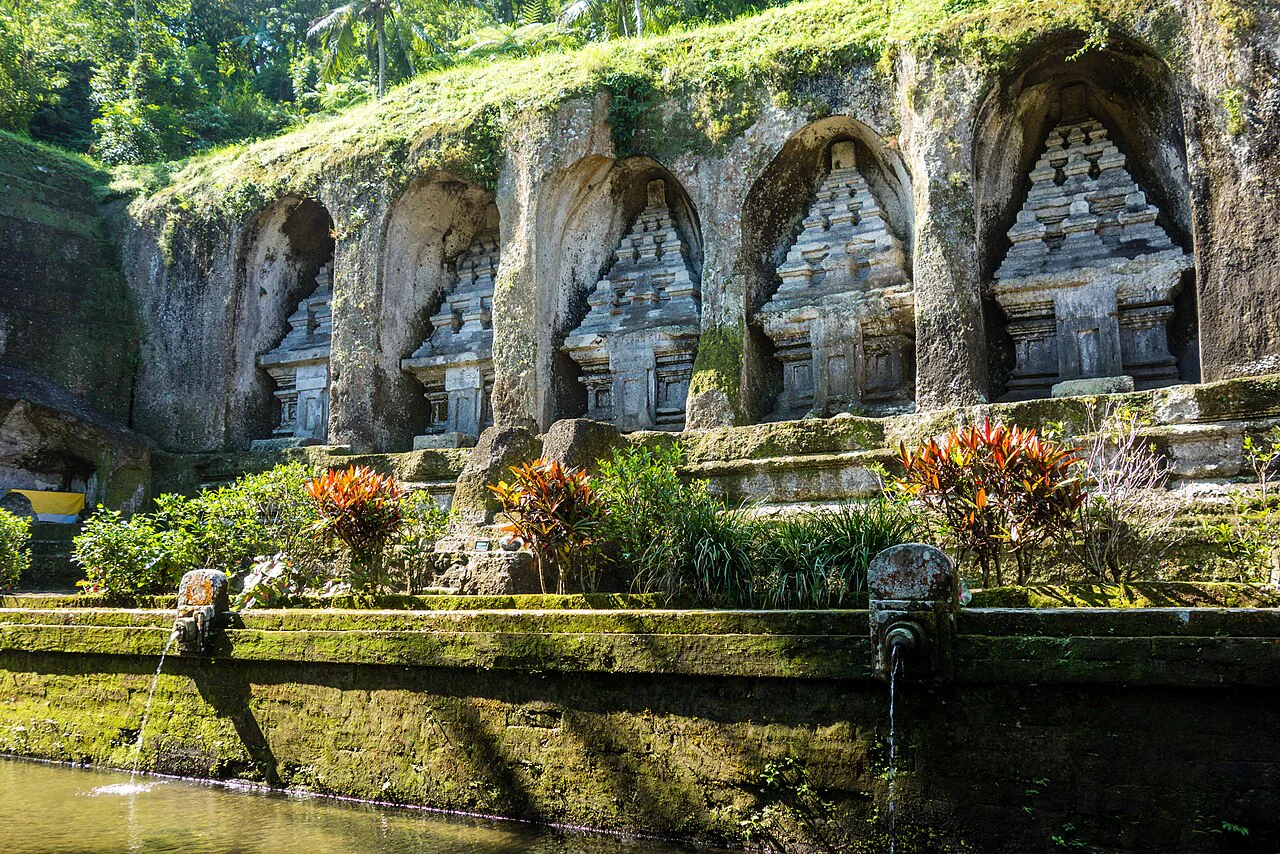
Gunung Kawi is an 11th-century temple and funerary complex located in Tampaksiring, Bali. It features ten rock-cut shrines carved into a cliff face that are dedicated to members of the Udayana dynasty.
Download Stanza, then search for “Gunung Kawi”.
About the tour
One guide. Your kind of visit.
Gunung Kawi is an 11th-century temple and funerary complex located in Tampaksiring, Bali. It features ten rock-cut shrines carved into a cliff face that are dedicated to members of the Udayana dynasty.
Ready when you are.
- 01Get the free Stanza app.
iOS & Android
- 02Find your guide.
“Gunung Kawi”
- 03Download before you go.
Works offline
Audio guide / 11 narrated stops
Inside the guide
Get to know a few of the stories before you go. Open a stop to read more.
01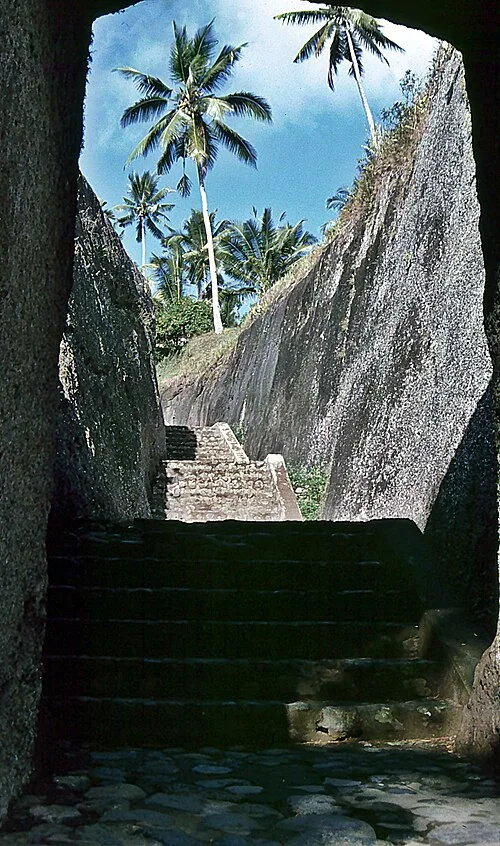 Descent into the River Valley (The 315 Stone Steps)
The Descent: Stone Steps into the River Valley
Welcome to Gunung Kawi, a place Balinese people call the Valley of the Kings. Hidden in a jungle ravine at Tampaksiring, near Ubud, it is an eleventh-century funerary complex and one of the oldest archaeological sites in Bali. The whole memorial spreads across two sides of a river gorge, and the way in is part of the design. About three hundred and fifteen steps, cut from soft padas stone and framed by high rock walls, lead down deep into the ravine. The cliff walls rise steeply on both sides, and palm trees lean over the rim far above. The builders could have set their monuments on open ground. Instead they carved them into the valley itself, so that every visit begins with this long walk down towards the water. At the bottom, the river Pakerisan waits, and the shrines of a royal family line the cliffs on both banks.
Photo: Ziegler175 · CC BY-SA 3.0
02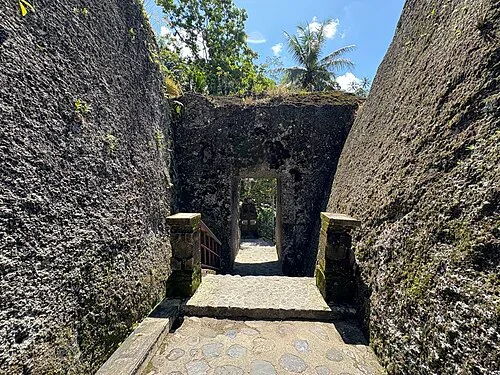 The Rock Arch Entrance Portal
The Rock-Cut Entrance Portal
Halfway down, the path passes through a gateway that was not built but carved. The passage runs between two sheer walls of rock, cut straight down into the cliff, and it marks the threshold of the sacred complex. The name explains the method. Gunung means mountain, and kawi means a carved thing, so Gunung Kawi is literally a temple carved into the mountain. That is what makes this place unusual. Most candi, as Hindu temples of this kind are called, were assembled from red brick or quarried stone, block by block. Here the masons worked in reverse, cutting the cliff away until the temple itself was all that remained. Everything ahead was made this way, hollowed out of the living rock.
Photo: Chainwit. · CC BY 4.0
03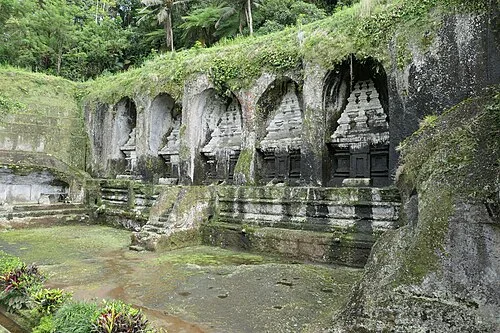 Eastern Cliff Shrines (The Five Royal Candi)
The Five Royal Memorials
On the eastern bank, five shrines stand in a row, cut into the cliff, each within its own arched niche. The best-known theory says they honour a royal family of the Warmadewa dynasty. King Udayana, one of Bali's famous rulers, married a Javanese princess named Gunapriya Dharma Patni. Their sons went two different ways. Airlangga grew up to rule in East Java, while Anak Wungsu ruled Bali itself, and the complex is thought to have been finished in his time. By this reading, the five memorials belong to Udayana, his queen, and their three sons, Airlangga, Anak Wungsu and Marakata. It is a theory, and honest guides say so. Other identifications exist, including a dedication to Anak Wungsu and his own queens.
Listen in the appPhoto: Anandajoti · CC BY-SA 4.0
04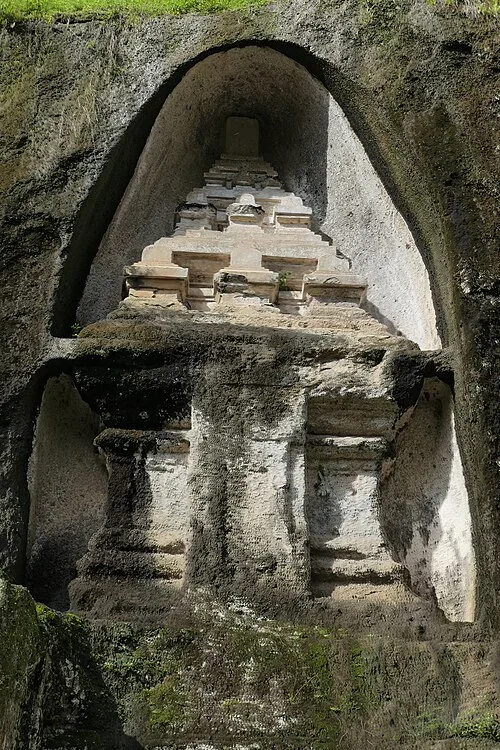 Eastern Cliff Shrines (The Five Royal Candi)
A Shrine in the Cliff Face
Each shrine stands about seven metres tall, inside a deep arched niche cut back into the cliff. The niche is not decoration. It shelters the memorial from rain and erosion, which is why the carvings have survived so long in the open tropics. The candi has no separate parts either. It was carved straight out of the living rock, so the shrine and the mountain are a single piece, bearing no weight of their own. No architect's name survives. Local folklore fills the gap with Kebo Iwa, a man of legend said to possess great power. The story goes that he dug his strong fingernails into the cliff beside the Pakerisan and shaped the whole complex in a single day and night. Archaeologists see patient, skilled stonework instead, but the legend is still told on the island with pride.
Listen in the appPhoto: Anandajoti · CC BY-SA 4.0
05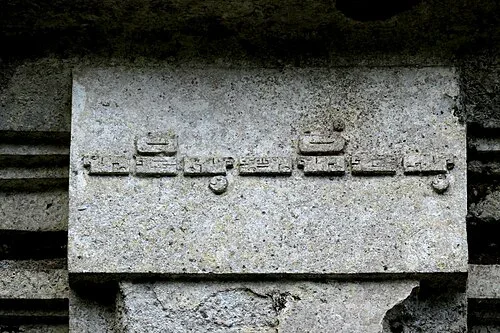 Eastern Cliff Shrines (The Five Royal Candi)
The Inscription of the King
Above a false doorway on the northern shrine, a short line of writing is carved into the stone. It reads Haji Lumah ing Jalu, set down in the old Kediri script. One translation is plain: the king made a temple here. Another reading goes further, taking the words to mean that the king was symbolically laid to rest at a place called Jalu. Jalu is the spur of a fighting cock, and by extension the blade of a keris, the dagger of old Java. The river that divides this site is the Pakerisan, a name built on that same word for blade. So the inscription ties a shrine to a king, and the river's name to the inscription. It is the written anchor for the whole royal story told at these cliffs.
Listen in the appPhoto: Anandajoti · CC BY-SA 4.0
06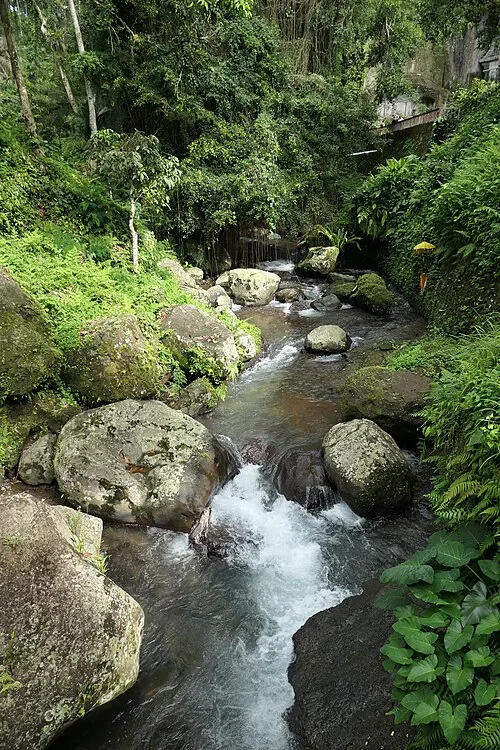 The Sacred Pakerisan River Crossing
The Sacred Pakerisan River
The water that divides the complex is the Pakerisan, a river held sacred in Bali. It runs through the ravine between mossy boulders and dense green jungle, splitting the eastern shrines from the western ones. Its name, as the inscription suggested, echoes the word for a keris blade. But the river is more here than a boundary. In Bali, water is the medium of purification, and a river held holy made this valley a fitting resting place for the dead. The springs of the gorge feed the pools and spouts waiting on the far bank, so the same water that flows past the shrines is drawn into ritual.
Listen in the appPhoto: Anandajoti · CC BY-SA 4.0
07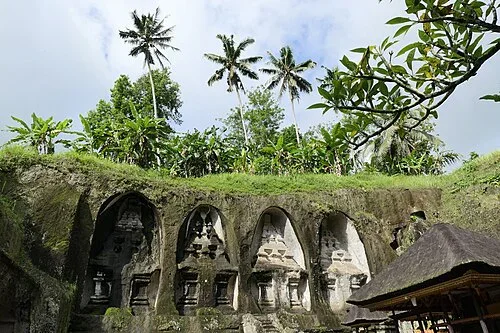 Western Cliff Shrines and Holy Water Pools
The Four Western Memorials
Across the river, a second row of shrines faces east, four of them cut into the western cliff. By the same theory applied to the royal five, these belong to the king's minor queens or concubines, the rest of the household. Count both banks together and the complex holds nine rock-cut shrines, arranged like a court spread across the valley, and a tenth stands apart a short walk away. The western group is smaller, but the carving is the same patient work in the same soft stone. If the identification is right, the memorial did not stop at the king and his heirs. It remembered the whole royal family, down to its lesser members.
Listen in the appPhoto: Anandajoti · CC BY-SA 4.0
08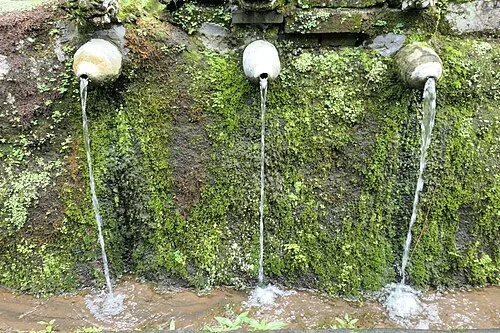 Western Cliff Shrines and Holy Water Pools
The Holy Water Outlets
On the western side, the cliff complex also holds bathing pools with stone spouts. Water from the valley's springs pours from three rounded outlets set into a mossy wall. In Balinese Hindu practice, water is living and cleansing, and spring water especially is used to purify body and spirit. Whether these pools served that purpose in the eleventh century is hard to say, since their original function is not recorded. What is plain is that the spouts still run. The water is still used in ritual, a quiet sign that the western cliff remains part of a living place of worship.
Listen in the appPhoto: Anandajoti · CC BY-SA 4.0
09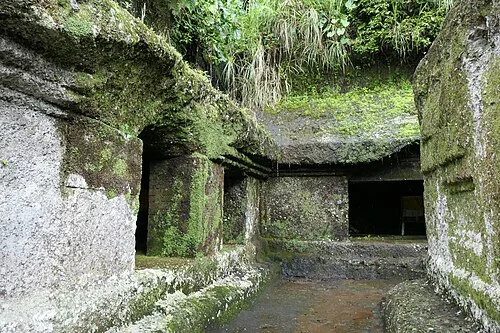 The Rock-Cut Monastery (Wihara)
The Rock-Cut Monastery Courtyard
There is another carved group here, and it is not a shrine at all. Set into the cliff is a wihara, a monastery, hollowed from the solid rock. Its rooms are small, cell-like chambers with windows cut through the stone. Openings in the roof let in air and sunlight, so the chambers are dark but not black. A courtyard lies between them. Scholars suggest the rooms may have served for meditation, or as meeting places for priests and other figures of the royal court. That reading rests on interpretation rather than any written record. But the architecture itself is clear: this was space for people to live in and withdraw to, cut with the same care as the memorials beside it.
Listen in the appPhoto: Anandajoti · CC BY-SA 4.0
10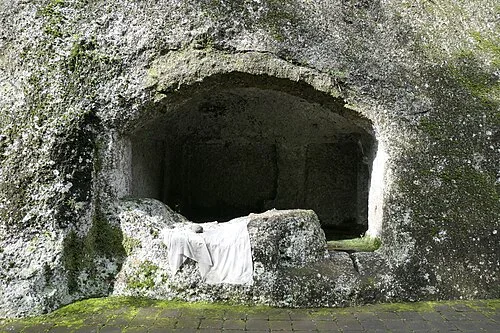 The Rock-Cut Monastery (Wihara)
A Meditation Cell
One of the monastery cells opens as a low, dark mouth in the rock. Inside there is room for little more than a single person, a chamber barely furnished, cool and silent. The architecture implies a life of withdrawal: prayer, silence, and the bare minimum of comfort. The shrines across the valley honoured the dead. These rooms were for the living, for people setting the world aside. And the reverence has not stopped. A white cloth lies at the entrance of this cell, one of the offerings people still bring to these chambers.
Listen in the appPhoto: Anandajoti · CC BY-SA 4.0
- 11
The Tenth Memorial (Geria Pedanda)
The secluded tenth memorial, built for a minister rather than a king, and found again around 1920.
Gunung Kawi
Frequently asked questions
How much does the guide cost?
Free app download. Listed guide price: $0.99. Guide price shown in the app. Audio guide only. Venue admission is separate.
Can I listen without internet?
Yes. Download the guide’s audio, images, and maps in the app before your visit. Your downloaded content is then available offline.
Can I listen in my language?
This audio guide is available in 15 languages, including English.
Do I need to follow a schedule?
No. This is a self-guided experience. Choose your stops, pause whenever you like, and return to a story at your own pace.
At your own pace
Explore Gunung Kawi.
Download Stanza, then search for “Gunung Kawi”.
Free app download · Guide price shown in the app
Keep exploring
Nearby audio guides
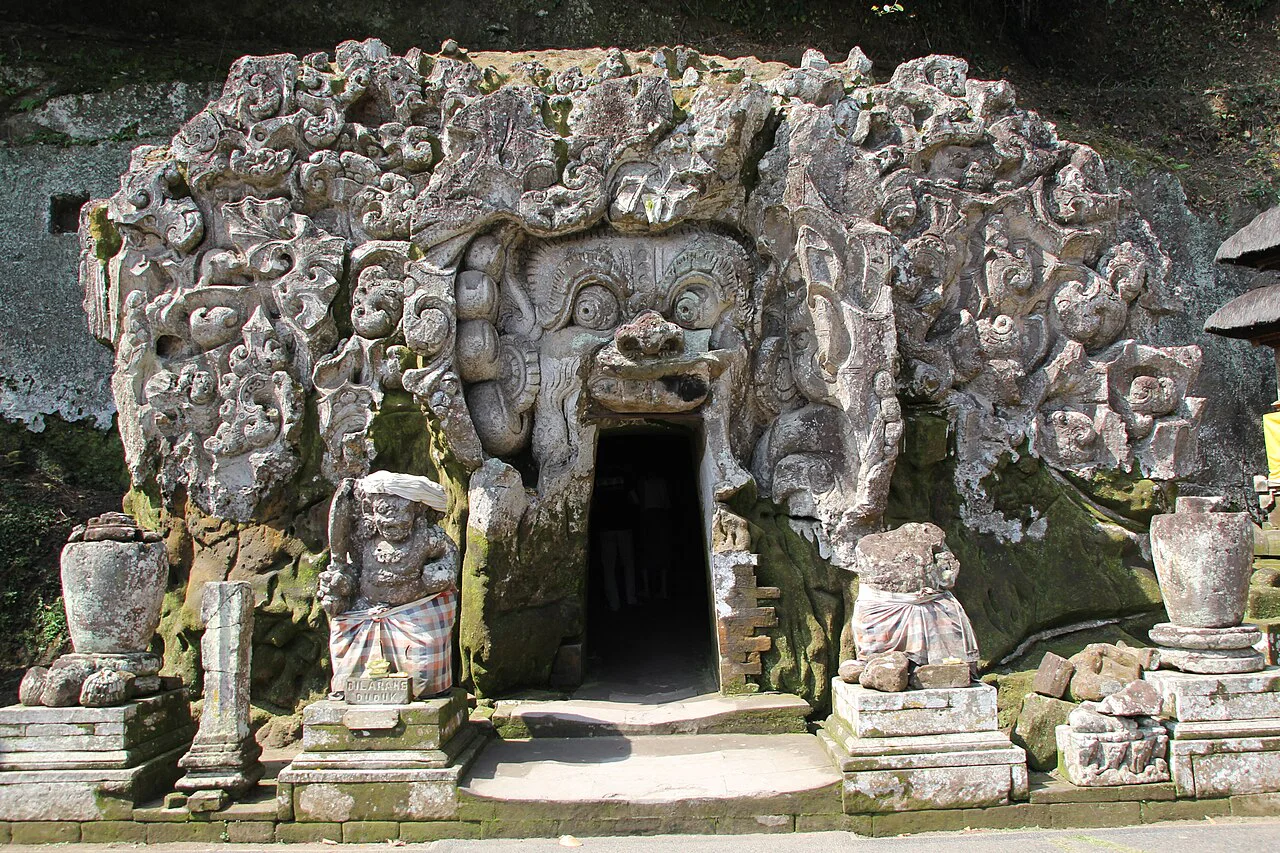
Gianyar · 11 km
Goa Gajah
Content & sources
Photo: DerGenaue Allrounder · CC BY-SA 3.0
Baturiti · 23 km
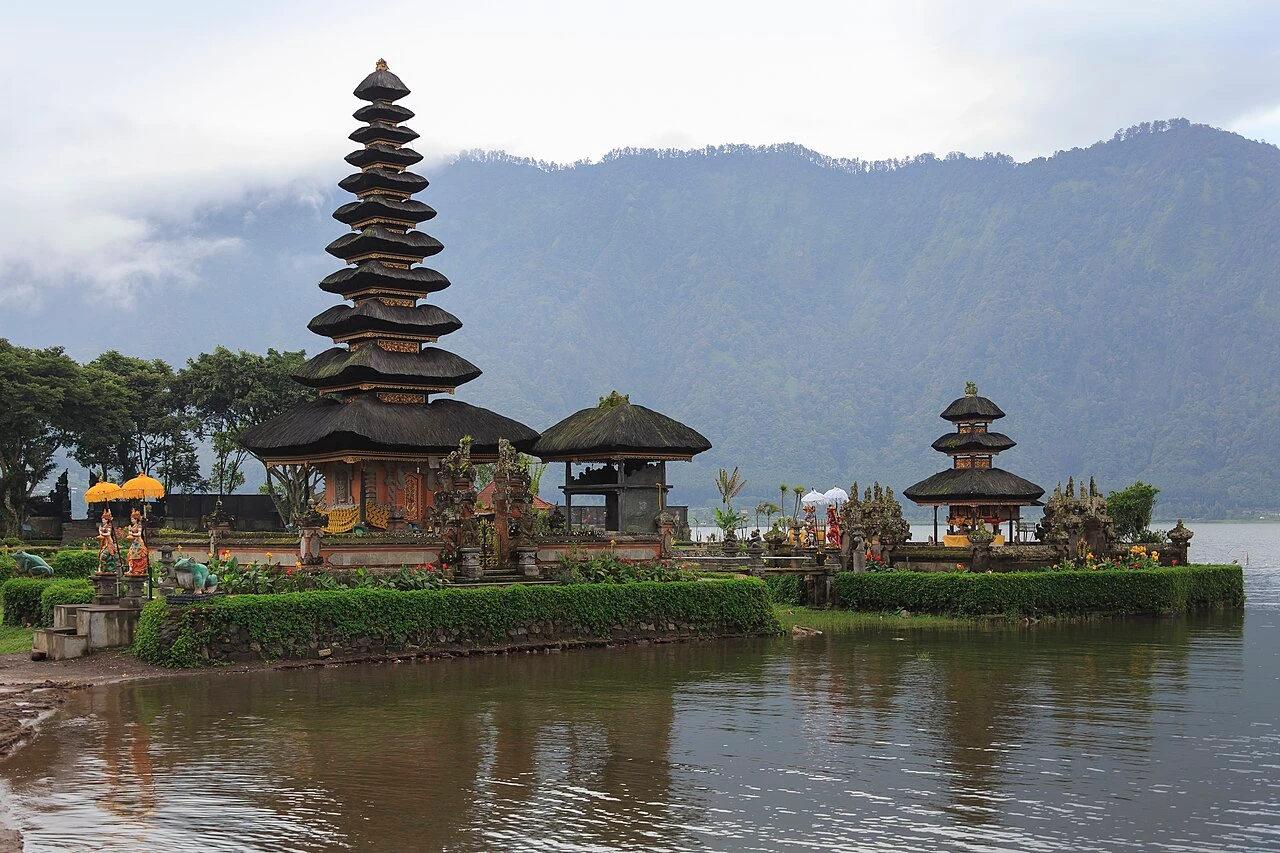
Pura Ulun Danu Bratan
Content & sources
CEphoto, Uwe Aranas · CC BY-SA 3.0
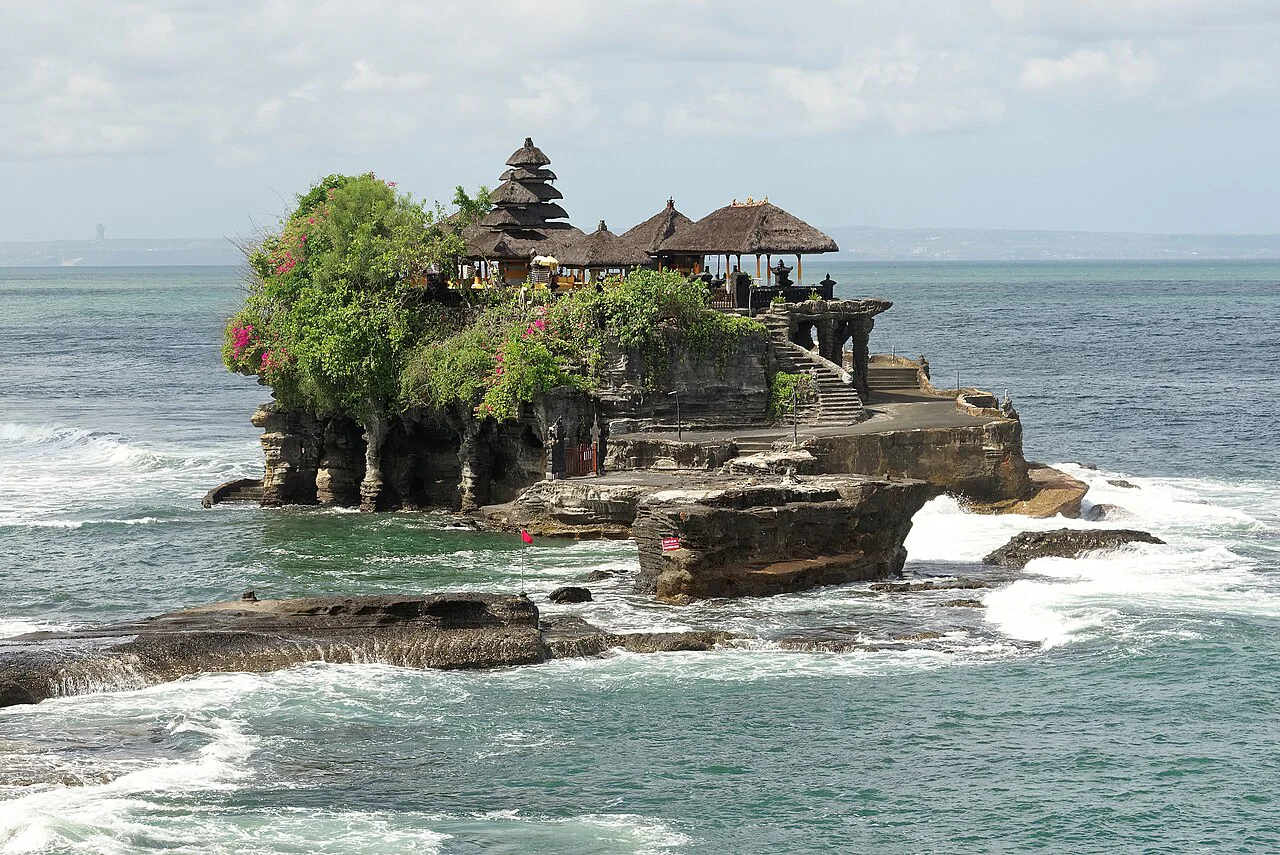
Beraban · 33 km
Tanah Lot
Content & sources
Jakub Hałun · CC BY-SA 4.0
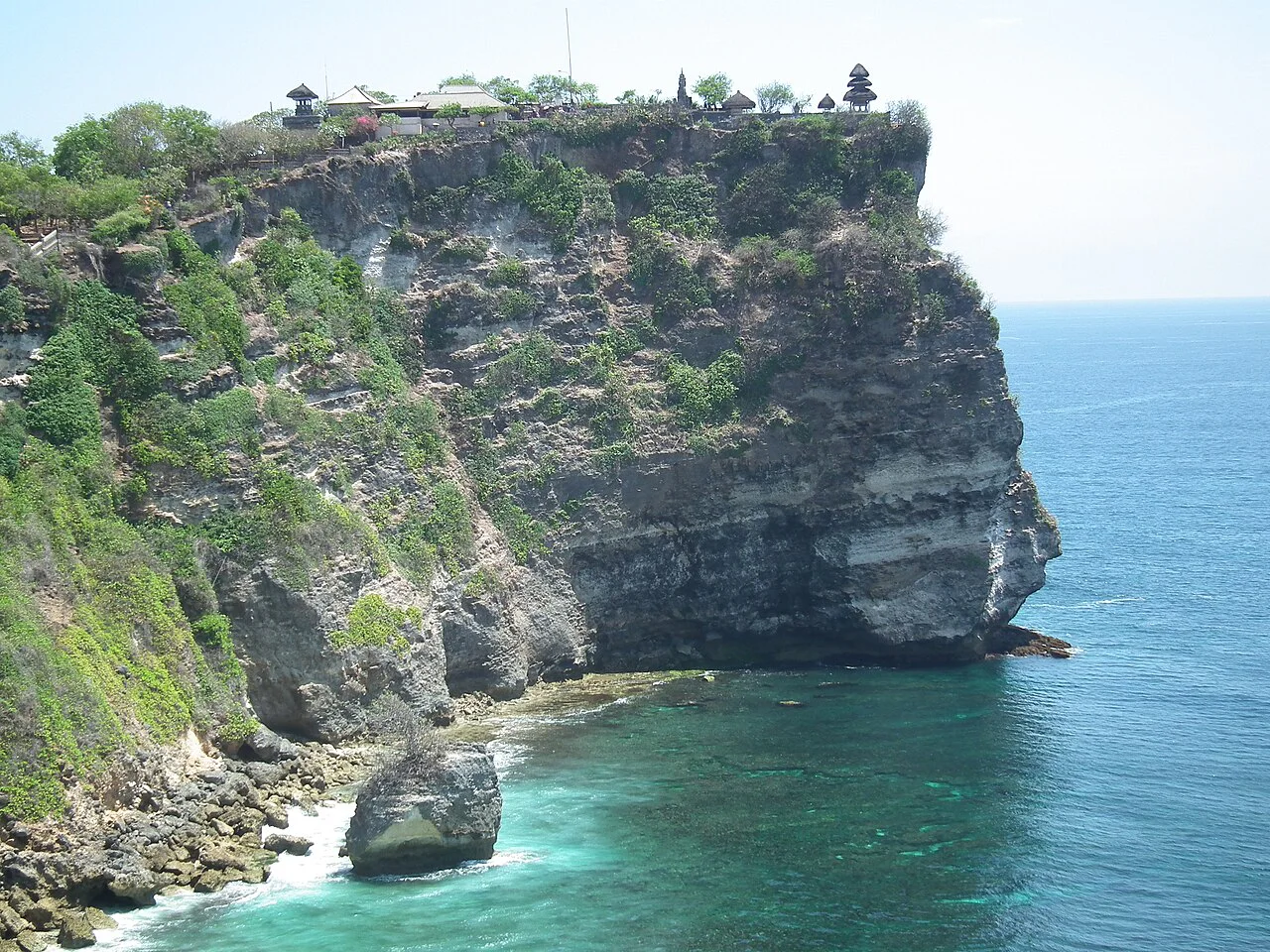
Kuta Selatan · 52 km
Uluwatu Temple
Content & sources
Photo: GeoffClarke · CC BY-SA 3.0