Stanza · Audio guide
Glendalough Audio Guide
A place to remember. A story to take with you.
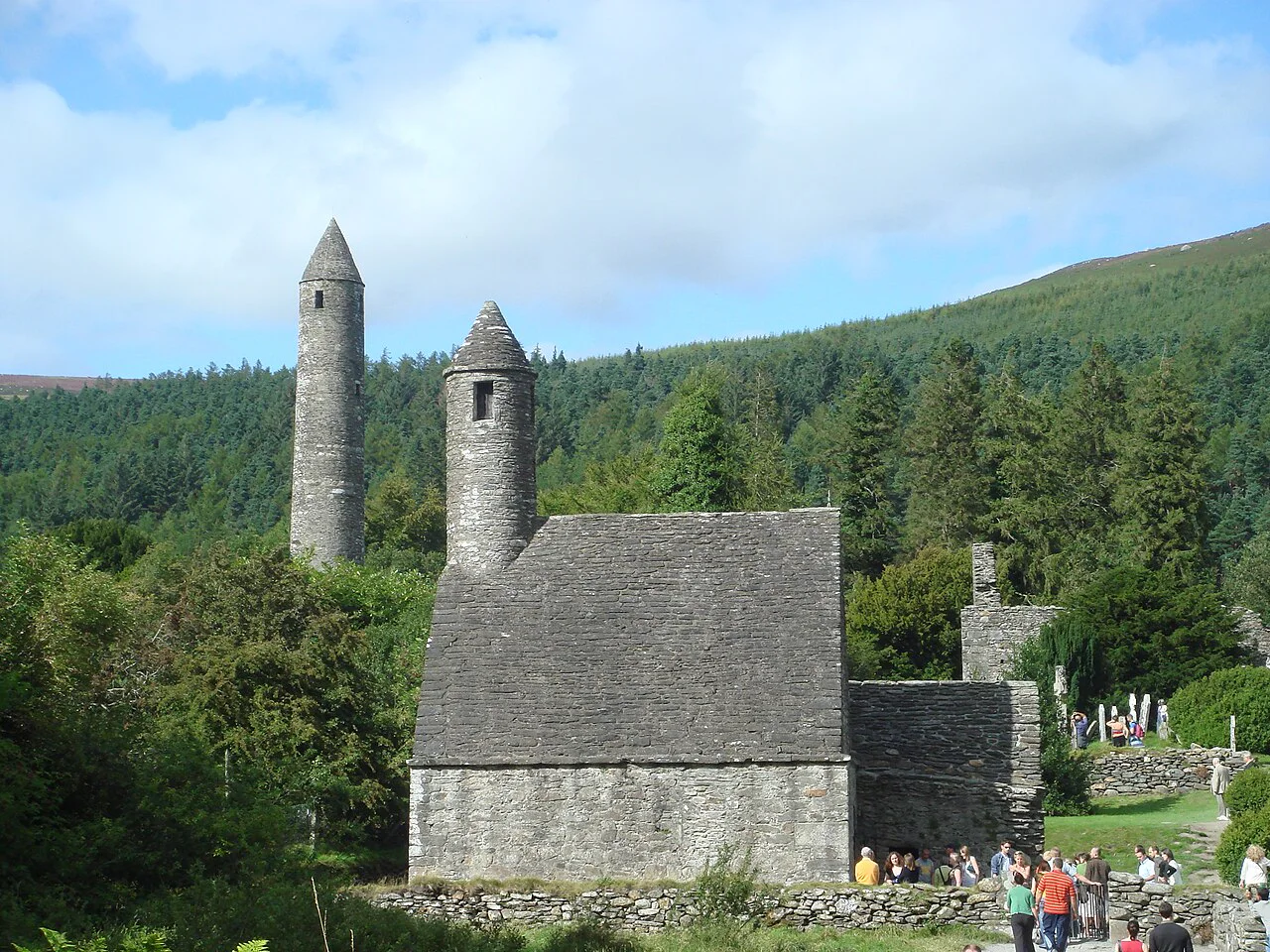
Glendalough is a glacial valley in County Wicklow, Ireland, that features an Early Medieval monastic settlement founded in the 6th century. The site is also a recreational area used for walking, picnicking…
Download Stanza, then search for “Glendalough”.
About the tour
One guide. Your kind of visit.
Glendalough is a glacial valley in County Wicklow, Ireland, that features an Early Medieval monastic settlement founded in the 6th century. The site is also a recreational area used for walking, picnicking, and rock climbing.
Ready when you are.
- 01Get the free Stanza app.
iOS & Android
- 02Find your guide.
“Glendalough”
- 03Download before you go.
Works offline
Audio guide / 24 narrated stops
Inside the guide
Get to know a few of the stories before you go. Open a stop to read more.
01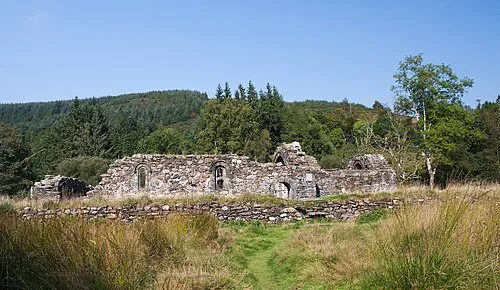 St. Saviour's Priory
Welcome to Glendalough, the valley of the two lakes in County Wicklow, where Saint Kevin founded a monastery in the sixth century. Among all the churches of Glendalough, Saint Saviour's came last, and it carries the finest carving of them all. It was founded around 1162, probably under Laurence O'Toole, the great figure of the monastery's final flowering. O'Toole was born in 1128 and became Abbot of Glendalough, renowned for his sanctity and his hospitality. In 1162 he was made Archbishop of Dublin, and this priory belongs to that same moment. Diarmait Mac Murchadha, King of Leinster, was likely involved in the foundation as well. The new house went to the Augustinians, and it stood apart from the old monastic city, three quarters of a mile east along the river's south bank. The long-established community there is thought to have resented the newcomers, which may explain the distance. Even as Archbishop, O'Toole returned now and then to Glendalough, seeking the quiet of a cave above the Upper Lake. He died in Eu, in Normandy, in 1180. The priory outlived him as a ruin, and by 1875 few of its walls stood above head height, buried under rubbish and tangled vegetation.
Andreas F. Borchert · CC BY-SA 4.0
02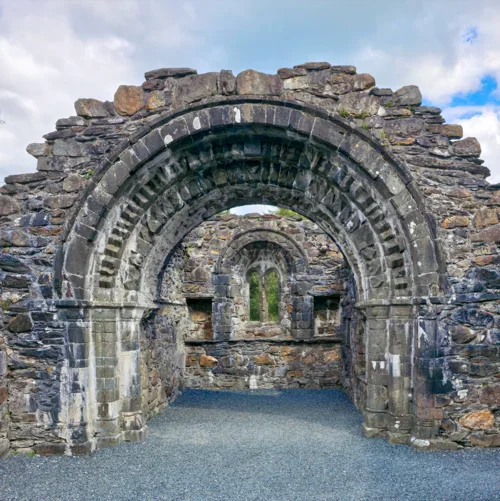 St. Saviour's Priory
: The Chancel Arch
The great arch between the nave and the chancel is the most striking feature of Saint Saviour's. It is built in the Irish Romanesque style, in three orders, meaning arches set one behind another, stepping back into the wall. Each ring carries its own carving, and the capitals at the spring of the arch are highly ornamented. Beyond the arch, the chancel is a small chamber, and it once had a vaulted stone roof. When the Office of Public Works opened the ruin up in 1875, the south group of pillars holding the arch was still intact, so it never needed rebuilding. Many of the original decorative stones lay where they had fallen, which made restoration easier. Even so, it is known that the restorers made mistakes along the way.
Listen in the appPhoto: NateBergin · CC BY 4.0
03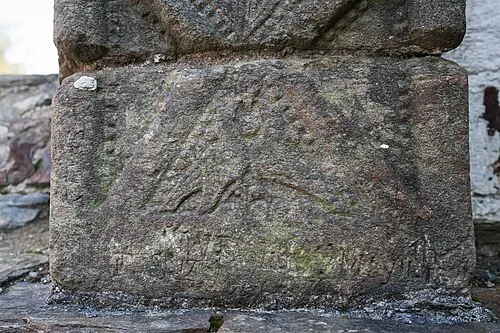 St. Saviour's Priory
: Carved Beasts of the East Window
At the east end of the church, the chancel window is made of two round-headed lights, side by side. Its surrounds are crowded with carved creatures. There is a serpent, and there is a lion. Most striking of all, two birds hold a human head between their beaks. Human heads appear elsewhere in the carving too, and so does the prow of a ship with mast and sails. What the bird-and-head scene was meant to say, no one can now say for certain. It may simply be the playfulness of Irish Romanesque craftsmen, who filled every surface with beasts and faces drawn from the imagination rather than from any strict pattern.
Listen in the appAndreas F. Borchert · CC BY-SA 4.0
04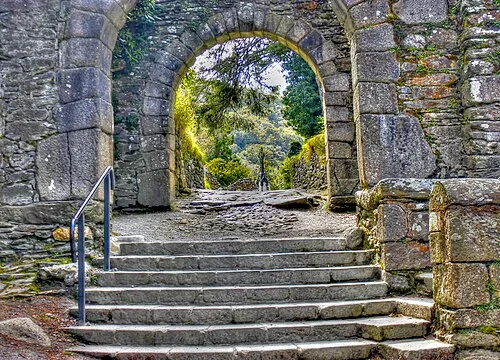 Glendalough Monastic Gateway
The Monastic Gateway
This gateway leads into the heart of Saint Kevin's foundation, which grew over six centuries into a great monastic town and remains a goal of pilgrims to this day. Every visitor once entered through the gateway here. It is the only surviving two-storeyed monastic entrance in Ireland, originally built with two fine granite arches, one above the other. The projecting walls at each end, called antae, suggest it carried a timber roof. Inside the gateway, in the west wall, sits a cross-inscribed stone. That cross denoted sanctuary, the boundary of the area of refuge.
Listen in the apppsyberartist · CC BY 2.0
05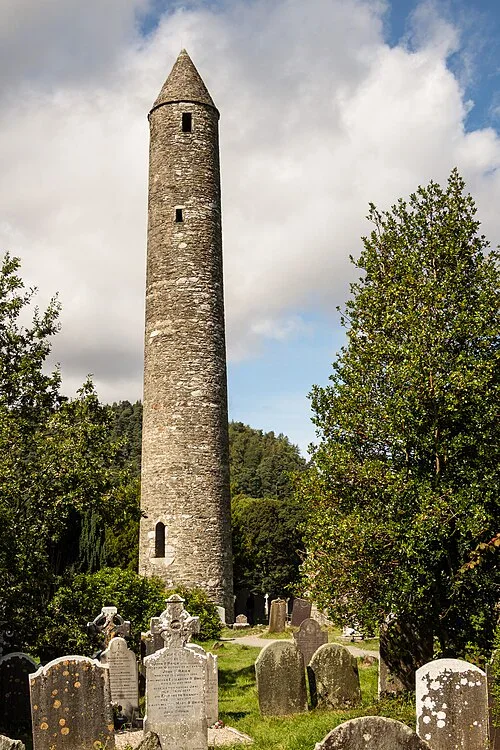 Glendalough Round Tower
The Round Tower
The round tower rises about thirty metres above the graveyard, built of mica-slate interspersed with granite. Its doorway sits three and a half metres above the base, reached originally by a ladder. Inside, timber floors were stacked one above another and connected by ladders. The top storey is lit by four windows, facing the four compass points. Towers like this were built first of all as bell towers, calling the community to prayer. They also served as landmarks for travellers finding their way through the Wicklow hills. On occasion they acted as store-houses, and as places of refuge when the valley came under attack. The conical roof seen today was rebuilt in 1876, using the original stones.
Listen in the appPhoto: Rafesmar · CC BY-SA 4.0
06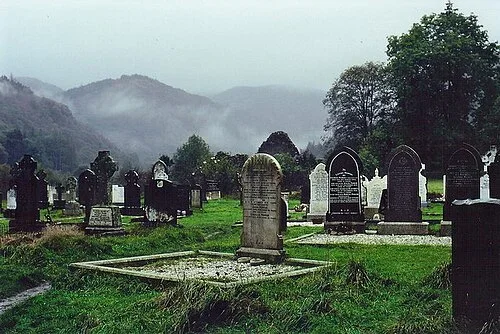 Glendalough Graveyard
The Graveyard
The graves still crowd the ground between the churches, because Glendalough never stopped being a place of burial. Devotion to Saint Kevin never quite stopped either. His feast day, the third of June, drew crowds here for centuries. Descriptions from the eighteenth and nineteenth centuries record occasions of what one account calls riotous assembly on his feast. Penitential rounds at the holy places sat uneasily beside the drinking and noise of a great crowd, and the gatherings alarmed the authorities. The headstones themselves tell their own long story, from plain early slabs to the carved crosses and folk-art stones of later centuries.
Listen in the appJoseph Mischyshyn · CC BY-SA 2.0
07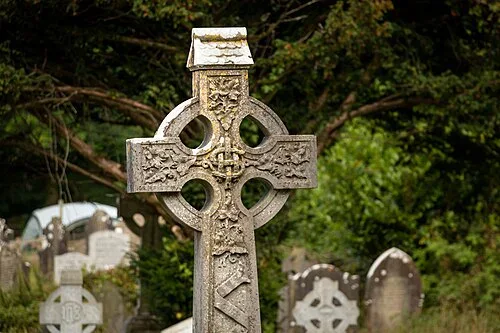 Glendalough Graveyard
A Celtic Cross in the Graveyard
Among the later headstones of the graveyard stands this ornate Celtic-style cross. Its ring circles the head of the cross, and its surfaces are covered in carved ornament. Elsewhere in the cemetery lie plain recumbent slabs, the oldest kind of memorial here, set flat over the grave with little or no decoration. Who cut this cross, and exactly when, nobody now knows.
Listen in the appPhoto: Rafesmar · CC BY-SA 4.0
08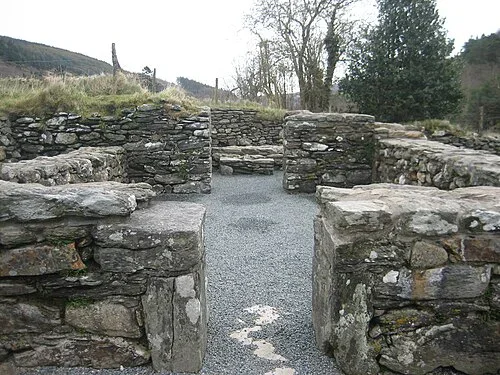 St. Kieran's Church
These low stone foundations are all that remain of a small nave-and-chancel church, uncovered in 1875. It is currently thought to commemorate Saint Ciarán, the founder of Clonmacnoise, one of the great monasteries of Ireland. Clonmacnoise had associations with Glendalough during the tenth century, and some see in this dedication a friendship between two of the age's great monastic founders. Whatever the truth, the little church shows that Glendalough belonged to a network of houses reaching far beyond its own valley. Directly opposite these ruins, on the far side of the Glenealo River, lies the Deer Stone, a bullaun stone whose original purpose is unknown but which became part of pilgrim rituals in later centuries.
Listen in the appPhoto: Millars · CC BY-SA 4.0
09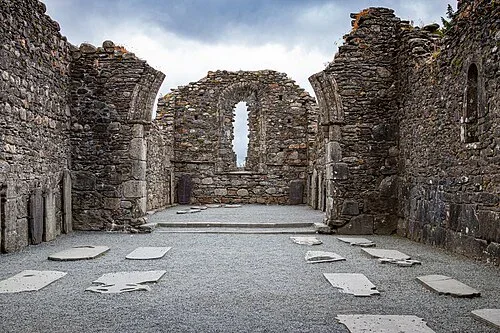 Glendalough Cathedral
The cathedral of Saints Peter and Paul is the largest and most imposing building at Glendalough. In its day it served a whole monastic town. The settlement included workshops, rooms for writing and copying manuscripts, guest houses, an infirmary, farm buildings, and dwellings for the monks and a large lay population. The ruined buildings visitors see today are only a small part of that, and most date from between the tenth and twelfth centuries. The cathedral itself had several phases of building. The earliest is the nave, with its antae. The large mica-schist stones visible up to the height of the square-headed west doorway were re-used from an earlier, smaller church. The community's learning left a mark on paper as well as stone. The Book of Glendalough, a manuscript of the local annals, was written here in about 1131.
Listen in the appPhoto: Superbass · CC BY-SA 4.0
10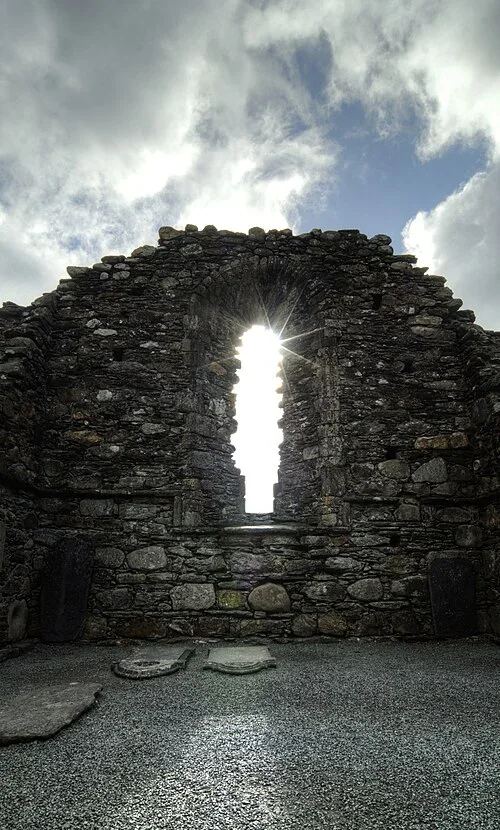 Glendalough Cathedral
: The Chancel
The eastern end of the cathedral is a later addition, with the chancel and sacristy dating from the late twelfth and early thirteenth centuries. Its chancel arch and east window were once finely decorated, though many of the carved stones are now missing. Below the south window of the chancel, two small fittings survive in the wall. One is an ambry, a cupboard built into the stonework. The other is a piscina, a shallow basin used for washing the sacred vessels after Mass. Small things like these show the great church in daily use, tended by priests for whom this was simply their place of work and prayer.
Listen in the appPhoto: Rob Hurson · CC BY-SA 4.0
- 11
St. Kevin's Cross
The early granite cross beside the cathedral, and the luck said to come from embracing it.
- 12
The Priests' House
A Romanesque chapel rebuilt from an old sketch, its first purpose still a mystery.
- 13
The Priests' House: Carved Stones
The twelfth-century zigzag carving that survived the Priests' House being taken down and built up again.
- 14
St. Kevin's Church ('St. Kevin's Kitchen')
Why a church with no kitchen was nicknamed Saint Kevin's Kitchen, and the clever vault that holds up its stone roof.
- 15
Kitchen and Tower Together
A miniature round tower on a church roof, echoing its giant neighbour across the green.
- 16
The Lower Lake
How oak from this quiet valley became one of the longest Viking warships ever recorded.
- 17
Poulanass Waterfall
The small waterfall that helped split one lake into two, and made Glendalough a valley of a pair.
- 18
Reefert Church
Royal burials, raids and ruin: how Glendalough faded as a power yet never lost its pilgrims.
- 19
Reefert Church: Granite Arch
The plain, sturdy granite work of Reefert Church, from sloping doorway jambs to roof-bearing corbels.
- 20
The Upper Lake
The story of Kevin the hermit, who came to this lake for solitude and founded a monastery instead.
- 21
St. Kevin's Bed
A cave the size of a baker's oven, high above the lake, and the legend of the blackbird in the saint's hand.
- 22
The Pilgrim Valley
Saint Kevin's Way, the thirty-kilometre pilgrim road that ends in this valley.
- 23
The Miners' Village
The lead mine that brought cottages, machinery and the nickname Van Diemen's Land to the quiet valley.
- 24
The Spinc Boardwalk
Nine marked trails, a zig-zag climb and a cliff-top boardwalk: Glendalough as walkers know it today.
Glendalough
Frequently asked questions
How much does the guide cost?
Free app download. Listed guide price: $1.99. Guide price shown in the app. Audio guide only. Venue admission is separate.
Can I listen without internet?
Yes. Download the guide’s audio, images, and maps in the app before your visit. Your downloaded content is then available offline.
Can I listen in my language?
This audio guide is available in 15 languages, including English.
Do I need to follow a schedule?
No. This is a self-guided experience. Choose your stops, pause whenever you like, and return to a story at your own pace.
At your own pace
Explore Glendalough.
Download Stanza, then search for “Glendalough”.
Free app download · Guide price shown in the app
Keep exploring
Nearby audio guides
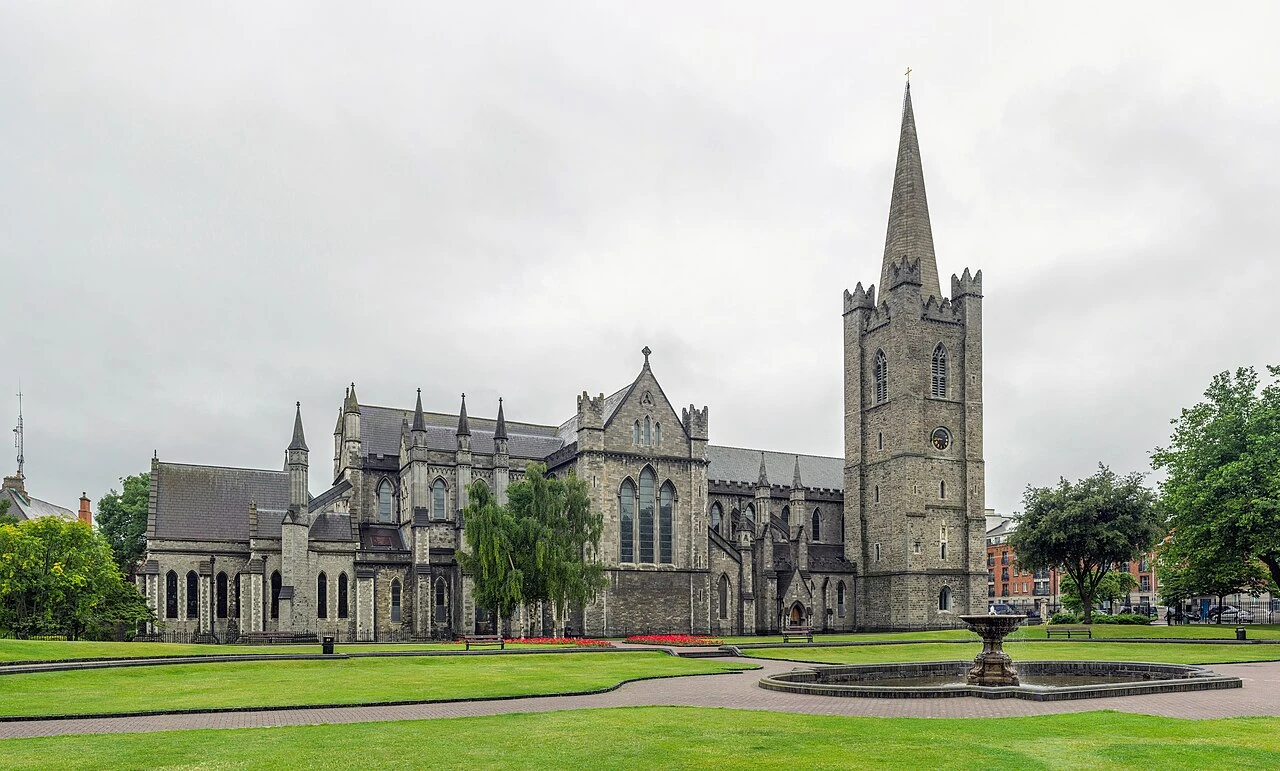
Dublin · 37 km
St. Patrick's Cathedral
Content & sources
Photo: Diliff · CC BY-SA 3.0
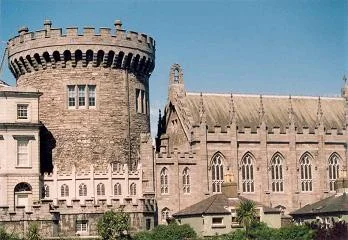
Dublin · 37 km
Dublin Castle
Content & sources
Photo: FoekeNoppert · Public domain
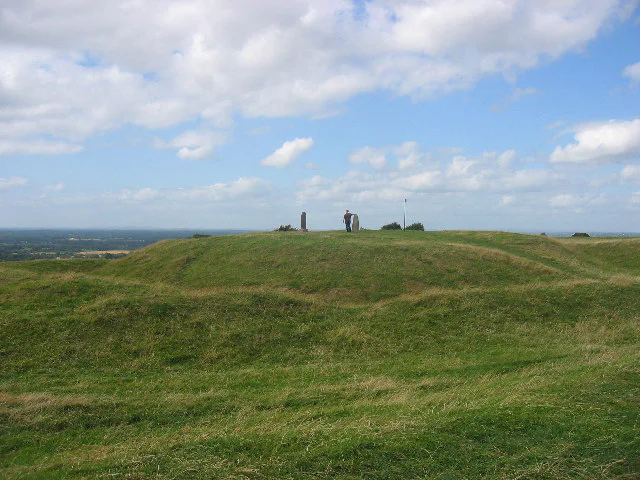
The Municipal District of Ashbourne · 66 km
Hill of Tara
Content & sources
Patrick Brown · CC BY-SA 2.0
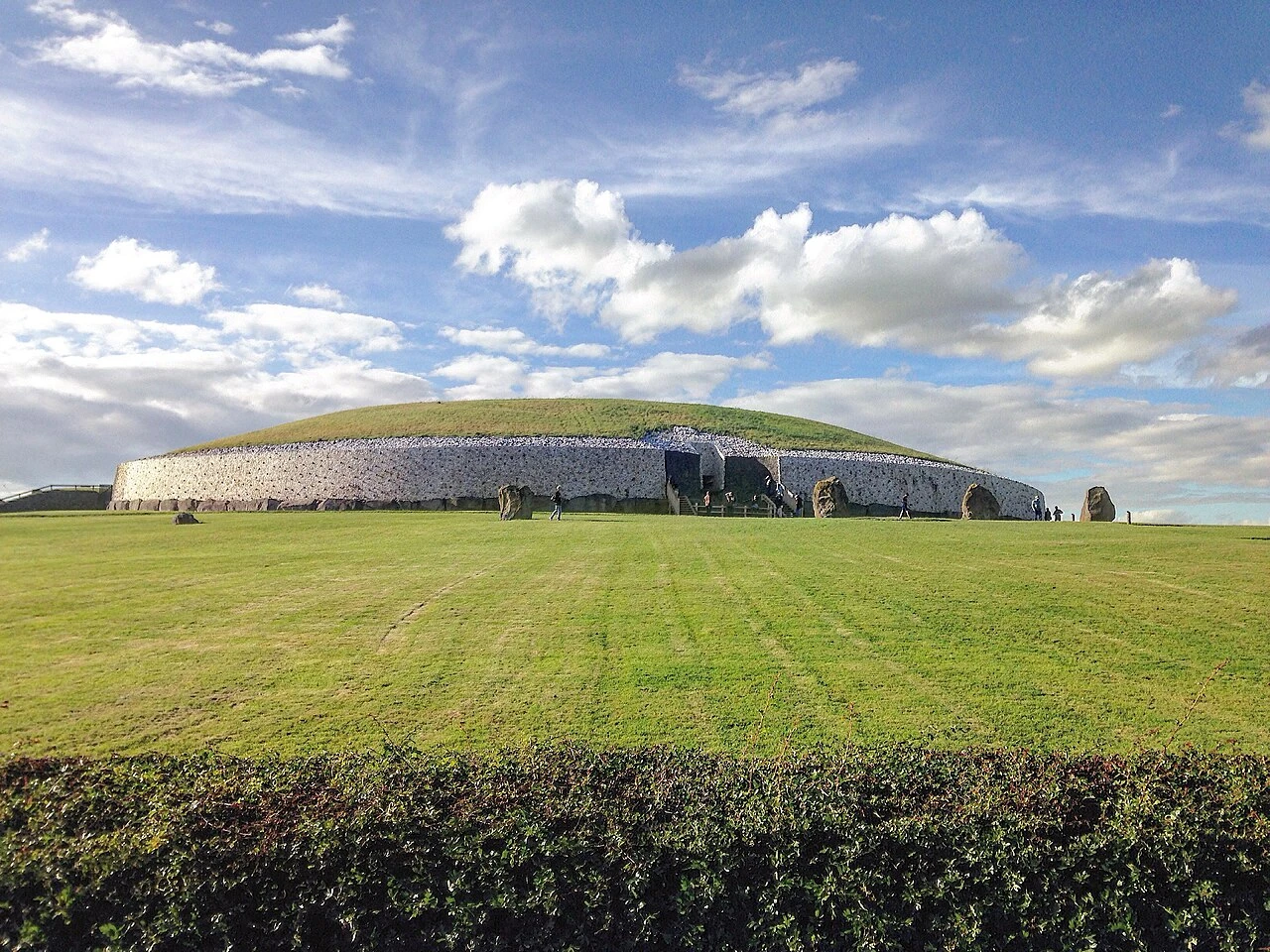
County Meath · 77 km
Newgrange
Content & sources
Photo: Tjp finn · CC BY-SA 4.0