 Stanza / Audio guide
Content & sources
Stanza · Audio guide
Hill of Tara Audio Guide
A place to remember. A story to take with you.
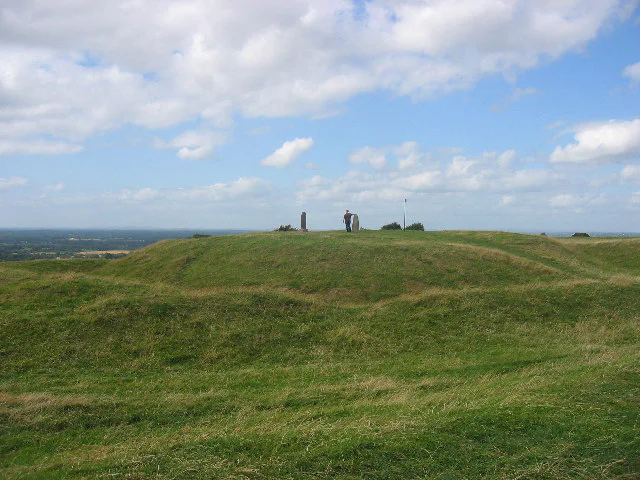
The Hill of Tara is a hill and ancient ceremonial and burial site near Skryne in County Meath, Ireland. Tradition identifies the hill as the inauguration place and seat of the High Kings of Ireland.
Download Stanza, then search for “Hill of Tara”.
About the tour
One guide. Your kind of visit.
The Hill of Tara is a hill and ancient ceremonial and burial site near Skryne in County Meath, Ireland. Tradition identifies the hill as the inauguration place and seat of the High Kings of Ireland.
Ready when you are.
- 01Get the free Stanza app.
iOS & Android
- 02Find your guide.
“Hill of Tara”
- 03Download before you go.
Works offline
Audio guide / 11 narrated stops
Inside the guide
Get to know a few of the stories before you go. Open a stop to read more.
01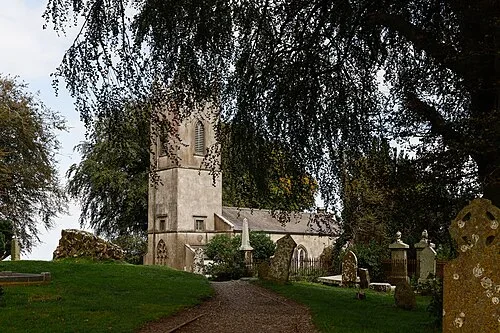 St. Patrick's Church & Visitor Centre
St. Patrick's Church - Arrival at Tara
Welcome to the Hill of Tara, a grassy hill in County Meath where tradition places the seat of the High Kings of Ireland. People raised tombs, mounds, enclosures and standing stones here from the Neolithic age through the Iron Age. The church by the graveyard is the newest layer of that long story. The earliest evidence of a church on this spot is a charter from the 1190s. In 1212, Pope Innocent the Third confirmed it among the possessions of the Knights Hospitallers of Saint John in Kilmainham. The building here today went up in the 1820s, on the site of an earlier church, and some of the old stonework was reused in its walls. It now serves as the visitor centre, run by the Office of Public Works. The hill's old Irish name, Teamhair, may come from an ancient word for a sanctuary cut off for ceremony.
Andreas F. Borchert · CC BY-SA 4.0
02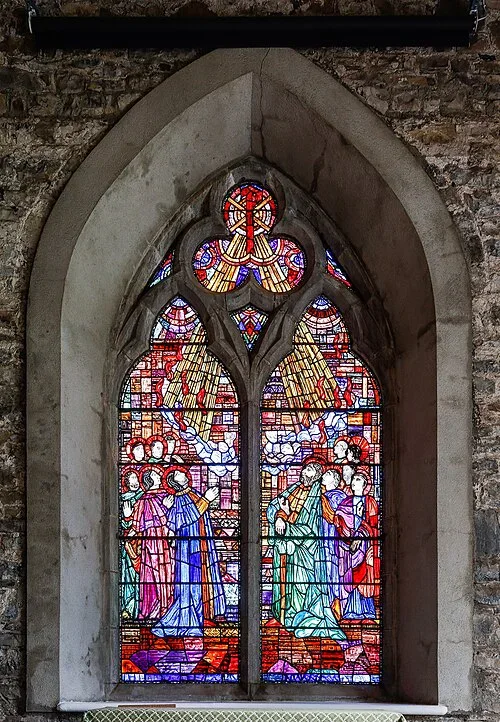 St. Patrick's Church & Visitor Centre
Inside the Visitor Centre - The East Window
Inside the former church, colour survives in the east window, a stained-glass work attributed to the artist Evie Hone. Its figures burn in deep reds and blues beneath a small cross of glass at the very top. The building itself kept changing across the centuries. A picture made in 1791 shows the older church divided into a nave and a chancel, with a bell-tower over the western end. Only a stump of wall marks that first building now. On Tara, the Christian layers and the pre-Christian ones sit close together, neighbours on the same hilltop rather than rivals.
Andreas F. Borchert · CC BY-SA 4.0
03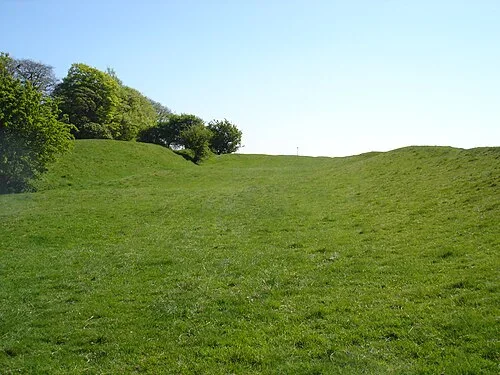 Teach Miodhchuarta (The Banqueting Hall)
Teach Miodhchuarta - The 'Banqueting Hall'
At the northern end of the hill, two long grassy banks run parallel, with a broad hollow between them. Later generations gave this earthwork a grand name: Teach Miodhchuarta, the Banqueting Hall. People pictured the kings of Tara feasting here in style, along a hall of royal proportions. Archaeology reads it differently. These banks most likely formed a ceremonial avenue leading up to the hilltop, and it seems to have been one of the last major monuments built at Tara. The approach, not the feast, was its work. The idea of Tara as a destination survives in legend all the same. Five ancient roads, the slighe, were said to meet at the hill, linking it with all the provinces of Ireland. The earliest telling of that legend appears in an old tale called The Destruction of Da Derga's Hall.
Listen in the appPhoto: Brholden · Public domain
04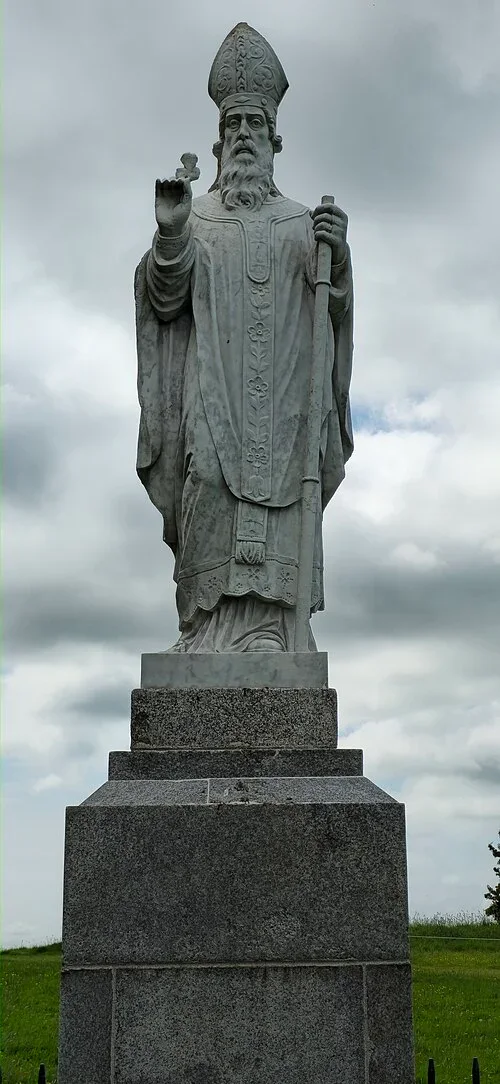 Ráth na Seanadh & St. Patrick's Statue
St. Patrick's Statue and the Rath of the Synods
A white statue of Saint Patrick marks this corner of the hill, beside the churchyard. Just nearby lies the Rath of the Synods, a round enclosure with four rings of ditches and banks. People occupied it between the first and fourth centuries, and a large timber building once stood inside. Roman objects were found there too. Part of the rath was destroyed by the churchyard itself, and far more by a treasure hunt. Around the turn of the twentieth century, a group called British Israelites became convinced the Ark of the Covenant lay buried in the hill. They believed the British people descended from the Lost Tribes of Israel. A retired Anglo-Indian judge, Edward Wheeler Bird, led the digging after the landowner was paid off. The rath was badly mutilated. Irish cultural nationalists rose in protest. Douglas Hyde tried to interrupt the dig and was ordered away by a man wielding a rifle. Maud Gonne made a more flamboyant stand: she relit an old bonfire and sang A Nation Once Again beside it, to the fury of the landlord and the police. Writers and nationalists of every stripe joined the campaign to save the hill.
Listen in the appPhoto: Qwertzu111111 · CC BY-SA 4.0
05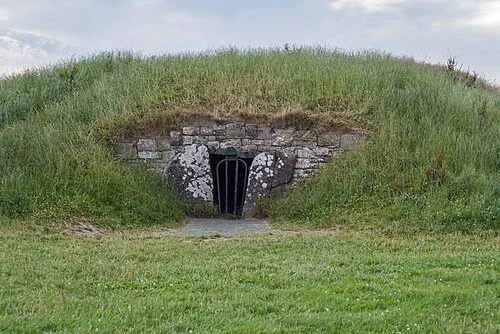 Dumha na nGiall (The Mound of the Hostages)
Dumha na nGiall - The Mound of the Hostages
Kings came late to this hill. Its oldest visible monument is Dumha na nGiall, the Mound of the Hostages, a passage tomb raised around 3200 BC. A grass-grown mound now covers it, ringed by a kerb of stones, with the passage mouth sealed behind a metal gate. For about a century, this was the communal tomb of a single Neolithic farming community. Nearly three hundred burials were placed inside, most of them cremated bones. Long before any king claimed Tara, this was a place where a people buried together.
Listen in the appPhoto: Olliebailie · CC BY-SA 4.0
06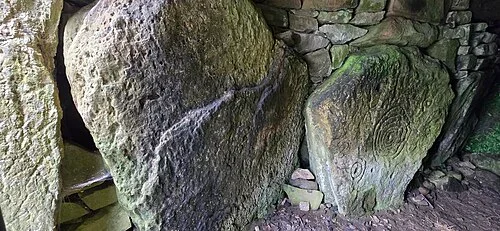 Dumha na nGiall (The Mound of the Hostages)
Inside the Passage - Carved Stones and the Returning Sun
Some of the tomb's stones carry carved decoration, spirals and scored lines cut into the surface by Neolithic hands. The passage they line points towards the sunrise at two moments of the year. One is Samhain, the festival that opened winter; the other is Imbolc, which opened spring. The passage is short compared with Newgrange, so its alignment is less exact. But the researcher Martin Brennan argues that the daily movement of its four-metre sunbeam is quite enough to fix those dates. Early Irish literature records a royal gathering called the feast of Tara, held here at Samhain. The tomb lived on long after its first community faded. In the Bronze Age, thirty-three more people were buried there, first in the passage and then in the mound around it. By then only high-status individuals were laid there, from several communities rather than one. The last burial was a young man of rank, with an ornate necklace and a dagger. Two gold torcs from the mound date to around 2000 BC.
Listen in the appPhoto: Qwertzu111111 · CC BY-SA 4.0
07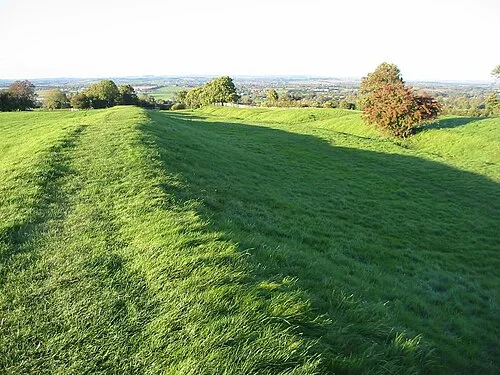 Ráth na Ríogh (The Enclosure of the Kings)
Ráth na Ríogh - The Enclosure of the Kings
A broad bank and a deep ditch sweep across the summit, enclosing the heart of Tara. This is Ráth na Ríogh, the Enclosure of the Kings, the biggest and most central of the hill's Iron Age round enclosures. It runs to a thousand metres around, with an inner ditch and an outer bank. It was dated to the first century BC and originally marked out by a stakewall. Digging in the ditch uncovered human burials, along with a high concentration of horse and dog bones. Inside the enclosure stand two round earthworks joined together in the shape of a figure of eight. One is called Cormac's House, after the legendary king. The other is the Forradh, the Royal Seat, which was raised over earlier burial mounds.
Listen in the appPhoto: Nemoi · CC BY-SA 3.0
08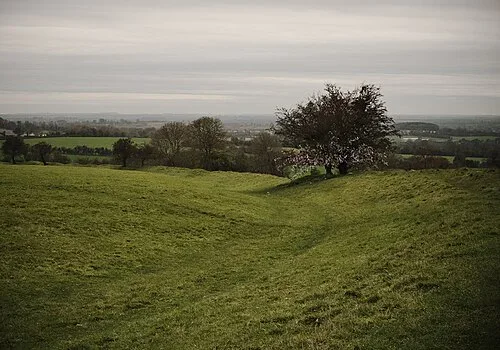 Ráth na Ríogh (The Enclosure of the Kings)
The Reality of the High Kings
By the beginning of Ireland's historical period, Tara had become the seat of a sacral kingship. The historian Dáibhí Ó Cróinín writes that the hill possessed an aura that seemed to set it above the other royal seats. It stands at the centre of most of the great drama in early Irish literature, and medieval king lists traced its High Kings far back into a legendary past. The reality on the ground was narrower. The scholar John T. Koch notes that before the ninth century, no king of Tara likely held enough authority to dominate the whole island. Control of the hill itself changed hands repeatedly. The Érainn probably held it first, until the Laigin seized it in the third century. In the fifth, Niall of the Nine Hostages drove the Laigin out, and Tara became the ceremonial seat of the Uí Néill. Their southern and northern branches alternated in the kingship until the eleventh century. After that, a would-be High King gained more from holding Dublin, Limerick or Waterford than from holding Tara.
Listen in the appPhoto: Rob Hurson · CC BY-SA 4.0
09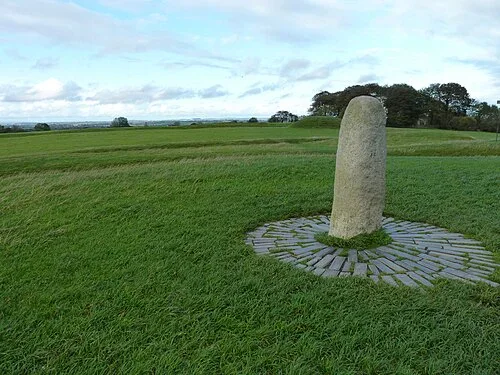 The Royal Seat, Lia Fáil & 1798 Memorial
The Lia Fáil - Stone of Destiny
A plain pillar of stone stands on the Forradh, the Royal Seat, set in a circle of flat paving. This is believed to be the Lia Fáil, the Stone of Destiny, at which the High Kings of Ireland were crowned. Irish legend tells that the stone was brought to Ireland by the Tuatha Dé Danann, the divine people of the old order. It would cry out beneath the foot of the rightful king, a roar heard across the land. Archaeology adds a quieter chapter. The stone is believed to have originally lain beside, or on top of, the Mound of the Hostages, the old tomb further down the hill. From there it was raised onto the Royal Seat, an earthwork that already incorporated earlier burial mounds. Tradition holds that it was moved again to commemorate the rebels of 1798.
Listen in the appJames Allan · CC BY-SA 2.0
10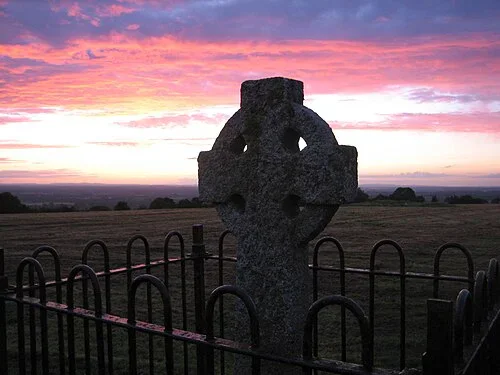 The Royal Seat, Lia Fáil & 1798 Memorial
The Battle of Tara Hill - 1798
In the rebellion of 1798, the United Irishmen made a camp on this hill. On 26 May 1798, British troops attacked and defeated them. Around four hundred rebels died on Tara that day, and the hill became their burial ground. A stone cross stands here in their memory, sharp against the sky at dusk. A hill of inauguration had turned, for one spring day, into a battlefield. Yet Tara's power as a symbol only grew. In 1843, the nationalist leader Daniel O'Connell held a peaceful demonstration here in favour of Irish self-governance. More than 750,000 people came. A hill where kings had once been made had become a place where a nation gathered to imagine itself.
Listen in the appNeil Forrester, Co.Meath, Ireland. http://neil.forrester.ie · CC BY 3.0
- 11
Tara from Above - A Hill Made by Generations
From above: a hill holding far more than the eye can see, shaped by four thousand years of generations.
Hill of Tara
Frequently asked questions
How much does the guide cost?
Free app download. Listed guide price: $1.99. Guide price shown in the app. Audio guide only. Venue admission is separate.
Can I listen without internet?
Yes. Download the guide’s audio, images, and maps in the app before your visit. Your downloaded content is then available offline.
Can I listen in my language?
This audio guide is available in 15 languages, including English.
Do I need to follow a schedule?
No. This is a self-guided experience. Choose your stops, pause whenever you like, and return to a story at your own pace.
At your own pace
Explore Hill of Tara.
Download Stanza, then search for “Hill of Tara”.
Free app download · Guide price shown in the app
Keep exploring
Nearby audio guides
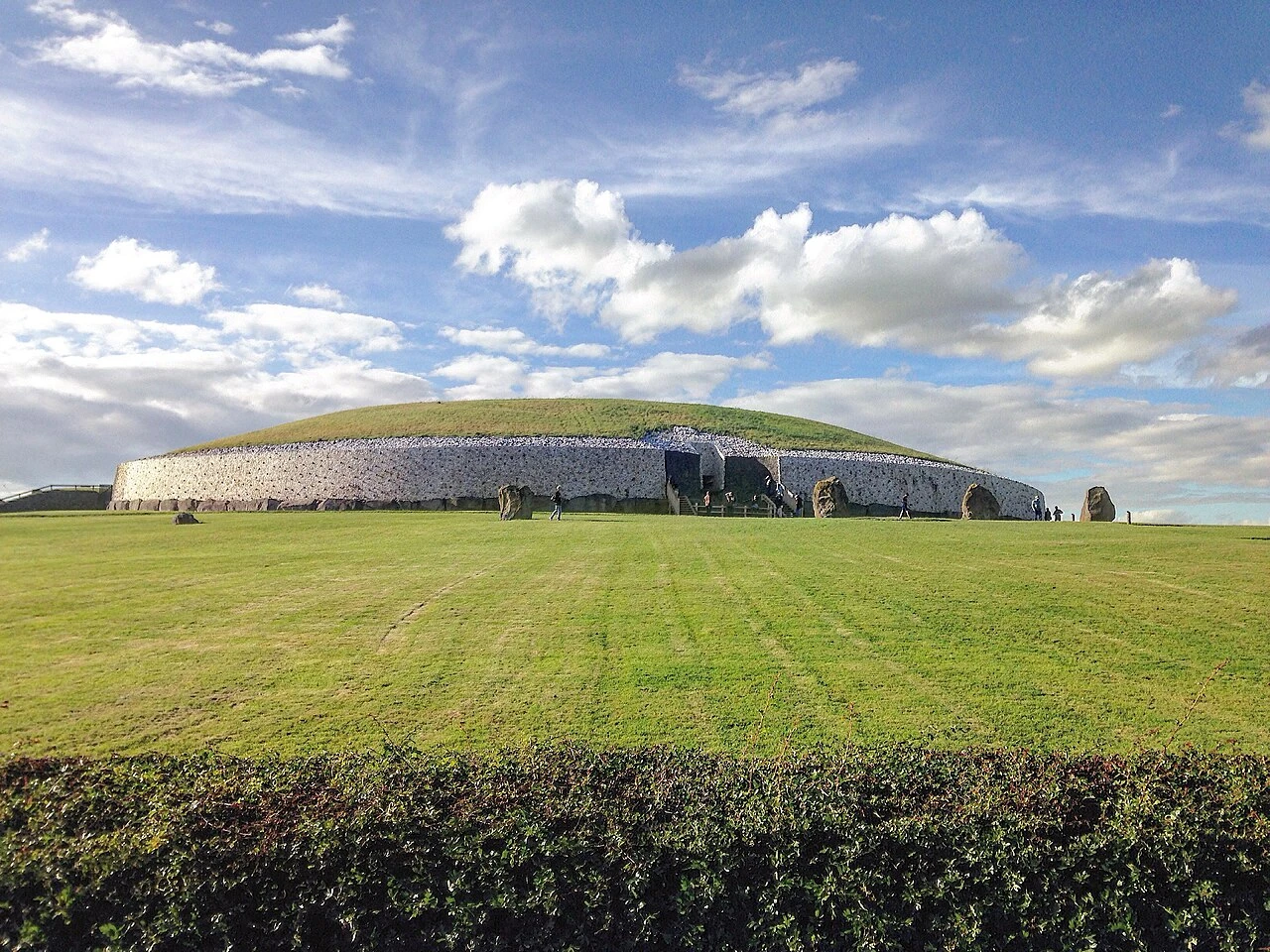
County Meath · 16 km
Newgrange
Content & sources
Photo: Tjp finn · CC BY-SA 4.0
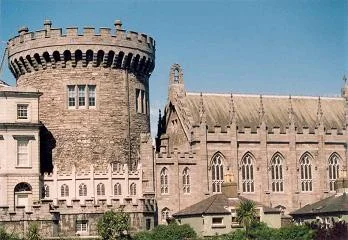
Dublin · 35 km
Dublin Castle
Content & sources
Photo: FoekeNoppert · Public domain
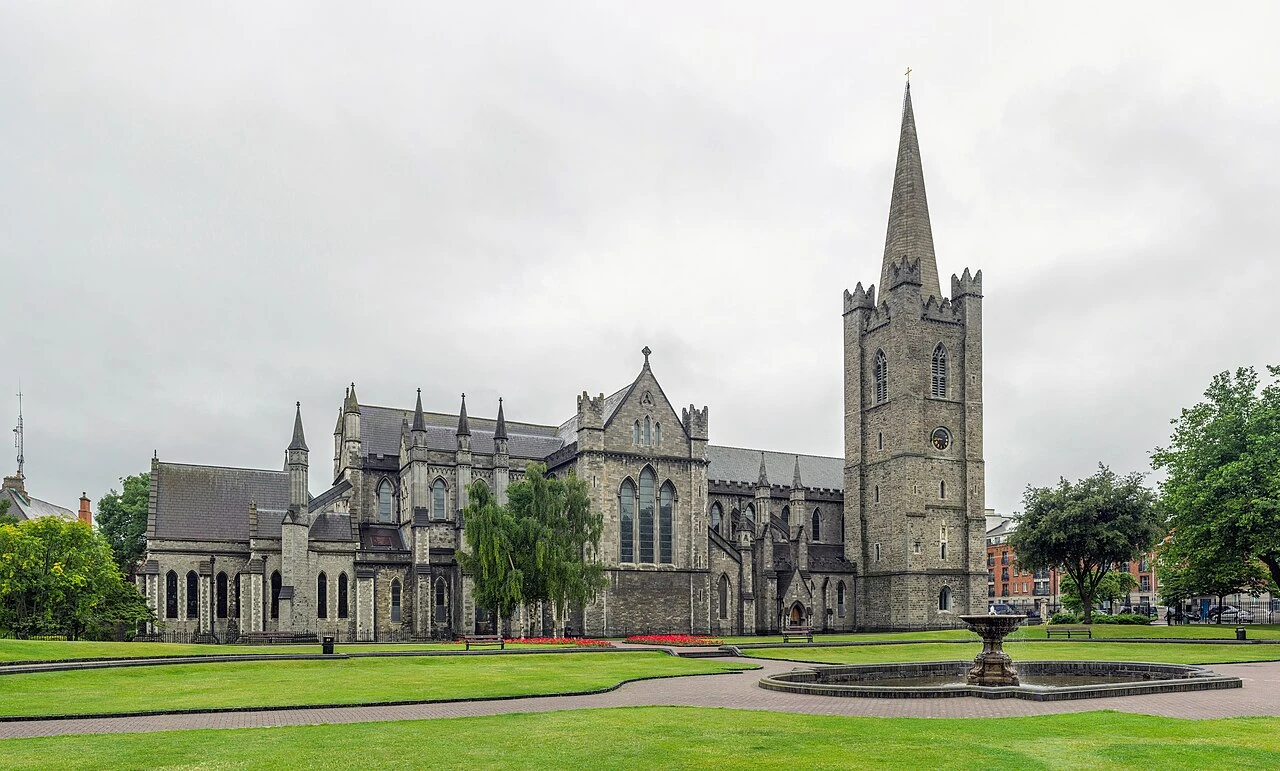
Dublin · 35 km
St. Patrick's Cathedral
Content & sources
Photo: Diliff · CC BY-SA 3.0
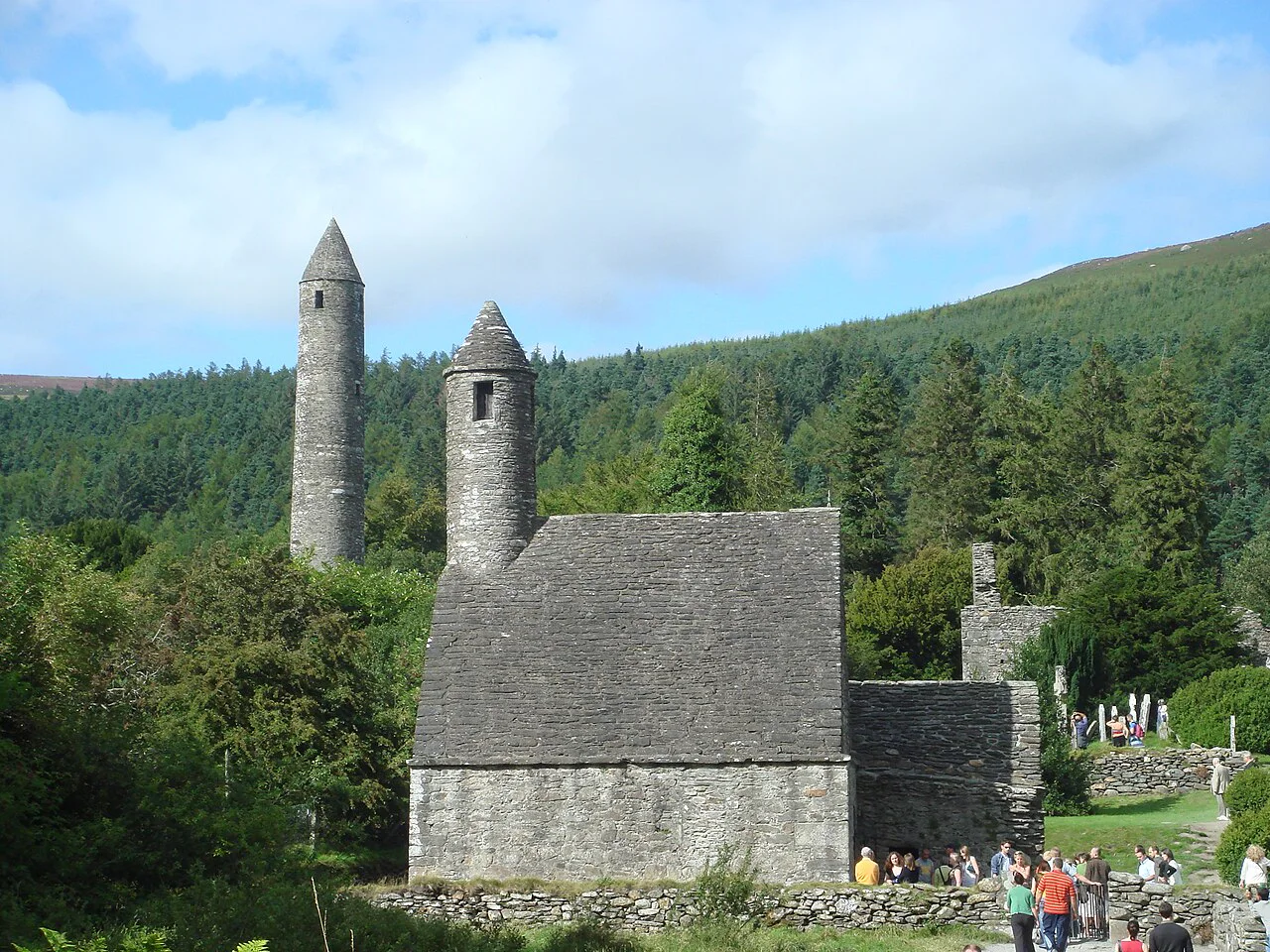
County Wicklow · 66 km
Glendalough
Content & sources
Schcambo at English Wikipedia · CC BY 3.0