Stanza · Audio guide
Bethsaida Audio Guide
A place to remember. A story to take with you.
Bethsaida is a place mentioned in the New Testament. It was an ancient city located in an administrative district known as Gaulonitis, which is now the Golan Heights.
Download Stanza, then search for “Bethsaida”.
About the tour
One guide. Your kind of visit.
Bethsaida is a place mentioned in the New Testament. It was an ancient city located in an administrative district known as Gaulonitis, which is now the Golan Heights.
Ready when you are.
- 01Get the free Stanza app.
iOS & Android
- 02Find your guide.
“Bethsaida”
- 03Download before you go.
Works offline
Audio guide / 9 narrated stops
Inside the guide
Get to know a few of the stories before you go. Open a stop to read more.
01 Trailhead and Ascent to et-Tell
Arriving at the Mound of et-Tell
Welcome to et-Tell, the mound that many identify with ancient Bethsaida. Basalt stones lie scattered across its slopes, the wreckage of cities built, burned and rebuilt over some three thousand years. The mound rises about twenty-five meters above the surrounding plain. Its base sits roughly 166 meters below the level of the sea, deep in the Jordan Rift. The story here runs in three acts. In the Iron Age this was very likely the capital of the kingdom of Geshur. Later it became a small fishing village that Philip the Tetrarch renamed Julias. And the Gospel of John calls it Bethsaida, the hometown of the apostles Peter, Andrew and Philip, which is why pilgrims still climb this path.
Photo: Chmee2 · CC BY 3.0
02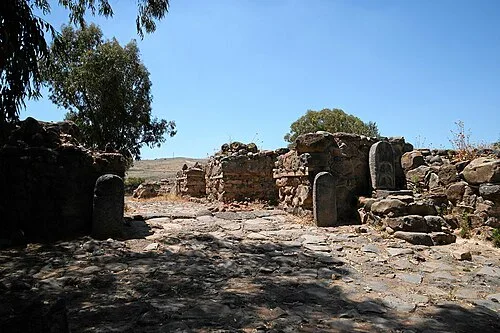 Outer City Gate and Cultic High Place
The Outer Gate Courtyard
Few Iron Age gates anywhere in the Middle East survive on this scale. This one ranks among the largest and most complete known, and its most imposing finds belong to the eighth century BCE. The paved courtyard formed the city's public arena. In Iron Age towns generally, the gate was where traders spread their goods, elders settled disputes, and travelers brought news from the road. A city announced itself here, to friends and enemies alike. Several rounded standing stones stand in the courtyard. They were not boundary markers or seats. They belong to a sacred high place beside the entrance.
Photo: Mboesch · CC BY-SA 4.0
03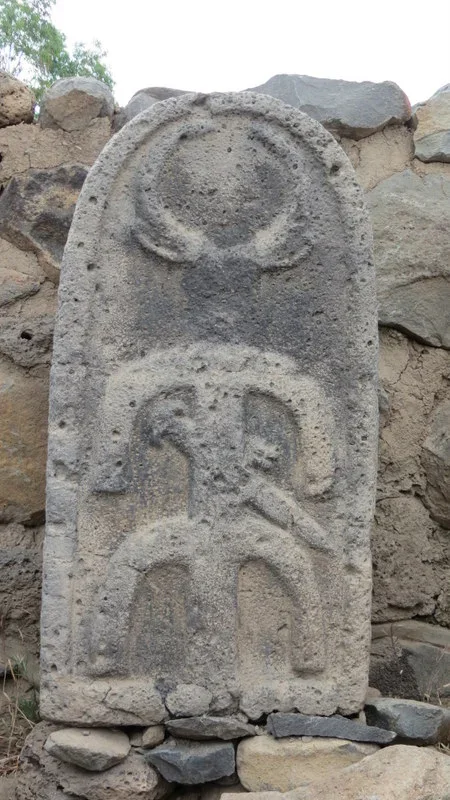 Outer City Gate and Cultic High Place
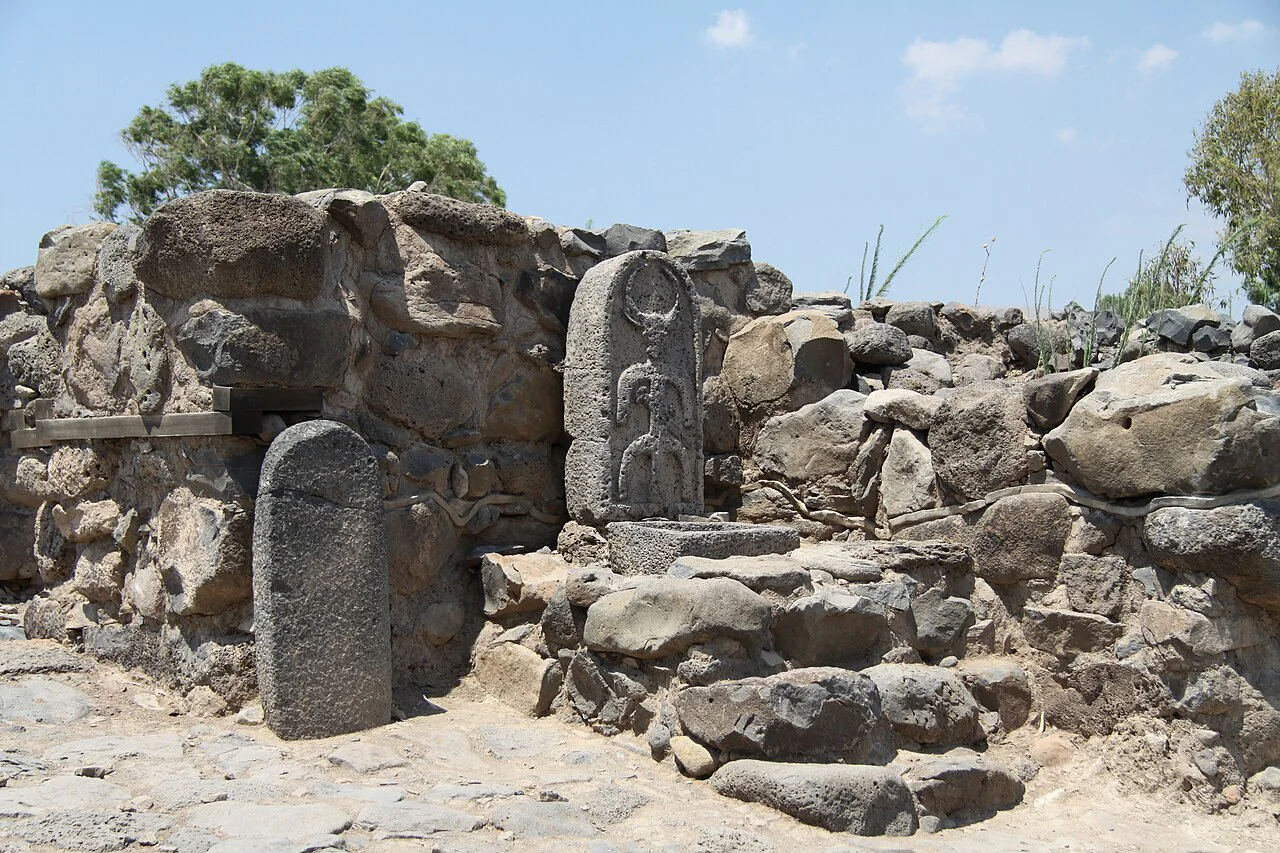
The Horned Bull Stele
A basalt slab as tall as a person, carved with a figure crowned by great bull horns. That is the god of the gate. The stone stood at a high place, a shrine set just outside the entrance, where the people of Geshur made vows and offerings as they came and went. A deity placed here watched over the city's doorway. Who exactly he was is argued over. The caption in the Israel Museum, where the carved original is displayed, calls it a Canaanite deity, possibly the moon god Kashku. The excavation team has suggested the storm god Hadad, or else a moon god. All of these are proposals. The horns are the one detail everyone agrees on.
Listen in the appPhoto: Hoshvilim · CC BY-SA 4.0
04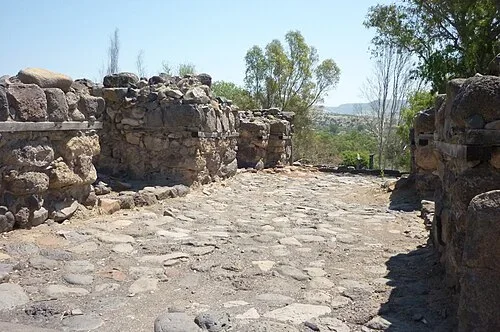 Inner City Gate Complex
Inside the Inner Gate: The Assyrian Destruction
This paved passage saw the end of the Iron Age city. Between 734 and 732 BCE the Assyrian king Tiglath-pileser III campaigned through the region, and et-Tell burned. Excavators found widespread fire, collapsed walls, and the heaviest damage right here at the gate. Arrowheads lay in the wreckage, and the storage rooms stood empty, signs of fighting and of supplies run dry. The destruction also ended the kingdom of Geshur. The city never regained its old standing, and parts of the gate were later dismantled and carried off. The gate's own history runs deeper still. In 2024 excavators uncovered a chamber wall from an earlier gate here, built in the eleventh or tenth century BCE.
Listen in the appDrahnier (Diskussion) · Copyrighted free use
05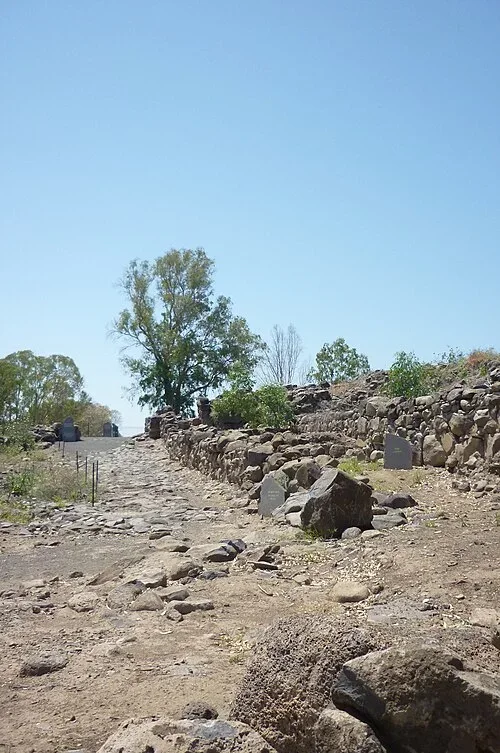 Inner City Gate Complex
Between the Walls: The Fortified City
Two lines of wall, inner and outer, wrapped around the city. An attacker who broke through the outer wall was funneled straight toward the gate, where the defenders waited. The mound stretches about four hundred meters from end to end. It is half that across, a stronghold by any measure. In the eighth century BCE the defenses stood at their height. Et-Tell was then easily the largest and strongest city east of the Jordan Valley. The walls are dry-built from local basalt boulders, hauled up the slope stone by stone.
Listen in the appDrahnier (Diskussion) · Copyrighted free use
06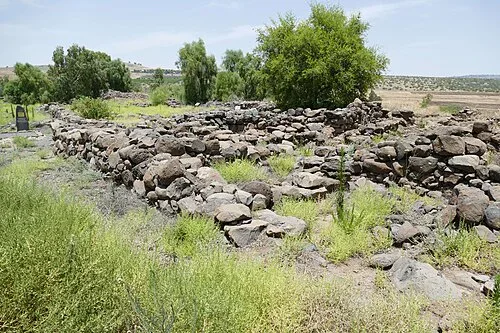 Iron Age Palace Ruins
The Palace of the Kings of Geshur
These heavy basalt foundations belonged to a palace, the administrative heart of a kingdom. Geshur was an independent Aramean state, and its capital very likely stood on this mound. The Hebrew Bible gives Geshur a place in David's story, telling of a marriage alliance between the two royal houses. That portrait comes from the biblical text, not from anything dug up in these rooms. In 2018 Rami Arav, who led the excavations here for many years, offered another name for the city. He identified it with Zer, a fortified town listed in the book of Joshua.
Listen in the appPhoto: Bukvoed · CC BY 4.0
07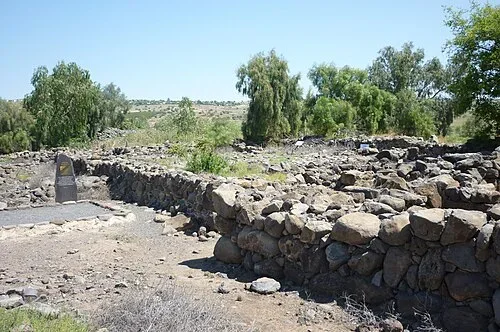 Hellenistic-Roman Residential Quarter
The House of the Fisherman
Centuries after the destruction, people came back. From the third century BCE a modest village stood on the mound, and one of its courtyard houses tells the trade plainly. Excavators found lead weights from fishing nets, and needles for mending them. The village lived off the Sea of Galilee, though the shore lies some distance away. Coins trace the village through the Hellenistic age: silver issues from 143 BCE, Seleucid bronzes, and coins of the Hasmonean king Alexander Jannaeus. This was the trade of fishing families like those the Gospels name, the apostles said to have come from Bethsaida.
Listen in the appDrahnier (Diskussion) · Copyrighted free use
08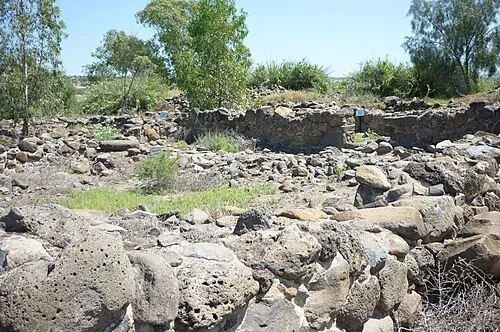 Hellenistic-Roman Residential Quarter
The Wine-Growers' House and the City of Julias
Under Philip the Tetrarch, the village became a city. Philip, a son of Herod the Great, ruled these lands, and around the year 30 CE, the historian Josephus writes, he raised Bethsaida to the rank of a polis. He renamed it Julias in honor of Livia, the wife of Augustus, also called Julia Augusta, though another account says the name honored a daughter of Caesar. A coin from Philip's own reign, found at the site, anchors the era in the ground. This house carries the excavators' label, the Wine-Growers' House, rather than any record of a vintage pressed here. This is also the world of the Gospels. Luke sets the feeding of the multitude near Bethsaida, and Mark tells of a blind man healed just outside the village.
Listen in the appDrahnier (Diskussion) · Copyrighted free use
09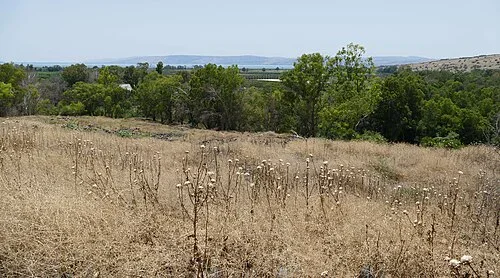 Summit Viewpoint over the Bethsaida Valley
The Summit Viewpoint: One Bethsaida or Two?
From the top of the mound the plain runs out toward the Sea of Galilee, and Bethsaida's great question opens up. Et-Tell stands about two kilometers from the water, an awkward distance for a fishing town. Geologists offer one explanation. Tectonic uplift along the Great Rift Valley may have carried the shore away from the site over many millennia, though that remains a proposal. A rival candidate, el-Araj, sits directly on the lakeshore. In 2017 its excavators announced a Roman bathhouse, a sign of a proper city. From 2019 they uncovered a Byzantine church with a mosaic invoking Peter as the chief and commander of the heavenly apostles. Some believe it is the Church of the Apostles, built over the house of Peter and Andrew, a claim of one excavation team that is not yet settled. The Gospels remember Bethsaida in harder tones too, reproaching the town for its unbelief. One scholar's line sums up the tangle: there could hardly have been two Bethsaidas so close together. Whether the answer lies on this mound or down at the shore, the stones of both are still being read.
Listen in the appPhoto: Bukvoed · CC BY 4.0
Bethsaida
Frequently asked questions
How much does the guide cost?
Free app download. Listed guide price: $0.99. Guide price shown in the app. Audio guide only. Venue admission is separate.
Can I listen without internet?
Yes. Download the guide’s audio, images, and maps in the app before your visit. Your downloaded content is then available offline.
Can I listen in my language?
This audio guide is available in 15 languages, including English.
Do I need to follow a schedule?
No. This is a self-guided experience. Choose your stops, pause whenever you like, and return to a story at your own pace.
At your own pace
Explore Bethsaida.
Download Stanza, then search for “Bethsaida”.
Free app download · Guide price shown in the app
Keep exploring
Nearby audio guides
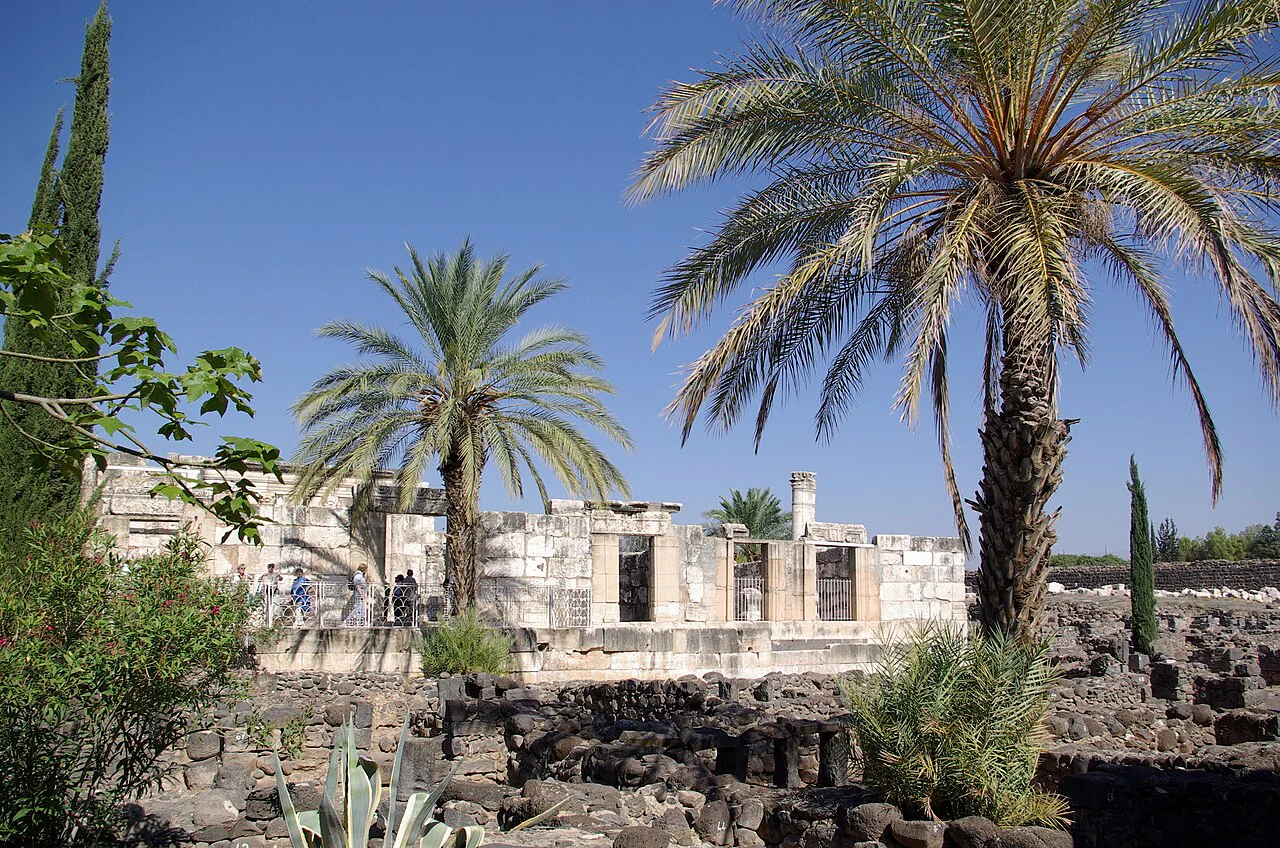
Emek HaYarden Regional Council · 6 km
Capernaum
Content & sources
Photo: Berthold Werner · Public domain
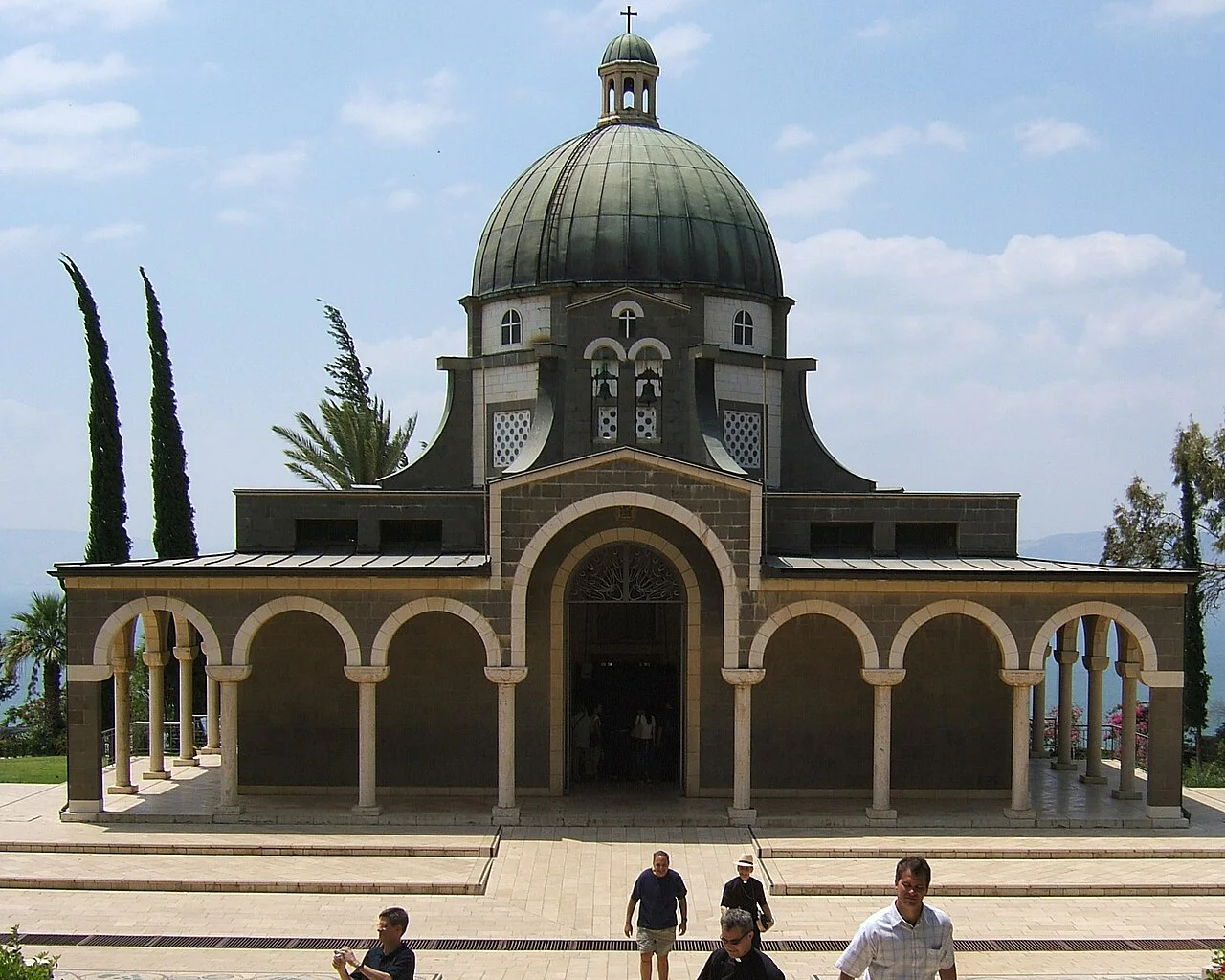
Tabgha · 8 km
Church of the Beatitudes
Content & sources
No machine-readable author provided. Bantosh~commonswiki assumed (based on copyright claims). · Public domain
Umm Qais · 29 km
Gadara
Content & sources
Samir I. Sharbaty · CC BY-SA 3.0
Jezreel Valley Regional Council · 37 km
Sepphoris
Content & sources
No machine-readable author provided. Bachrach44 assumed (based on copyright claims). · Public domain