Stanza · Audio guide
Area Archeologica di Paestum Audio Guide
A place to remember. A story to take with you.
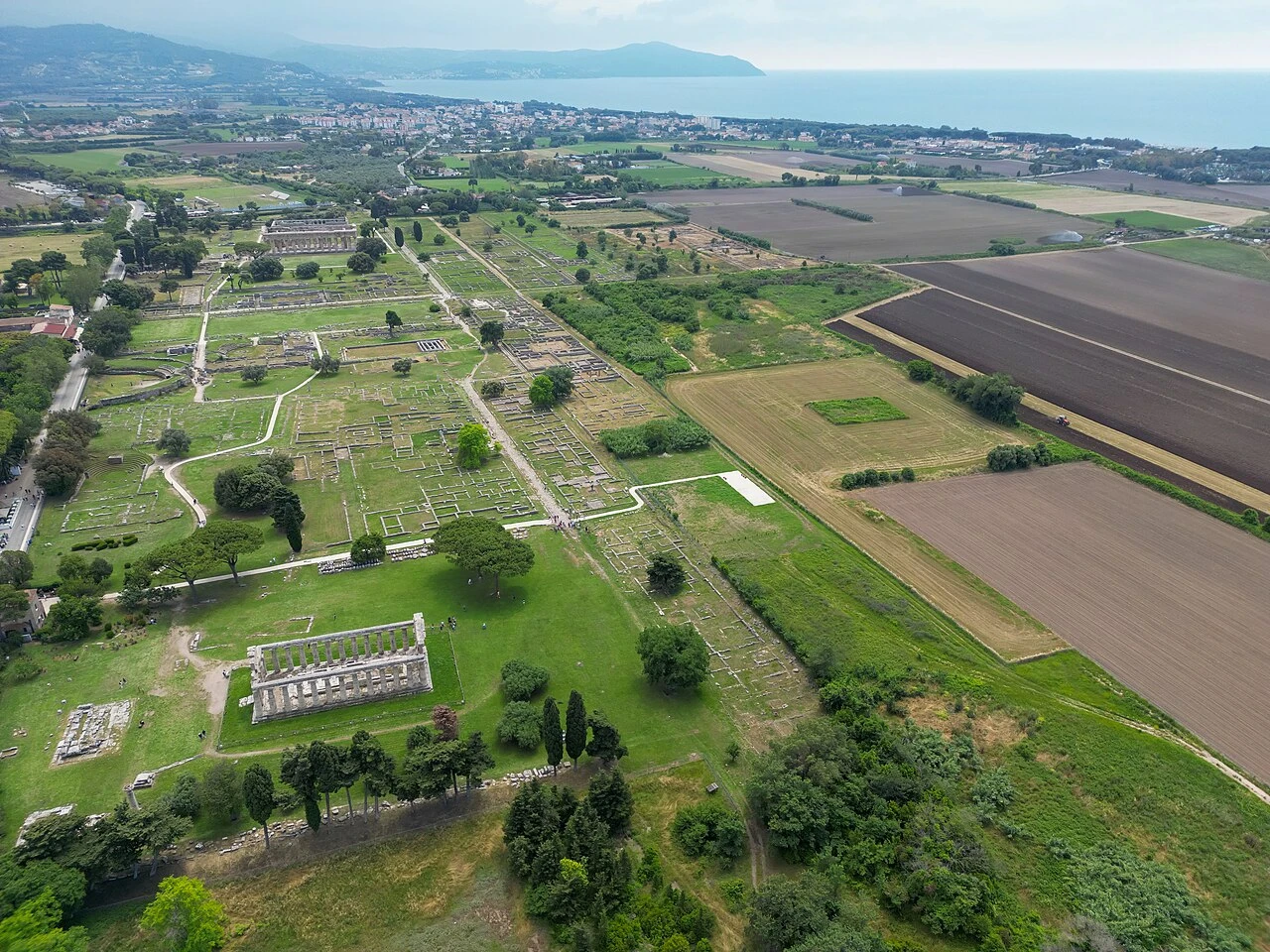
Paestum is a major archaeological site featuring three exceptionally well-preserved ancient Greek temples. It was originally known as Poseidonia and served as a major city in Magna Graecia.
Download Stanza, then search for “Area Archeologica di Paestum”.
About the tour
One guide. Your kind of visit.
Paestum is a major archaeological site featuring three exceptionally well-preserved ancient Greek temples. It was originally known as Poseidonia and served as a major city in Magna Graecia.
Ready when you are.
- 01Get the free Stanza app.
iOS & Android
- 02Find your guide.
“Area Archeologica di Paestum”
- 03Download before you go.
Works offline
Audio guide / 43 narrated stops
Inside the guide
Get to know a few of the stories before you go. Open a stop to read more.
01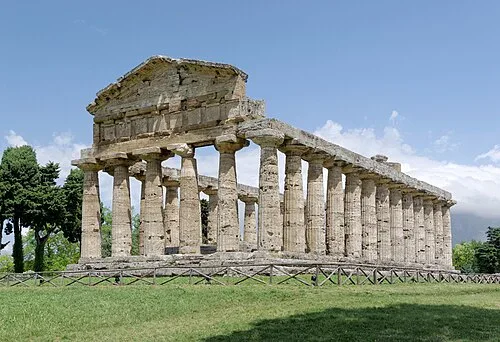 Temple of Athena
Greek settlers from Sybaris founded this city around 600 BCE and named it Poseidonia, after the sea god Poseidon. For about two centuries it flourished as a Greek polis, and democracy took root here. Late in the fifth century BCE an Italic people, the Lucanians, took control of the town and renamed it Paistos. Rome took over in 273 BCE and gave it the name it keeps today, Paestum. The great survivals are three Doric temples, built between about 550 and 450 BCE. The one on the highest ground in the city, north of the ancient centre, is the Temple of Athena. It went up around 500 BCE, and its architecture is transitional: mainly early Doric, with Ionic elements worked in. For a long time scholars called it the Temple of Ceres, goddess of the harvest, until the dedication to Athena was recognised.
Photo: Berthold Werner · CC BY-SA 3.0
02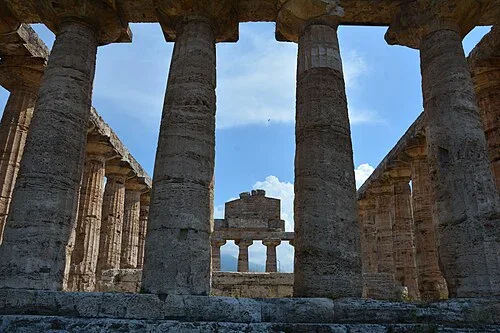 Temple of Athena
: through the colonnade
The Temple of Athena is the smallest of Paestum's three temples, and the most unusual. Its outer ring of columns is Doric, plain-capped and sturdy. Inside, in the deep porch in front of the cella where the cult image stood, the builders switched to the Ionic order, with its slenderer proportions. That mixing of two Greek styles is what makes the building transitional. It belongs fully to neither the older Archaic manner nor the later Classical one. Few Greek temples anywhere show both orders at work in a single structure.
Mentnafunangann · CC BY-SA 4.0
03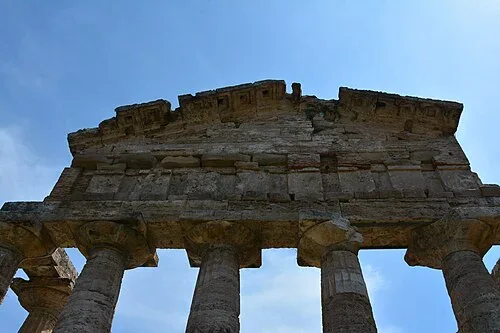 Temple of Athena
: the upper order
At the gable end of the Temple of Athena, the stonework above the columns still rises in its original stack. The long architrave beams sit where the builders set them, and part of the raking cornice of the pediment survives with them. At most Greek temples in the region, that upper zone is the first to go. Painted terracotta once covered some of the detailed parts of this temple, and pieces of it are now kept in the museum.
Listen in the appMentnafunangann · CC BY-SA 4.0
04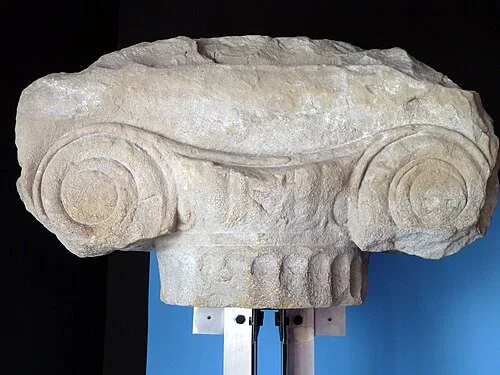 Temple of Athena
Ionic Capital from Paestum
A pair of spiral scrolls, called volutes, is the signature of the Ionic capital, and the carved example from Paestum on your screen shows them clearly. It is kept in the museum. Whether it came from the Temple of Athena itself is not certain, but it shows the Ionic order that Paestum's builders knew and used alongside their Doric. The city had no good marble nearby, so its temples carried little stone sculpture and relied on paint and terracotta for ornament. A worked limestone capital like this one was the exception rather than the rule.
Listen in the appDave & Margie Hill / Kleerup · CC BY-SA 2.0
05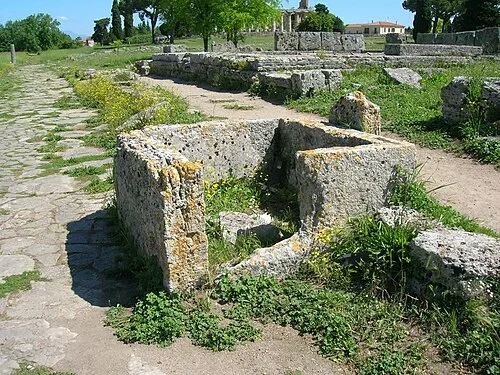 Sacred Way (Via Sacra)
Via Sacra, the ancient main street
After Rome refounded the city as a colony, its planners laid a formal main road through Paestum, the Via Sacra. It runs north to south on stone paving, linking the sanctuaries with the civic heart of the town, and it followed the line of the older Greek street plan. That line still orders the site today. The main roads of the ancient city remain paved, and a walk through the ruins follows the route the Romans set out.
Listen in the appMentnafunangann · CC BY-SA 3.0
06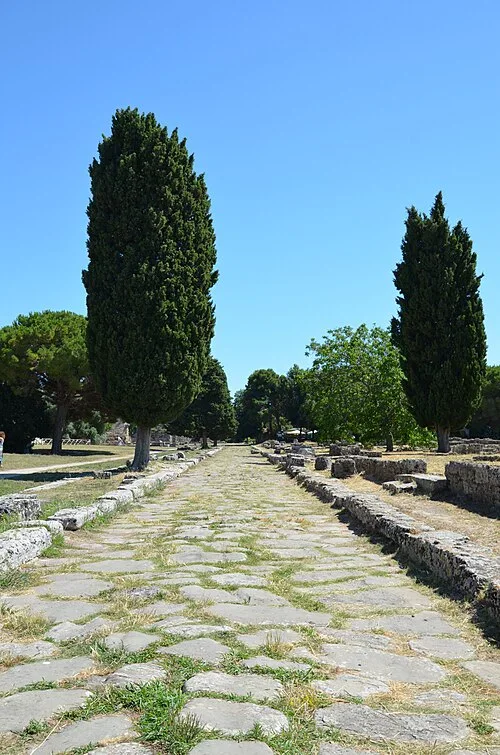 Sacred Way (Via Sacra)
Walking the ancient paving
A long ribbon of worn stone runs straight between tall cypresses, under an open sky. The paving blocks are set so tightly that the line reads as one unbroken surface, running toward the temples at the far end of the city. The scale is easy to miss until the whole length registers at once. This is the main street of the Roman town, still doing its work of alignment after two thousand years.
Listen in the appCarole Raddato from FRANKFURT, Germany · CC BY-SA 2.0
07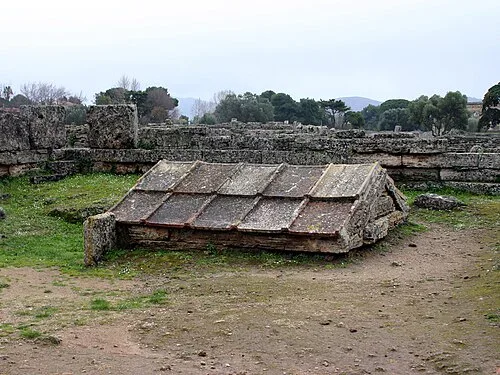 Subterranean Heroon
The Subterranean Heroon
Close to the forum stands a low stone enclosure, built around a small tumulus. It is a heroon, a shrine to a hero, and it probably honoured the founder of Poseidonia himself, though his name is unknown. The builders raised it perhaps a century after the man's death. When it was excavated in 1954, a low stone chamber with a pitched roof came to light at the centre, half below the surrounding ground and half above. Inside lay large and splendid bronze vessels, perhaps not made locally, and a great Athenian black-figure amphora of about 520 to 500 BCE. The bronze vessels carried traces of honey inside.
Listen in the appJosé Luiz · CC BY-SA 4.0
08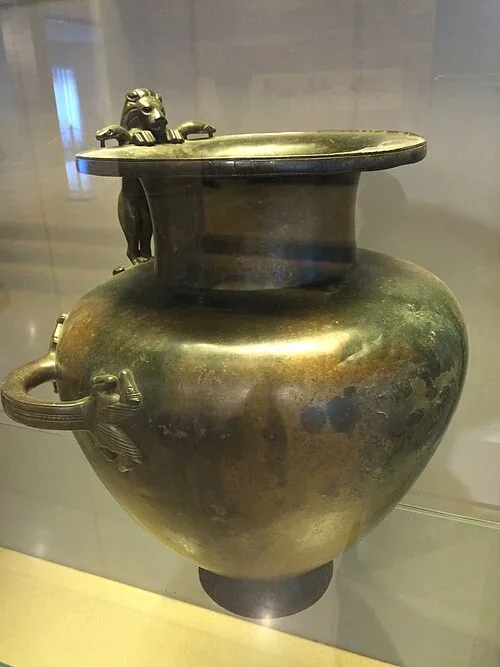 Subterranean Heroon
Bronze vessel from the Heroon
Dark bronze, a broad belly, and at the rim an animal figure climbing over the edge with its paws on the lip. On your screen is one of the splendid vessels found in the stone chamber of the Heroon, the shrine probably honouring the city's founder, and it now stands in a glass case in the museum. The honey these vessels held was an offering to the dead man the shrine celebrated. The metal has taken on a deep mottled patina, from centuries sealed away in the half-buried chamber.
Listen in the appSergio Spolti · CC BY-SA 4.0
09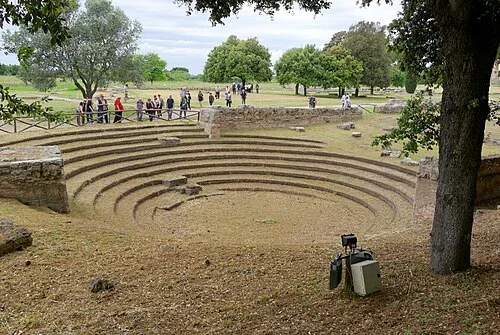 Ekklesiasterion
The citizens of Greek Poseidonia gathered in this circular hall to debate and vote, in an ekklesiasterion, the assembly building of a Greek city. This is where the democracy you heard about at the Temple of Athena was put into practice. The seats rise in tiers around a central floor, so a seated audience of citizens could follow a speaker and cast their votes. The building was probably never roofed, but a wall ran around it, perhaps with a small arcade on the inside. Few Greek assembly buildings of this kind survive anywhere.
Listen in the appPhoto: Berthold Werner · CC BY-SA 3.0
10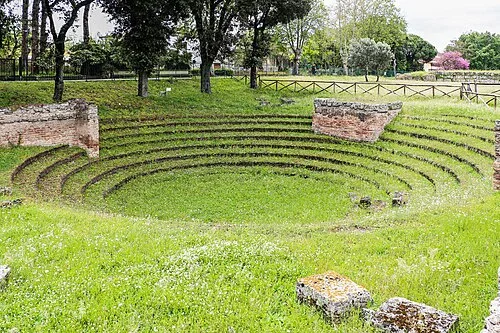 Ekklesiasterion
: sunken tiers
The tiers of the assembly hall now lie well below the grass around them, sunk into a shallow bowl of green. The building lost its role in Roman times and was filled over, buried by the later levels of the city. What looks like a lawn is in fact the top of the Greek town. The deeper you look into this hollow, the further back in Paestum's history you go.
Listen in the appBernard Gagnon · CC BY 4.0
- 11
Amphitheatre of Paestum
The Roman amphitheatre, the eighteenth-century road that cut the site in two, and the engineer the locals say went to prison.
- 12
Amphitheatre: inside the cavea
Inside the amphitheatre: the seats, the vaulted entrance, and what Roman crowds came to see.
- 13
Comitium
The circular voting place of Roman Paestum, where the colony elected its magistrates and held its trials.
- 14
Temple of Peace (Italic Temple)
A Roman temple on a high podium, and how Roman building practice displaced the Greek form.
- 15
Roman Forum
How Rome took Poseidonia, paved its agora into a forum, and rewarded the city's loyalty with its own coins.
- 16
The Forum quarter in panorama
One wide view that maps the whole Roman civic core: temple, voting place, council hall and shops packed around a single square.
- 17
Curia
The brick-and-stone hall where the colony's council met to run the city's daily business.
- 18
South Portico of the Forum
The shaded colonnaded walkway along the forum's south side, where the city's daily business was done on foot.
- 19
Hellenistic Pool
A vast sunken basin of fitted stone, tied either to a sanctuary of Venus or to a luxury residence.
- 20
Ancient Roman Houses
House after house along a paved street: the ordinary city beyond the temples and the forum.
- 21
Mosaic floor of the houses
A geometric mosaic of meanders and diamonds, still fixed in the floor of a Roman house.
- 22
Impluvium of a Paestum house
A marble basin at the foot of the roof opening, the machine that caught the rain for a Roman household.
- 23
Second Temple of Hera
The most complete Greek temple at Paestum, raised for Hera in the city's southern sanctuary around the mid-fifth century BCE.
- 24
Second Temple of Hera: the double colonnade
Inside the temple, a second storey of columns rises above the first to carry the weight of the roof.
- 25
Along the temple's side aisle
Why the altar stood outside: how Greeks worshipped in a temple, with the statue within and the sacrifice in the open air.
- 26
Second Temple of Hera: entablature above
The only temple at Paestum that still carries most of its entablature, the stonework above the columns.
- 27
First Temple of Hera (the Basilica)
The oldest temple at Paestum, raised about 550 BCE, and the visit Goethe paid it in 1787 that changed how Europe saw it.
- 28
First Temple of Hera: inside the peristyle
Looking down the oldest temple's interior, along the rare central line of columns that runs through its inner chamber.
- 29
First Temple of Hera: colonnade walk
A pause among the archaic columns, under the single beam that still spans them.
- 30
Archaic capital up close
The swelling capital and the curved column shaft, the two details that mark this temple as archaic.
- 31
Villa Salati
How a forgotten ruin became a European sensation, and the farmhouse that remembers the era of the grand tourists.
- 32
Porta Sirena
The eastern gate of a city ringed by nearly five kilometres of wall, named for a siren carved to guard the doorway.
- 33
Porta Sirena: along the rampart
The gate's masonry at arm's length, and the short dark passage every traveller into the city once made.
- 34
Church of the Santissima Annunziata
Where the ancient city's story ends: a bishop's town, a marsh, a flight to the mountains, and a cult carried into exile.
- 35
Spolia in the Annunziata
An ancient column standing inside the church wall: the old city recycled, block by block, into new buildings.
- 36
National Archaeological Museum of Paestum
The museum inside the park, and the logic behind its galleries: everything too fragile to survive outdoors.
- 37
Metopes from the Heraion at Foce del Sele
The rescue of a destroyed sanctuary at the mouth of the Sele, and the Heracles cycle that became the museum's centrepiece.
- 38
Europa on the Bull
One terracotta figure, one myth: Zeus as a bull, a princess on his back, and the colour still clinging to the clay.
- 39
Lucanian painted tomb slab
How an Italic people rose to power inside the Greek city, and the painted tombs of its horse-mad warrior elite.
- 40
Cult statue of the goddess Hera
The goddess of the great southern temples: Hera enthroned, offering dish in hand, faced by worshippers only at her altar.
- 41
The Tomb of the Diver: the complete cycle
A tomb found in 1968 that changed what we know about Greek painting: the only complete figured fresco cycle to survive.
- 42
The diving scene: leap into the unknown
The famous dive itself: a youth leaping from a tower into water, painted where only the dead could see it.
- 43
The symposium on the tomb wall
The banquets on the tomb's four walls, where vase painting moved onto plaster and the dead kept their place at table.
Area Archeologica di Paestum
Frequently asked questions
How much does the guide cost?
Free app download. Listed guide price: $4.99. Guide price shown in the app. Audio guide only. Venue admission is separate.
Can I listen without internet?
Yes. Download the guide’s audio, images, and maps in the app before your visit. Your downloaded content is then available offline.
Can I listen in my language?
This audio guide is available in 15 languages, including English.
Do I need to follow a schedule?
No. This is a self-guided experience. Choose your stops, pause whenever you like, and return to a story at your own pace.
At your own pace
Explore Area Archeologica di Paestum.
Download Stanza, then search for “Area Archeologica di Paestum”.
Free app download · Guide price shown in the app
Keep exploring
Nearby audio guides
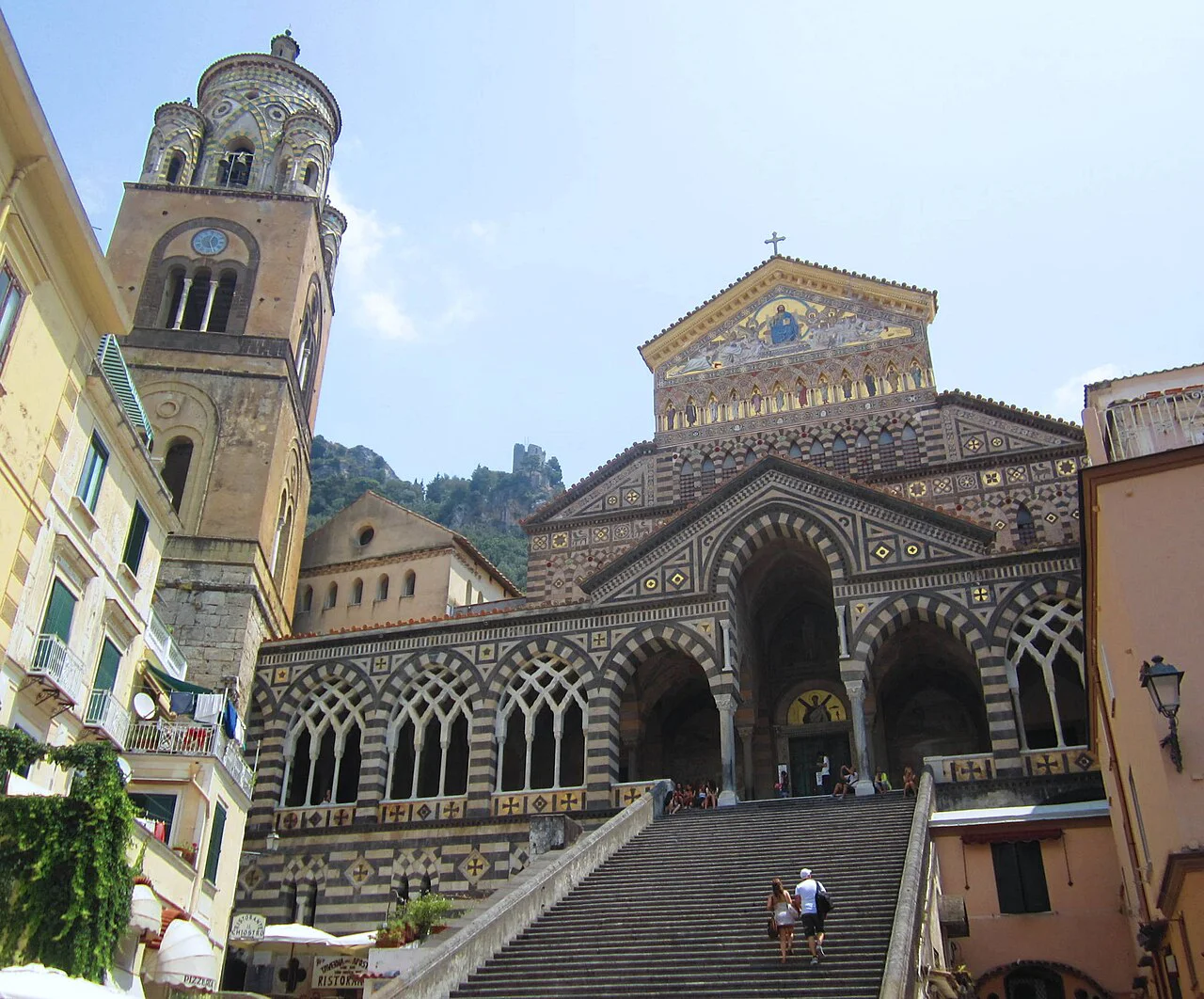
Amalfi · 42 km
Duomo di Amalfi
Content & sources
Photo: Luca Aless · CC BY-SA 3.0
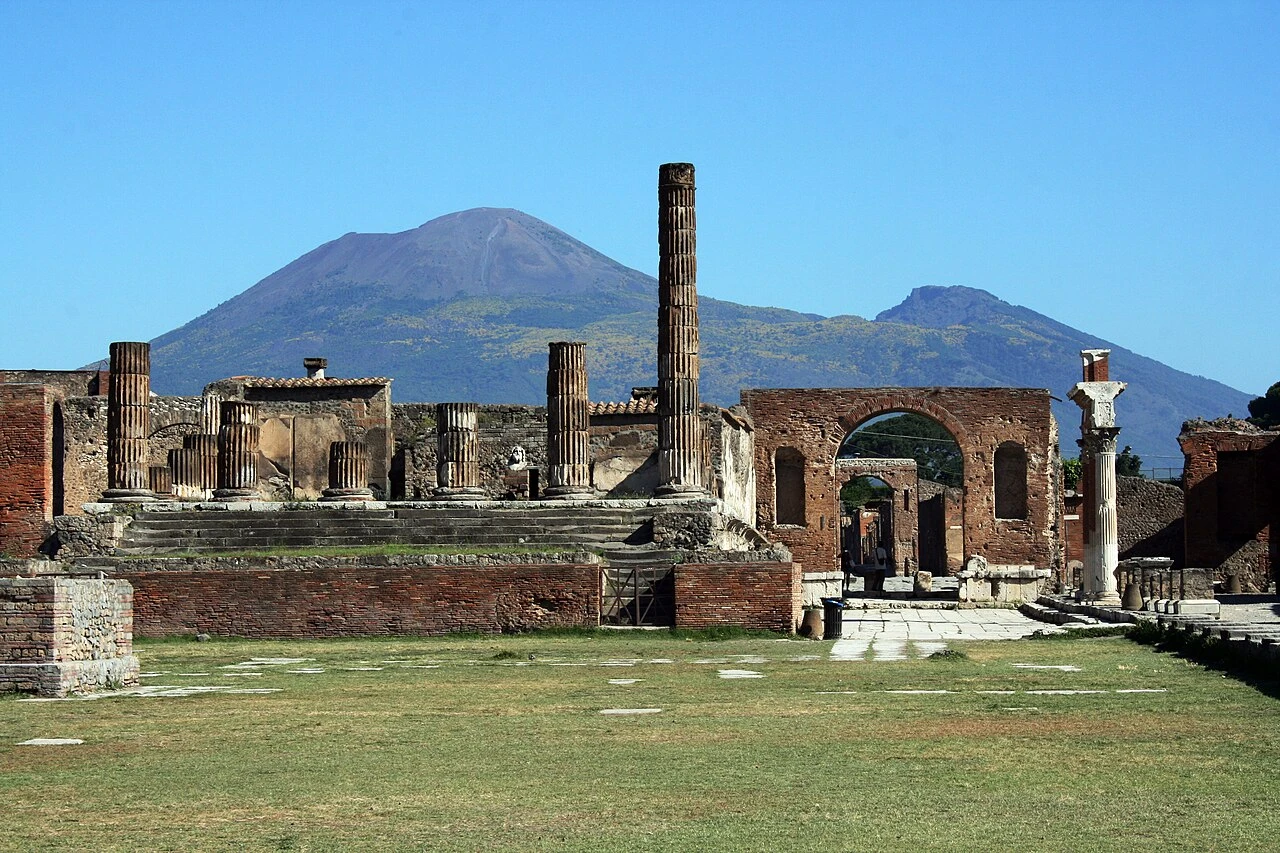
Pompei · 57 km
Pompeii Archaeological Park
Content & sources
Glen Scarborough from The Central Coast, Australia · CC BY 2.0
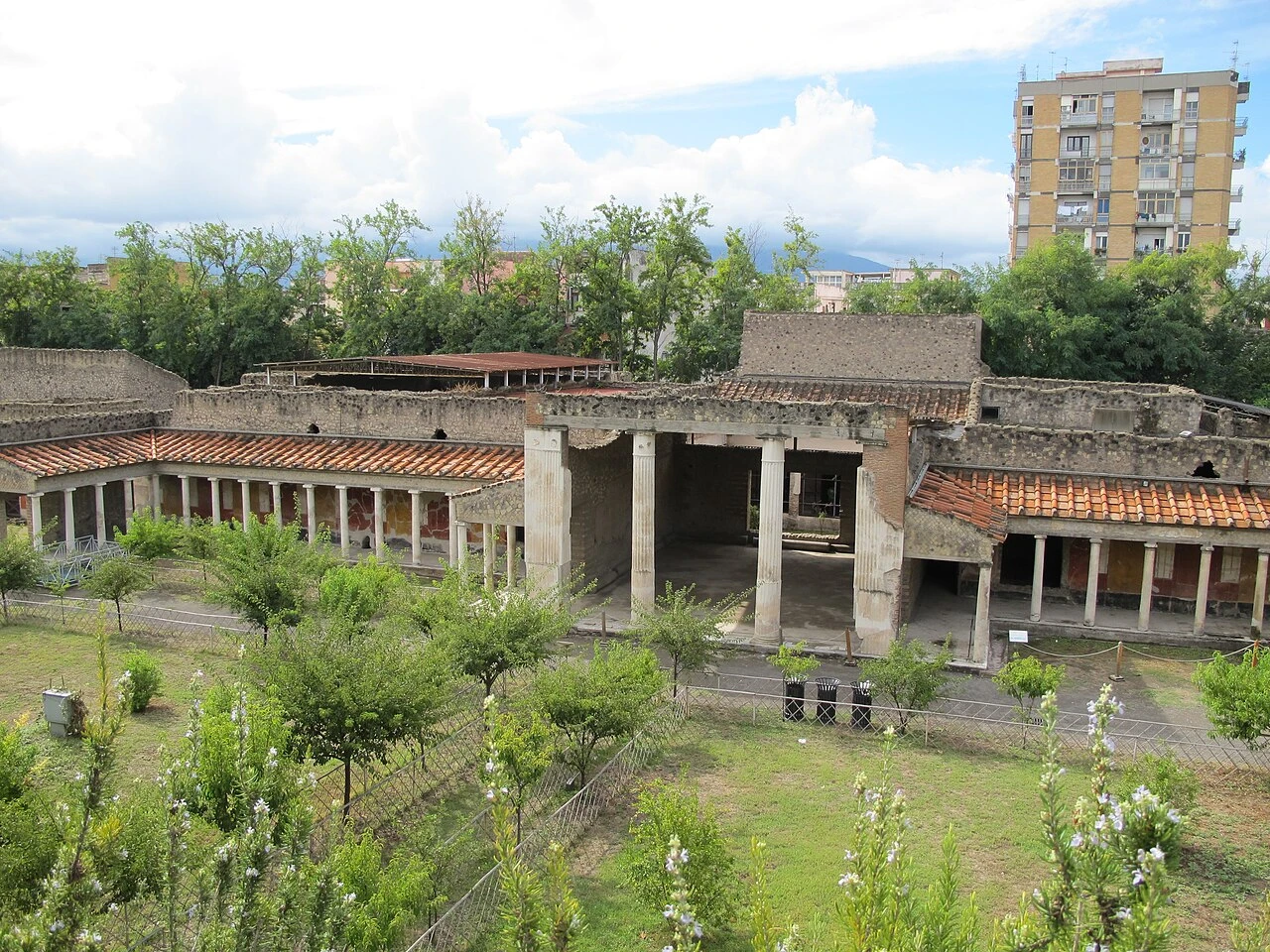
Torre Annunziata · 60 km
Villa Poppaea
Content & sources
ho visto nina volare from Italy · CC BY-SA 2.0
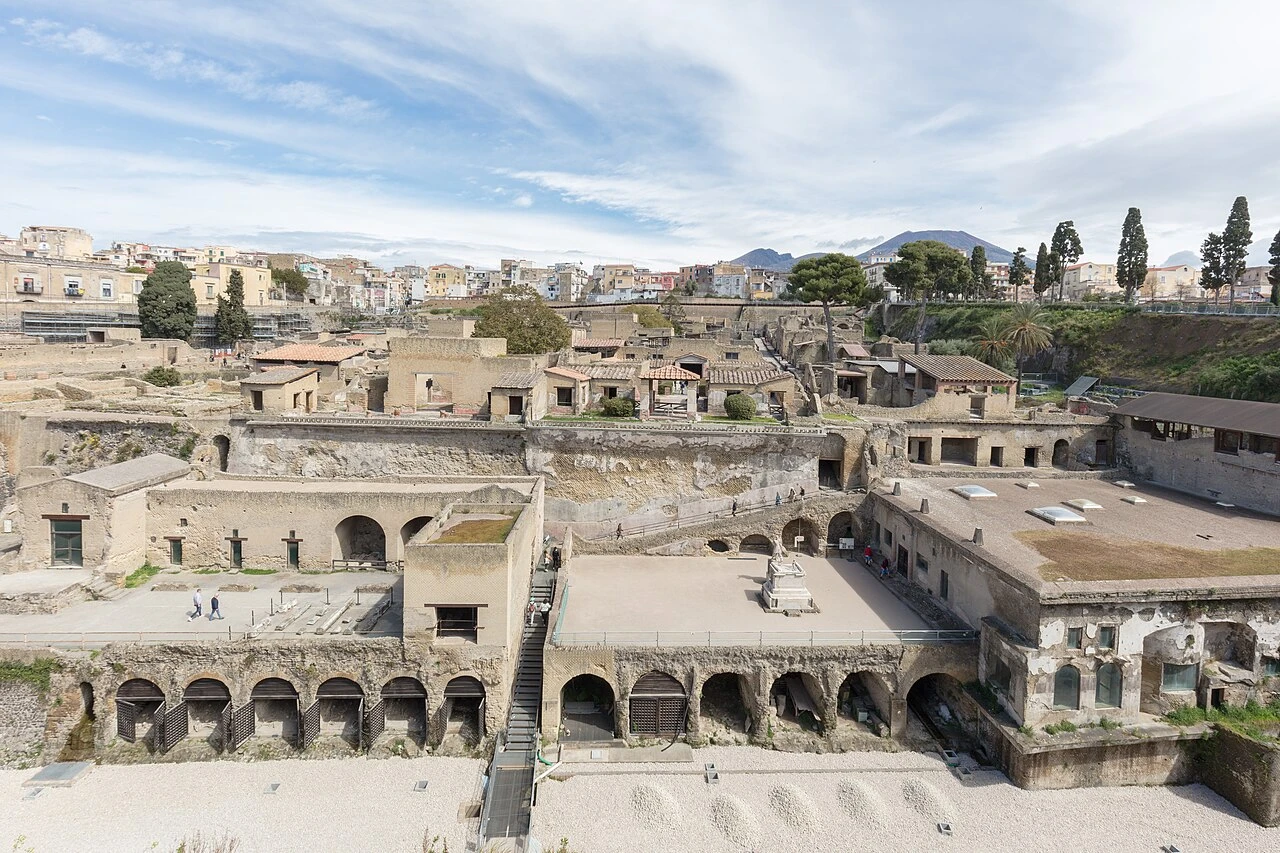
Ercolano · 70 km
Herculaneum
Content & sources
Diego Delso · CC BY-SA 4.0