Languages
15Brancacci Chapel Audio Guide
Brancacci Chapel is a landmark in Florence, Italy. Explore it with Stanza's GPS-triggered offline audio guide — available in 15 languages.
Quick Facts
14
Stops
15
Languages
100%
Offline
📍 Florence, Italy · 43.7684°N, 11.2440°E
About Brancacci Chapel
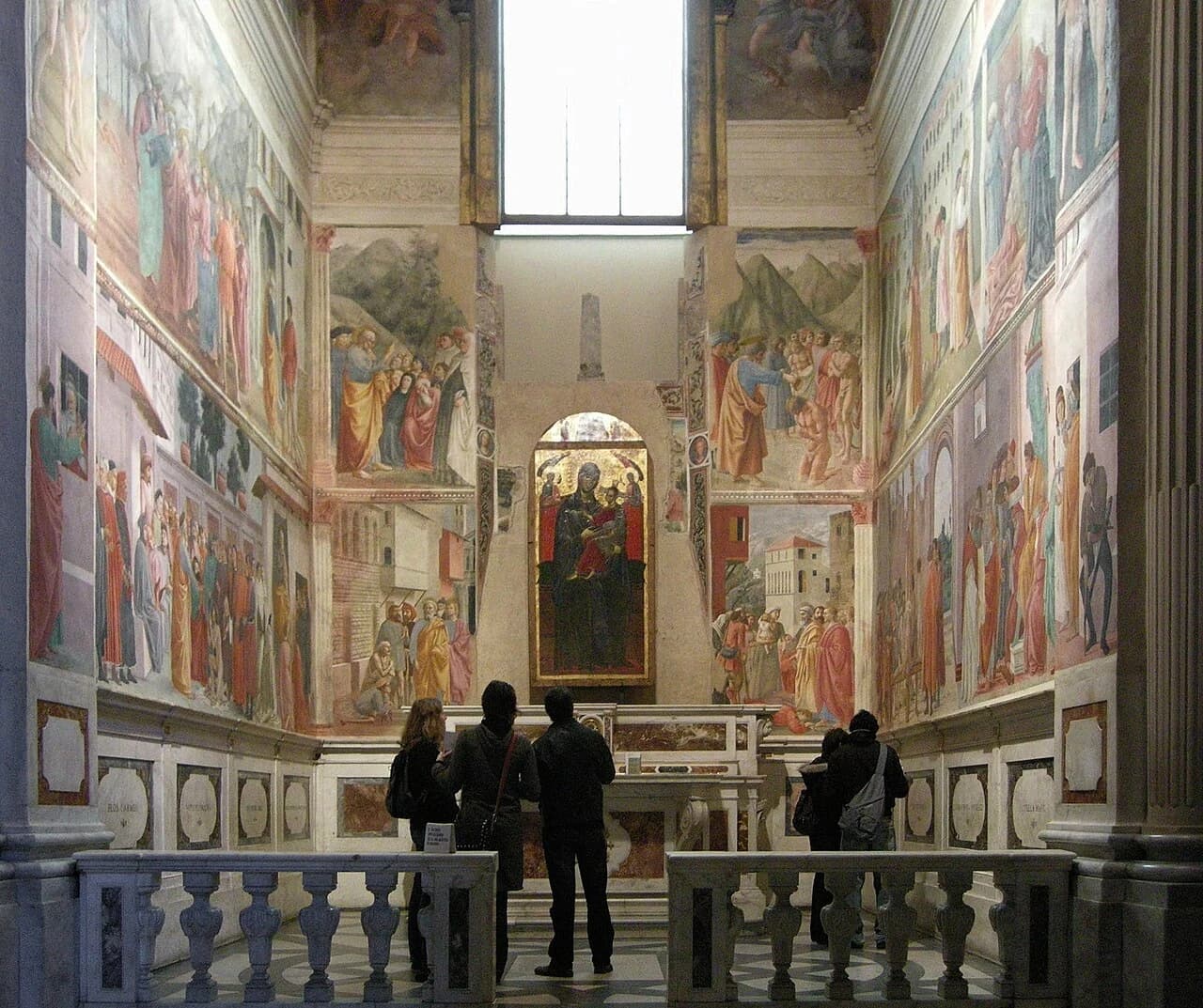
The Brancacci Chapel is a renowned chapel located within the Church of Santa Maria del Carmine in Florence, Italy. It is famous for its cycle of frescoes by Masaccio and Masolino, considered a masterpiece of Early Renaissance painting.
Brancacci Chapel is also known as Brancacci Chapel of Santa Maria del Carmine, cappella Brancacci.
This self-guided audio tour features 14 narrated stops organized across 6 sections, including The Fall of Man: Temptation and Expulsion, The Masterpiece: The Tribute Money, Miracles in the City Square, Faith and Mercy: Baptism and the Shadow, Politics and Resurrection, The Final Acts: Lippi's Completion. As a chapel, Brancacci Chapel offers a unique cultural experience in the heart of Florence, Italy.
The Stanza audio guide is available in 15 languages and works entirely offline — download the complete tour including audio narration, maps, and images before your visit. As you walk through Brancacci Chapel, GPS-triggered narration plays automatically at each point of interest.
Last updated:
What you will hear
The Fall of Man: Temptation and Expulsion
Explains the 'Artistic Collaboration' by comparing Masolino’s soft Temptation with Masaccio’s raw, emotional Expulsion.
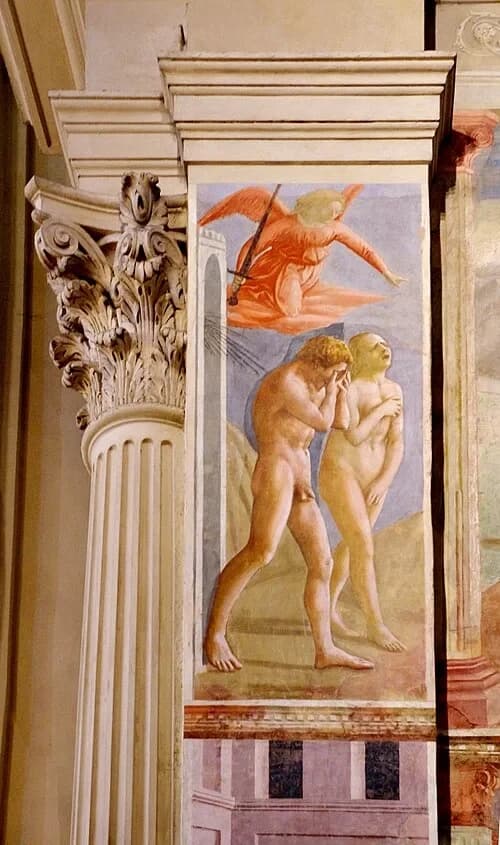
The Expulsion from the Garden of Eden
Masaccio · 1424 · fresco
The contrast between the previous panel and this scene by Masaccio is one of the most jarring transitions in art history. Here, the soft elegance of the Temptation is replaced by a gut-wrenching portrayal of human suffering. Look at the figures of Adam and Eve as they are forced out of Eden by a vengeful angel. Adam buries his face in his hands, slumped over in a posture of deep, internal shame. Eve, however, provides a visceral display of agony; her head is thrown back, her eyes are hollow pits, and her mouth is open in a silent, primal scream. Masaccio focused on the emotional weight and physical gravity of the figures, making them feel like real, heavy human beings. For centuries, their original nakedness was obscured by fig leaves added by 17th-century censors. However, a major restoration in the 1980s removed these later additions, revealing the figures' profound vulnerability. The stark lighting and the way the shadows fall on the ground emphasize their physical presence in a way that had never been seen before in painting. This work changed art forever by prioritizing human emotion over decorative beauty.
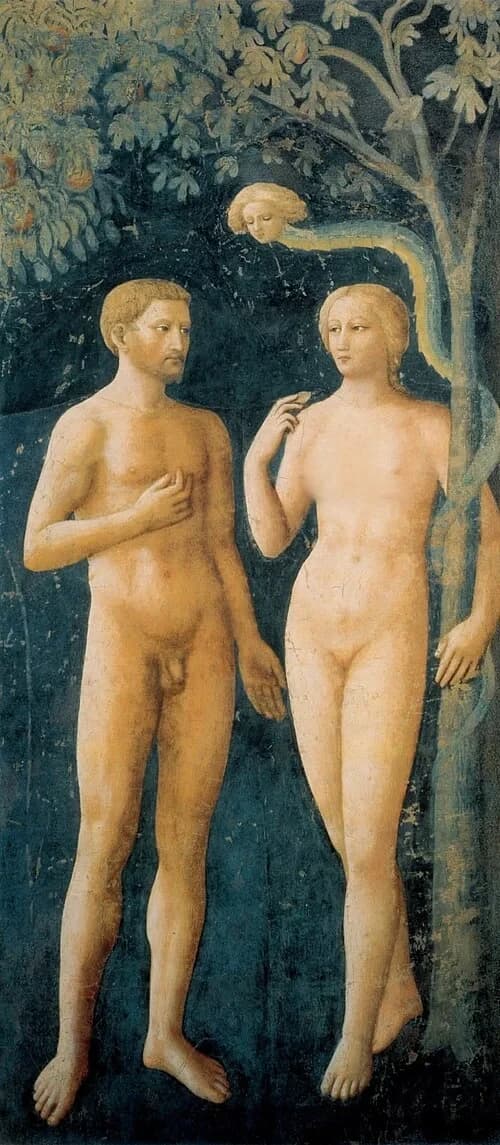
The Temptation of Adam and Eve
Masolino da Panicale · 1424 · fresco
This panel introduces a fascinating collaboration between two artists with very different approaches: the older Masolino and his younger protege, Masaccio. Here, Masolino takes the lead, depicting the Temptation of Adam and Eve. Observe the figures' soft, elongated forms and their refined, idealized features. They possess a rhythmic, decorative quality typical of the International Gothic style that was popular during the early 15th century. Adam and Eve appear somewhat doll-like and fragile, floating almost weightlessly against a dense, dark background. There is a sense of calm and innocence in their gestures; they seem entirely unaware of the serpent winding around the tree or the catastrophic fall that is about to occur. The skin tones are pale and smooth, and the overall composition emphasizes beauty and harmony over anatomical realism. This panel serves as a perfect baseline for the chapel’s narrative, representing the artistic conventions of the past just before they were challenged by the revolutionary naturalism of Masaccio in the adjacent works. It captures a moment of static perfection before the drama of the human story begins in earnest.
The Masterpiece: The Tribute Money
Focuses on the chapel's most famous fresco, highlighting scientific perspective and the three-part narrative structure.
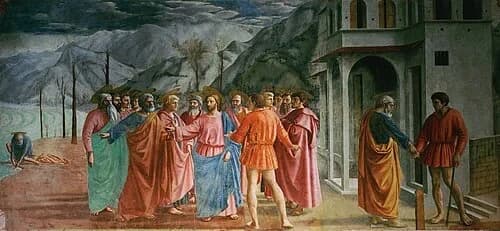
The Tribute Money
Masaccio · 1424 · fresco
The Tribute Money is widely considered Masaccio’s greatest achievement in the chapel. It depicts a single biblical narrative spread across three distinct moments in time within one frame. In the center, a Roman tax collector confronts the Apostles, and Christ orders Peter to find a coin. On the far left, you see Peter alone by the water, reaching into a fish to retrieve the money. Finally, on the right, Peter hands the coin to the tax collector. Beyond the storytelling, look closely at the architecture of the building on the right. Masaccio employed the newly discovered 'scientific perspective,' a mathematical system used to create the illusion of three-dimensional depth on a flat surface. All the architectural lines of the building converge at a single vanishing point: the head of Christ. This technical innovation ensures that, despite the multiple scenes occurring simultaneously, the viewer's focus is always pulled back to the most important figure in the composition. The landscape also fades into the distance using atmospheric perspective, adding to the sense of vast, real space. It is a masterclass in how to organize a complex story through geometry.
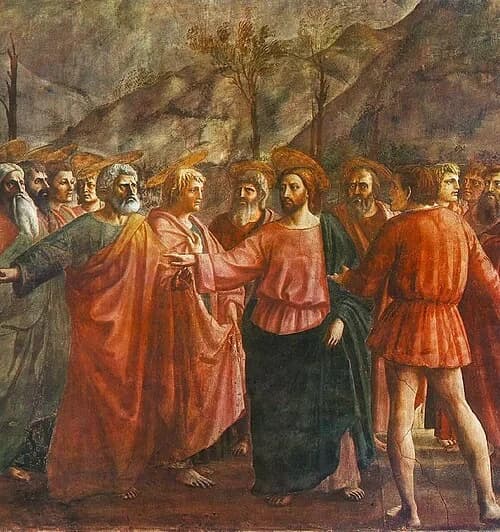
The Apostles' Expressions
Looking at the central group of figures, the departure from the flat, symbolic icons of the Middle Ages becomes clear. Masaccio painted the Apostles not as ethereal beings, but as men with substantial weight and gravity. Their heavy cloaks hang in deep, sculptural folds that suggest the solid bodies beneath the fabric. Each face tells a different story, showing a range of human reactions to Christ’s command to pay the tax. Some appear confused, while others look skeptical or intensely focused. These are not generic faces; they possess individual character and psychological depth. This commitment to naturalism extends to the way they stand. Instead of floating on their toes, they are firmly planted on the ground, casting realistic shadows that anchor them to the earth. By giving these biblical figures such human qualities, Masaccio made the sacred stories feel grounded and relatable to the viewers of his time, setting a new standard for characterization in Western painting. Notice how the light consistently comes from the right, matching the actual window of the chapel and further enhancing the illusion of physical reality.
Miracles in the City Square
Examines the right wall where Masolino and Masaccio blended their styles within a 15th-century Florentine architectural setting.
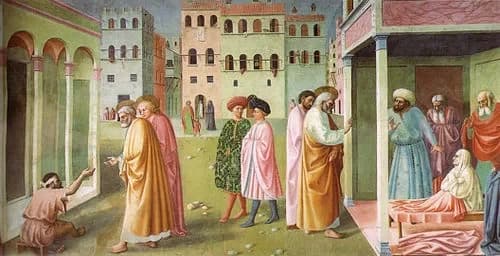
Miracles in the City Square
A fascinating aspect of the chapel's decoration is how the artists blended sacred stories with the everyday life of the people who commissioned them. Look past the main figures in these scenes to the background architecture. Instead of an idealized, distant Jerusalem, Masaccio and Masolino depicted a square that would have looked very familiar to 15th-century Florentines. You can see the characteristic stone buildings, overhanging upper floors supported by brackets, and even laundry hanging out to dry from the windows. This was a deliberate choice to ground the biblical miracles in the lived reality of the Oltrarno district. By placing these holy events in a contemporary setting, the artists made the messages of the church feel immediate and personal. This integration of the mundane and the divine helped the viewers see their own city as a place where the sacred could manifest. It also provided a sense of continuity, suggesting that the lessons of Saint Peter were just as relevant in the streets of Renaissance Florence as they were in ancient times. The detailed urban background effectively transforms the biblical narrative into a local event.
Faith and Mercy: Baptism and the Shadow
Located on the back altar wall, these scenes showcase Masaccio's revolutionary use of light and human vulnerability.
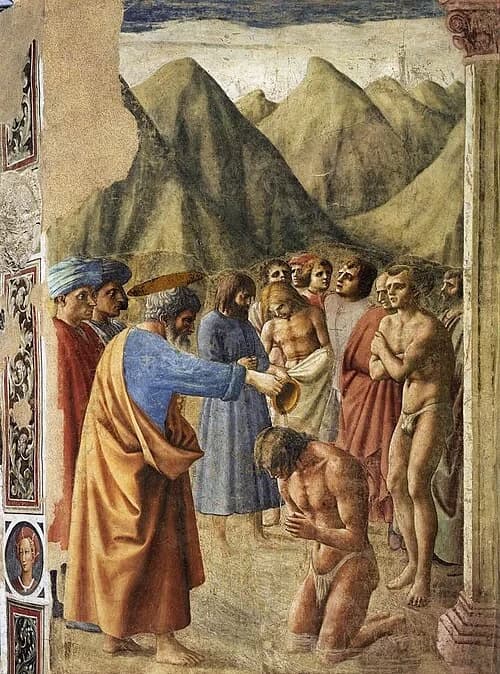
The Baptism of the Neophytes
Masaccio · 1425 · fresco
In this scene of Saint Peter baptizing new converts, one figure in particular has captured the attention of art historians for centuries. Behind the man kneeling in the water, another man stands waiting his turn, his arms crossed over his chest and his body huddled. This is famously known as the 'shivering man.' Masaccio’s ability to capture the physical sensation of being wet and cold was entirely unprecedented. He observed how muscles tense and how skin reacts to the chill, painting the body with a level of anatomical accuracy that defied the stiff traditions of the era. This figure demonstrates Masaccio’s radical commitment to naturalism—the idea that art should reflect the actual world as seen by the human eye. Instead of painting a generic group of onlookers, he chose to depict a specific, relatable physical experience. This small but significant detail signaled to contemporary artists that they should look to nature and human anatomy, rather than just copying older models, to create powerful and convincing images. It remains a landmark moment where observation replaced ornamentation in the history of painting.
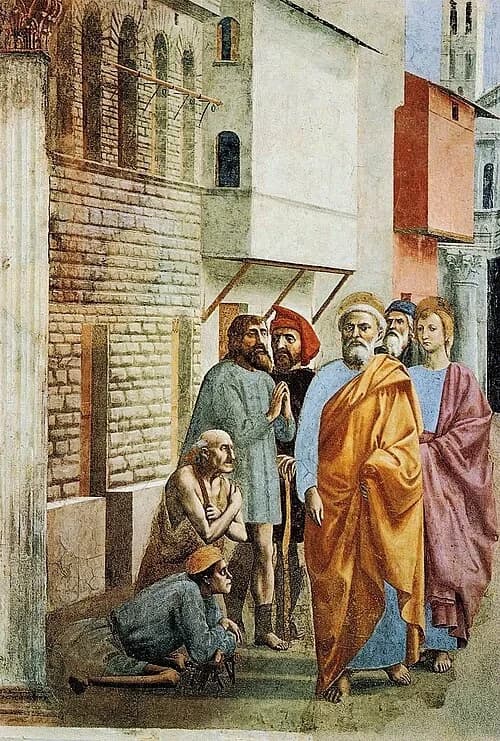
Healing with a Shadow
This panel illustrates a miracle where the mere shadow of Saint Peter heals those it touches as he walks through the streets. The scene is remarkable for its unflinching portrayal of poverty and physical suffering. Look at the beggars huddled on the left; their bodies are painted with a raw, gritty realism that avoids any sense of idealization. You can see the strain in their postures and the detail in their weathered skin. This scene is also famous for its contemporary connections. On the right side, among the figures following Peter, is a man wearing a red hat. This is widely believed to be a portrait of the great sculptor Donatello, who was a close personal friend of Masaccio. In fact, many of the figures throughout the chapel are thought to represent real people from 15th-century Florence. This practice of including portraits of friends and patrons helped anchor the grand religious themes in the actual social fabric of the city. By depicting Peter in a contemporary street scene, Masaccio emphasizes the practical, physical nature of his ministry to the poor.
Politics and Resurrection
Discusses the political censorship (Damnatio Memoriae) and the self-portraits of the artists themselves.
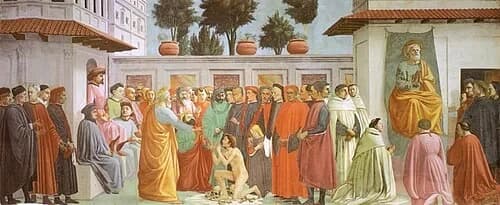
Raising of the Son of Theophilus and Saint Peter Enthroned
Filippino Lippi · 1427 · fresco
The history of this large fresco is as much about politics as it is about art. When the Brancacci family was forced into exile in 1436 after clashing with the powerful Medici, their chapel became a target for 'damnatio memoriae'—the intentional erasure of their legacy. The portraits of various family members and their supporters were literally chiseled off the walls by political rivals. For several decades, the fresco remained scarred and incomplete. It wasn't until fifty years later that the artist Filippino Lippi was commissioned to repair the damage and finish the cycle. Lippi faced the daunting task of matching Masaccio's monumental style while working in a later period. You can see the difference if you look closely; Lippi’s figures tend to be softer and are dressed in the more elaborate, colorful fashions of the late 15th century. This panel stands as a unique record of Florence's turbulent political history, where the physical surface of the art reflects the rise and fall of the city’s most influential families. The final result is a fascinating patchwork of two different eras of the Italian Renaissance.
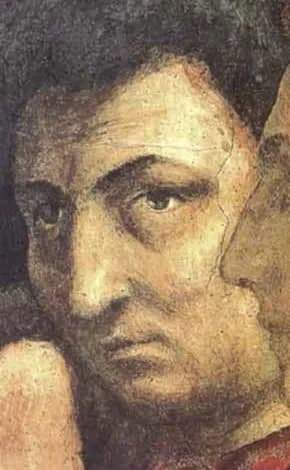
Portrait of Masaccio
Amidst the crowd of figures in this lower fresco, one face stands out for its direct engagement with the viewer. On the far right, a young man with dark, intense features looks out from the scene. Tradition holds that this is a self-portrait of Masaccio himself. His gaze is steady and confident, as if he is aware of the revolutionary nature of the work he was creating here. Masaccio’s legacy is particularly poignant because of its brevity. He died in Rome at the incredibly young age of twenty-seven, leaving behind only a handful of works. However, the years he spent in this chapel fundamentally altered the direction of Western art. He broke away from the decorative traditions of the past to create a world of three-dimensional space, light, and shadow. His influence was so profound that artists for the next two centuries would come to this very room to learn how to paint. Although his life was short, his presence in this chapel remains permanent through this subtle, watching figure. It is a rare chance to look into the eyes of a man who single-handedly launched a new artistic era.
The Final Acts: Lippi's Completion
Covers the lower right register where Filippino Lippi completed the cycle decades after Masaccio’s death.
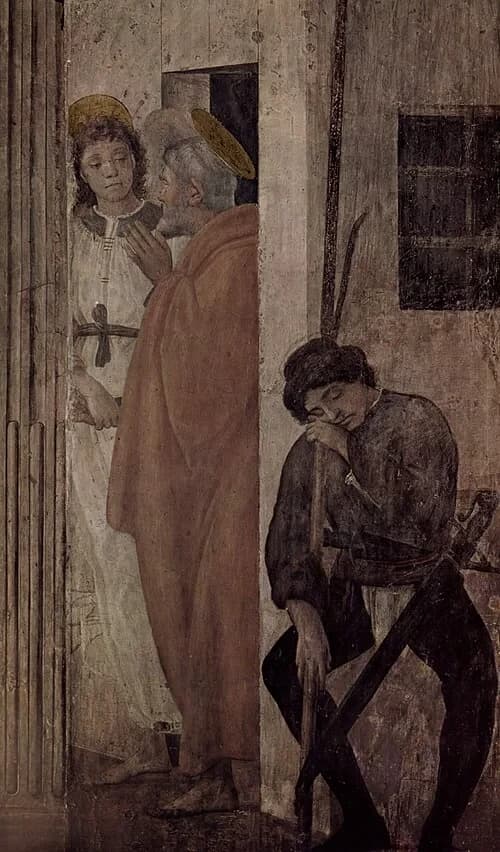
Saint Peter in Prison
This narrow vertical panel focuses on a moment of quiet intensity: Saint Peter’s visit by an angel while imprisoned. The composition is masterfully designed to create a sense of depth within a very tight space. Look at the way the iron bars of the prison window are rendered; they establish a clear foreground and background, pulling your eye into the shadows of the cell. The guard is shown slumped over in a deep sleep, oblivious to the divine intervention occurring right beside him. The most striking element here is the use of light. Notice how the radiance of the angel illuminates the scene, catching the folds of its robes and casting soft highlights on Peter’s face. This contrast between the dark, cramped interior and the ethereal light creates a profound psychological atmosphere. It emphasizes the theme of spiritual liberation even in the midst of physical confinement. The simple, direct gestures of the figures make this one of the most intimate and emotionally resonant moments in the entire chapel. It is a testament to how much narrative can be packed into a small, restricted frame.
Want to hear the rest?
Download the Stanza app to unlock all 14 stops and full GPS-guided navigation.
Frequently Asked Questions
How long does the Brancacci Chapel audio tour take?
The Brancacci Chapel audio guide includes 14 narrated stops. Most visitors spend 45 minutes to 1.5 hours exploring the complete tour, though you can listen at your own pace and skip or revisit any stop.
Is the Brancacci Chapel audio guide available in my language?
Stanza supports 15 languages: English, Spanish, French, German, Italian, Portuguese, Russian, Japanese, Chinese, Korean, Arabic, Hindi, Polish, Dutch, Hebrew. Check the guide in the app to confirm the languages currently available for this tour.
Can I use the audio guide offline at Brancacci Chapel?
Yes! Download the complete Brancacci Chapel tour — including all audio, maps, and images — before your visit. The Stanza app works completely offline, so you don't need WiFi or mobile data at the venue.
How much does the Brancacci Chapel audio guide cost?
The Stanza app is free to download. The current listed price for the Brancacci Chapel audio guide is $1.99; app-store region and currency may affect the final price.
How do I use the Stanza audio guide at Brancacci Chapel?
Download the free Stanza app, search for "Brancacci Chapel", and download the tour. When you arrive at the venue, the app uses GPS to detect your location and automatically plays the relevant narration as you move between points of interest — completely hands-free.
What makes the Stanza audio guide different from other Brancacci Chapel tours?
Stanza offers GPS-triggered narration that plays automatically as you walk through Brancacci Chapel — no need to manually select stops. The tour is available in 15 languages, works fully offline, and includes 14 expertly narrated stops with images and historical context.
What other audio guides are available near Brancacci Chapel?
Stanza offers multiple audio guides in Florence, Italy and nearby areas. After downloading the app, browse the map to discover all available tours near Brancacci Chapel. Each guide can be downloaded for offline use.