Stanza · Audio guide
Cattedrale di Santa Maria del FioreAudio guide
A place to remember. A story to take with you.
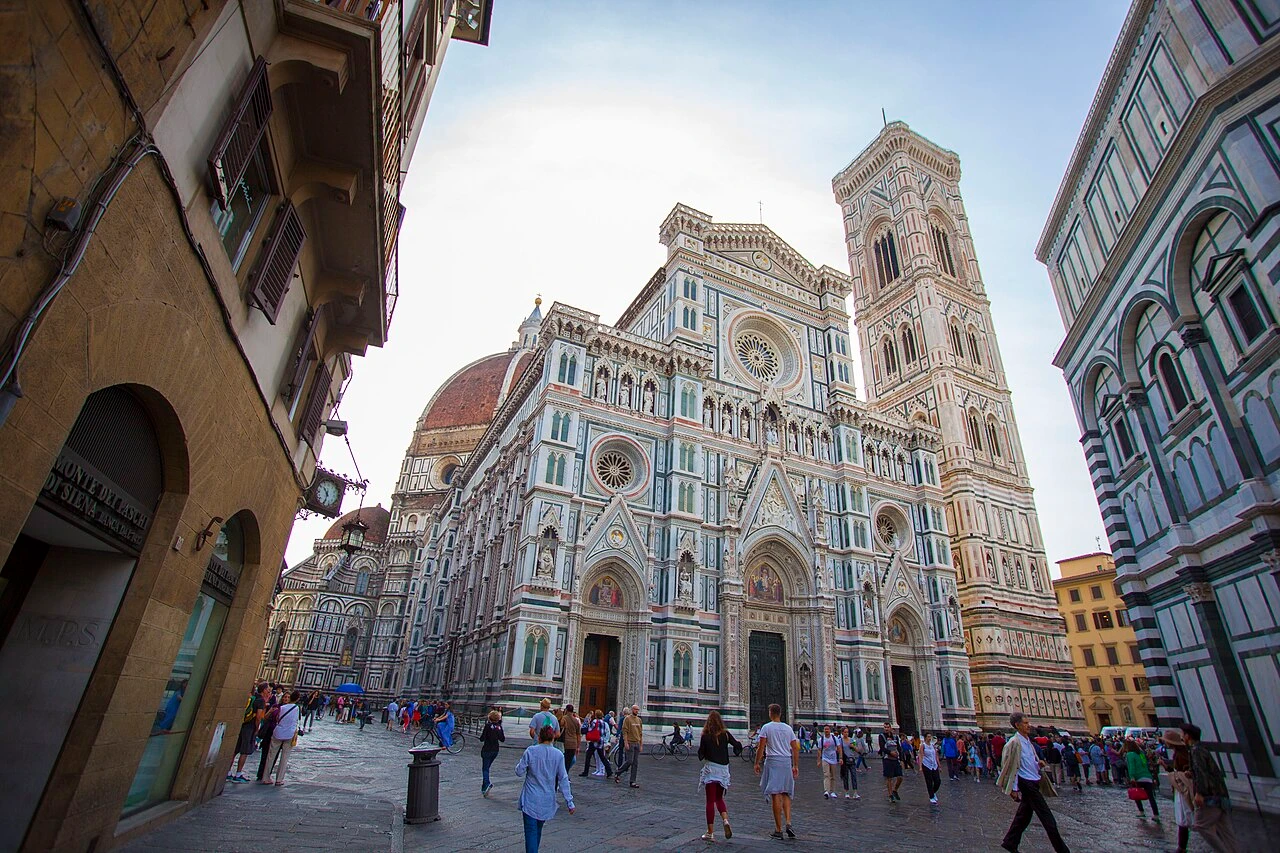
Florence Cathedral, officially the Cattedrale di Santa Maria del Fiore, is a 13th-century cathedral in Florence, Italy. It is renowned for its iconic Renaissance dome engineered by Filippo Brunelleschi.
Download Stanza, then search for “Cattedrale di Santa Maria del Fiore”.
About the tour
One guide. Your kind of visit.
Florence Cathedral, officially the Cattedrale di Santa Maria del Fiore, is a 13th-century cathedral in Florence, Italy. It is renowned for its iconic Renaissance dome engineered by Filippo Brunelleschi.
Ready when you are.
- 01Get the free Stanza app.
iOS & Android
- 02Find your guide.
“Cattedrale di Santa Maria del Fiore”
- 03Download before you go.
Works offline
Audio guide / 23 narrated stops
Inside the guide
Get to know a few of the stories before you go. Open a stop to read more.
01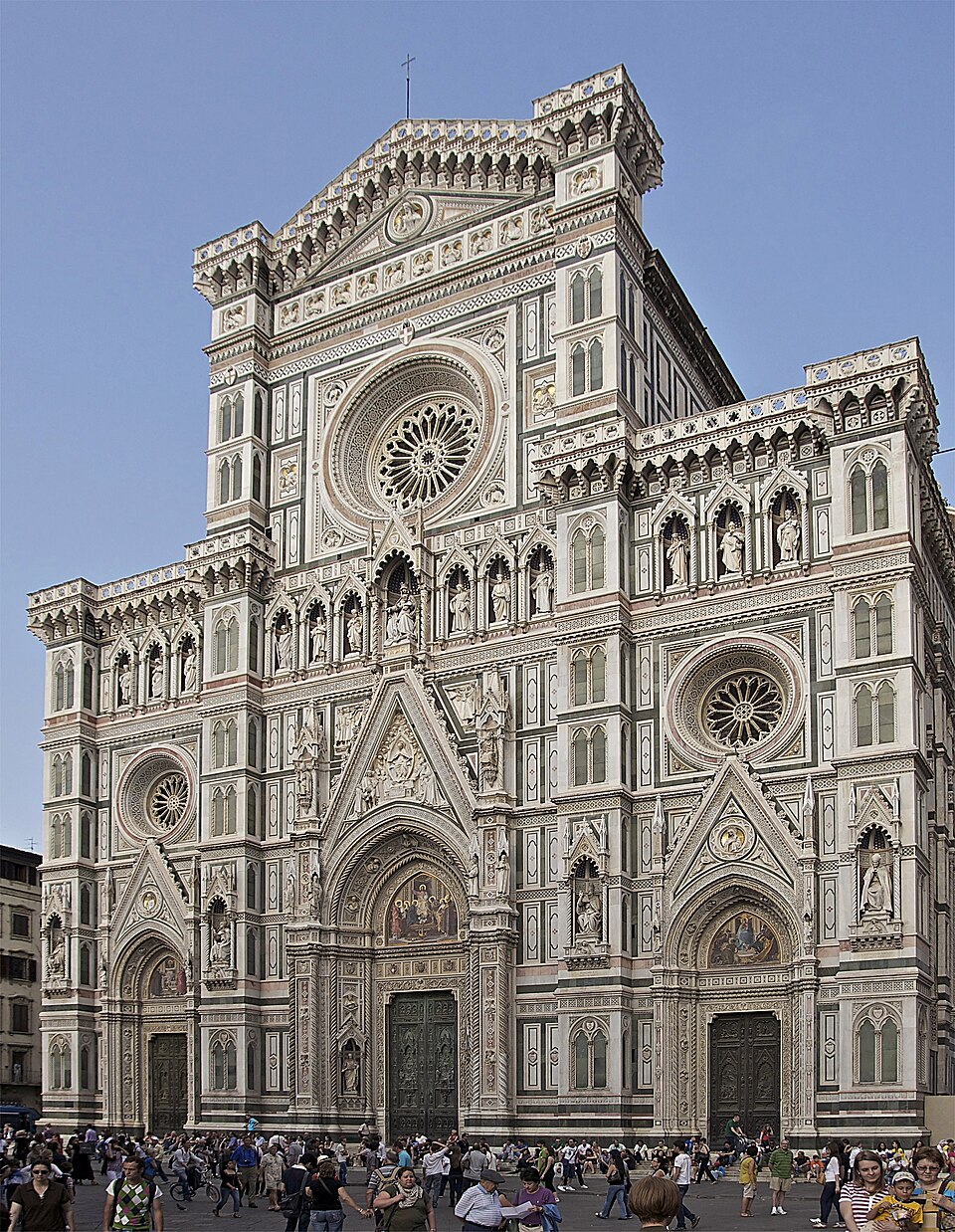 Piazza del Duomo: The Grand ArrivalThe Main Facade
Welcome to one of the most iconic landmarks in the world. As you stand before the Cattedrale di Santa Maria del Fiore, you are looking at the culmination of nearly 600 years of architectural ambition and civic pride. The story of this massive structure began on September 8, 1296, when the first stone was laid under the direction of the architect Arnolfo di Cambio. At the time, Florence was rapidly rising as a European powerhouse, and its citizens wanted a cathedral that would surpass those of their rivals in Pisa and Siena. While the primary body of the church was largely finished by 1436, the intricate, colorful face you see today is much younger. For centuries, the cathedral actually stood with an unfinished brick front. This ornate Neo-Gothic facade was only completed in 1887 by the architect Emilio De Fabris. He sought to harmonize the exterior with the existing 14th-century designs found on the sides of the building. To achieve this, he utilized a striking 'polychrome' or multi-colored marble style. Notice the vibrant interplay of three distinct stones: white marble brought from the quarries of Carrara, green marble from nearby Prato, and a deep red marble sourced from the Maremma region. This color scheme has become the signature aesthetic of the Florentine Renaissance, turning the massive stone walls into a delicate, lace-like tapestry.
Photo: Txllxt TxllxT · CC BY-SA 4.0
02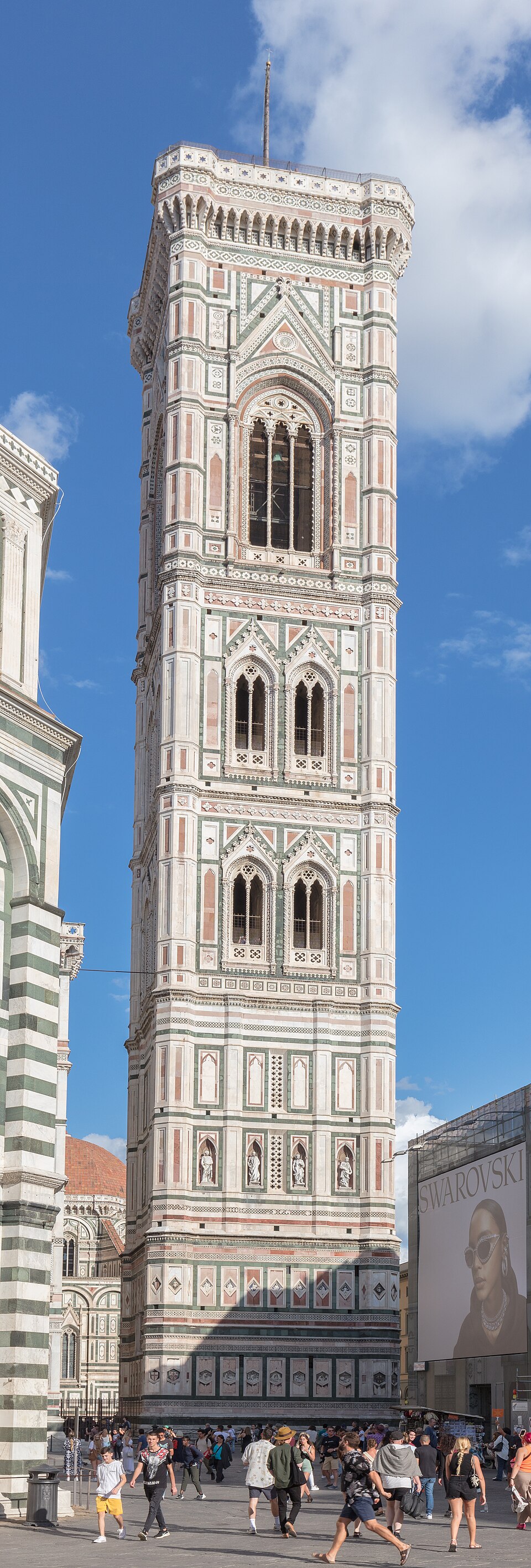 Piazza del Duomo: The Grand ArrivalGiotto's Bell Tower
Rising independently next to the cathedral's main facade is the Campanile, or Bell Tower. Designed by the celebrated painter Giotto di Bondone, construction began in 1334. While Giotto only lived to see the first stage completed, his vision for a slender, square silhouette set the tone for the entire structure. It stands at nearly 85 meters tall, serving as a vertical counterpoint to the broad, heavy volume of Brunelleschi’s dome. The tower continues the tri-color marble theme seen on the cathedral, creating a unified architectural ensemble. You may notice that the tower is physically separated from the main church by a small gap. This was a deliberate engineering choice; it was built as a freestanding structure to ensure that the intense vibrations from the heavy swinging bells would not damage the delicate masonry of the cathedral’s nave. Over the centuries, several architects followed Giotto, including Andrea Pisano and Francesco Talenti, each adding their own flourishes while respecting the original design. The result is a masterpiece of Gothic architecture that manages to feel both solid and incredibly light as it stretches toward the sky.
Diego Delso · CC BY-SA 4.0
03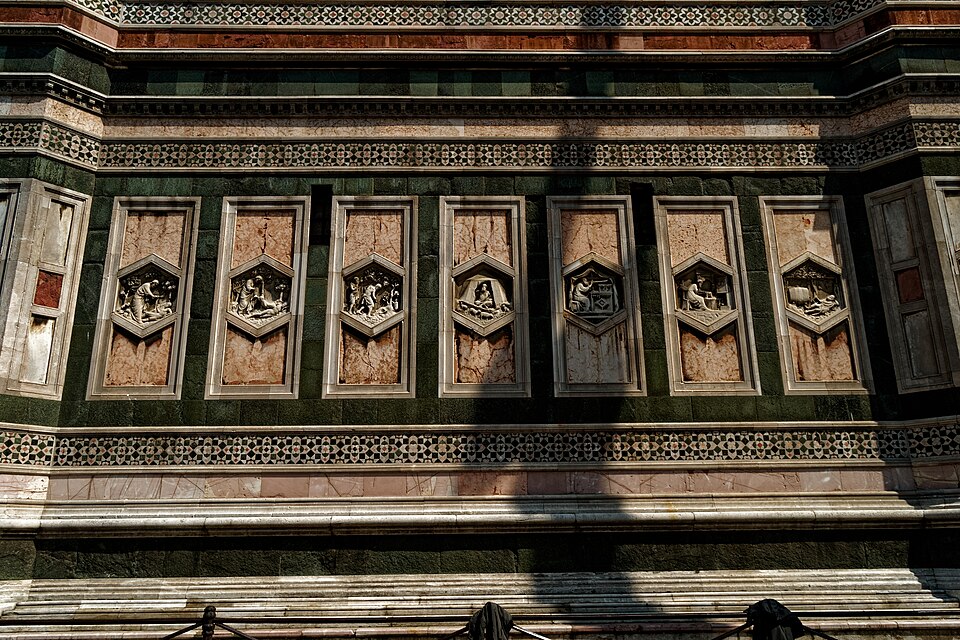 Piazza del Duomo: The Grand ArrivalTower Relief Panels
At the lower level of the Bell Tower, take a moment to look closely at the series of hexagonal relief carvings. These panels are more than just decoration; they represent an encyclopedia of human knowledge and labor as understood by the 14th-century Florentines. The scenes depict a wide range of human activities, from the fundamentals of agriculture and animal husbandry to the sophisticated arts of weaving, music, and even the building of ships. These carvings reflect a core tenet of the early Renaissance: the belief in the dignity and divinity of human endeavor. They suggest that through work and creativity, humanity participates in the ongoing process of creation. It is important to note that the panels you see here today are high-quality copies. The originals were moved to the nearby Opera del Duomo Museum to protect them from the elements. However, their placement here still conveys the original intent—grounding the celestial height of the bell tower in the everyday work of the people who built this city. As you move along the base, you can trace the progress of civilization, carved meticulously into the stone.
Listen in the appPhoto: Txllxt TxllxT · CC BY-SA 4.0
04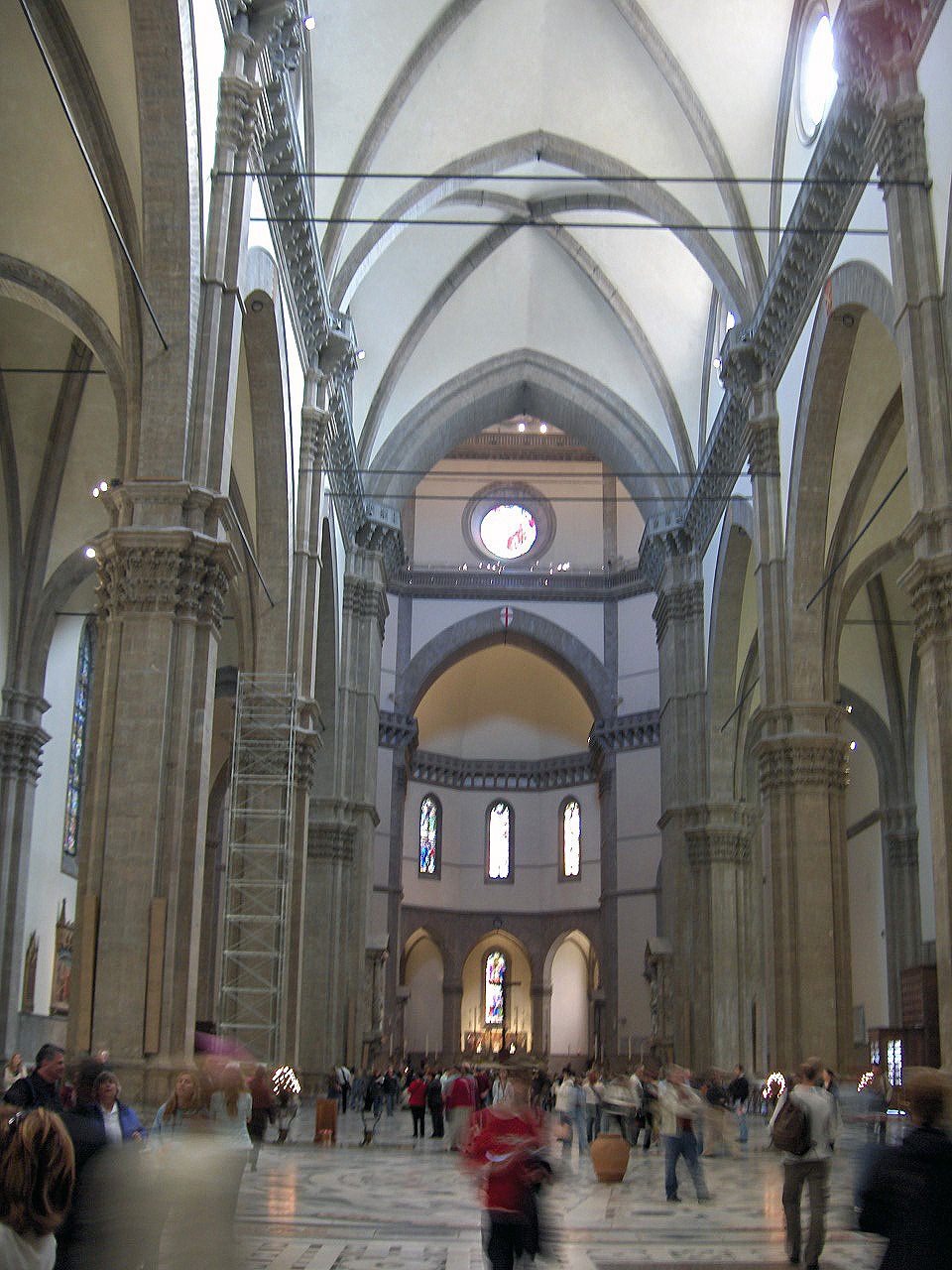 The Main Nave and Dante's FlorenceNave of Santa Maria del Fiore
As you pass through the doors, the atmosphere changes instantly. The sensory overload of the colorful, patterned exterior is replaced by the cool, quiet, and surprisingly austere simplicity of the Gothic interior. The scale here is difficult to process at first glance; the cathedral was designed to accommodate 30,000 people at once. In the Middle Ages, that was nearly the entire population of Florence, making the building a literal house for the city. This vast space was intended to reflect the power and wealth of the Florentine Republic, yet the design avoids excessive ornamentation to focus the worshipper’s attention on the sheer volume of the space. Look toward the high-pointed arches and the massive stone pillars that support the vaulted ceiling. These architectural features are designed to draw your eye upward, leading from the ground of the nave toward the spiritual and architectural heart of the building: the high altar beneath the dome. The lack of distracting color on the walls emphasizes the play of light coming through the stained glass and highlights the pure geometry of the Gothic structure, a style that prioritizes height and light to create a sense of the divine.
Listen in the appPhoto: JoJan · CC BY-SA 3.0
05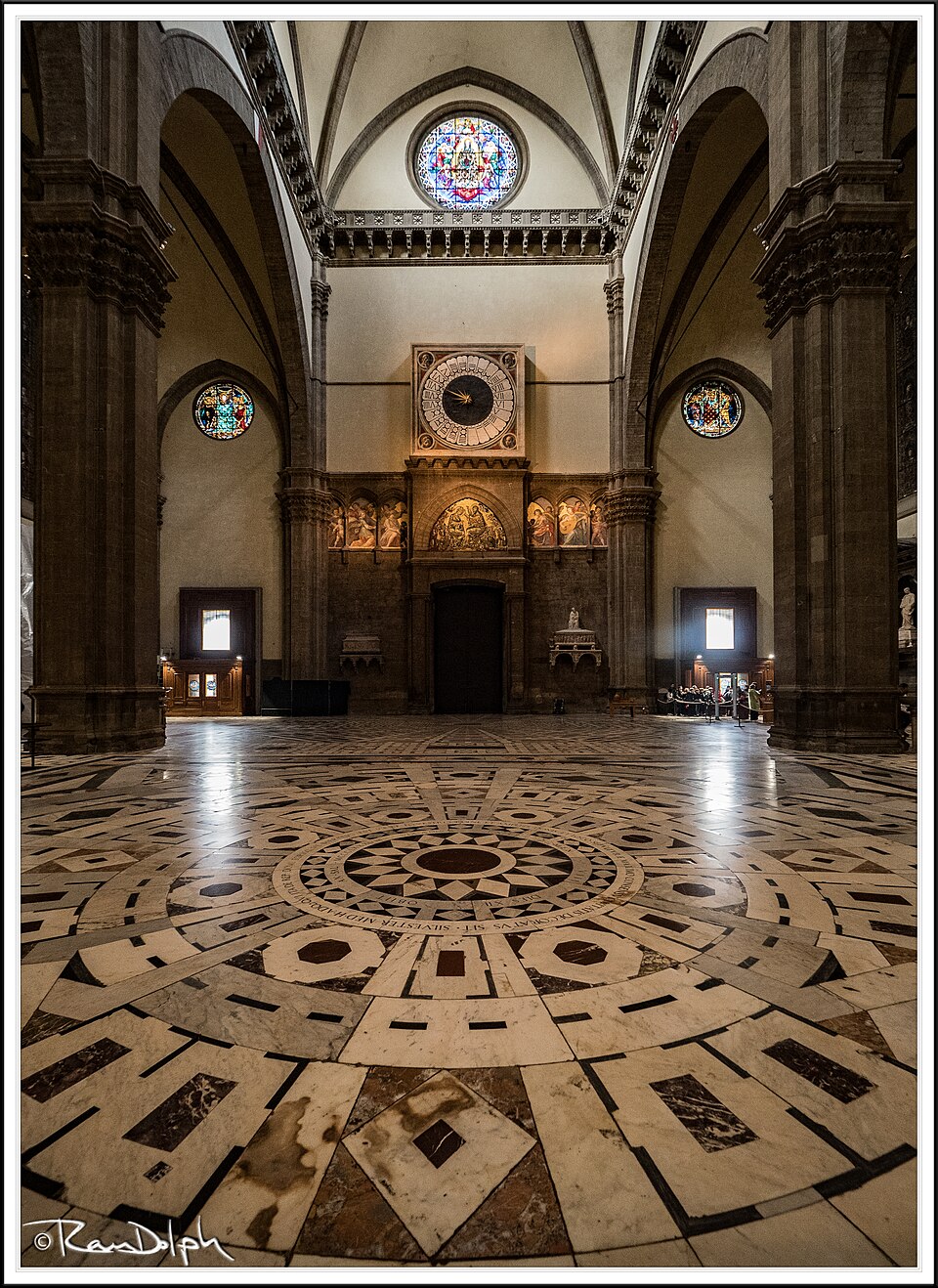 The Main Nave and Dante's FlorenceThe Marble Pavement
While the walls of the cathedral are famously plain, the floor is quite the opposite. Look down at the incredibly complex 'carpet of stone' that stretches out before you. This intricate pavement was laid primarily during the 16th century and utilizes the same tri-color marble palette found on the exterior: white from Carrara, green from Prato, and red from the Maremma region. The geometric patterns are so dense and complex that they almost seem to vibrate if you look at them for too long. This floor was designed with more than just aesthetics in mind. The lines and shapes act as a subtle guide, leading the visitor’s path from the entrance directly toward the high altar. The precision required to cut and fit these thousands of pieces of marble is a testament to the high level of craftsmanship available in Florence at the time. Over the centuries, millions of pilgrims and tourists have walked across this stone, gradually wearing down the surface but leaving the vibrant colors and patterns intact. It remains one of the largest and most impressive examples of marble intarsia in the world, anchoring the vast, airy space of the nave with its heavy, patterned beauty.
Listen in the appRandolph Croft · CC BY 2.0
06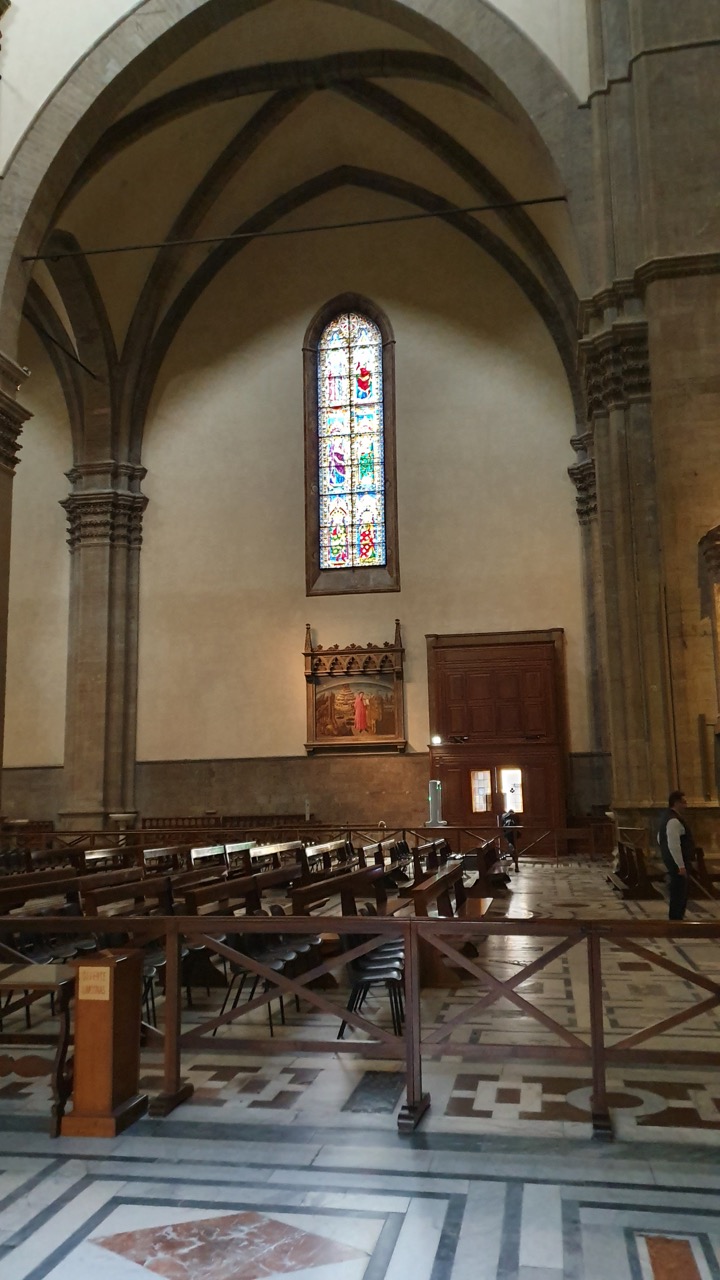 The Main Nave and Dante's FlorenceDante and His Poem
On the left-hand wall of the nave, you will find a prominent fresco that is a favorite for many visitors. It depicts the legendary poet Dante Alighieri, the author of the 'Divine Comedy.' In the painting, Dante stands holding an open copy of his masterpiece, with the realms of the afterlife—Hell, Purgatory, and Paradise—depicted around him. However, for historians and architecture lovers, the most fascinating part of the image is what lies to Dante's right. Behind the poet is a depiction of 15th-century Florence. This provides a rare contemporary look at how the city and this cathedral appeared shortly after the great dome was completed. It serves as a visual bridge between the medieval city Dante knew and the Renaissance city that celebrated him long after his exile and death. Notice the red-tiled roofs and the distinct silhouette of the cathedral; it is a reminder that while the building has changed—most notably with the addition of the 19th-century facade—its essential character has remained the defining feature of the Florentine skyline for over five hundred years. The fresco was painted in 1465 by Domenico di Michelino, commissioned to honor the poet whose words helped define the Italian language.
Listen in the appYair Haklai · CC BY-SA 4.0
07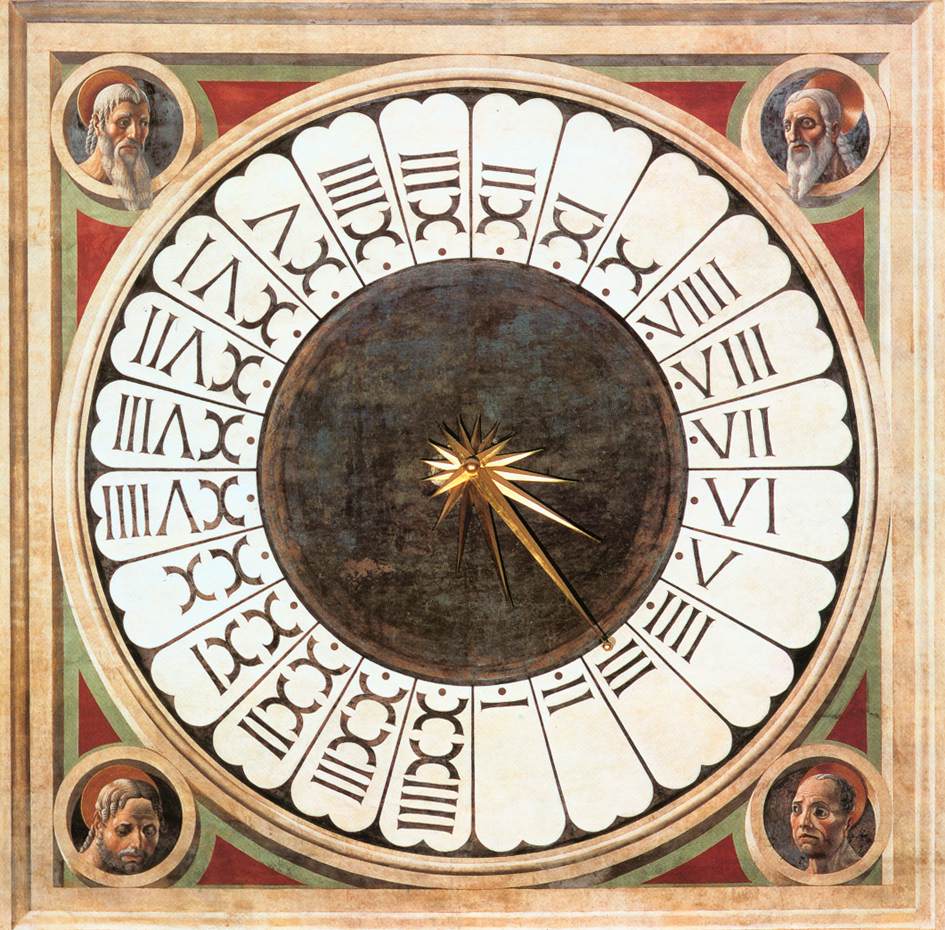 The Clock of Italic TimeClock at Florence Cathedral
High on the counter-facade wall, just above the main entrance, is one of the cathedral’s most curious treasures. This large clock face was decorated by the painter Paolo Uccello in 1443. At first glance, it looks like a standard clock, but look closer and you will notice something strange: the single hand moves counter-clockwise, and the dial is divided into 24 hours indicated by Roman numerals. This clock follows what is known as 'Italic Time,' or the Julian calendar system. In this medieval way of measuring the day, the 24th hour was not midnight, but rather the moment of sunset. This was the point at which the liturgical day ended and the new one began. Because the time of sunset changes throughout the year, the clock had to be adjusted frequently by the bell ringer. In the corners of the square frame, Uccello painted the portraits of four prophets, their heads emerging from circular windows as they look out over the congregation. While we now live by standardized time, this clock remains a functional link to a world where human life was synchronized strictly with the setting of the sun and the rhythms of religious life.
Listen in the appPaolo Uccello · Public domain
08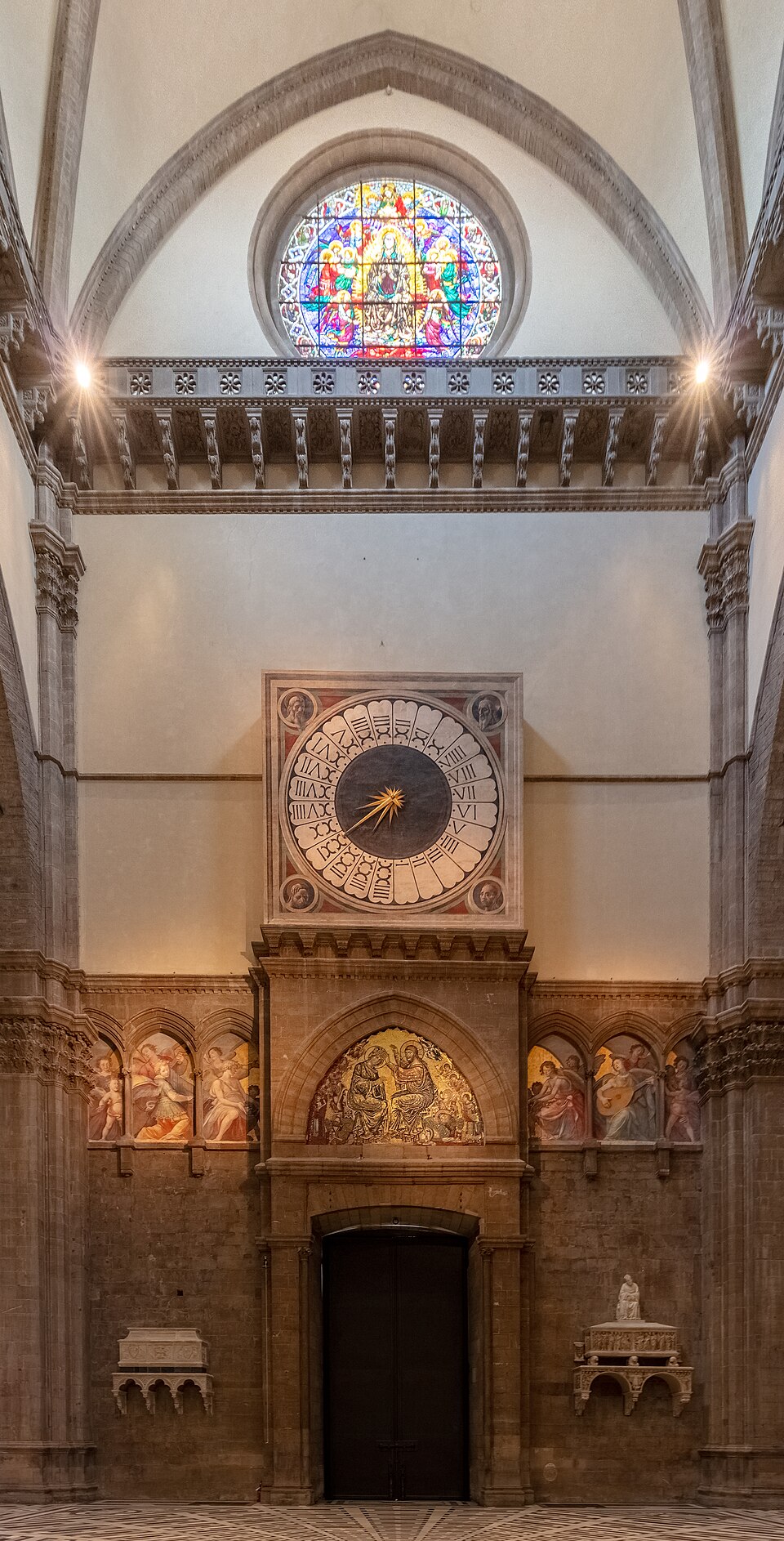 The Clock of Italic TimeThe Counter-Facade
If you turn your back to the high altar and look toward the entrance you just came through, you are facing the counter-facade. This interior wall is a showcase of different artistic mediums coming together. Centered above the main door is a beautiful mosaic depicting the 'Coronation of the Virgin,' believed to be the work of Gaddo Gaddi from the early 14th century. The gold leaf used in the mosaic catches the light, creating a glowing focus point for those leaving the church. Above the mosaic is the massive rose window, a spectacular example of early stained glass. This is just one of 44 windows in the cathedral, which together form the largest collection of 14th and 15th-century stained glass in Italy. Many of these windows were designed by the greatest artists of the era, including Donatello, Ghiberti, and Uccello. When the sun is positioned correctly, these windows bathe the otherwise dark interior in a kaleidoscope of saturated colors. The interplay between the dark stone, the glittering mosaic, the colorful light from the rose window, and the ticking of the ancient 24-hour clock above creates a powerful, contemplative moment that summarizes centuries of Florentine artistic achievement.
Listen in the appDiego Delso · CC BY-SA 4.0
09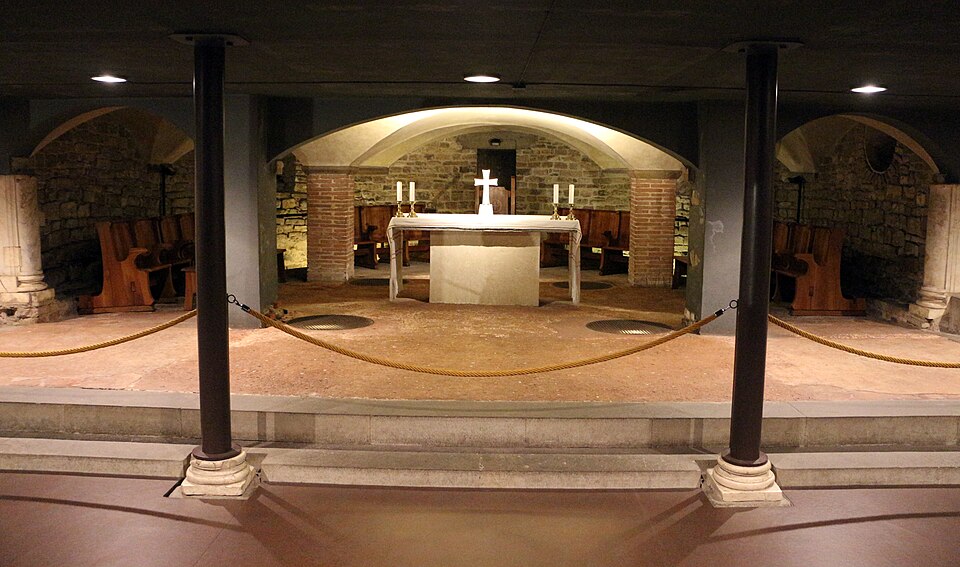 The Crypt of Santa ReparataThe Ancient Crypt
By taking the stairs down into the crypt, you are essentially traveling back in time over a millennium. You are standing in the archaeological remains of the original Cathedral of Santa Reparata. Built in the 5th century, this smaller church served as the heart of Florence's religious life for hundreds of years. However, as the city grew in power and ambition, Santa Reparata was deemed too small and modest. Instead of moving to a new site, the Florentines decided to build the current cathedral directly on top of the old one, slowly dismantling the ancient church as the new walls rose around it. In this space, you can see visible Roman-style brickwork and the simple, low-ceilinged altar area. The rough textures and intimate scale stand in stark contrast to the soaring, smooth grandeur of the cathedral above. It’s a place of quiet reflection where you can see the literal layers of history that make up Florence. These ruins were only rediscovered during excavations in the mid-20th century, revealing a wealth of information about the early Christian community in the city and providing a foundation—both literal and historical—for the Renaissance masterpiece that now stands over them.
Listen in the appPhoto: Sailko · CC BY 3.0
10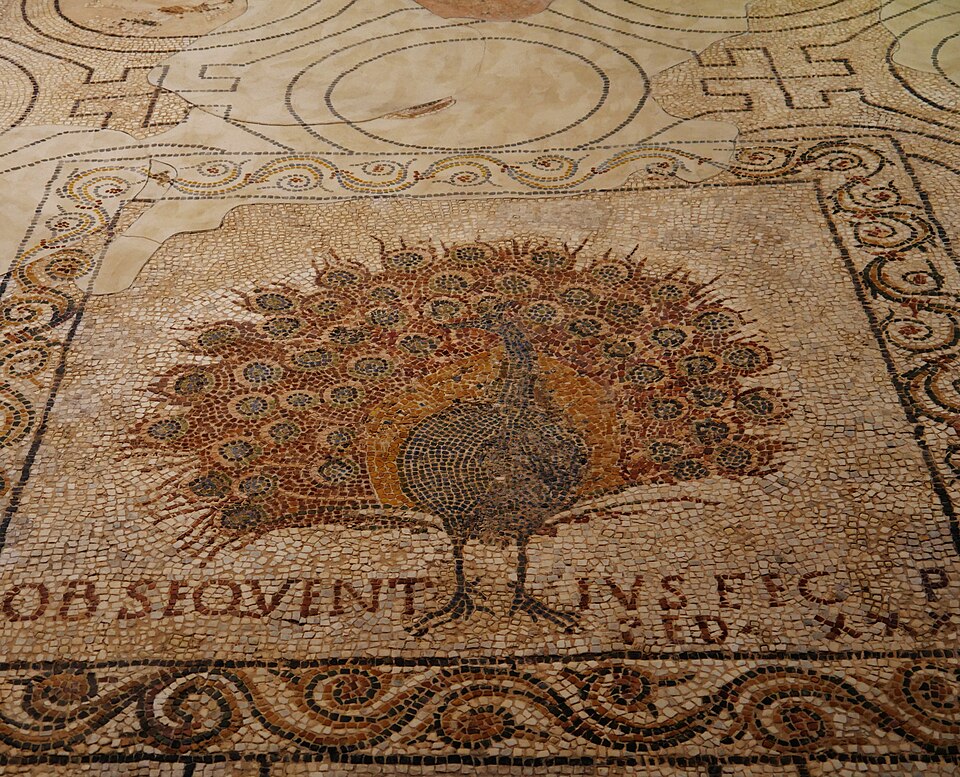 The Crypt of Santa ReparataThe Peacock Mosaic
Among the most remarkable finds in the crypt of Santa Reparata is a beautifully preserved floor mosaic depicting a peacock. This isn't just a decorative bird; in early Christian iconography, the peacock was a potent symbol of immortality and the resurrection. This belief stemmed from an ancient legend that the flesh of a peacock never decayed after death. For the early worshippers in this 5th-century church, the image served as a constant reminder of the promise of eternal life. The craftsmanship involved in creating this image is extraordinary. It is composed of thousands of tiny stone 'tesserae'—small cubes of naturally colored stone—carefully arranged to create the bird's plumage and the surrounding patterns. The fact that these delicate stones have remained in place for over 1,500 years, surviving the demolition of the church above and centuries of being buried, is a minor miracle. As you look at the vibrant greens, reds, and yellows that are still visible, you are seeing the world exactly as a Florentine would have seen it in late antiquity. It provides a rare, direct connection to the very beginnings of Christian art in this city, long before the first stone of the 'new' cathedral was even dreamed of.
Listen in the appPhoto: Zairon · CC BY 4.0
Cattedrale di Santa Maria del Fiore
Frequently asked questions
How much does the guide cost?
Free app download. Listed guide price: $1.99. Guide price shown in the app. Audio guide only. Venue admission is separate.
Can I listen without internet?
Yes. Download the guide’s audio, images, and maps in the app before your visit. Your downloaded content is then available offline.
Can I listen in my language?
Stanza supports 15 languages. Check the app for the languages available for this guide.
Do I need to follow a schedule?
No. This is a self-guided experience. Choose your stops, pause whenever you like, and return to a story at your own pace.
At your own pace
Explore Cattedrale di Santa Maria del Fiore.
Download Stanza, then search for “Cattedrale di Santa Maria del Fiore”.
Free app download · Guide price shown in the app
Keep exploring
Nearby audio guides
Florence
Basilica di San Lorenzo
Content & sources
Nelson Pérez · CC BY-SA 3.0
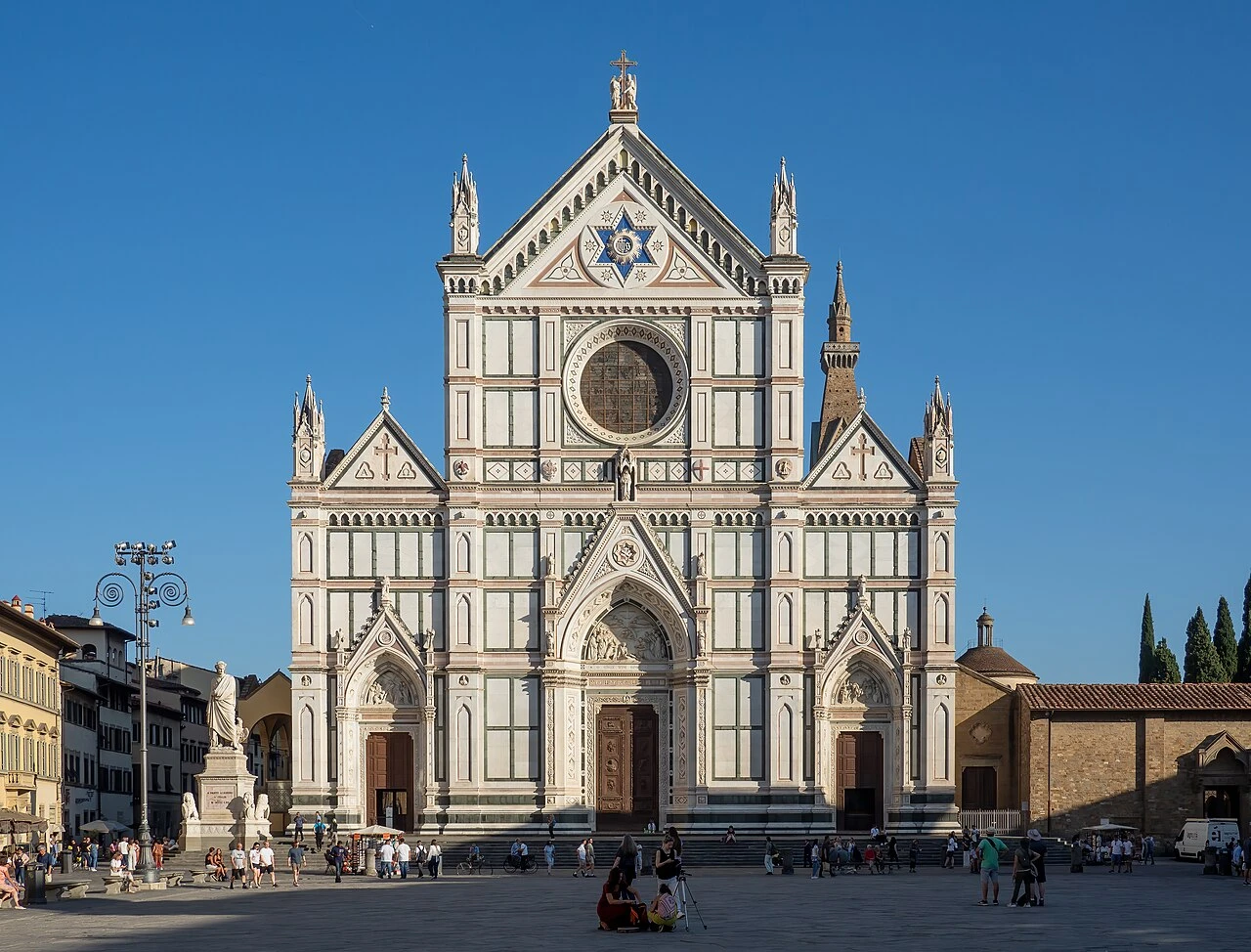
Florence
Basilica di Santa Croce
Content & sources
Photo: Rhododendrites · CC BY-SA 4.0
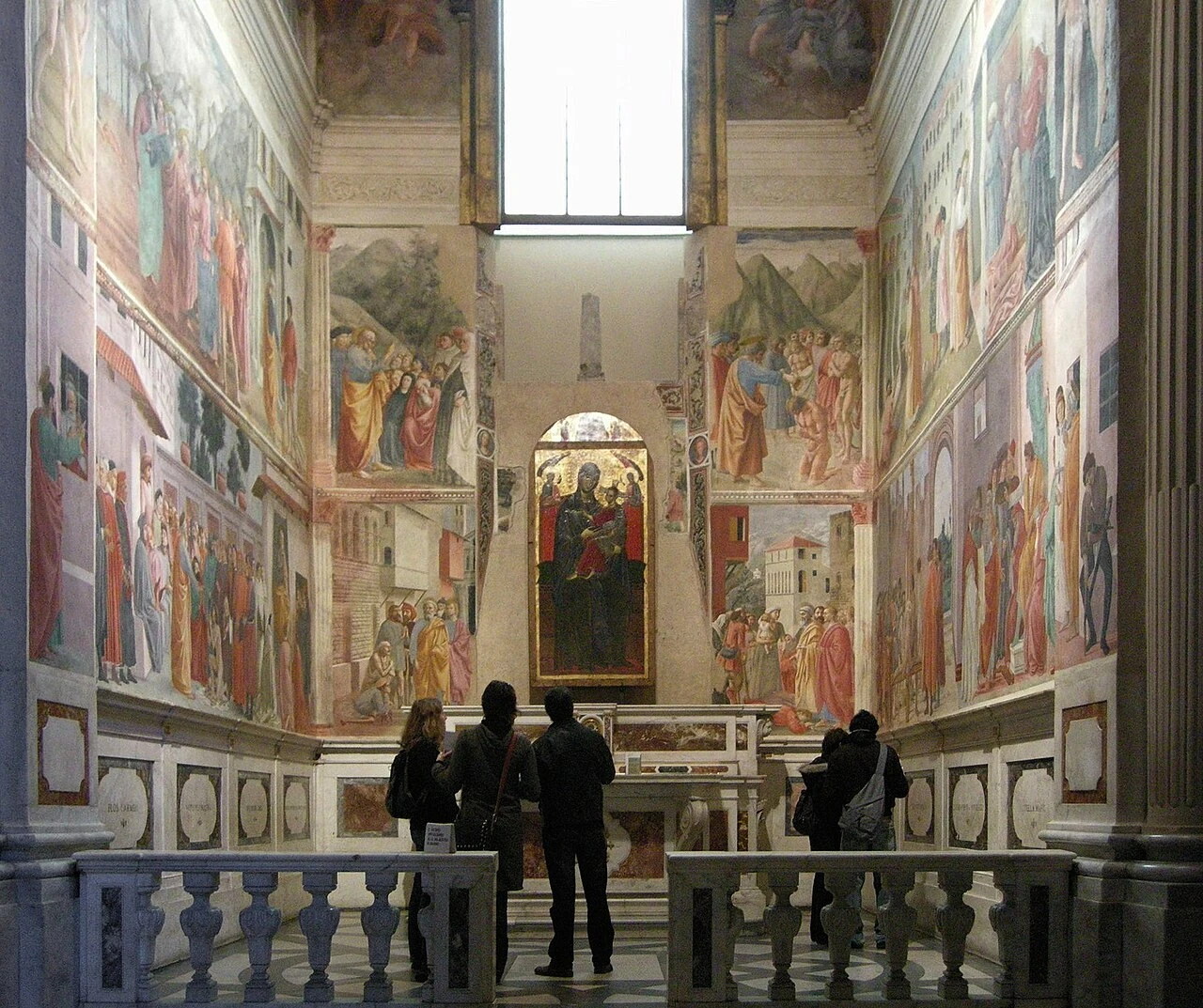
Florence
Brancacci Chapel
Content & sources
Masaccio, Masolino und Fra Filippo Lippi · CC BY 2.5
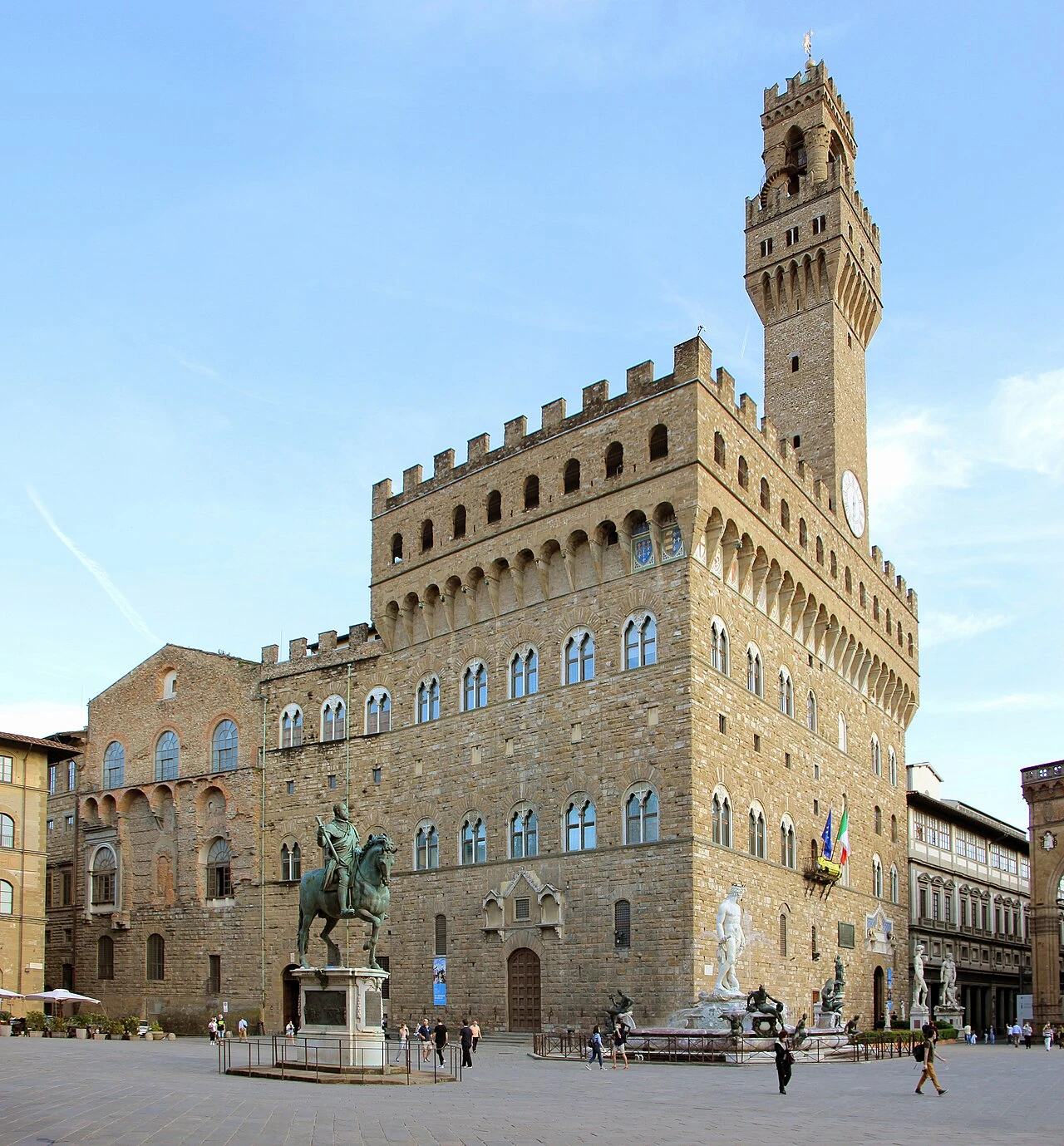
Florence
Palazzo Vecchio
Content & sources
Francesco Bini · CC BY-SA 4.0