Stanza · Audio guide
Palazzo VecchioAudio guide
A place to remember. A story to take with you.
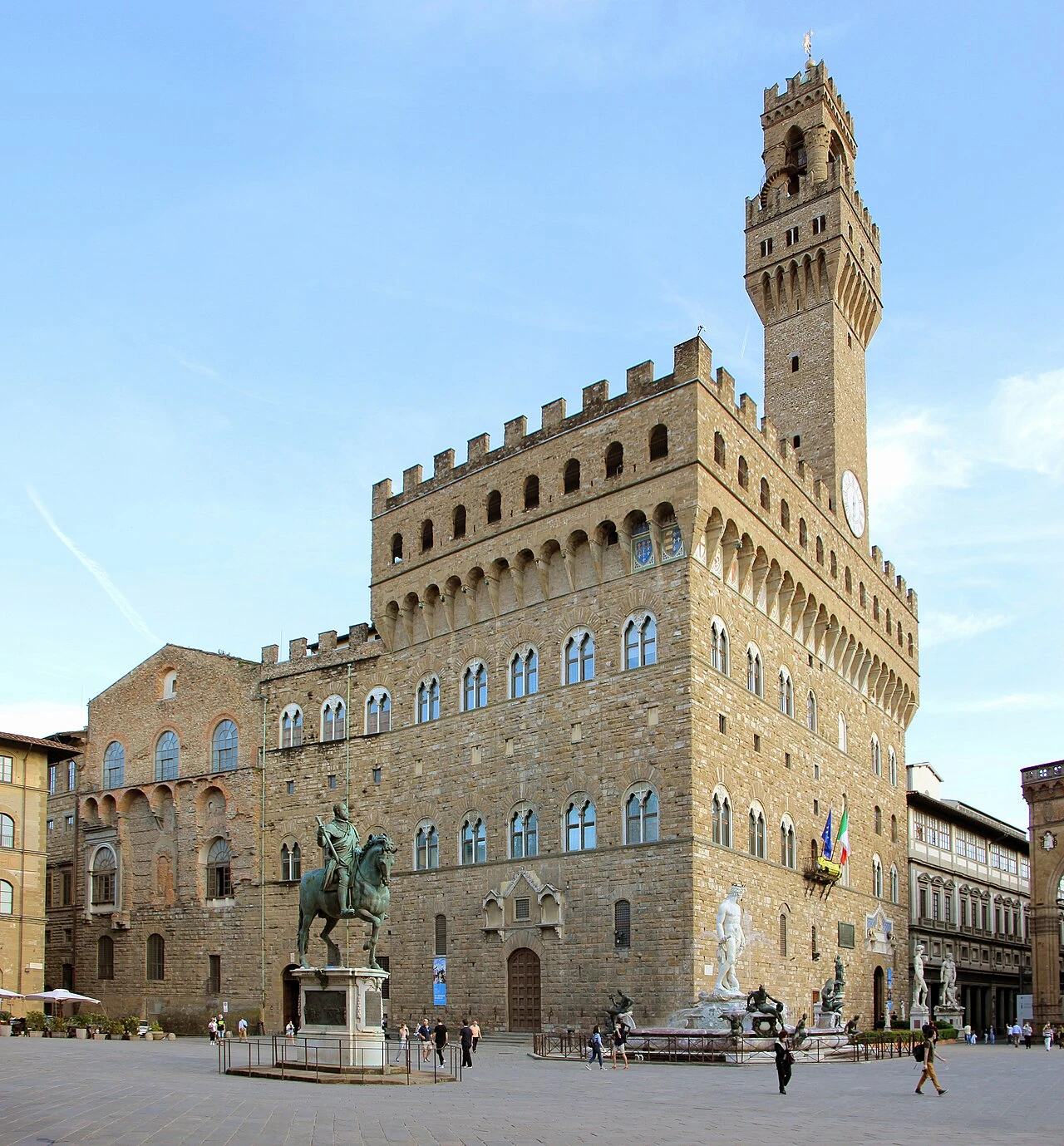
Palazzo Vecchio is a historic palace in Florence, Italy, serving as the city's town hall. It also houses an art collection and functions as a prominent museum and tourist attraction.
Download Stanza, then search for “Palazzo Vecchio”.
About the tour
One guide. Your kind of visit.
Palazzo Vecchio is a historic palace in Florence, Italy, serving as the city's town hall. It also houses an art collection and functions as a prominent museum and tourist attraction.
Ready when you are.
- 01Get the free Stanza app.
iOS & Android
- 02Find your guide.
“Palazzo Vecchio”
- 03Download before you go.
Works offline
Audio guide / 21 narrated stops
Inside the guide
Get to know a few of the stories before you go. Open a stop to read more.
01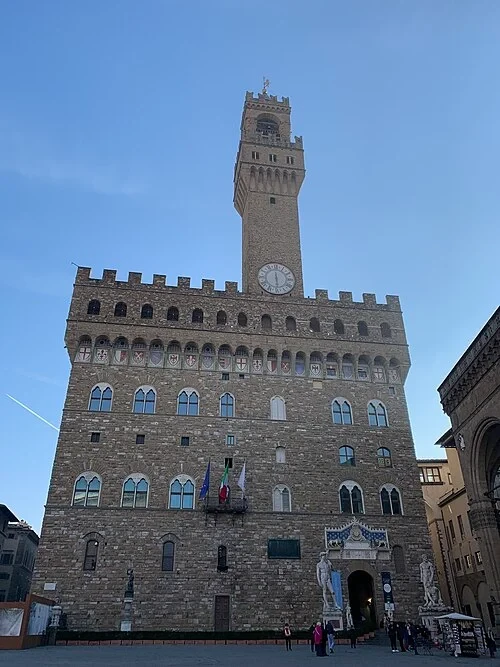 Piazza della Signoria and Fortress FacadeThe Fortress Facade
Construction on this formidable palace began in 1299 under the direction of architect Arnolfo di Cambio. Designed during a turbulent period of civil unrest, the building resembles a fortress more than a traditional administrative hall, with its thick stone walls and crenelated roofline. One of its most striking features is the 94-meter-tall Arnolfo Tower. If you look closely, you’ll notice the tower is slightly off-center. This wasn't an accident; Arnolfo chose to build upon the pre-existing foundations of an older tower known as "La Vacca," or "The Cow," which belonged to the defeated Foraboschi family. Inside the belfry hangs the "Martinella" bell. Historically, this bell was not used for daily timekeeping but was rung specifically to summon the city’s citizens in times of war or to announce a public assembly. The facade also displays a row of colorful coats of arms under the battlements, representing the different quarters of the city and its complex political alliances. This exterior served as a clear message of strength and stability to everyone in the piazza below, establishing the palace as the center of civic authority.
Photo: Photo2023 · CC BY 4.0
02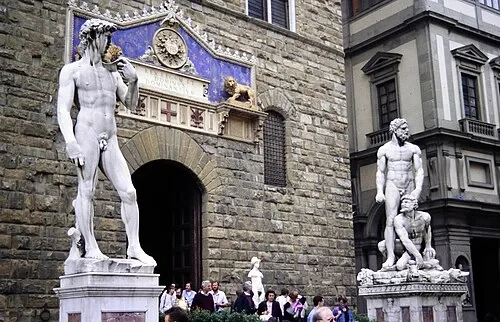 Piazza della Signoria and Fortress FacadeStatues of the Arengario
The statues standing on this elevated stage tell a story of competing political philosophies. Most famous is the replica of Michelangelo’s David. In the early 16th century, the original statue was placed here as a powerful symbol of the Florentine Republic’s defiance against both internal tyranny and external threats. David, the underdog who defeated a giant, represented the city's independent spirit. Standing nearby is the massive group of Hercules and Cacus by Baccio Bandinelli. This sculpture was commissioned later by the Medici family. By choosing Hercules—a figure known for overwhelming physical force—the Medici aimed to symbolize their own indisputable power over the city, effectively countering the earlier Republican message of the David. Above the main entrance portal, look for the decorative marble frame featuring two lions and a blue background. It bears the Latin inscription "Rex Regum et Dominus Dominantium," which translates to "King of Kings and Lord of Lords." This was added in 1511, signifying that the city’s only true sovereign was Christ, a final attempt to prevent any single family from claiming ultimate authority over the Florentine people.
Photo: Christian-wittmann-1964 · CC BY-SA 4.0
03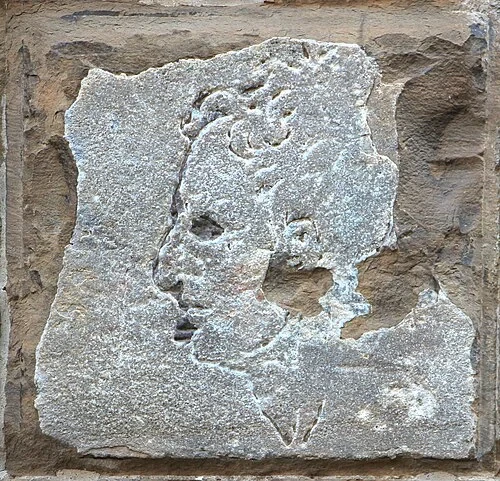 Piazza della Signoria and Fortress FacadeMichelangelo's Importuno
Local folklore suggests that Michelangelo himself is responsible for this rough sketch found on a corner stone near the main entrance. According to the most popular story, the artist was frequently stopped by a notoriously boring and persistent debtor who would talk at length. While the man was droning on, Michelangelo allegedly leaned against the wall and carved this profile behind his back, using only a small chisel he happened to have with him. Whether he did it out of boredom or to mock the man remains a subject of debate among Florentines. However, historians offer more grounded theories. Some suggest it might be a portrait of Michelangelo’s close friend and fellow artist, Francesco Granacci. Others believe it could represent the face of a prisoner being led to execution, captured in stone as a somber record of the city's justice system. Regardless of its true origin, the carving provides a surprisingly personal and informal touch to the otherwise stern and imposing masonry of the palace’s medieval facade. Finding it requires a keen eye, as centuries of weather have softened the lines of the profile.
Listen in the appFrancesco Bini · CC BY-SA 4.0
04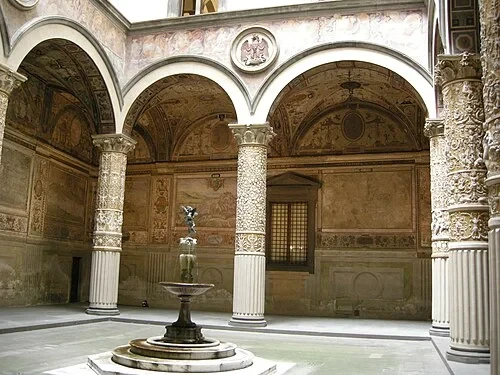 The Michelozzo CourtyardThe Michelozzo Courtyard
Originally built in the 15th century with a simpler medieval design, this space was transformed by Giorgio Vasari in 1565. The occasion was the wedding of Francesco I de' Medici to Joanna of Austria. To impress the royal bride and her delegation, the Medici family spared no expense in modernizing the courtyard. The large, sturdy columns were covered in intricate gilded stucco work, featuring vines, flowers, and classical motifs. If you look at the walls surrounding the upper gallery, you will see a series of frescoes depicting the major cities of the Austrian Empire, including Vienna, Prague, and Graz. These were intended to make the young Duchess feel at home in her new Italian surroundings. The transition from the rugged, protective stone outside to this delicate, light-filled interior was a deliberate architectural choice. It signaled that while the palace was still a secure seat of government, it was also the refined residence of a powerful ducal family capable of hosting Europe's most elite royalty. The harmony of the classical proportions here reflects the High Renaissance aesthetic that the Medici championed during their reign.
Listen in the appPhoto: Sailko · CC BY 2.5
05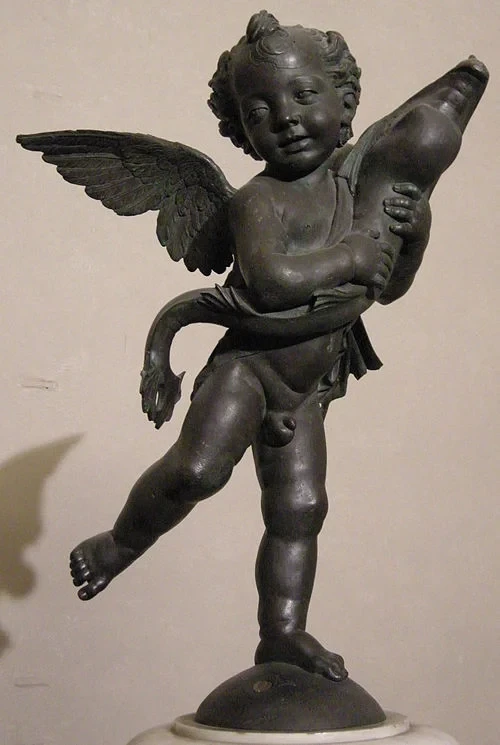 The Michelozzo CourtyardPutto with a Dolphin
While the statue you see atop the fountain is a replica, the 15th-century original by Andrea del Verrocchio is carefully preserved inside the palace. Verrocchio, who was a teacher to Leonardo da Vinci, was renowned for his ability to capture dynamic energy in metal. In this work, the child, or "putto," seems caught in a moment of mid-spin as he balances on one leg while clutching a squirming dolphin. The way the figure is designed encourages viewers to walk around the fountain, as the composition reveals new angles and details from every side. The dolphin was originally designed as a water spout, with the water intended to spray from its mouth. This sculpture was not originally intended for this space; Cosimo I de' Medici had it moved here from the family's country villa at Careggi. By placing such a sophisticated and joyful artwork in the center of the main courtyard, Cosimo signaled a new era for the palace, moving away from its grim medieval past toward a more refined and cultured ducal court, where art and government could coexist.
Listen in the appAndrea del Verrocchio · CC BY-SA 3.0
06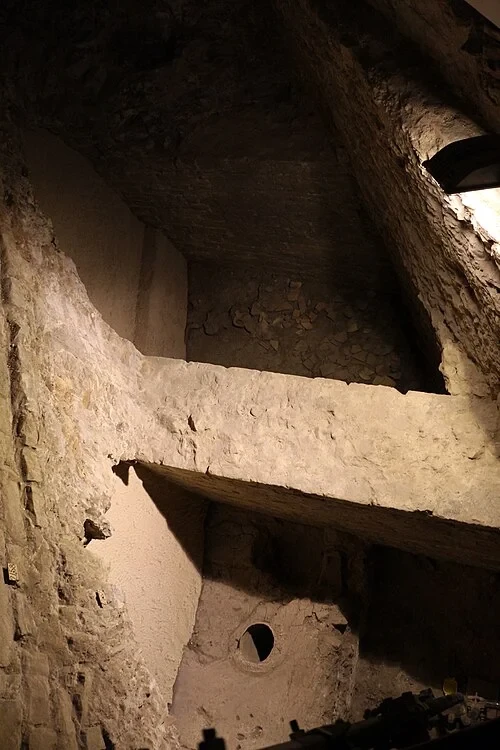 Roman Theater ExcavationsRoman Theater Foundations
Descending into the archaeological area brings you to the remains of the Roman theater of Florentia, which stood here in the 1st century AD. When the palace was built in the late 1200s, the architects didn't clear the site; they integrated the ancient ruins into the new construction. You can see how the medieval brick arches and stone walls follow the distinct curve of the ancient "cavea," the semicircular seating area where spectators once watched performances. The theater was massive, capable of holding thousands of people, and its footprint determined the unusual shape of several rooms in the palace above. This site provides a rare, vertical look at history, where Roman masonry directly supports medieval and Renaissance halls. It serves as a literal foundation for the city's political heart, demonstrating a practical approach to urban development where the ruins of the past were repurposed to build the future. This layers-of-time effect is a hallmark of many historic Italian cities, but few show the transition from ancient entertainment to medieval government as clearly as this underground passage, where the ancient brickwork remains visible.
Listen in the appPhoto: Sailko · CC BY 3.0
07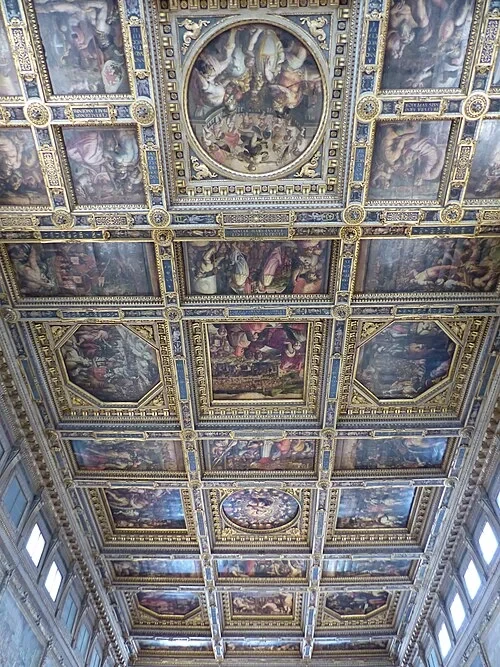 Salone dei CinquecentoThe Ceiling of the Five Hundred
Looking up, the sheer scale of this ceiling is staggering. Measuring 54 meters long and 23 meters wide, it sits 18 meters above the floor. The structure consists of 39 separate panels, each framed in heavy, gilded wood. Giorgio Vasari and his workshop executed the paintings in the mid-16th century as part of a grand renovation. The content serves as a visual biography of Cosimo I de' Medici, detailing his military victories, administrative successes, and his eventual rise to become the Grand Duke of Tuscany. The central, largest panel shows Cosimo in his full glory, being crowned by figures representing the city of Florence. This was not just art; it was a powerful statement of legitimacy and divine favor. The hall was originally built to house the Great Council of the Republic, but under Cosimo, it was transformed into a throne room designed to awe visitors with the family's wealth and dominance. Every scene on this ceiling was carefully chosen to reinforce the idea that the Medici were the natural and rightful leaders of the Tuscan state, forever linking their personal history to the glory of the city.
Listen in the appPhoto: Benjamín Núñez González · CC BY-SA 4.0
08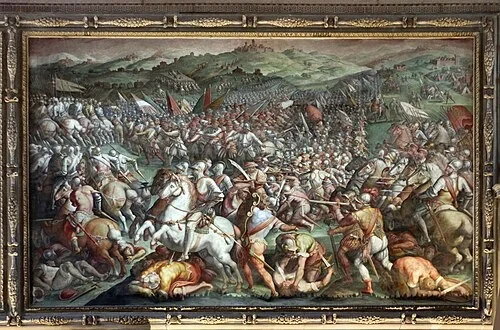 Salone dei CinquecentoThe Battle of Marciano
Painted by Giorgio Vasari, this scene depicts the Battle of Marciano, a 1554 conflict where Florentine forces defeated Siena, securing Medici control over all of Tuscany. The painting is filled with the chaos of war: clashing soldiers, rearing horses, and a dense forest of pikes. However, the most intriguing detail is a small, green flag held by a soldier high in the composition. If you look closely, you can see the words "Cerca Trova" painted on it, which means "Seek and You Shall Find." Many art historians believe this was a cryptic clue left by Vasari himself. Before this hall was remodeled, Leonardo da Vinci began a legendary fresco here called "The Battle of Anghiari." It was reportedly his most ambitious work but remained unfinished. Evidence suggests that rather than destroying Leonardo’s work, Vasari may have built a protective wall in front of it to paint his own fresco. Modern acoustic testing has confirmed a gap behind this wall, fueling the hope that one of the world's most sought-after lost artworks still exists just inches away from the surface of this massive mural.
Listen in the appPhoto: Sailko · CC BY 3.0
09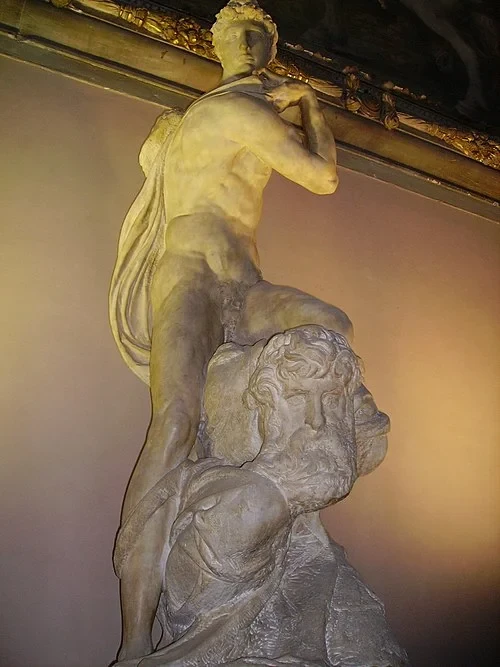 Salone dei CinquecentoThe Genius of Victory
Michelangelo originally began this work for the monumental tomb of Pope Julius II in Rome, but the project was never completed, and the statue eventually found its way here. The composition depicts a youthful, athletic victor standing over an older, bearded captive. Notice the unusual proportions; the victor has a long, twisting torso that gives the sculpture a sense of upward, spiraling movement. This "serpentine" pose became a hallmark of the Mannerist style that followed Michelangelo. The face of the older man, crushed beneath the youth's knee, is believed by some to be a self-portrait of the aging artist himself. Look closely at the hair and the lower parts of the figures. You can see the tool marks and the rough texture where Michelangelo stopped carving. This "non finito" technique suggests the artist’s struggle to fully release the form he envisioned within the block of marble. The contrast between the polished skin of the youth and the raw, unrefined stone at the base creates a powerful emotional tension. It remains a prime example of Michelangelo's late period, where the physical effort of carving is visible to every visitor.
Listen in the appMichelangelo · CC BY 2.5
10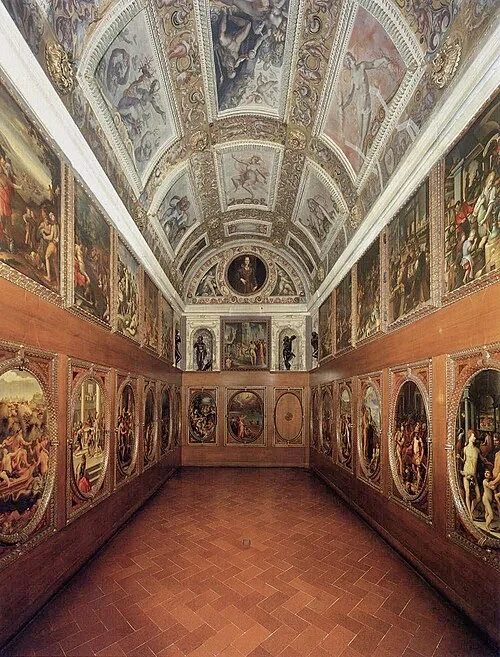 Studiolo of Francesco IStudiolo of Francesco I
The Studiolo is one of the most unique spaces in the palace, designed specifically to satisfy the eccentric interests of Francesco I. Unlike the grand, public halls elsewhere, this room was a secret world where the Duke could indulge his passion for alchemy and natural science. There are no windows; the space was originally lit only by candles, adding to its mysterious atmosphere. The walls are lined with decorated cabinet doors, which were once used to store thousands of rare items, ranging from exotic shells and carved ivory to precious gems and chemical concoctions. The entire decorative program was organized around the four classical elements: Earth, Air, Fire, and Water. Each side of the room was dedicated to one element, and the paintings on the doors depicted activities or materials related to that specific category. For example, scenes of mining would be on the "Earth" side, while pearl diving appeared on the "Water" side. This room represented a microcosm of the world, allowing the Duke to feel as though he held the secrets of nature within these four small walls. It was a space for quiet study and the private display of the Medici family’s vast wealth.
Listen in the appGiorgio Vasari y colaboradores · Public domain
Palazzo Vecchio
Frequently asked questions
How much does the guide cost?
Free app download. Listed guide price: $1.99. Guide price shown in the app. Audio guide only. Venue admission is separate.
Can I listen without internet?
Yes. Download the guide’s audio, images, and maps in the app before your visit. Your downloaded content is then available offline.
Can I listen in my language?
Stanza supports 15 languages. Check the app for the languages available for this guide.
Do I need to follow a schedule?
No. This is a self-guided experience. Choose your stops, pause whenever you like, and return to a story at your own pace.
At your own pace
Explore Palazzo Vecchio.
Download Stanza, then search for “Palazzo Vecchio”.
Free app download · Guide price shown in the app
Keep exploring
Nearby audio guides
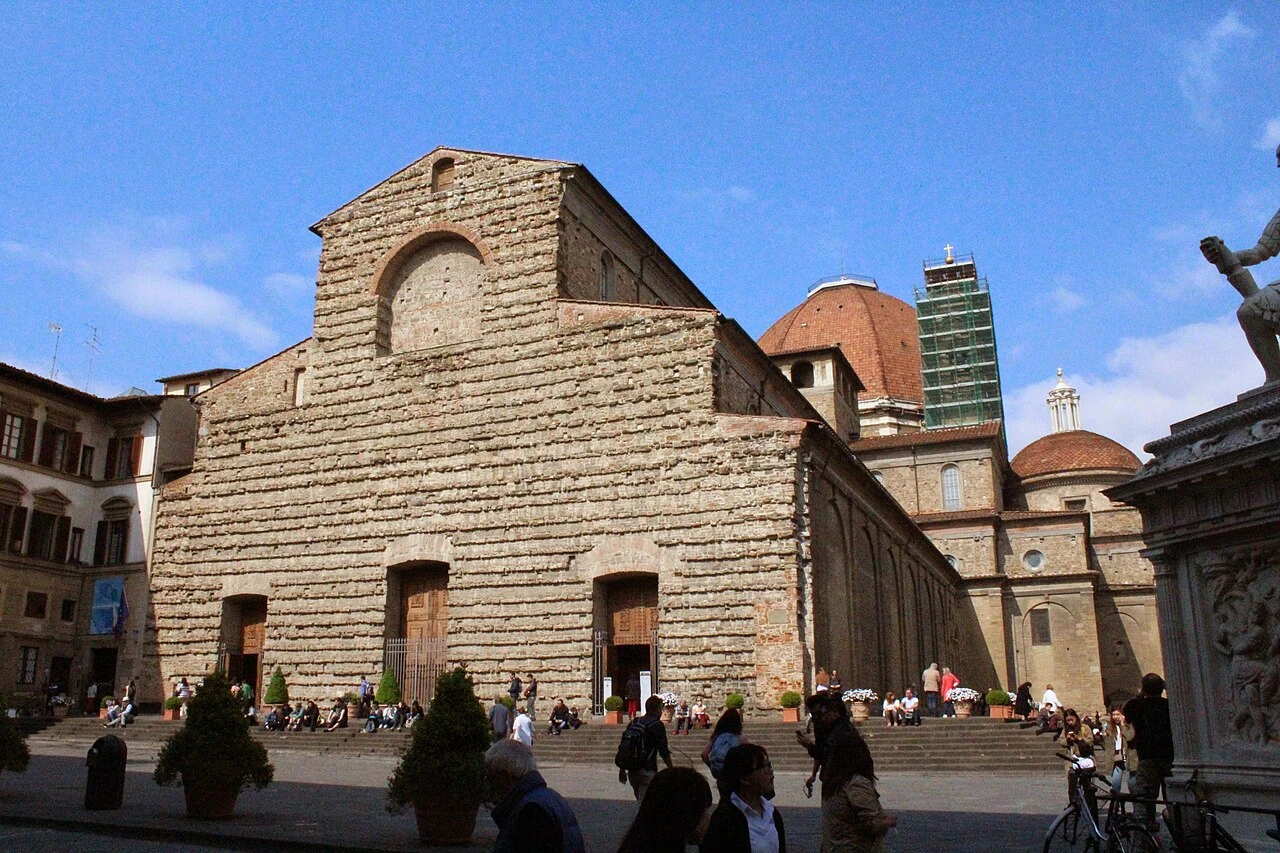
Florence
Basilica di San Lorenzo
Content & sources
Nelson Pérez · CC BY-SA 3.0
Florence
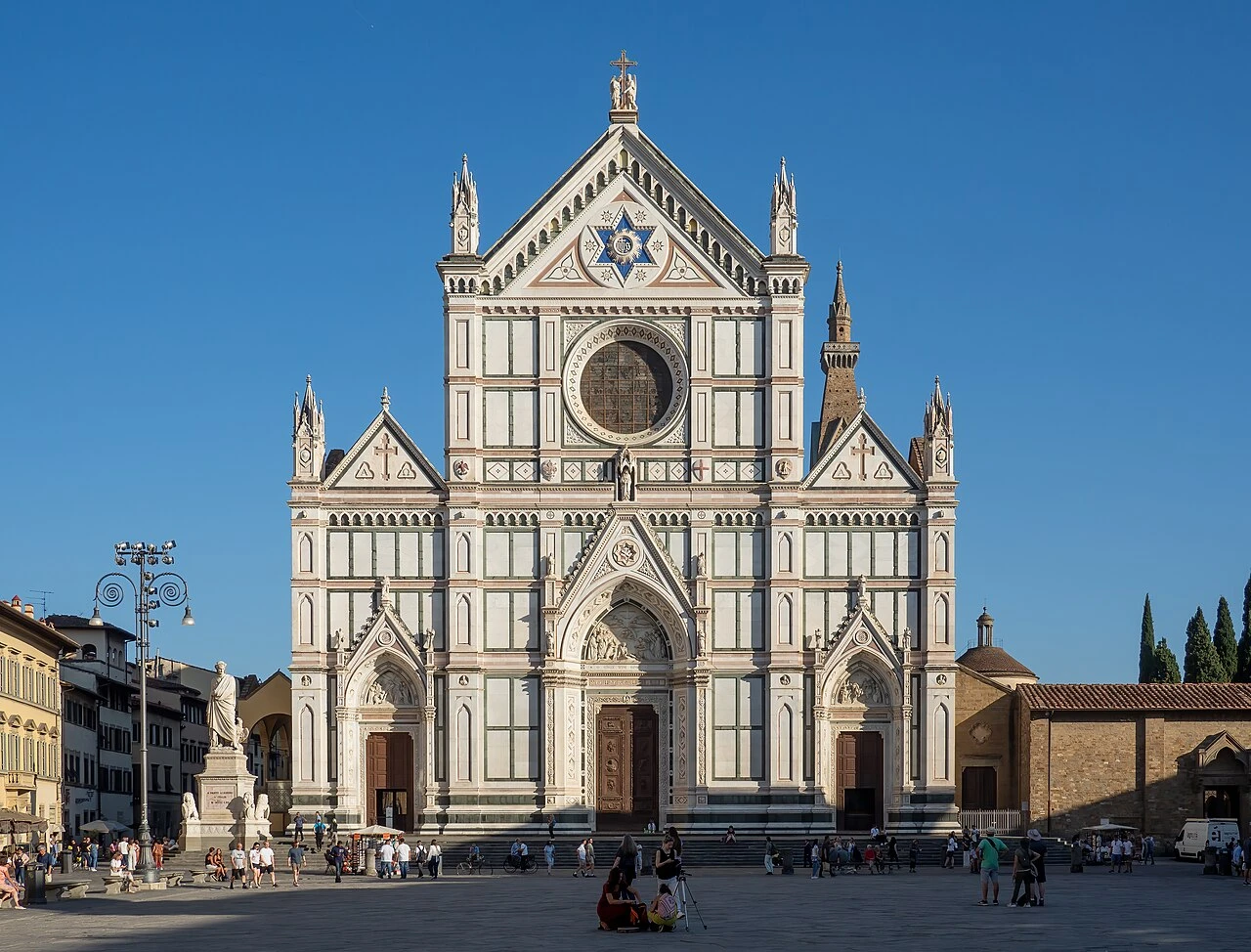
Basilica di Santa Croce
Content & sources
Photo: Rhododendrites · CC BY-SA 4.0
Florence
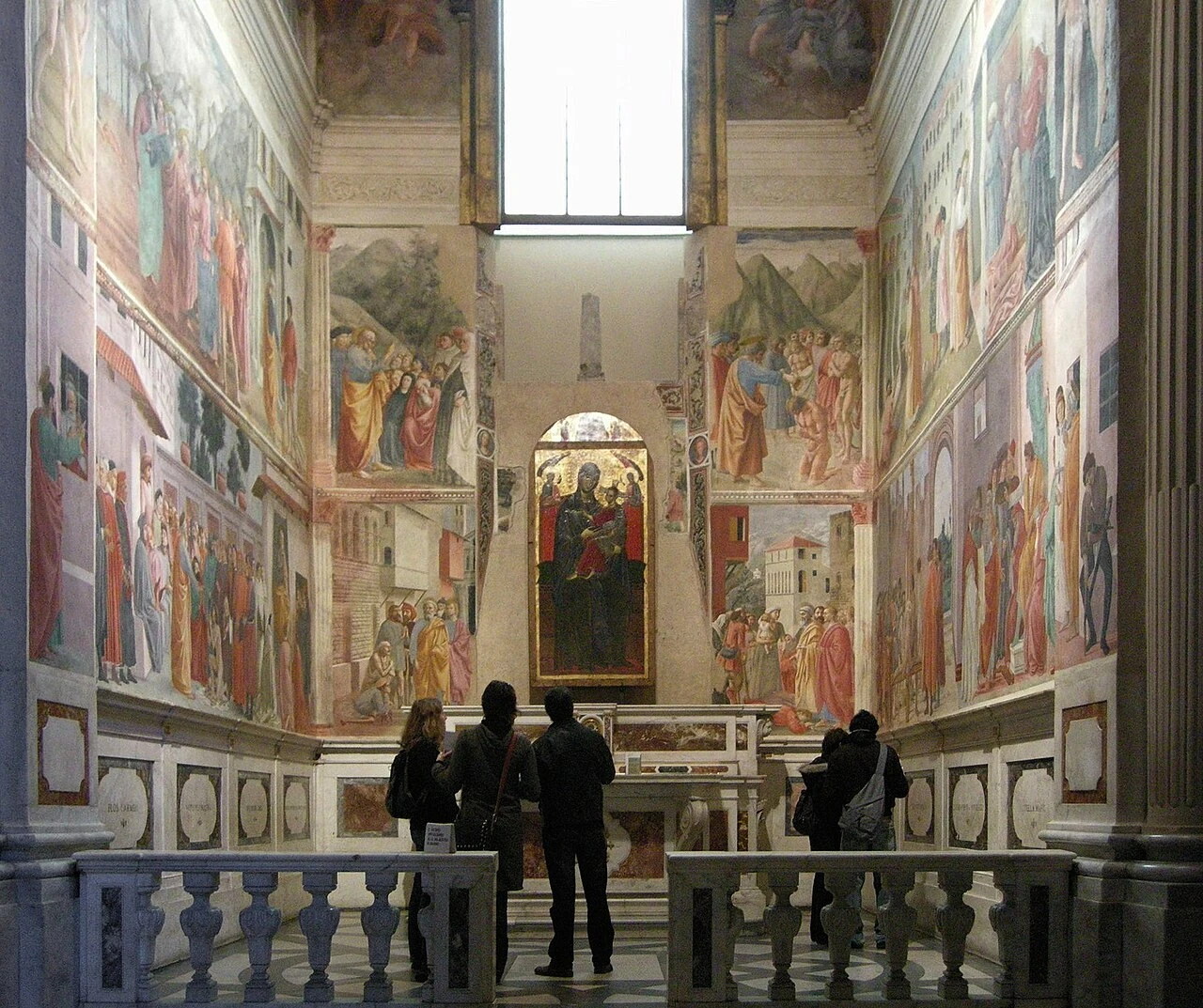
Brancacci Chapel
Content & sources
Masaccio, Masolino und Fra Filippo Lippi · CC BY 2.5
Florence
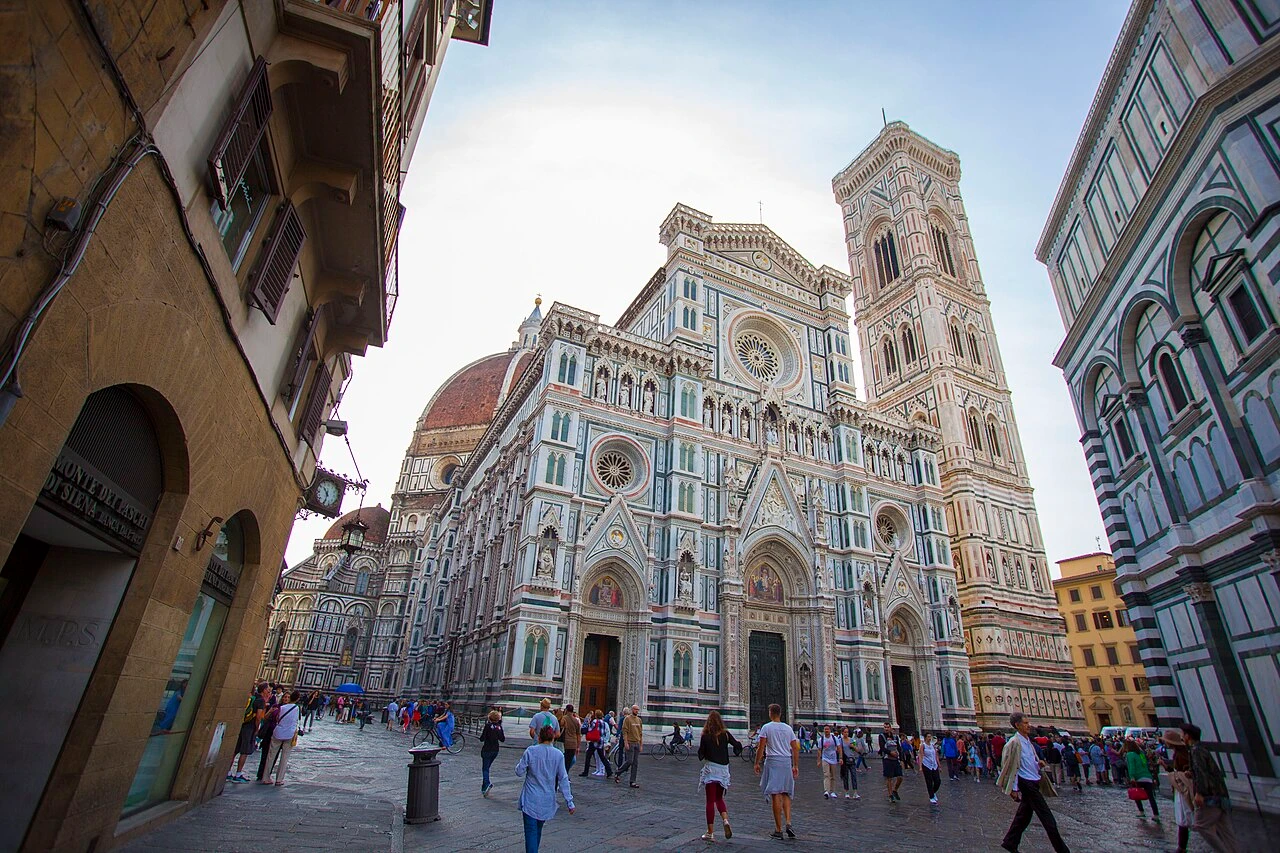
Cattedrale di Santa Maria del Fiore
Content & sources
Photo: ScareCriterion12 · CC BY-SA 4.0