Stanza · Audio guide
Ponte VecchioAudio guide
A place to remember. A story to take with you.
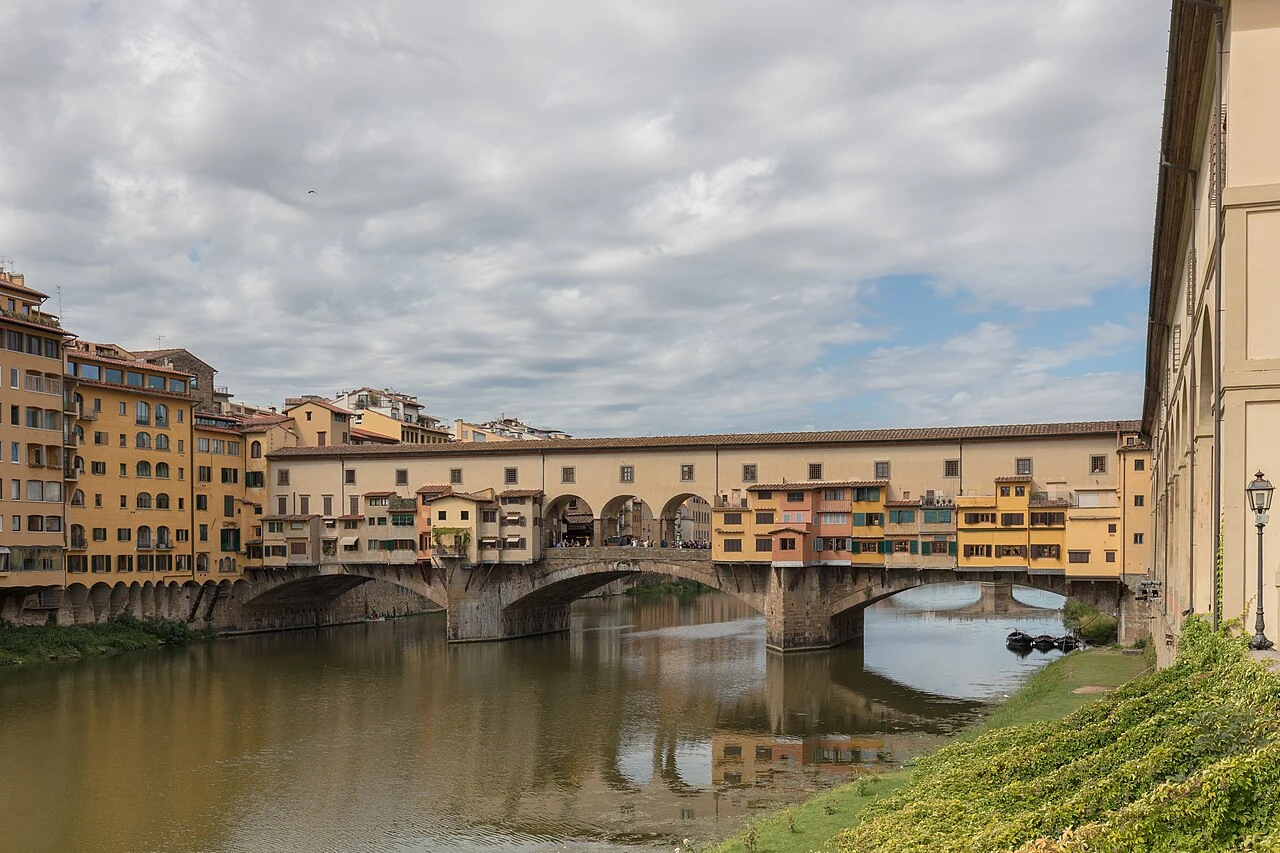
The Ponte Vecchio is a medieval stone closed-spandrel segmental arch bridge over the Arno River in Florence, Italy. It is notable for its shops built along its edges.
Download Stanza, then search for “Ponte Vecchio”.
About the tour
One guide. Your kind of visit.
The Ponte Vecchio is a medieval stone closed-spandrel segmental arch bridge over the Arno River in Florence, Italy. It is notable for its shops built along its edges.
Ready when you are.
- 01Get the free Stanza app.
iOS & Android
- 02Find your guide.
“Ponte Vecchio”
- 03Download before you go.
Works offline
Audio guide / 14 narrated stops
Inside the guide
Get to know a few of the stories before you go. Open a stop to read more.
01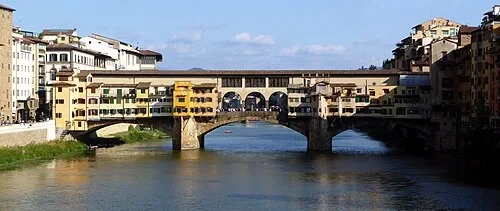 North Entrance and the Great ReconstructionThe Inhabited Bridge
Welcome to the most iconic crossing in Florence. The Ponte Vecchio is a rare survivor of a once-common medieval architectural style known as a 'habitated bridge.' In the Middle Ages, building shops and homes directly onto bridges was a clever way to maximize prime commercial real estate in crowded city centers. This structure spans 95 meters across the Arno River and reaches a width of 20 meters, allowing for the bustling street of shops you see today. While most medieval bridges across Europe were eventually cleared of buildings to ease traffic or modernize, this bridge remained a hub of city life. The various extensions and protrusions that overhang the river weren't planned at once; they grew organically over centuries as shopkeepers expanded their tiny workshops further out over the water. This gives the bridge its famous asymmetrical, colorful silhouette that has made it a focal point for artists and visitors for over six hundred years. As you begin your walk, notice how the shops create a solid wall that makes you feel more like you are in a narrow city alleyway than on a bridge spanning a wide river.
Photo: Lucarelli · CC BY-SA 3.0
02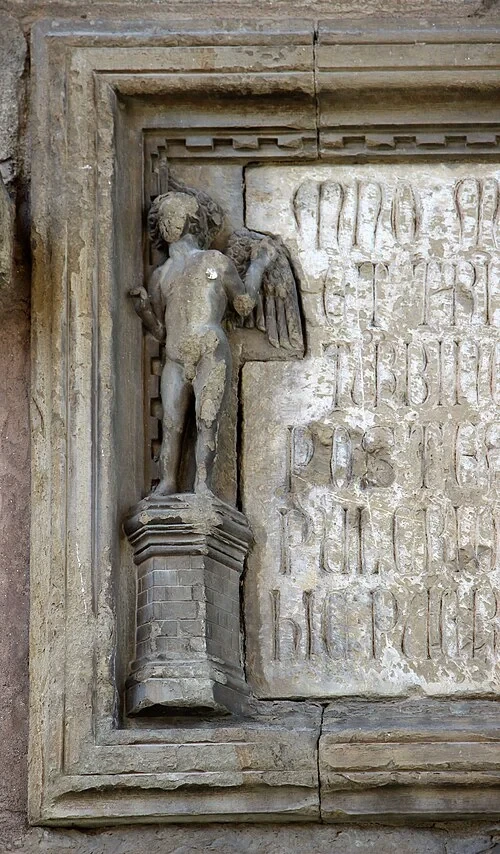 North Entrance and the Great ReconstructionThe 1345 Inscription
A small stone tablet embedded in the structure marks a critical turning point in the history of the Arno. In 1333, a massive flood devastated Florence, sweeping away the previous wooden version of this bridge and leaving the city disconnected. Determined to build something that could withstand the river's power, city officials commissioned a new design in 1339. This current stone iteration was completed in 1345, and this inscription commemorates that achievement. The design is credited to the architect Neri di Fioravante, who made the bold choice to move away from traditional wooden supports. He implemented a more resilient stone arch system that offered greater structural stability. Unlike the semi-circular arches common at the time, Fioravante used shallower segmental arches, which required fewer pillars in the riverbed. This was a sophisticated engineering move that reduced the bridge's profile in the water, allowing debris and floodwaters to pass through more easily during storms. This specific plaque serves as the bridge's birth certificate, ensuring that future generations would know when and why the Florentines transitioned from temporary timber to the enduring stone you see under your feet today.
Photo: Sailko · CC BY 3.0
03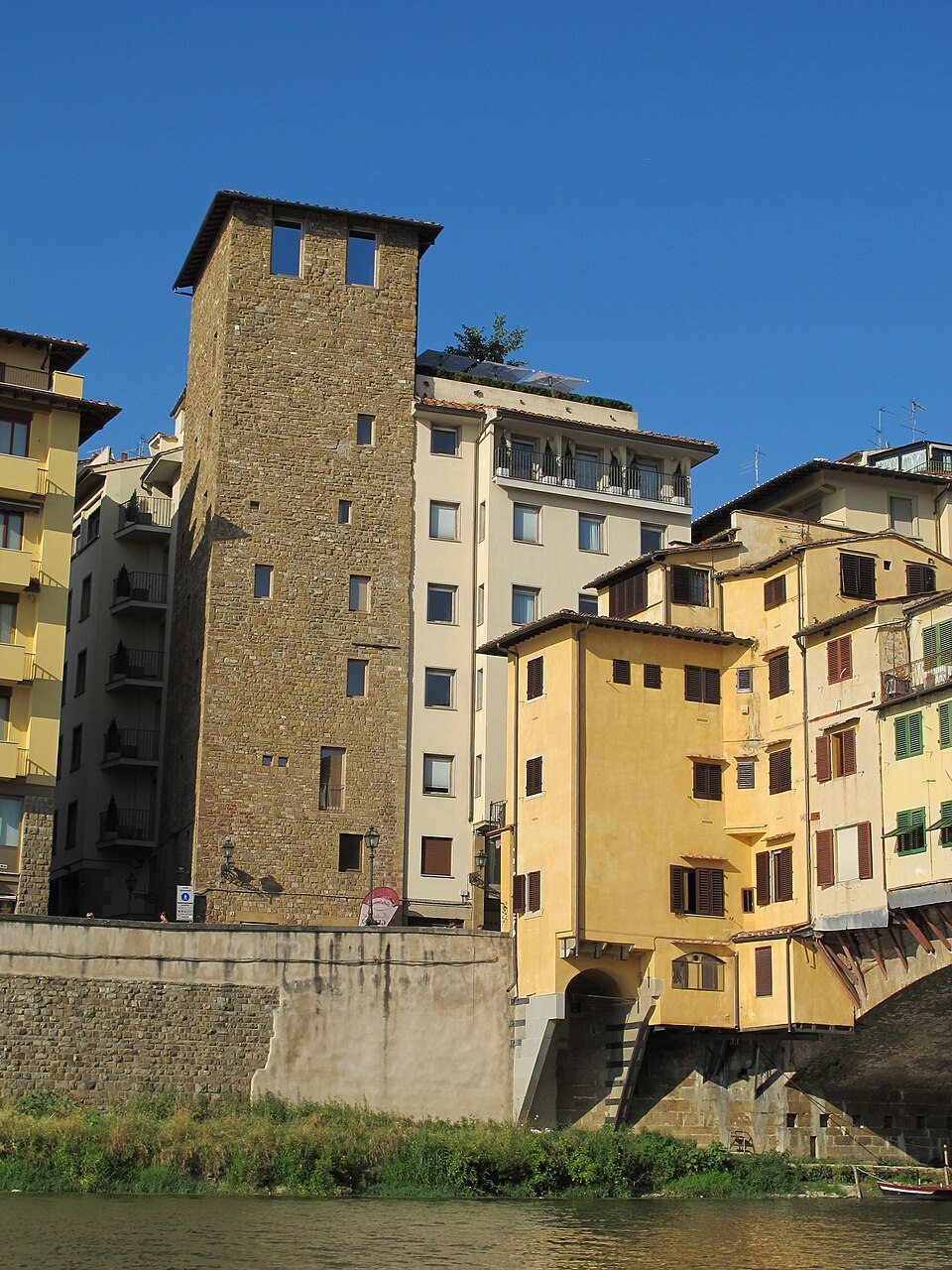 North Entrance and the Great ReconstructionThe Consorti Tower
At the north entrance of the bridge stands a rugged stone structure known as the Consorti Tower. In the 12th and 13th centuries, Florence was a city of towers, with noble families competing for height and security. These towers functioned as private fortresses during times of civil unrest, providing a safe retreat for family members and their loyal guards. The Consorti family originally built this tower to defend their interests and guard the approach to the bridge, which was the most vital crossing in the city. Before the Medici family consolidated power and stabilized the city, these family-run checkpoints were common. The thick stone walls and narrow openings are hallmarks of medieval defensive architecture, designed to withstand siege or assault. Over time, as the city became more peaceful, the tower's role shifted from a military outpost to a commercial and residential landmark. Its presence here is a reminder that the bridge was not always just a place of commerce; it was a strategic gateway that required heavy protection. The masonry reflects the raw, functional style of medieval Florence before the more decorative Renaissance aesthetics took hold of the city's skyline.
Listen in the appPhoto: Sailko · CC BY-SA 3.0
04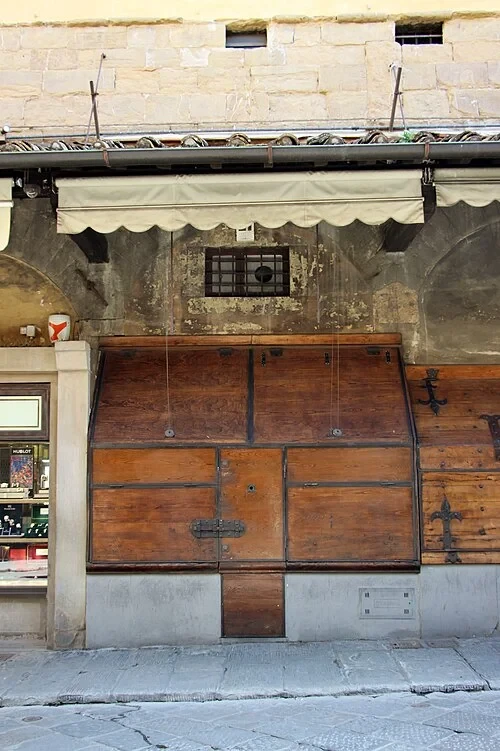 The Street of GoldTraditional Workshop Shutters
Looking at the storefronts, you will notice heavy wooden shutters that look significantly different from standard modern shop doors. Locally called 'madiella,' these shutters are a unique piece of Florentine heritage. They consist of two hinged parts: the bottom half folds down to create a horizontal counter for displaying goods to passersby, while the top half swings upward to form a small, protective awning. This design allows the tiny interiors to spill out into the street, maximizing the very limited space available on the bridge. This specialized storefront layout became standardized after a major change in 1594. Before that time, the bridge was home to butchers, fishmongers, and tanners. Because the smell of animal waste and rotting meat was deemed offensive to the nobility who frequently used the bridge, Grand Duke Ferdinando I issued a decree forcing the butchers out. He replaced them with goldsmiths and jewelers, whose clean and prestigious trade was more suited to the heart of the city. The wooden madiella have been used by generations of these artisans to safely house their precious stock by night and showcase their craftsmanship by day.
Listen in the appPhoto: Sailko · CC BY 3.0
05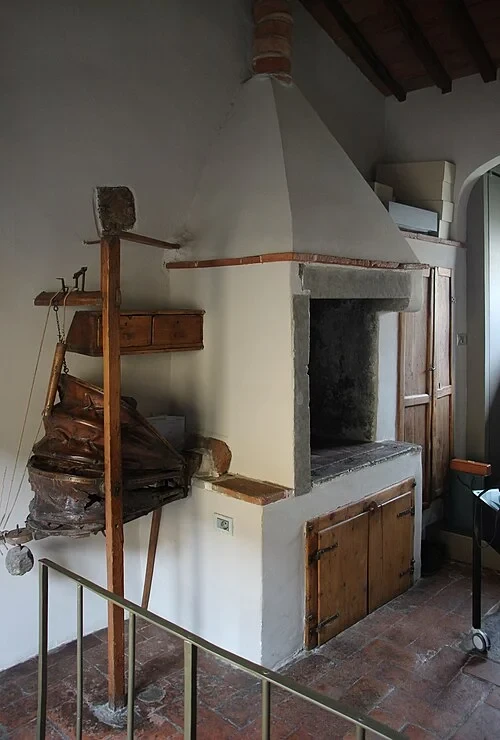 The Street of GoldInside the Goldsmith's Forge
While the windows on the bridge display polished gems and intricate jewelry, the interiors often hide a much older world of craftsmanship. For over 400 years, these tiny spaces have functioned as active workshops. In many of them, you can still find the traditional tools of the trade, such as large leather bellows and stone furnaces. The bellows were essential for pumping air into the forge, keeping the heat high enough to melt precious metals. This artisanal process has remained remarkably consistent since the late 16th century. Gold is still melted down, hammered, and hand-set into the designs you see in the cases outside. Because the bridge is a protected historical site, the workshops cannot be expanded, forcing jewelers to work in cramped, vertical spaces that have been passed down through families for generations. When you walk past, you might hear the rhythmic sound of a small hammer against an anvil, a noise that has defined the acoustic environment of the Ponte Vecchio for centuries. This isn't just a shopping district; it is a living manufacturing hub where the ancient traditions of Florentine goldsmithing are preserved in real-time.
Listen in the appPhoto: Sailko · CC BY 3.0
06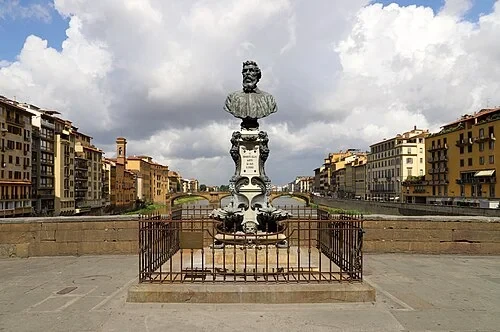 The Heart of the Bridge: Cellini and SurvivalMonument to Benvenuto Cellini
In the central opening of the bridge stands a bronze bust honoring Benvenuto Cellini, the 16th-century master goldsmith and sculptor. Cellini is celebrated not just for his incredible skill with precious metals, but also for his flamboyant personality and his famous autobiography. His placement here is no accident; he represents the very pinnacle of the craft that has defined the Ponte Vecchio since the late 1500s. The monument was created by sculptor Raffaello Romanelli and installed in 1901 to celebrate the fourth centenary of Cellini's birth. This specific location is one of the few spots on the bridge where the row of shops is broken, providing a wide view of the Arno River. This central square was intentionally left open during the bridge's reconstruction to provide a 'breath of air' for the people navigating the crowded, enclosed street. It serves as the bridge's communal heart, where the commercial activity pauses to allow for a view of the water and the surrounding city. The base of the monument is often surrounded by small padlocks left by visitors, following a modern tradition that city officials frequently have to clear away to protect the ironwork of the railings.
Listen in the appPhoto: Sailko · CC BY 3.0
07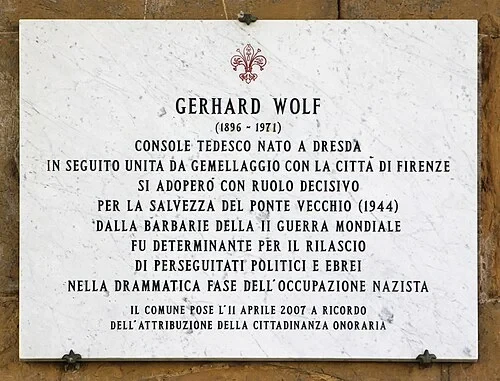 The Heart of the Bridge: Cellini and SurvivalPlaque to Consul Gerhard Wolf
This white marble plaque tells the somber story of the bridge's survival during one of Florence's darkest periods. In August 1944, as retreating German forces prepared to leave the city, they were ordered to blow up every bridge across the Arno to slow the Allied advance. Every other historic crossing, including the beautiful Ponte Santa Trinita, was reduced to rubble. However, the Ponte Vecchio was spared. The plaque honors German consul Gerhard Wolf, who utilized his diplomatic position and influence to persuade the military command that destroying this specific bridge would be a crime against art and history. Wolf was also credited with assisting Jewish citizens and political prisoners during the Nazi occupation. Because of these efforts, the bridge remained intact, though the buildings on either end were leveled to create a blockade. After the war, Wolf was made an honorary citizen of Florence in recognition of his role in preserving the city's most beloved landmark. The presence of this plaque ensures that visitors remember the bridge was not saved by chance, but by the deliberate and risky intervention of individuals who valued human heritage over military tactics.
Listen in the appPhoto: Sailko · CC BY 3.0
08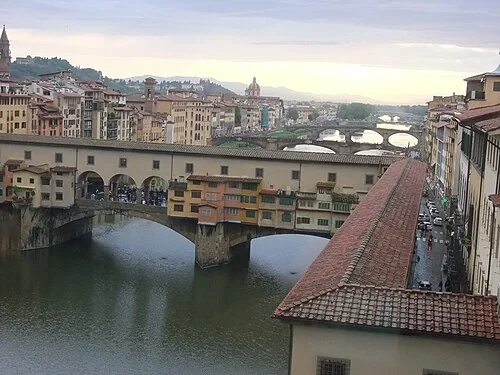 The Medici's Secret PathThe Vasari Corridor
Look up at the second level of the bridge and you will see a row of small, square windows running the entire length of the structure. This is the Vasari Corridor, a private elevated walkway built in 1565. Cosimo I de' Medici commissioned the architect Giorgio Vasari to construct this kilometer-long passage in just five months. Its purpose was entirely political; it connected the family’s government offices at the Palazzo Vecchio with their private residence at the Palazzo Pitti on the other side of the river. By using this corridor, the Medici could move across the heart of Florence without needing a security detail and without ever having to mingle with the common citizens or the smells of the street below. This was the ultimate expression of the family's power and their desire for privacy and safety. The corridor actually changes height as it moves across the bridge, wrapping around existing structures and providing the rulers with a vantage point from which they could watch their subjects unobserved. Today, it remains one of the most exclusive paths in the city, though it is now primarily used to house a significant collection of self-portraits belonging to the Uffizi Gallery.
Listen in the appDror Feitelson · CC BY-SA 3.0
09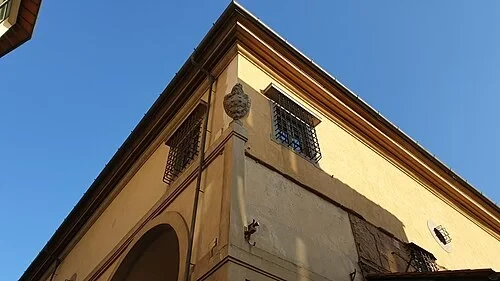 The Medici's Secret PathThe Medici Coat of Arms
On the corner of the elevated walkway, you can see a stone shield featuring six distinctive spheres, or 'palle.' This is the famous coat of arms of the Medici family, the merchant-bankers who rose to become the grand dukes of Tuscany. In the Renaissance, placing your family crest on a public building was more than just decoration; it was a form of political branding. By installing their crest on the Vasari Corridor and the Ponte Vecchio, the Medici signaled to everyone below that they literally lived above the laws and the crowds of the city. There are many legends about what the six balls represent, ranging from medicinal pills—referencing their name, which means 'doctors'—to coins or even dents in a shield from battle. Regardless of the origin, the symbol became synonymous with Florentine power. Its placement here, high above the main thoroughfare, reminded every merchant and traveler that they were crossing the river under the watchful eye of the ruling family. It served as a constant visual anchor for the Medici's surveillance over the city's most important commercial and strategic artery, marking the bridge as part of their private territory.
Listen in the appYair Haklai · CC BY-SA 4.0
10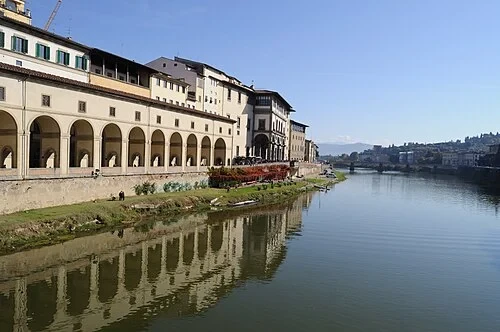 The Medici's Secret PathThe Three Arches
From a distance, the most striking feature of the Ponte Vecchio is its trio of wide, shallow arches. Supporting a massive weight of shops and the elevated corridor above, these three segmental arches represented a major leap forward in 14th-century engineering. The central arch spans 30 meters, while the two side arches are slightly smaller. Before this design was implemented, most bridges relied on heavy, semi-circular arches that required many thick pillars placed closely together in the water. Such designs were dangerous because the pillars acted like a dam, catching debris during floods and putting immense pressure on the structure. By using shallower, flatter arches, architect Neri di Fioravante was able to reduce the number of supports in the riverbed. This allowed the Arno to flow more freely underneath, significantly decreasing the risk of collapse during the city's frequent floods. This innovation was so successful that the bridge has stood for nearly seven hundred years, surviving countless storms and even the retreat of armies. The elegant curve of these stones is what allows the bridge to carry its heavy load while maintaining its graceful, low-slung appearance over the water.
Listen in the appAMANO Jun-ichi · CC BY 3.0
Ponte Vecchio
Frequently asked questions
How much does the guide cost?
Free app download. Listed guide price: $0.99. Guide price shown in the app. Audio guide only. Venue admission is separate.
Can I listen without internet?
Yes. Download the guide’s audio, images, and maps in the app before your visit. Your downloaded content is then available offline.
Can I listen in my language?
Stanza supports 15 languages. Check the app for the languages available for this guide.
Do I need to follow a schedule?
No. This is a self-guided experience. Choose your stops, pause whenever you like, and return to a story at your own pace.
At your own pace
Explore Ponte Vecchio.
Download Stanza, then search for “Ponte Vecchio”.
Free app download · Guide price shown in the app
Keep exploring
Nearby audio guides
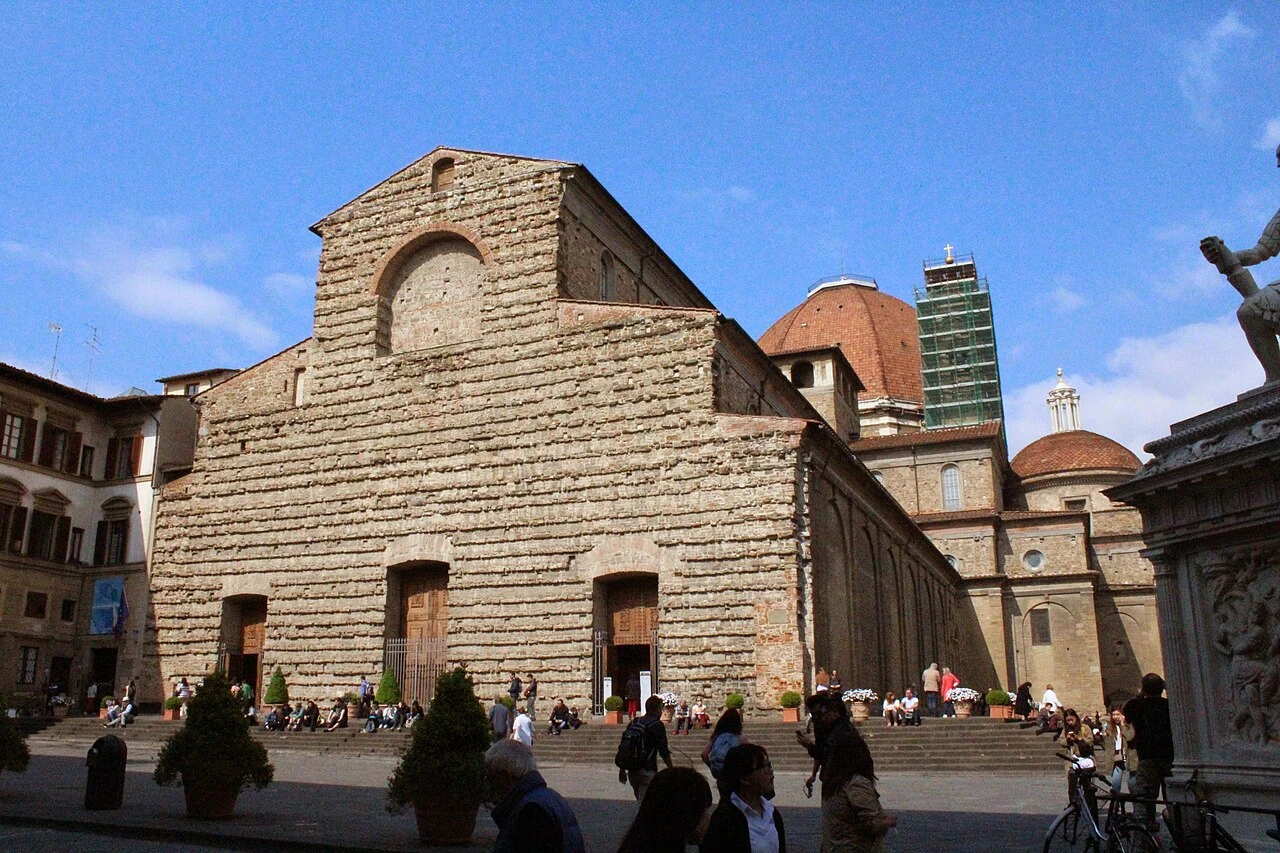
Florence
Basilica di San Lorenzo
Content & sources
Nelson Pérez · CC BY-SA 3.0
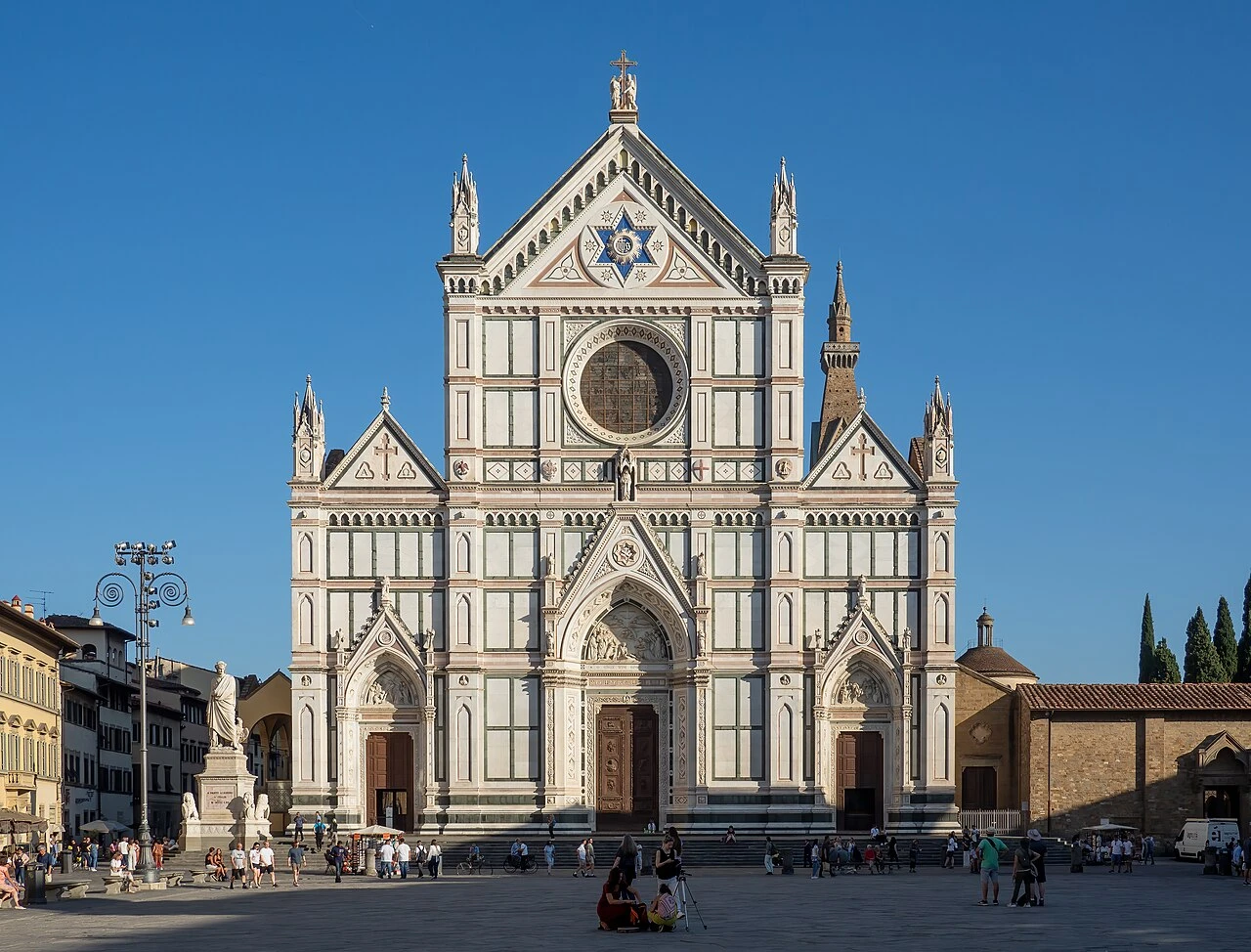
Florence
Basilica di Santa Croce
Content & sources
Photo: Rhododendrites · CC BY-SA 4.0
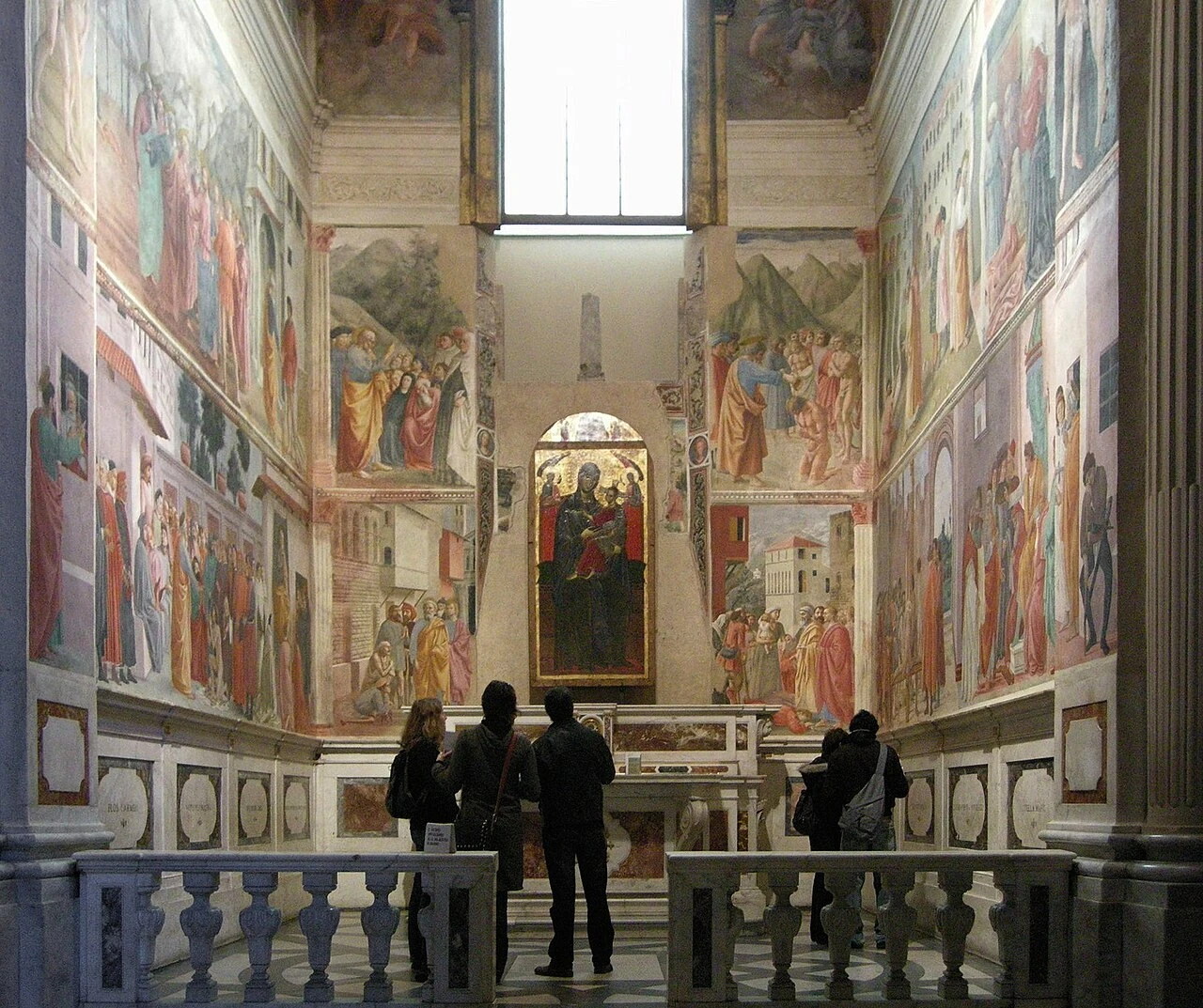
Florence
Brancacci Chapel
Content & sources
Masaccio, Masolino und Fra Filippo Lippi · CC BY 2.5
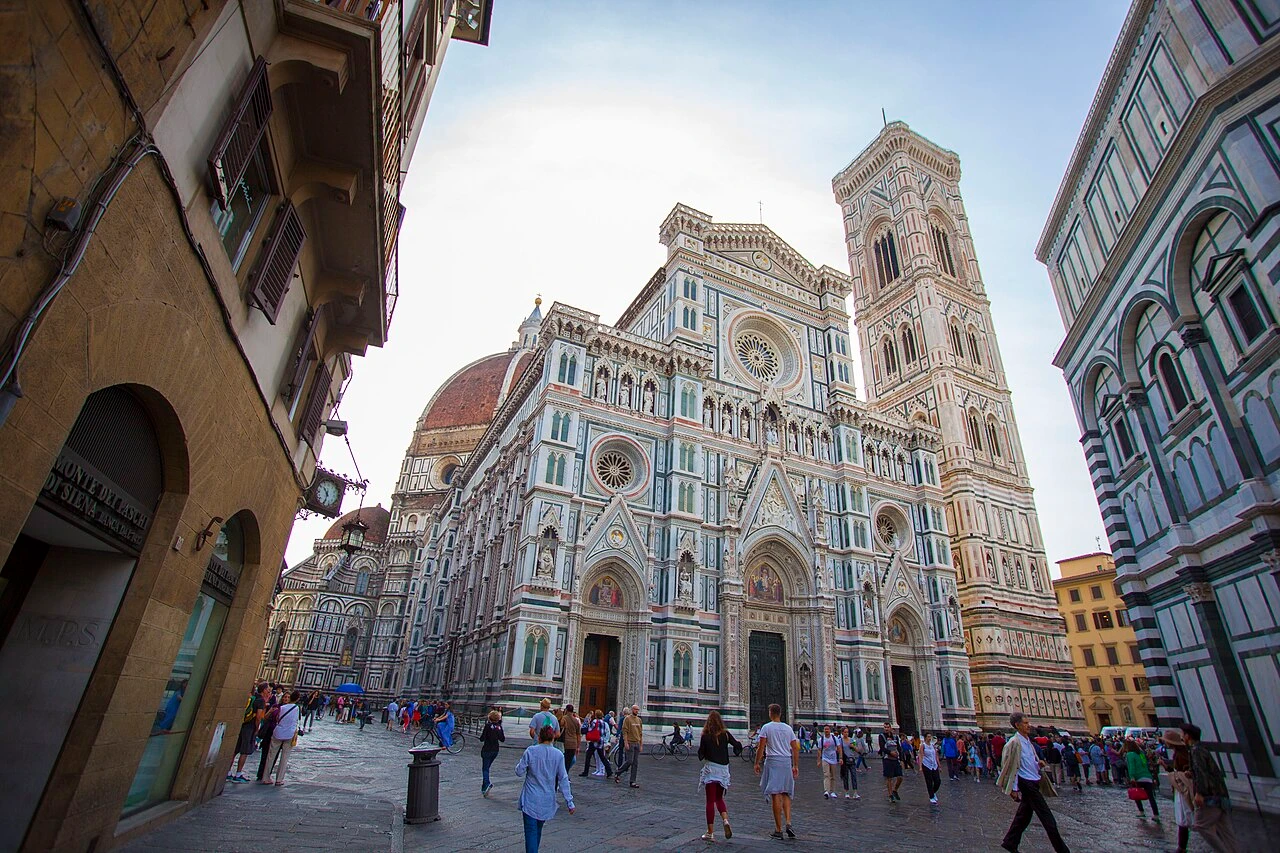
Florence
Cattedrale di Santa Maria del Fiore
Content & sources
Photo: ScareCriterion12 · CC BY-SA 4.0