Stanza · Audio guide
Castello Aragonese Audio Guide
A place to remember. A story to take with you.
Aragonese Castle is a castle built on a small tidal island east of Ischia at the northern end of the Gulf of Naples. The castle stands on a volcanic rocky islet that connects to the larger island of Ischia by…
Download Stanza, then search for “Castello Aragonese”.
About the tour
One guide. Your kind of visit.
Aragonese Castle is a castle built on a small tidal island east of Ischia at the northern end of the Gulf of Naples. The castle stands on a volcanic rocky islet that connects to the larger island of Ischia by a causeway.
Ready when you are.
- 01Get the free Stanza app.
iOS & Android
- 02Find your guide.
“Castello Aragonese”
- 03Download before you go.
Works offline
Audio guide / 14 narrated stops
Inside the guide
Get to know a few of the stories before you go. Open a stop to read more.
01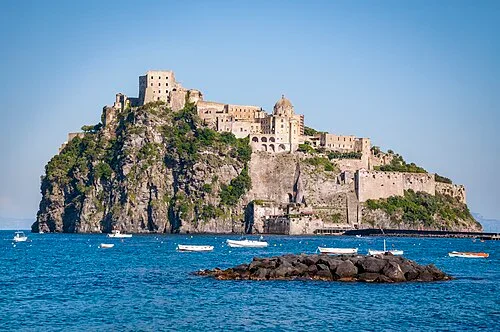 The Ponte Aragonese Causeway
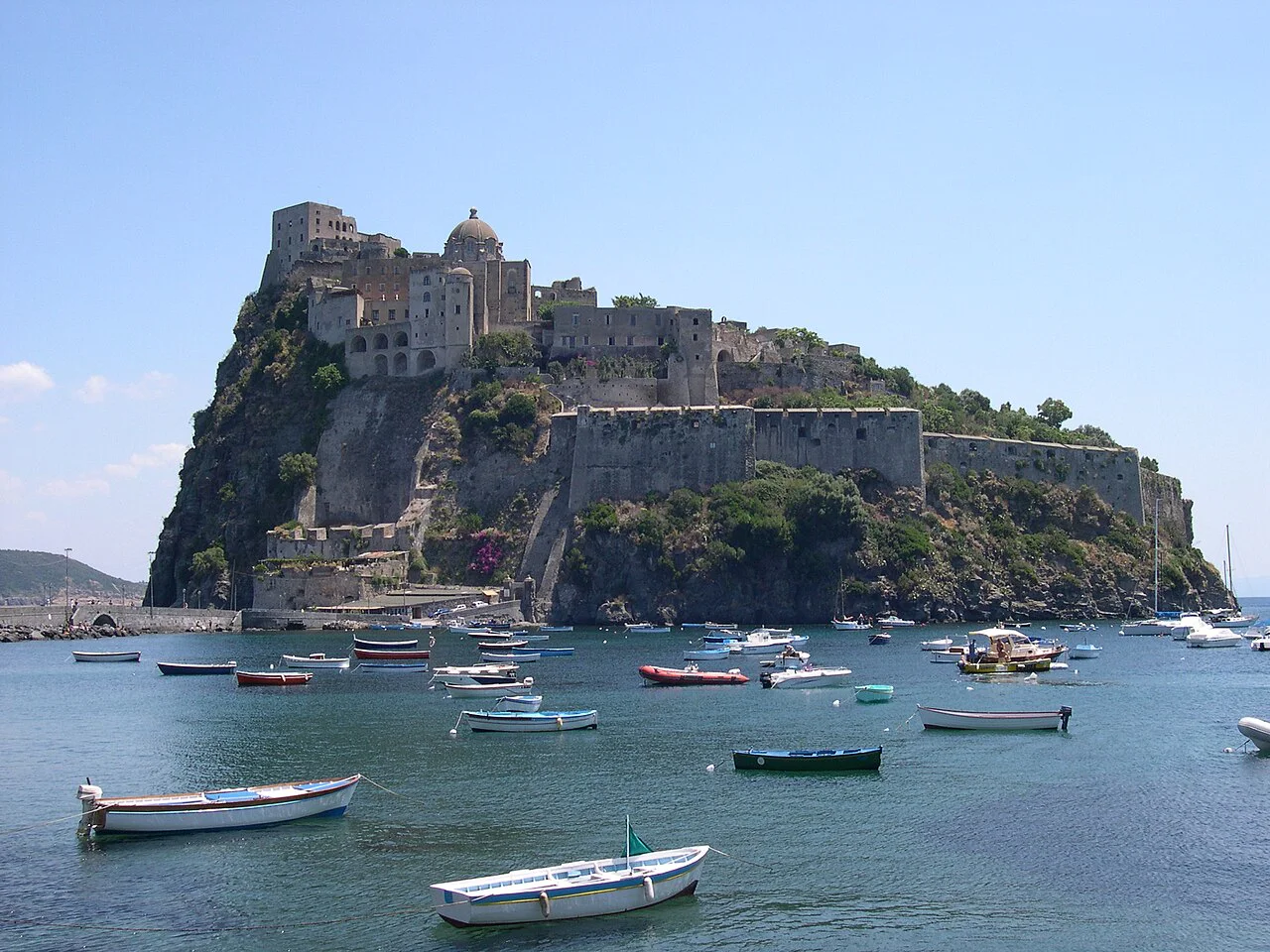
Castello Aragonese from Ischia Ponte
Welcome to the Castello Aragonese, the fortress of Ischia. The rock beneath it is older than anything built upon it: a bubble of magma that rose and slowly cooled into stone more than three hundred thousand years ago. Geologists call it a stagnation dome. The islet climbs sheer from the sea to about a hundred and thirteen metres. A stone causeway, two hundred and twenty metres long, ties it to the old village of Ischia Ponte. On one side open water, on the other the green coast of Ischia itself. That isolation is the thread of everything here. The same rock that kept attackers out became a refuge, then a walled town, and finally a prison.
Luca Scognamillo · CC BY-SA 4.0
02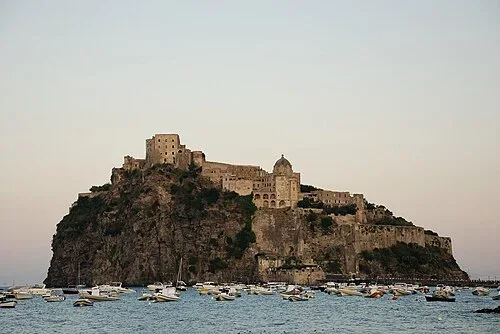 The Ponte Aragonese Causeway
The Rock's Deep Origins
The first castle on this rock went up long before any wall still standing. In 474 BC Hiero the First, tyrant of Syracuse, sailed his fleet to help the people of Cumae in their war against the Tyrrhenians. His ships helped win the battle off Lacco Ameno, and the grateful Cumaeans gave him the whole island in return. He raised the first fortress here, with two tall towers to watch the movements of enemy fleets. After him the rock was occupied by the Parthenopeans, the ancient inhabitants of Naples. In 315 BC the Romans took it from them and founded a colony called Aenaria. The fortress served as a defensive outpost, with a few dwellings and high towers for keeping watch. Over the centuries that followed, the rock kept doing what it was made for: sheltering people against raiders who arrived by sea.
Yellow.Cat from Roma, Italy · CC BY 2.0
03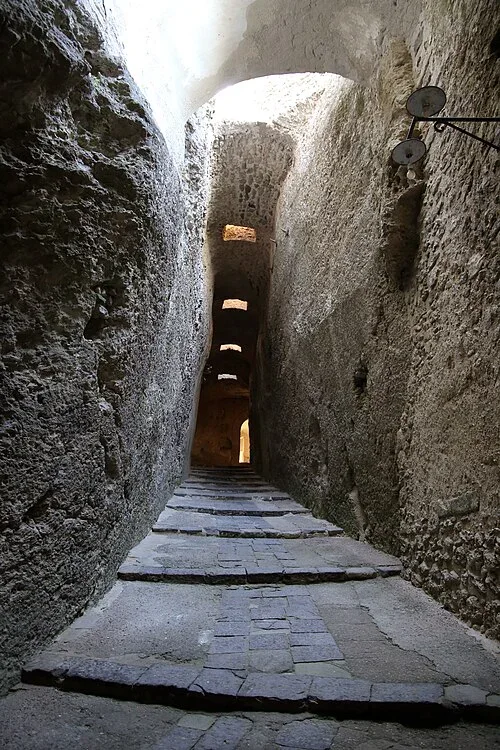 The Rock-Cut Aragonese Tunnel
The Rock-Cut Access Tunnel
Four hundred metres of passage, cut with hammer and chisel through the living rock. Until the middle of the fifteenth century the only way up was a stairway on the north side of the islet, open to the sea and to anyone who wished harm. In 1441 Alfonso the Fifth of Aragon changed that. He rebuilt the citadel, giving the castle its modern shape: a quadrangular block ringed by walls with four towers. The old wooden bridge gave way to a causeway of stone. As part of the same works, his men drove this tunnel through the bedrock. The tall openings that light the way had a second job. Through them the defenders dropped boiling oil, molten lead and stones on anyone who got that far. Inside these walls, nearly the whole population of Ischia could find shelter when pirates raided.
Listen in the appPhoto: Sailko · CC BY-SA 4.0
04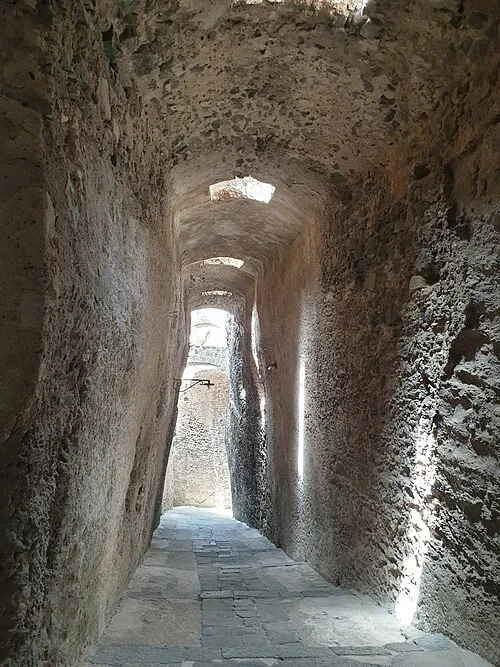 The Rock-Cut Aragonese Tunnel
Inside the Passage
The walls here were never built; they were carved. The whole corridor is hollowed out of the volcanic rock, and daylight still falls through the tall shafts cut above. Since the 1970s there has been an easier way up as well. An elevator carved into the rock climbs to sixty metres above the sea. From the top of the tunnel the old route continues in the open: a mule track that climbs to the summit. Smaller paths branch off it toward the various buildings and gardens of the castle.
Listen in the appPhoto: Paola3009 · CC BY-SA 4.0
05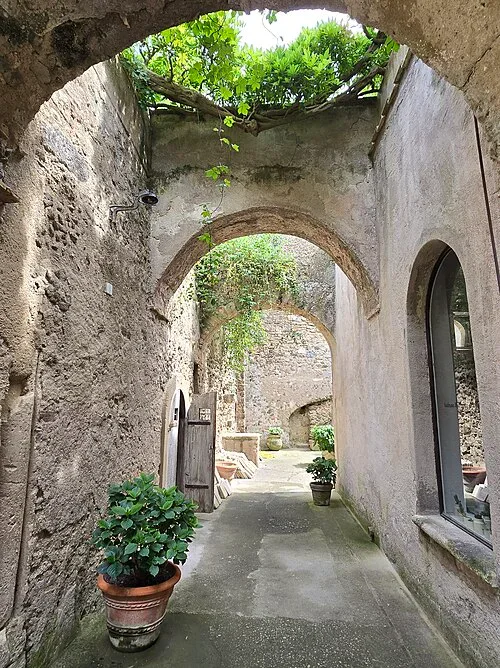 The Convent and Church of the Immacolata
Convent of St. Mary of Consolation
Behind these arches, with potted plants and a grapevine shading the passage, the rock once held an entire town. At its height, in the late sixteenth century, nearly two thousand families lived on the islet. Alongside them lived the Poor Clares, Basilian monks of the Greek rite, the bishop with his seminary, and the prince with his garrison. Thirteen churches served them all, the cathedral among them. The convent of St Mary of Consolation was founded in 1575 by Beatrice Quadra, widow of Muzio d'Avalos. She settled here with seven nuns from a hermitage on Mount Epomeo. A courtyard like this was the daily working space of a community that lived its whole life on the rock.
Listen in the appPhoto: Rigorius · CC BY-SA 4.0
06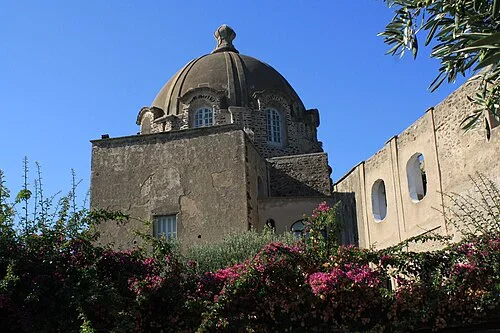 The Convent and Church of the Immacolata
Church of the Immacolata
The dome of the Immacolata rules over every other roof on the castle, and from beside it the view runs down to the village of Ischia Ponte. The church was begun in 1737, on the site of an older chapel dedicated to Saint Francis, at the wish of Abbess Giovanna Battista Lanfreschi of the neighbouring convent. The undertaking proved far more expensive than the nuns had planned. They sold even the convent's silver to meet the costs, and it still was not enough. The facade and the interiors were never finished. The walls remain plain white plaster to this day. The plan is a Greek cross, with a presbytery and an entrance porch added. Above it all sits the dome, resting on a circular drum pierced by eight windows.
Listen in the appFrancesco Chiarosi · CC BY-SA 4.0
07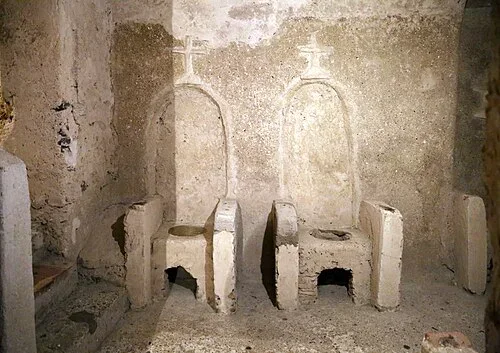 The Putridarium of the Poor Clares
The Putridarium
This low underground room served the convent as a cemetery. Along the walls run stone seats, each with a carved arch and a cross above it. A deceased nun was laid on one of these seats, seated upright with her trunk held erect. In that position the body slowly dried and mummified. The liquids of decomposition drained into vessels placed beneath the seats. When only the skeleton remained, the bones were gathered and moved to an ossuary. It was a practical system, devised by a community that meant to keep its dead close.
Listen in the appPhoto: Sailko · CC BY-SA 4.0
08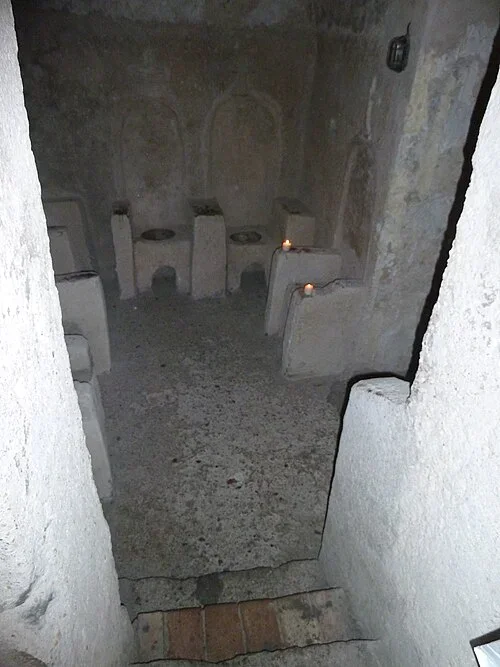 The Putridarium of the Poor Clares
The Sisters' Vigil
The same room had another use while the bodies rested here. Every day the sisters came down to pray among their dead, meditating on death and on how brief earthly life is. By the second half of the eighteenth century the danger of pirates had passed, and families began leaving the castle for easier homes in the island's towns, closer to their fields and their fishing. In 1806 the convents were suppressed, and the nunnery of the Clarisses closed with them. A ritual that had lasted for centuries came to an end.
Listen in the appPhoto: Abxbay · CC BY-SA 4.0
09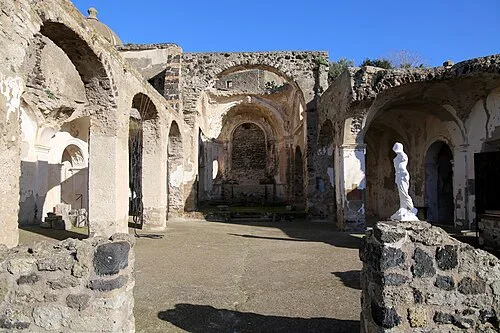 The Ruined Cathedral and Crypt of Nobles
Ruined Cathedral of the Assunta
In 1301 the Arso crater erupted and destroyed the town of Geronda on the shore below, where the pine wood stands today. The islanders fled to this rock, and stayed. What had been a fortress became a true refuge, a place to live. Here they built a cathedral as an ex-voto, a work of thanksgiving for survival, to replace the church the eruption had destroyed. It is a basilica with three naves. In December 1509 it held a wedding. Vittoria Colonna, the poet, married Fernando Francesco d'Avalos, Marquis of Pescara and commander of Emperor Charles V's troops. Vittoria lived on the rock for decades, and the best writers and artists of the century gathered around her, Michelangelo and Ariosto among them. In 1809 the islet, then held by the French, was besieged and shelled by British troops and almost completely destroyed. The cathedral lost its roof and never regained it. Its walls now stand open to the sky, and classical concerts are played inside.
Listen in the appPhoto: Sailko · CC BY-SA 4.0
10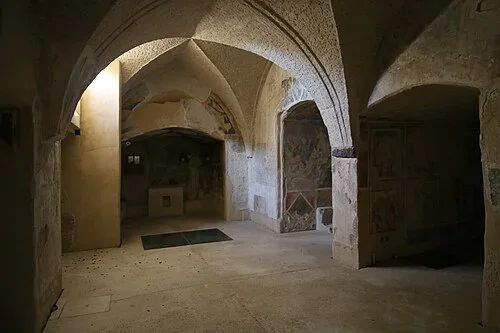 The Ruined Cathedral and Crypt of Nobles
Crypt of the Nobles
Beneath the ruined church lies a vaulted crypt, cool and dim. This was the burial place of the noble families of the islet. On its walls and pillars, traces of medieval frescoes still show through: saints and sacred figures, often fragmentary, awaiting restoration. Upstairs the cathedral stands roofless under the sun. Down here, the oldest painting on the rock has survived in the shadow.
Listen in the appPhoto: Sailko · CC BY-SA 4.0
- 11
The Bourbon Political Prison
The fortress that became a Bourbon prison for the conspirators of the Risorgimento.
- 12
The Grated Door
Rusted bars, a petition from the islanders, and the prison's final closure in 1890.
- 13
Terrace of the Olive Trees
Sold at auction in 1912, the castle stands today as the island's most visited monument.
- 14
The Panoramic Loggia
What one hard-to-reach rock can hold: the whole story, seen from the loggia.
Castello Aragonese
Frequently asked questions
How much does the guide cost?
Free app download. Listed guide price: $0.99. Guide price shown in the app. Audio guide only. Venue admission is separate.
Can I listen without internet?
Yes. Download the guide’s audio, images, and maps in the app before your visit. Your downloaded content is then available offline.
Can I listen in my language?
This audio guide is available in 15 languages, including English.
Do I need to follow a schedule?
No. This is a self-guided experience. Choose your stops, pause whenever you like, and return to a story at your own pace.
At your own pace
Explore Castello Aragonese.
Download Stanza, then search for “Castello Aragonese”.
Free app download · Guide price shown in the app
Keep exploring
Nearby audio guides
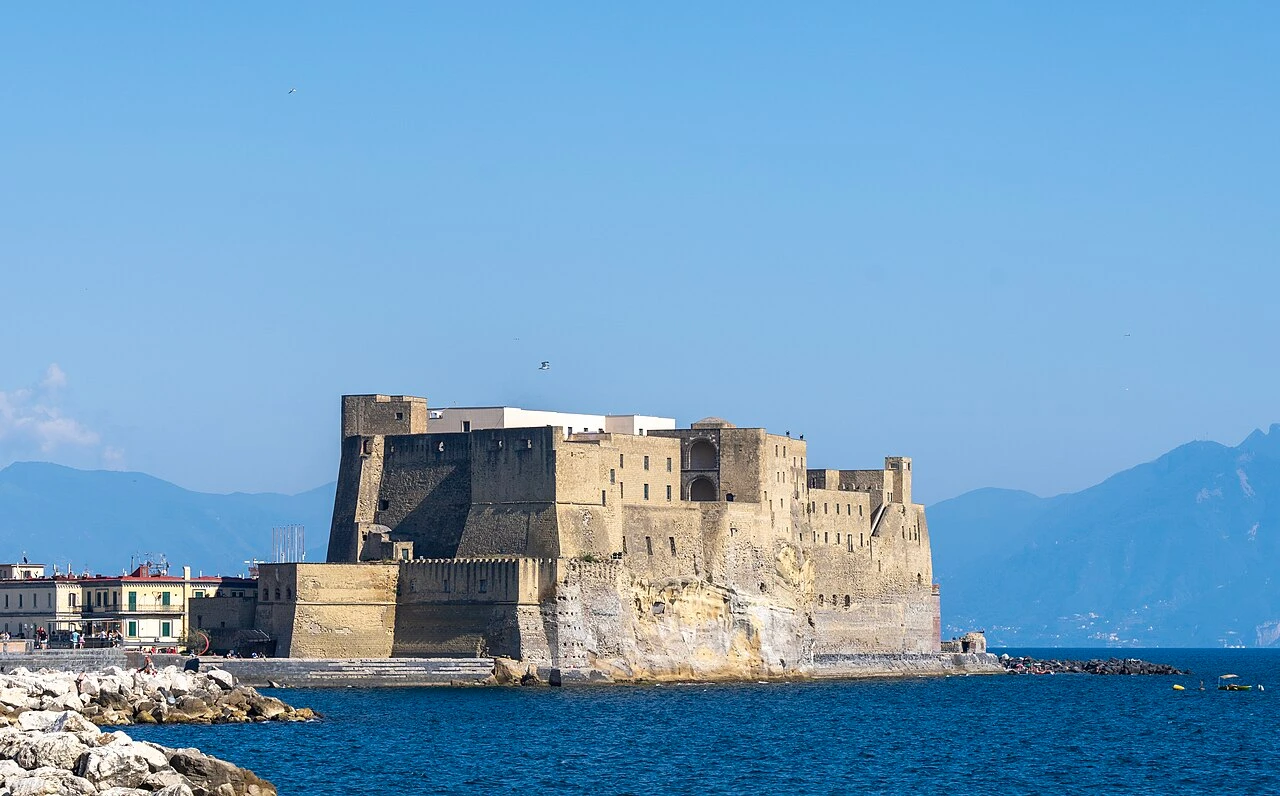
Naples · 26 km
Castel dell'Ovo
Content & sources
Paestum · CC BY-SA 4.0
Naples · 26 km
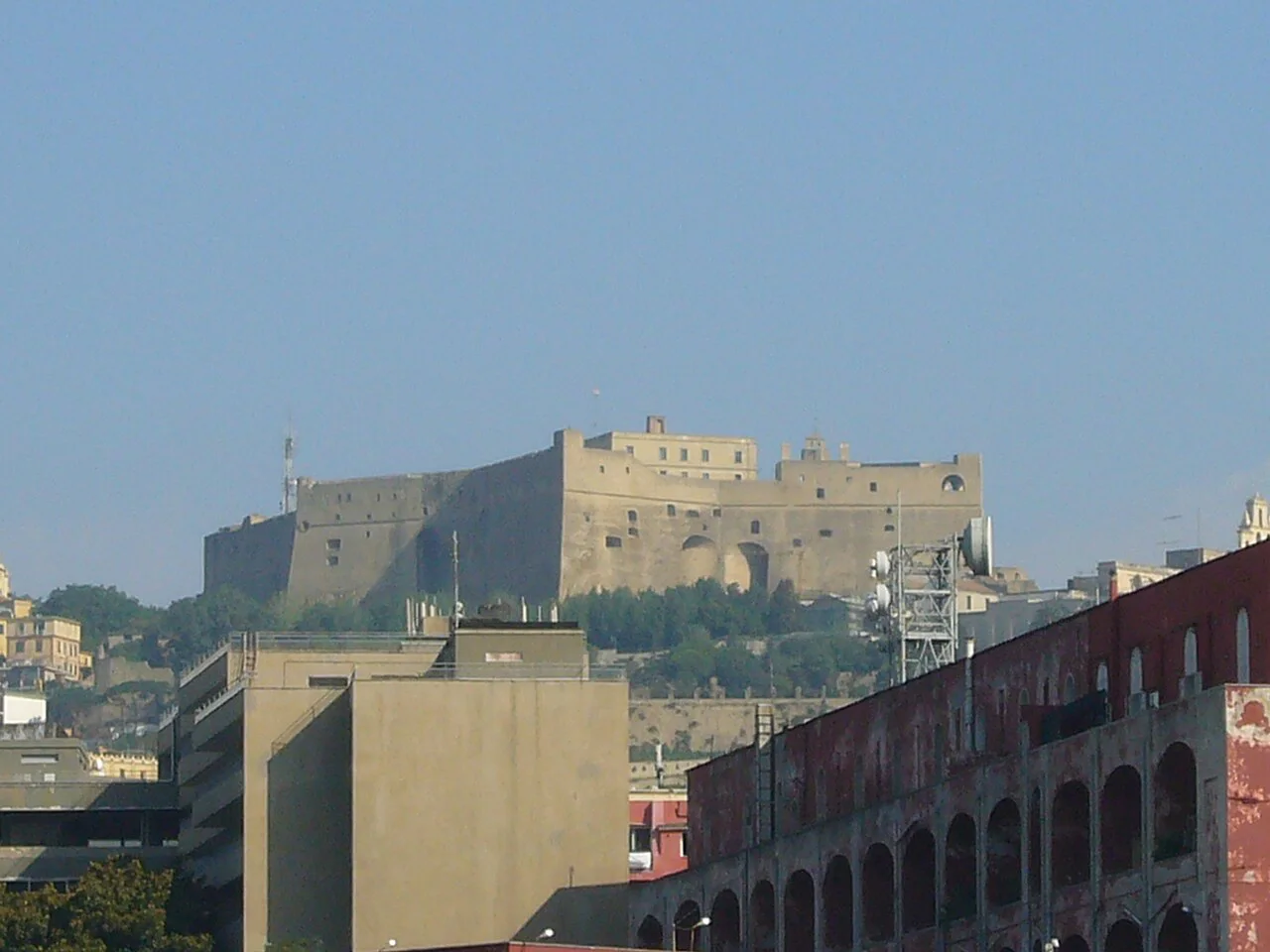
Castel Sant'Elmo
Content & sources
Photo: Lalupa · CC BY 3.0
Naples · 27 km
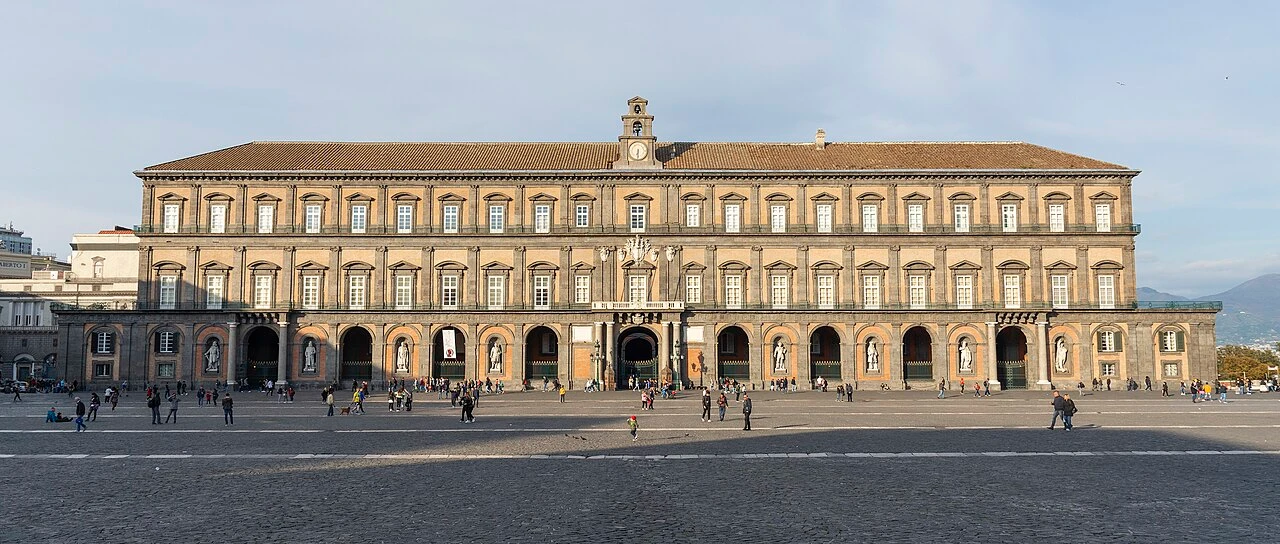
Royal Palace of Naples
Content & sources
Photo: Sordelli · CC BY-SA 3.0
Naples · 27 km
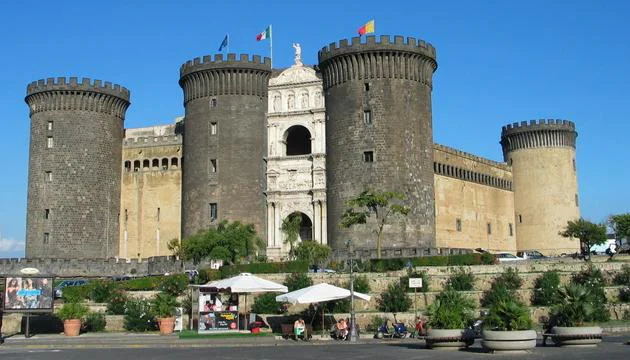
Maschio Angioino
Content & sources
Photo: IgnisFatuus · CC BY-SA 2.5