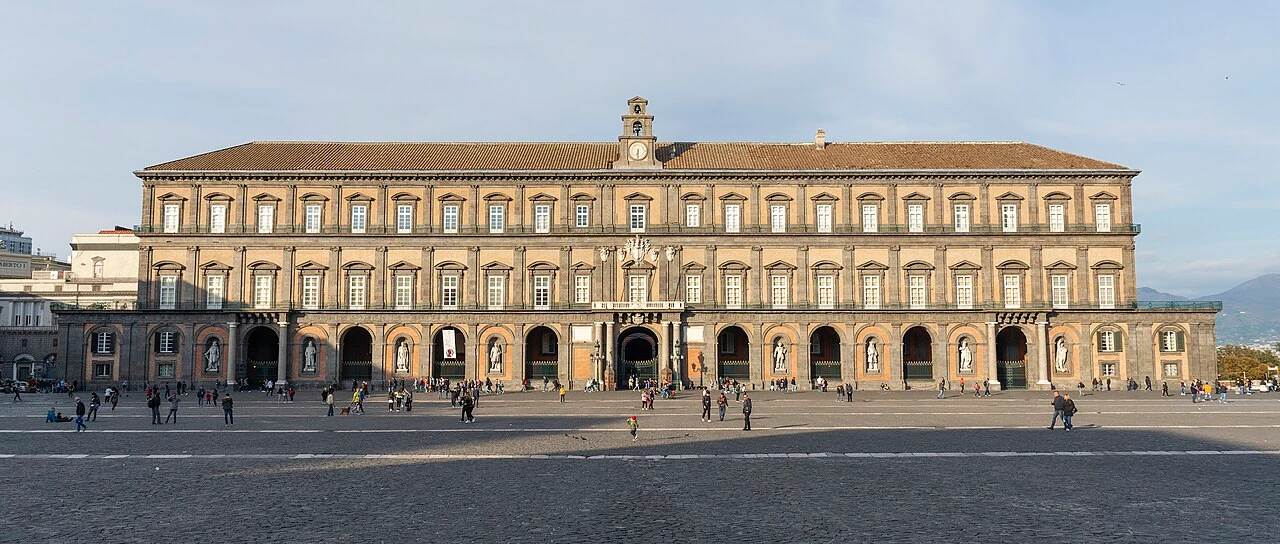
Stanza · Audio guide
Palazzo Reale di NapoliAudio guide
A place to remember. A story to take with you.
This historic 17th-century palace served as the residence of the Spanish viceroys and later the Bourbon kings of the Two Sicilies. It currently functions as a museum featuring an extensive collection of…
Download Stanza, then search for “Palazzo Reale di Napoli”.
About the tour
One guide. Your kind of visit.
This historic 17th-century palace served as the residence of the Spanish viceroys and later the Bourbon kings of the Two Sicilies. It currently functions as a museum featuring an extensive collection of period furniture, paintings, and tapestries.
Ready when you are.
- 01Get the free Stanza app.
iOS & Android
- 02Find your guide.
“Palazzo Reale di Napoli”
- 03Download before you go.
Works offline
Audio guide / 15 narrated stops
Inside the guide
Get to know a few of the stories before you go. Open a stop to read more.
01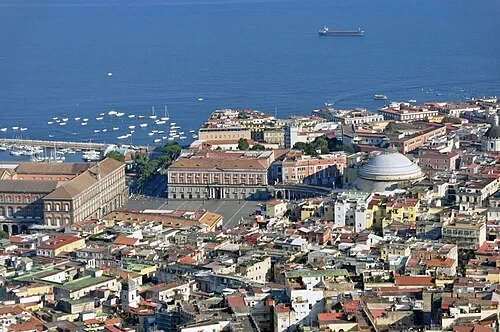 Piazza del Plebiscito and the Royal FacadeThe Royal Palace and Square
Welcome to the Royal Palace of Naples, a massive structure that served as the seat of power for four different dynasties over more than two and a half centuries. The impressive facade stretches 169 meters along Piazza del Plebiscito, anchoring the city’s most significant public space. Construction began in 1600 under the direction of the renowned architect Domenico Fontana. Originally, the Spanish viceroy ordered the construction to provide suitable accommodation for King Philip III of Spain. Ironically, although the project was launched specifically for his benefit, the king famously never set foot inside the building. Over the subsequent decades and centuries, the palace continued to evolve as successive rulers added new wings, renovated interiors, and updated the exterior to match changing architectural tastes. This resulted in a complex layout that reflects the transition from Spanish rule to the Bourbon monarchy, and later the French and Savoy eras. The building you see today is the result of 250 years of continuous development and political change, marking the site where major decisions affecting the Mediterranean were made.
© Ra Boe / Wikipedia · CC BY-SA 3.0 de
02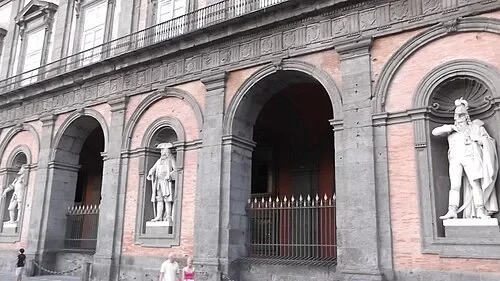 Piazza del Plebiscito and the Royal FacadeThe Kings of Naples
The eight statues standing in the niches of the palace facade were a later addition to the building, installed in 1888 under the orders of King Umberto I. These figures were commissioned to create a visible narrative of the various royal lines that had governed Naples over several centuries. Starting from the left, you can identify figures such as Roger the Norman, Frederick II of Swabia, and Charles I of Anjou. The sequence continues through the major shifts in Neapolitan history, concluding with Victor Emmanuel II, the first king of a unified Italy. Each statue represents a different dynasty, emphasizing a sense of historical continuity and legitimacy for the newly formed Italian state. By placing these rulers on the facade facing the city's largest public square, the palace served as a public gallery of royal power. The sculptors used various artistic styles to distinguish each king, though they are all scaled to fit the uniform architectural niches of Fontana’s original design, looking out over the city as a display of historical heritage.
karel291 · CC BY 3.0
03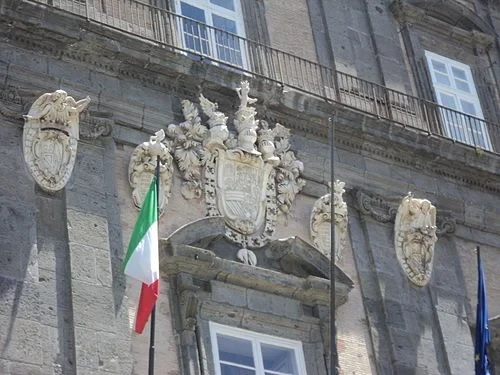 Piazza del Plebiscito and the Royal FacadeCoat of Arms of Philip III of Habsburg
High above the main entrance, you can see the high-relief heraldic carvings representing the complex ancestry of the families who resided here. These shields and symbols denote the power of the Bourbon and Savoy dynasties, serving as a formal introduction to the royal status of the inhabitants. Originally built as a residence for the Spanish viceroys, the palace eventually became a primary home for the Kings of Naples. The transition of the building from a colonial administrative center to a domestic royal residence is a key part of its story. One significant historical event occurred here in 1869, when the palace served as the birthplace of Victor Emmanuel III, who would eventually become the King of Italy. The intricate carvings remain well-preserved, showing the various lions, eagles, and crowns associated with European nobility. These symbols acted as a visual claim of authority, visible to everyone who approached the main gates from the square outside, marking the building's identity as a house of international importance.
Listen in the appPhoto: IlSistemone · CC BY-SA 3.0
04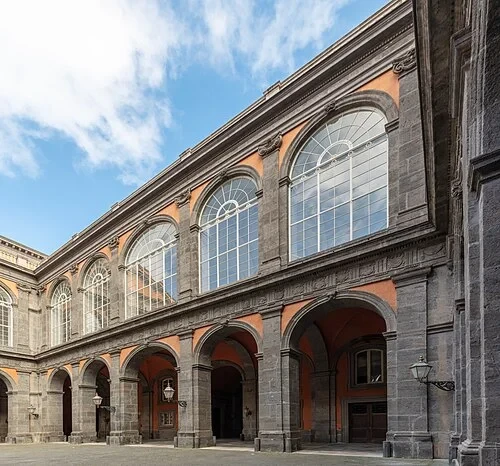 The Inner CourtyardsThe Courtyard of Honour
Passing through the main entrance leads you into the Courtyard of Honour, the architectural heart of the building as envisioned by Domenico Fontana in the early seventeenth century. The layout is a large square surrounded by a double row of arches, a classic design that emphasizes symmetry and order. The lower level consists of a portico with sturdy pillars, while the upper level provides access to the grand apartments. During a major restoration project in 1994, researchers made a surprising discovery beneath the stone floor of this courtyard. They found a hidden sixteenth-century well that predates the palace itself. Interestingly, the well had been used as a convenient dump for rubbish and construction debris from the moment the palace was first built. Excavations revealed layers of discarded items that offer a rare look at the everyday life and habits of the people who inhabited the site before it became a royal residence. The courtyard remains a quiet central hub, connecting the various wings of the vast palace and providing a sense of structural balance.
Listen in the appDiego Delso · CC BY-SA 4.0
05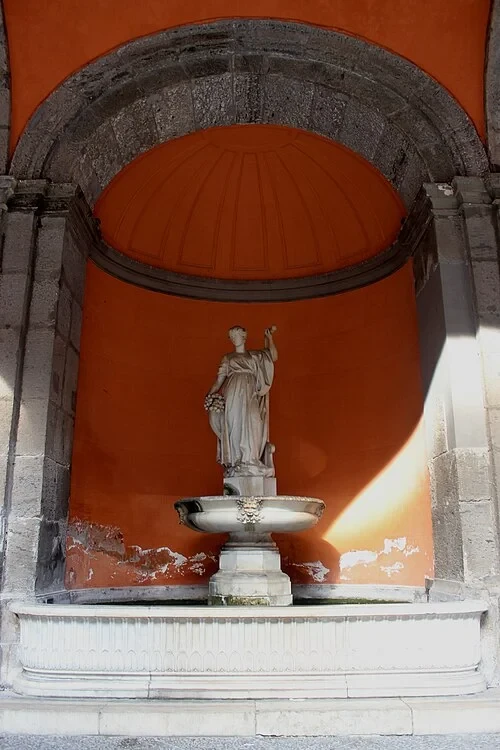 The Inner CourtyardsFountain of Fortune
Within a deep niche of the Courtyard of Honour sits the Fountain of Fortune, an eighteenth-century sculptural work. The central figure depicts Fortune holding a large cornucopia, a traditional symbol of abundance and prosperity. While the fountain certainly added an element of artistic beauty to the courtyard, it also served a very practical purpose. In the centuries before modern plumbing, such fountains were essential water sources for the hundreds of servants, guards, and administrative staff who once populated the palace complex. The steady flow of water was a luxury that few in the city could access so easily. The design of the niche creates a theatrical backdrop for the water feature, integrated into the stone walls of the courtyard. The figure is posed dynamically, appearing to offer the contents of the horn of plenty to the viewers below. This blend of functionality and high art is a recurring theme throughout the palace, where even the most basic infrastructure was expected to reflect the status and wealth of the ruling monarchy.
Listen in the appMiguel Hermoso Cuesta · CC BY-SA 4.0
06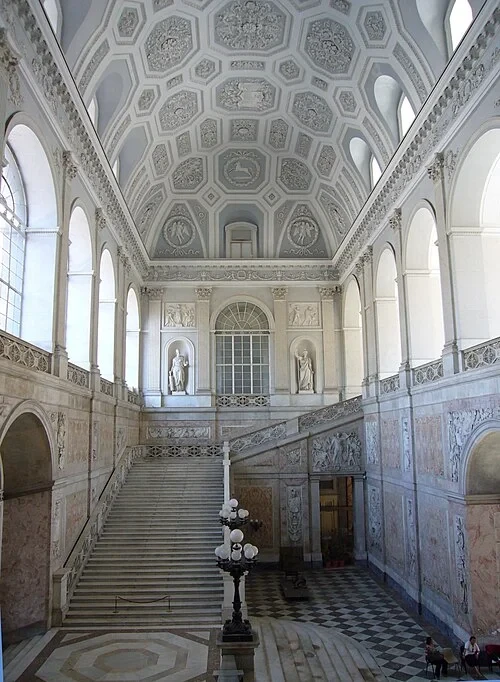 The Grand Staircase of HonourThe Grand Staircase
The Scalone d’Onore, or Grand Staircase of Honour, is a masterwork of Neoclassical design by the architect Gaetano Genovese. It was constructed following a devastating fire in 1837 that destroyed a significant portion of the palace's interior. The intention behind this new staircase was to create a monumental entrance that would immediately impress visiting dignitaries and heads of state. Notice the stark contrast between the smooth white marble of the steps and the intricate, colorful stucco decorations that adorn the vaulted ceiling above. The space is vast and airy, filled with natural light that highlights the precision of the masonry work. The wide, shallow steps were designed to allow royal guests to ascend slowly and with dignity while wearing heavy formal attire. As you move upward, the ceiling reveals a complex network of geometric patterns and classical motifs that were meticulously applied in the mid-nineteenth century. This staircase replaced a much smaller, darker passage, transforming the visitor's initial experience into one of light and grandeur that matched the ambitious scale of the renovated royal apartments.
Listen in the appPhoto: Lalupa · CC BY-SA 3.0
07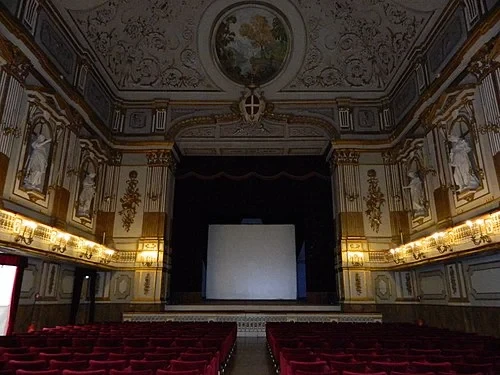 The Court TheatreThe Court Theatre
This small performance space, built in 1768, was the private theatre of the Bourbon kings. Ferdinand IV was particularly known for his love of music and opera, often hosting intimate performances here for his family and high-ranking members of the court. The theatre was designed to be a miniature version of the great opera houses of Europe, featuring a semi-circular arrangement of seats and a lavishly decorated royal box. However, the history of the room was nearly lost during World War II when the palace was heavily damaged by aerial bombardment in 1943. Much of the original decoration was destroyed, requiring a monumental restoration project in the 1950s. Craftspeople worked tirelessly to return the theatre to its original gilded splendor, using historical records to recreate the delicate wood carvings and painted panels. Today, it stands as a faithful restoration of eighteenth-century court life, where the elite gathered to escape the pressures of politics and enjoy the latest musical compositions in a setting of gold leaf and velvet.
Listen in the appPhoto: IlSistemone · CC BY-SA 3.0
08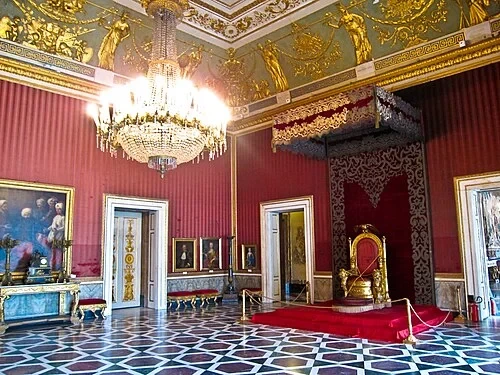 The Royal Apartments and State RoomsThe Throne Room
At the heart of the palace is the Throne Room, the site where the most important state ceremonies and official audiences took place. The centerpiece is the throne itself, which sits on a raised platform beneath a massive canopy made of crimson velvet and gold embroidery. This throne was used by the Bourbon kings and later by the rulers of the Savoy dynasty. Looking upward, the ceiling features frescoes dating from the early 1800s, depicting scenes that celebrate the virtues of the monarchy. One of the most prominent portraits in the room is that of King Ferdinand I, who was the first monarch to rule the United Kingdom of the Two Sicilies from this very chamber. The room was designed to project absolute power, with every gilded detail and large-scale painting reinforcing the divine right and authority of the king. The heavy chandeliers and polished floors further enhance the formal atmosphere. For centuries, this was the room where ambassadors were received and where the fate of the kingdom was often decided through royal decree and formal ceremony.
Listen in the appArmando Mancini · CC BY-SA 2.0
09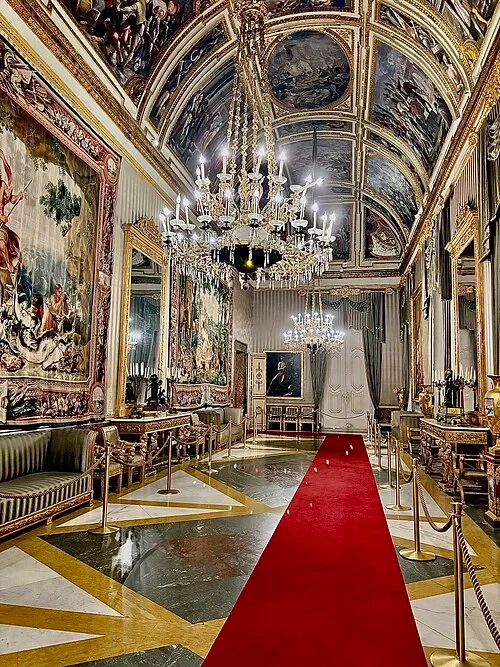 The Royal Apartments and State RoomsThe Royal Ambulatory
This long ambulatory circles the Courtyard of Honour on the 'piano nobile,' or noble floor of the palace. It served as a vital transition space between the various grand reception rooms and the private apartments of the royal family. The gallery is notable for its sequence of large windows that flood the space with light, offering views down into the courtyard. Along the walls, you will see a collection of seventeenth-century tapestries and elaborate glass chandeliers that once illuminated evening gatherings. In the heyday of the court, this was the primary place for courtiers to promenade and socialise between official ceremonies. It was a space for political maneuvering and gossip, where the latest news from across Europe would be discussed by the kingdom's elite. The marble floors and decorative arches create a rhythmic architectural pattern that stretches the full length of the wing. Unlike the formal power displayed in the Throne Room, the ambulatory was a more fluid environment, designed to facilitate the complex social interactions that were essential to the life of a royal court.
Listen in the appPhoto: Matmoga · CC BY 4.0
10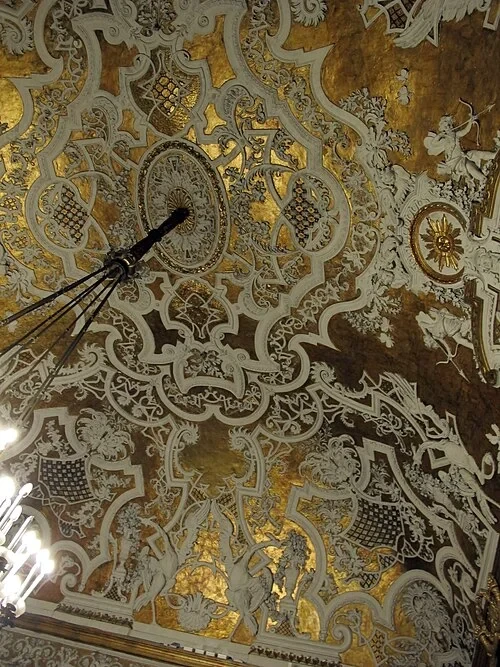 The Royal Apartments and State RoomsThe Queen's Room Ceiling
Gazing upward in the private apartments reveals a shift in artistic style. The intricate Rococo stucco work on this ceiling is far more delicate than the formal, rigid power displayed in the public state rooms. Here, you see fine gold leaf accents and playful figures of cherubs floating amidst swirling floral patterns. This style represents the intimate luxury preferred by the queens of Naples, who often had a significant influence on the interior design of their personal quarters. The decorations were intended to create a more relaxed and comfortable environment, away from the heavy protocol of the throne room and the grand gallery. The use of light colors and organic shapes is typical of the mid-eighteenth century, moving away from the heavier Baroque traditions. These ceilings were often the work of specialized artisans who traveled across Europe to bring the latest Parisian and Viennese tastes to the Neapolitan court. The preservation of these details allows us to see how royal life was lived in private, where the architecture was designed to please the personal tastes of the royal family rather than to intimidate visiting dignitaries.
Listen in the appPhoto: Sailko · CC BY 3.0
Palazzo Reale di Napoli
Frequently asked questions
How much does the guide cost?
Free app download. Listed guide price: $3.99. Guide price shown in the app. Audio guide only. Venue admission is separate.
Can I listen without internet?
Yes. Download the guide’s audio, images, and maps in the app before your visit. Your downloaded content is then available offline.
Can I listen in my language?
Stanza supports 15 languages. Check the app for the languages available for this guide.
Do I need to follow a schedule?
No. This is a self-guided experience. Choose your stops, pause whenever you like, and return to a story at your own pace.
At your own pace
Explore Palazzo Reale di Napoli.
Download Stanza, then search for “Palazzo Reale di Napoli”.
Free app download · Guide price shown in the app
Keep exploring
Nearby audio guides
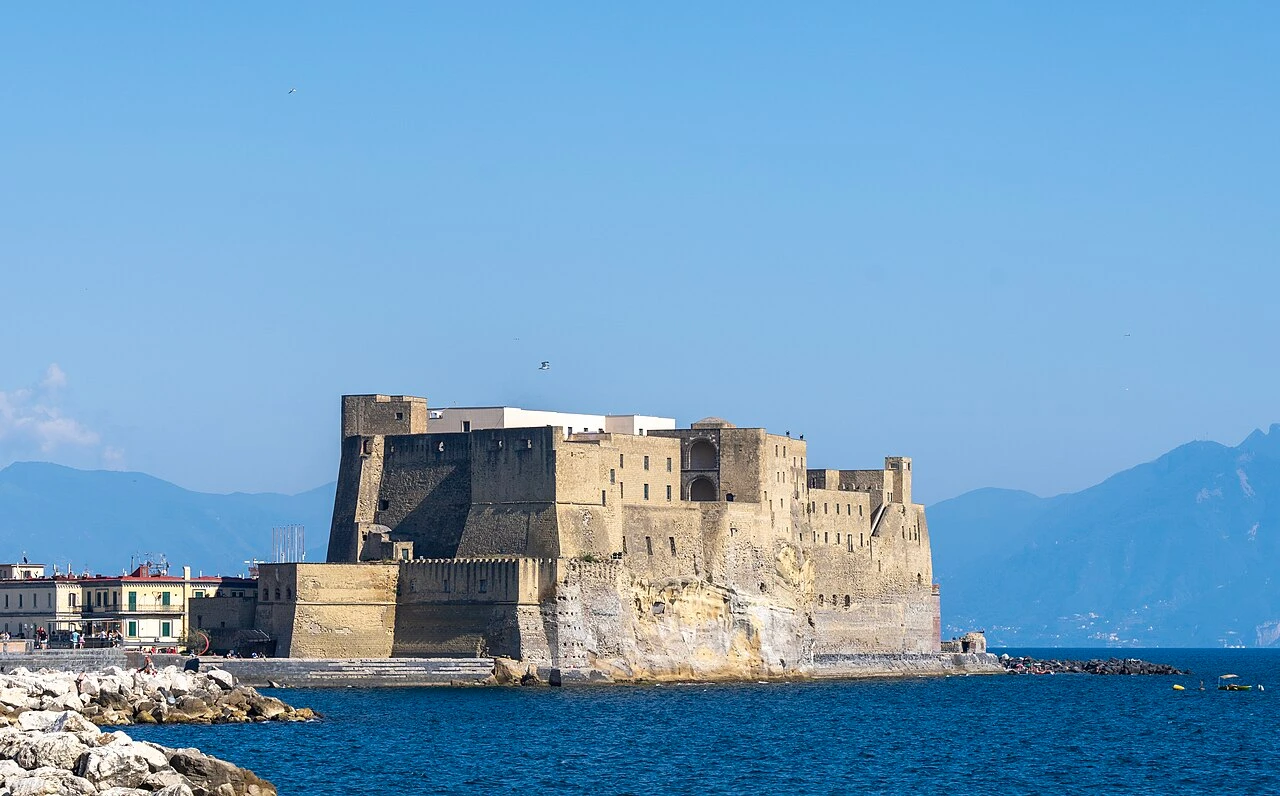
Naples
Castel dell'Ovo
Content & sources
Paestum · CC BY-SA 4.0
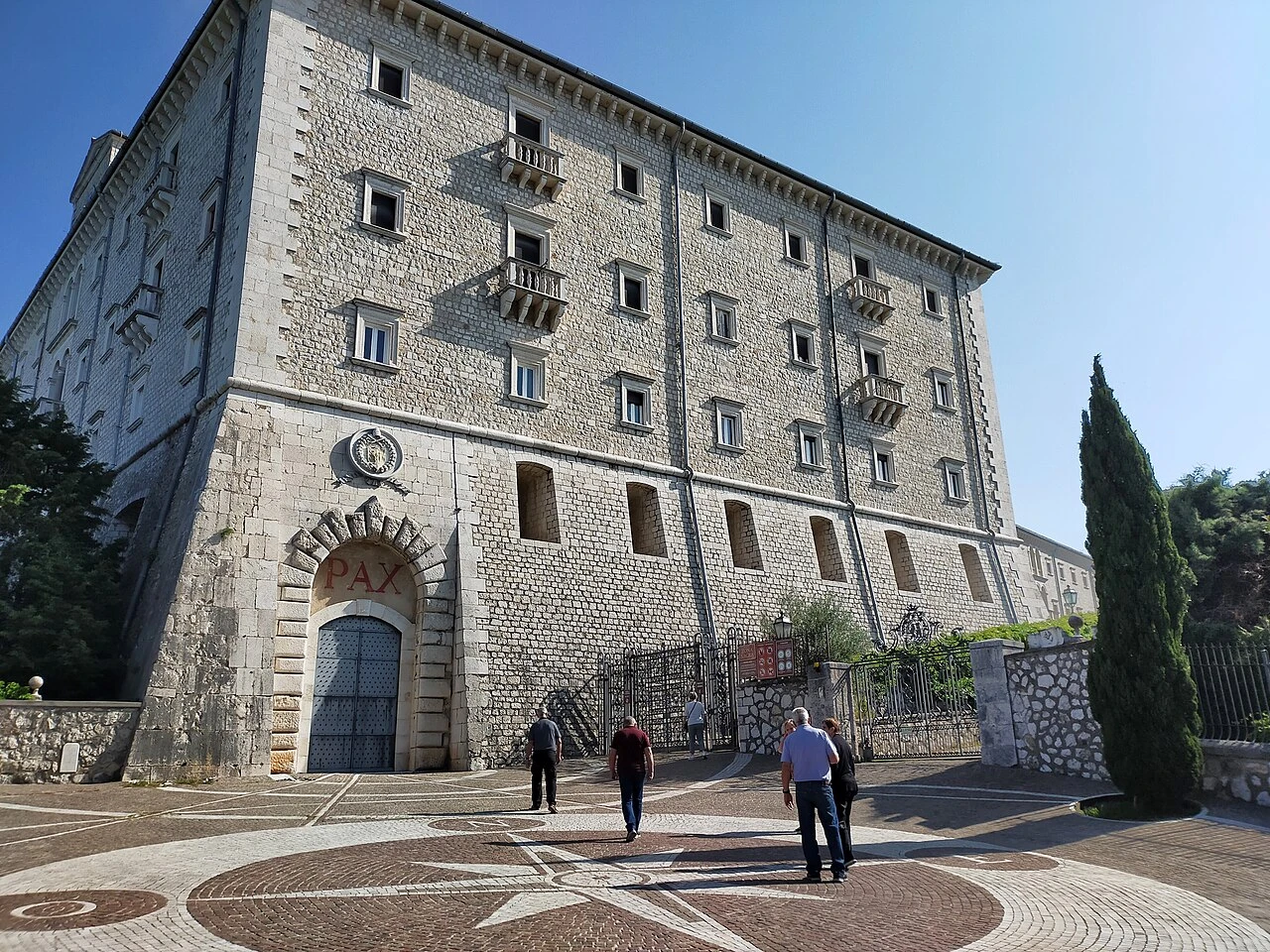
Cassino
Abbey of Monte Cassino
Content & sources
Photo: Marica Massaro · CC BY-SA 4.0
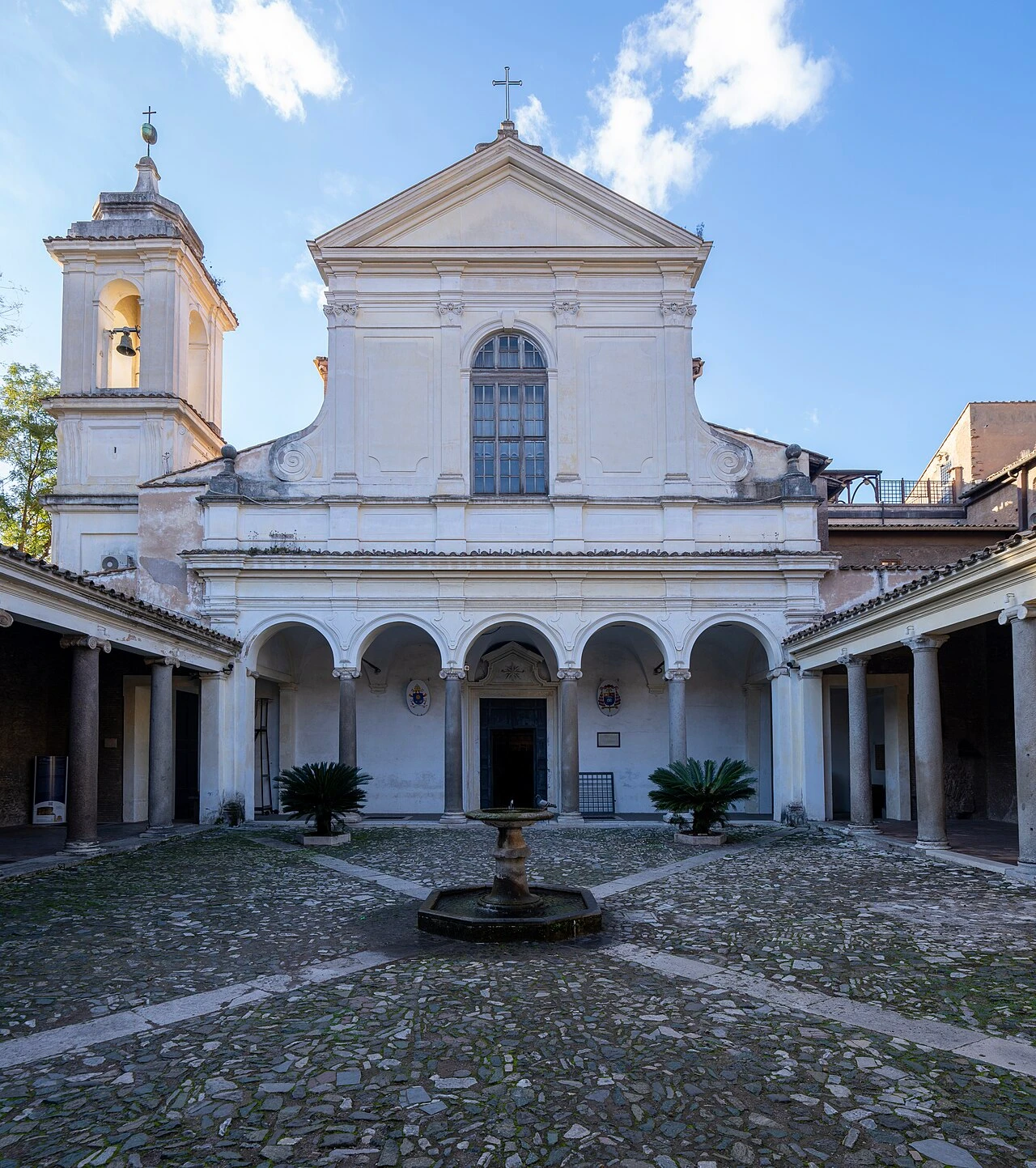
Rome
Basilica di San Clemente
Content & sources
Photo: Labicanense · CC BY-SA 4.0

Assisi
Basilica di San Francesco
Content & sources
Hagai Agmon-Snir حچاي اچمون-سنير חגי אגמון-שניר · CC BY-SA 4.0