Stanza · Audio guide
Castel Sant'Elmo Audio Guide
A place to remember. A story to take with you.
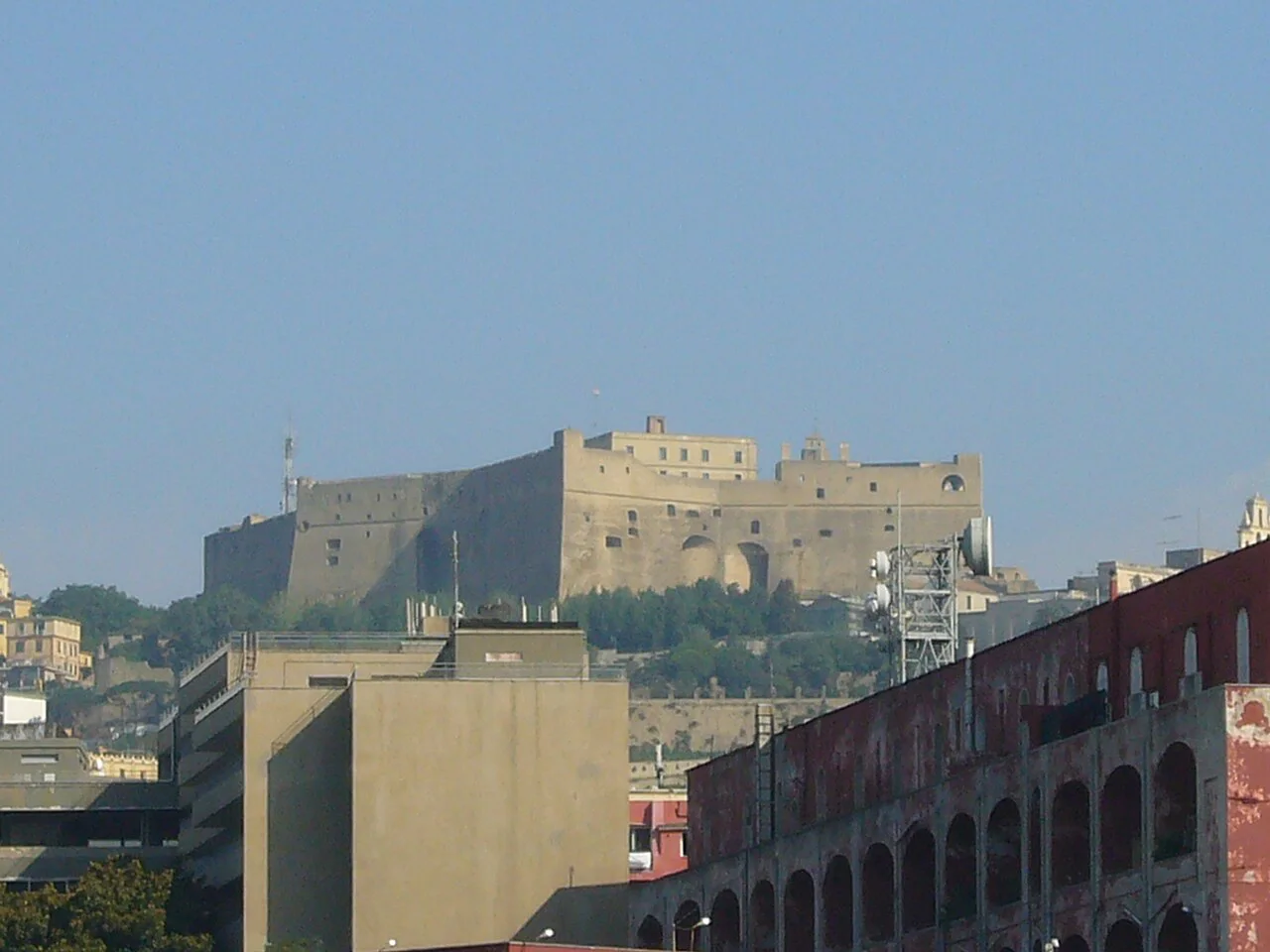
Castel Sant'Elmo is a medieval fortress located on Vomero Hill overlooking Naples, Italy. The site currently serves as a museum, exhibition hall, and offices.
Download Stanza, then search for “Castel Sant'Elmo”.
About the tour
One guide. Your kind of visit.
Castel Sant'Elmo is a medieval fortress located on Vomero Hill overlooking Naples, Italy. The site currently serves as a museum, exhibition hall, and offices.
Ready when you are.
- 01Get the free Stanza app.
iOS & Android
- 02Find your guide.
“Castel Sant'Elmo”
- 03Download before you go.
Works offline
Audio guide / 14 narrated stops
Inside the guide
Get to know a few of the stories before you go. Open a stop to read more.
01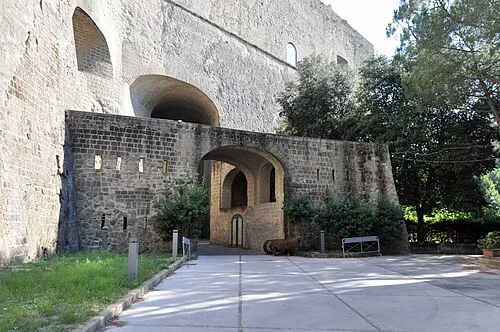 Outer Moat and Defended Entrance Bridge
Entrance Bridge and Outer Ramp
Welcome to Castel Sant'Elmo, the largest castle in Naples by extent. It stands two hundred and fifty metres above the city, on the hill of Vomero, built for a single purpose: to watch and control Naples below. The approach says it plainly. A bridge crosses a moat carved from the living rock, and massive walls of yellow tufa rise on either side of the ramp. Even the name is a small story of its own. A church dedicated to Sant'Erasmo stood on this spot from the tenth century. Over the years Erasmo became Eramo, then Ermo, and finally Elmo. What began as a fortress later served as a prison, and today it is a museum. The Imperial Gate waits at the top of the ramp.
© Ra Boe / Wikipedia · CC BY-SA 3.0 de
02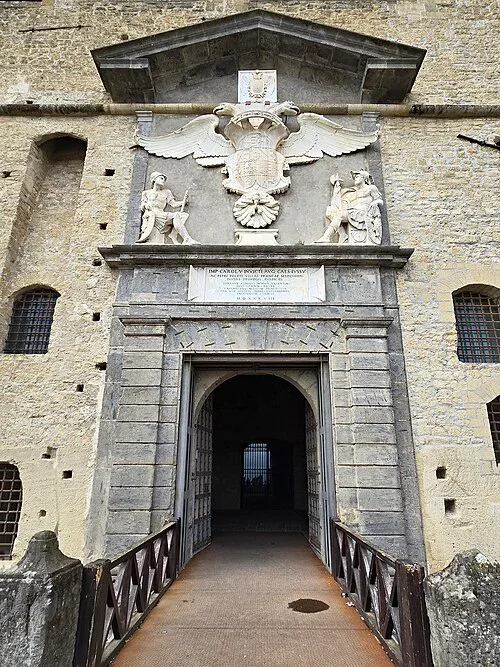 Imperial Gate of Charles V and Hermit's Cave
Imperial Gate of Charles V
The double-headed eagle carved above the doorway belongs to Emperor Charles V. In 1538 a marble inscription was set over the entrance gate, surmounted by his coat of arms and that two-headed imperial eagle. It recalled his reign and the viceregal rule of Pedro de Toledo, marchese di Villafranca. The message was simple: Naples answered to the empire. And the gate could back those words with force. Seven loopholes faced the drawbridge, so the guards could keep fighting even if they were attacked before managing to raise the bridge. The portal itself is cut from piperno, a hard dark Neapolitan stone that takes a sharp edge. Eagle, inscription and the carved figures beside it all survive above the arch.
Photo: Rigorius · CC BY-SA 4.0
03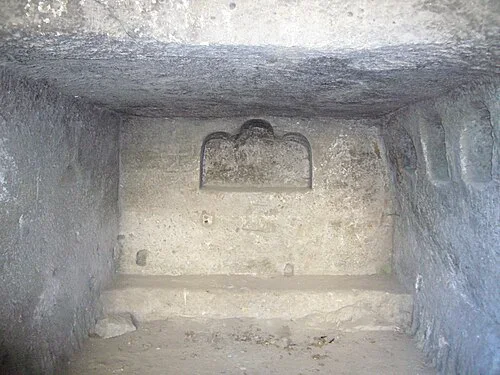 Imperial Gate of Charles V and Hermit's Cave
Grotta dell'Eremita
Just past the little bridge, a chamber opens in the rock. Tradition says a hermit lived here, an anchorite seeking solitude on the hill long before any fortress rose above him. The story is legend rather than history, and no name or date attaches to him. Inside, niches and a stone bench are cut into the tufa. At the second entrance, on the left, a guillotine-style gate was installed in the Napoleonic age, made in the style of its own time. The hill's story continues up the ramp inside the walls.
Listen in the appPhoto: Lalupa · Public domain
04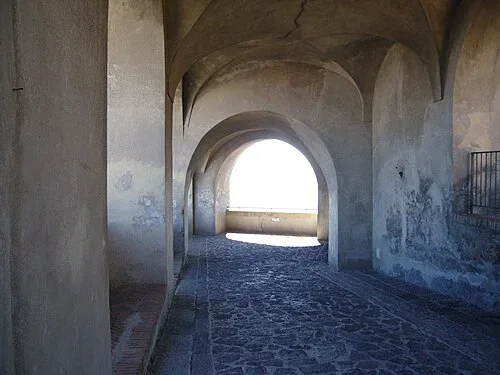 Inner Vaulted Ramp and Defensive Casemates
Inner Vaulted Ramp
The way up to the summit runs inside the fortress body itself. A covered ramp climbs through vaulted bays, its ceiling of stone arches springing from the walls. At the second bend a wide window opens onto the city and the historic centre below. The design is pure military practicality. Men, guns and supplies could be moved up to the parade ground without ever showing themselves to an attacker outside. The flanking walls let defenders hold the passage bay by bay if anyone forced the gate. Light falls only where the builders wanted it, through that one big opening and the mouths of the vaults. It is a road turned into a piece of engineering, cut and roofed from the fortress's own rock.
Listen in the appPhoto: Lalupa · CC BY 3.0
05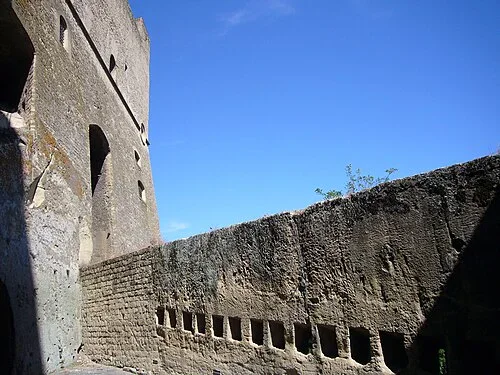 Inner Vaulted Ramp and Defensive Casemates
Embrasures of the Star Fortress
These rows of square openings in the tufa are gun embrasures, and they belong to the fortress's defining idea. In 1537 the medieval castle began its transformation into a six-pointed star, a shape finished ten years later. The design came from Pedro Luis Escrivà, a military architect from Valencia, working for Don Pedro de Toledo at the urging of Emperor Charles V. Gian Giacomo dell'Acaya brought the work to completion. The thinking was new. Round towers left dead ground at their feet where attackers could hide. Angled bastions let every wall sweep its neighbours with gunfire, and embrasures like these shielded the guns between shots. Contemporaries found the hexagonal plan reckless. The criticism grew so fierce that Escrivà published an Apologia in 1538, a written defence of his own design. Part of the fortress was never built at all, only carved. It is cut directly from the living yellow tufa of the Neapolitan hill.
Listen in the appPhoto: Lalupa · Public domain
06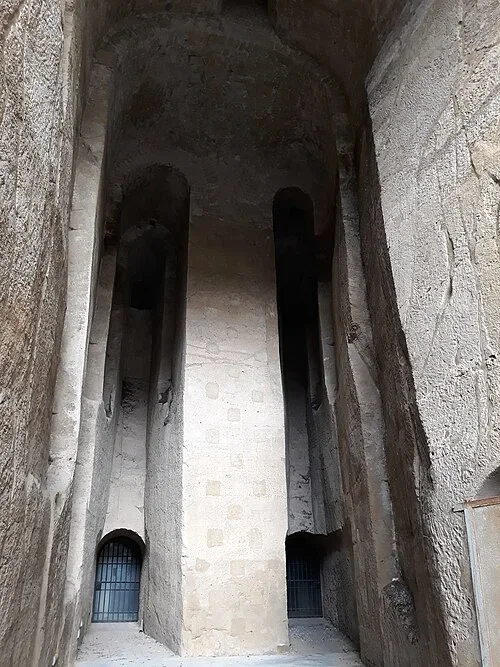 The Historic Prison Cells
The Prison Cells
Deep in the rock, these vaulted chambers held prisoners for centuries. The philosopher Tommaso Campanella arrived in 1604, branded a heretic, and stayed four years. A cell is linked with Luisa Sanfelice, the patriot of the Neapolitan Revolution of 1799. After that republic fell, the fortress filled with its supporters, and during the Risorgimento it held prisoners of the movement for Italian unity. Over the years the inmates left their mark, names and words scratched into the stone walls. The barred openings at the base of the chambers were the prisoners' window onto the world. The castle remained a military prison until 1952, when the prison was transferred to Gaeta.
Listen in the appPhoto: Simon Burchell · CC BY-SA 4.0
07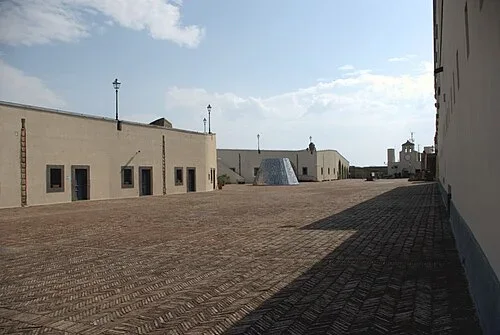 Piazza d'Armi and Castellano's Tower
Piazza d'Armi
The great square at the summit is the Piazza d'Armi, the parade ground at the heart of the fortress. Around it stood the officers' quarters, the chaplain's house and the church, alongside surviving buildings of the older Angevin keep. The castle ran as an autonomous military outpost. Its governor, the castellano, held absolute authority over both military and civilian matters, a small state of his own on the hill. Then came the disaster. In 1587 lightning struck the powder magazine. The explosion killed a hundred and fifty men and wrecked much of the fortress: the church of Sant'Erasmo, the castellano's residence and the military lodgings all went. The blast caused damage across the rest of Naples too.
Listen in the appRoberto De Martino · Public domain
08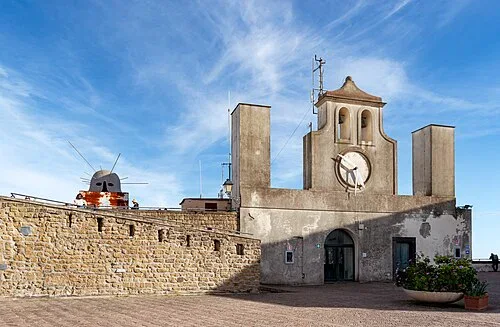 Piazza d'Armi and Castellano's Tower
Torre del Castellano
The tower with the clock rises over the parade ground, and its rooms are what remains of the lodging of the commander and the castle's personnel. The 1587 explosion you heard about at the square destroyed the earlier residence, and these rooms are the remnant of the rebuilt command quarter. The castellano lived at the top of his own fortress, above the garrison he commanded. Daily life here followed the drum: drills on the parade ground, meals in the quarters, the church bell marking the hours. Even the brick paving of the Piazza d'Armi dates from the time the fortress was built, laid long before any visitor's feet.
Listen in the appPhoto: Sylva-ae · CC BY-SA 4.0
09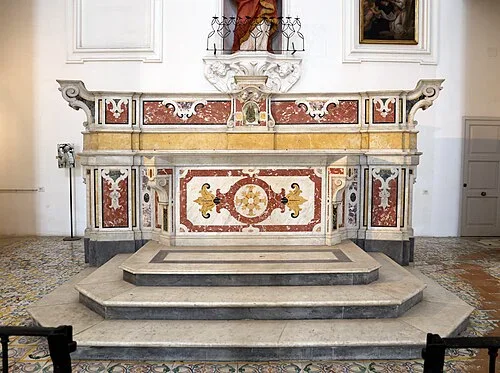 Church of Sant'Erasmo
 - Altar
The small church of Sant'Erasmo stands on the great square, and its altar is the focus of the rebuilt chapel. A first church was erected here in 1547 by the Spanish architect Pietro Prato. The 1587 explosion destroyed it, along with much of the fortress around it. Rebuilding began in 1599 under Domenico Fontana. The marble altar, with its inlaid panels of red, white and yellow stone, belongs to that restored church. Behind the altar are the tomb slabs of some of the castellani themselves, the fortress's commanders, among them Francisco Vasquez, buried here in 1776. The men who governed the castle for Spain ended their days at its spiritual centre.
Listen in the appPhoto: Sailko · CC BY 3.0
10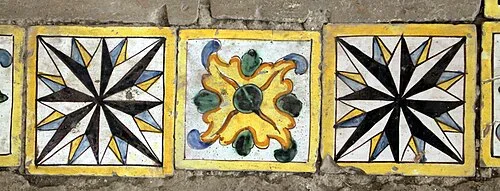 Church of Sant'Erasmo
Maiolica Floor and Chapel Paintings
The floor is one of the church's treasures: tiles of cotto and maiolica from the seventeenth and eighteenth centuries, typical work of Neapolitan craftsmen. Star patterns radiate across the tiles, an echo, intended or not, of the star-shaped fortress above. The walls carry paintings too. There is a youthful Saint Michael slaying the demon by Luca Giordano, from his early years. Antonio De Bellis shows Saint Oderisio in glory before the Madonna of Purity. Francesco De Maria painted Christ with the angel, and a Santa Barbara hangs here by an unknown late-Mannerist hand. On the vault, an eighteenth-century fresco shows the Assumption of Mary into heaven.
Listen in the appPhoto: Sailko · CC BY 3.0
- 11
Tomb of Don Pedro de Toledo, First Castellano
The first castellano in marble: armoured, helmet at his feet, carved by Annibale Caccavello in 1559.
- 12
Museo Napoli Novecento
How a garrison became a gallery: the long restoration and the Museo Napoli Novecento.
- 13
Sentry Box on the Rampart Walk
The Bourbon sentry box that watched the bay, and the modern water tank hidden in the wall's thickness.
- 14
The Panorama and the Republic of 1799
The view that justifies the fortress, and the weeks in 1799 when Naples raised its flag from this height.
Castel Sant'Elmo
Frequently asked questions
How much does the guide cost?
Free app download. Listed guide price: $0.99. Guide price shown in the app. Audio guide only. Venue admission is separate.
Can I listen without internet?
Yes. Download the guide’s audio, images, and maps in the app before your visit. Your downloaded content is then available offline.
Can I listen in my language?
This audio guide is available in 15 languages, including English.
Do I need to follow a schedule?
No. This is a self-guided experience. Choose your stops, pause whenever you like, and return to a story at your own pace.
At your own pace
Explore Castel Sant'Elmo.
Download Stanza, then search for “Castel Sant'Elmo”.
Free app download · Guide price shown in the app
Keep exploring
Nearby audio guides
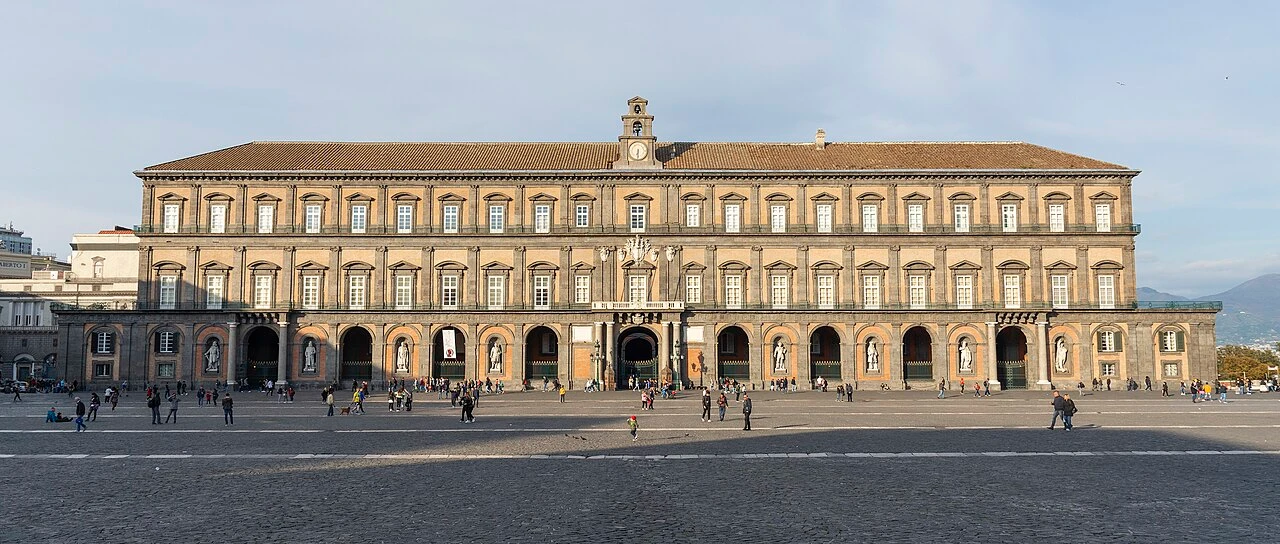
Naples · 1 km
Royal Palace of Naples
Content & sources
Photo: Sordelli · CC BY-SA 3.0
Naples · 1 km
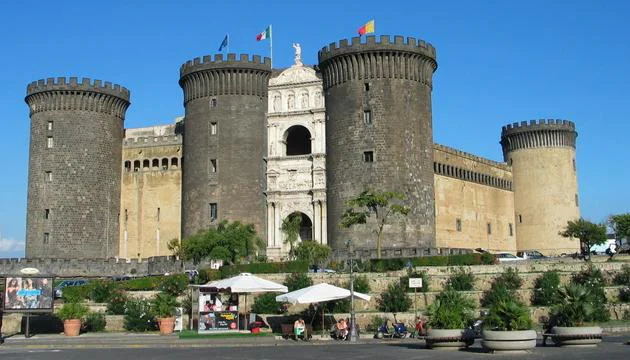
Maschio Angioino
Content & sources
Photo: IgnisFatuus · CC BY-SA 2.5
Naples · 2 km
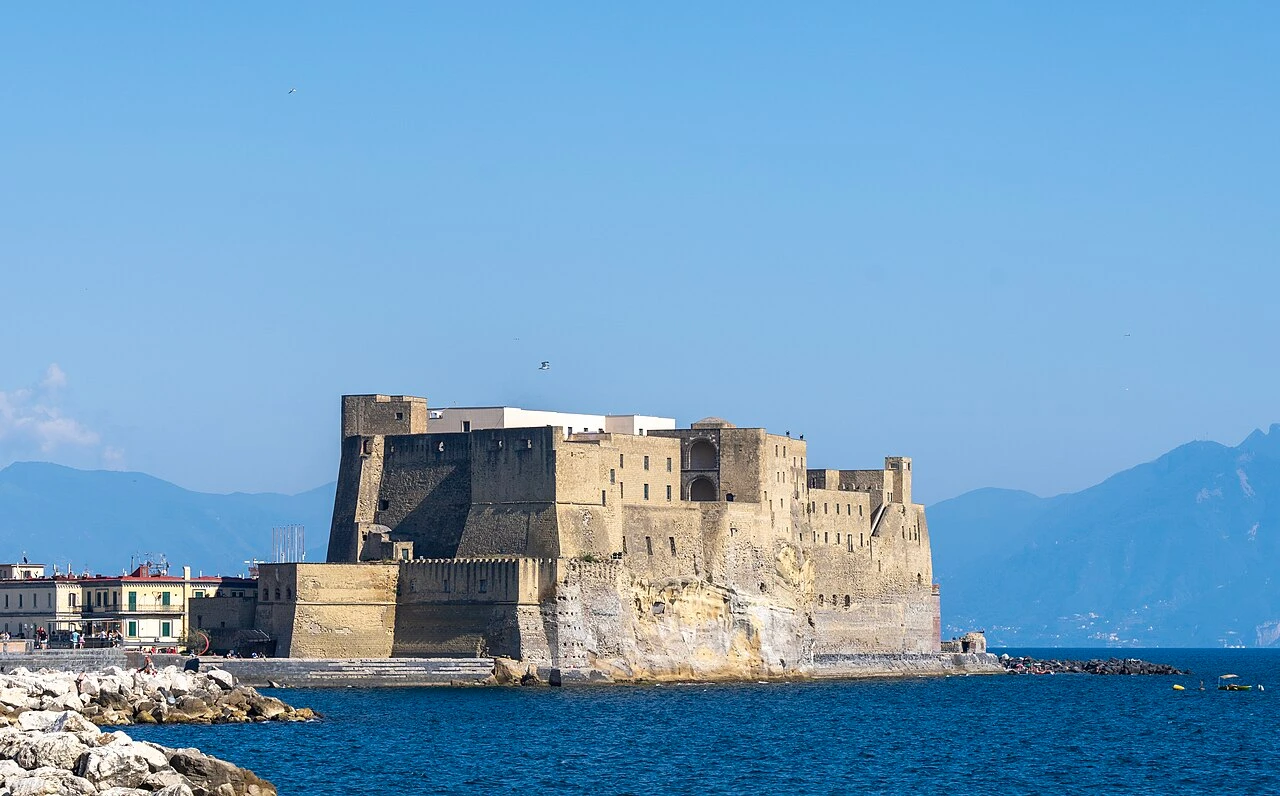
Castel dell'Ovo
Content & sources
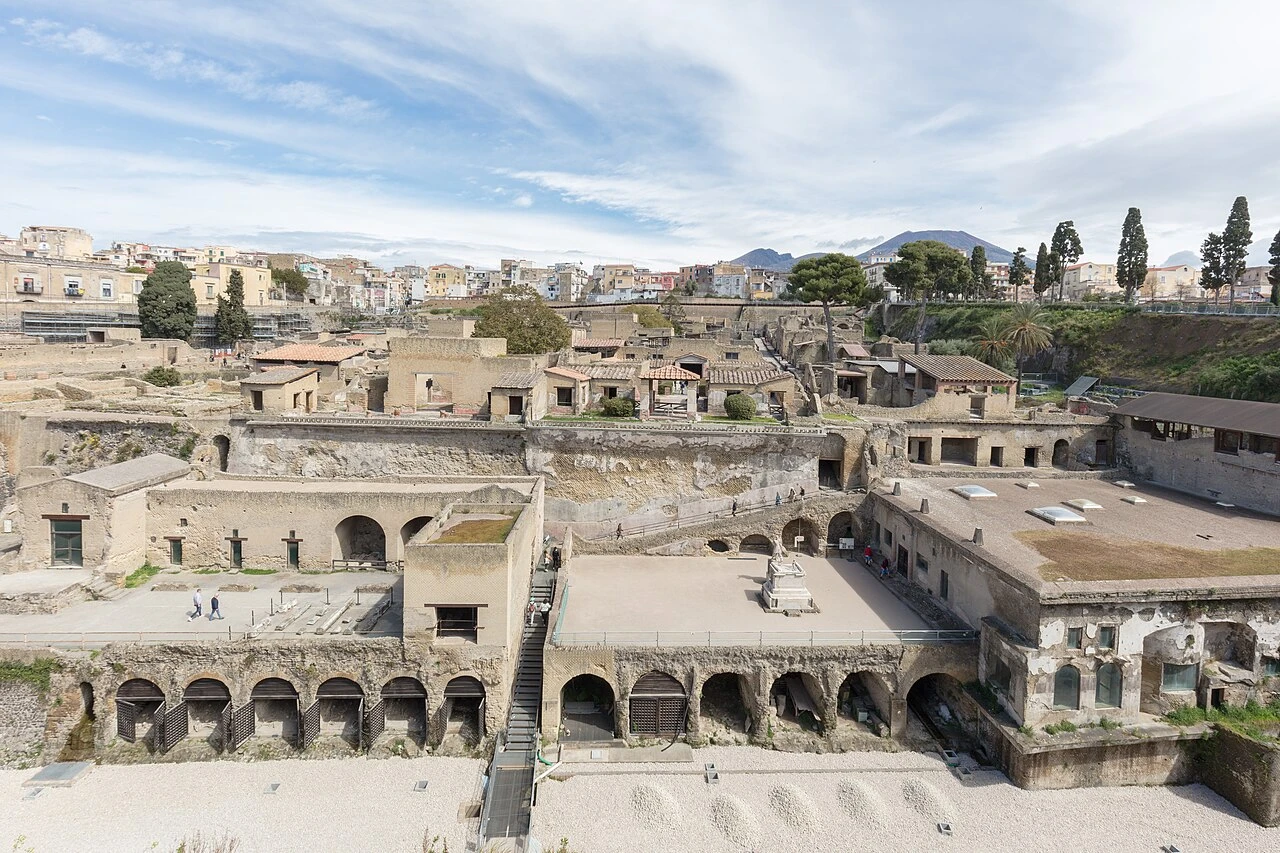
Paestum · CC BY-SA 4.0
Ercolano · 10 km
Herculaneum
Content & sources
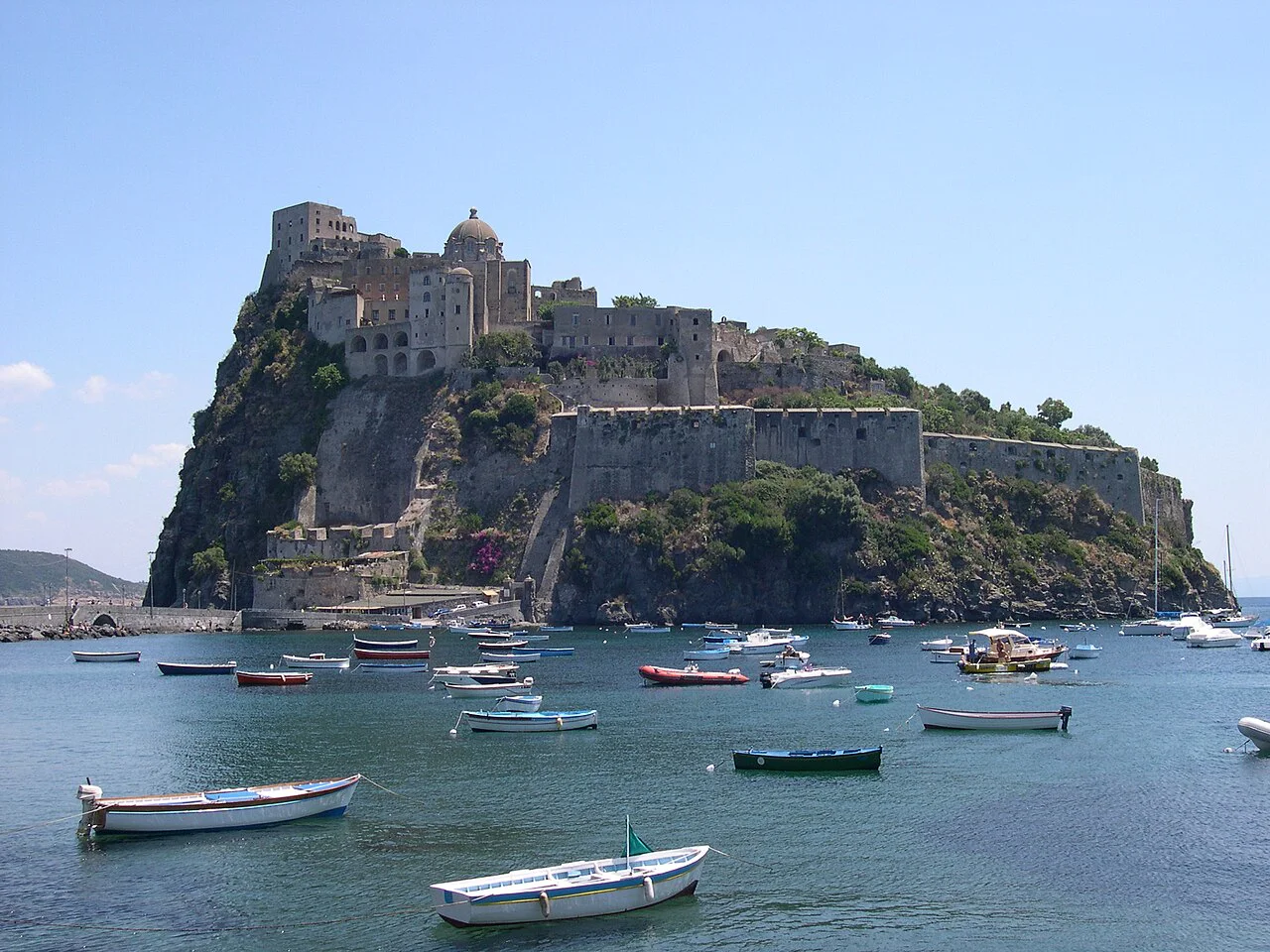
Diego Delso · CC BY-SA 4.0
Ischia · 26 km
Castello Aragonese
Content & sources
Photo: Otrebor81~commonswiki · CC BY-SA 3.0