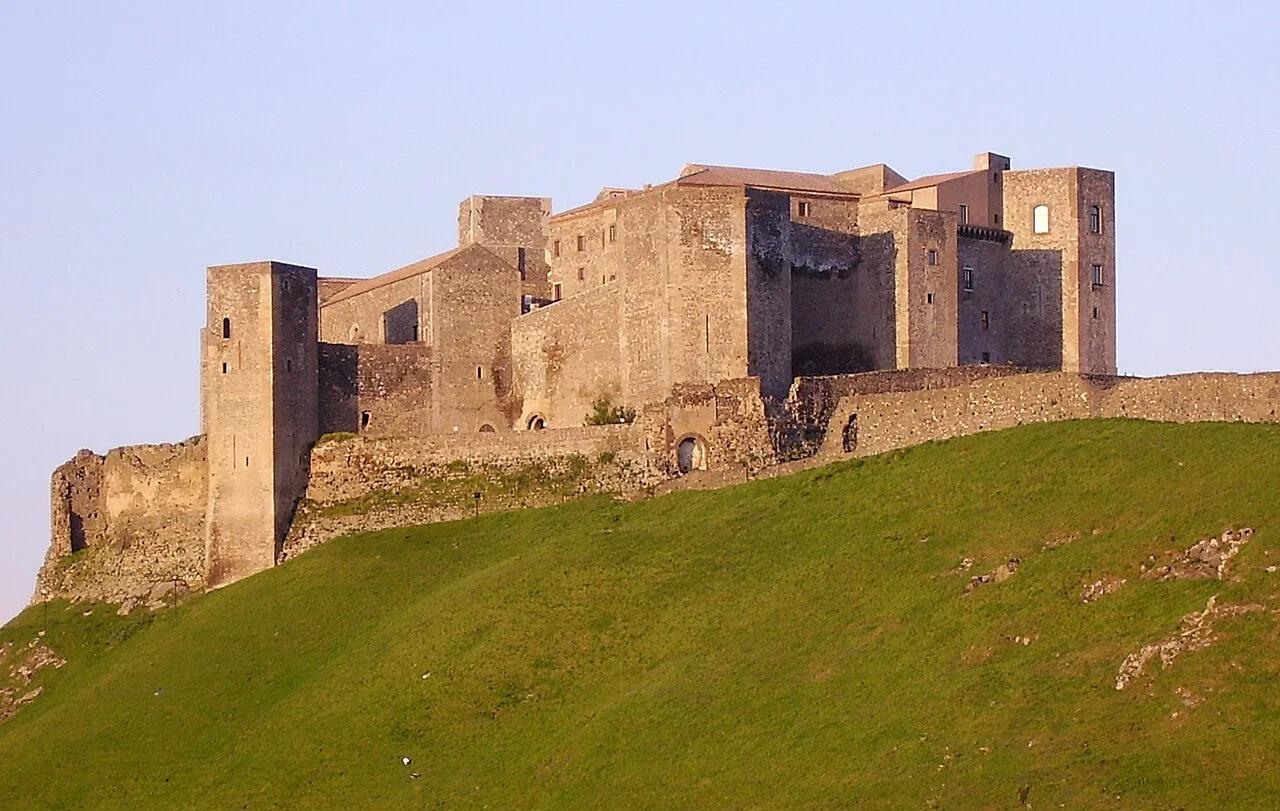
 Stanza / Audio guide
Stanza · Audio guide
Castello di Melfi Audio Guide
A place to remember. A story to take with you.
The Castle of Melfi is a monument owned by the Italian State and one of the most important medieval castles in Southern Italy. Its construction dates back to the Norman conquest and has undergone significant…
Download Stanza, then search for “Castello di Melfi”.
About the tour
One guide. Your kind of visit.
The Castle of Melfi is a monument owned by the Italian State and one of the most important medieval castles in Southern Italy. Its construction dates back to the Norman conquest and has undergone significant changes under the House of Anjou and the Crown of Aragon.
Ready when you are.
- 01Get the free Stanza app.
iOS & Android
- 02Find your guide.
“Castello di Melfi”
- 03Download before you go.
Works offline
Audio guide / 14 narrated stops
Inside the guide
Get to know a few of the stories before you go. Open a stop to read more.
01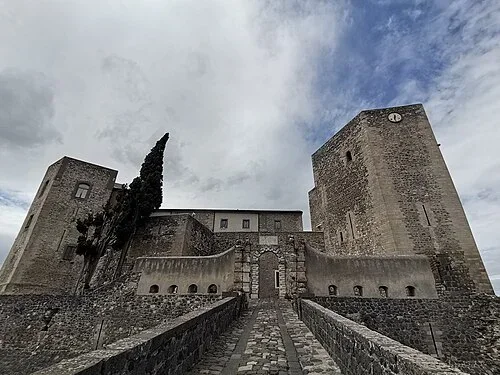 South Stone Bridge and Doria Portal
The Stone Bridge over the Moat
The road into the castle crosses a deep moat on a bridge of solid stone. It may once have worked as a drawbridge. Beyond it rises one of the most important medieval castles in Southern Italy. The hill guards the gateway between Campania and Apulia, and whoever held Melfi held that passage. Later the fortress became a seat of law, and today it houses an archaeological museum. The castle once had four entrances. This is the only one still usable, so every visitor crosses the same threshold.
Photo: Luigi Catalani · CC BY-SA 4.0
02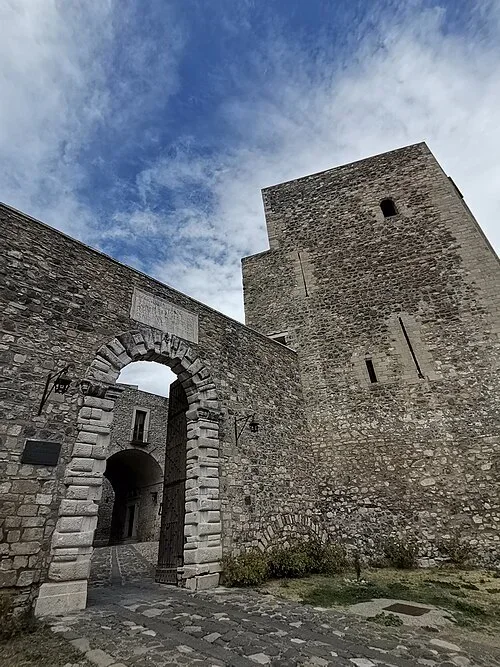 South Stone Bridge and Doria Portal
The Doria Portal and Inscription
The arched gateway wears a carved inscription, and it marks a violent change of owners. In 1528 French troops under Odet de Foix besieged Melfi, in their war against the emperor. They had already breached the walls and slaughtered much of the population. Inside the castle, Prince Giovanni Caracciolo made the last attempt at defence. Taken prisoner and unable to pay a ransom, he swore loyalty to the King of France. His later defeat at the siege of Naples forced him into exile. The fief was confiscated. It passed briefly to Filibert of Chalon, and then, in 1531, the emperor granted Melfi to the Genoese admiral Andrea Doria, who had put his fleet at the emperor's service. The stone above the arch carries a dedication to the Doria name. Accounts differ on whom it honours. Some read it as praise of the admiral and his emperor. Others name a later Doria couple who inherited the title. Either way, it was the Doria who cut this gateway toward the town, with their bridge over the moat.
Photo: Luigi Catalani · CC BY-SA 4.0
03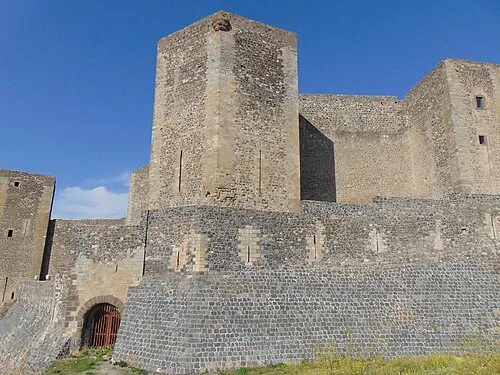 Norman Foundations and Marcangione Tower
The Norman Entrance and the Councils of Melfi
This walled-up gateway belongs to the castle's first life. The first stone fort rose here around 1042, begun under the Norman leader William Iron Arm. From Melfi the Normans organized their conquest of the south, and the town became the capital of their Italian lands. In the summer of 1059 a pope came up to the fortress to meet Count Robert Guiscard. He named Guiscard Duke of Apulia and Calabria, formally recognizing the Norman conquests. That meeting opened a remarkable run of church assemblies. Five papal councils met at the castle, each under a different pope, across nearly eighty years. No single hall can be named as their chamber. The assemblies are placed simply inside the castle. At the third of them, in 1089, Pope Urban II gave voice to the summons that led to the First Crusade.
Listen in the appZioEmi · CC BY-SA 4.0
04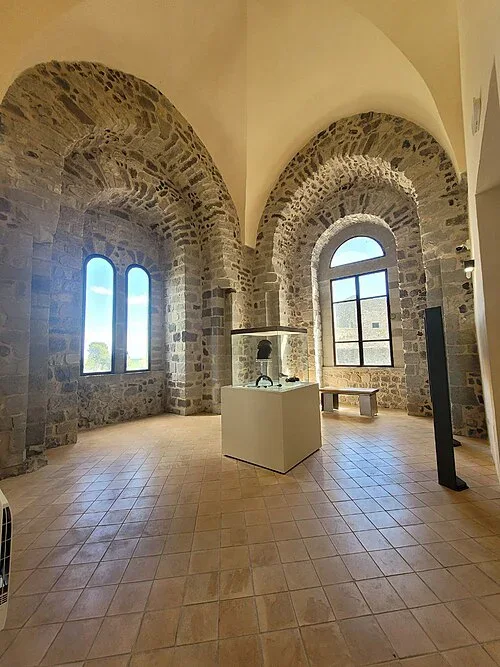 Norman Foundations and Marcangione Tower
The Marcangione Tower Hall
Rough stone arches, deep windows and thick walls give this tower room its character. It is called the Jail Tower, and it remembers the castle's less glamorous work. Under Frederick II the castle kept the archive of the kingdom, where jurists and notaries studied and translated Arabic manuscripts. Among them was Avicenna's great work on animals. The building was also the main depot for taxes collected across Basilicata, and a prison. In 1241, after the pope excommunicated the emperor, the castle imprisoned two cardinals and several French and German bishops. They had been summoned to a council meant to depose him. Another captive, the Saracen Uthman of Lucera, bought his freedom with fifty ounces of gold. Today the room serves the museum, its vaulted quiet given over to a display case.
Listen in the appPhoto: Nmorano · CC BY-SA 4.0
05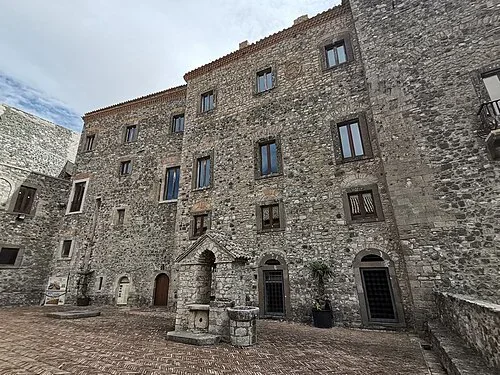 Lower Ramparts and Clock Tower Courtyard
The Angevin Courtyard
The courtyard sits ringed by stern stone ranges, and most of what surrounds it is Angevin work. When the Hohenstaufen dynasty fell, the new royal house of Anjou rebuilt and expanded the castle on a grand scale. The military architect Pierre d'Agincourt directed the works of the late 1270s, and his plan gave the fortress the outline it keeps today. The stone tells its own story. It is dark volcanic rubble, quarried from the hillside just behind the castle. Charles II of Anjou ordered the stables and service yards opening from here, finished in 1281. Horses, grooms, stores and soldiers moved through these lower ranges, with the fine rooms set above.
Listen in the appPhoto: Luigi Catalani · CC BY-SA 4.0
06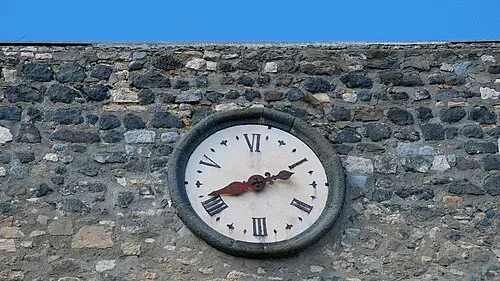 Lower Ramparts and Clock Tower Courtyard
The Six-Hour Clock
The dial on this tower runs to only six hours, marked in Roman numerals. The castle has outlasted more than time. Earthquakes struck the town in 1851. Another came in 1930. A third shook the region in 1980. The castle rode out the first two almost unscathed, while other monuments of Melfi suffered badly. The 1980 shock did leave damage, and concrete was set into the underground floors to hold up the structures above. A dial of six hours, on a tower that has outlasted them all.
Listen in the appPhoto: Aldo Montemarano · CC BY-SA 4.0
07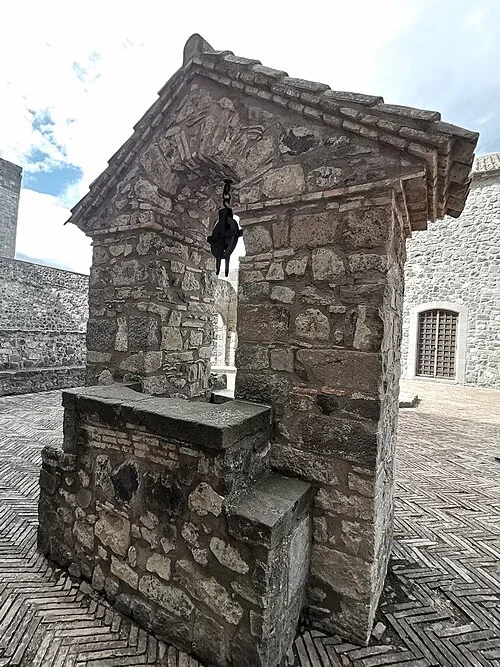 Emperor's Courtyard and Angevin Cistern
The Well of the Emperor's Courtyard
A gabled stone canopy shelters this well, with an old pulley hanging at its heart. Water was a fortress matter here, not a courtesy. The Angevin program completed a monumental cistern inside the walls. Wells like this one belonged to the castle's water system. A garrison under siege could not send for water from the town. Everything it drank had to be stored or found within these walls.
Listen in the appPhoto: Luigi Catalani · CC BY-SA 4.0
08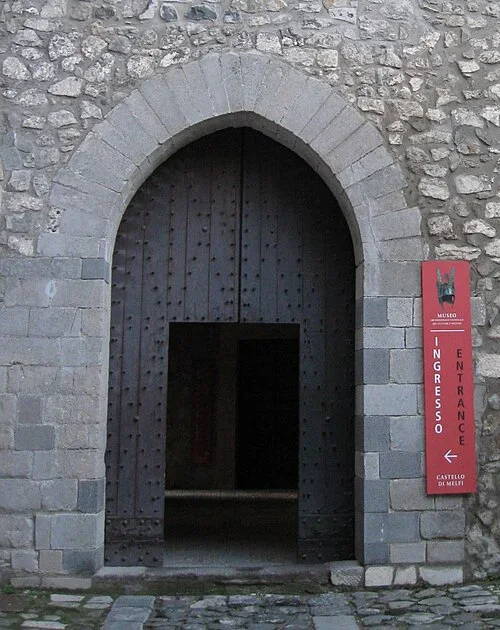 National Archaeological Museum and Sale Doria
Entering the National Archaeological Museum
Under a Gothic arch waits a studded door, with a red sign beside it reading Ingresso, entrance. Since 1976 it has led into the National Archaeological Museum of the Melfese. The castle's medieval rooms now hold the deep past of the region it once ruled. The way in runs through the fortress itself, out to the older world it guarded.
Listen in the appPhoto: Generale Lee · CC BY-SA 3.0
09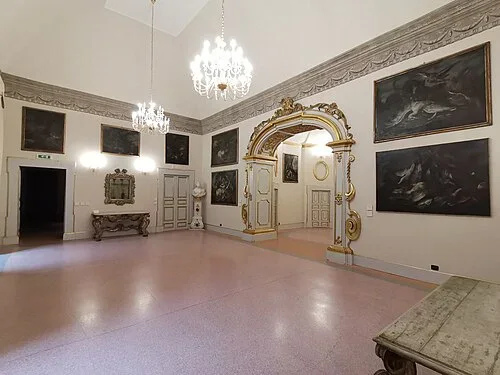 National Archaeological Museum and Sale Doria
The Doria Halls
Chandeliers, pale floors and dark hunting paintings belong to the castle's other life, as a baronial palace. For more than four centuries the Genoese Doria governed Melfi through their delegates. Over those centuries they turned the fortress into a residence. The apartments gained hunting pictures and fine furnishings, much of which later went to various museums. A slow, complicated work of return is still under way. In the age of the Grand Tour the governors hosted travellers in these rooms, among them the French scholar Lenormant and the Englishman Edward Lear. The family's hold ended only in the 1950s, when the castle passed to the Italian State.
Listen in the appPhoto: Luigi Catalani · CC BY-SA 4.0
10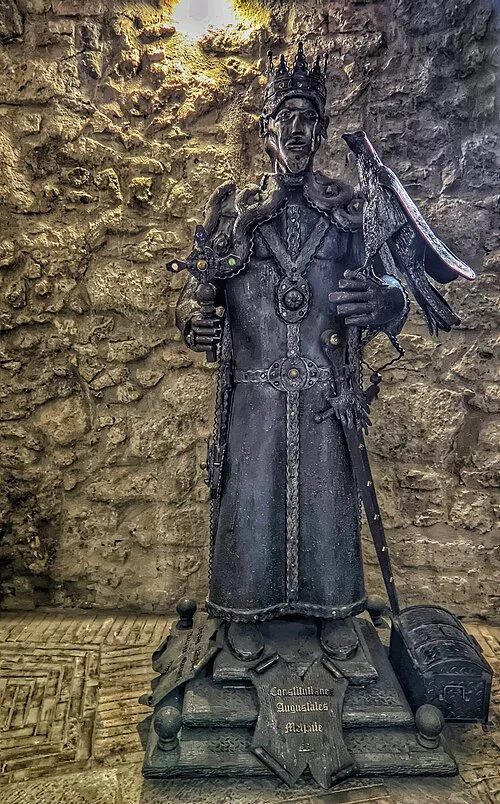 National Archaeological Museum and Sale Doria
The Frederick II Statue and the Constitutions of Melfi
The crowned figure holds a falcon on his wrist, and the base is inscribed Constitutiones Augustales. It stands for Frederick II, King of Sicily and Holy Roman Emperor, and for the event that defines this castle. In 1231 Frederick promulgated here the Constitutions of Melfi, the Liber Augustalis, a code of laws for the Kingdom of Sicily. It is counted the most important legal corpus of the Middle Ages, reordering the Roman-Byzantine and Arab laws inherited through the Norman state. The emperor took part in the writing himself, with his notary Pier della Vigna and the philosopher and mathematician Michael Scot. Dante later made Pier della Vigna famous, in the Inferno. The falcon on the wrist points to a legend. The story goes that the cone-shaped roof of the Bulwark of the Lion housed the emperor's falcons. Historians see the structure more plainly, as a watchpost.
Listen in the appPhoto: Acquario51 · CC BY-SA 4.0
- 11
The Rapolla Sarcophagus
A second-century marble sarcophagus from Asia Minor, and the museum's most famous piece.
- 12
The Sarcophagus in Its Darkened Room
The sarcophagus in its darkened room, and the person on the lid nobody can name.
- 13
The Moat View and the Tower of the Seven Winds
Ten towers around one circuit, and the highest watch post of them all.
- 14
The Castle from Above
The whole citadel at a glance: six courtyards within its walls.
Castello di Melfi
Frequently asked questions
How much does the guide cost?
Free app download. Listed guide price: $0.99. Guide price shown in the app. Audio guide only. Venue admission is separate.
Can I listen without internet?
Yes. Download the guide’s audio, images, and maps in the app before your visit. Your downloaded content is then available offline.
Can I listen in my language?
This audio guide is available in 15 languages, including English.
Do I need to follow a schedule?
No. This is a self-guided experience. Choose your stops, pause whenever you like, and return to a story at your own pace.
At your own pace
Explore Castello di Melfi.
Download Stanza, then search for “Castello di Melfi”.
Free app download · Guide price shown in the app
Keep exploring
Nearby audio guides
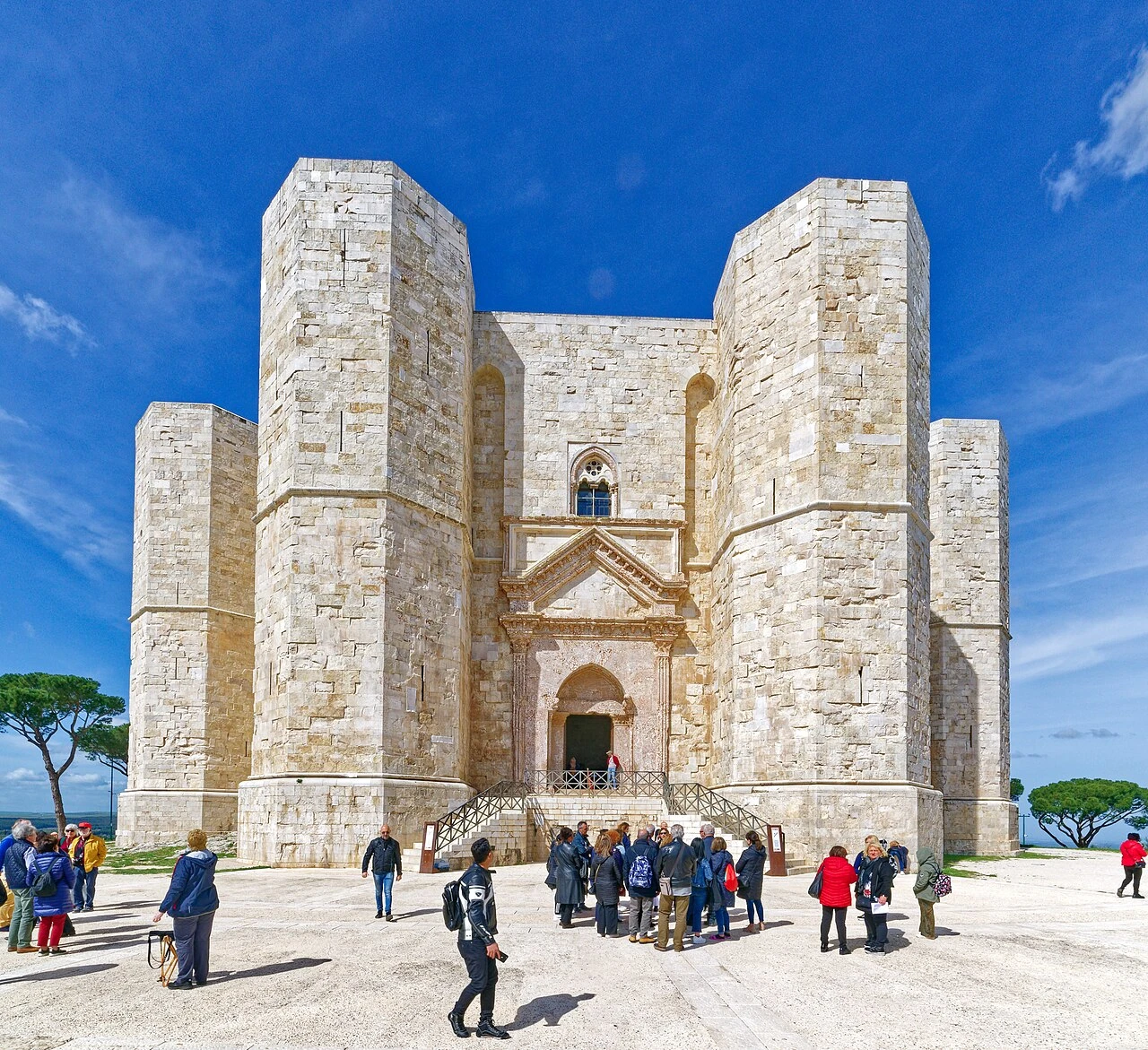
Andria · 53 km
Castel del Monte
Content & sources
Photo: Holger Uwe Schmitt · CC BY-SA 4.0
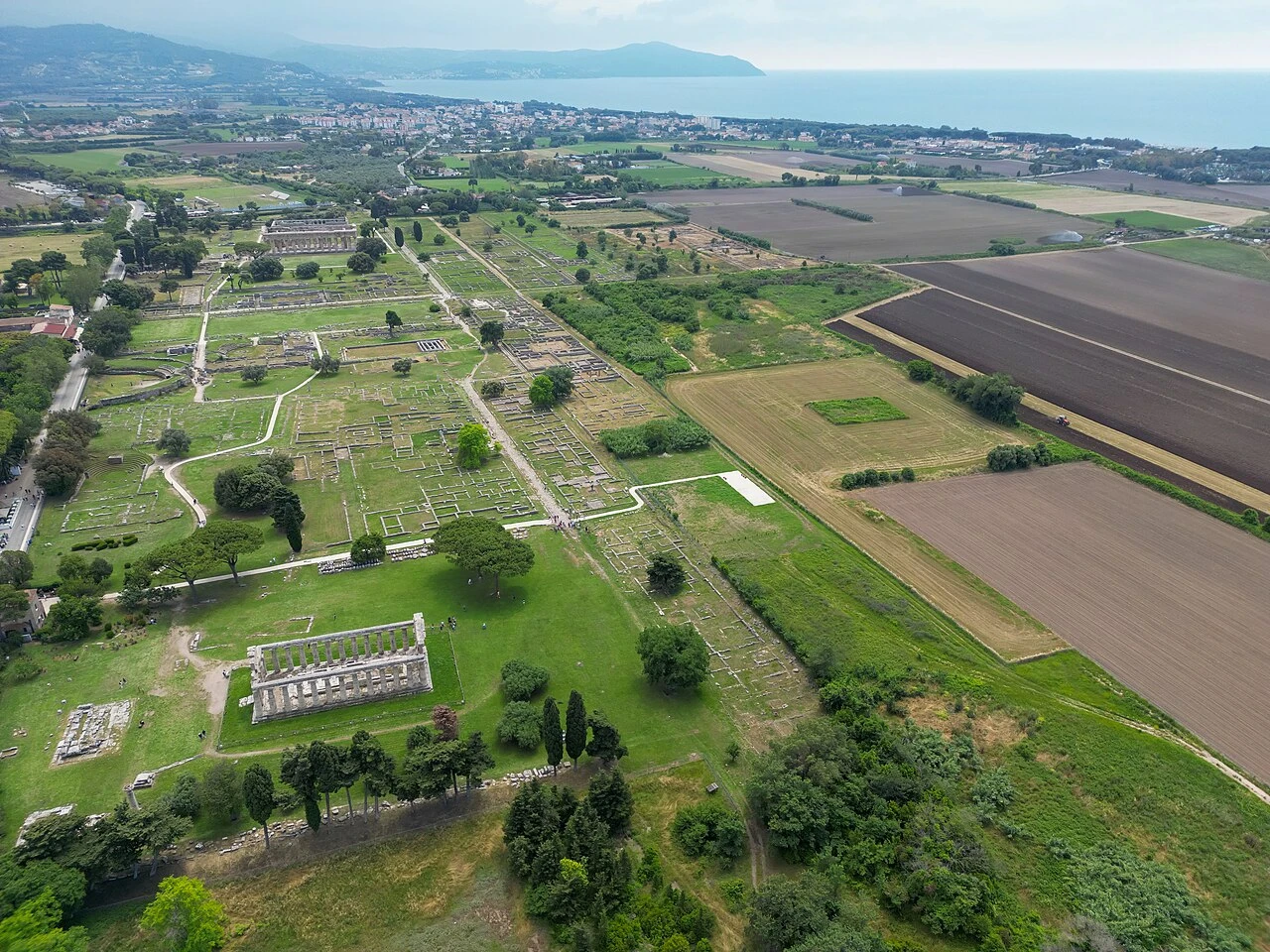
Capaccio Paestum · 84 km
Area Archeologica di Paestum
Content & sources
Paestum · CC BY-SA 4.0
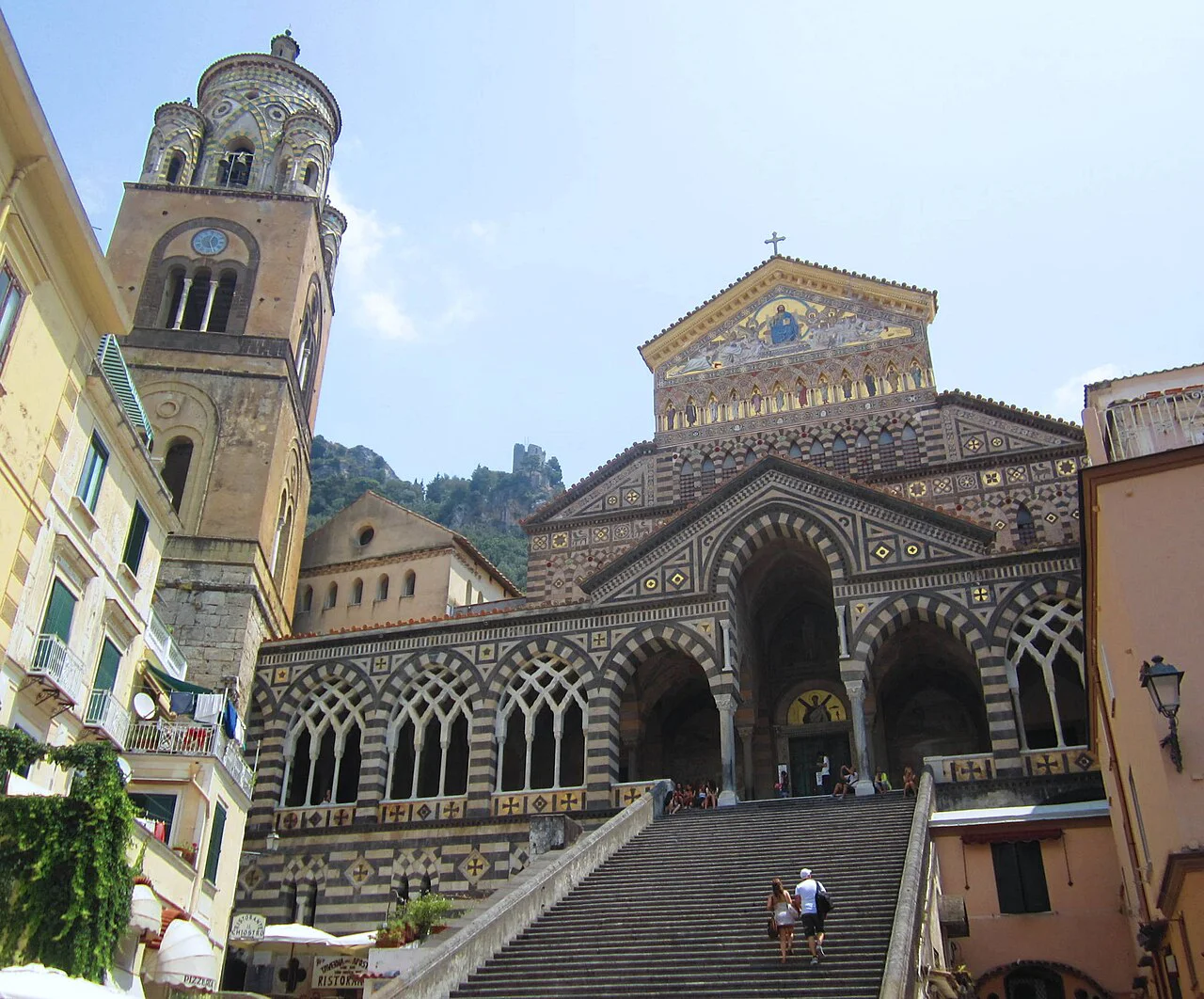
Amalfi · 97 km
Duomo di Amalfi
Content & sources
Photo: Luca Aless · CC BY-SA 3.0
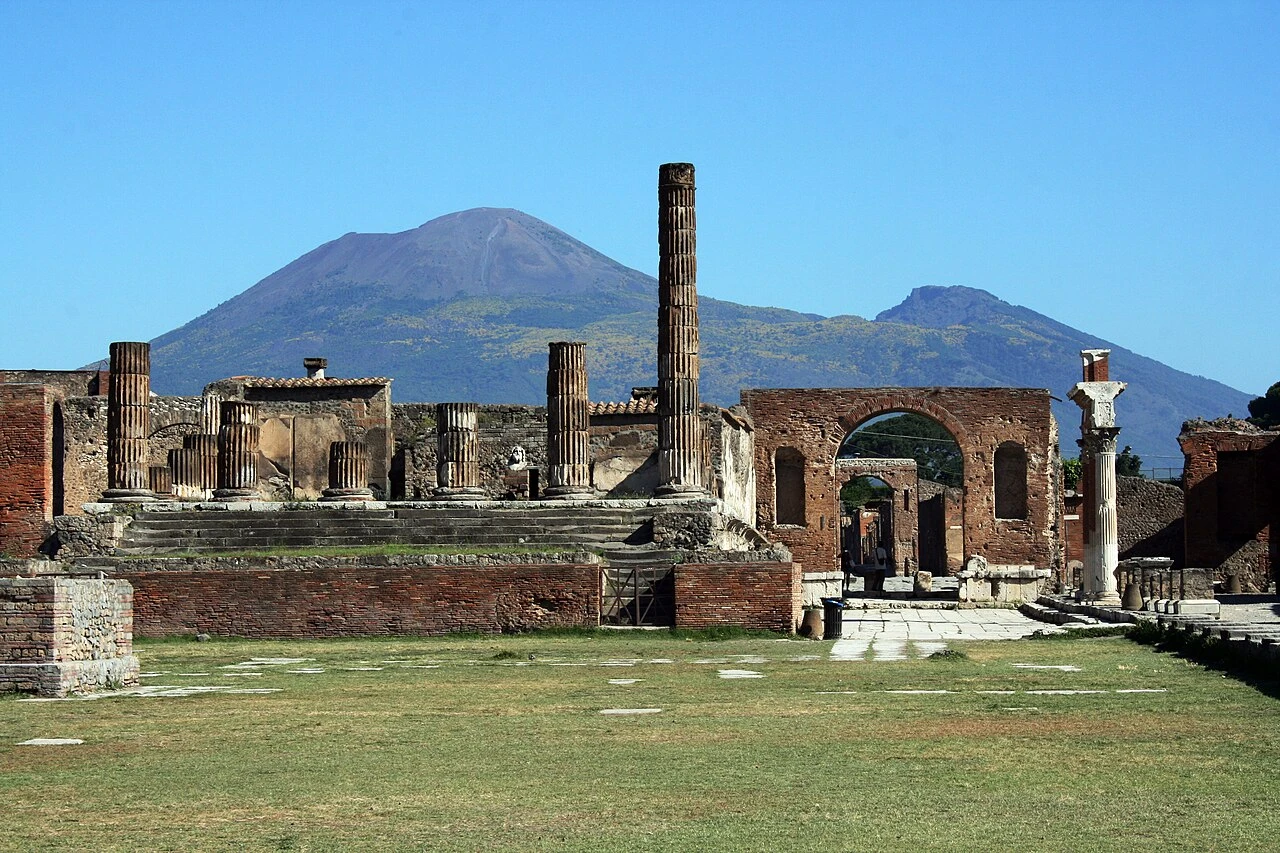
Pompei · 102 km
Pompeii Archaeological Park
Content & sources
Glen Scarborough from The Central Coast, Australia · CC BY 2.0