Stanza · Audio guide
Cattedrale di MonrealeAudio guide
A place to remember. A story to take with you.
The Cattedrale di Monreale is a large Roman Catholic church located in Monreale, Sicily. It is renowned for its extensive Norman-Byzantine mosaics and architectural significance.
Download Stanza, then search for “Cattedrale di Monreale”.
About the tour
One guide. Your kind of visit.
The Cattedrale di Monreale is a large Roman Catholic church located in Monreale, Sicily. It is renowned for its extensive Norman-Byzantine mosaics and architectural significance.
Ready when you are.
- 01Get the free Stanza app.
iOS & Android
- 02Find your guide.
“Cattedrale di Monreale”
- 03Download before you go.
Works offline
Audio guide / 16 narrated stops
Inside the guide
Get to know a few of the stories before you go. Open a stop to read more.
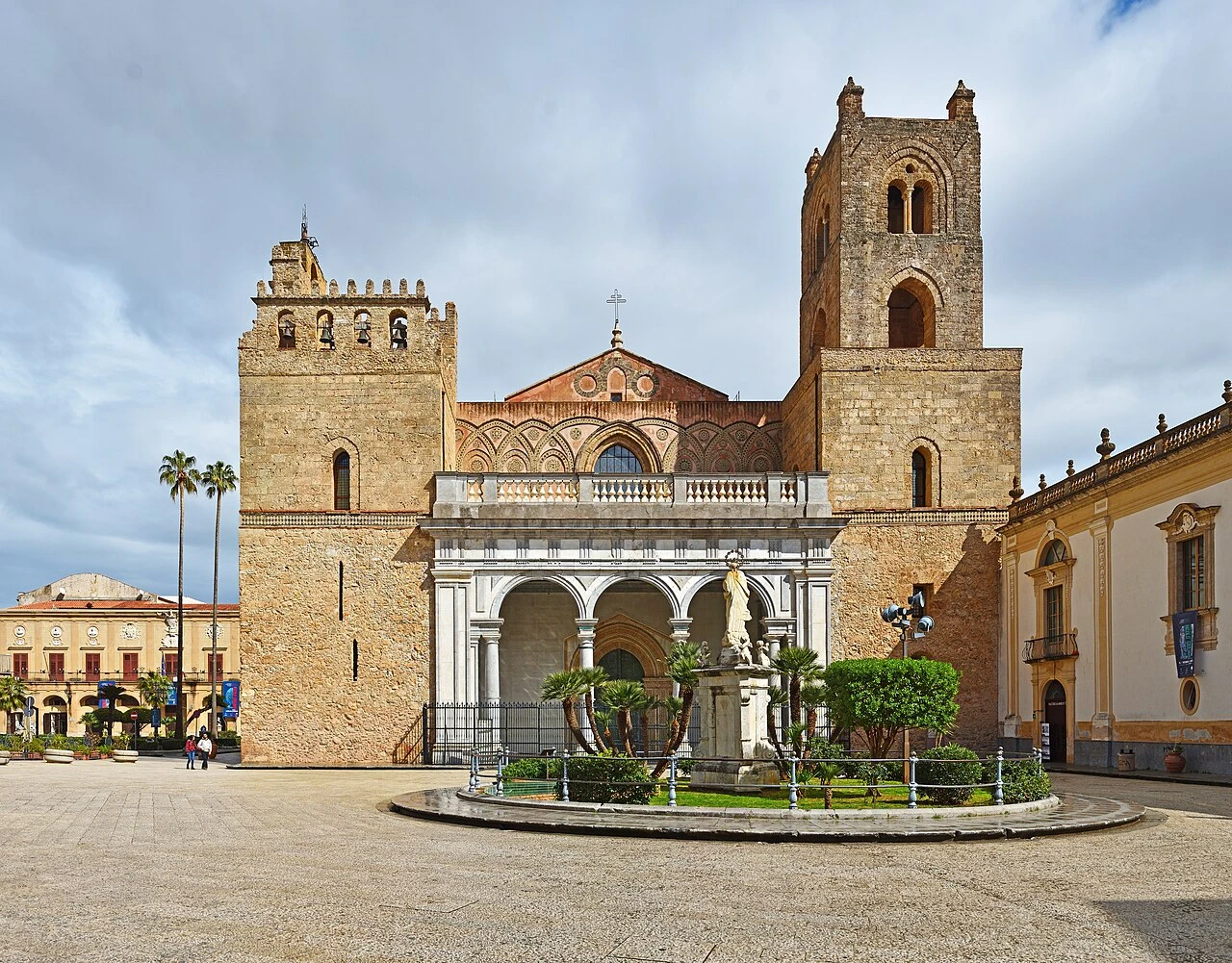
01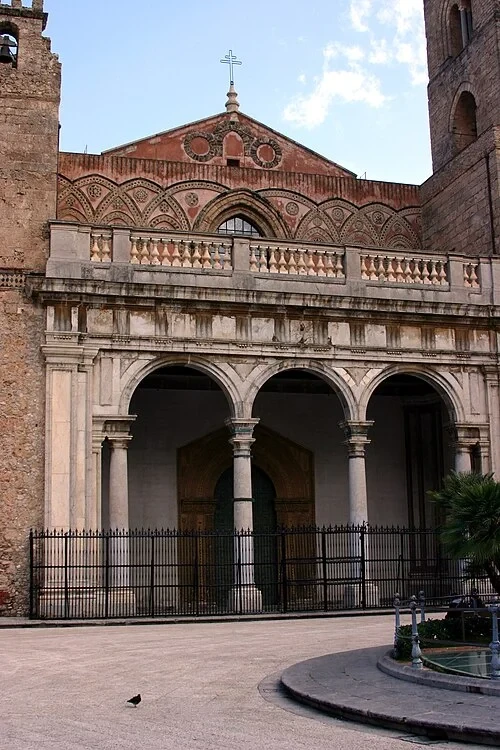 Western Facade and the Bronze DoorsThe Main Facade
Welcome to one of the most significant architectural achievements of the Middle Ages. This massive structure represents the ultimate synthesis of three distinct worlds: Northern European Norman, Mediterranean Byzantine, and North African Islamic. King William II commissioned this site in 1172 with a clear political motive. By building a grand complex outside the capital, he sought to outshine the Archbishop of Palermo and establish his own independent authority. As you examine the exterior, look for the two fortress-like towers that frame the entrance. These massive blocks reflect the Norman influence, emphasizing security and strength. Between them, however, the heavy stone gives way to lighter, more decorative elements. Notice the intricate geometric patterns and the pointed blind arches. These features, along with the limestone and lava stone decorations above the porch, are direct imports from Islamic architecture. This interplay of styles was intentional, reflecting a kingdom that was a vibrant crossroad of cultures. The facade serves as a prologue to the interior, signaling that you are entering a space where the wealth of a king was used to unite disparate traditions under one roof.
José Luiz · CC BY-SA 4.0
02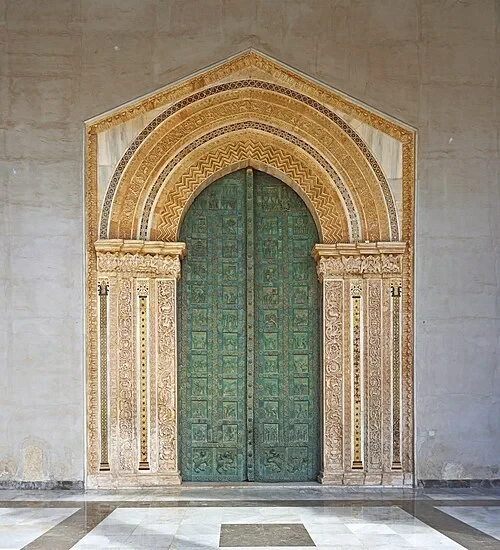 Western Facade and the Bronze DoorsThe Bronze Entrance
Standing at the threshold, these massive bronze doors offer a glimpse into the international reach of the Norman court. They were crafted by the renowned artist Bonanno Pisano around 1186. Because a commission of this scale required specialized expertise not locally available at the time, the doors were cast in Pisa and then carefully transported across the sea to Monreale. This logistical feat alone was a demonstration of the King’s immense wealth. The doors consist of forty-two relief panels that illustrate scenes from the Bible, starting with the Creation at the bottom and ascending through the life of Christ. Each panel is framed by decorative borders featuring small animal and human figures. During the Middle Ages, bronze was a material of high prestige, often associated with imperial power. Most surviving bronze doors from this period were lost to war or recycling, making this set a rare historical survival. The clarity of the relief work and the detailed storytelling were designed to prepare visitors for the spiritual journey within, acting as a transition from the physical world to the sacred space of the cathedral.
Photo: Ludvig14 · CC BY-SA 4.0
03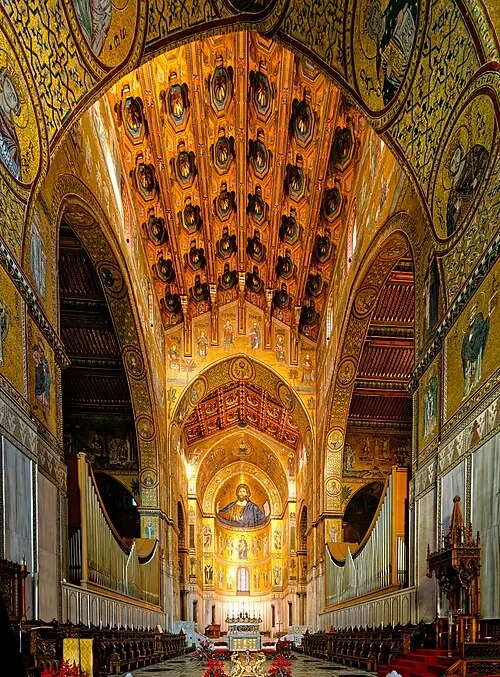 The Golden Nave and Genesis MosaicsThe Golden Nave
Entering the nave provides an immediate sense of the cathedral's overwhelming scale. The space measures 102 meters in length and 40 meters in width, but it is the vertical surfaces that command attention. Approximately 6,500 square meters of gold-leaf mosaics cover every upper wall, arch, and apse. This was not merely a decorative choice; the gold was intended to reflect light, creating a celestial atmosphere that seemed to transcend the physical stone of the building. The layout follows a strict theological hierarchy. Along the long walls of the nave, you can see the sequence of Old Testament stories. These scenes guide the eye forward, moving toward the sanctuary where the focus shifts to holy figures and the life of Christ. The craftsmanship required for this undertaking was staggering, involving teams of Byzantine masters and local assistants working for years to set millions of tiny glass tiles, known as tesserae. This golden envelope served to glorify the Norman dynasty, placing King William II at the center of a divine narrative that linked the history of the world to the current Sicilian throne. The sheer quantity of gold remains one of the largest concentrations of its kind anywhere.
Listen in the appPhoto: Holger Uwe Schmitt · CC BY-SA 4.0
04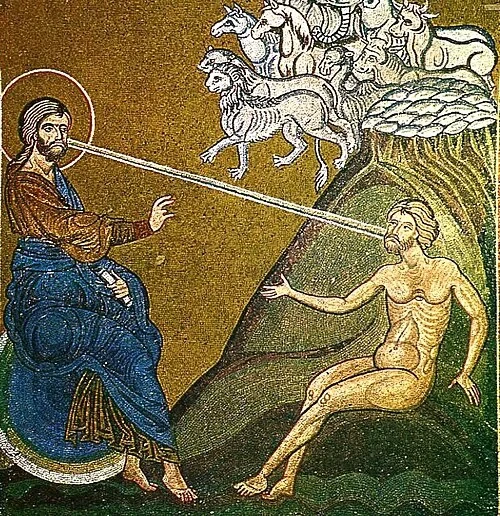 The Golden Nave and Genesis MosaicsThe Creation of Adam
Among the many narratives along the nave, the Creation of Adam illustrates the specific storytelling technique used by the medieval mosaicists. The figure of God is depicted seated upon a celestial orb, reaching out toward the reclining figure of Adam. A prominent feature here is the physical beam of light that connects the divine face to Adam’s. This is a literal depiction of the 'breath of life,' making a complex theological concept visible and immediate for the viewer. These mosaics are often referred to as a 'Bible for the illiterate.' In an age when most people could not read Latin, these visual dramas taught the tenets of the faith through color and form. Notice the use of high-contrast colors and the rhythmic patterns in the background. The artists avoided realistic depth, choosing instead a flat, symbolic style that emphasized the importance of the action over the setting. By placing these familiar stories at eye level throughout the nave, the cathedral builders ensured that the common person felt a direct connection to the sacred history displayed above them. Every gesture and object in the scene holds specific meaning, intended to be read like a text by those who entered the space.
Listen in the appUnknown author · CC0
05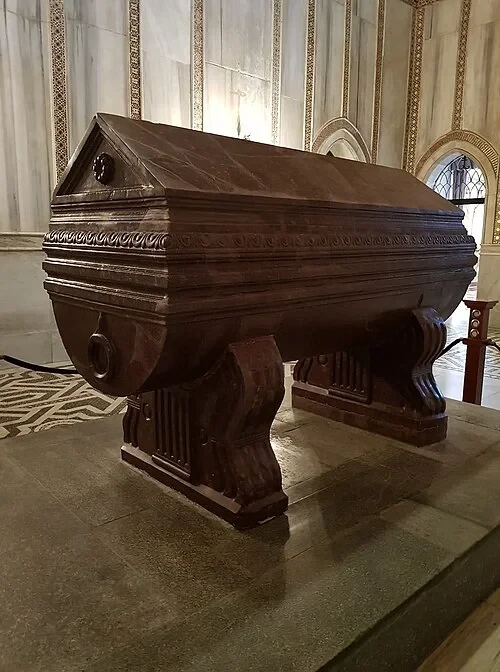 The Royal Tombs of the Norman KingsTomb of William I of Sicily
This heavy, unadorned sarcophagus contains the remains of King William I, who ruled from 1154 to 1166. It is made of deep purple porphyry, a material of extraordinary significance in the Middle Ages. In the ancient world, porphyry was a stone reserved exclusively for Roman emperors, and by choosing it for his father’s tomb, William II was making a bold political statement. He was asserting that the Norman kings of Sicily were the true heirs to the imperial Roman tradition. The stone itself was incredibly difficult to carve, requiring specialized tools and immense labor. Unlike the more ornate tombs you may see elsewhere, this one relies entirely on the prestige of the material for its impact. William I earned the nickname 'The Bad' primarily because of his stern and often repressive rule, which led to numerous rebellions among the Sicilian barons. His reputation stands in sharp contrast to the more favorable legacy of his son, yet his burial here in this imperial stone ensures that his role in the foundation of the dynasty remains a central part of the cathedral's royal narrative.
Listen in the app-Armin · CC BY-SA 3.0 de
06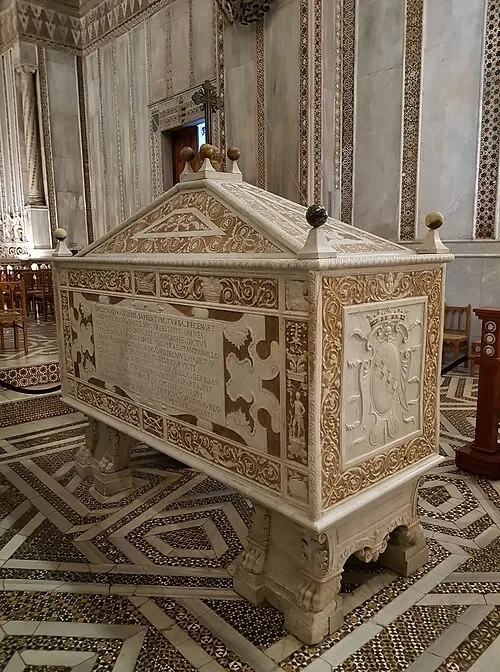 The Royal Tombs of the Norman KingsTomb of William II of Sicily
Resting here is William II, often called 'The Good,' the visionary king who commissioned this entire cathedral complex. In contrast to the plain, imperial porphyry of his father's tomb nearby, William II's sarcophagus is crafted from white marble and features more detailed decorative elements. This shift in style reflects the transition toward more ornate Gothic sensibilities that were beginning to reach Sicily from Northern Europe. William was only 20 years old when he began construction on Monreale, and he poured the kingdom's vast resources into the project. He intended the cathedral to be his final resting place and a permanent monument to his piety and power. Unfortunately, the king died at the young age of 36, before he could see every artistic detail of his grand design completed. While his father’s tomb emphasized the link to the Roman past, William II’s tomb points toward the artistic future of the island. His burial within the church he founded served as the ultimate signature on his work, cementing his identity as the benefactor who brought this golden vision to life for his subjects and for history.
Listen in the app-Armin · CC BY-SA 3.0 de
07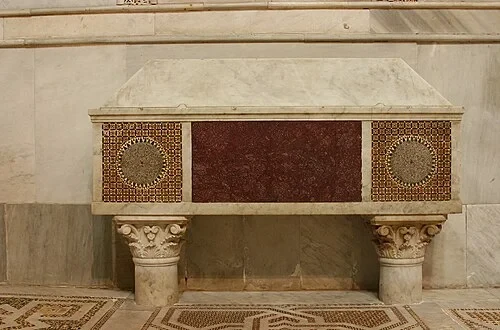 The Royal Tombs of the Norman KingsTomb of Margaret of Navarre, Queen of Sicily
This monument is dedicated to Margaret of Navarre, the wife of William I and mother of William II. Her tomb is notable for the intricate mosaic work on its base and the porphyry slab integrated into its side. These materials connect her burial to the royal and imperial themes found throughout the cathedral. Margaret played a pivotal role in Sicilian history, serving as regent for several years after her husband's death while her son was still a child. It was a period of intense political instability and power struggles among the nobility. Margaret was a shrewd leader who managed to maintain the stability of the crown and protect her son’s inheritance, which ultimately allowed William II to eventually build this cathedral. Her tomb’s position within the royal sanctuary reflects her high status and her essential contribution to the dynasty’s legacy. The fine craftsmanship of the base, with its tiny tiles of glass and gold, mirrors the artistic excellence found in the nave above, ensuring that the queen’s final resting place was as distinguished as her time on the throne.
Listen in the appJosé Luiz · CC BY-SA 4.0
08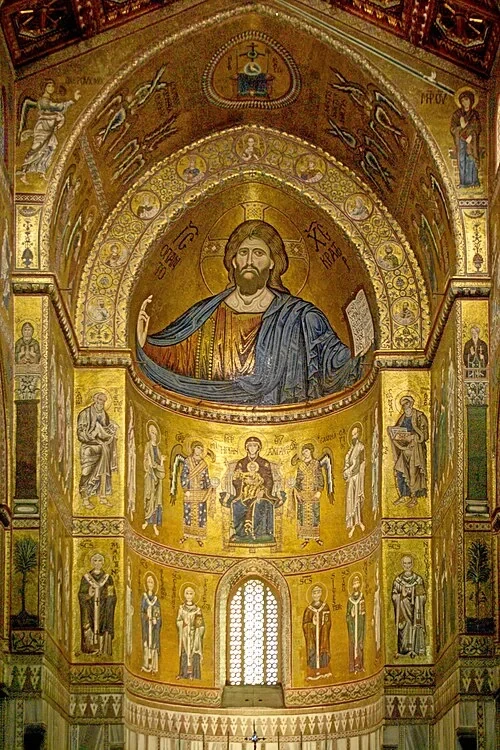 The Christ Pantocrator and High AltarMonreale Cathedral Mosaics
The spiritual and visual climax of the cathedral is found in the main apse, where the image of Christ Pantocrator, or 'the Almighty,' looms over the space. This mosaic is a triumph of Byzantine artistry, created by masters brought specifically from Constantinople. The scale is monumental; to give you an idea of the proportions, the figure's right hand alone measures several meters across. Christ is shown in the traditional pose of a judge and protector, holding a gospel book and offering a blessing. A remarkable feature of this work is the treatment of the eyes. Using a specific artistic technique of the era, the eyes are positioned so that they appear to follow you as you move throughout the nave. This was intended to instill a sense of divine scrutiny and constant presence. Surrounding the central figure are layers of angels, saints, and apostles, all set against the endless gold background. This arrangement reflects the heavenly order, with Christ at the summit of the hierarchy. The mosaic remains one of the best-preserved and most impactful examples of its kind, intended to overwhelm the viewer with the majesty of the divine and the power of the king who commissioned it.
Listen in the appPhoto: Berthold Werner · CC BY-SA 3.0
09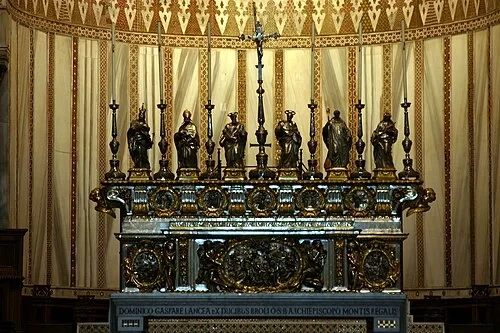 The Christ Pantocrator and High AltarThe High Altar
Positioned directly beneath the great mosaic of Christ, the high altar represents a much later chapter in the cathedral's history. Completed in the 18th century, this piece is a masterpiece of Baroque silverwork. It stands in stark visual contrast to the rigid, two-dimensional style of the medieval mosaics above. Where the Byzantine art is still and symbolic, the Baroque altar is fluid and dramatic, filled with movement and depth. The silver reliefs depict various religious scenes, while the sculptures around the altar seem to twist and turn in the light. This addition demonstrates that the cathedral remained a living center of worship and wealth long after the Norman era ended. Each century brought new artistic contributions as subsequent rulers and bishops sought to leave their mark on the site. The use of silver on such a grand scale was an immense display of 18th-century prosperity. By examining the altar against the backdrop of the gold walls, you can see how different eras of Sicilian history layered themselves upon one another, with the Baroque desire for theatricality meeting the medieval desire for golden light.
Listen in the appJosé Luiz · CC BY-SA 4.0
10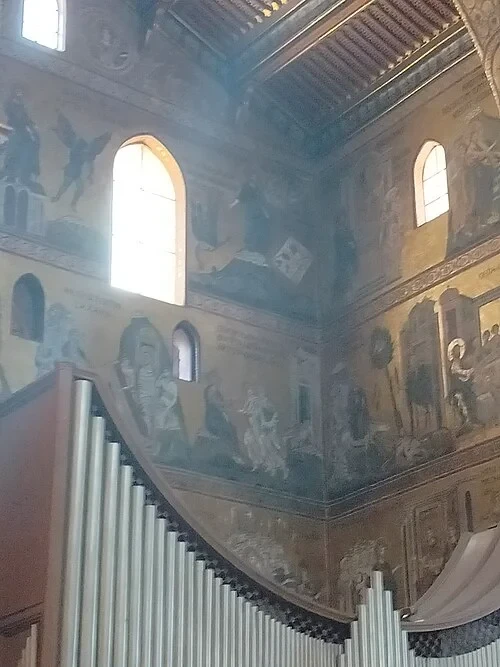 The Ruffatti Pipe OrganThe Grand Organ
Integrated into the walls of the transept is the grand organ, a colossal instrument that remains one of the largest in Italy. Built in the mid-20th century by the renowned Ruffatti brothers, it contains over 7,000 pipes. These pipes range from the size of a small pencil to massive columns several meters high. The cathedral’s architects designed the interior with acoustics that were exceptionally well-suited for music, and the organ utilizes the vast stone and gold-vaulted space to its full advantage. When played, the sound resonates through the nave, intended to sound like a celestial choir. The organ console itself is a complex piece of machinery, with multiple keyboards and pedals allowing the organist to control the vast array of sounds. It is frequently used for international festivals and liturgical celebrations, continuing a tradition of sacred music that has been part of the cathedral's life since its founding. The way the pipes are recessed into the architecture ensures that the instrument, despite its modern origin and massive size, does not distract from the medieval mosaics but rather enhances the sensory experience of the sacred space.
Listen in the appPhoto: Kaspo · CC BY-SA 4.0
Cattedrale di Monreale
Frequently asked questions
How much does the guide cost?
Free app download. Listed guide price: $1.99. Guide price shown in the app. Audio guide only. Venue admission is separate.
Can I listen without internet?
Yes. Download the guide’s audio, images, and maps in the app before your visit. Your downloaded content is then available offline.
Can I listen in my language?
Stanza supports 15 languages. Check the app for the languages available for this guide.
Do I need to follow a schedule?
No. This is a self-guided experience. Choose your stops, pause whenever you like, and return to a story at your own pace.
At your own pace
Explore Cattedrale di Monreale.
Download Stanza, then search for “Cattedrale di Monreale”.
Free app download · Guide price shown in the app
Keep exploring
Nearby audio guides
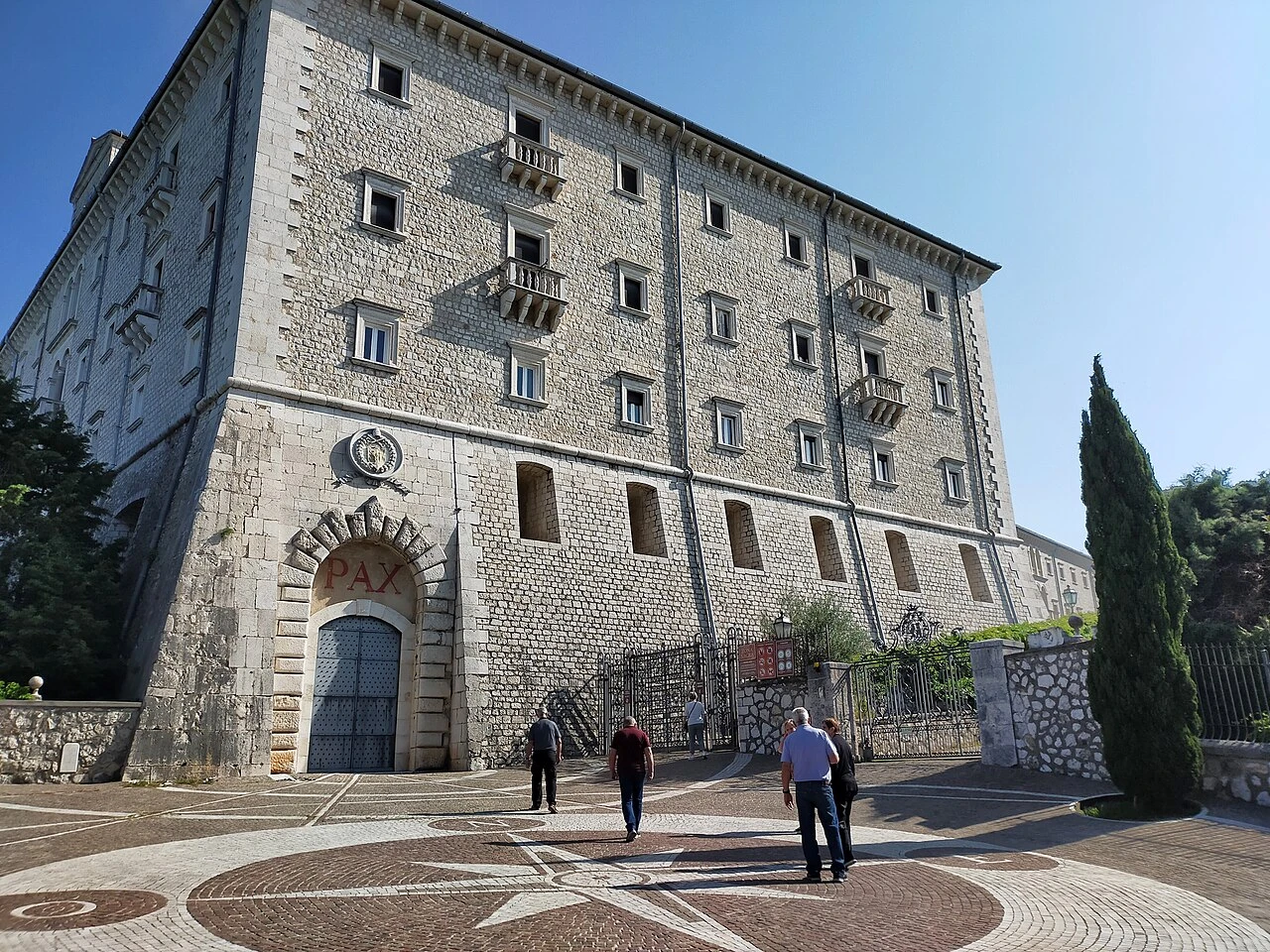
Cassino
Abbey of Monte Cassino
Content & sources
Photo: Marica Massaro · CC BY-SA 4.0
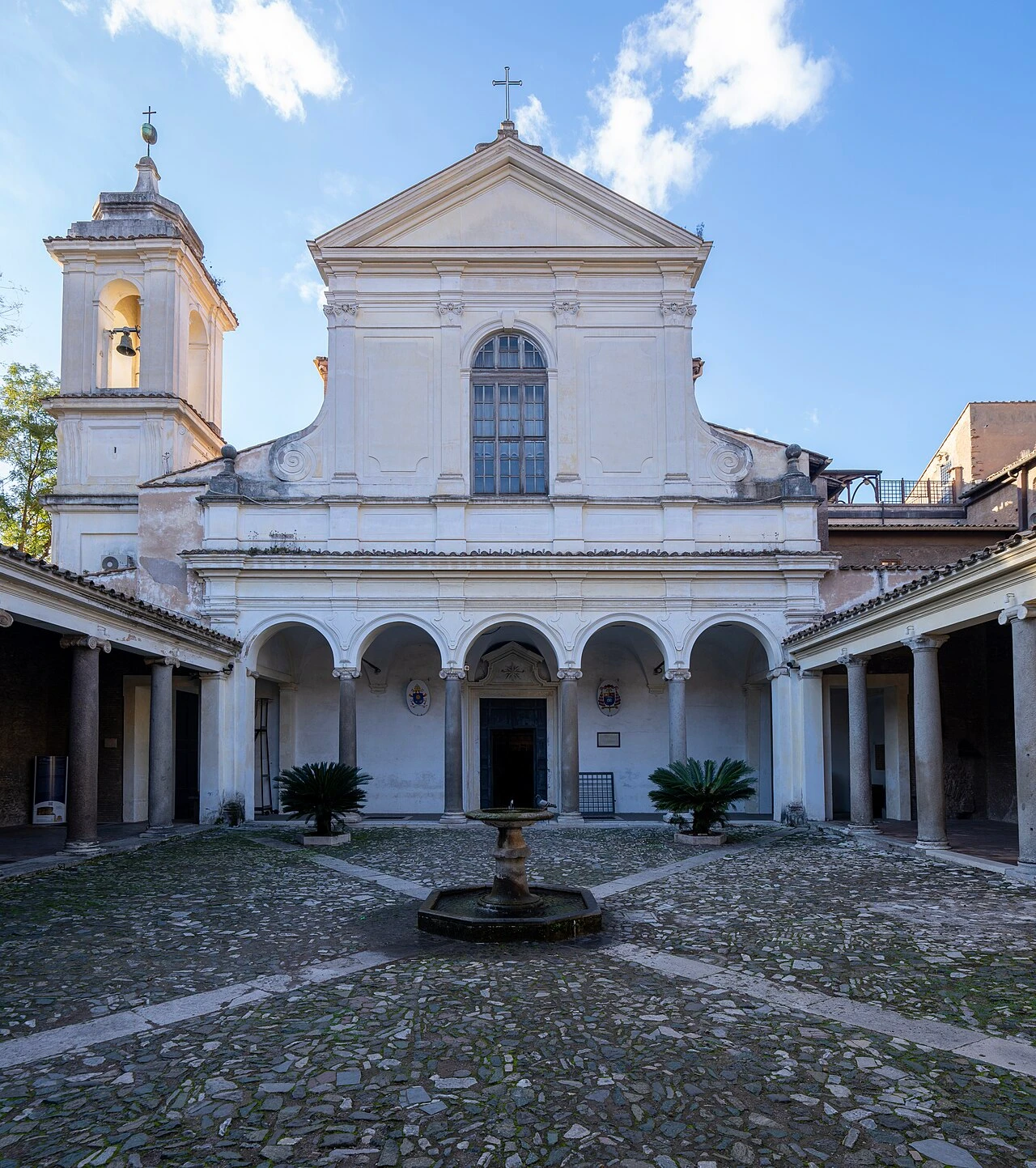
Rome
Basilica di San Clemente
Content & sources
Photo: Labicanense · CC BY-SA 4.0
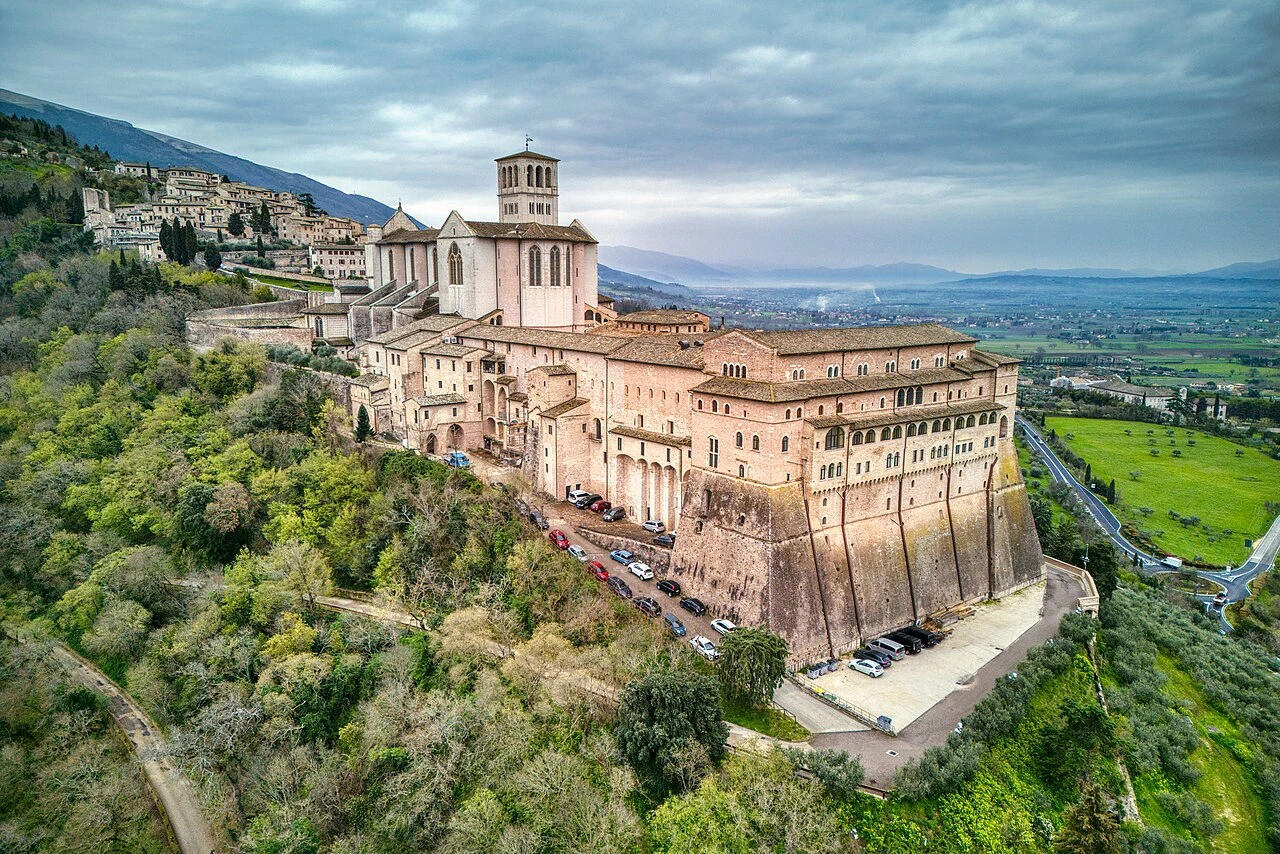
Assisi
Basilica di San Francesco
Content & sources
Hagai Agmon-Snir حچاي اچمون-سنير חגי אגמון-שניר · CC BY-SA 4.0
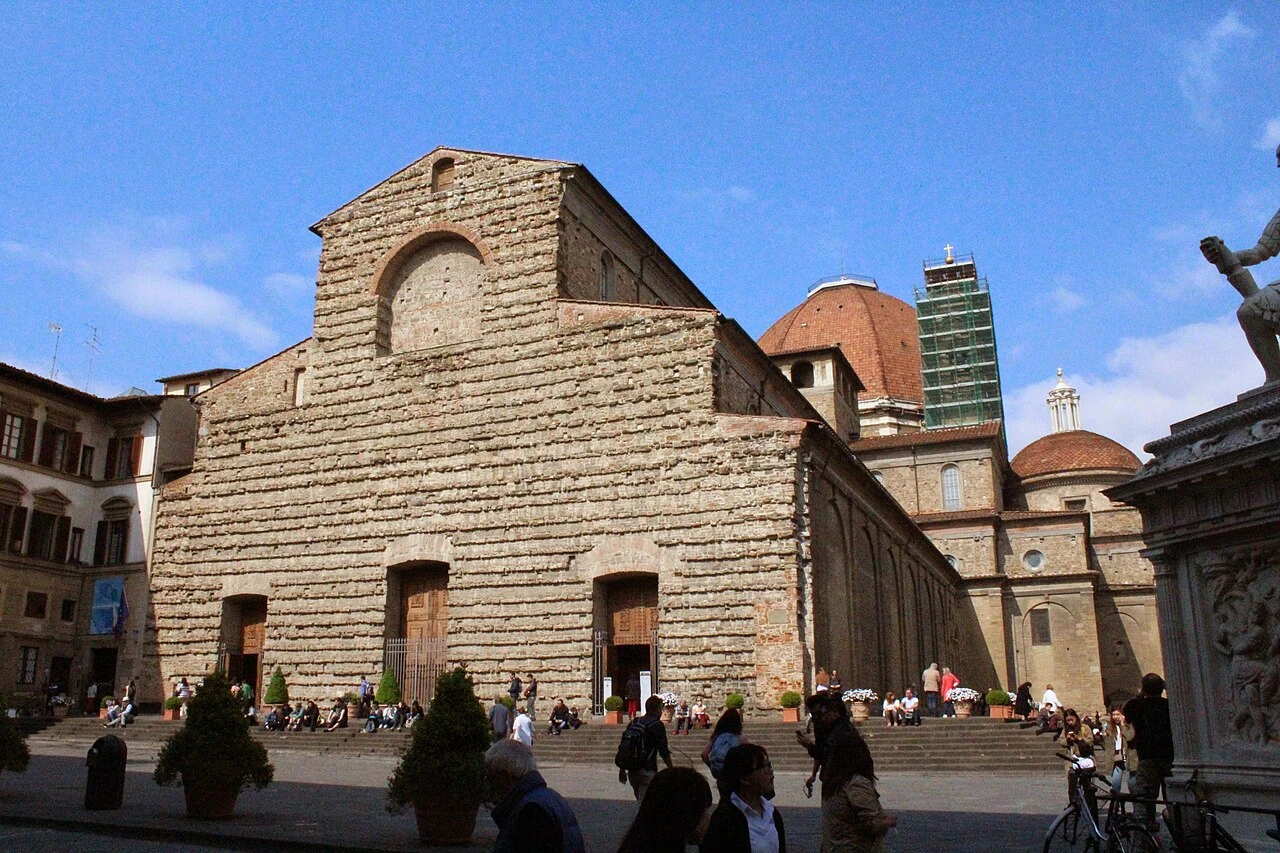
Florence
Basilica di San Lorenzo
Content & sources
Nelson Pérez · CC BY-SA 3.0