Stanza · Audio guide
Scrovegni ChapelAudio guide
A place to remember. A story to take with you.
A historic chapel in Padua, Italy, famous for its comprehensive fresco cycle by Giotto, depicting the lives of Joachim and Anna, Mary, and Christ. It also serves as a religious and art museum.
Download Stanza, then search for “Scrovegni Chapel”.
About the tour
One guide. Your kind of visit.
A historic chapel in Padua, Italy, famous for its comprehensive fresco cycle by Giotto, depicting the lives of Joachim and Anna, Mary, and Christ. It also serves as a religious and art museum.
Ready when you are.
- 01Get the free Stanza app.
iOS & Android
- 02Find your guide.
“Scrovegni Chapel”
- 03Download before you go.
Works offline
Audio guide / 14 narrated stops
Inside the guide
Get to know a few of the stories before you go. Open a stop to read more.
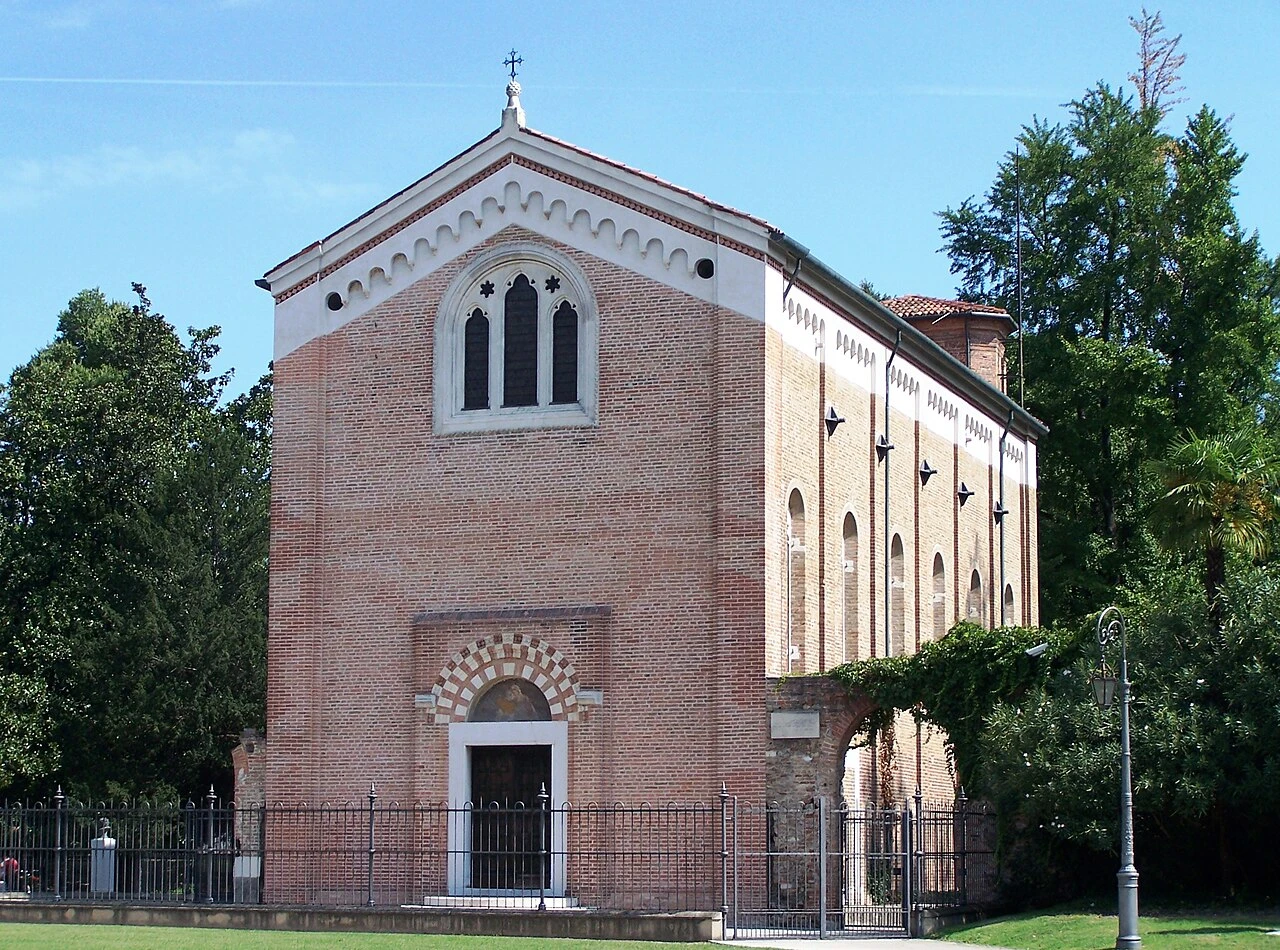
01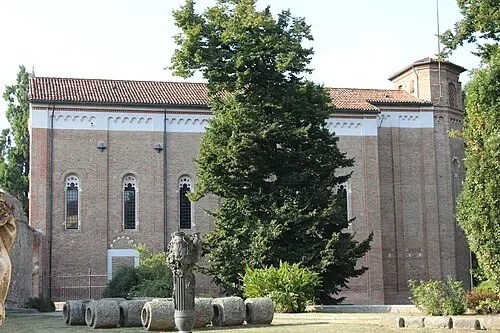 Arrival at the Scrovegni ChapelThe Scrovegni Chapel Exterior
This simple brick exterior belies the artistic treasure within. Since 2021, this site has been recognized as a UNESCO World Heritage site, marking its global importance as a milestone in human creativity. Before entering, you likely spent fifteen minutes in a specialized, climate-controlled chamber. This technological precaution is vital to protecting the seven hundred square meters of delicate frescoes from the humidity and pollutants carried by visitors. The interior nave measures approximately 20.88 meters long and 12.65 meters high, a space specifically commissioned by the wealthy Paduan banker Enrico Scrovegni. Around the year 1300, Enrico purchased this land—the site of an ancient Roman arena—to construct a private chapel attached to his family palace. While the grand palace has long since vanished, the chapel remains as a vessel for Giotto’s masterpiece. As you step inside, you leave the modest brick shell behind to find a world transformed by color and narrative. The architecture was designed specifically to provide the maximum wall surface for the paintings you are about to explore, effectively creating a massive canvas for a new era of human expression.
Photo: Oursana · CC0
02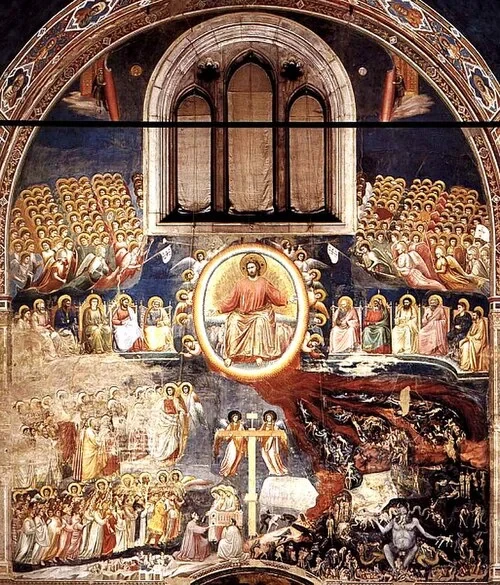 The Last Judgment and the Donor’s GiftThe Last Judgment
Spanning the entire interior facade, this composition represents a turning point in art history. Here, Giotto famously broke away from the rigid, flat, and symbolic Byzantine style that had dominated for centuries. Instead, he created figures with palpable weight, volume, and genuine human emotion. At the center sits Christ the Judge, surrounded by a celestial mandorla. Notice the literal and symbolic separation: on the left, the saved are guided toward heaven, while on the right, the damned are cast into a terrifying, chaotic underworld. This monumental task was not performed by Giotto alone. The entire chapel cycle was completed in a remarkably short period of about 625 work days. To achieve this, Giotto led a highly organized workshop consisting of roughly forty assistants. They worked in sections called "giornate," or "a day's work," painting onto fresh plaster before it could dry. This specific fresco serves as a bookend to the chapel’s stories, reminding every departing visitor of the spiritual consequences of their lives. Look closely at the variety of facial expressions among the saved, showcasing Giotto’s newfound interest in individual psychological states.
Giotto · Public domain
03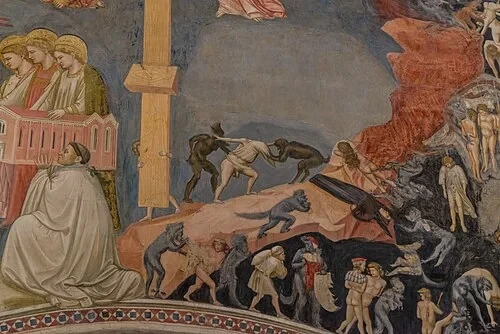 The Last Judgment and the Donor’s GiftThe Patron’s Penance
This specific detail provides the key to understanding why this magnificent space exists. Enrico is depicted in an act of profound penance. He built this chapel to atone for the sin of usury—the practice of lending money at high interest rates—which was a crime committed by his father, Reginaldo. The family's reputation was so notorious that the poet Dante Alighieri, a contemporary of Giotto, famously placed Enrico's father in the Seventh Circle of Hell in his masterpiece, the "Inferno." By commissioning Giotto to decorate this sanctuary, Enrico sought to redeem his family name and ensure his own salvation. He is shown here in a humble posture, supported by a priest, handing over the chapel to three figures: the Virgin Mary, Saint John the Evangelist, and Mary of Charity. The model he holds is quite accurate, showing the very building you are standing in today. This inclusion of a living person into a sacred scene was a bold statement of both piety and social standing. It grounds the divine narratives surrounding you in a very real, human struggle for redemption and legacy in 14th-century Padua.
Listen in the appPhoto: Joergens.mi · CC BY-SA 3.0
04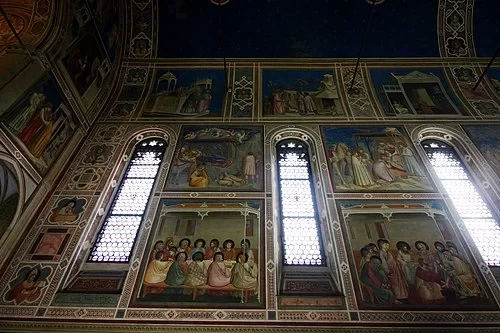 The Story of Joachim and AnneCycle of the Life of Joachim
To follow the story, guide your eyes to the top of the right-hand wall. The narrative begins there with the Life of Joachim and Anna, the parents of the Virgin Mary. From there, the story moves through the Life of the Virgin and concludes on the lower levels with the extensive Life of Christ. This organized layout allowed the mostly illiterate congregation of the time to read the sacred texts visually. Giotto’s genius extended beyond the subjects themselves; he carefully considered the physical environment of the chapel. For instance, notice the narrow windows on the south wall. Giotto factored the actual light entering from these windows into his compositions, aligning the painted shadows within the frescoes to match the direction of the real sunlight. This creates a remarkable sense of consistency and realism throughout the space. As you look across the tiers, notice how the deep blue backgrounds unify the separate panels into a single, cohesive environment. The registers serve as a structured path, leading the viewer through time and theology, from the origins of the holy family to the ultimate sacrifice of the crucifixion.
Listen in the appJosé Luiz · CC BY-SA 4.0
05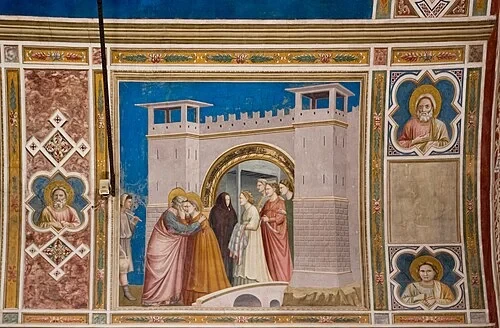 The Story of Joachim and AnneMeeting at the Golden Gate
Giotto uses this moment to showcase his revolutionary approach to human emotion. After a long period of separation and divine intervention, the couple reunites. Instead of the distant, stylized figures common in earlier centuries, Giotto presents them in a deep, intimate embrace. Their faces press together, and their arms wrap around one another in a way that feels genuinely affectionate and psychologically real. This focus on intimacy marked a massive leap forward for art, moving away from symbolic icons and toward relatable human experiences. Notice the architectural setting of the Golden Gate itself. Giotto uses the structure to provide a sense of physical place and three-dimensional depth, anchoring the figures in a believable world. The surrounding figures, including the woman in black and the group of onlookers, react to the reunion with their own subtle expressions, further enriching the narrative. The gate serves as both a literal entrance to Jerusalem and a metaphorical transition point in the lives of the couple. By capturing such a private moment of joy on a monumental scale, Giotto invited the viewer to connect with these holy figures on a personal level.
Listen in the appPhoto: Joergens.mi · CC BY-SA 3.0
06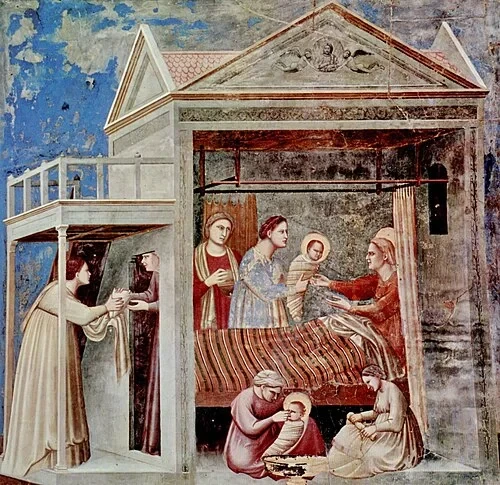 The Early Life of MaryBirth of the Virgin
This technique allows us to look directly into a private domestic interior, a radical departure from the flat backgrounds of the past. By treating the house like a stage set, Giotto explores three-dimensionality and creates a believable space for his figures to inhabit. The scene is filled with realistic domestic details that would have felt familiar to the people of 14th-century Padua. You can see the carefully rendered bed, the hanging textiles, and the busy movements of the women tending to the infant Mary. One woman reaches over the bed, while another holds the swaddled baby below. These mundane activities make the holy story feel relatable and grounded in everyday life. Notice how the architecture of the room frames the action, using columns and beams to define the space. This use of interior architecture was a key step in the development of linear perspective, though that would not be fully formalized for another century. By placing sacred events in such recognizable settings, Giotto brought the divine down to earth, allowing the viewer to imagine these events happening in their own world.
Listen in the appGiotto · Public domain
07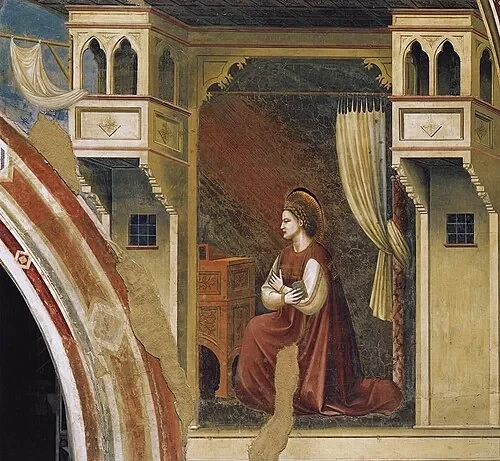 The Triumphal Arch and AnnunciationThe Virgin of the Annunciation
This placement is deeply intentional and central to the chapel's design. The figure of Mary is on one side of the arch, while Gabriel is on the opposite, physically bridging the gap between the Old Testament stories on the upper walls and the New Testament life of Christ depicted below. This architectural framing signifies the moment of transition in Christian theology. The chapel itself was consecrated on March 25, which is the Feast of the Annunciation, highlighting the importance of this specific scene to the patron, Enrico Scrovegni. Look at the two figures; they are set within painted architectural balconies that seem to project out from the wall, enhancing the illusion of space. Mary’s humble posture and Gabriel’s dynamic gesture create a silent dialogue across the physical void of the arch. This scene acts as a gatekeeper to the altar area, where the most sacred rites were performed. By integrating the architecture of the chapel so closely with the painted narrative, Giotto ensures that the physical space and the spiritual story are inextricably linked, guiding the visitor's transition from earthly narratives to the divine focus of the sanctuary.
Listen in the appGiotto · Public domain
08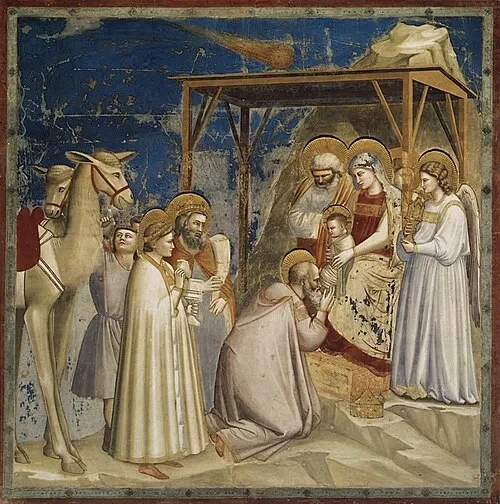 The Star of Bethlehem and Christ's MinistryAdoration of the Magi
Historians believe Giotto based this star on his own observation of Halley’s Comet during its passage in 1301. Instead of a traditional multi-pointed star, he painted a trailing, fiery object, making this one of the first scientifically-inspired depictions of a comet in Western art. This detail highlights Giotto's interest in the natural world and his desire to bring a sense of observed reality to these biblical events. Below the comet, the scene of the Adoration of the Magi shows a departure from the ethereal. The figures and the camels have a solid, monumental feel, possessing actual physical mass and volume. Look at the weight of the kneeling king and the heavy folds of the garments. Giotto treats these figures as physical bodies in space rather than flat symbols. The stable itself is a simple wooden structure, adding to the grounded, humble atmosphere of the birth. This combination of astronomical observation and physical realism demonstrates Giotto's role as a bridge between the medieval and the Renaissance mindsets. The comet's trail points directly toward the Christ child, using a real-world phenomenon to anchor a supernatural event.
Listen in the appGiotto · Public domain
09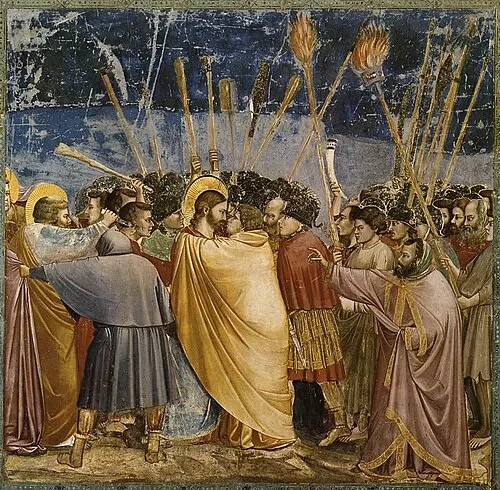 The Passion and LamentationThe Kiss of Judas
Focus on the central pair: the calm, knowing face of Jesus contrasts sharply with the deceptive, puckered face of Judas. As Judas leans in to deliver the infamous kiss, he envelops Jesus in his yellow cloak, a color traditionally associated with betrayal. Their eye contact is intense and unwavering, creating a quiet, powerful core in the midst of turmoil. Surrounding them is a claustrophobic forest of spears, torches, and clubs held by a violent crowd. This chaotic background emphasizes the isolation of the two central figures and heightens the sense of impending tragedy. Notice how Giotto uses the overlapping bodies and the vertical lines of the weapons to create a sense of depth and frantic energy. The figures in the crowd are not just fillers; they have individual expressions of anger, confusion, and determination. By stripping away the symbolic ornamentation of earlier styles, Giotto forces the viewer to confront the raw human drama of the moment. The stillness of Christ's face against the motion of the crowd serves as a visual anchor, drawing the viewer’s eye back to the emotional heart of the scene.
Listen in the appGiotto · Public domain
10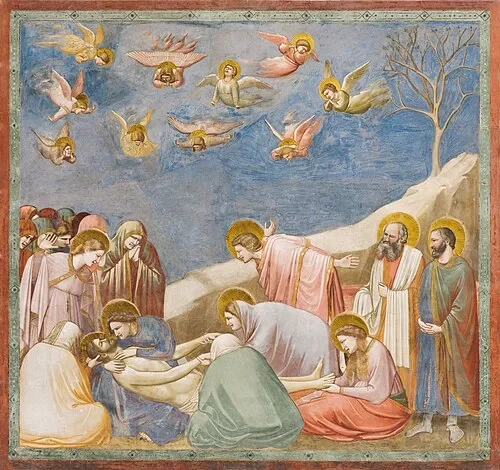 The Passion and LamentationLamentation
In this scene, Giotto masterfully orchestrates a collective expression of sorrow. Notice the different ways grief is manifested: from the quiet, bowed head of the Virgin Mary cradling her son to the dramatic, outstretched arms of Saint John. Even the sky is filled with small, foreshortened angels who wail and twist in agony, showing that all of creation mourns this loss. Giotto uses the composition to guide your eye; the diagonal line of the rocky ridge behind the figures leads directly down to the face of Christ. This focal point is reinforced by the two figures in the foreground who have their backs turned to us. This is a brilliant narrative device; by showing us their backs, Giotto draws us into the circle of mourners, making us participants in the scene rather than just observers. The heavy, block-like forms of the figures add to the somber weight of the atmosphere. There is no background distraction here, just a barren landscape that mirrors the desolation of the figures. Every element, from the barren tree on the hill to the tender touch of the grieving women, is designed to evoke a visceral emotional response.
Listen in the appPhoto: Gennadii Saus i Segura · Public domain
Scrovegni Chapel
Frequently asked questions
How much does the guide cost?
Free app download. Listed guide price: $0.99. Guide price shown in the app. Audio guide only. Venue admission is separate.
Can I listen without internet?
Yes. Download the guide’s audio, images, and maps in the app before your visit. Your downloaded content is then available offline.
Can I listen in my language?
Stanza supports 15 languages. Check the app for the languages available for this guide.
Do I need to follow a schedule?
No. This is a self-guided experience. Choose your stops, pause whenever you like, and return to a story at your own pace.
At your own pace
Explore Scrovegni Chapel.
Download Stanza, then search for “Scrovegni Chapel”.
Free app download · Guide price shown in the app
Keep exploring
Nearby audio guides
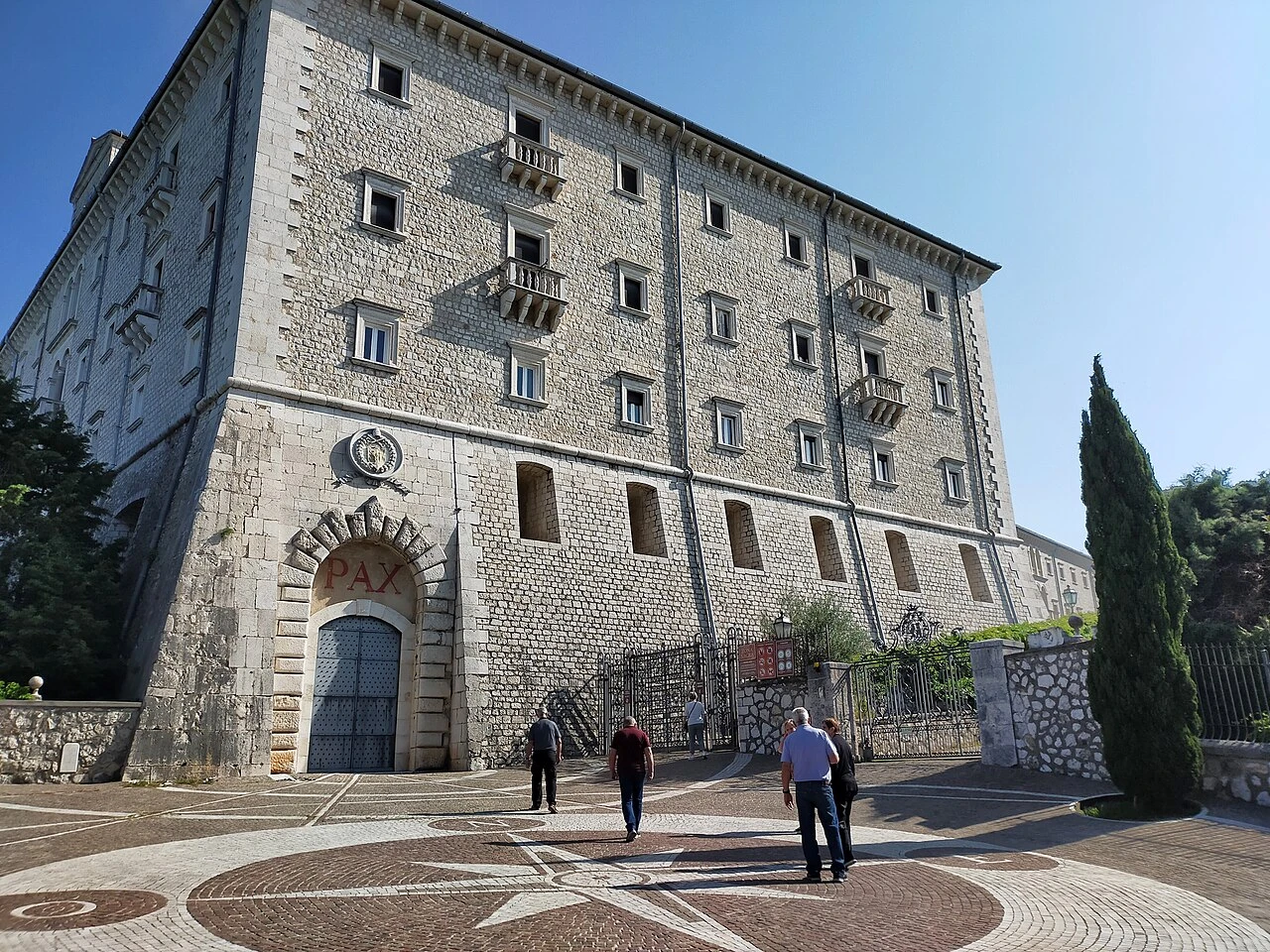
Cassino
Abbey of Monte Cassino
Content & sources
Photo: Marica Massaro · CC BY-SA 4.0
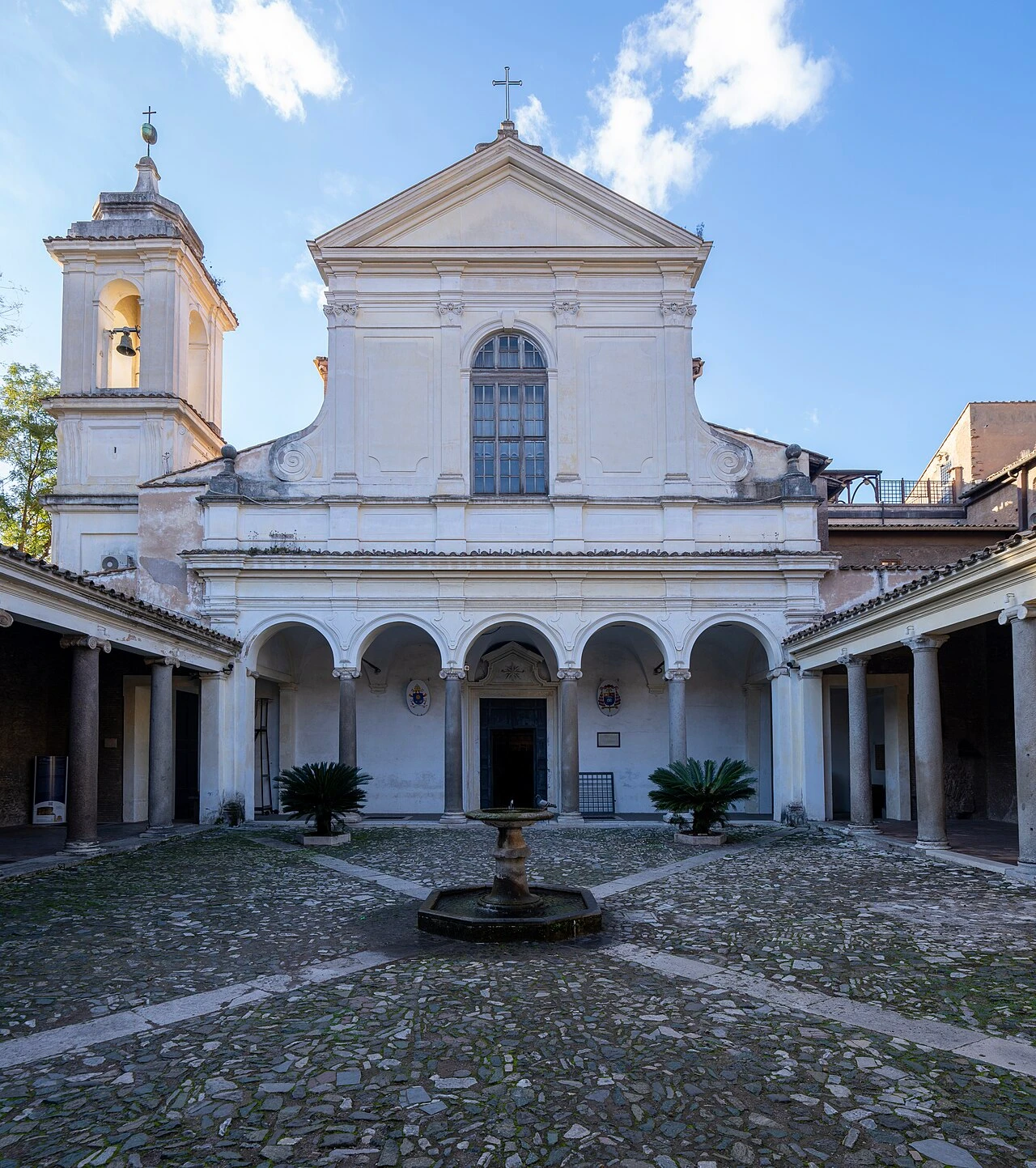
Rome
Basilica di San Clemente
Content & sources
Photo: Labicanense · CC BY-SA 4.0
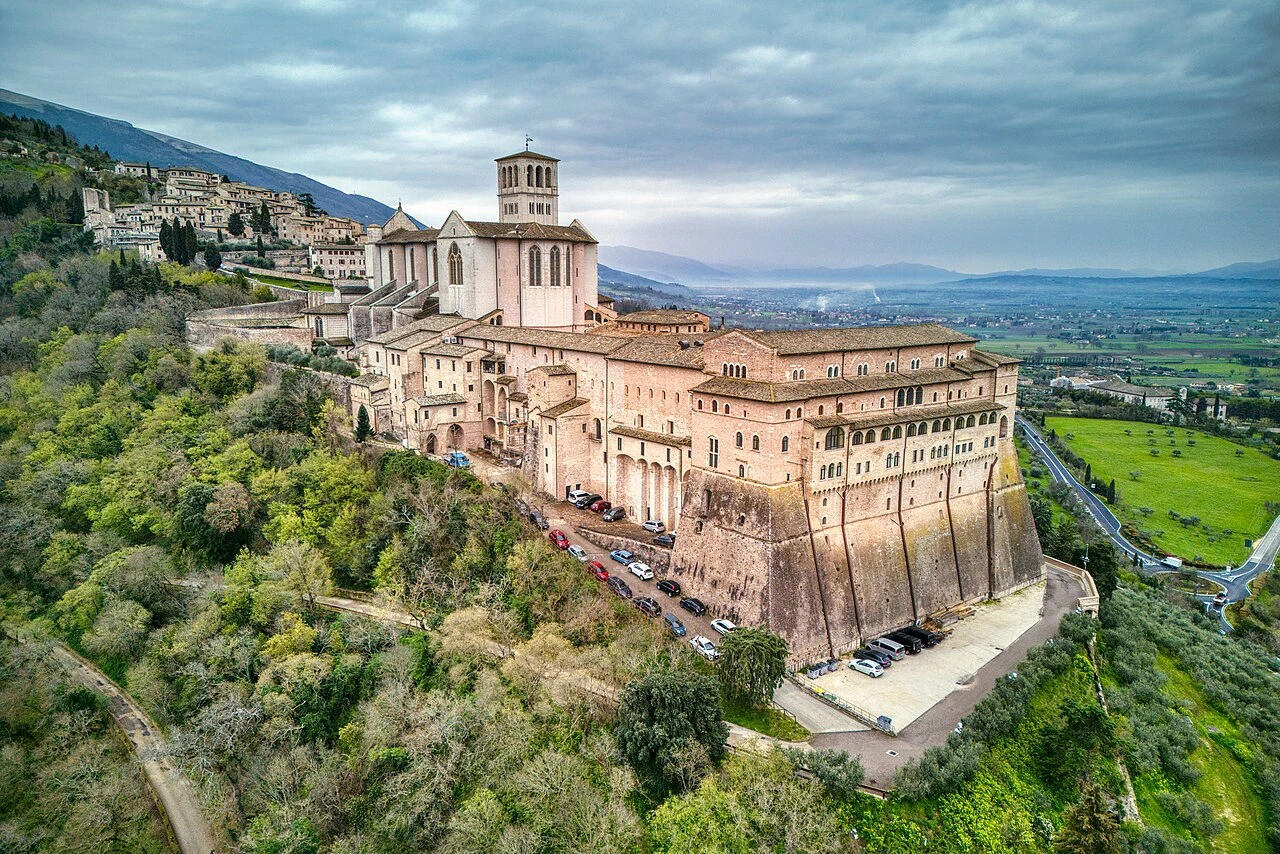
Assisi
Basilica di San Francesco
Content & sources
Hagai Agmon-Snir حچاي اچمون-سنير חגי אגמון-שניר · CC BY-SA 4.0
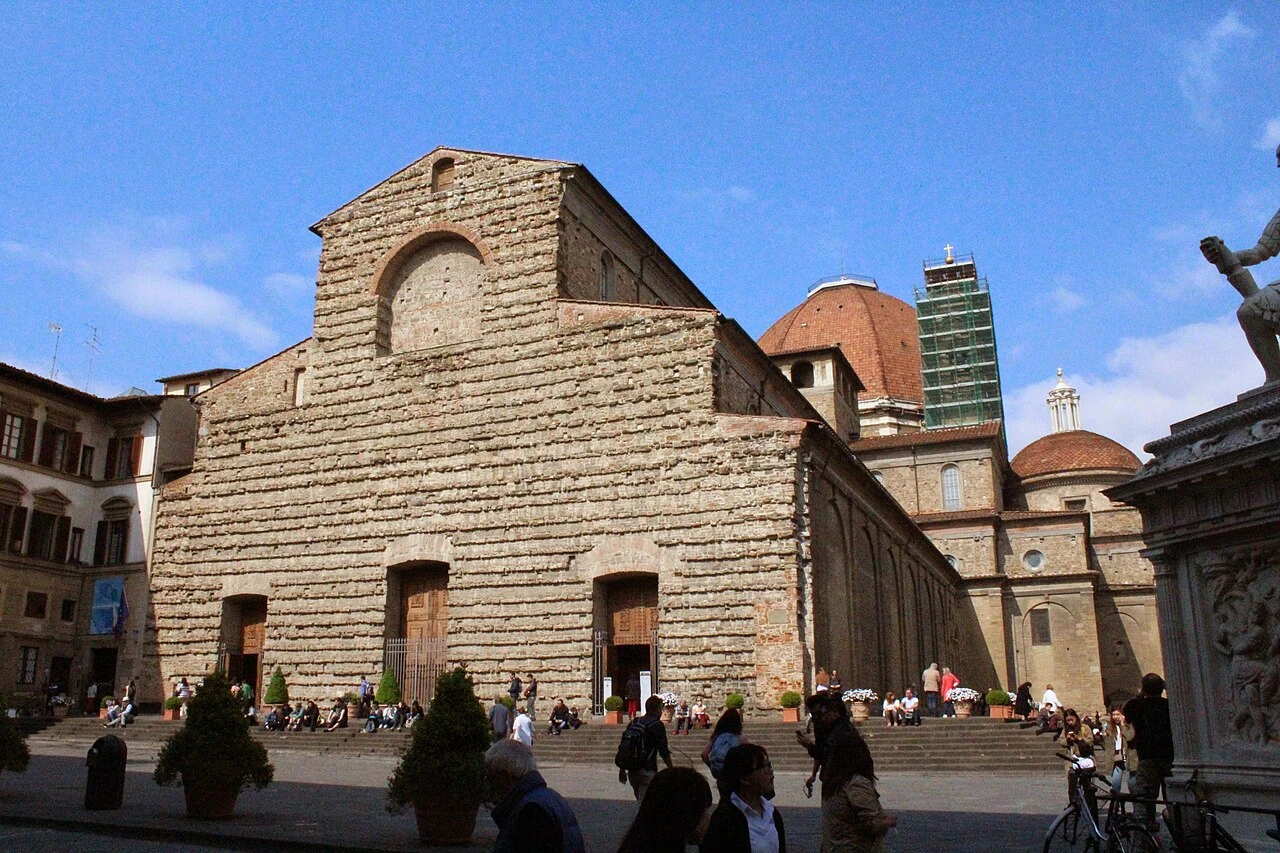
Florence
Basilica di San Lorenzo
Content & sources
Nelson Pérez · CC BY-SA 3.0