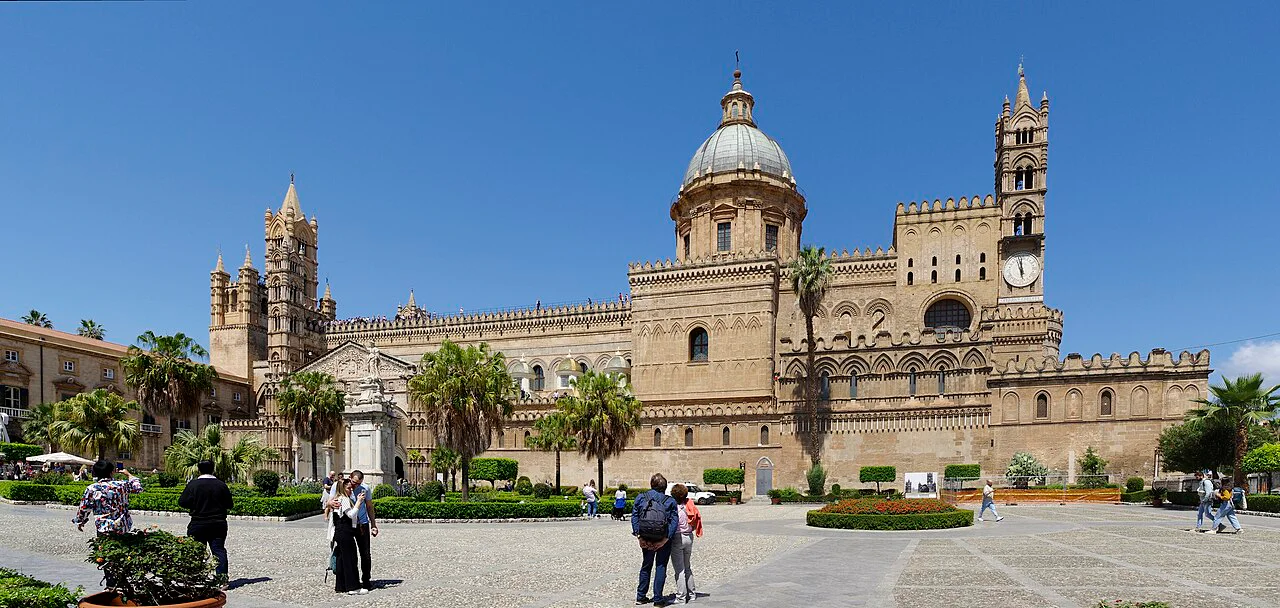
Stanza · Audio guide
Cattedrale di Palermo Audio Guide
A place to remember. A story to take with you.
Palermo Cathedral is the cathedral church of the Roman Catholic Archdiocese of Palermo in Sicily. The architectural complex is characterized by different styles resulting from a long history of additions and…
Download Stanza, then search for “Cattedrale di Palermo”.
About the tour
One guide. Your kind of visit.
Palermo Cathedral is the cathedral church of the Roman Catholic Archdiocese of Palermo in Sicily. The architectural complex is characterized by different styles resulting from a long history of additions and restorations.
Ready when you are.
- 01Get the free Stanza app.
iOS & Android
- 02Find your guide.
“Cattedrale di Palermo”
- 03Download before you go.
Works offline
Audio guide / 14 narrated stops
Inside the guide
Get to know a few of the stories before you go. Open a stop to read more.
01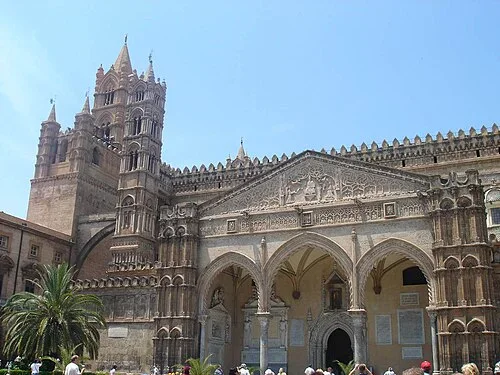 Southern Portico and the Quranic Column
The Southern Portico
Welcome to Palermo Cathedral, a single building that carries nearly a thousand years of Sicilian history. Norman, Islamic, Gothic, Baroque and Neoclassical all meet in its stone. The main entrance opens through this portico, three tall arcades built around 1465 in the Catalan-Gothic style that Spanish craftsmen brought to the island. The carved portal was executed by Antonio Gambara, finished by 1430, and the great wooden doors are the work of Francesco Miranda, from 1432. Kings were crowned under this roof. Monuments on the walls remember two of them. Victor Amadeus of Savoy was crowned here in December 1713, and Charles of Bourbon followed in 1735.
Sibeaster · Public domain
02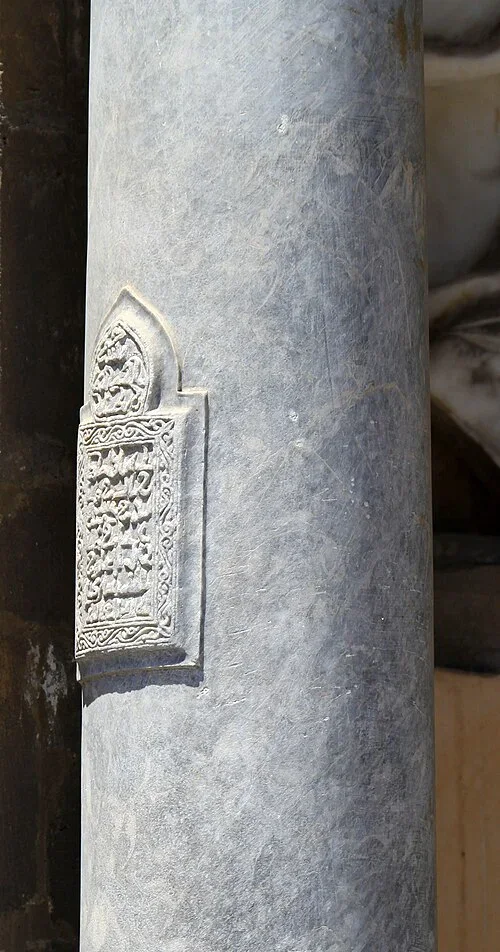 Southern Portico and the Quranic Column
The Quranic Column
The first column on the left of the portico is the oldest thing in sight. Carved into its marble is a verse from the Quran, the fifty-fourth verse of the seventh sura, from the chapter called Al-A'raf. The column once stood in an early Byzantine basilica on this spot, rebuilt by Bishop Vittore in 592. When the Arabs took Palermo in 831, the church became the city's great Friday mosque, the Gami. It is said to have held seven thousand worshippers. The Normans conquered Palermo in 1072 and returned the building to Christian worship. Yet they chose to keep Islamic elements, and this column with its Arabic inscription survived the change. A verse of the Quran, standing inside a Christian cathedral, marks how many faiths have shared this ground.
Carlo Pelagalli · CC BY-SA 3.0
03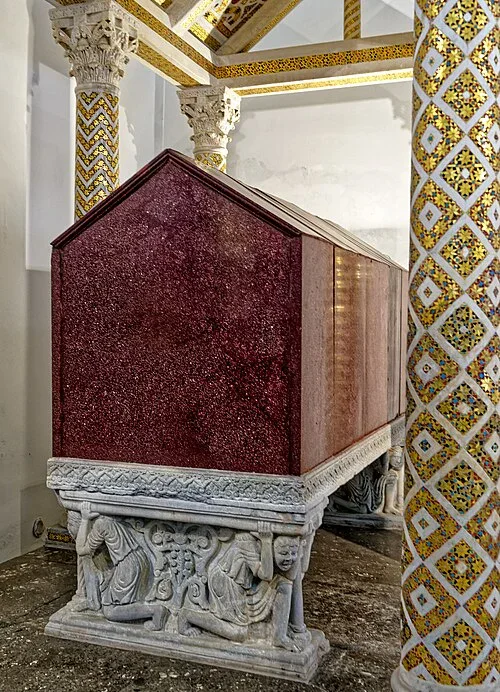 The Royal and Imperial Tombs
The Porphyry Tomb of Roger II
Deep red and shot with sparkle, porphyry was the stone of emperors in the ancient world. Under mosaic baldachins in the right-aisle chapels stand four sarcophagi of Sicily's first royal house. They hold Roger II, the first King of Sicily, his daughter Constance, her husband Emperor Henry VI, and their son Frederick II. Scholars count them as the very first free-standing medieval secular tombs in the West. Earlier and later tombs lean against walls. These stand alone. A local Sicilian workshop probably carved several of them from a single Roman column shaft, possibly taken from the Baths of Caracalla or of Diocletian in Rome. The inspiration came from Constantinople, where the porphyry sarcophagi of late Roman emperors still stood in the twelfth century. Roger had prepared two porphyry sarcophagi for his own foundation at Cefalù, meant as the family mausoleum; in 1215 Frederick II had them brought here, for himself and for his father, Henry VI.
Listen in the appGeak (Diskussion) · Copyrighted free use
04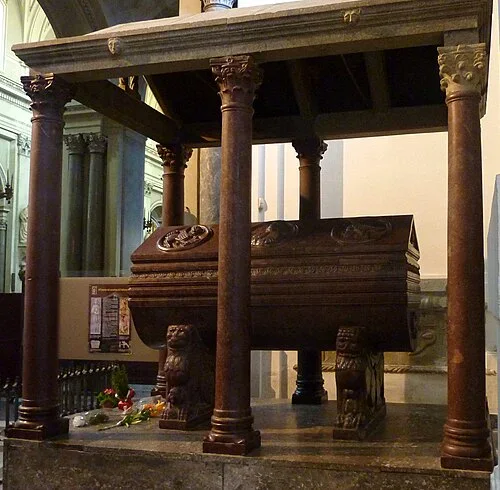 The Royal and Imperial Tombs
The Tomb of Emperor Frederick II
Frederick II rests beneath a canopy of porphyry columns, his urn raised on two pairs of carved lions. He was a king of Sicily who became Holy Roman Emperor, and he lies buried among his Norman ancestors. His father, Emperor Henry VI, lies in the same chapels. So does Frederick's wife, Constance of Aragon, in a Roman sarcophagus reused for her burial. They were moved to these chapels in the eighteenth century from their earlier places, most of them elsewhere in this same church.
Listen in the appGeak (Diskussion) · Copyrighted free use
05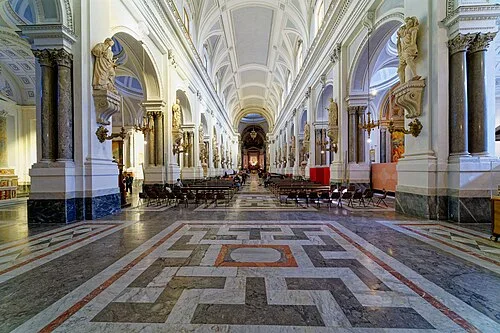 The Central Nave and Piazzi Meridian Line
The Central Nave
The bright white nave looks tidy and young, and in a sense it is. Most of what fills the eye dates from the great remake of the late eighteenth century. The work lasted two decades and finished in 1801, led by Ferdinando Fuga and Giuseppe Venanzio Marvuglia. The plan is a Latin cross, a nave flanked by two aisles, with pillars reinforced to carry the new vaults. The remake had a casualty. Antonello Gagini's Tribuna, a monumental marble altarpiece crowded with statues, friezes and reliefs, had risen behind the high altar from 1510 onward. His sons and other sculptors worked on it until 1574, for Archbishop Giovanni Paternò. Fuga ordered it dismantled. Its dozens of statues were scattered across the pillars and walls of the cathedral, where many of them remain.
Listen in the appPhoto: Holger Uwe Schmitt · CC BY-SA 4.0
06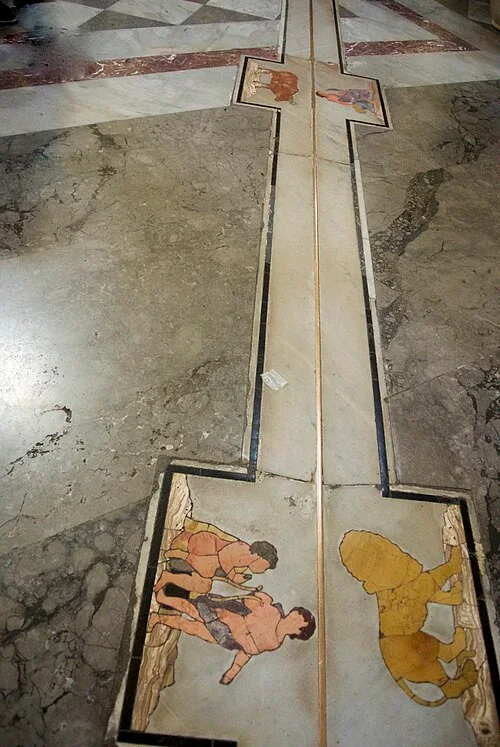 The Central Nave and Piazzi Meridian Line
The Meridian Line of Giuseppe Piazzi
Set into the marble floor runs a bronze line, the meridiana, a solar observatory built in 1801. Its maker was Giuseppe Piazzi, director of the Observatory of Palermo and the discoverer of Ceres, the first asteroid ever found. A tiny hole in one of the minor domes works like a pinhole camera, throwing an image of the sun onto the floor. At solar noon the image crosses the line, which runs exactly north to south. Through the year the crossing point slides along it. The ends mark the summer and winter solstices, and zodiac signs inlaid in marble give the dates between. Piazzi could even gauge the sun's distance from the Earth by the size of its projected disk. The purpose was to standardise time. Sicily had measured the day from sunrise, so no two towns kept the same hour, and Rome's time mattered too. The line also fixed the correct date of Easter.
Listen in the appColsu · CC BY-SA 4.0
07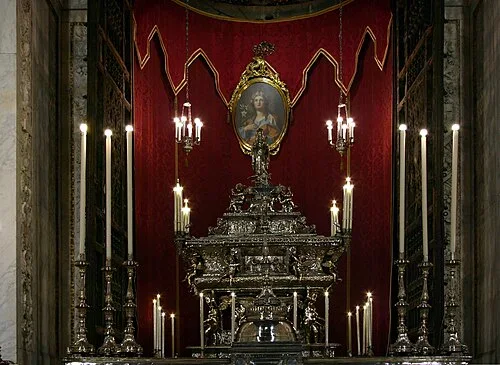 The Chapel of Saint Rosalia
One saint rules the heart of Palermo. She is Rosalia, the city's patron, and her chapel stands in the right transept behind a richly ornamental bronze gate. Inside waits a massive silver urn of the seventeenth century holding her relics, the single object of particular devotion in this cathedral. The story begins in 1624, when plague gripped the city. A hunter's vision led to the discovery of her long-lost bones in a cave on Monte Pellegrino, the mountain that overlooks Palermo. When the relics were carried through the city in procession, the plague subsided, and on 15 July 1625 Palermo held its first festival in her honour. The city declared her its patron, and the great silver urn was commissioned. Mariano Smiriglio designed it, and Palermo's silversmiths completed it in 1637.
Listen in the appJosé Luiz · CC BY-SA 4.0
08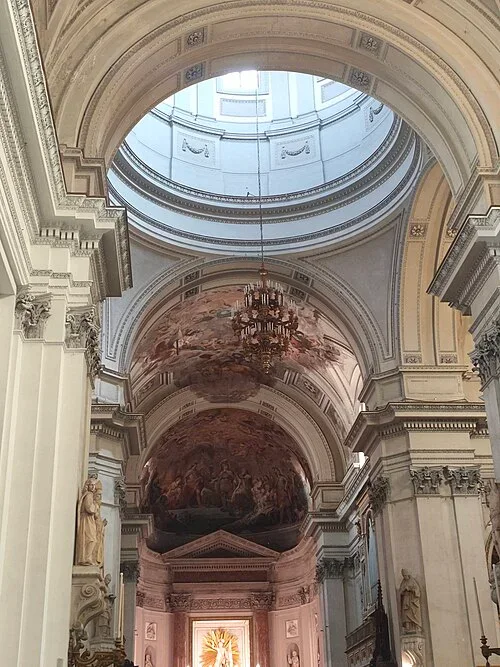 The High Altar and Neoclassical Dome
The Neoclassical Dome
The great dome rising over the crossing is Ferdinando Fuga's most visible mark on the building, set above four massive pillars. It belongs to the same eighteenth-century campaign that reshaped the nave. Marvuglia's intervention turned out more radical than Fuga's original plans, which would have kept part of the old aisles and the original wooden ceiling. Critics have not been gentle. The dome has been called characteristic but discordant, a modern silhouette imposed on a medieval body. The frescoes overhead belong to this later decorative programme too, showing the Assumption and the Delivery of the Cathedral to Bishop Nicodemus.
Listen in the appPhoto: Whihazel · CC BY-SA 4.0
09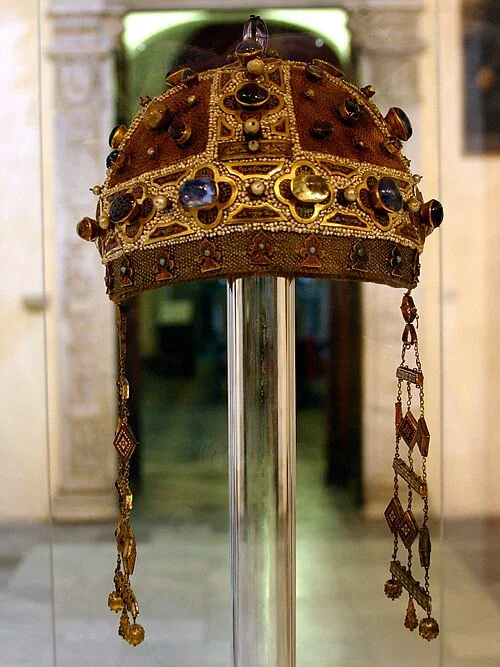 The Cathedral Treasury
Constance's Crown
A golden tiara set with gems and pearls, and it once lay inside a tomb. When the tomb of Constance of Aragon was opened in 1491, this crown came to light. She was the wife of Frederick the Second. Today the crown is the star of the Cathedral Treasury. The collection also keeps sacred vestments of the sixteenth and eighteenth centuries, monstrances, chalices and a fifteenth-century breviary with miniatures. The rulers buried in these aisles left their regalia behind, and the cathedral still guards it.
Listen in the appJosé Luiz · CC BY-SA 4.0
10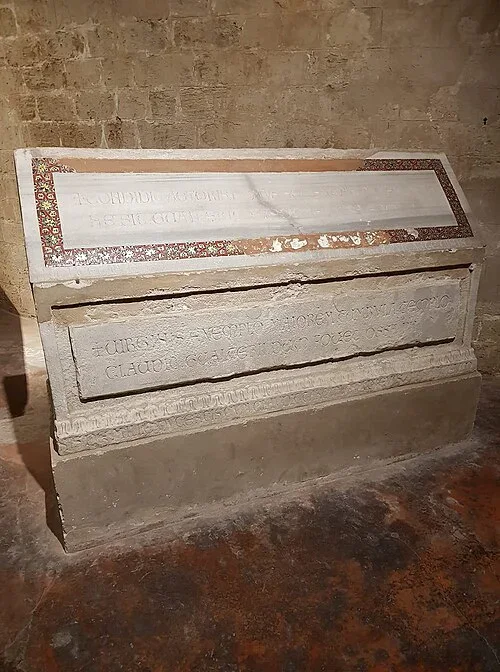 The Crypt and Ancient Sarcophagi
The Sarcophagus of Walter Ophamil
The man who built this cathedral lies underground, in a sarcophagus with his name on it. Walter Ophamil was the Norman archbishop of Palermo and a minister of King William II. In 1185 he erected the church on the ground of the earlier basilica-mosque. His inscribed sarcophagus rests in the crypt, reached from the left side of the church.
Listen in the app-Armin · CC BY-SA 3.0 de
- 11
The Crypt
The vaulted crypt, where Roman, Byzantine and Norman sarcophagi have gathered under granite columns.
- 12
The Eastern Apses
The original twelfth-century Norman apses, sheathed in interlocking arcades and geometric inlays of dark lava stone.
- 13
The Roof Terraces
The roof terraces, a stiff medieval climb rewarded with tiled cupolas at eye level and views over all Palermo.
- 14
The Western Facade and the Flying Arches
The medieval west front on Via Matteo Bonello, where flying arches stride over the street to the bell tower.
Cattedrale di Palermo
Frequently asked questions
How much does the guide cost?
Free app download. Listed guide price: $0.99. Guide price shown in the app. Audio guide only. Venue admission is separate.
Can I listen without internet?
Yes. Download the guide’s audio, images, and maps in the app before your visit. Your downloaded content is then available offline.
Can I listen in my language?
This audio guide is available in 15 languages, including English.
Do I need to follow a schedule?
No. This is a self-guided experience. Choose your stops, pause whenever you like, and return to a story at your own pace.
At your own pace
Explore Cattedrale di Palermo.
Download Stanza, then search for “Cattedrale di Palermo”.
Free app download · Guide price shown in the app
Keep exploring
Nearby audio guides
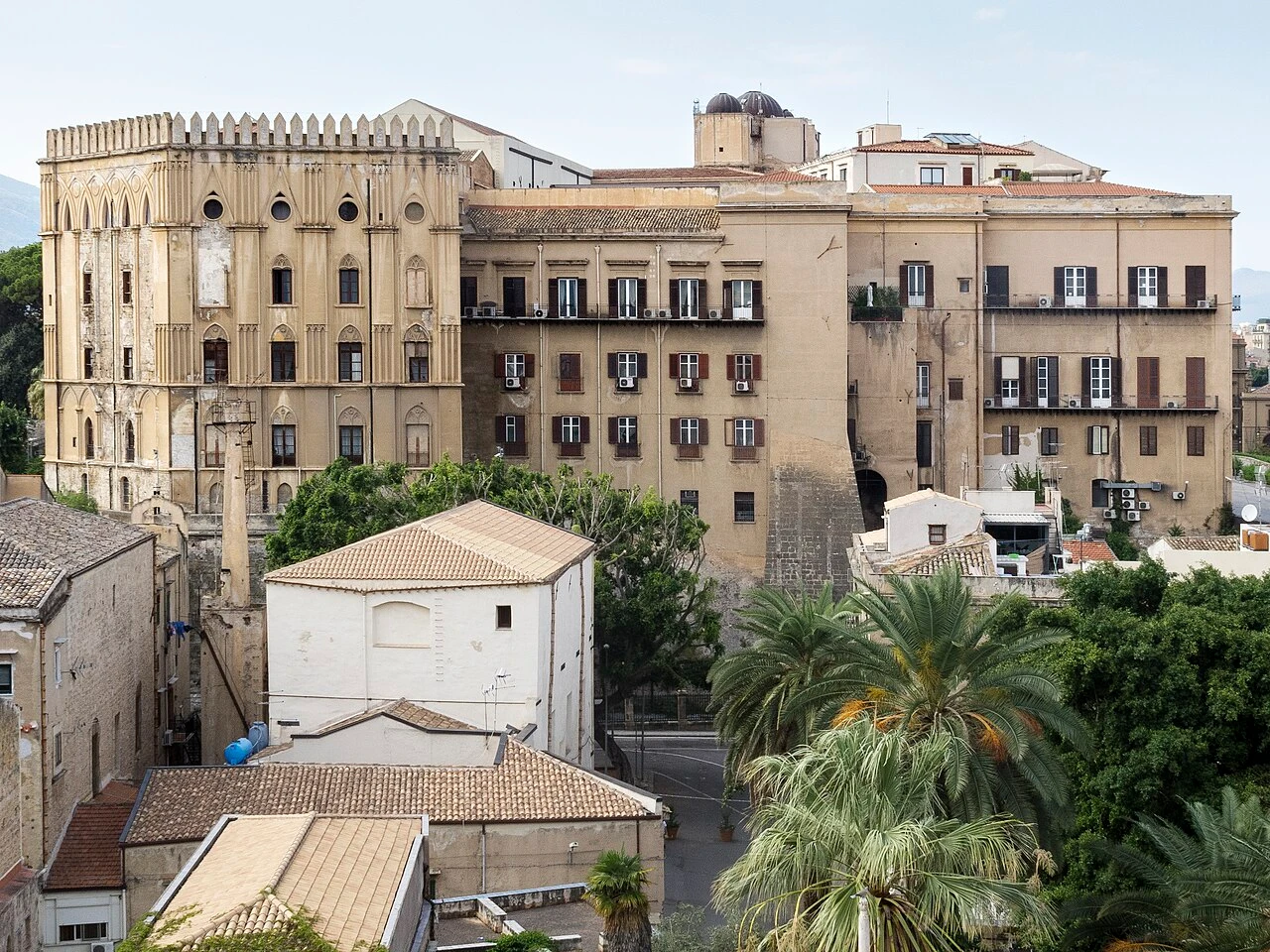
Palermo · 1 km
Palazzo dei Normanni
Content & sources
Photo: Jules Vaulont · CC BY-SA 4.0
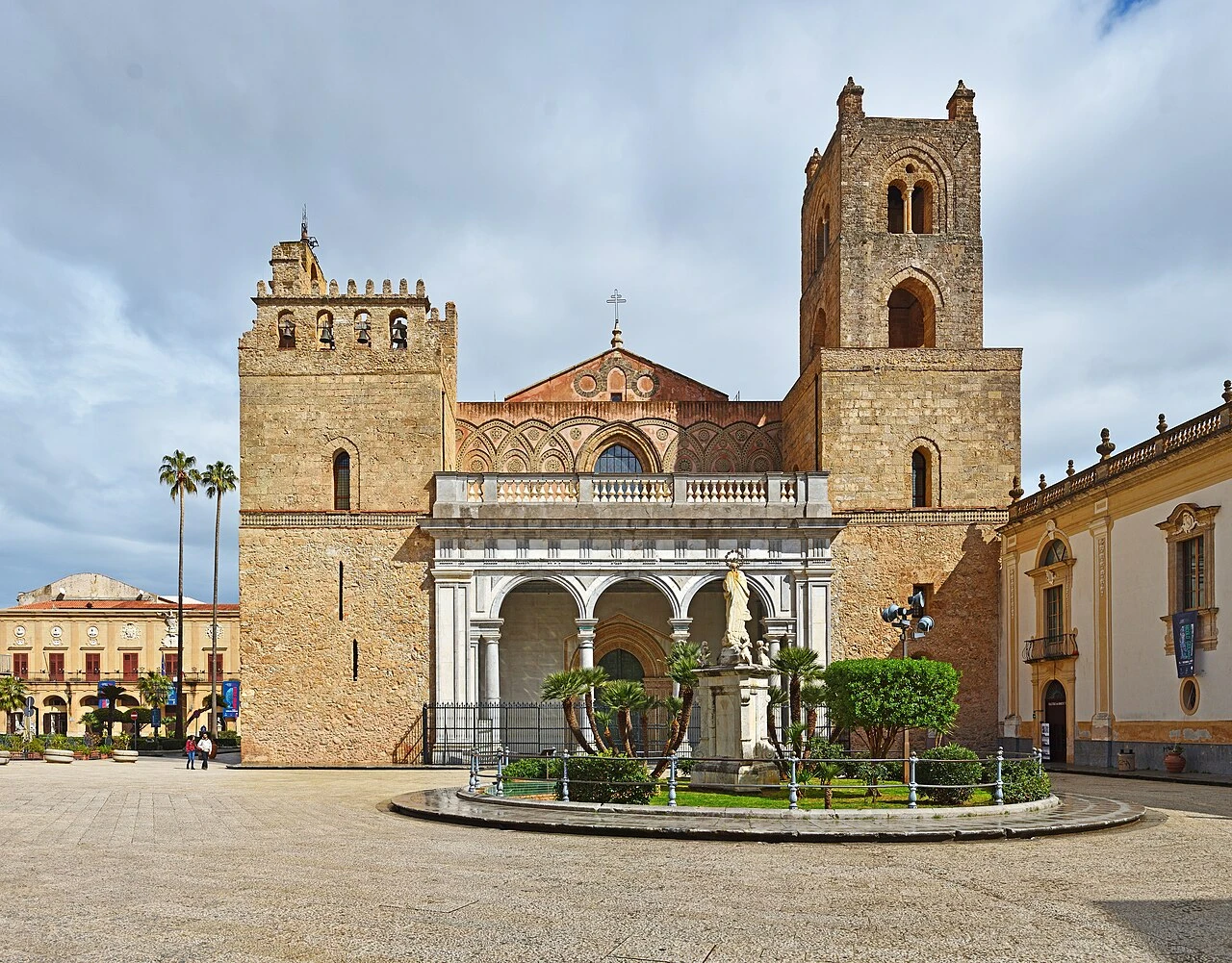
Monreale · 7 km
Cattedrale di Monreale
Content & sources
Photo: Ludvig14 · CC BY-SA 4.0
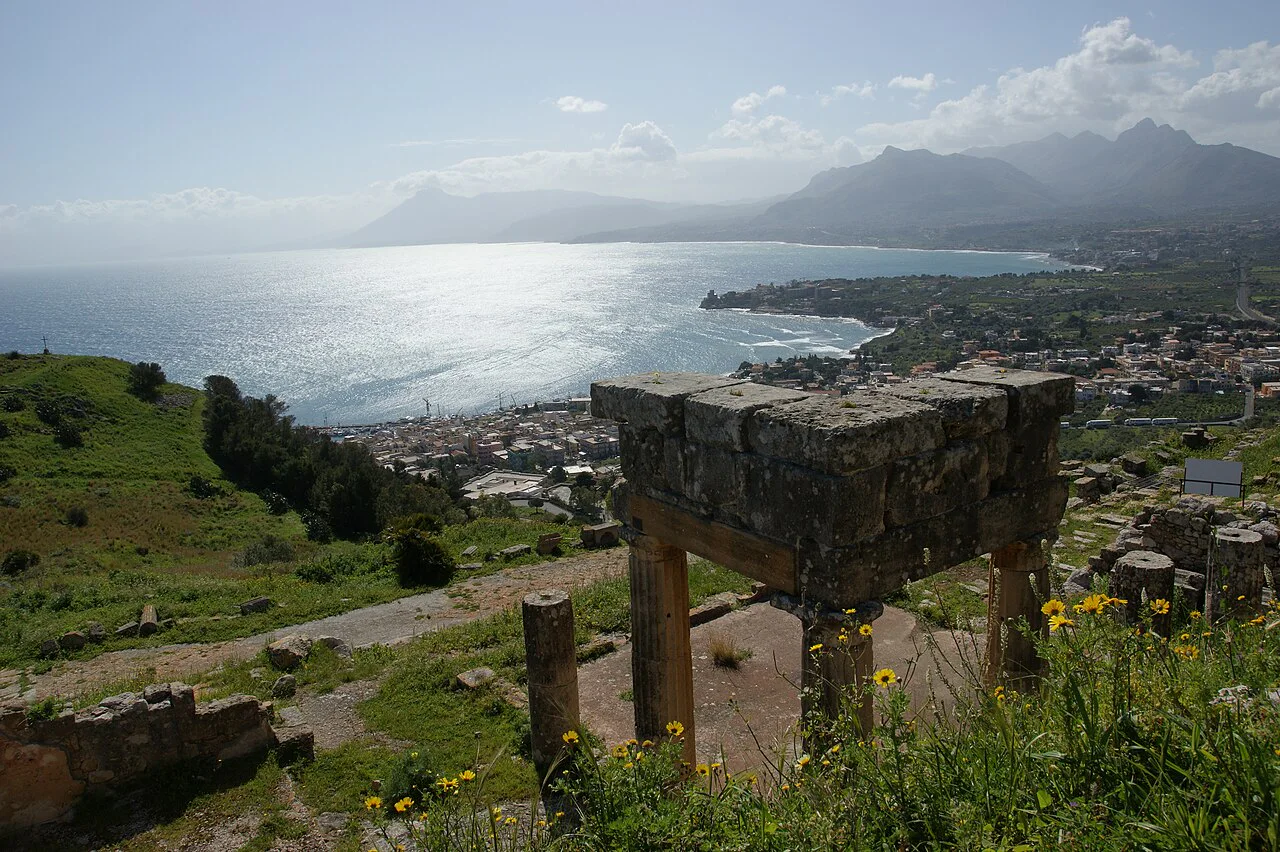
Santa Flavia · 16 km
Solunto
Content & sources
Allie_Caulfield from Germany · CC BY 2.0
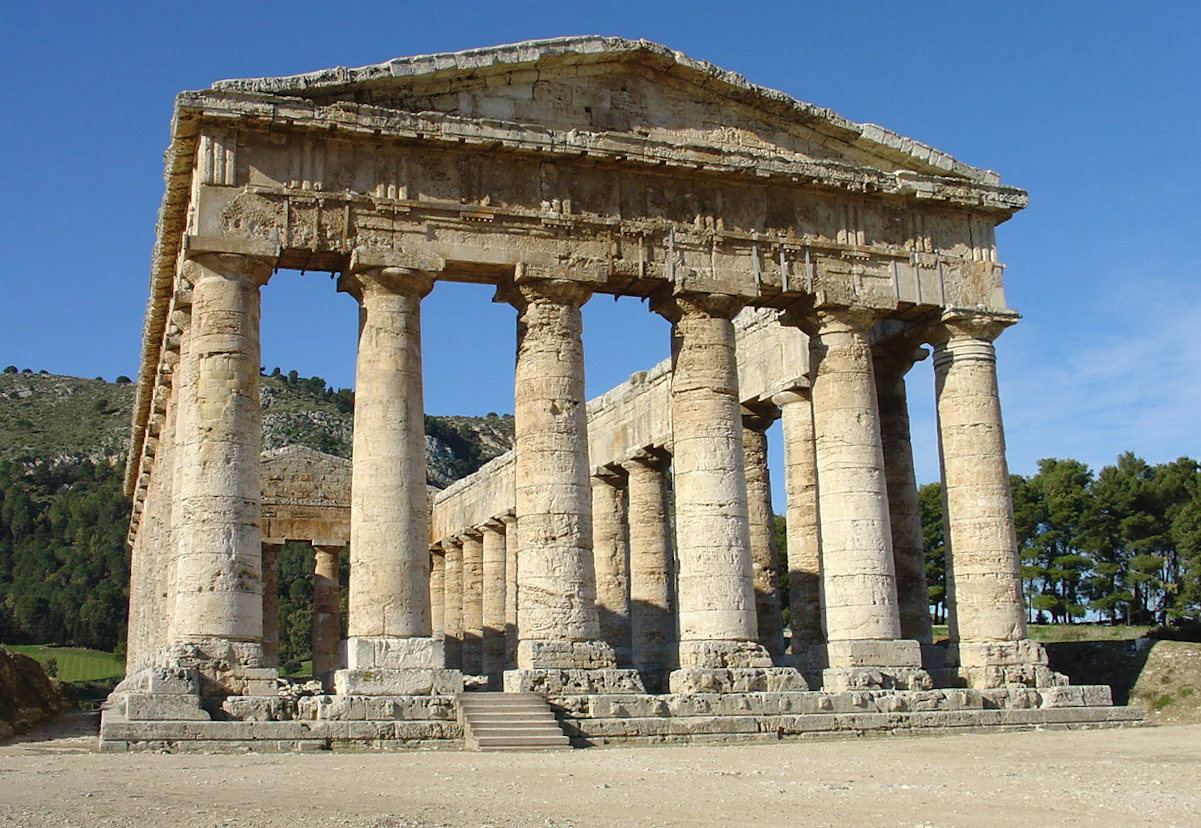
Calatafimi-Segesta · 50 km
Segesta
Content & sources
Photo: Ptyx · Public domain