Stanza · Audio guide
Villa Romana del CasaleAudio guide
A place to remember. A story to take with you.
Villa Romana del Casale is an ancient Roman villa built in the first quarter of the 4th century AD. It is renowned for its extraordinarily rich and elaborate Roman mosaics, which are among the finest in the…
Download Stanza, then search for “Villa Romana del Casale”.
About the tour
One guide. Your kind of visit.
Villa Romana del Casale is an ancient Roman villa built in the first quarter of the 4th century AD. It is renowned for its extraordinarily rich and elaborate Roman mosaics, which are among the finest in the world, covering almost every room.
Ready when you are.
- 01Get the free Stanza app.
iOS & Android
- 02Find your guide.
“Villa Romana del Casale”
- 03Download before you go.
Works offline
Audio guide / 31 narrated stops
Inside the guide
Get to know a few of the stories before you go. Open a stop to read more.
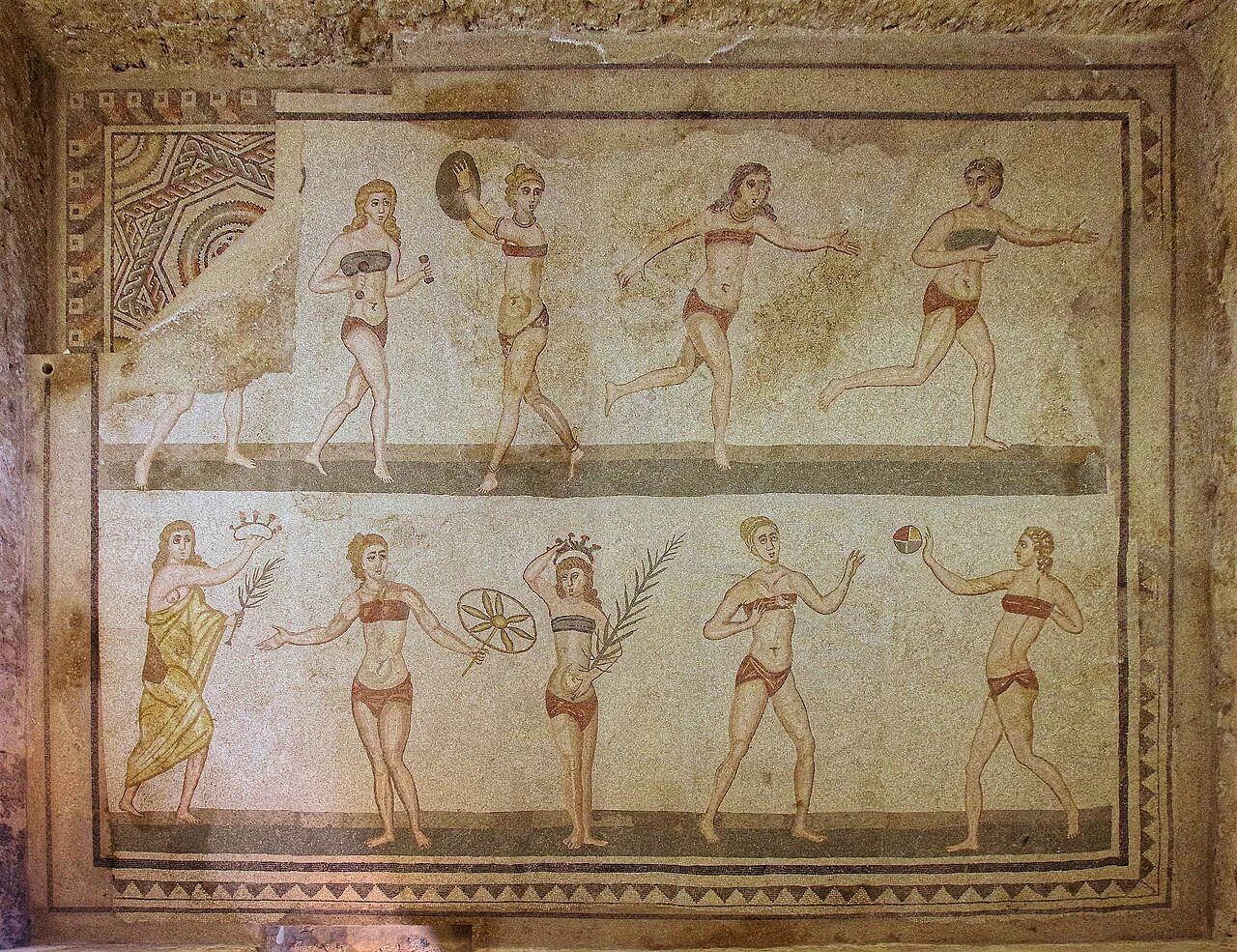
01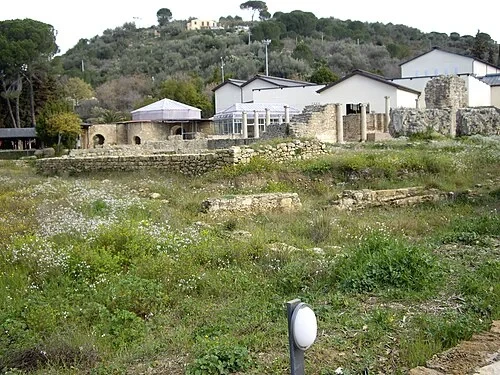 The Monumental Entrance and CourtyardThe World's Largest Mosaic Collection
Welcome to one of the most significant archaeological sites in the Mediterranean, where history is literally laid out beneath your feet in over 3,500 square meters of intricate floor decorations. Dating from the early 4th century AD, this site holds the largest and best-preserved collection of Roman mosaics in the world. While it is commonly known as a villa, the sheer scale and architectural complexity suggest it functioned more like a miniature imperial palace for a high-ranking Roman aristocrat. The complex served as the luxurious heart of a massive rural estate, blending public reception areas with private living quarters. As you move through the rooms, you will see how these stone-tesserae artworks transformed every floor into a canvas for storytelling. The level of preservation is exceptional, allowing us to see the vibrant colors and sharp details exactly as they appeared seventeen centuries ago. This site represents the height of Roman opulence during the late Empire, offering an unparalleled look into the lifestyle, tastes, and social structures of the era. Each room provides a unique window into a world of myth, hunting, and daily life.
Photo: Lasterketak · CC BY-SA 4.0
02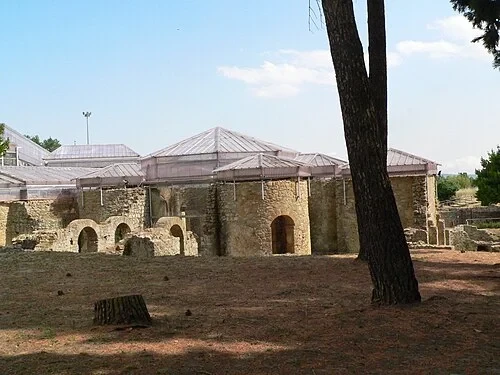 The Monumental Entrance and CourtyardThe Miracle of Preservation
The reason we can appreciate these floors in such vivid detail today is the result of a remarkable historical accident. In the 12th century, centuries after the villa had been abandoned and partially reoccupied, a massive landslide and flood swept down from the nearby hills. This event buried the entire complex under thick layers of mud and silt, effectively sealing the rooms like a time capsule. This earthen blanket protected the fragile floors from the destructive effects of sun, rain, and human looters for over seven hundred years. Without this unintentional preservation, the stones likely would have been bleached, eroded, or pilfered for construction material by later civilizations. It was not until systematic excavations began in the 1950s that the full extent of the buried treasure was revealed. As archaeologists carefully removed the mud, the vibrant colors and sharp anatomical details of the 4th-century craftsmanship emerged as if they had been created only yesterday. Today, modern glass walkways and protective covers ensure that these ancient surfaces remain safe while allowing us to study the legacy that nature accidentally saved from the passage of time.
Image:User:DisderoPreservation building:it:Franco Minissi · Public domain
03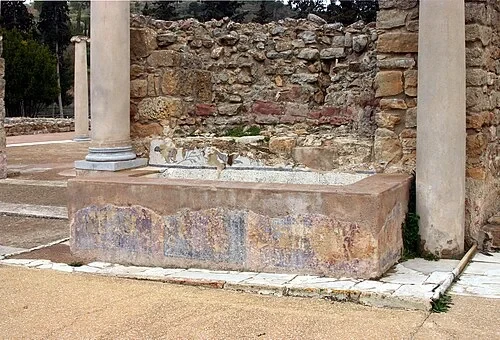 The Monumental Entrance and CourtyardThe Monumental Entrance
The journey into the villa began here, at an entrance designed specifically to impress arriving guests with the owner’s immense social status. You are looking at the remains of a horseshoe-shaped courtyard dominated by a monumental three-arched gateway that served as the primary threshold into the estate. In the center of this area, several stone basins and fountains once bubbled with constant running water, creating a tranquil and cooling atmosphere. The sound of splashing water and the sight of these imposing arches signaled to every visitor that they were entering the domain of someone with significant political or social power. This space was not merely functional; it was a stage for Roman social ritual, where clients would gather to pay respects to the master of the house. While the original roofs and decorative statues are long gone, the sprawling footprint of the courtyard reveals a level of planning typical of imperial-scale architecture. This entrance acted as a grand buffer zone, separating the noisy business of the public world from the refined, artistic interior of the villa's inner rooms.
Listen in the appJosé Luiz · CC BY-SA 4.0
04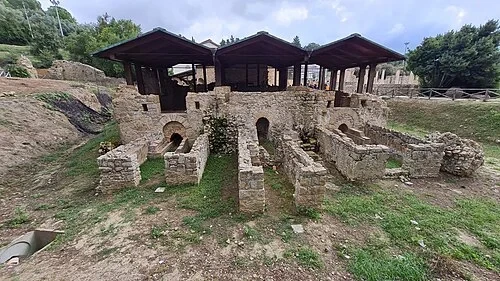 The Thermal Bath ComplexThe Thermal Bath Complex
Bathing was an essential daily ritual in Roman life, serving as much for socializing and business as for personal hygiene. This massive thermal bath complex was a private luxury, yet its design and engineering were just as sophisticated as the public baths found in the capital. The structures visible here were once part of a highly organized sequence of rooms designed to move the bather through varying temperatures. A typical visit involved spending time in the caldarium, or hot room, followed by the lukewarm tepidarium, and finally a plunge into the cold waters of the frigidarium. Look for the thick masonry walls and stone arches that once supported the vaulted ceilings of these chambers. Because these rooms required constant specialized heating, they were often built with external furnace areas to keep smoke and ash away from the bathers. The presence of such a complete and technologically advanced bathing suite within a private residence is a clear indicator of the immense resources available to the villa's owner. It allowed for the hosting of guests in the most refined Roman fashion, combining physical comfort with architectural grandeur.
Listen in the appPhoto: Derbrauni · CC BY 4.0
05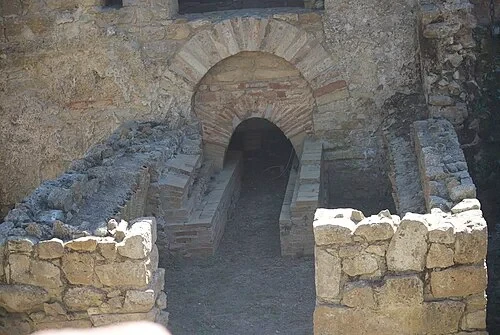 The Thermal Bath ComplexThe Heating Furnaces
To maintain the high temperatures required for the hot and lukewarm baths, the Romans relied on the engineering visible in these low stone arches. Known as praefurnia, these served as the furnace openings where wood fires were kept burning day and night. The labor involved was constant; workers were tasked with feeding the flames and hauling fuel to ensure the water in the massive lead boilers remained at a steady boil. The heat from these fires did not just warm the water; it was directed through a network of hollow spaces to heat the floors and walls of the adjacent rooms. This ancient central heating system allowed the Roman elite to enjoy a level of indoor climate control that would not be seen again for over a millennium. By placing these furnaces on the periphery of the main bath complex, the builders ensured that the soot, smoke, and noise of the fires remained hidden from the residents and their guests. These humble-looking arches represent the invisible infrastructure that made the opulent lifestyle of the villa possible, illustrating the Roman mastery over heat and airflow within large stone structures.
Listen in the appColsu · CC BY-SA 4.0
06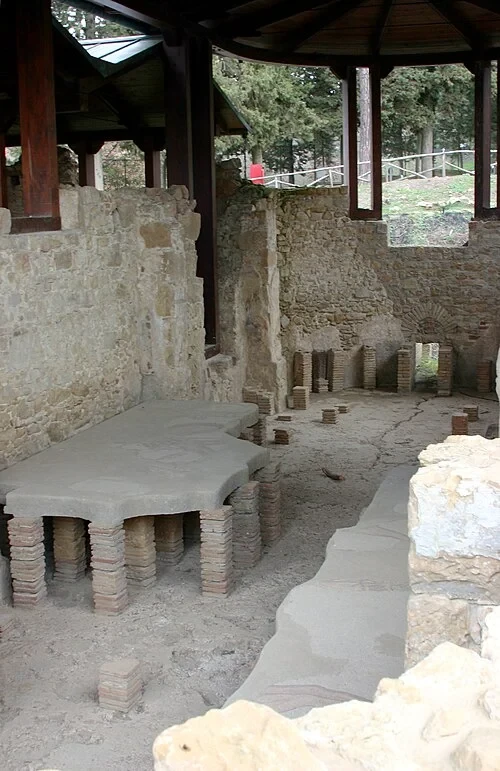 The Thermal Bath ComplexThe Hypocaust System
The ingenious method the Romans used to heat their baths from the ground up is clearly visible here in the hypocaust system. Notice the rows of small brick pillars, called pilae, which served as the foundation for a secondary, raised floor. The gap between the ground and the upper floor acted as an empty chamber where hot air from the nearby furnaces could circulate freely. As the heat flowed through this crawlspace, it warmed the heavy stone and tile floors above, effectively turning the entire room into a giant radiator. This was a highly efficient way to keep bathers warm in the hot rooms, even after they stepped out of the water. In some areas, hollow tiles were even built into the walls to allow the heat to rise, enveloping the entire room in warmth. When you walk through the villa today, you are often standing over these ancient engineering marvels. The complexity of the masonry required to support the weight of the floor and the people above while maintaining open air channels demonstrates the high level of technical skill possessed by the villa's architects and builders.
Listen in the appJosé Luiz · CC BY-SA 4.0
07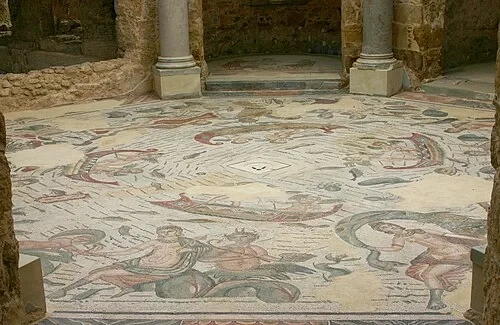 The Thermal Bath ComplexThe Frigidarium Mosaic
After the intense heat of the steam rooms, Romans would move into the frigidarium, or cold room, for a final bracing plunge. The mosaic on this floor is specifically themed to match that refreshing aquatic purpose. Look for the lively marine world depicted here, filled with mythical sea creatures like nereids and tritons, alongside playful dolphins and fish. The intricate tiles capture the fluid motion of these figures through the water, a common motif in Roman bathhouses across the empire. The room itself is octagonal in shape, a design choice often favored for cooling chambers because the multiple angles allowed for the placement of various niches and basins. This shape also provided structural strength for the domed roof that would have originally arched over this space. Even today, the cool blue and green tones used in the mosaic evoke a sense of the water that once filled this room. This space served as a final transition point for the bather, preparing them to re-enter the rest of the villa after completing the physical ritual of the bath.
Listen in the appJosé Luiz · CC BY-SA 4.0
08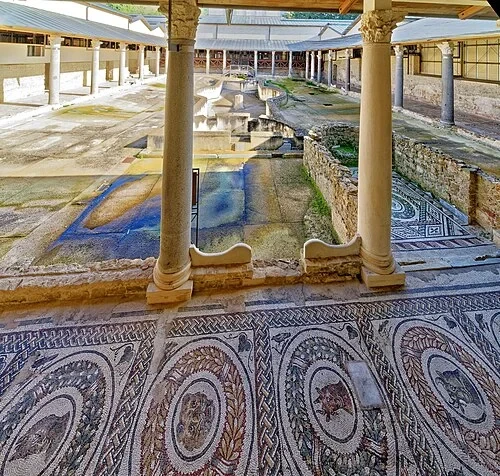 The Quadrangular PeristyleThe Quadrangular Peristyle
You are standing in the quadrangular peristyle, the architectural and social center of the complex. This massive open courtyard was designed to bring light and fresh air into the interior of the villa. It features a central garden area surrounded by a continuous colonnade that supports wide, covered walkways. These walkways are paved with decorative mosaics, providing a sheltered path for moving between the various wings of the estate. The peristyle functioned as a grand traffic hub, connecting the public audience halls used for official business with the more secluded private living quarters of the family. In the Roman world, the peristyle was more than just a corridor; it was a space for quiet contemplation and social interaction, where the master of the house might walk with his guests or advisors. The transition from the bright, open garden to the shaded, decorated portico created a sense of rhythmic beauty as one moved through the space. While the columns you see today are often weathered remains or reconstructions, they still define the grand perimeter of what was once the villa’s most vital circulation zone.
Listen in the appPhoto: Holger Uwe Schmitt · CC BY-SA 4.0
09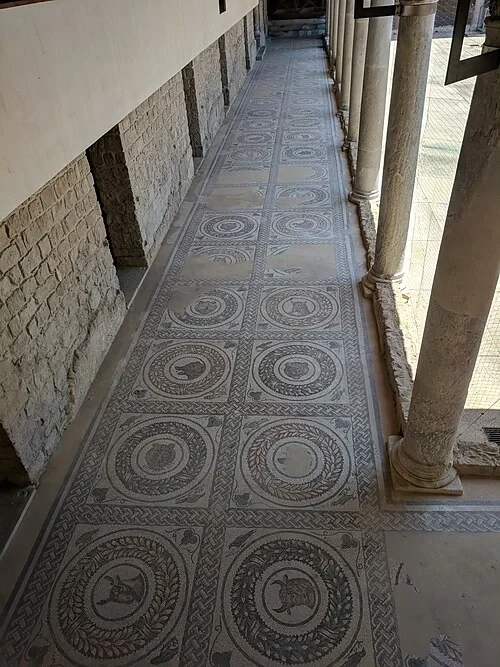 The Quadrangular PeristyleThe Animal Medallion Corridor
As you move through the corridor surrounding the peristyle, notice the repetitive pattern of circular wreaths, known as laurel medallions, decorating the floor. Each of these medallions frames the head of a different wild animal, including lions, bears, and tigers. The level of individual character in each face is remarkable, showcasing the artist’s ability to use small stone tiles to create realistic anatomical features and expressions. This specific decorative scheme serves as a thematic introduction to the larger, more narrative hunting scenes that dominate other parts of the villa. By placing these fierce predators in a controlled, geometric pattern, the owner was subtly displaying his mastery over the natural world and his access to exotic creatures from the far reaches of the Roman Empire. These medallions also functioned as a visual guide, leading visitors toward the more important reception rooms. The use of laurel wreaths is significant, as the laurel was a symbol of victory and status in Roman culture. Even in this transitional space, every detail was carefully chosen to reinforce the prestige and sophistication of the villa’s inhabitant.
Listen in the appTyB · CC BY 2.0
10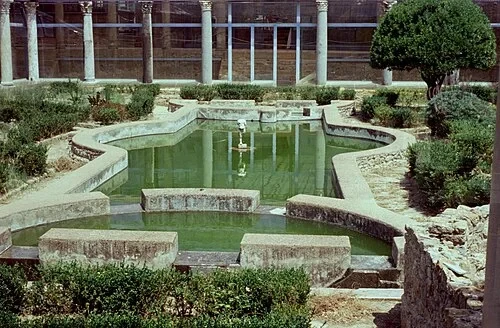 The Quadrangular PeristyleThe Peristyle Garden
The open space in the center of the peristyle was once a vibrant oasis designed to contrast with the surrounding stone architecture. At its center is a large, geometrically shaped pool, which would have mirrored the sky and the surrounding columns on its surface. Originally, this area was a lush garden, or viridarium, filled with exotic plants, flowering shrubs, and meticulously pruned greenery. Statues would have been placed strategically among the foliage, further enhancing the sense of refined nature. This garden served several practical purposes: it allowed natural light to flood into the interior rooms and provided essential ventilation throughout the massive estate. For the residents, it offered a private sanctuary where they could enjoy the outdoors while remaining securely within the villa's walls. The sound of water from the fountains and the scent of the garden plants transformed this courtyard into a sensory retreat. Today, while only the stone outlines of the basins remain, it is easy to imagine how this central hub once breathed life and color into the heart of the Roman palace, providing a natural respite from the official duties conducted in the surrounding halls.
Listen in the apprene boulay · CC BY-SA 3.0
Villa Romana del Casale
Frequently asked questions
How much does the guide cost?
Free app download. Listed guide price: $0.99. Guide price shown in the app. Audio guide only. Venue admission is separate.
Can I listen without internet?
Yes. Download the guide’s audio, images, and maps in the app before your visit. Your downloaded content is then available offline.
Can I listen in my language?
Stanza supports 15 languages. Check the app for the languages available for this guide.
Do I need to follow a schedule?
No. This is a self-guided experience. Choose your stops, pause whenever you like, and return to a story at your own pace.
At your own pace
Explore Villa Romana del Casale.
Download Stanza, then search for “Villa Romana del Casale”.
Free app download · Guide price shown in the app
Keep exploring
Nearby audio guides
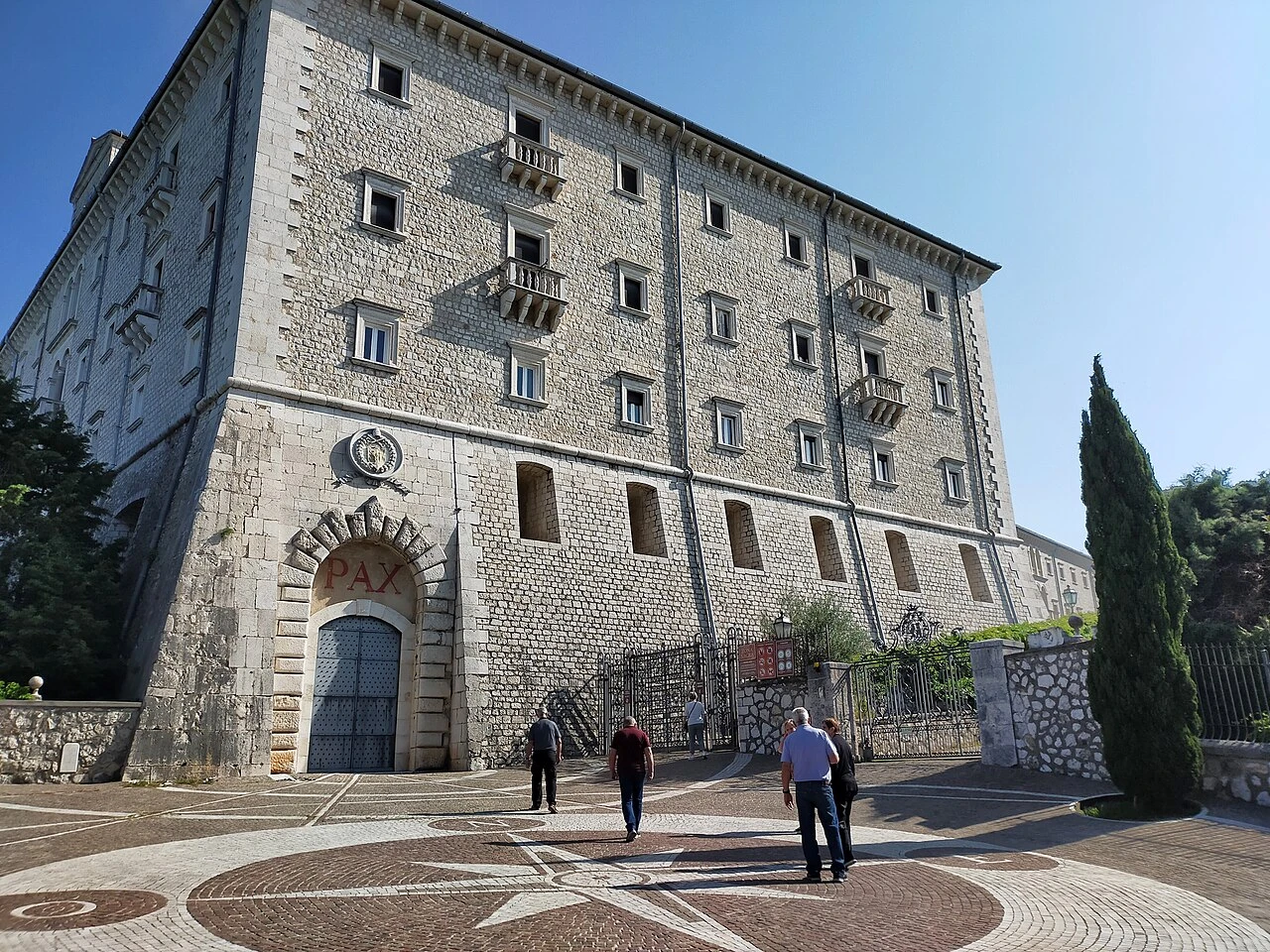
Cassino
Abbey of Monte Cassino
Content & sources
Photo: Marica Massaro · CC BY-SA 4.0
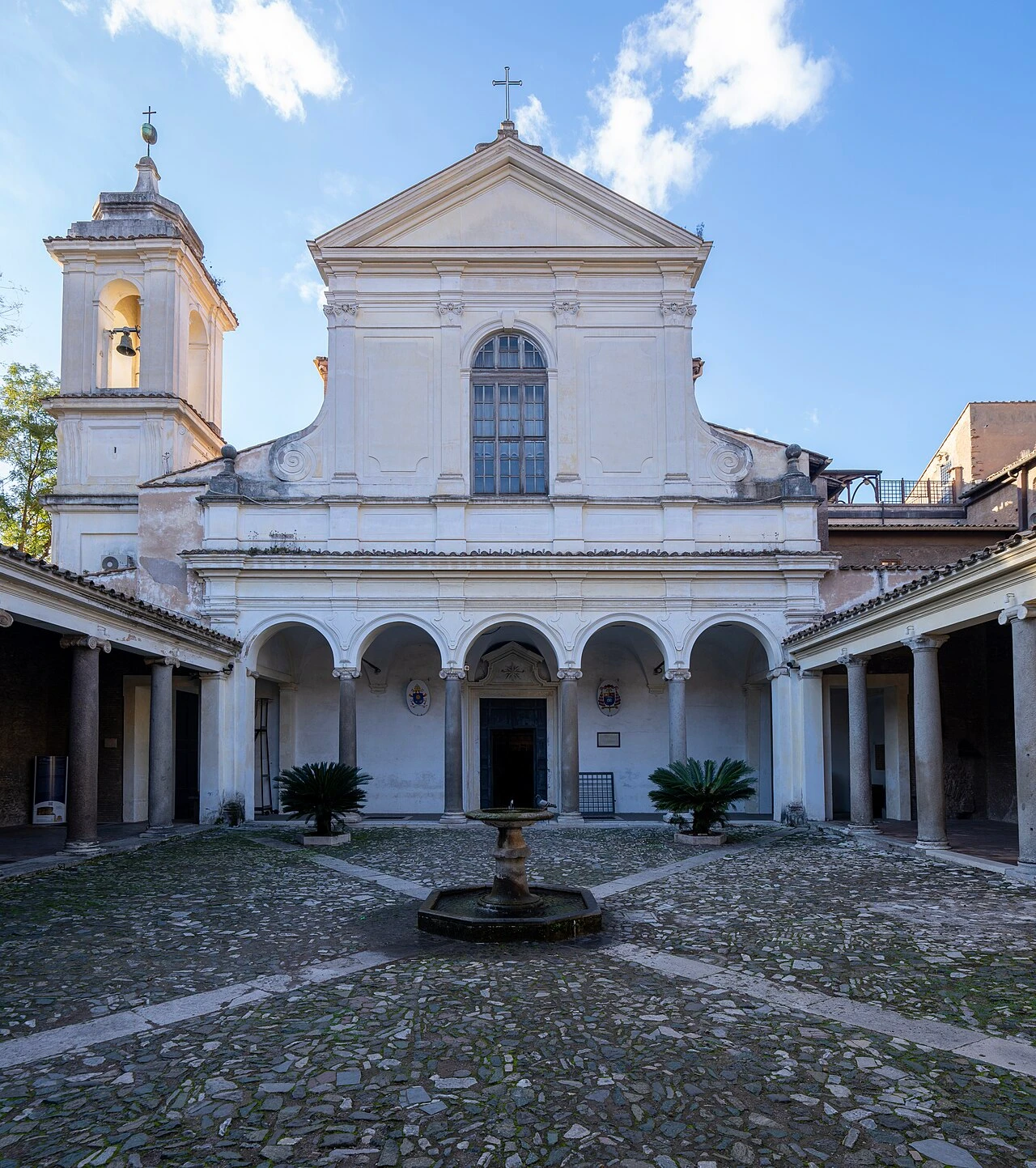
Rome
Basilica di San Clemente
Content & sources
Photo: Labicanense · CC BY-SA 4.0
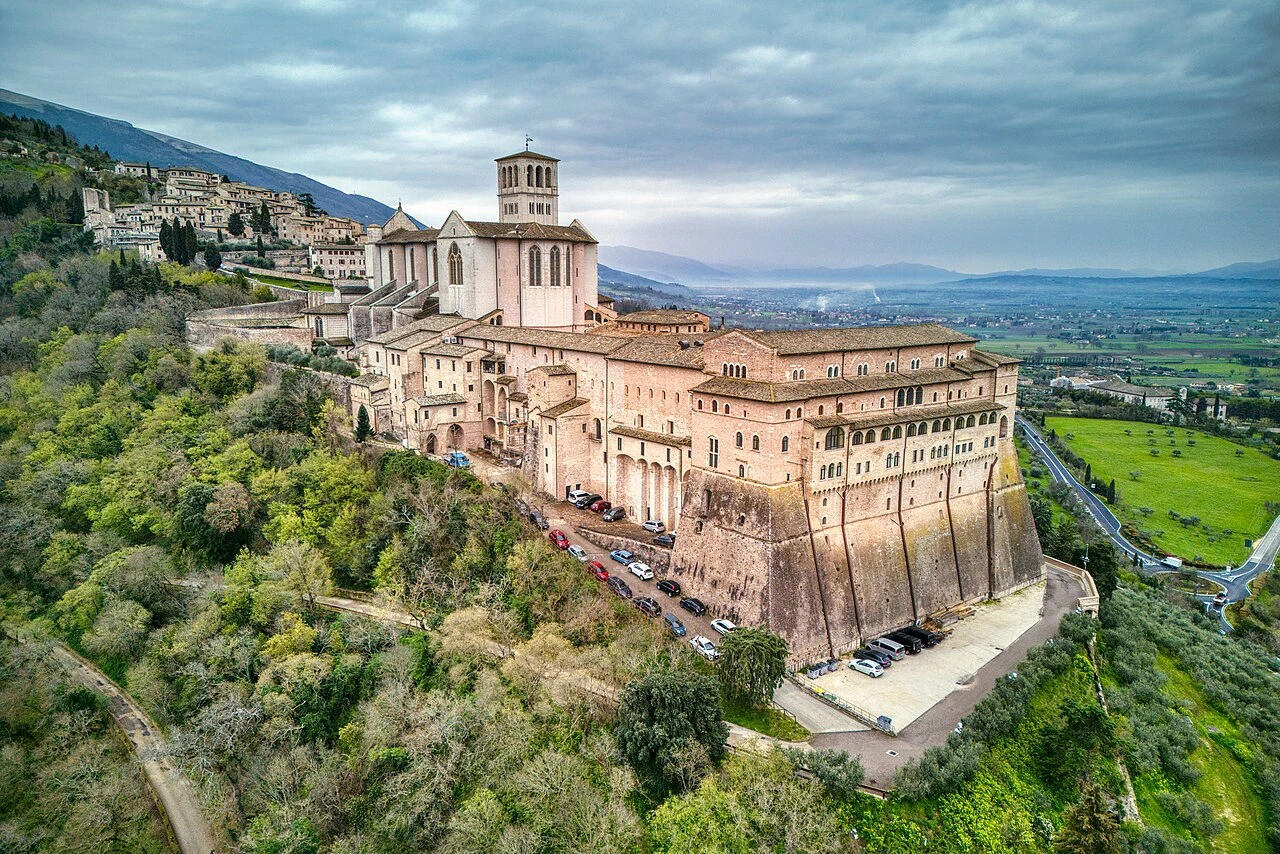
Assisi
Basilica di San Francesco
Content & sources
Hagai Agmon-Snir حچاي اچمون-سنير חגי אגמון-שניר · CC BY-SA 4.0
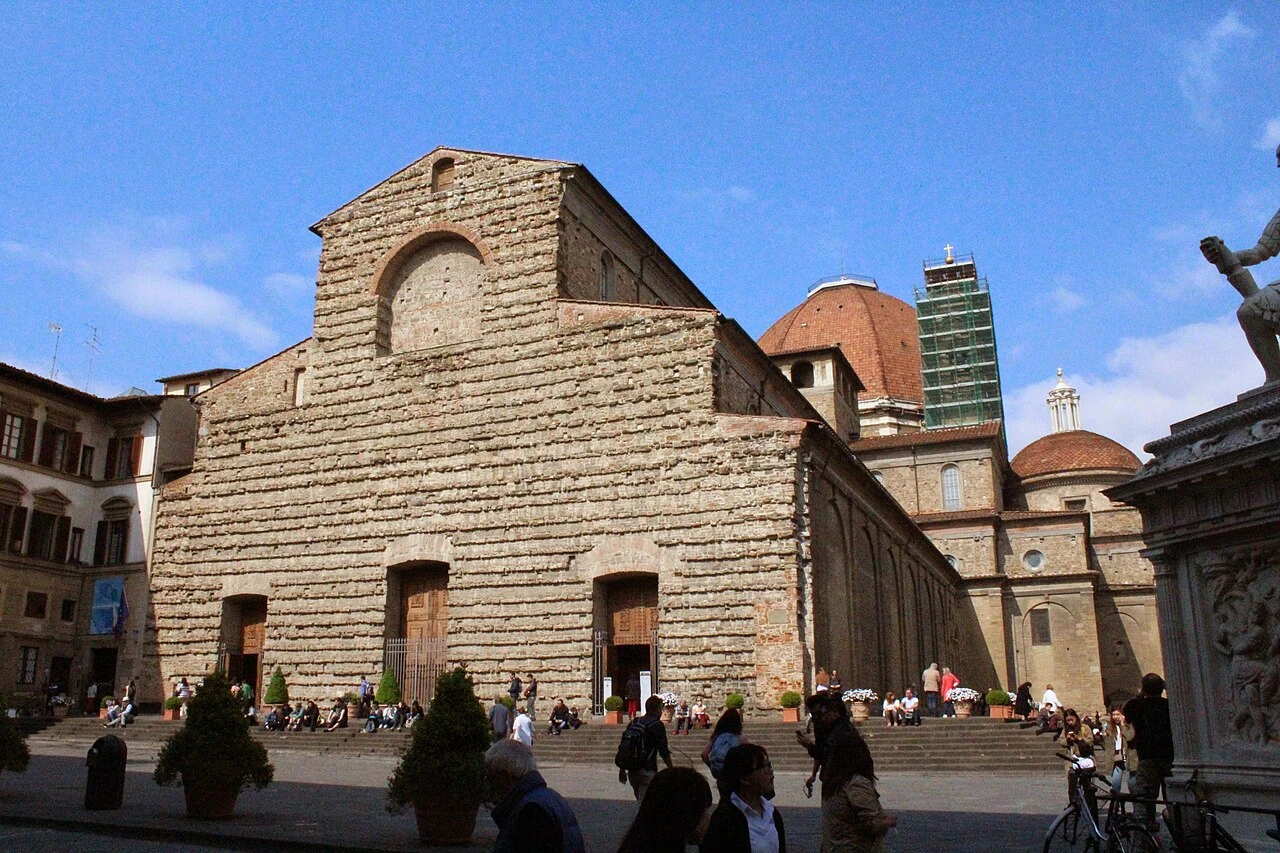
Florence
Basilica di San Lorenzo
Content & sources
Nelson Pérez · CC BY-SA 3.0