Stanza · Audio guide
Basilica dei Santi Ambrogio e Carlo al Corso Audio Guide
A place to remember. A story to take with you.
Sant'Ambrogio e Carlo al Corso is a basilica church located in Rome, Italy, along the Via del Corso. The church's apse faces the Mausoleum of Augustus on Via di Ripetta.
Download Stanza, then search for “Basilica dei Santi Ambrogio e Carlo al Corso”.
About the tour
One guide. Your kind of visit.
Sant'Ambrogio e Carlo al Corso is a basilica church located in Rome, Italy, along the Via del Corso. The church's apse faces the Mausoleum of Augustus on Via di Ripetta.
Ready when you are.
- 01Get the free Stanza app.
iOS & Android
- 02Find your guide.
“Basilica dei Santi Ambrogio e Carlo al Corso”
- 03Download before you go.
Works offline
Audio guide / 8 narrated stops
Inside the guide
Get to know a few of the stories before you go. Open a stop to read more.
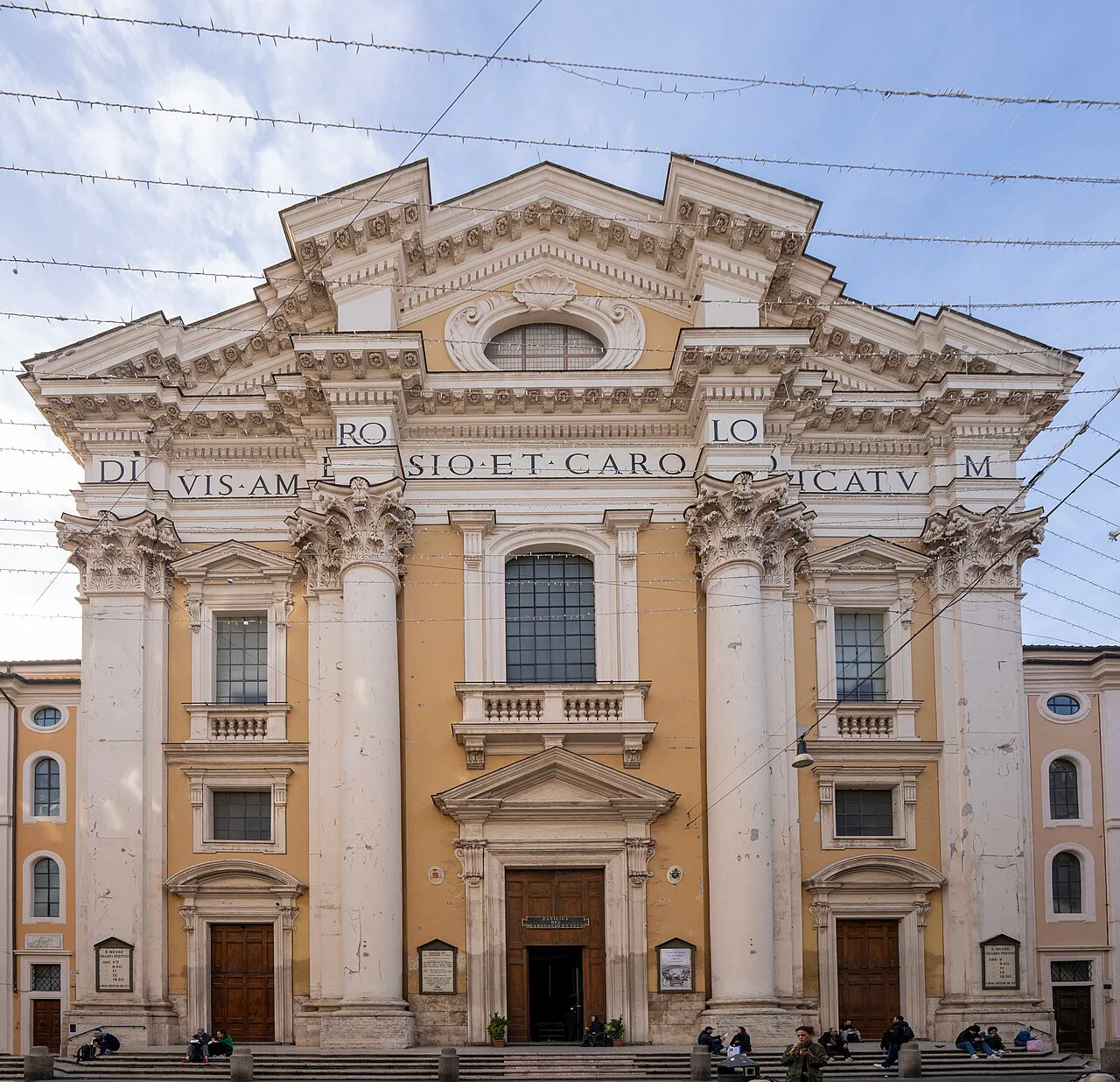
01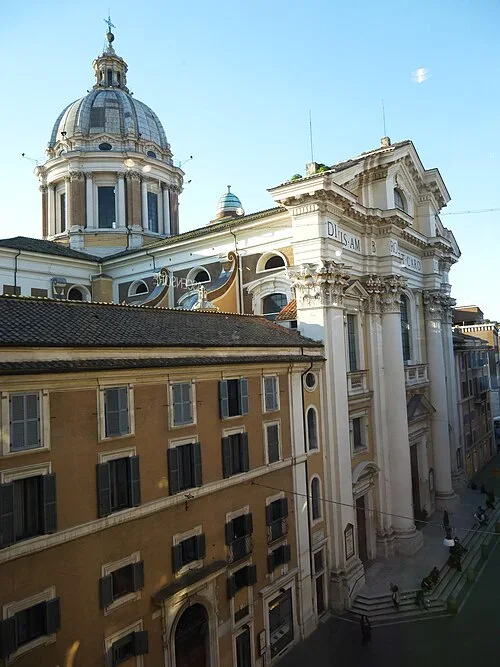 Baroque Facade on Via del Corso
The Facade on the Via del Corso: A National Church for the Lombards
Pope Sixtus the Fourth gave a small old church in the Campo Marzio district to Rome's Lombards in 1471. The Lombards were a large community in Rome. The pope was rewarding them for their valuable building work on the Sistine Chapel. The church was called San Niccolò del Tufo. Papal writings from the tenth century already mention it. After it was restored, it was dedicated to Saint Ambrose, the patron saint of Milan. Charles Borromeo's name was added after he was made a saint in 1610. The grand front came much later. The design came from Cardinal Luigi Alessandro Omodei, who also paid to finish the church. He did not like the plan an earlier architect had made for the front. The front was finished in 1694, long after the gift.
Photo: Lalupa · CC BY-SA 3.0
02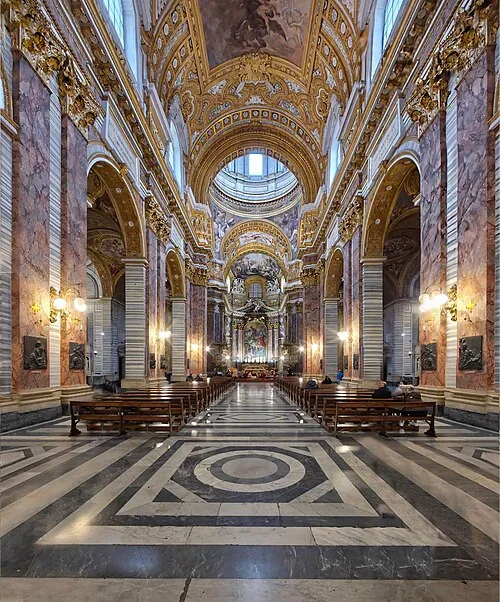 Central Nave and the Rebel Angels Ceiling
The Central Nave: Eighty-Two Years in the Making
Building began in 1612, in honor of Charles Borromeo's canonization. The first architect was Onorio Longhi. After his death, his son, Martino Longhi the Younger, took over. Money ran short, so the work went slowly. The new church stands on the site of an older church, which was pulled down. The plan is a Latin cross, with a long nave and a shorter crossbar. Three aisles run toward the high altar, lined with pinkish marble columns. The floor is laid in a patterned marble design. Angelo Giuseppe Roncalli was ordained a bishop here in 1925. He later became Pope John the Twenty-Third.
Photo: NateBergin · CC BY 4.0
03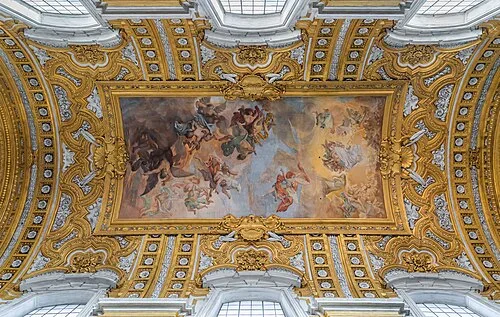 Central Nave and the Rebel Angels Ceiling
The Fall of the Rebel Angels by Giacinto Brandi
Giacinto Brandi's Fall of the Rebel Angels covers the central vault with a battle fought in the heavens. Saint Michael leads the angels of God against the rebel angels, who are led by Lucifer. Brandi painted it in the late 1670s. Its figures crowd the clouds, and some are already tumbling downward. The rich stucco around the vault is the work of Giacomo and Cosimo Fancelli.
Listen in the appGiacinto Brandi · CC BY-SA 4.0
04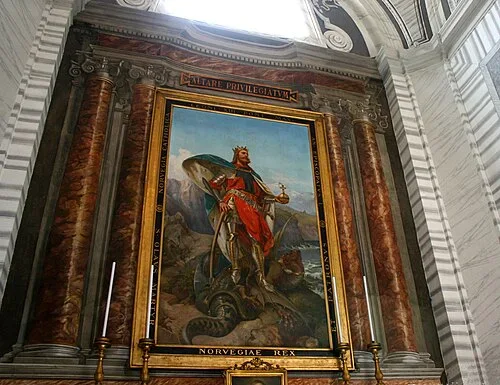 Chapel of Saint Olav of Norway
The Chapel of Saint Olav of Norway
Saint Olav of Norway gives this chapel its name. He was a king who became a Christian, and he was slain at the Battle of Stiklestad in 1030. The altarpiece shows him in armor and a crown. He holds a sword and a shield, and he stands over a dragon. Along the base run the Latin words Norvegiae Rex, King of Norway. The dragon stands for his own pagan past, and the painting shows him triumphing over it. A Polish artist painted it, and in March 1893 it was given to Pope Leo. The gift marked fifty years since the pope had been made a bishop. The request to place it here came from Johannes Olav Fallize, the bishop leading the Catholic mission in Norway. The pope backed the idea of a Norwegian chapel in Rome. A cardinal opened the chapel in April 1893. The opening fell on the fiftieth anniversary of the first legal Mass in Norway since the Reformation. Beneath the altar lie the relics of a Roman martyr, Saint Saturninus. Nothing is known about him except his name.
Listen in the appGiovanni Dall'Orto · Attribution
05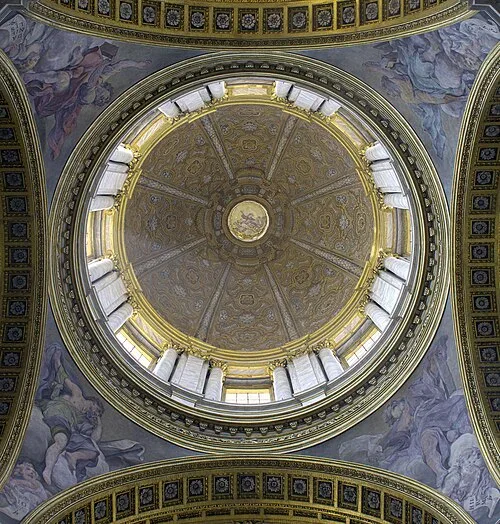 Pietro da Cortona's Grand Dome
Pietro da Cortona's Dome
Pietro da Cortona designed this dome in 1668, and he also took charge of the apse and much of the rich decoration inside. The dome sits on a drum, the tall ring of wall that lifts it up. Windows set in the drum let daylight flood the crossing below. Inside, the dome is covered in coffers, which are sunken panels in a ceiling. They are gilded, and they sweep in rings toward a round panel at the center. The four corners below the dome are curved triangles called pendentives. Prophets are painted on them by Giacinto Brandi and Giovanni Battista Beinaschi. The dome looks much like the one on the church of Saints Luke and Martina. It was finished in 1688, the last major building work of Pietro da Cortona.
Listen in the appPhoto: Livioandronico2013 · CC BY-SA 4.0
06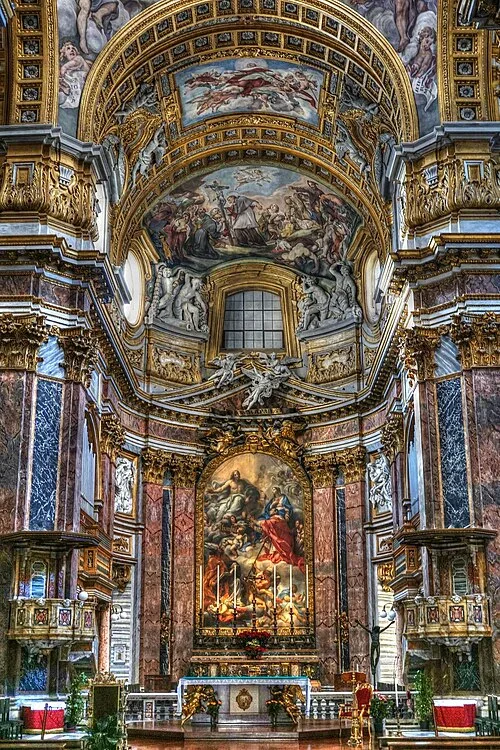 High Altar and Carlo Maratta Altarpiece
The High Altar: Maratta's Altarpiece and Liszt's Unwedding
On the high altar, Carlo Maratta painted Saints Ambrose and Charles Borromeo, shown with the Virgin and Christ. The painting dates from the late 1680s. It brings Milan's two patron saints together at the heart of the church. This church was also set to host a wedding that never took place. Franz Liszt, the composer, and Carolyne zu Sayn-Wittgenstein planned to marry in San Carlo, her parish church. Carolyne was a Polish princess, and she had given Liszt a home at the Altenburg in Weimar. Her earlier marriage to a Russian officer had already been dissolved in Russia five years before, and her effort to end it in Rome succeeded in January 1861. The wedding was set for Liszt's birthday in October 1861. He was turning fifty. On the eve of the ceremony, the pastor sent word to Carolyne. The request was being reconsidered, and the wedding was postponed. A bishop, with help from her relatives, prevented the ceremony, keeping her fortune in the family. Carolyne broke off the relationship. Liszt stayed in Rome, studied theology, and took the minor orders, the first steps toward priesthood. He lived on as Abbé Liszt.
Listen in the appMiwok from France · CC0
07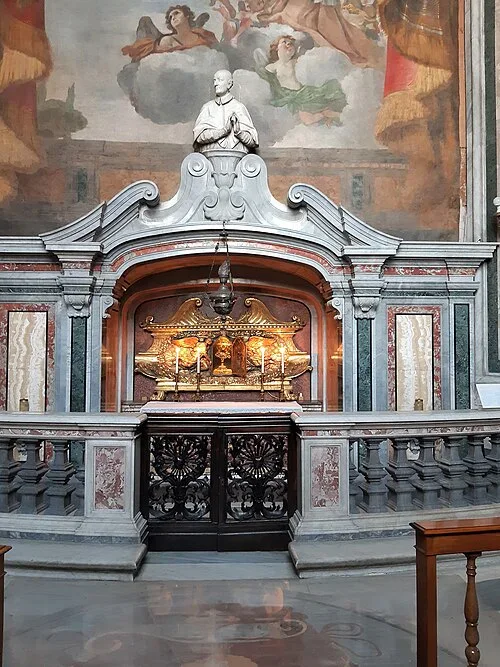 The Ambulatory and Heart of Saint Charles
The Ambulatory and the Heart of Saint Charles
San Carlo is the only church in Rome with an ambulatory that holds the heart of Saint Charles Borromeo. An ambulatory is a walkway that curves around the back of the sanctuary. The heart reached Rome from Milan in 1613. When it arrived, it was shown in a monstrance, a holder made to display a sacred relic. The monstrance was held up by an angel and rested on a base of crystal. His cousin, Cardinal Federico Borromeo, gave the heart to the church in 1614. Above the altar, a white marble figure of the saint stands with hands joined in prayer.
Listen in the appPhoto: Gaux · CC BY-SA 4.0
08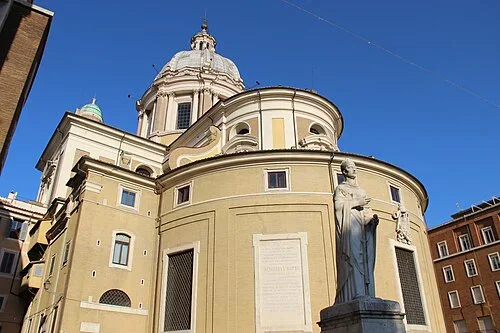 Exterior Rear Apse and Piazza Augusto Imperatore
Colossi of Milan's Saints, Facing Augustus
The rounded apse looks across the street toward the ancient Mausoleum of Augustus. Two giant statues of Saints Ambrose and Charles stand beside the apse, among the largest statues in Rome. The sculptor credited with them is Francesco Cavallini. One is a tall white figure in long robes, set on a stone base. The apse walls are cream-colored, pierced by tall windows, with the dome rising behind.
Listen in the appGary Todd from Xinzheng, China · Public domain
Basilica dei Santi Ambrogio e Carlo al Corso
Frequently asked questions
How much does the guide cost?
Free app download. Listed guide price: $0.99. Guide price shown in the app. Audio guide only. Venue admission is separate.
Can I listen without internet?
Yes. Download the guide’s audio, images, and maps in the app before your visit. Your downloaded content is then available offline.
Can I listen in my language?
This audio guide is available in 15 languages, including English.
Do I need to follow a schedule?
No. This is a self-guided experience. Choose your stops, pause whenever you like, and return to a story at your own pace.
At your own pace
Explore Basilica dei Santi Ambrogio e Carlo al Corso.
Download Stanza, then search for “Basilica dei Santi Ambrogio e Carlo al Corso”.
Free app download · Guide price shown in the app
Keep exploring
Nearby audio guides
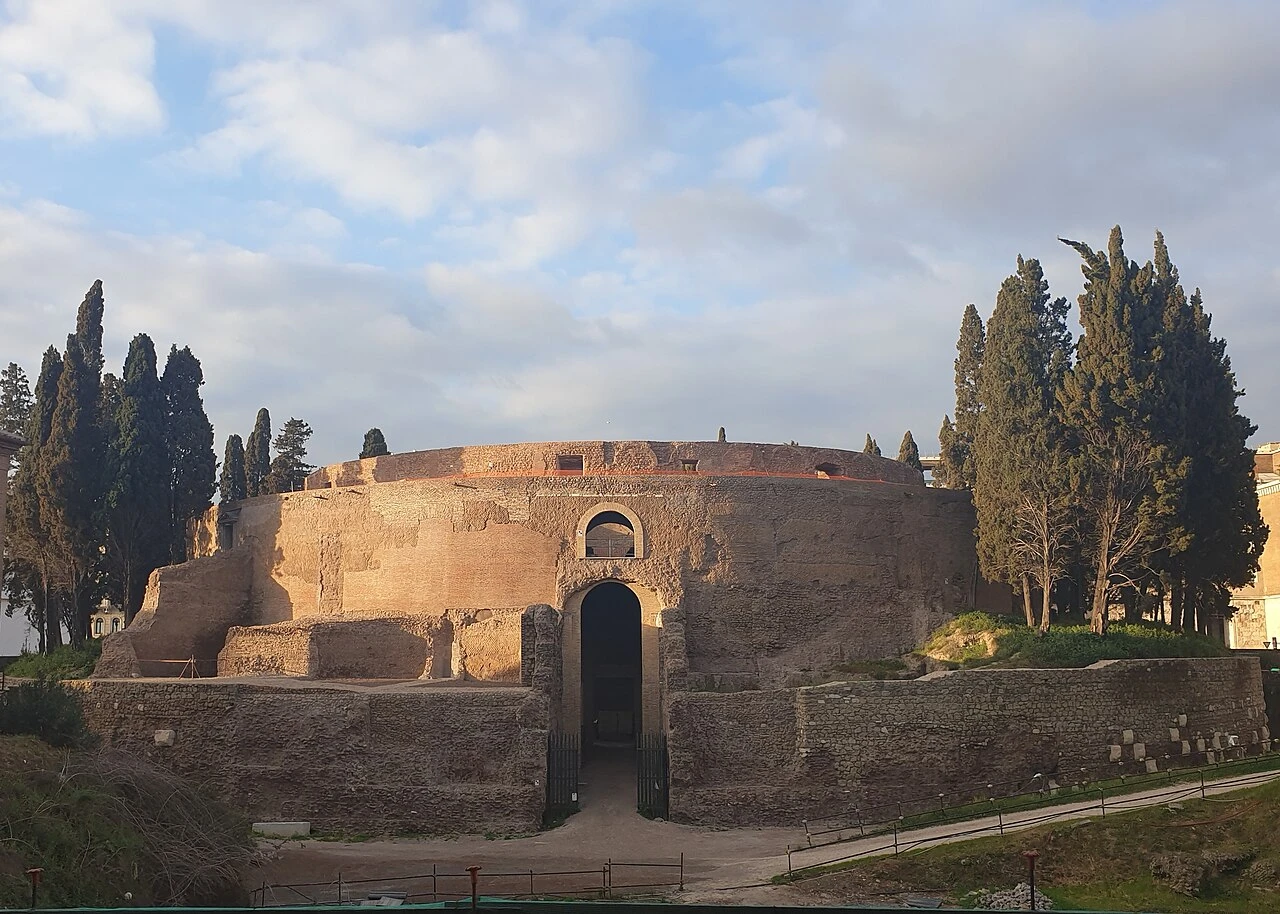
Rome · 1 km
Mausoleum of Augustus
Content & sources
MumblerJamie · CC BY-SA 2.0
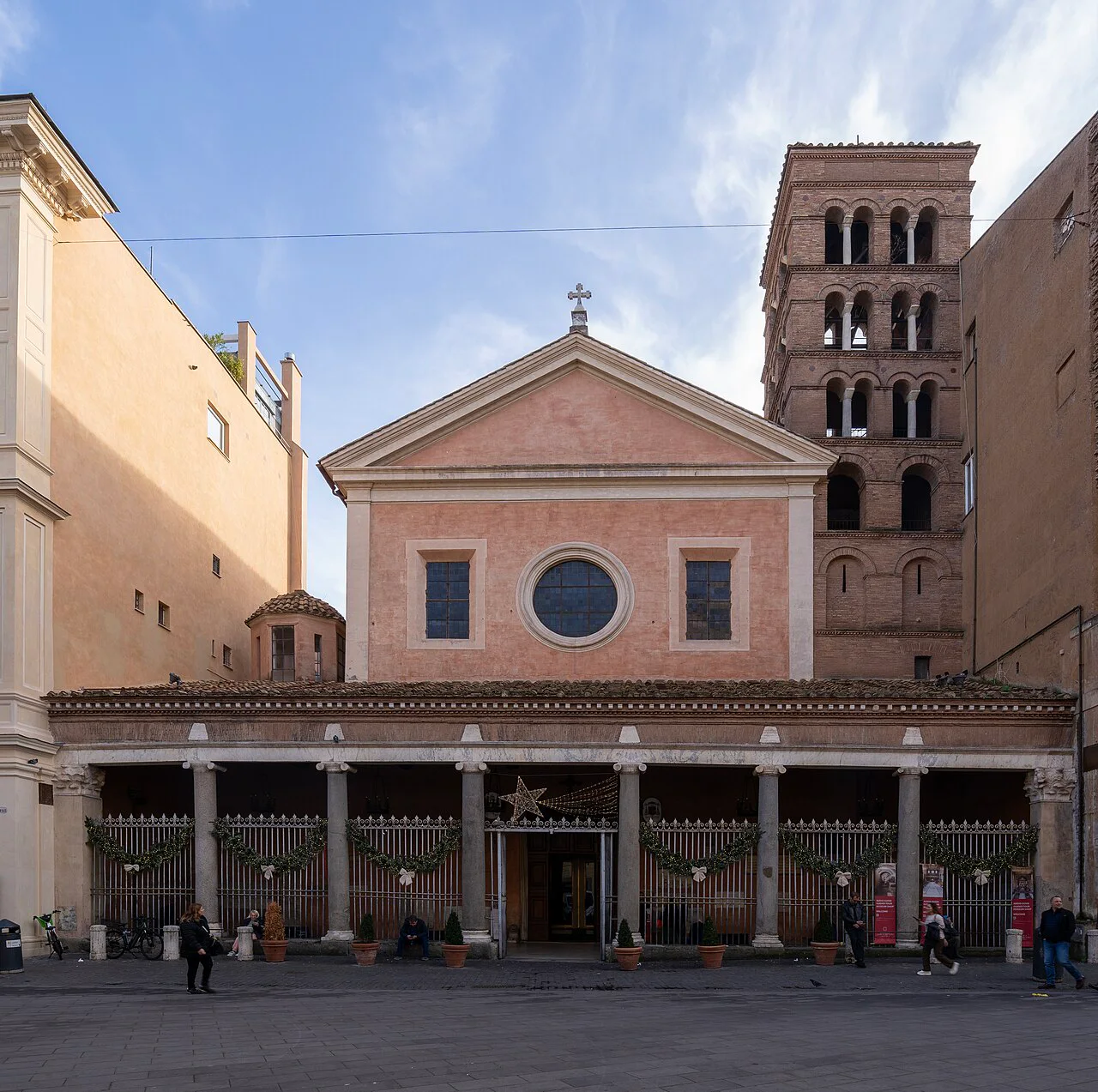
Rome · 1 km
Basilica di San Lorenzo in Lucina
Content & sources
Photo: DellaGherardesca · CC BY 4.0
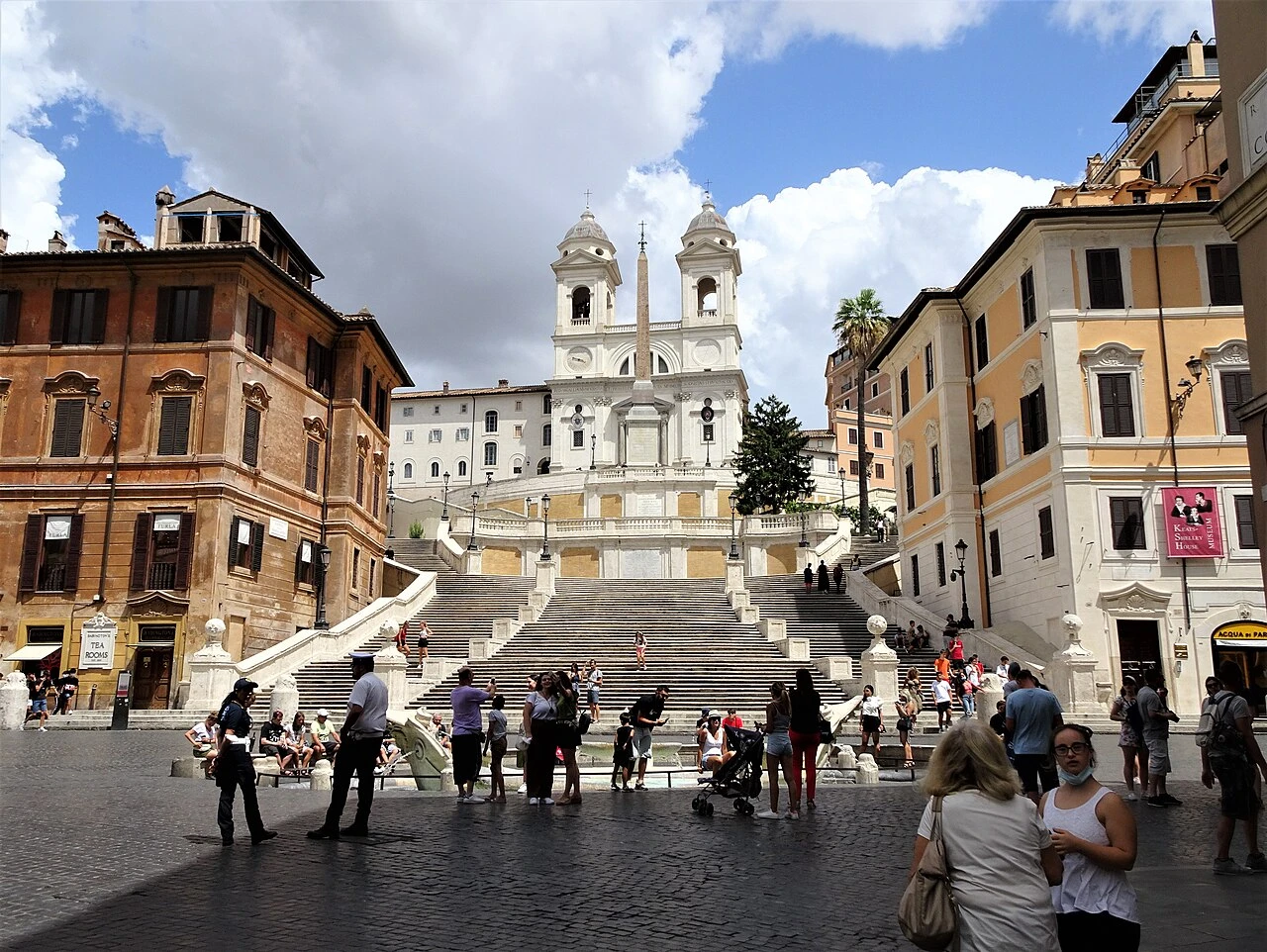
Rome · 1 km
Spanish Steps
Content & sources
Photo: Hugo DK · CC BY-SA 4.0
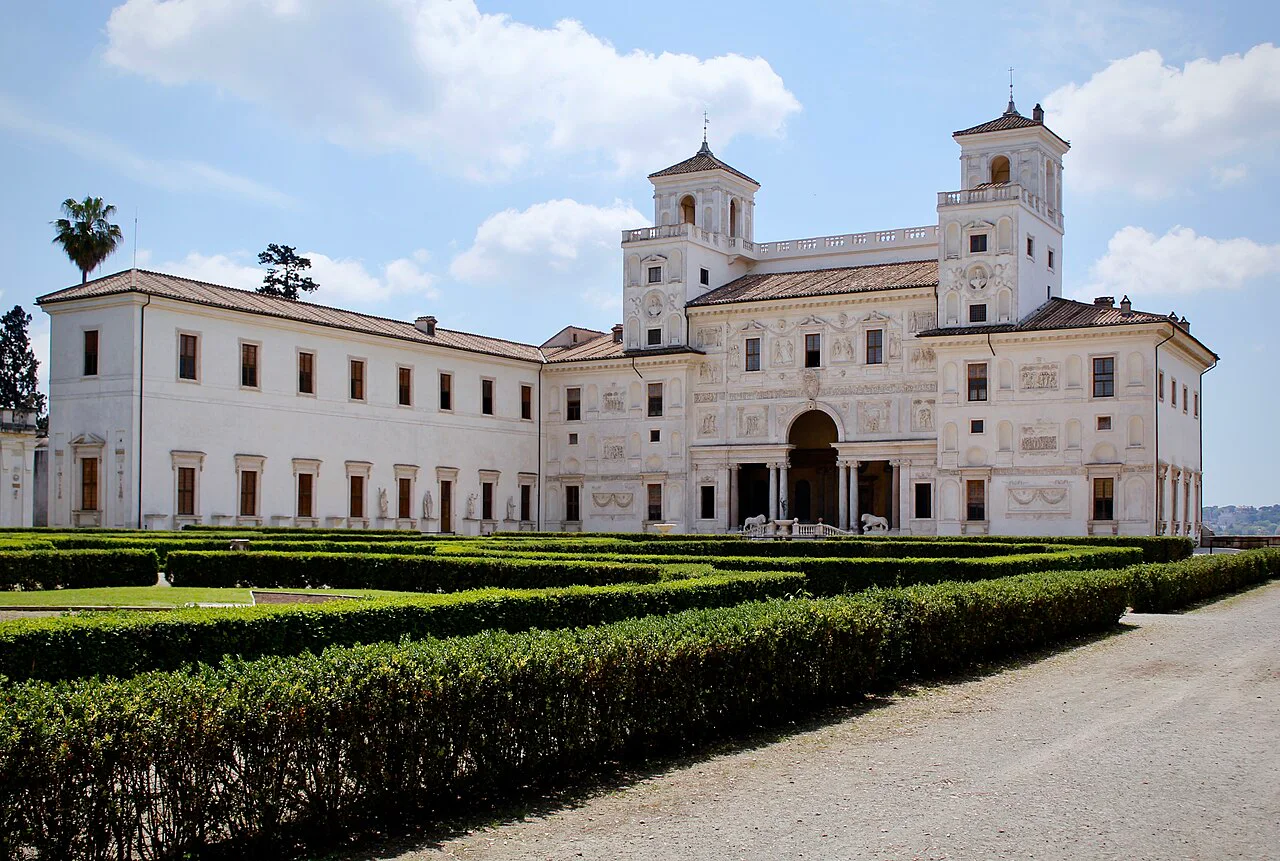
Rome · 1 km
Villa Medici
Content & sources
Photo: Laterbat · CC BY-SA 4.0