Stanza · Audio guide
Basilica di San Lorenzo in Lucina Audio Guide
A place to remember. A story to take with you.
The Minor Basilica of St. Lawrence in Lucina is a Roman Catholic parish, titular church, and minor basilica located in central Rome. It is situated in the Rione Colonna, near the Palazzo Montecitorio and the…
Download Stanza, then search for “Basilica di San Lorenzo in Lucina”.
About the tour
One guide. Your kind of visit.
The Minor Basilica of St. Lawrence in Lucina is a Roman Catholic parish, titular church, and minor basilica located in central Rome. It is situated in the Rione Colonna, near the Palazzo Montecitorio and the Via del Corso.
Ready when you are.
- 01Get the free Stanza app.
iOS & Android
- 02Find your guide.
“Basilica di San Lorenzo in Lucina”
- 03Download before you go.
Works offline
Audio guide / 9 narrated stops
Inside the guide
Get to know a few of the stories before you go. Open a stop to read more.
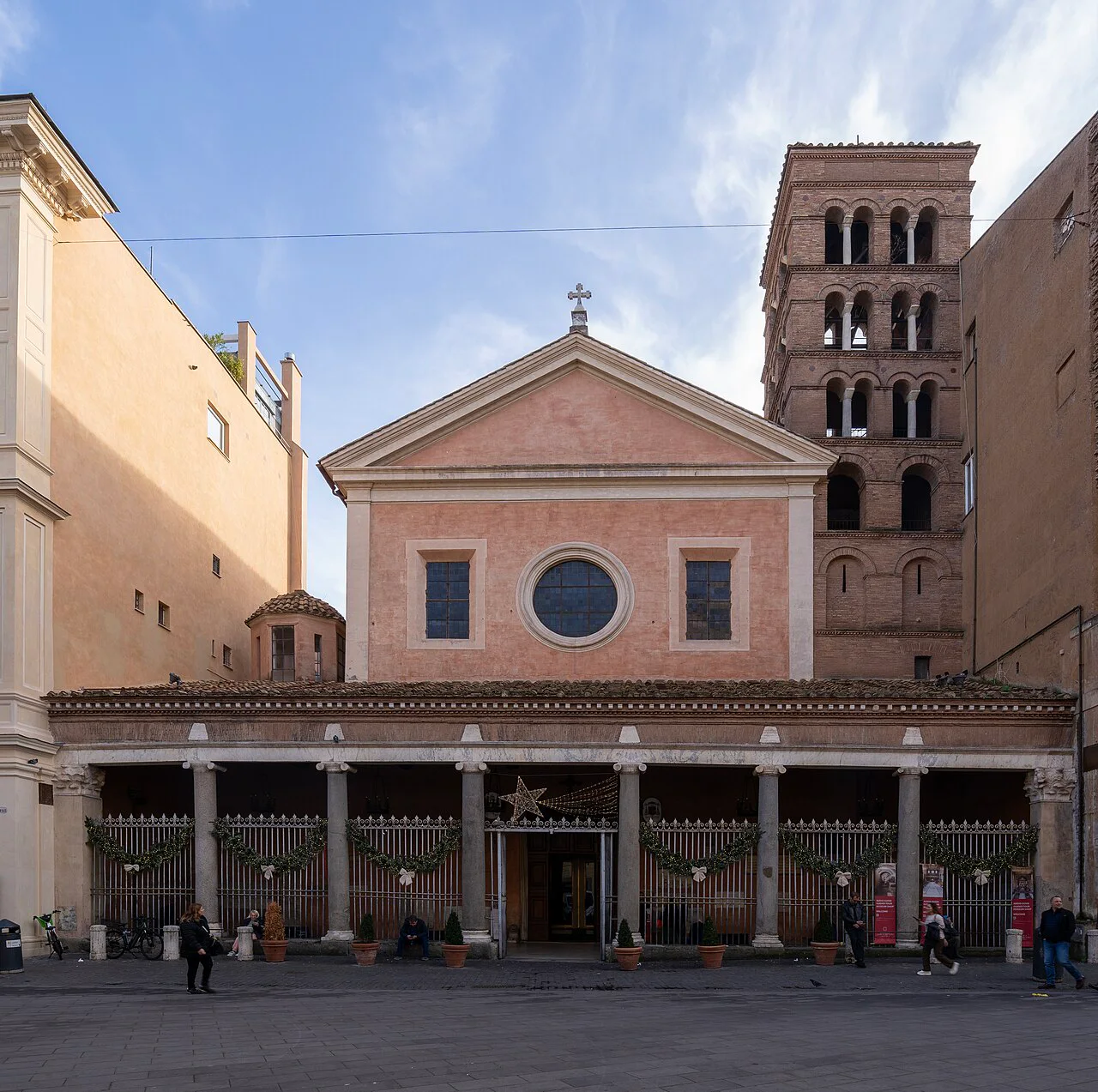
01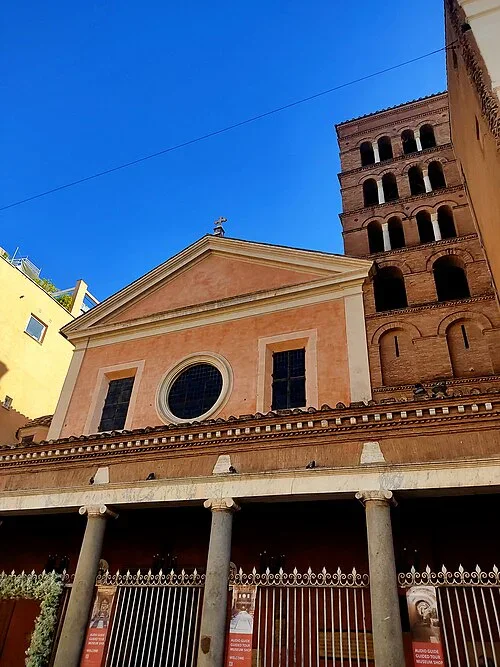 Piazza Approach, Romanesque Portico, and Bell Tower
Basilica Façade, Romanesque Portico and Bell Tower
The Basilica of Saint Lawrence in Lucina is a parish church in central Rome, dedicated to Saint Lawrence, a deacon and martyr. Pope Paschal the Second rebuilt the church in the early twelfth century. The work was finished in 1130. Six granite columns hold up the portico across the front, each with a carved top and base. Across their tops runs a beam cut from one enormous ancient column. Its long grooves, called flutes, run down its length. To the right, set back from the front, rises a Romanesque bell tower of brick. It has five levels, and its upper floors are pierced with arched openings. In the middle of the façade, under the triangular gable, a round window sits between two rectangular Baroque windows. Pope Celestine the Third consecrated the church in 1196.
Photo: LaHantucci · CC BY-SA 4.0
02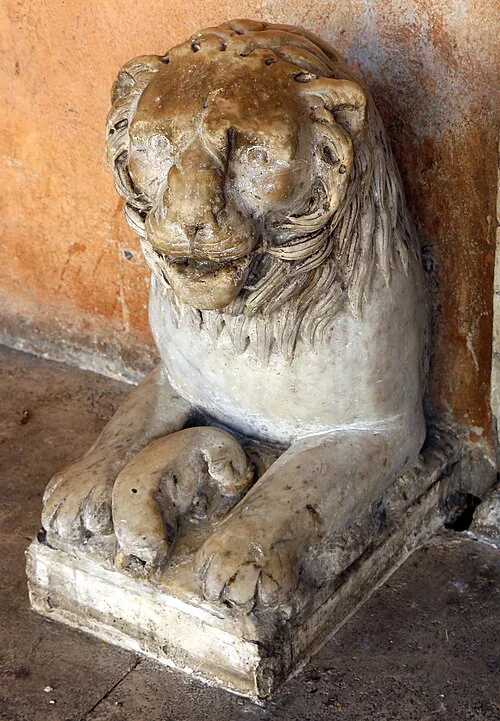 Piazza Approach, Romanesque Portico, and Bell Tower
Medieval Marble Lion
In many medieval churches, stone lions were carved as guardians at the entrance. This one sits on a square plinth against an orange wall, its forepaws reaching across the stone base. Weather has worn its face, and small holes pierce the heavy mane. The mane falls in carved locks around the head and shoulders. Its date is uncertain, and so is the place where it first stood. Its broad forepaws still hold their shape.
Photo: Sailko · CC BY 3.0
03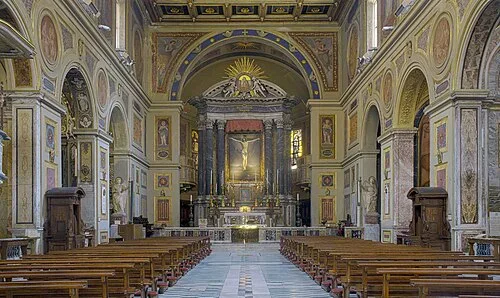 The Baroque Nave and Memorial to Nicolas Poussin
The Baroque Nave
The church once had three aisles, the two side ones running alongside the central nave. In the middle of the seventeenth century, the architect Cosimo Fanzago remade the interior. He built walls behind the piers of the arcades, closing off the side aisles. Each side aisle became a chapel. Noble families rented these chapels, decorated them, and used them as family tombs. The result is one wide hall with chapels along both sides. The arches rest on solid, square piers, each topped with an impost, the block where an arch springs. In the nineteenth century, Pope Pius the Ninth had the Baroque decoration of the nave replaced with frescoes.
Listen in the appPhoto: Livioandronico2013 · CC BY-SA 4.0
04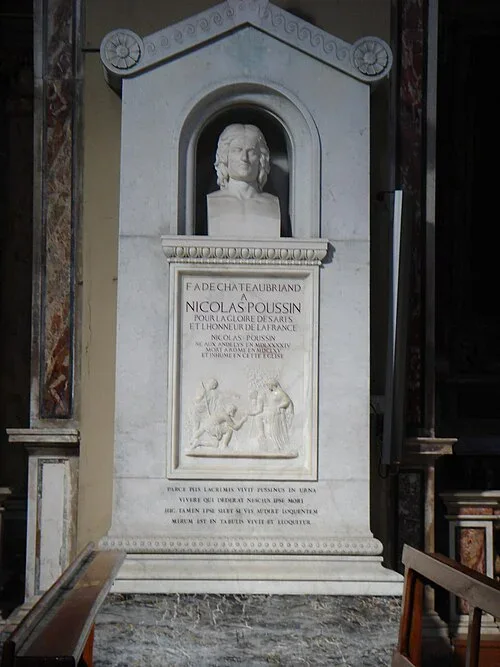 The Baroque Nave and Memorial to Nicolas Poussin
Monument to Nicolas Poussin
The French painter Nicolas Poussin is buried in this church, and a white marble monument honours him. The French ambassador to Rome, François-René de Chateaubriand, gave the monument in 1830. Chateaubriand's dedication, in French, reads roughly: 'For the glory of the arts and the honour of France.' A white marble bust sits in an arched niche above the lettering. Below the lettering, a relief shows a few figures. The tomb also carries the Latin words 'Et in Arcadia ego', which mean 'I too am in Arcadia.' The phrase comes from Poussin's famous painting, The Shepherds of Arcadia.
Listen in the appPhoto: Lalupa · CC BY-SA 3.0
05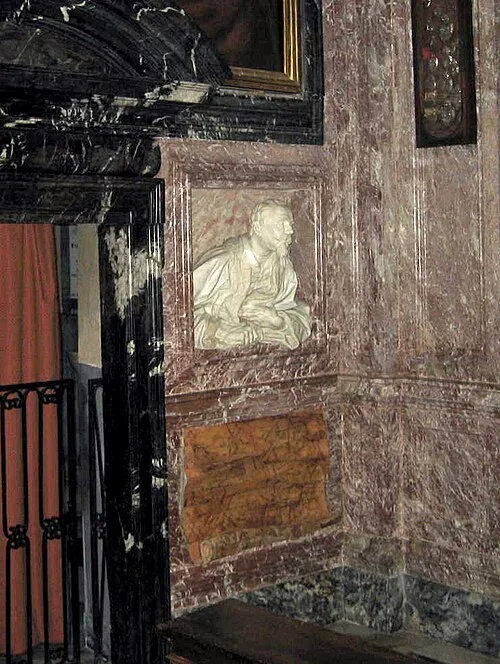 The Fonseca Chapel by Gian Lorenzo Bernini
Bust of Gabriele Fonseca
Gian Lorenzo Bernini designed this chapel for Gabriele Fonseca, a Portuguese physician. Fonseca was personal physician to Pope Innocent the Tenth. A bust of Fonseca sits in a recess beside the altar. Bernini carved it in the late 1660s. It may not have been finished until the early 1670s. The bust is larger than life, set into a panel of rose-coloured marble. The head turns to one side, and loose drapery falls over the shoulders. The chapel also holds other busts from Bernini and his workshop.
Listen in the appTorvindus · CC BY-SA 3.0
06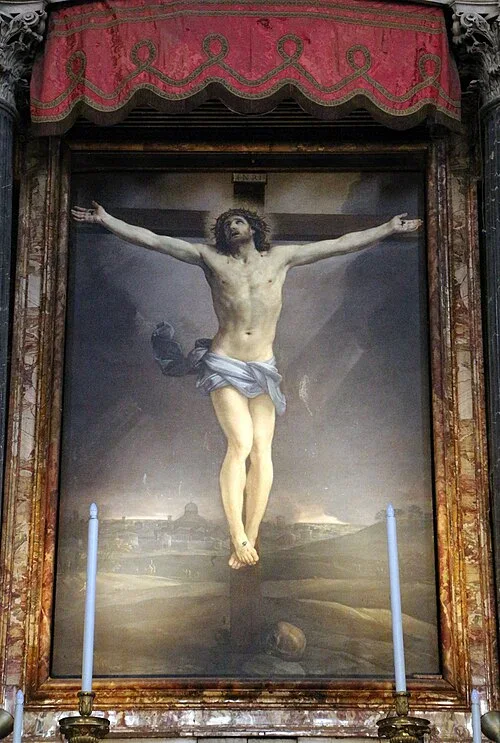 The High Altar and Relics of Saint Lawrence
High Altar and Guido Reni's Crucifixion
The high altar closes off the single nave, framed by six black marble columns in the Corinthian style. Carlo Rainaldi designed the altar in 1669. Above it hangs Guido Reni's painting of Christ on the cross, from around 1640. A red canopy with gold trim tops the marble frame. Christ's arms stretch wide across the canvas, and a crown of thorns rests on his head. Behind him, a dim landscape stretches toward the horizon, with distant buildings. At the foot of the cross lies a skull. Painters often placed one there, as a reference to Golgotha, the place of the skull.
Listen in the appPhoto: Sailko · CC BY 3.0
07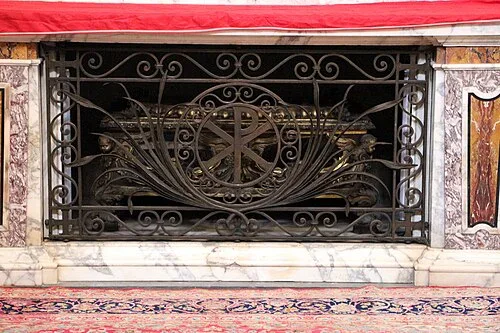 The High Altar and Relics of Saint Lawrence
Urn with the Gridiron of Saint Lawrence
The ornate wrought-iron grille is set into a marble urn. The urn holds a relic which, tradition says, is the gridiron of Saint Lawrence. Iron scrolls curl around a cross-like emblem at the centre. A gridiron is a flat iron frame with bars. According to tradition, Saint Lawrence, a deacon of Rome, was martyred on one. Pope Paschal the Second's marble throne, in the apse behind the high altar, bears an inscription. It records that the saint's relics were moved to this basilica. One description places the gridiron beneath the high altar, another beneath an altar in a side chapel.
Listen in the appPhoto: Sailko · CC BY 3.0
08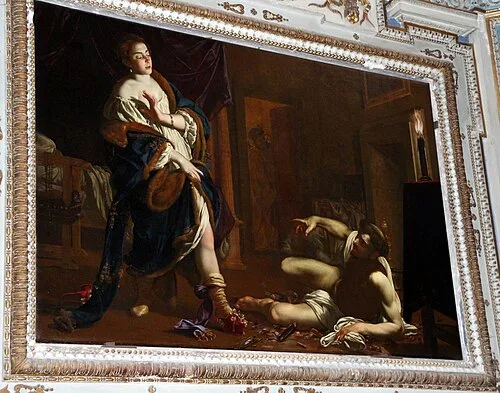 Left Aisle and Simon Vouet's Franciscan Cycle
Simon Vouet's Temptation of Saint Francis
Simon Vouet, a French painter, painted two canvases for the chapel of Saint Francis of Assisi and Saint Giacinta Marescotti. He painted in the manner of Caravaggio, the Italian master. That style, using strong light against deep shadow, is called Caravaggesque. In the Temptation of Saint Francis, a richly dressed woman stands in a dim room. At the lower right, a man crouches on the floor. Vouet's other canvas shows Saint Francis receiving his religious habit. Marco Benefial painted the altarpiece in 1736. On the same side, another chapel holds an altarpiece by Carlo Saraceni, a distinguished follower of Caravaggio.
Listen in the appPhoto: Sailko · CC BY 3.0
09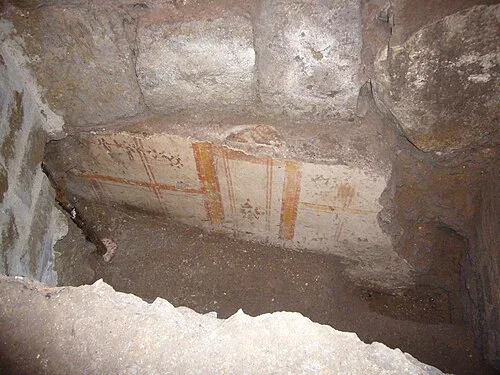 Subterranean Roman Domus and Paleochristian Origins
Excavated Roman Walls with Painted Plaster
The floor of the nave was raised in 1598, and the walls that support it stand on something much older. Below them lies the floor of a building from the second century. Around the fourth century, that building was turned into an apartment block, called an insula. A staircase can still be traced, climbing toward an upper floor. It is only a hypothesis, but the house may have belonged to a Roman lady named Lucina. She is thought to have given the Christian community this space for worship. That link lies behind the church's early Latin name, the Titulus Lucinae. What survives includes the walls, a black and white mosaic floor, and traces of painted plaster. The plaster is pale, with reddish-orange bands dividing it into panels. Tradition says Pope Marcellus the First hid on this site during the persecutions under the emperor Maxentius. Pope Damasus the First was elected here in 366.
Listen in the appPhoto: Lalupa · CC BY-SA 3.0
Basilica di San Lorenzo in Lucina
Frequently asked questions
How much does the guide cost?
Free app download. Listed guide price: $0.99. Guide price shown in the app. Audio guide only. Venue admission is separate.
Can I listen without internet?
Yes. Download the guide’s audio, images, and maps in the app before your visit. Your downloaded content is then available offline.
Can I listen in my language?
This audio guide is available in 15 languages, including English.
Do I need to follow a schedule?
No. This is a self-guided experience. Choose your stops, pause whenever you like, and return to a story at your own pace.
At your own pace
Explore Basilica di San Lorenzo in Lucina.
Download Stanza, then search for “Basilica di San Lorenzo in Lucina”.
Free app download · Guide price shown in the app
Keep exploring
Nearby audio guides
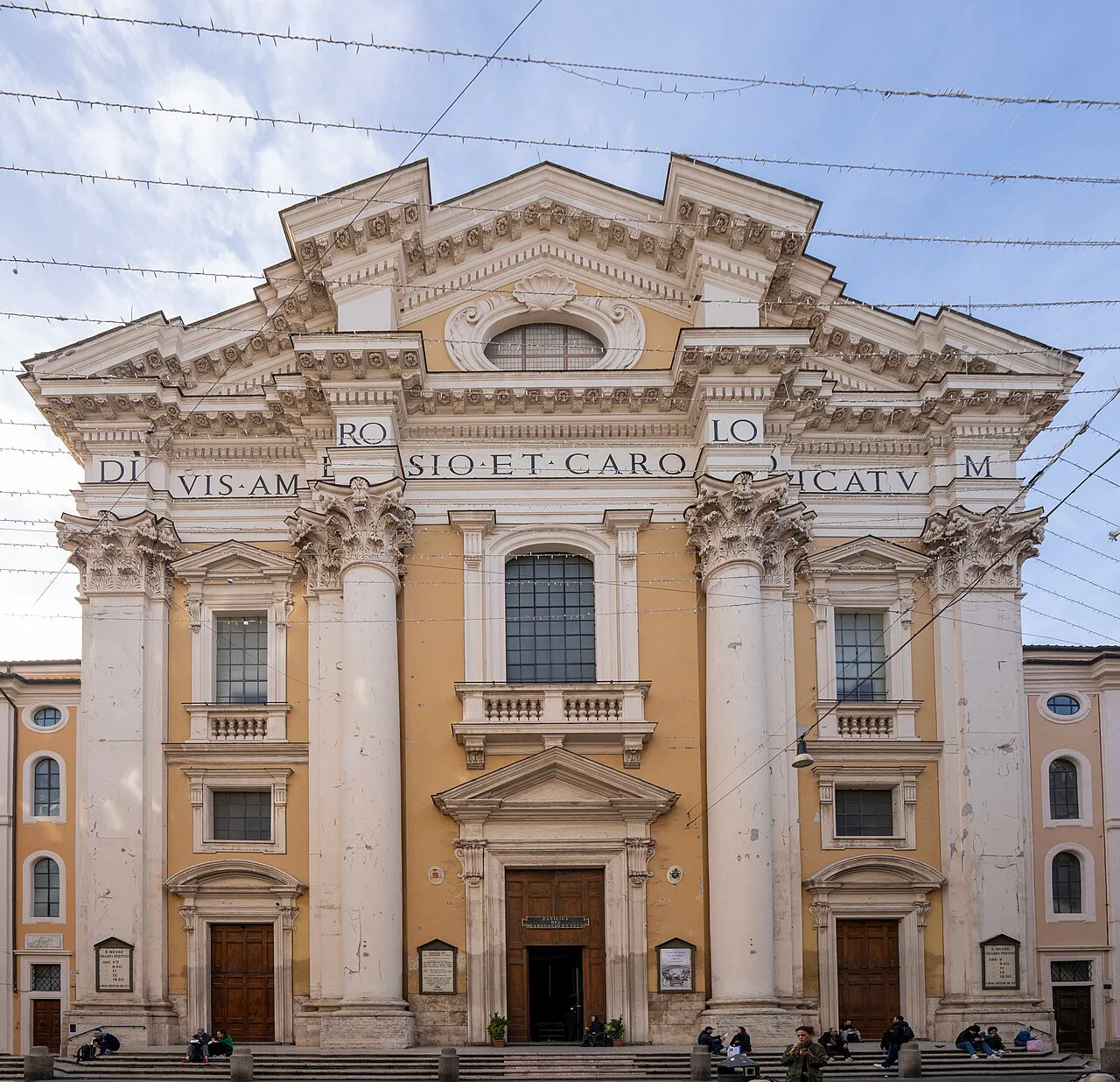
Rome · 1 km
Basilica dei Santi Ambrogio e Carlo al Corso
Content & sources
Photo: DellaGherardesca · CC BY 4.0
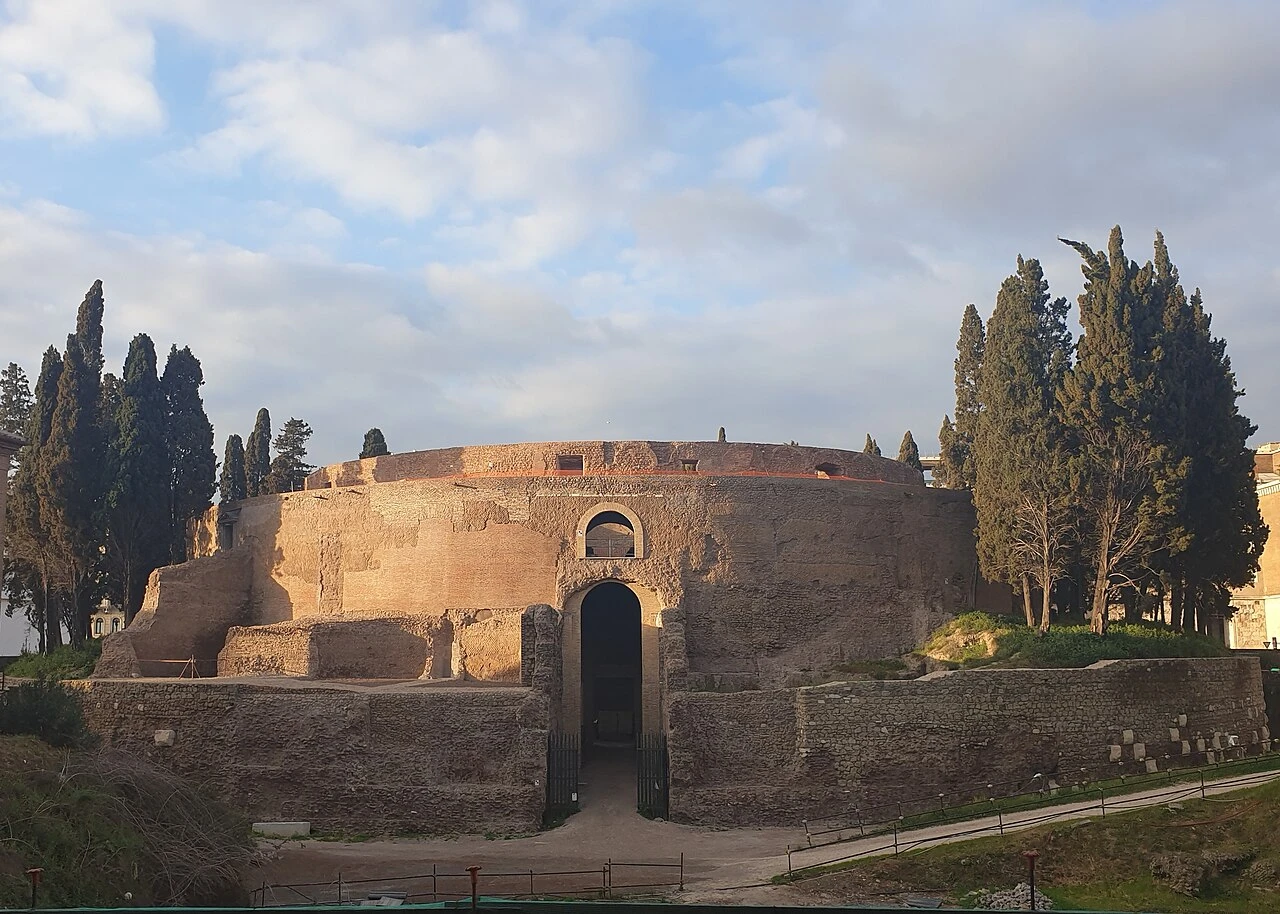
Rome · 1 km
Mausoleum of Augustus
Content & sources
MumblerJamie · CC BY-SA 2.0
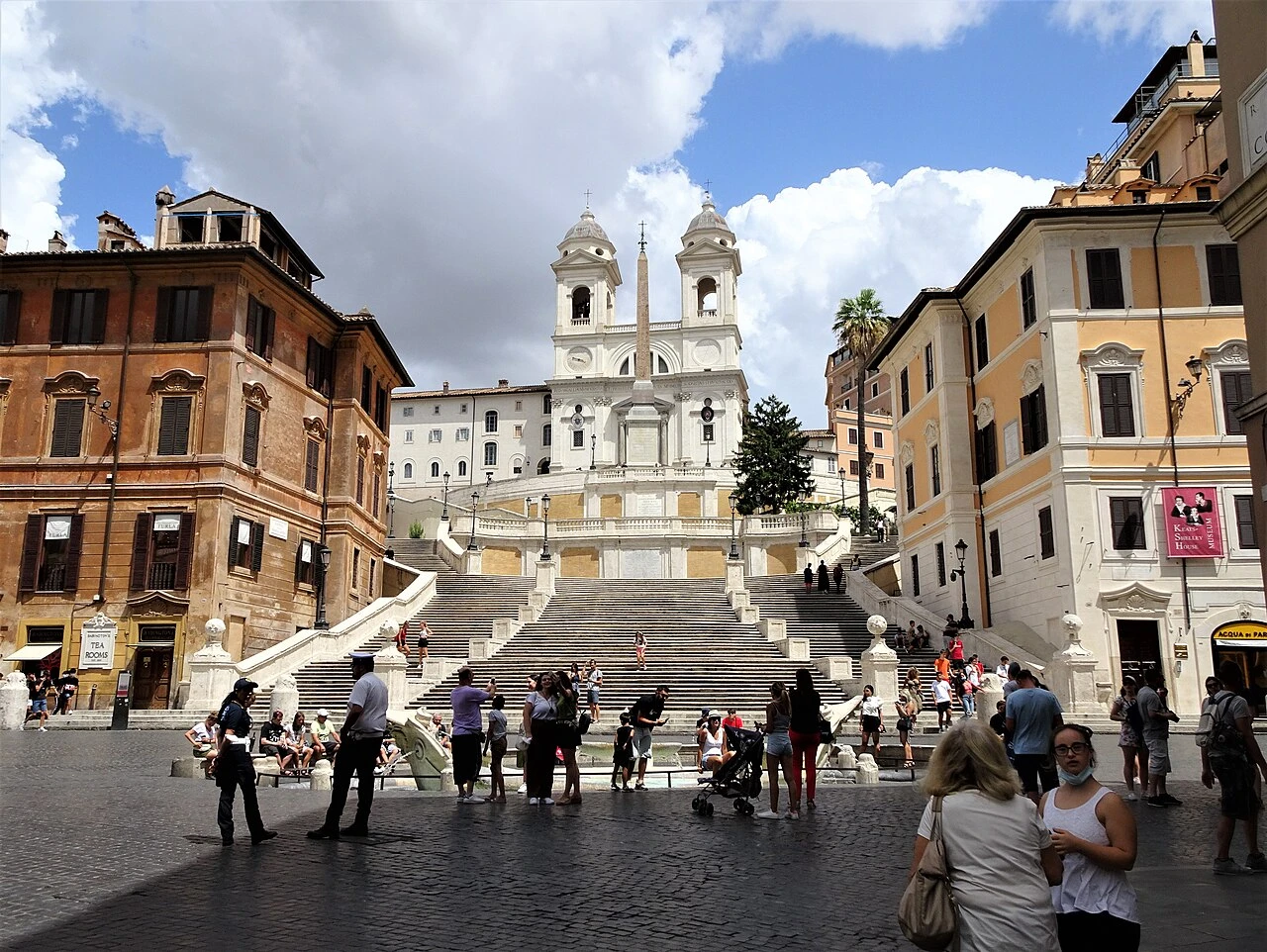
Rome · 1 km
Spanish Steps
Content & sources
Photo: Hugo DK · CC BY-SA 4.0
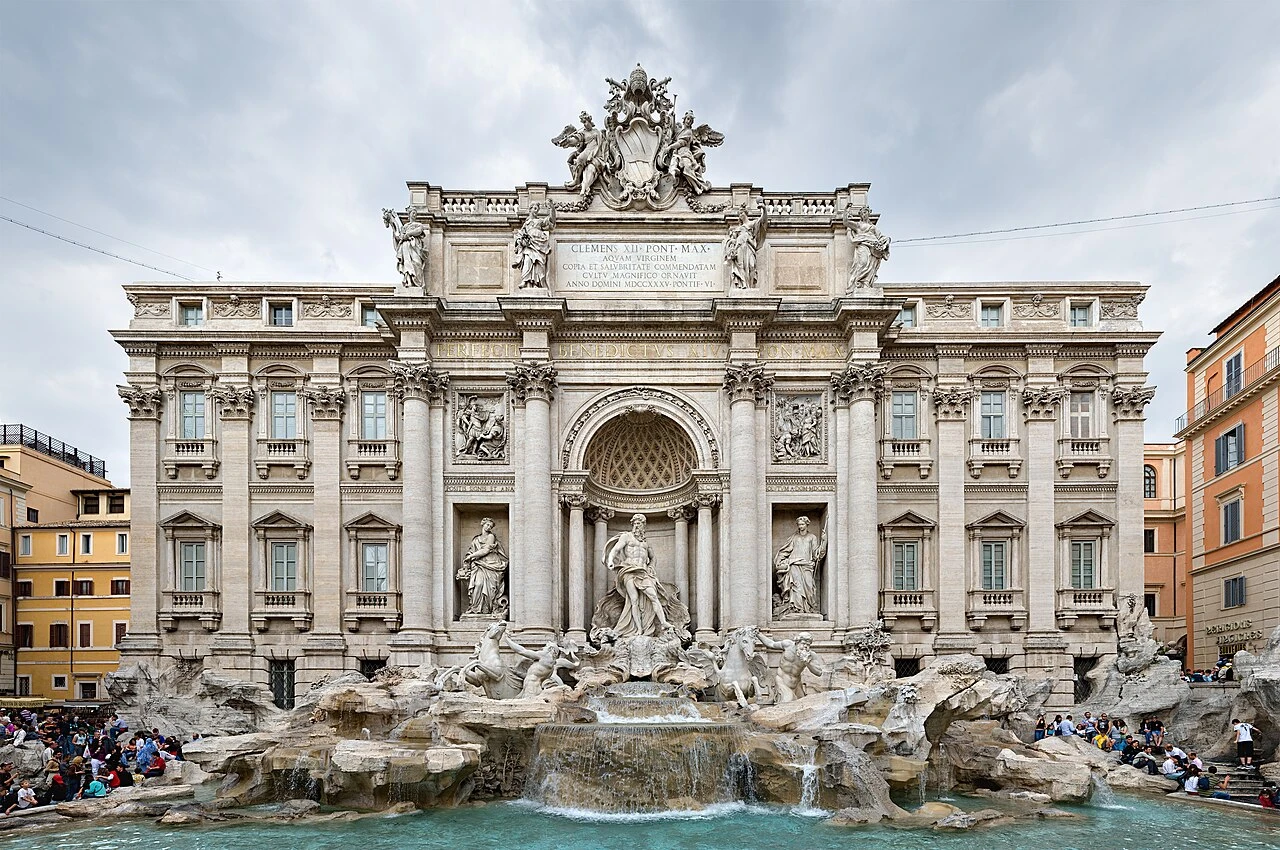
Rome · 1 km
Trevi Fountain
Content & sources
Photo: Diliff · CC BY 3.0