Stanza · Audio guide
Basilica dei Santi XII Apostoli Audio Guide
A place to remember. A story to take with you.
Santi Dodici Apostoli is a 6th-century Catholic parish and minor basilica in Rome. It serves as the mother church of the Conventual Franciscan Order.
Download Stanza, then search for “Basilica dei Santi XII Apostoli”.
About the tour
One guide. Your kind of visit.
Santi Dodici Apostoli is a 6th-century Catholic parish and minor basilica in Rome. It serves as the mother church of the Conventual Franciscan Order.
Ready when you are.
- 01Get the free Stanza app.
iOS & Android
- 02Find your guide.
“Basilica dei Santi XII Apostoli”
- 03Download before you go.
Works offline
Audio guide / 11 narrated stops
Inside the guide
Get to know a few of the stories before you go. Open a stop to read more.
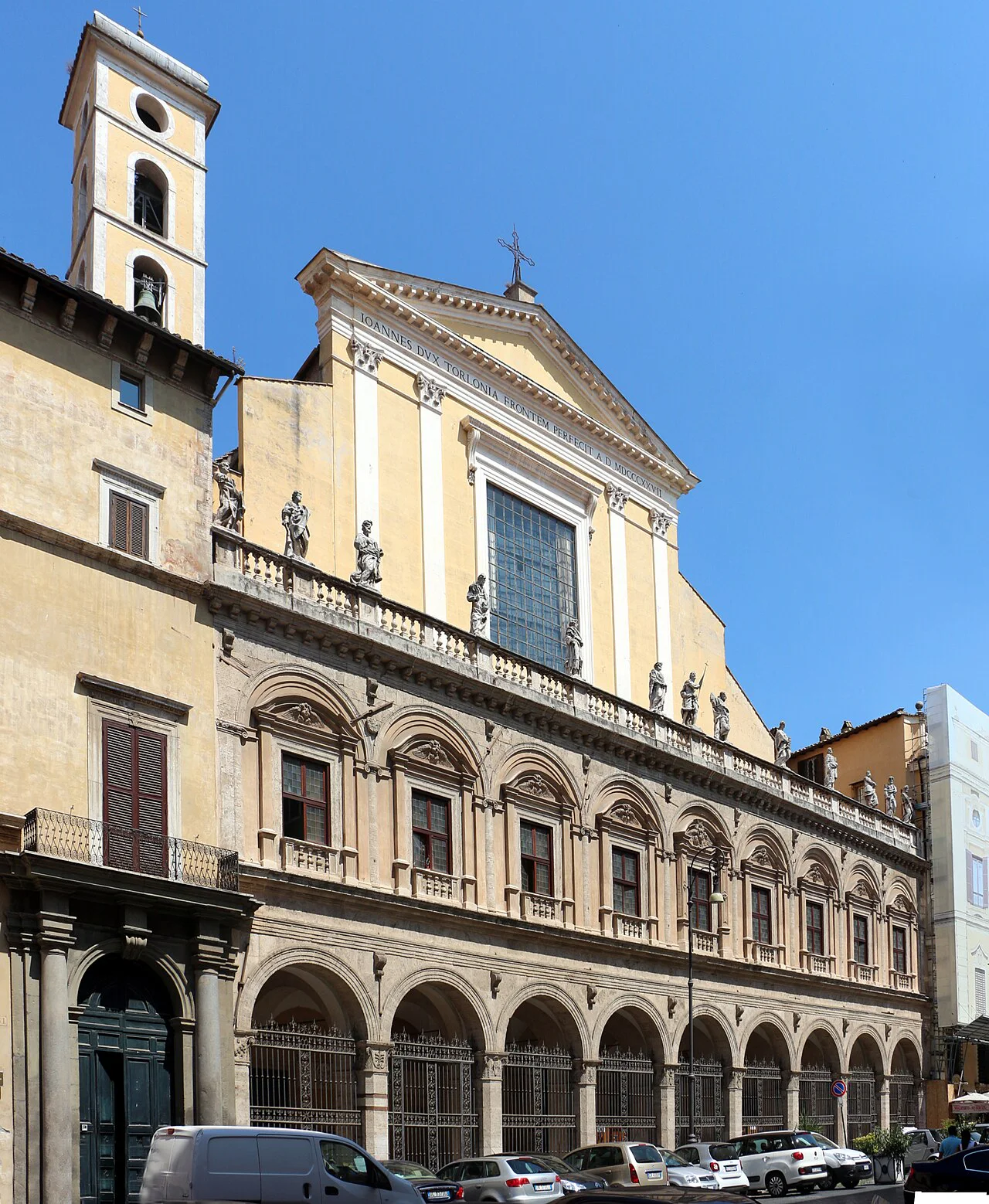
01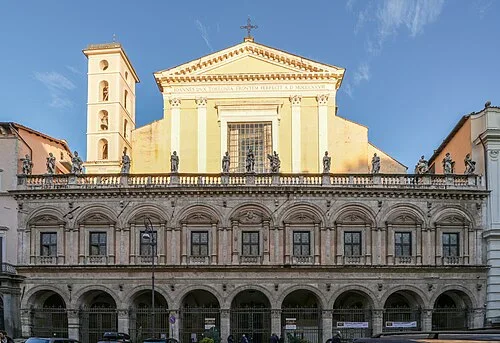 Outer Portico and Renaissance Narthex
The Basilica and its Renaissance Portico
Pope Pelagius the First built this church to celebrate a victory. The victory belonged to General Narses, who had defeated the Ostrogoths at the Battle of Taginae in 552. Narses himself helped with the building work. Around the year 570, Pope John the Third dedicated the church to two apostles, Saint Philip and Saint James. One account traces an earlier church on this spot to Pope Julius the First, in the fourth century. Today the church is the mother church of the Conventual Franciscans, and their world headquarters stands in the building next door. A row of statues lines the top of the arcaded portico, which dates from the fifteenth century. Its name now honours all the apostles, though it was first dedicated to just two of them.
Photo: Monticiano · CC BY-SA 4.0
02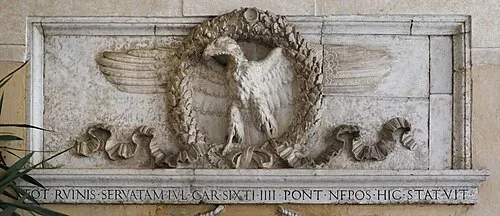 Outer Portico and Renaissance Narthex
The Roman Eagle in the Portico
An eagle with outspread wings is carved in relief on this wall, and it grips an oak crown in its talons. It is a Roman imperial eagle, usually dated to the second century. That makes it well over a thousand years older than the portico around it. Fifteenth-century builders set it into their new portico. Historians call a piece like this spolia, meaning older pieces taken from earlier buildings and reused. Below the eagle, a Latin inscription speaks of something saved from ruins, and it names Pope Sixtus the Fourth. The stone is thought to have come from the Baths of Constantine, rather than from Trajan's Forum, as a legend has it. Across the portico hangs a monument by Antonio Canova to his friend, the Venetian engraver Giovanni Volpato. It shows a weeping woman, called Friendship in Mourning, bent before a bust of the engraver. Canova made it for his friend after Volpato had died.
Photo: Sailko · CC BY 3.0
03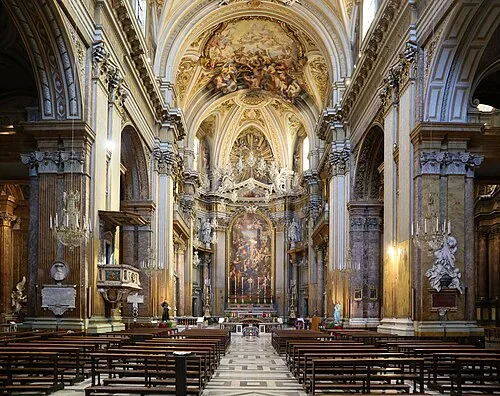 Central Nave and Baciccio's Vault
The Baroque Nave
An earthquake in 1348 ruined this church, and it was left abandoned. In 1417, Pope Martin the Fifth restored it. He came from the Colonna family, whose palace stood right beside the church. The Franciscans took charge of the church in 1463. Around 1700, Pope Clement the Eleventh ordered a dramatic renovation. The architect Carlo Fontana designed the new Baroque interior, which was completed in 1714. That is why the inside looks Baroque, even though the church was founded in the sixth century. The church is about seventy-five metres long. It is about forty metres wide. Pale columns line the nave, and gilded stucco decorates the arches and vaults. By the time the interior was finished, the Franciscans had been in charge of the church for more than two centuries.
Listen in the appPhoto: Sailko · CC BY 3.0
04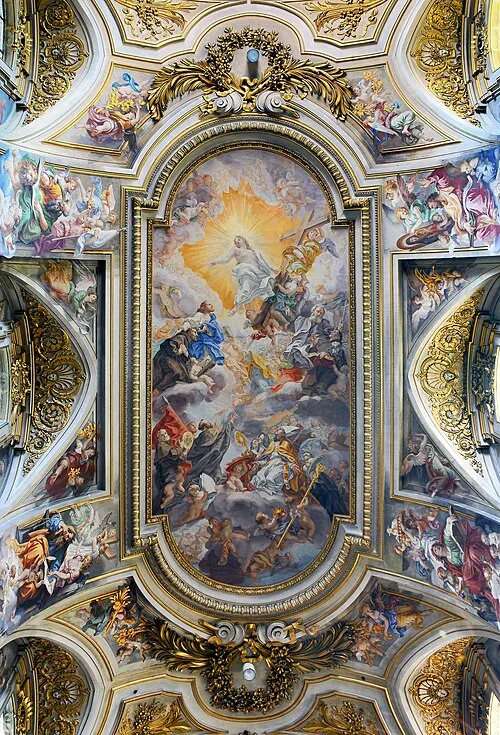 Central Nave and Baciccio's Vault
Baciccio's Triumph of the Franciscan Order
The vault above the nave is painted to look as if it has split open onto heaven. Giovanni Battista Gaulli, known as Baciccio, painted it in 1707. The fresco is called the Triumph of the Franciscan Order, and it was painted into wet plaster. Clouds and crowds of figures rise toward a blazing light at the top, and gilded stucco frames the scene. It celebrates the order whose mother church this is. Pope Benedict the Thirteenth consecrated the church in September 1724.
Listen in the appPhoto: Livioandronico2013 · CC BY-SA 4.0
05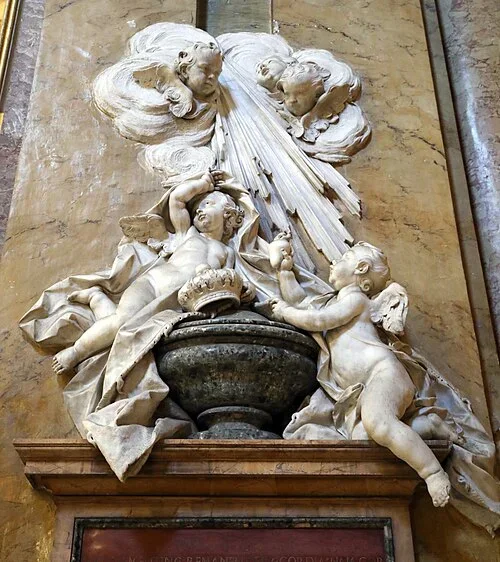 Right Aisle: The Stuart Monument and Bessarione Chapel
The Monument to Maria Klementyna Sobieska
Her heart is enshrined beside a pier of the nave, but her body lies in Saint Peter's Basilica. Maria Clementina Sobieska was the wife of the exiled Stuart prince James Francis Edward Stuart. Filippo della Valle carved this marble monument in 1737. Two angel heads peer from the clouds above, while cherubs gather around a stone urn topped with a crown. James lived at the nearby Palazzo Muti, and this church was his parish church. He came here to pray every morning. After his death in 1766, his body lay in state in this church, before he was buried with his wife in Saint Peter's.
Listen in the appPhoto: Sailko · CC BY 3.0
06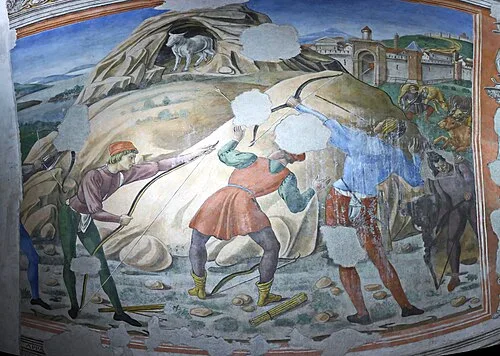 Right Aisle: The Stuart Monument and Bessarione Chapel
The Hidden Bessarione Chapel Frescoes
For more than two centuries, a fifteenth-century chapel lay hidden in a narrow gap beside this church. Cardinal Bessarion had it built in the mid-fifteenth century as his funerary chapel. Antoniazzo Romano, who finished its decoration in 1467, is among the painters credited with the frescoes. Floods from the Tiber damaged the paintings, and so did mercenary soldiers who sacked Rome in 1527. Around 1720, the Odescalchi chapel was built and almost sealed the old chapel off. In 1959, an architect working on repairs in the neighbouring Palazzo Colonna stumbled on the hidden space. Parts of the frescoes have been visible since 2008. The left scene shows the walled town of Siponto, on the Gargano, where the archangel Michael appears as a bull struggling against evil. The right-hand scene shows Mont Saint-Michel and a solemn procession led by the bishop of Avranches. Behind the bishop walk two churchmen: the future Pope Sixtus the Fourth, and his nephew, who would also become pope. The choir of angels on the vault has almost completely disappeared.
Listen in the appPhoto: Peter1936F · CC BY-SA 3.0
07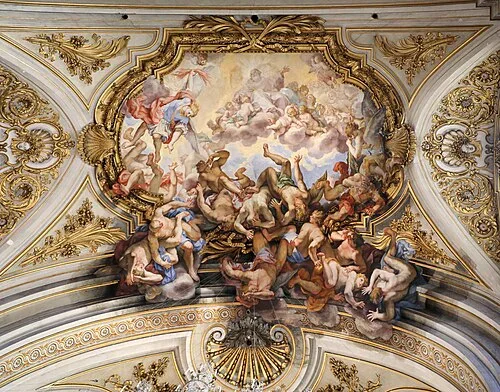 The High Altar and Presbytery
Odazzi's Fall of the Rebel Angels
Lucifer and his rebel angels are tumbling across the vault above the altar. Giovanni Odazzi painted this fresco in 1709, and it makes the ceiling seem to open onto a mass of falling bodies. The space once held something older. Around 1472, Melozzo da Forlì was commissioned to paint the Ascension of Christ on this apse vault, for the cardinal whose tomb stands beside the altar. Vasari, the sixteenth-century writer, said Christ was foreshortened so well that he seemed “to pierce the vault.” In 1711, when the choir was enlarged, the fresco was taken down. Its pieces were scattered. A hall in the Vatican Museums holds Melozzo's designs for angels and apostles, and the sacristy of Saint Peter's keeps other portions. Some say the fresco shaped the work of later painters. The figure of Christ from it is now in the Quirinal Palace.
Listen in the appPhoto: Peter1936F · CC BY-SA 4.0
08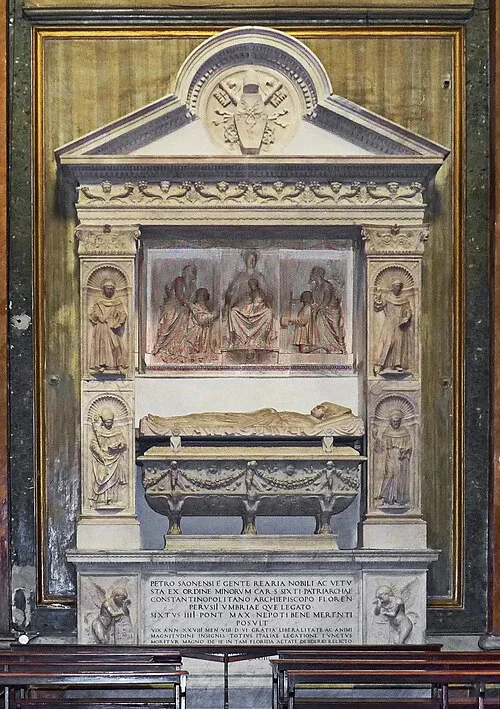 The High Altar and Presbytery
The Tomb of Cardinal Pietro Riario
Cardinal Pietro Riario died in 1474, and his tomb stands to the left of the high altar. He was a nephew of Pope Sixtus the Fourth. The monument rises in layers, with a pediment topped by a coat of arms and a relief of the Virgin with saints below it. Figures of saints stand in niches on the side pillars, and the cardinal lies on top of the sarcophagus. The sculptor is still debated, and the workshop of Andrea Bregno is the name most often given. He was also the patron of the apse fresco you heard about earlier.
Listen in the appPhoto: Peter1936F · CC BY-SA 4.0
09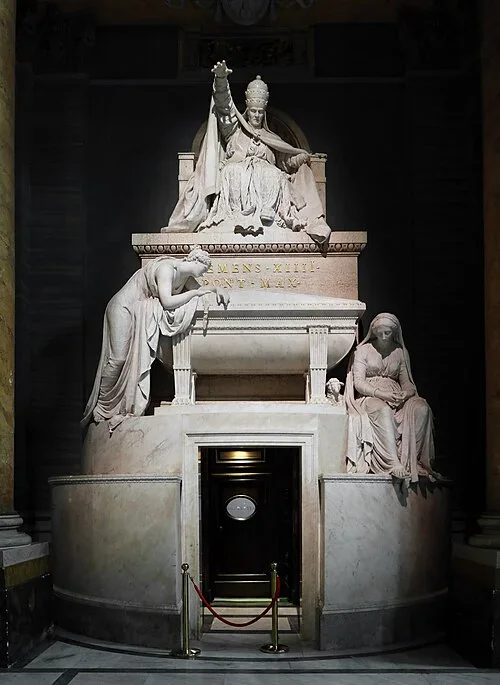 Left Aisle: Canova's Tomb of Clement XIV
Canova's Tomb of Pope Clement XIV
Pope Clement the Fourteenth sits high above his own sarcophagus, one arm raised in a warning gesture. Two women flank him below. Temperance leans over the sarcophagus with a quiet, resigned face. Clemency sits with her head bowed and her arms folded in her lap. Antonio Canova carved the tomb in the 1780s, and it was the first major work he made in Rome. A wealthy merchant paid for it, a man who owed his fortune to favours from the pope. In 1773, Clement had suppressed the Jesuits, a decision forced upon him. Before he became pope, he had been a cardinal priest of this very church.
Listen in the appPhoto: Sailko · CC BY 3.0
10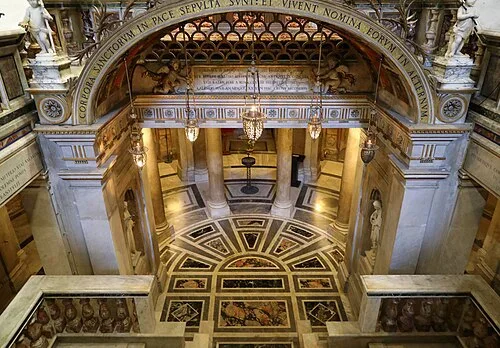 The Confessio Crypt and Apostolic Shrine
Descending to the Confessio
In 1871, while the new crypt was being built, the relics of two apostles came to light beneath the high altar. They had been taken from the catacombs in the ninth century, to keep them safe from invaders. The crypt is a confessio, a space beneath an altar made to hold relics. A broad staircase leads down to a round floor of inlaid marble. The painted walls reproduce the decorations of two Roman catacombs, those of Callixtus and Domitilla. Relics of other martyrs, turned up in the same digging, were gathered here as well.
Listen in the appPhoto: Sailko · CC BY 3.0
- 11
The Shrine of the Apostles
An inscription's account of a barefoot pope carrying two apostles' relics to this church, and the shrine where they rest today.
Basilica dei Santi XII Apostoli
Frequently asked questions
How much does the guide cost?
Free app download. Listed guide price: $0.99. Guide price shown in the app. Audio guide only. Venue admission is separate.
Can I listen without internet?
Yes. Download the guide’s audio, images, and maps in the app before your visit. Your downloaded content is then available offline.
Can I listen in my language?
This audio guide is available in 15 languages, including English.
Do I need to follow a schedule?
No. This is a self-guided experience. Choose your stops, pause whenever you like, and return to a story at your own pace.
At your own pace
Explore Basilica dei Santi XII Apostoli.
Download Stanza, then search for “Basilica dei Santi XII Apostoli”.
Free app download · Guide price shown in the app
Keep exploring
Nearby audio guides
Rome · 1 km
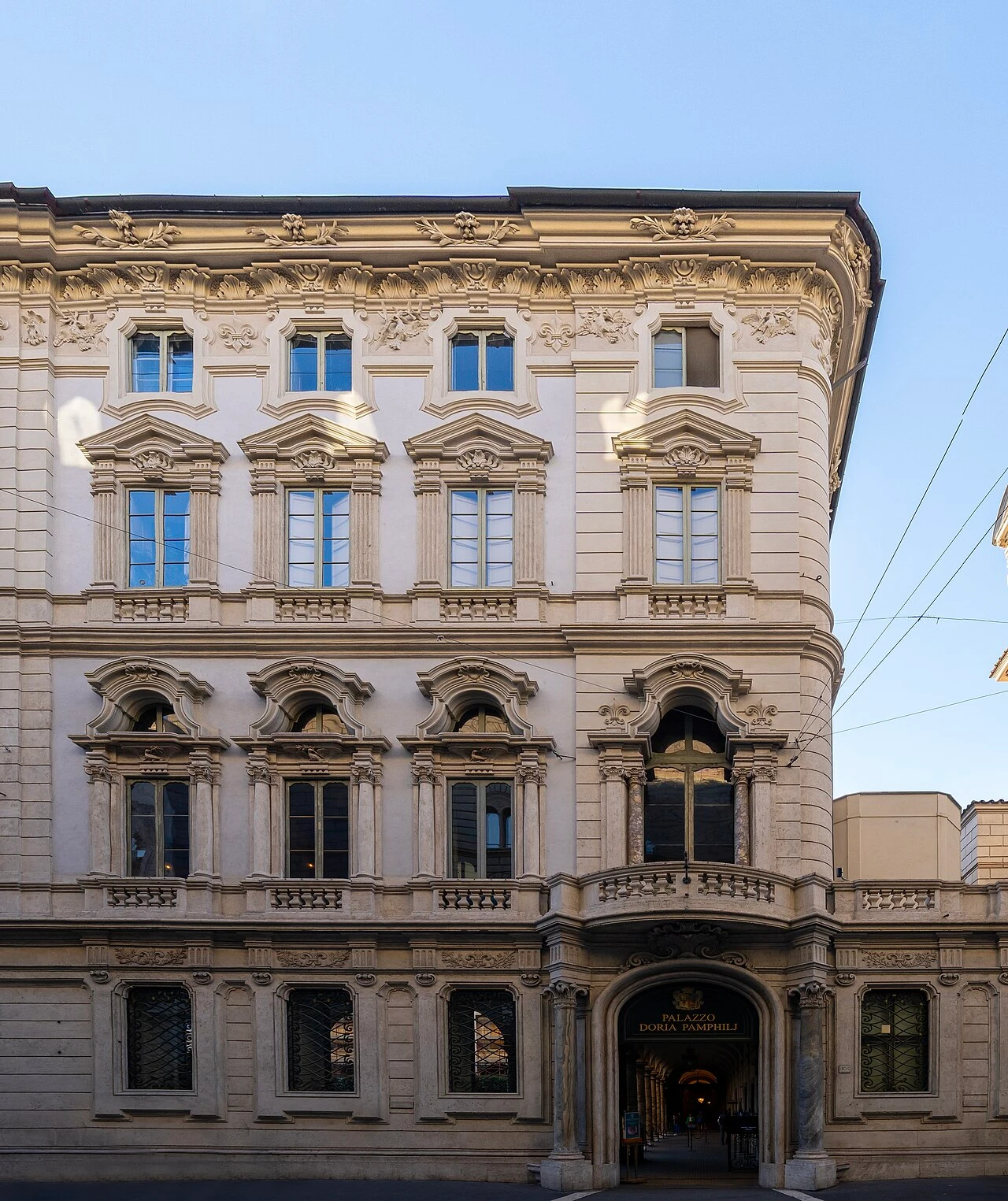
Palazzo Doria-Pamphilj
Content & sources
Photo: Fiat 500e · CC BY 4.0
Rome · 1 km
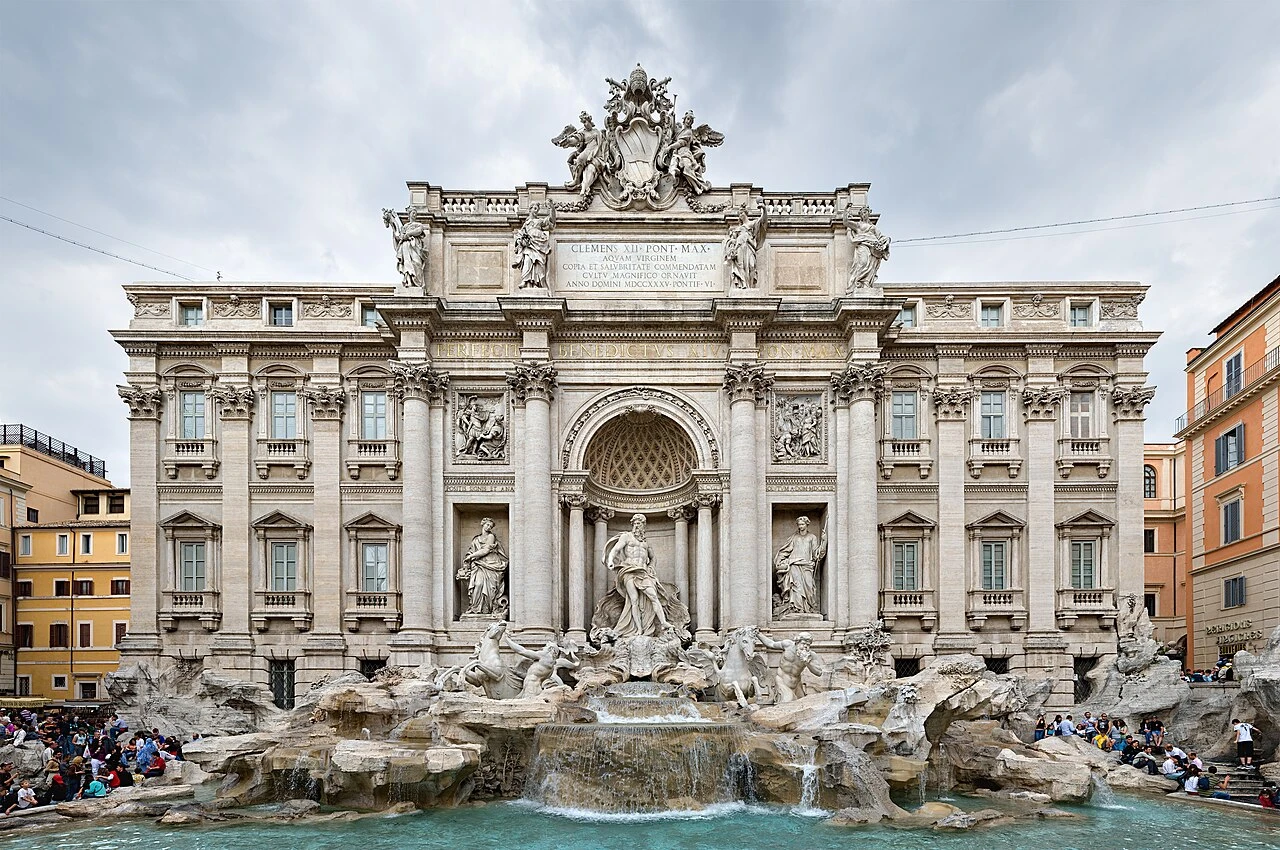
Trevi Fountain
Content & sources
Photo: Diliff · CC BY 3.0
Rome · 1 km
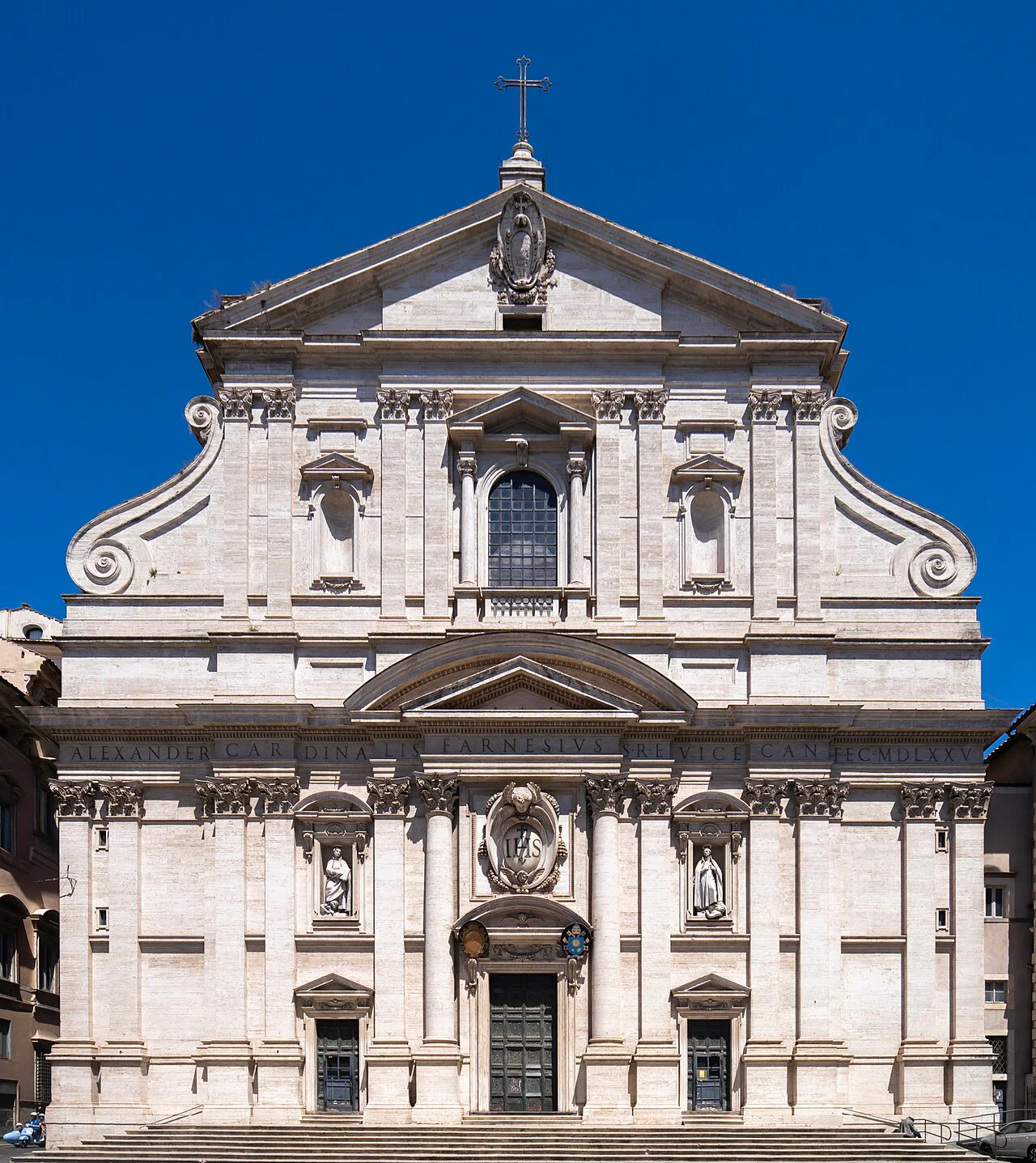
Chiesa del Gesù
Content & sources
Photo: Rione Colonna · CC BY 4.0
Rome · 1 km
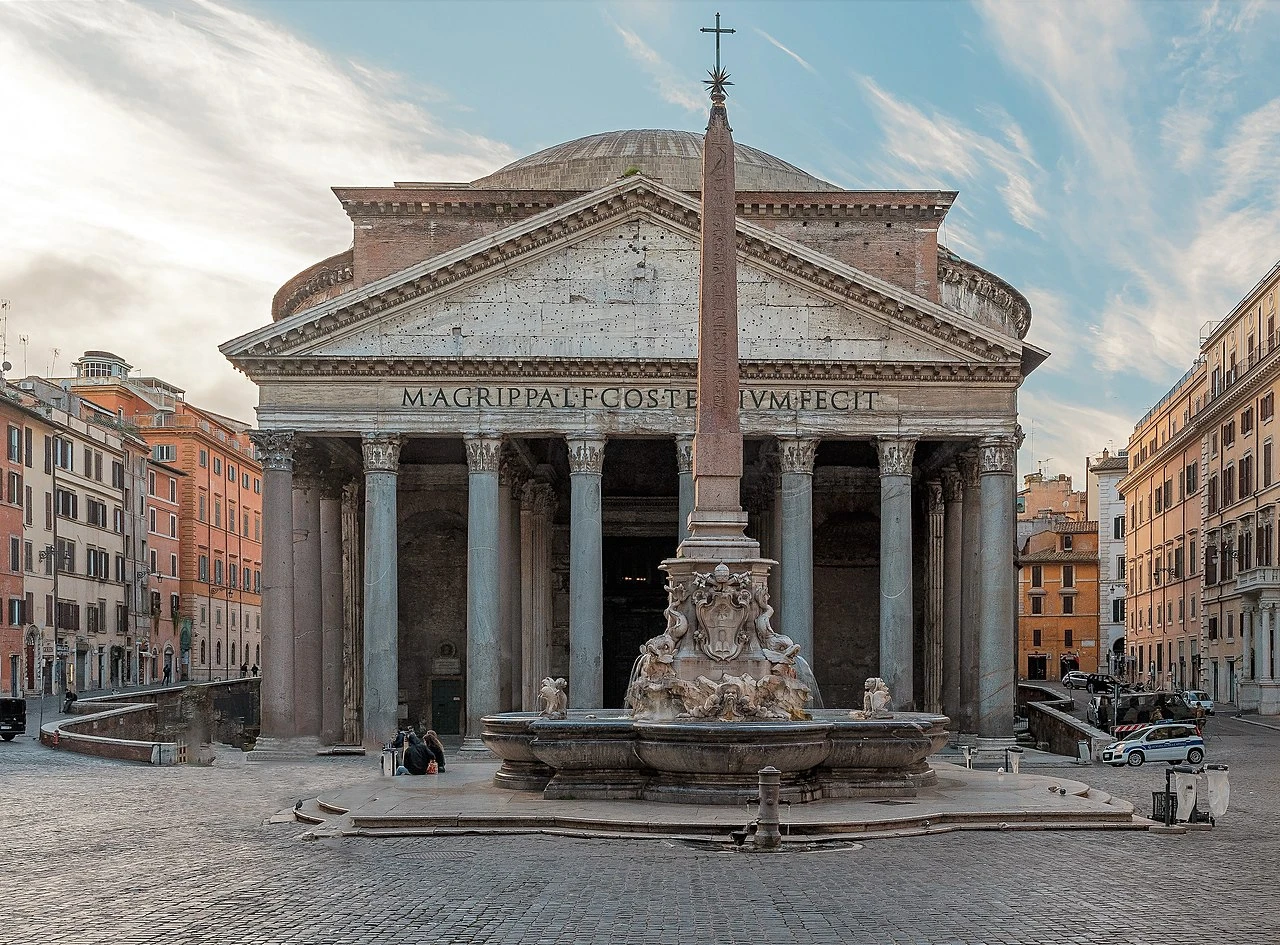
Pantheon
Content & sources
Rabax63 · CC BY-SA 4.0