Stanza · Audio guide
Chiesa del Gesù Audio Guide
A place to remember. A story to take with you.
The Church of the Gesù is the mother church of the Society of Jesus located in Rome, Italy. Its façade is considered the first truly baroque façade and served as a model for Jesuit churches worldwide.
Download Stanza, then search for “Chiesa del Gesù”.
About the tour
One guide. Your kind of visit.
The Church of the Gesù is the mother church of the Society of Jesus located in Rome, Italy. Its façade is considered the first truly baroque façade and served as a model for Jesuit churches worldwide.
Ready when you are.
- 01Get the free Stanza app.
iOS & Android
- 02Find your guide.
“Chiesa del Gesù”
- 03Download before you go.
Works offline
Audio guide / 14 narrated stops
Inside the guide
Get to know a few of the stories before you go. Open a stop to read more.
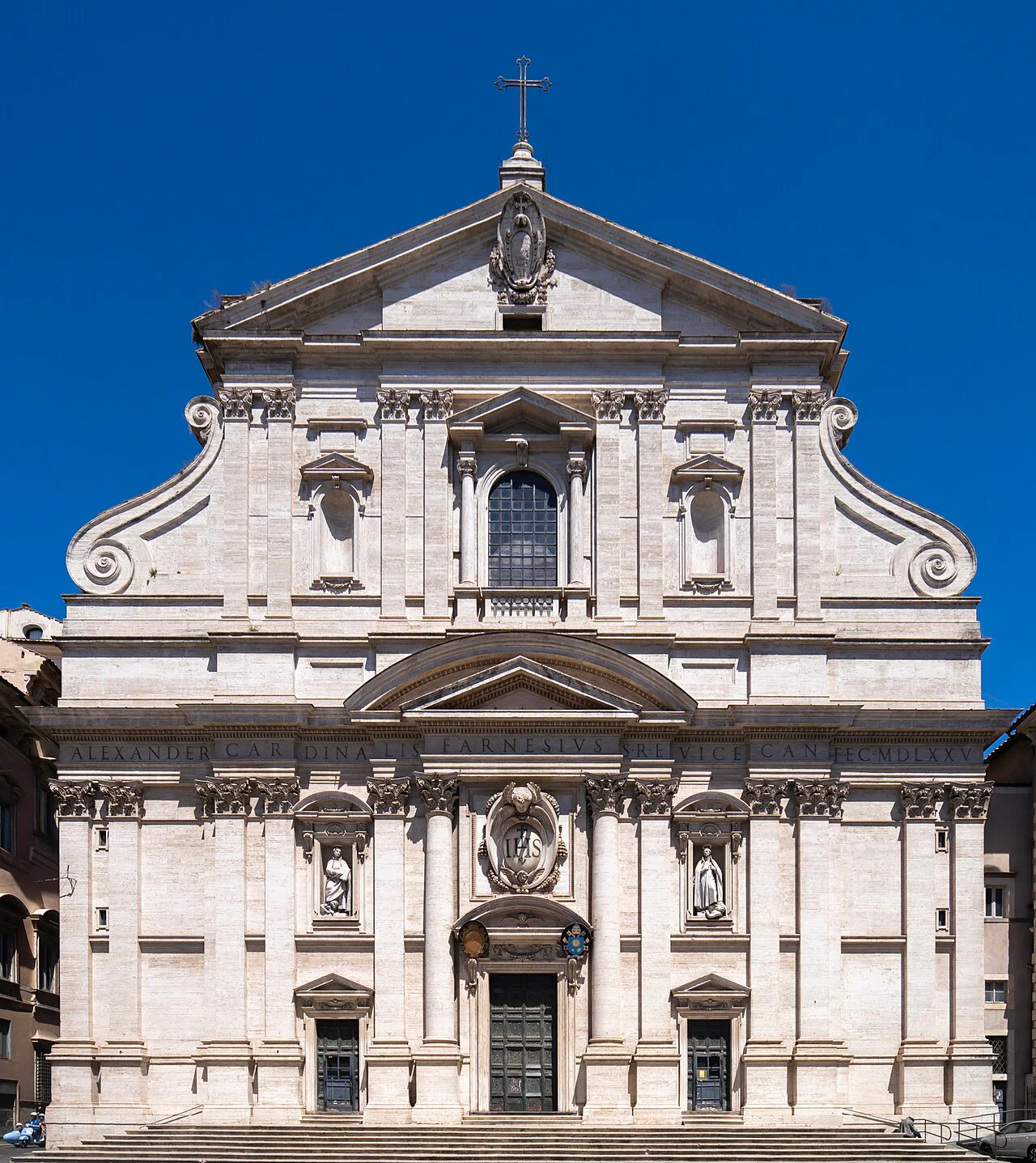
01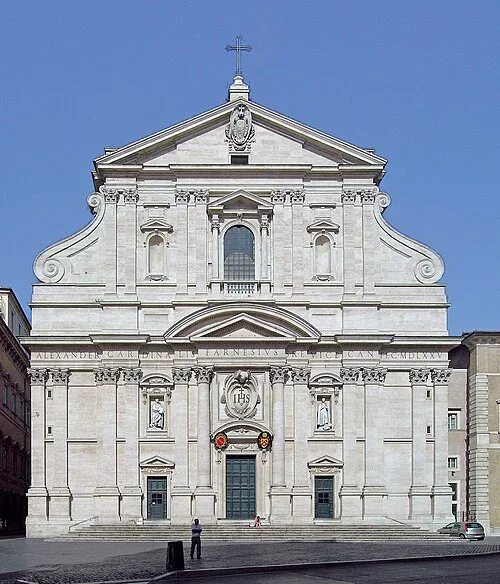 Piazza del Gesù and Della Porta's Façade
The Façade: First of the Baroque
The name of this place is the shortest in Rome: Gesù, Jesus. It is the mother church of the Society of Jesus, the order better known as the Jesuits, and this tour follows it from the street to the tombs of its saints. A Spanish priest, Ignatius of Loyola, conceived the church in 1551, in the thick of the Reformation and the Catholic response to it. Michelangelo, the story goes, offered to design it for free out of devotion. The money came instead from Cardinal Alessandro Farnese, grandson of the pope who had approved the new order. Building began in 1568 to a design by Giacomo Barozzi da Vignola, the Farnese family architect, and was finished in 1580. The façade was reworked by Giacomo della Porta, and it has been called the first truly baroque façade. Its bold curves were copied by Jesuit churches across Europe and the Portuguese colonies for centuries. The carved letters along the band above the doors name Cardinal Farnese himself as the founder. The church was consecrated in 1584, and it remained the home of the Jesuits' Superior General until the order's suppression in 1773.
Alessio Damato · CC BY-SA 3.0
02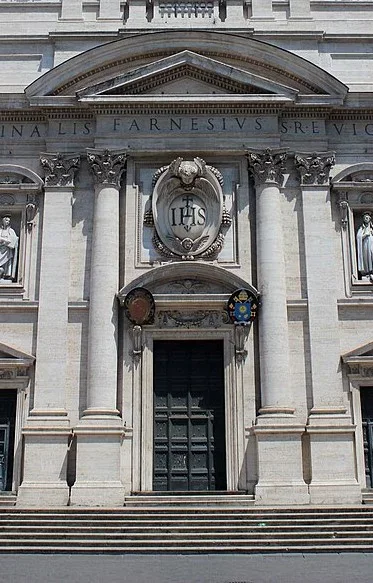 Piazza del Gesù and Della Porta's Façade
The Portal and the Name of Jesus
Above the main door sits a large medallion with three letters: IHS. They are the first three letters of the name Jesus spelled in Greek, and they give the church its full title, the Most Holy Name of Jesus. The monogram is the Jesuit emblem, and it returns again and again inside, on altars, pulpits and ceilings. Two statues on the façade announce the order's story before anyone steps inside. On the right stands Francis Xavier, his left foot planted on a human figure beneath him. Opposite him stands Ignatius of Loyola, the founder whose idea this whole church was. The doorway has no porch or vestibule to slow anyone down; the door opens straight into the body of the church.
Miguel Hermoso Cuesta · CC BY-SA 4.0
03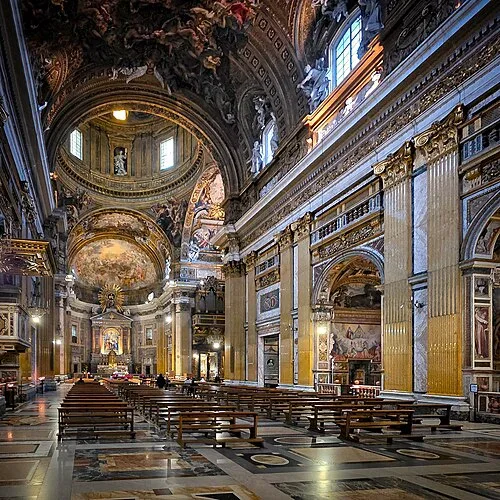 The Central Nave and the Preaching Hall
The Preaching Hall: A Nave Built to Be Heard
Inside, the plan breaks with centuries of tradition. Preaching churches built by Franciscans and Dominicans since the thirteenth century had long naves flanked by side aisles. Here the aisles are gone. In their place runs a series of identical interconnecting chapels behind arched openings, each entrance controlled by balustrades with gates. The transepts shrink to stubs that push every gaze toward the altars at their end walls. The reason is sound. The Jesuits relied heavily on the acoustics of their churches; they wanted the faithful to hear every word of the sermon clearly. A single wide nave carries a preacher's voice, and the dome at the crossing helps gather it. The Council of Trent itself said little about architecture, but its call for simplification led Charles Borromeo to reform church building across the Catholic Church, and his ideas left marks here. The nave runs about seventy-five metres from door to altar. Across, the church measures thirty-five metres. This layout became the Jesuit blueprint, repeated well into the twentieth century.
Listen in the appPhoto: NateBergin · CC BY 4.0
04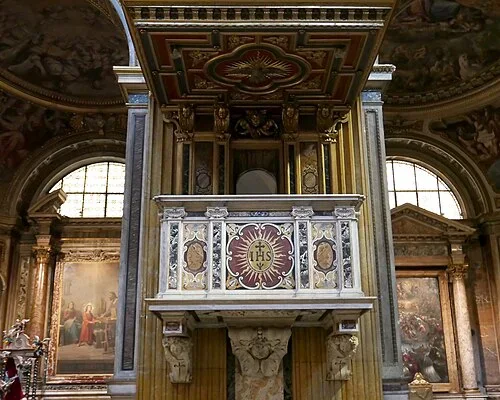 The Central Nave and the Preaching Hall
The Pulpit: Word Made Architecture
Ignatius gave his architects two requirements for this church. The first was a great nave with a lateral pulpit, to make preaching easier. The second was a central altar for the celebration of the Eucharist. The first designs had been drawn by the Florentine architect Nanni di Baccio Bigio, then reworked by Michelangelo in 1554 before Vignola took the project in hand. The pulpit here hangs from a nave pier, richly carved and bearing the IHS emblem of the Holy Name. Preaching was the Jesuits' principal weapon in the Counter-Reformation, and this pulpit was built for the fight. Whether it stands exactly where the original sixteenth-century design placed it, no one can say for certain.
Listen in the appPhoto: Finoskov · CC BY-SA 4.0
05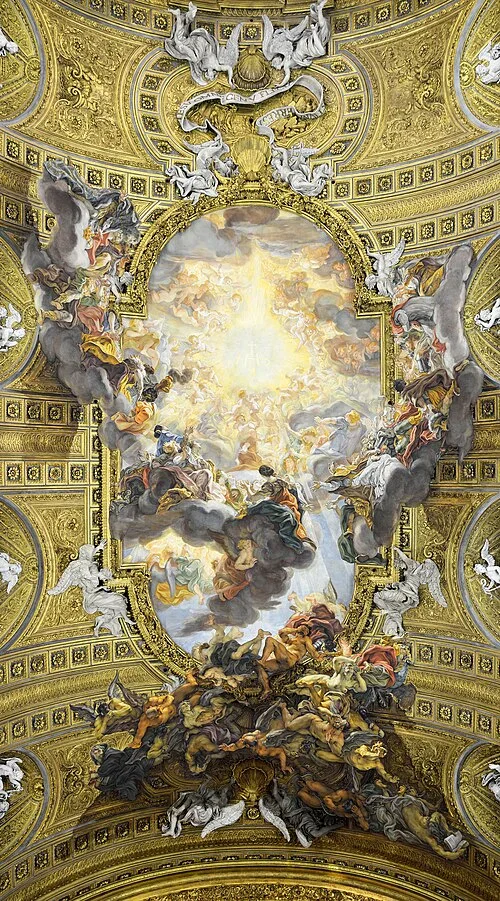 Vault of the Nave: Triumph of the Name of Jesus
Gaulli's Triumph of the Name of Jesus
High over the nave, the ceiling opens into heaven. Giovanni Battista Gaulli, whom Romans called Baciccia, painted the Triumph of the Name of Jesus, unveiled in 1679. At the centre blazes the monogram of Christ's name, the same IHS that crowns the façade, radiant in gold light. Around it the heavenly host swirls in clouds, saints and angels drawn upward toward the light. At the lower edge the mood turns: dark clouds and figures tumble downward, cast out of the radiance. Gaulli did not stop at the vault. He also frescoed the cupola, its lantern and pendentives, the window recesses and the transept ceilings, so the whole church reads as a single decorative scheme.
Listen in the appDiego Delso · CC BY-SA 4.0
06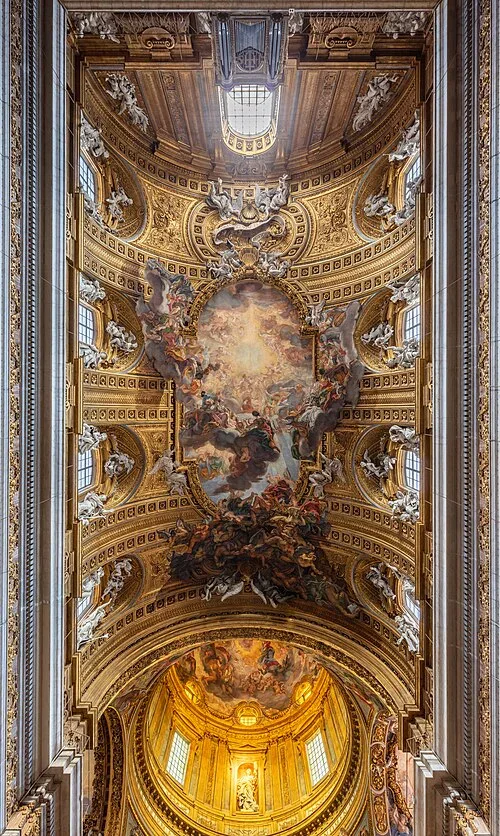 Vault of the Nave: Triumph of the Name of Jesus
The Illusion: Where Painting Leaves the Ceiling
The trick is that the painting refuses to stay in its frame. Figures spill past the gilded architecture into real stucco sculpture, so painting, stucco and daylight fuse into one scene. The illusion is calculated for one exact viewpoint. In the nave floor, a point marked with the IHS monogram indicates the optimal place for the spectator. From that spot the perspective resolves into depth, and the painted clouds seem to keep rising past the real gilding above. From anywhere else, the seams begin to show. It is illusionism treated as a science, worked out to the metre on the floor below.
Listen in the appDiego Delso · CC BY-SA 4.0
07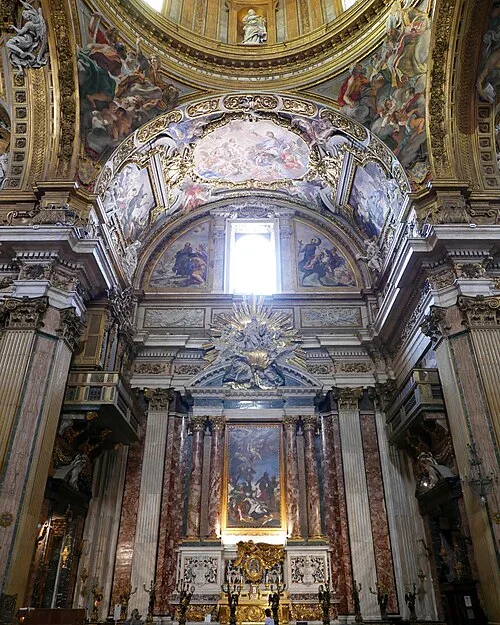 Chapel of Saint Francis Xavier
In the right transept opens the Chapel of Saint Francis Xavier, designed by Pietro da Cortona and commissioned by Cardinal Giovanni Francesco Negroni. Polychrome marbles in deep reds and greens enclose a stucco relief of Xavier welcomed to heaven by angels. The altarpiece is Carlo Maratta's painting of the Death of Francis Xavier on Shangchuan Island, the island off the Chinese coast where the missionary died. On the arches, frescoes by Giovanni Andrea Carlone carry scenes from the saint's life. There is the crucifixion, the saint lost at sea, and at the left, the baptism of an Indian princess. Together they compress a life of travel across half the world into a single room.
Listen in the appPhoto: Finoskov · CC BY-SA 4.0
08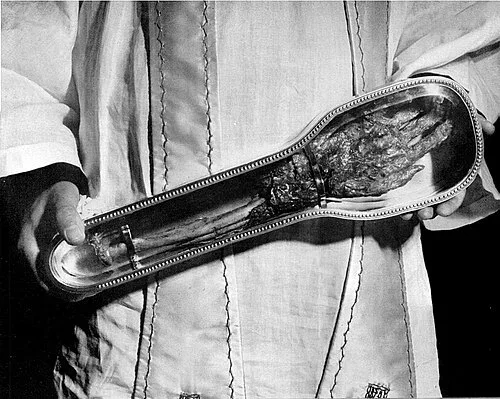 Chapel of Saint Francis Xavier
The Missionary's Arm
A silver reliquary in this chapel holds Francis Xavier's right forearm. Tradition credits that arm with baptising some three hundred thousand people, and it is the limb the altarpiece's missionary used across his travels. His work carried him to India, where his other remains lie in the Jesuit church in Goa, and to the Chinese coast, where he died on Shangchuan Island. The relic made the journey back to Rome, and the church in Goa kept the rest. An arm that baptized across Asia now rests behind coloured marble in a Roman transept.
Listen in the apphttps://books.google.co.jp/books?id=Uk4EAAAAMBAJ&printsec=frontcover · Public domain
09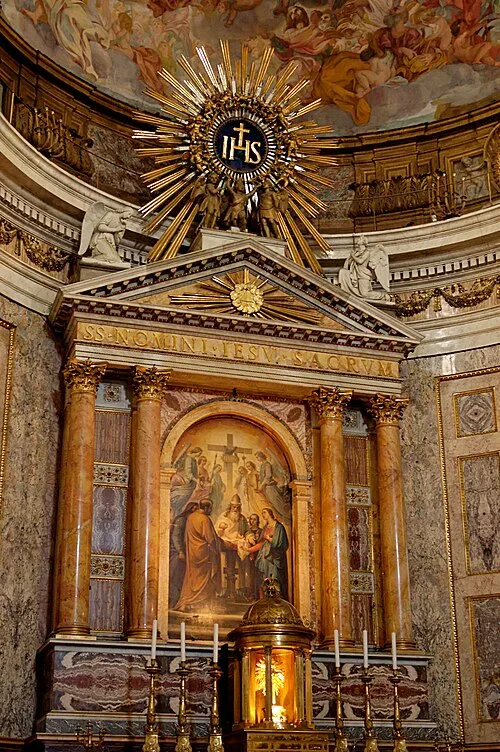 The High Altar and Presbytery
The High Altar and the Consecration
Every sightline in the nave was engineered to land here, at the high altar. The one standing today was designed by Antonio Sarti and built towards the middle of the nineteenth century, dated 1843 in Italian accounts. Four columns carry a neoclassical pediment above the altar. The altarpiece shows the Circumcision of Jesus, painted by Alessandro Capalti, the moment a child receives his name and a nod to the church's dedication to the Holy Name. Rinaldo Rinaldi sculpted the angels surrounding the IHS aureole, and above, the apse ceiling carries Gaulli's Glory of the Mystical Lamb. The church was consecrated here on 25 November 1584 by Cardinal Giulio Antonio Santorio, acting as Pope Gregory the Thirteenth's delegate. The first altar did not survive the nineteenth-century renovations. Its tabernacle was bought by Archbishop Patrick Leahy and installed, after small changes, in his new cathedral in Thurles, Ireland.
Listen in the appPhoto: Jastrow · Public domain
10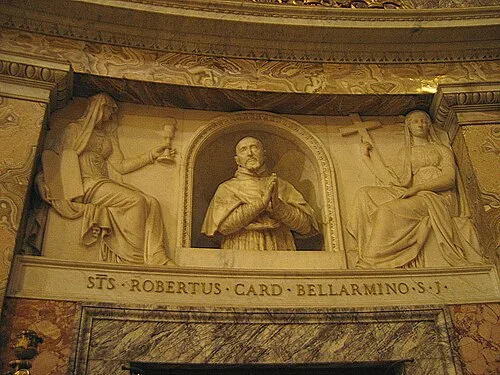 The High Altar and Presbytery
Bernini's Cardinal Bellarmine
A marble portrait by Gian Lorenzo Bernini watches over the presbytery: Cardinal Robert Bellarmine, carved soon after the cardinal's death in 1621. Bellarmine was the Jesuits' leading theologian of his age and later a doctor of the Church. He is shown in prayer, set in an aedicule between allegorical figures. Bernini had his own tie to the building, and a close one. The era's greatest sculptor prayed in this church every day.
Listen in the appUser:Torvindus. · CC BY-SA 3.0
- 11
The Chapel of Saint Ignatius and the Baroque Machine
Pozzo's lapis lazuli chapel, a statue that appears by machine every evening, and the silver original melted for Napoleon.
- 12
Religion Overthrowing Heresy
A putto tearing up Luther, Calvin and Zwingli, in marble, at the foot of Ignatius's urn.
- 13
Batoni's Sacred Heart of Jesus
Batoni's Sacred Heart of 1767, the image behind one of Catholicism's widest devotions.
- 14
Madonna della Strada: The Oldest Treasure
The worn medieval icon Ignatius himself prayed before, older than every stone of the church around it.
Chiesa del Gesù
Frequently asked questions
How much does the guide cost?
Free app download. Listed guide price: $0.99. Guide price shown in the app. Audio guide only. Venue admission is separate.
Can I listen without internet?
Yes. Download the guide’s audio, images, and maps in the app before your visit. Your downloaded content is then available offline.
Can I listen in my language?
This audio guide is available in 15 languages, including English.
Do I need to follow a schedule?
No. This is a self-guided experience. Choose your stops, pause whenever you like, and return to a story at your own pace.
At your own pace
Explore Chiesa del Gesù.
Download Stanza, then search for “Chiesa del Gesù”.
Free app download · Guide price shown in the app
Keep exploring
Nearby audio guides
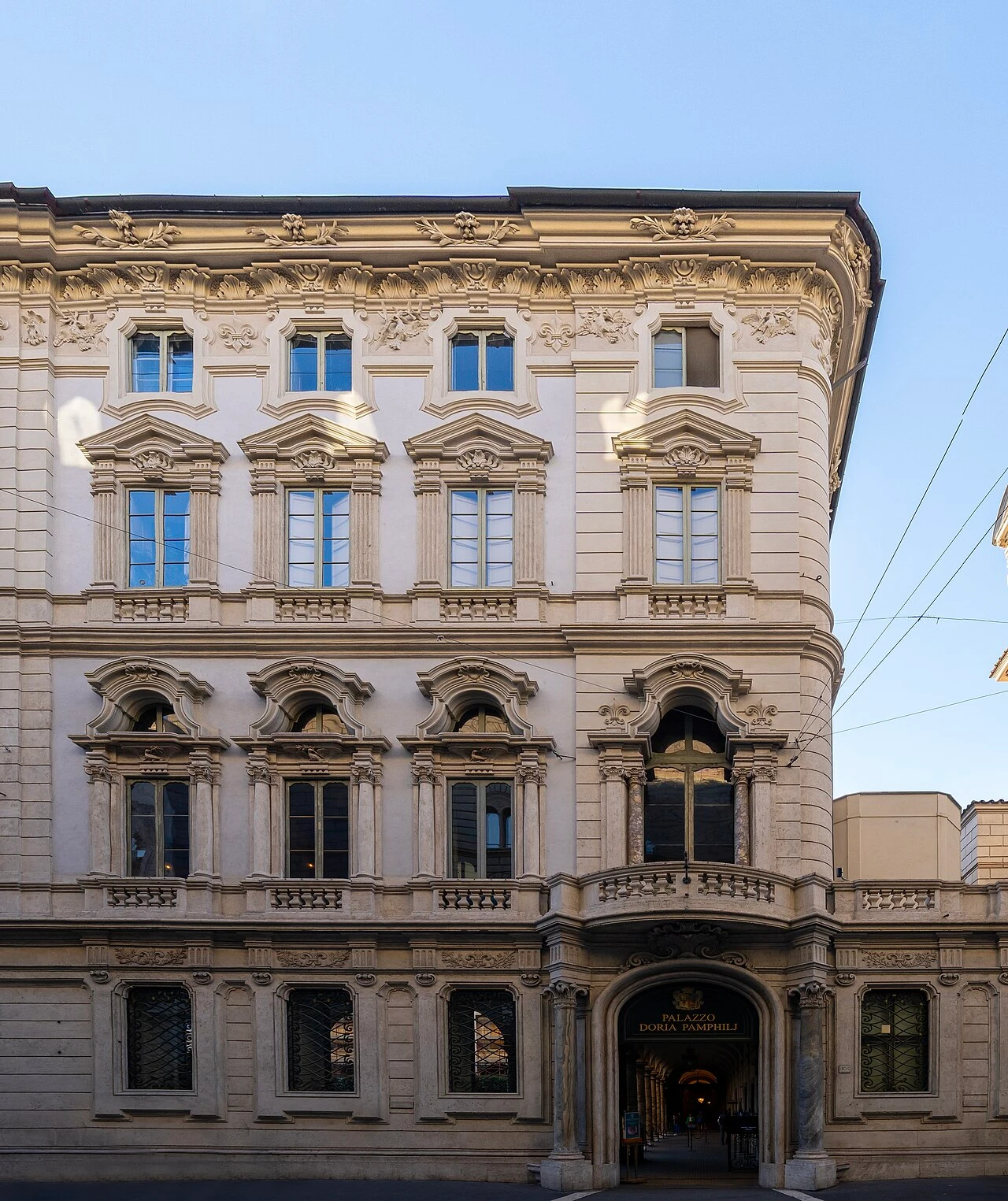
Rome · 1 km
Palazzo Doria-Pamphilj
Content & sources
Photo: Fiat 500e · CC BY 4.0
Rome · 1 km
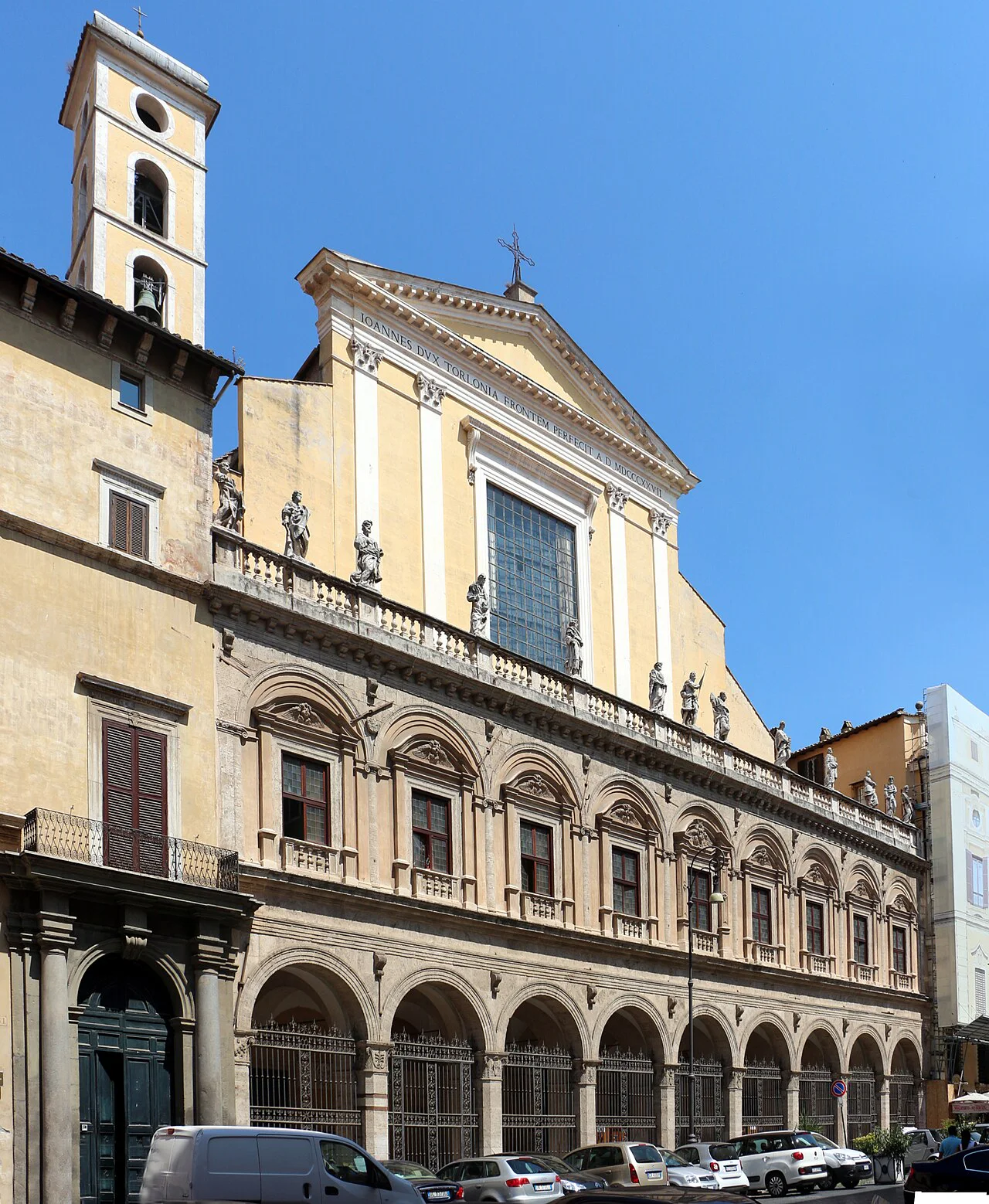
Basilica dei Santi XII Apostoli
Content & sources
Photo: Sailko · CC BY 3.0
Rome · 1 km
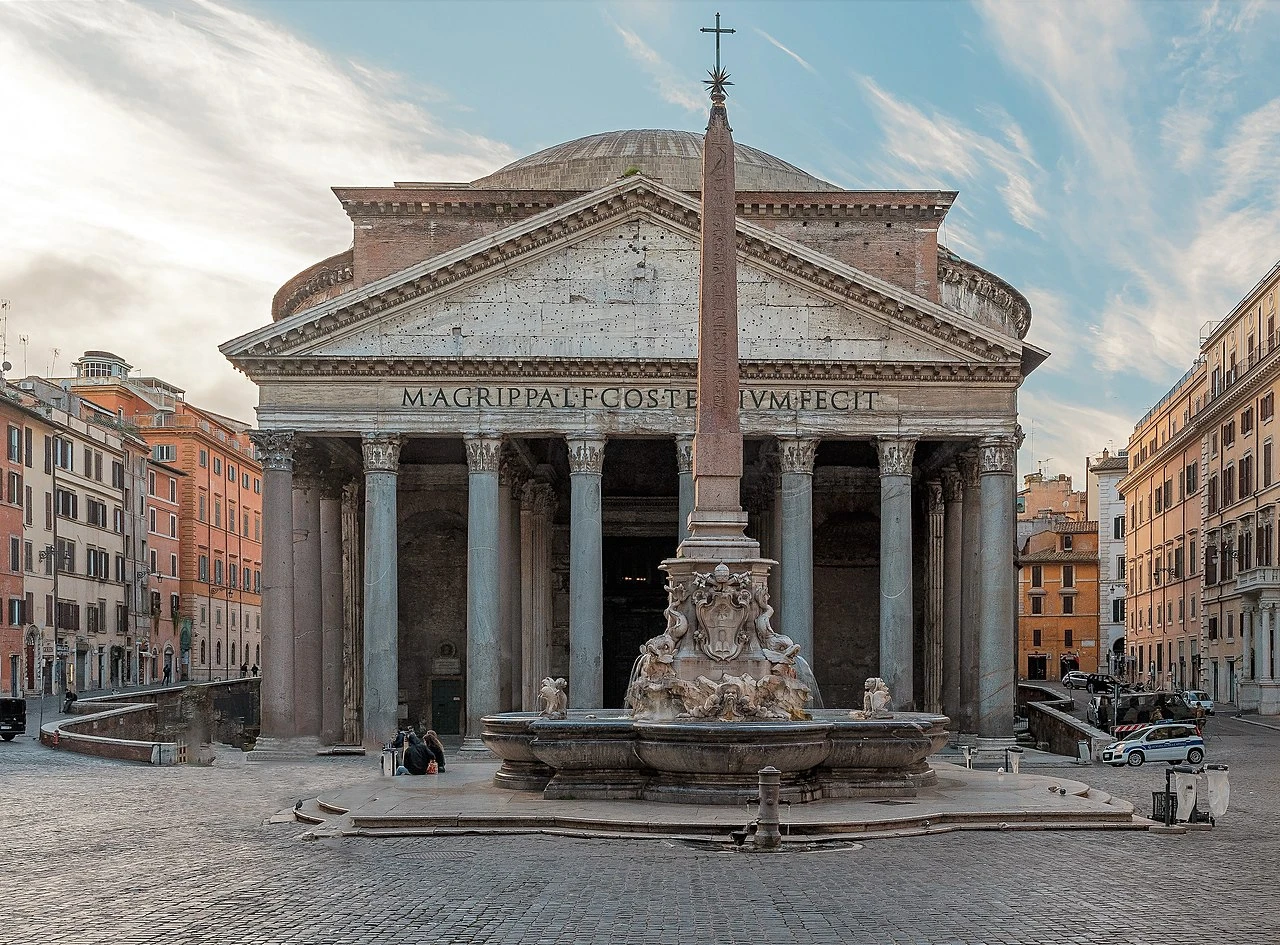
Pantheon
Content & sources
Rabax63 · CC BY-SA 4.0
Rome · 1 km
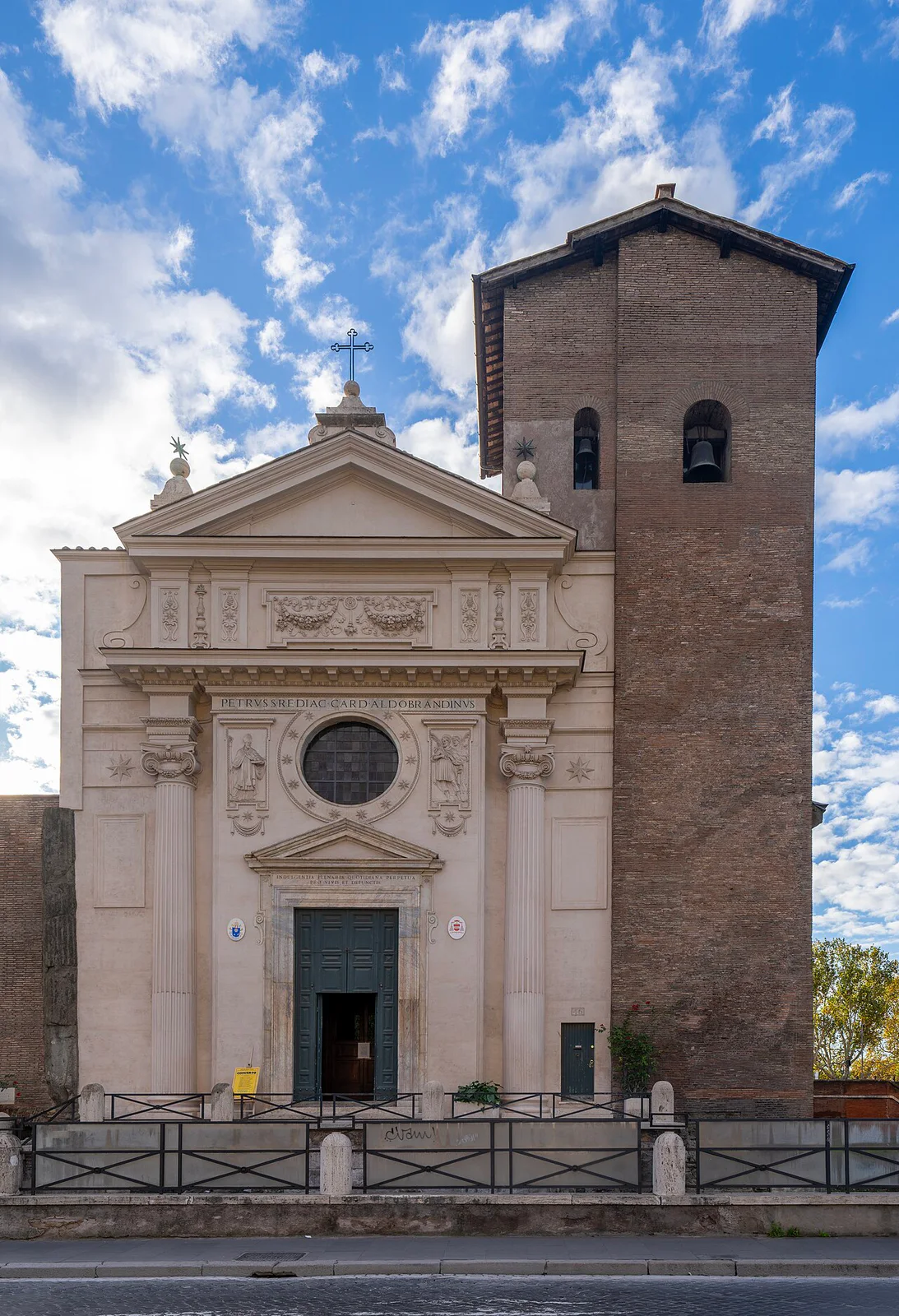
Basilica di San Nicola in Carcere
Content & sources
Photo: Ninfamania · CC BY 4.0