Stanza · Audio guide
Basilica di San Nicola in Carcere Audio Guide
A place to remember. A story to take with you.
San Nicola in Carcere is an ancient titular church and minor basilica located in Rome near the Forum Boarium. It is constructed in the remains of the three temples of the Forum Holitorium and serves as one of…
Download Stanza, then search for “Basilica di San Nicola in Carcere”.
About the tour
One guide. Your kind of visit.
San Nicola in Carcere is an ancient titular church and minor basilica located in Rome near the Forum Boarium. It is constructed in the remains of the three temples of the Forum Holitorium and serves as one of the traditional stational churches of Lent.
Ready when you are.
- 01Get the free Stanza app.
iOS & Android
- 02Find your guide.
“Basilica di San Nicola in Carcere”
- 03Download before you go.
Works offline
Audio guide / 8 narrated stops
Inside the guide
Get to know a few of the stories before you go. Open a stop to read more.
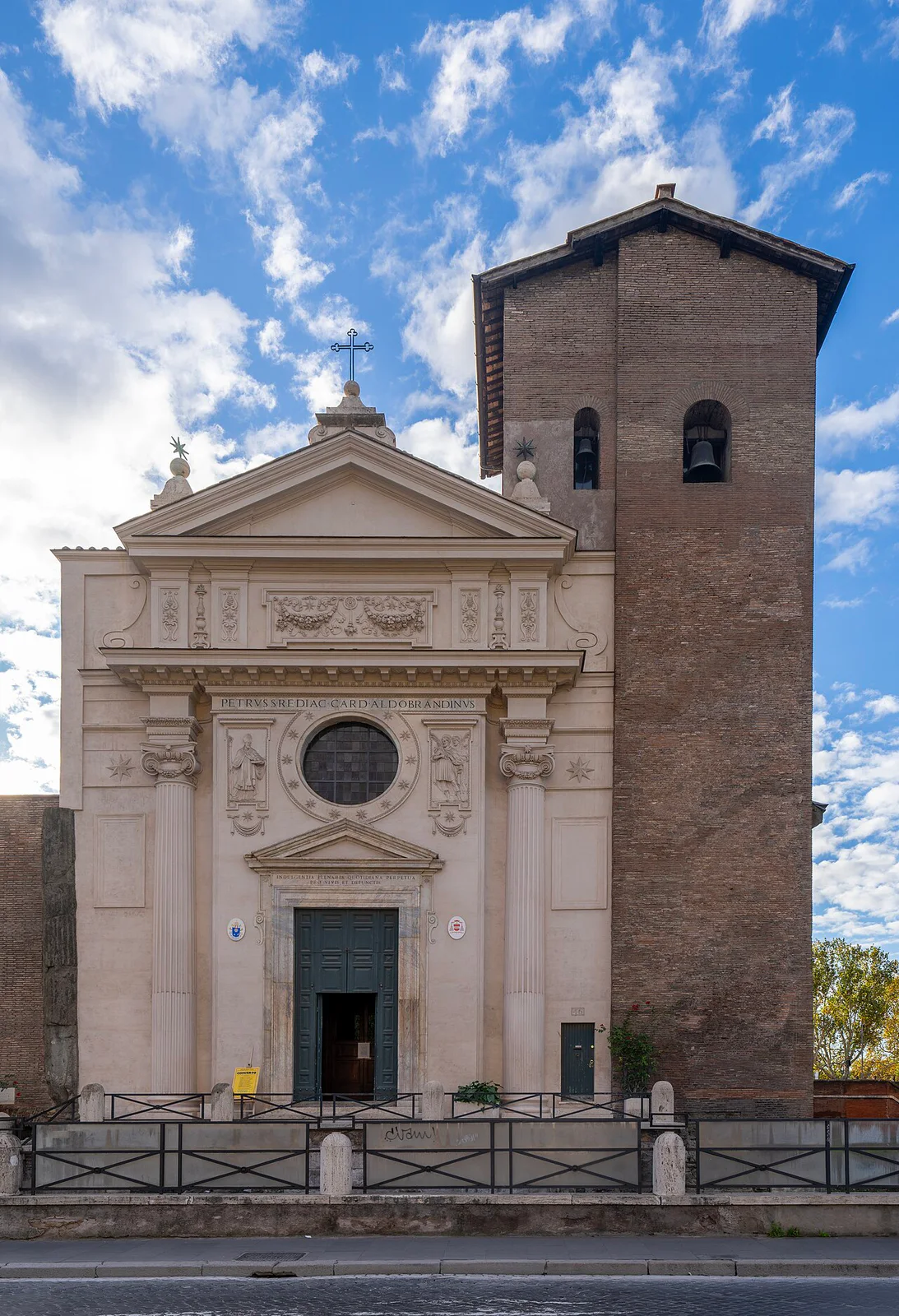
01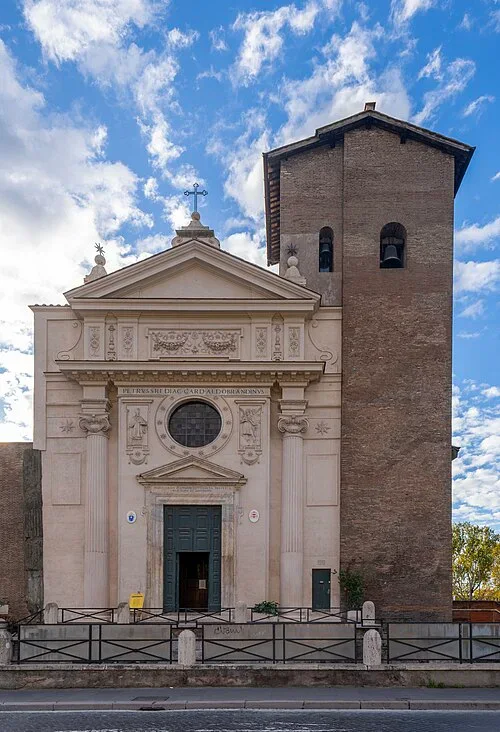 Renaissance Facade and the Pierleoni Fortress Tower
The 1599 Facade and the Embedded Temple Columns
Welcome to San Nicola in Carcere, a basilica built literally in and from the ruins of three Roman temples. In Republican times, the Forum Holitorium here carried three temples side by side, dedicated to Juno Sospita, Janus and Spes. Their stones became the skeleton of the church, and columns from the old temples are still built into its walls. The facade dates to a rebuilding of 1599, the work of Giacomo della Porta. He kept the ancient fluted columns standing in the frontage. Three of them belonged to the Temple of Juno Sospita, and they had already served in the medieval facade before him. One puzzle remains: experts still debate which temple lies under the nave, since Juno Sospita may be either the central temple or the smallest of the three.
Photo: Ninfamania · CC BY 4.0
02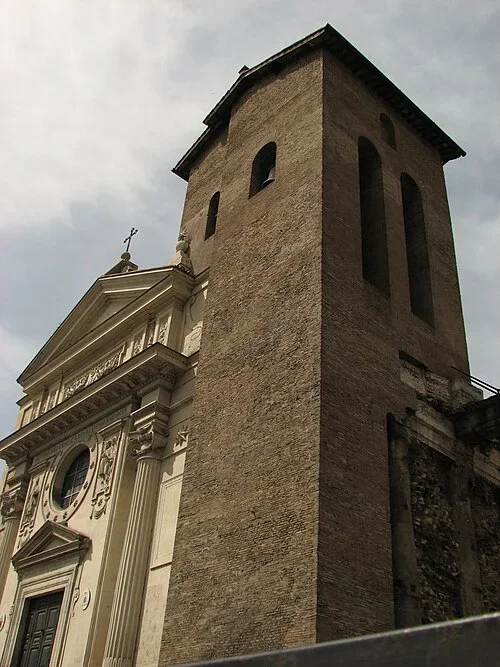 Renaissance Facade and the Pierleoni Fortress Tower
The Pierleoni Fortress Tower and the 1289 Bell
That squat brick tower beside the facade began life as a fortress. In the eleventh century the Pierleoni family held this whole area, from the slopes of the Capitoline down to the Tiber Island. They were a Jewish family newly converted to Christianity, and they rebuilt the nearby Theatre of Marcellus into a stronghold. The church itself was then known simply as the church of Petrus Leonis, after them. The family even reached the papacy: Pietro Pierleone, a leading cardinal, was elected pope as Anacletus II, and was later branded a schismatic antipope. When the tower lost its military role, it was adapted into a bell tower. One bell still hanging there was commissioned by Pandolfo Savelli in 1289. Where the tower straddles the alley, a corner of an ancient temple's entablature is built into the brickwork.
Patrick Denker · CC BY 2.0
03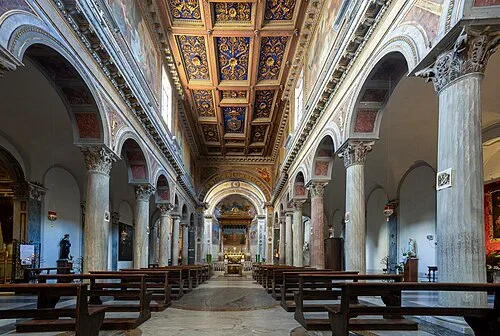 Central Nave and Reused Classical Colonnades
The Nave and the Greek Merchants' Dedication
The dedication to Saint Nicholas came from the Greeks. In Byzantine times, a Greek trading community settled along the Tiber here, bringing produce upriver to the vegetable market of the Forum Holitorium. They honoured Nicholas of Myra, patron of sailors and merchants, and gave his name to their church. Worship on this spot goes back a long way: a first church probably stood here in the sixth century. A tenth-century inscription survives on a fluted column beside the entrance. The first definite record of the dedication is a plaque on the church dated 1128. The nave itself rises over the temple remains, continuing worship on ground once occupied by pagan temples.
Listen in the appPhoto: DellaGherardesca · CC BY 4.0
04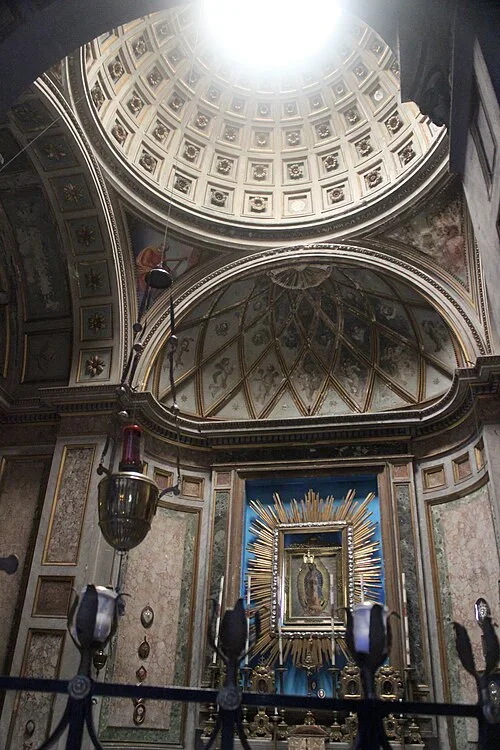 Central Nave and Reused Classical Colonnades
Our Lady of Guadalupe Copy, Sent from Mexico in 1773
Devotion here never stopped. The church keeps a venerated copy of the miraculous painting of Our Lady of Guadalupe, sent from Mexico in 1773. It is displayed in its own shrine, beneath a small dome, and is honoured by the faithful to this day. The feast of Our Lady of Pompeii is celebrated here as well, so two Marian devotions share one ancient building.
Listen in the appMiguel Hermoso Cuesta · CC BY-SA 4.0
05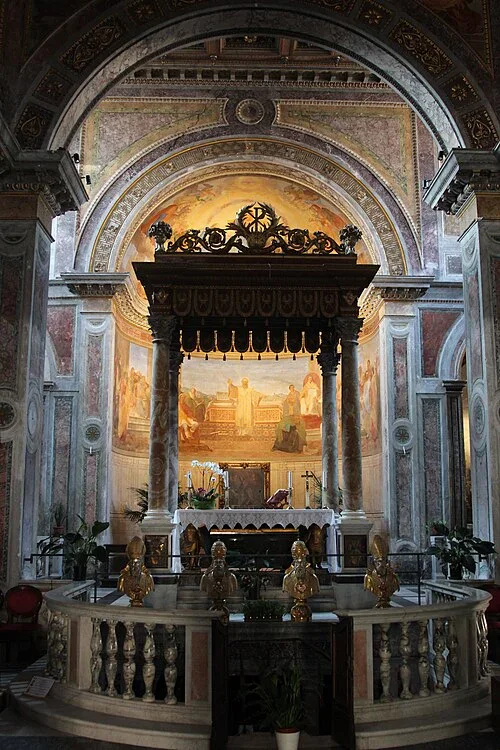 High Altar and the Martyr Reliquary
The High Altar and the Basalt Reliquary
Under the high altar rests an ancient Roman bath tub, carved from basalt. It holds the relics of martyrs. A pagan basin put to Christian use, in the same spirit that raised this church from temple ruins. Stairs beneath the altar lead down to the crypt and to the bases of the Roman temples. That descent is the next stop.
Listen in the appPhoto: Fallaner · CC BY-SA 4.0
06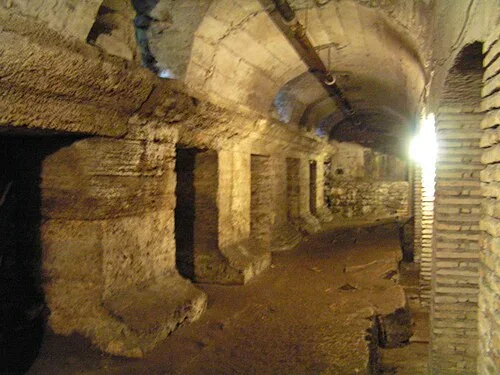 Subterranean Crypt and Roman Temple Podiums
Descending to the Republican Temple Podiums
Several metres below the street, the crypt keeps the ground level of the Roman Republic. Here lie the foundations of the three temples you heard about at the facade. They were built across the third and second centuries BC, aligned between the modern roadway and the Tiber. Their massive stone podiums still stand, along with the two narrow alleys that once separated them. The church floor was laid over the roofs of these structures, sealing the ancient street level underneath. The way down is a steep, narrow stone staircase, and the visit is not wheelchair accessible.
Listen in the appManel Zaera · CC BY-SA 2.0
07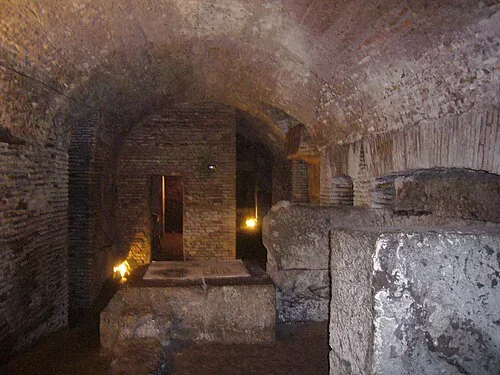 Subterranean Crypt and Roman Temple Podiums
The Vaulted Chambers and the False Prison Legend
The name of the church says 'in prison'. From the thirteenth century, tradition held that these vaulted chambers were the Tullian Prison, where Saint Peter was said to have been jailed. By the fourteenth century the church was even called San Nicola in Carcere Tulliano. Writers pointed to Pliny's account of a jail among the temples' ruins. Archaeology tells a different story. The vaulted rooms are read today, quite plausibly, as stalls of Roman moneychangers, which suits a commercial quarter near the cattle market of the Forum Boarium. The real prison of the area was of Byzantine times, and it was known as the Carcer ad Elephantum.
Listen in the appPhoto: Lalupa · CC BY-SA 3.0
08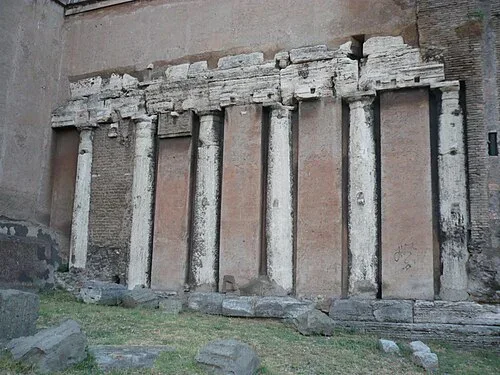 Southern Exterior Flank and the Temple of Spes
The Six Doric Columns of the Temple of Spes
Six Doric columns of the Temple of Spes stand embedded in the southern wall, the clearest view anywhere here of a whole temple front absorbed into the church. For centuries the basilica was hemmed in by a dense medieval quarter. In the mid-nineteen-twenties and the years that followed, the surrounding blocks were demolished to open the Via del Mare, and the church was left standing alone among its ancient stones. Few buildings in Rome hold so much of the city's past in their own walls.
Listen in the appPhoto: Zanner · Public domain
Basilica di San Nicola in Carcere
Frequently asked questions
How much does the guide cost?
Free app download. Listed guide price: $0.99. Guide price shown in the app. Audio guide only. Venue admission is separate.
Can I listen without internet?
Yes. Download the guide’s audio, images, and maps in the app before your visit. Your downloaded content is then available offline.
Can I listen in my language?
This audio guide is available in 15 languages, including English.
Do I need to follow a schedule?
No. This is a self-guided experience. Choose your stops, pause whenever you like, and return to a story at your own pace.
At your own pace
Explore Basilica di San Nicola in Carcere.
Download Stanza, then search for “Basilica di San Nicola in Carcere”.
Free app download · Guide price shown in the app
Keep exploring
Nearby audio guides
Rome · 1 km
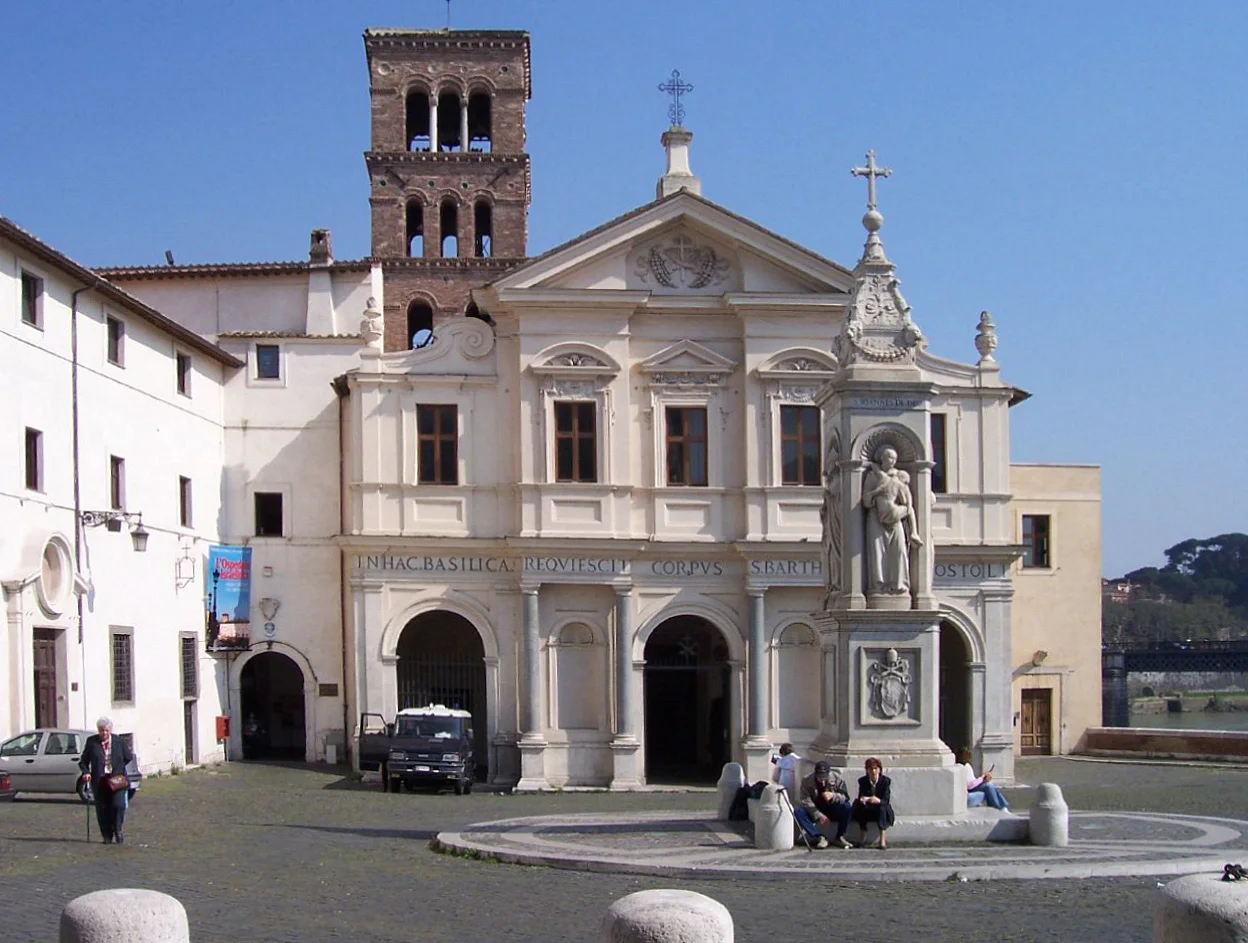
Basilica di San Bartolomeo all'Isola
Content & sources
sonofgroucho · CC BY 2.0
Rome · 1 km
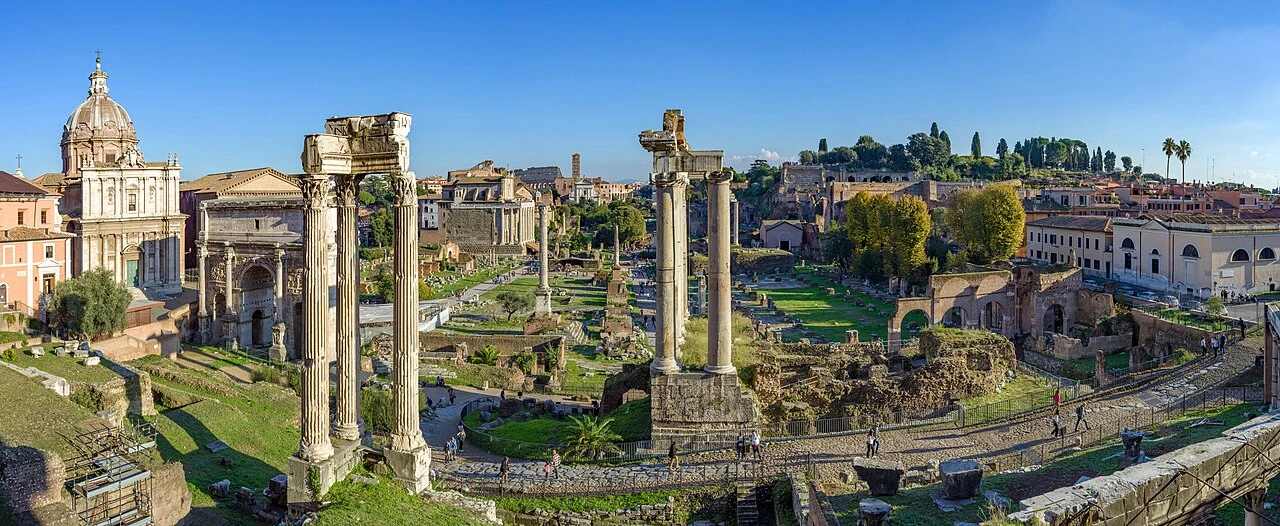
Roman Forum
Rome · 1 km
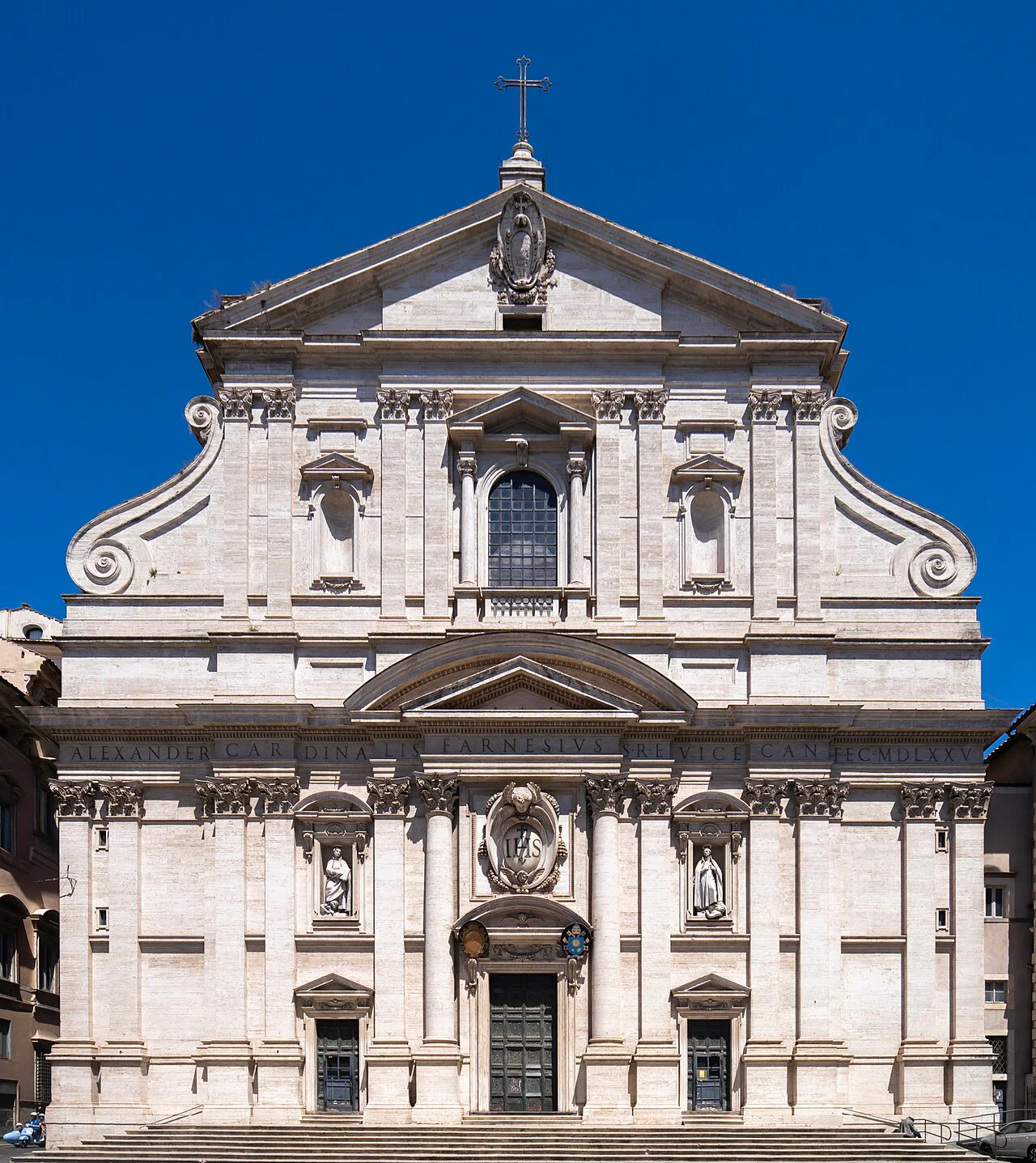
Chiesa del Gesù
Content & sources
Photo: Rione Colonna · CC BY 4.0
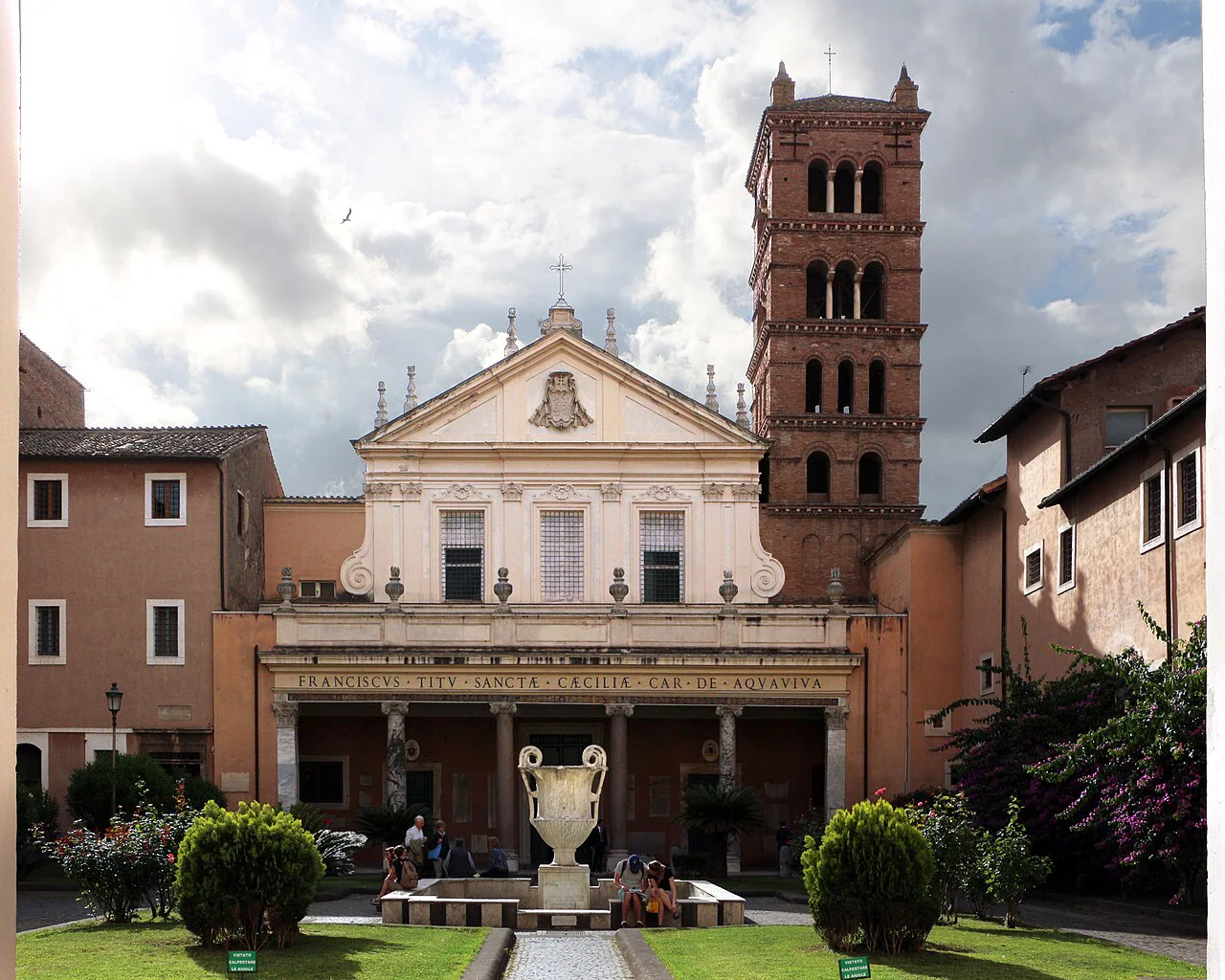
Rome · 1 km
Basilica di Santa Cecilia in Trastevere
Content & sources
Photo: Sailko · CC BY 3.0