Stanza · Audio guide
Basilica di San Bartolomeo all'Isola Audio Guide
A place to remember. A story to take with you.
The Basilica of St. Bartholomew on the Island is a titular minor basilica located in Rome, Italy. It was founded in 998 by Otto III and contains the putative relics of St. Bartholomew the Apostle.
Download Stanza, then search for “Basilica di San Bartolomeo all'Isola”.
About the tour
One guide. Your kind of visit.
The Basilica of St. Bartholomew on the Island is a titular minor basilica located in Rome, Italy. It was founded in 998 by Otto III and contains the putative relics of St. Bartholomew the Apostle.
Ready when you are.
- 01Get the free Stanza app.
iOS & Android
- 02Find your guide.
“Basilica di San Bartolomeo all'Isola”
- 03Download before you go.
Works offline
Audio guide / 8 narrated stops
Inside the guide
Get to know a few of the stories before you go. Open a stop to read more.
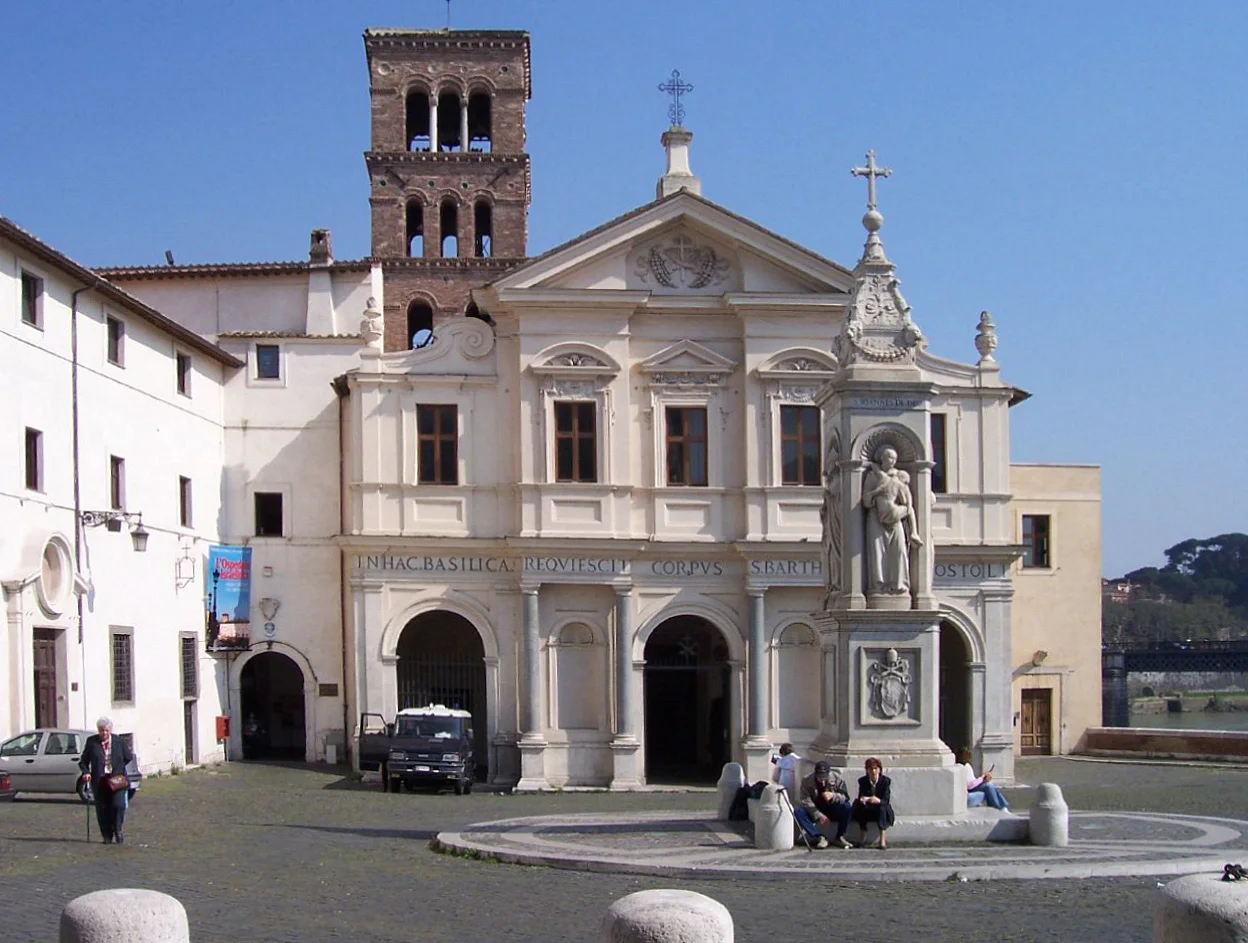
01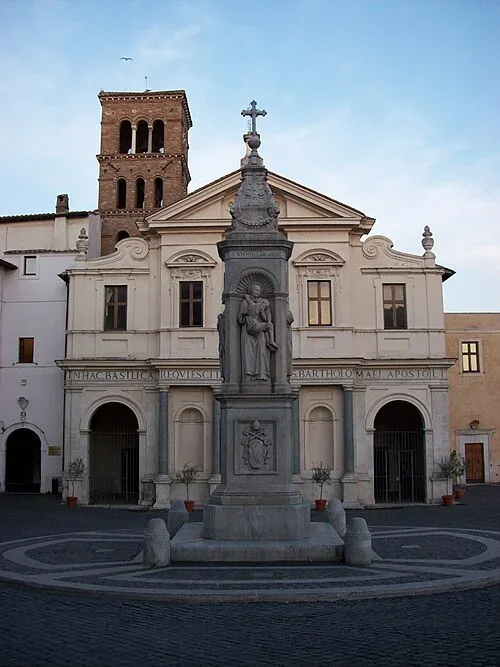 Piazza di San Bartolomeo: Baroque Façade and Bell Tower
The Piazza and Baroque Facade of San Bartolomeo all'Isola
Welcome to the Basilica of Saint Bartholomew, set on an island in the middle of the Tiber. The Romans thought this island looked like a ship, so they sheathed it in marble to complete the illusion. The stone prow can still be seen at one end. In ancient times a temple to Aesculapius, the god of medicine, stood right here, and the island became famous as a place of healing. That reputation never left. The church was founded in the year 998 by the emperor Otto III, and pilgrims have been coming ever since. The pale Baroque facade was designed by Orazio Torriani in 1624, on a commission from Cardinal Trescio. In the middle of the little square rises a four-sided monument with saints in its niches, made by the sculptor Ignazio Jacometti and set up here in 1869. Behind it you can make out the brick bell tower, far older than the facade.
Photo: Blackcat · CC BY-SA 3.0
02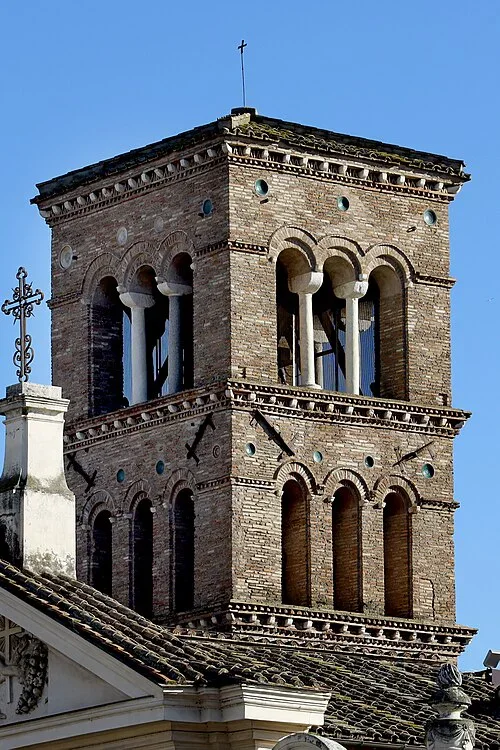 Piazza di San Bartolomeo: Baroque Façade and Bell Tower
The Romanesque Bell Tower
This brick tower is the oldest thing still standing whole at the church. It belongs to the twelfth century, when the basilica was renovated, first under Pope Paschal II in 1113 and then again in 1180. Its round arches and small columns are classic Romanesque work. The tower rises above the roofline, the tallest element of the whole complex. Nearby stands another survivor from the same age: the Torre dei Caetani. It is all that remains of a medieval castle built on the island by the Pierleoni family, one of the powerful Roman clans of the day. Between the church tower and that fortress wall, this little island was once a defended stronghold in the middle of the river.
Photo: Fabrizio Garrisi · CC0
03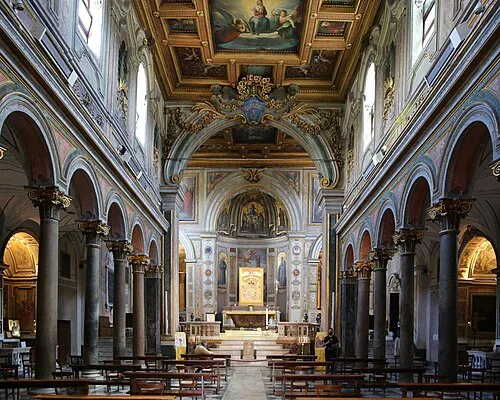 The Central Nave and Ancient Roman Columns
The Nave and the Ancient Roman Columns
In 1557 the Tiber flooded badly, and the church took the brunt of it. What stands today is the reconstruction that followed, rebuilt in the Baroque style and finished in 1624. Yet the oldest things inside are far older than the Baroque. Fourteen ancient Roman columns hold up the arcades of the nave, salvaged from ruins that predate the church itself. They are a physical thread running back to the island's pagan past, when the temple of Aesculapius drew the sick here. The basilica is a simple three-aisled hall, about forty-five meters long and twenty-two wide. Down at the far end, the decorated sanctuary marks the spot the whole building was built to honor.
Listen in the appPhoto: Sailko · CC BY 3.0
04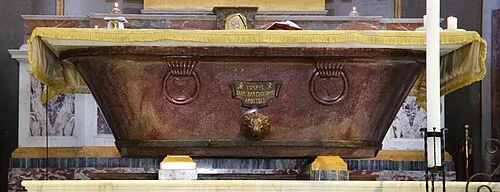 The High Altar and Porphyry Sarcophagus
Under the main altar rests an ancient Roman sarcophagus of purple porphyry, carved with lions' heads. Inside are the relics of Saint Bartholomew the Apostle, or at least what the church holds to be his relics. Their journey here was long and tangled. They are said to have reached the southern city of Benevento in 838, from the island of Lipari, though an Italian account records them arriving from Armenia by 809. From Benevento they came to Rome. The story goes that when the emperor demanded the apostle's body, the citizens of Benevento handed over the body of Saint Paulinus, bishop of Nola, instead. The emperor then besieged the city, and this time the true relics were taken. Scholars have argued about it ever since: exactly which portion of the apostle reached Rome, and whether it was the emperor Otto the Second or his successor Otto the Third who secured them. What is certain is that the cult of Saint Bartholomew rose sharply in Rome in the tenth and eleventh centuries, and that Rome formally examined the relics in 1157 and twice more after great floods of the Tiber.
Listen in the appPhoto: Sailko · CC BY 3.0
05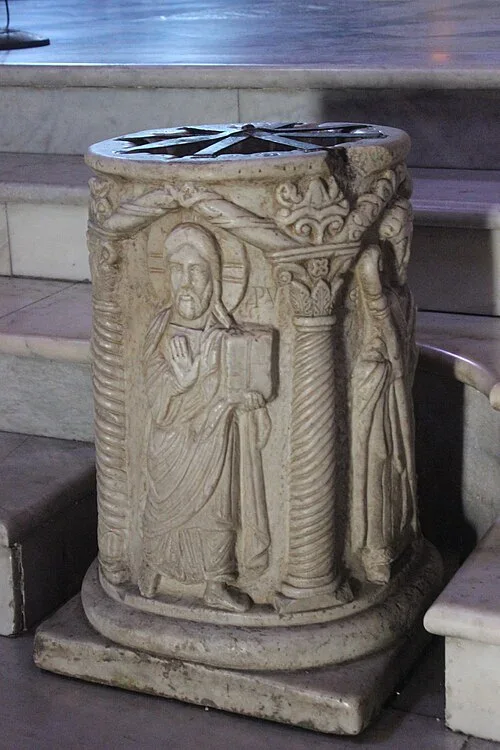 The Medieval Marble Wellhead
On the altar steps stands a carved marble wellhead, medieval work from the twelfth century. Around its drum, under little arched canopies, run the figures of the Savior, Saint Adalbert, Saint Bartholomew and the emperor Otto the Third. Those four faces together tell the church's early story. Otto the Third founded this basilica for his friend, Saint Adalbert of Prague, and dedicated it to him. Then the apostle's relics arrived, and the dedication changed to Saint Bartholomew. The carving keeps both patrons side by side. The story told about this well is that it was Christianized over a spring linked to the old temple of Aesculapius, and that pilgrims credited its water with healing. That is why, down the centuries, Bartholomew's name became tied to medicine and hospitals, carrying the island's ancient calling into Christian times.
Listen in the appMiguel Hermoso Cuesta · CC BY-SA 4.0
06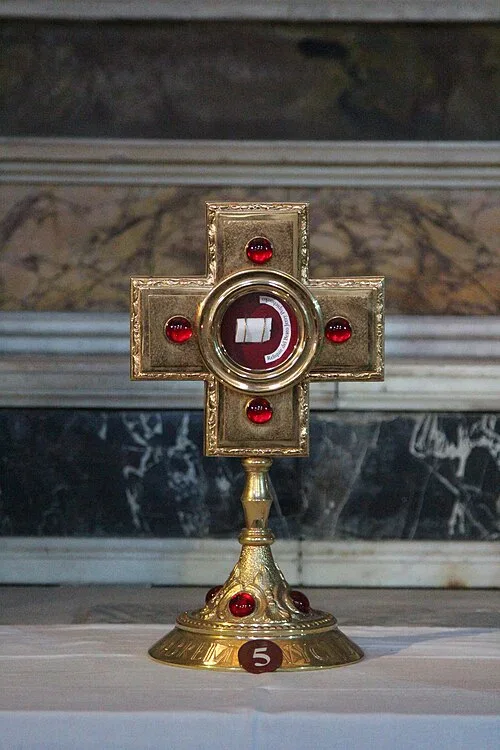 Sanctuary of the New Martyrs
Reliquary of a Modern Witness
In the year 2000, Pope John Paul the Second gave this basilica a new mission: a memorial to the new martyrs of the twentieth and twenty-first centuries. The Community of Sant'Egidio, a Rome-based lay movement, cares for the memorial and painted the great icon of the martyrs that hangs on the main altar. It was placed there in October 2002, at an ecumenical celebration attended by cardinals and by the Orthodox patriarch of Romania. The people commemorated here come from every corner of those violent centuries. Archbishop Oscar Romero, shot in El Salvador while celebrating Mass. The farmer Franz Jagerstatter, who refused to serve the Nazi regime and paid with his life. Alongside them are remembered a Protestant pastor, a Romanian monk, a cardinal killed by drug traffickers at an airport in Mexico, and priests murdered in Turkey and in Chile. Small reliquaries like the cross-shaped one here hold their personal effects, each one a witness.
Listen in the appPhoto: Fallaner · CC BY-SA 4.0
07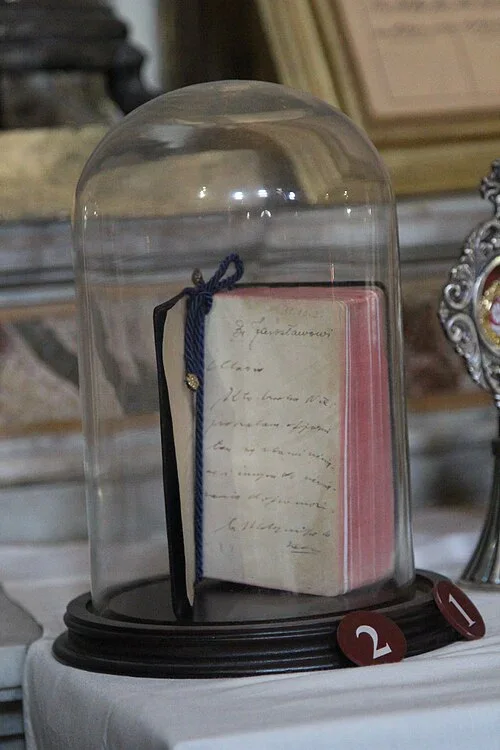 Sanctuary of the New Martyrs
The Prayer Book of Maksymilian Kolbe
Under a glass dome lies a small prayer book, handwritten and soft with use. It belonged to Maksymilian Kolbe, the Franciscan friar who died at Auschwitz after taking another prisoner's place. Kolbe is one of the best-known witnesses of faith of the twentieth century, and this modest notebook is the kind of object the memorial gathers: ordinary, intimate, personal. Around the basilica, small side chapels each hold memories of martyrs, and each is dedicated to a particular historical situation, from Nazism to communism to organized crime. Not every relic here is an object someone owned. The basilica also preserves a piece of the rock used in 1984 to kill Father Jerzy Popieluszko, the Polish priest murdered for his ties to the Solidarity movement. A stone and a notebook: things that outlived the people who used them.
Listen in the appPhoto: Fallaner · CC BY-SA 4.0
08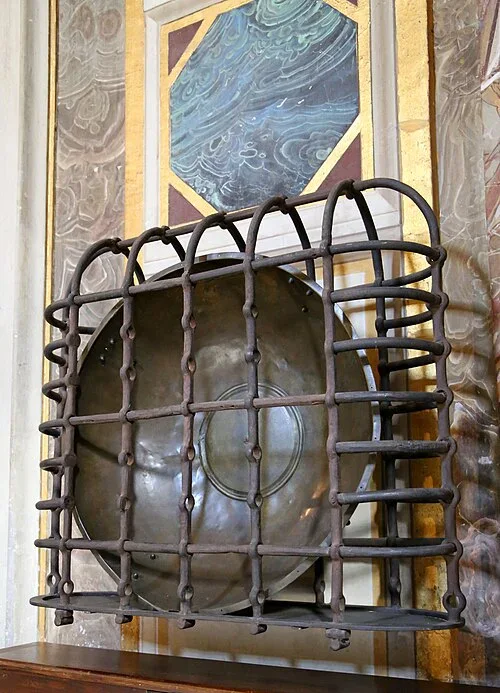 The Sacred Relic Basin Display
The Relic Basin Behind the Grate
Behind a heavy iron grate rests an ancient bronze basin, broad and worn. This is the vessel in which Saint Bartholomew's relics were carried to Rome, though in truth it began life as the lid of a Roman cista, a storied container from antiquity. It has a modern adventure of its own. In January 1981, unknown thieves stole the basin from the church. A major investigation followed, and in May 1985 it was found again and returned here. Since then it has been shown to veneration behind the grate, as it is now. From a healing temple to an apostle's shrine to a memorial of modern witnesses, this little island in the Tiber has kept its door open to those who seek it for more than two thousand years.
Listen in the appPhoto: Sailko · CC BY 3.0
Basilica di San Bartolomeo all'Isola
Frequently asked questions
How much does the guide cost?
Free app download. Listed guide price: $0.99. Guide price shown in the app. Audio guide only. Venue admission is separate.
Can I listen without internet?
Yes. Download the guide’s audio, images, and maps in the app before your visit. Your downloaded content is then available offline.
Can I listen in my language?
This audio guide is available in 15 languages, including English.
Do I need to follow a schedule?
No. This is a self-guided experience. Choose your stops, pause whenever you like, and return to a story at your own pace.
At your own pace
Explore Basilica di San Bartolomeo all'Isola.
Download Stanza, then search for “Basilica di San Bartolomeo all'Isola”.
Free app download · Guide price shown in the app
Keep exploring
Nearby audio guides
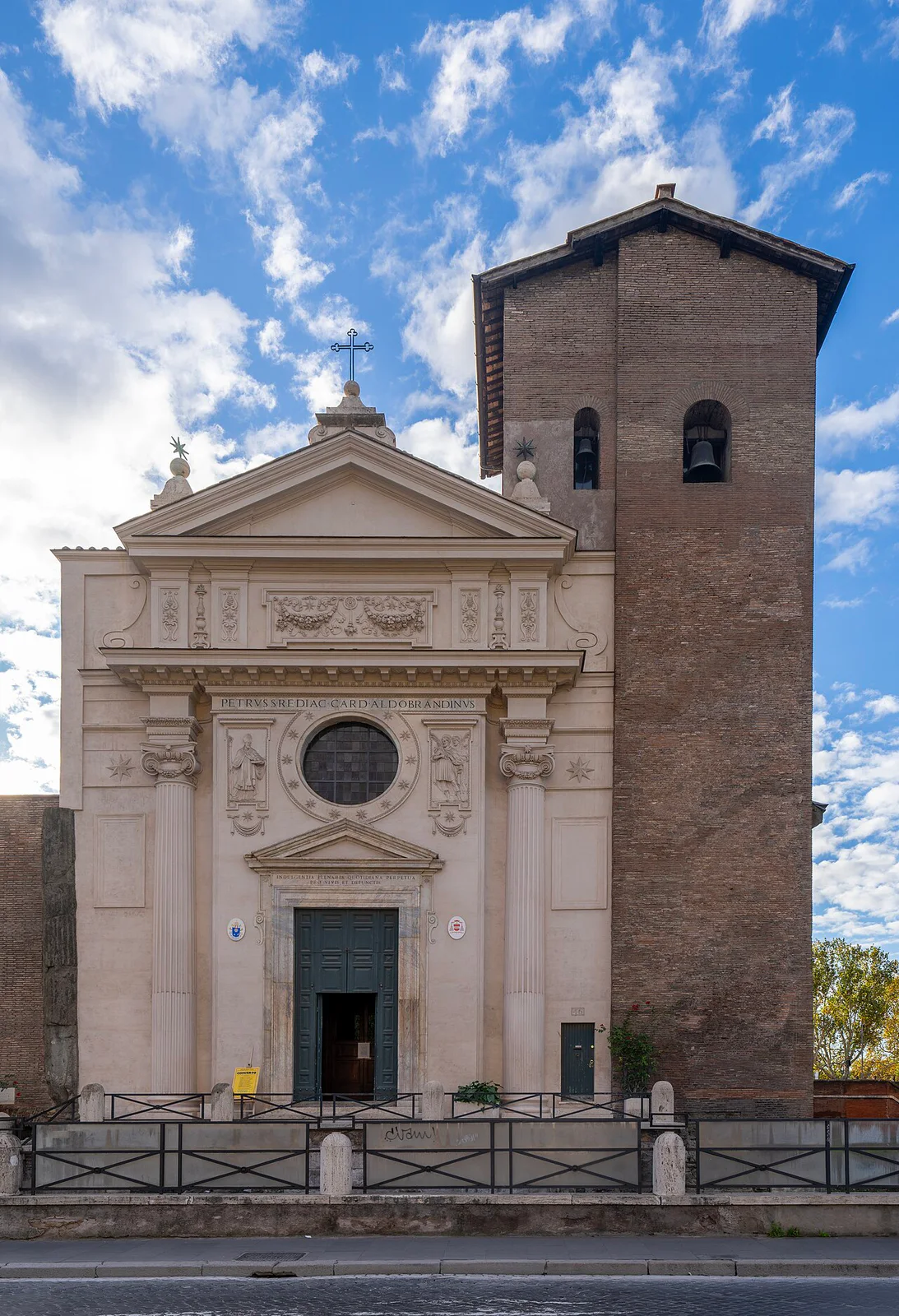
Rome · 1 km
Basilica di San Nicola in Carcere
Content & sources
Photo: Ninfamania · CC BY 4.0
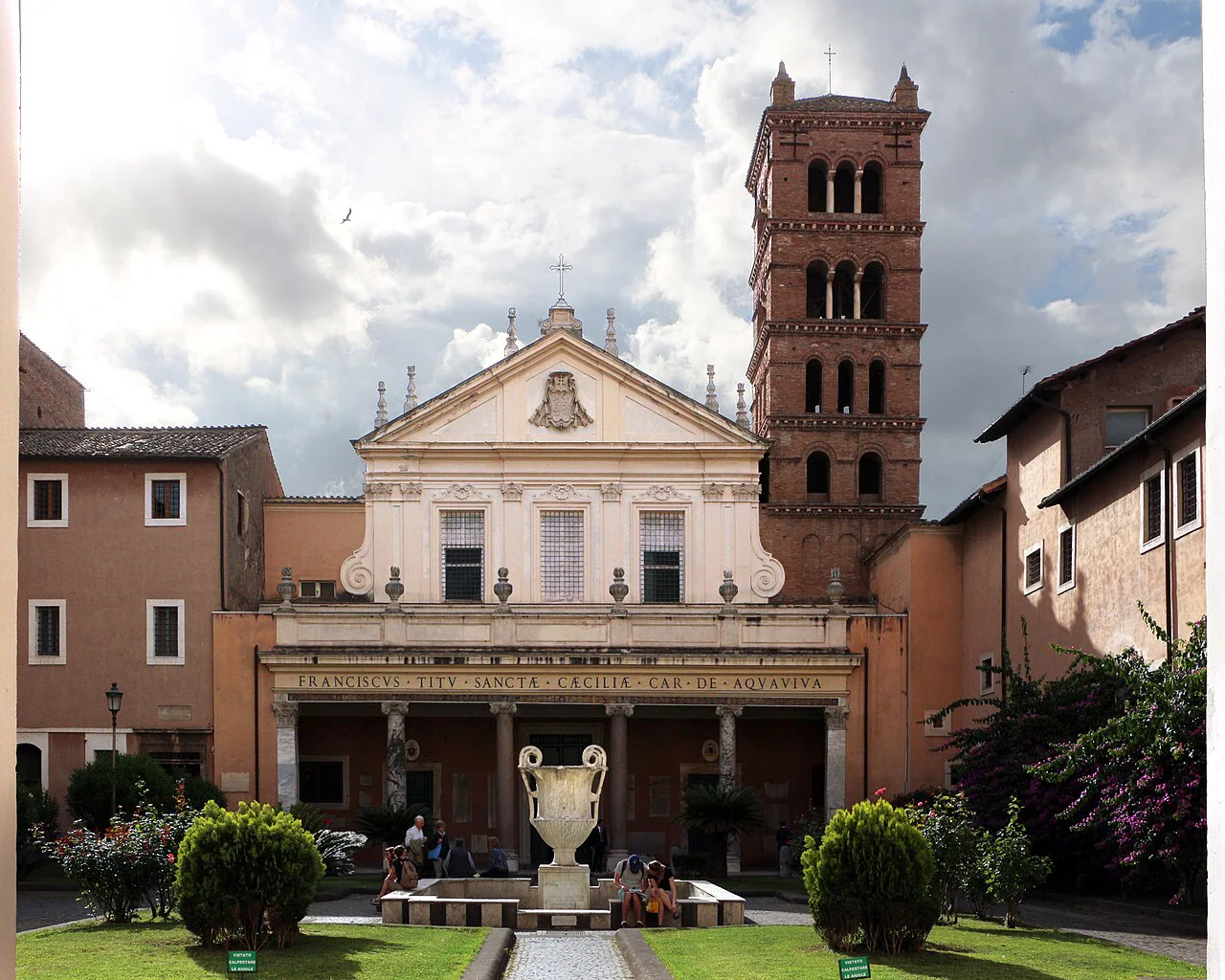
Rome · 1 km
Basilica di Santa Cecilia in Trastevere
Content & sources
Photo: Sailko · CC BY 3.0
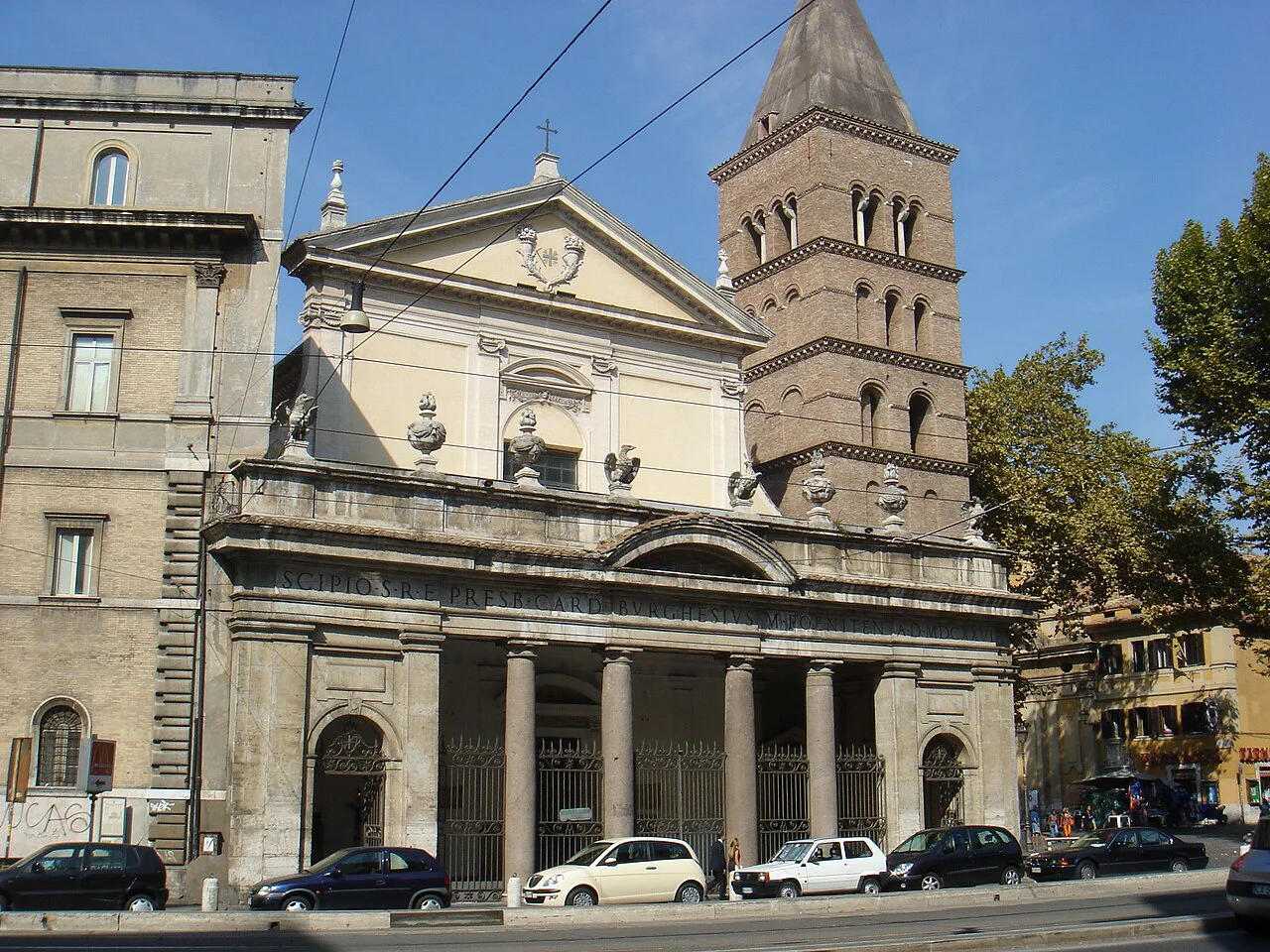
Rome · 1 km
Basilica di San Crisogono
Content & sources
Photo: Lalupa · CC BY-SA 3.0
Rome · 1 km