Stanza · Audio guide
Basilica di San Crisogono Audio Guide
A place to remember. A story to take with you.
Basilica di San Crisogono is a titular church and minor basilica located in Trastevere, Rome. Established in the 4th century, it is one of the oldest parish churches in the city and features a Baroque…
Download Stanza, then search for “Basilica di San Crisogono”.
About the tour
One guide. Your kind of visit.
Basilica di San Crisogono is a titular church and minor basilica located in Trastevere, Rome. Established in the 4th century, it is one of the oldest parish churches in the city and features a Baroque interior with remains of an early Christian church beneath the crypt.
Ready when you are.
- 01Get the free Stanza app.
iOS & Android
- 02Find your guide.
“Basilica di San Crisogono”
- 03Download before you go.
Works offline
Audio guide / 12 narrated stops
Inside the guide
Get to know a few of the stories before you go. Open a stop to read more.
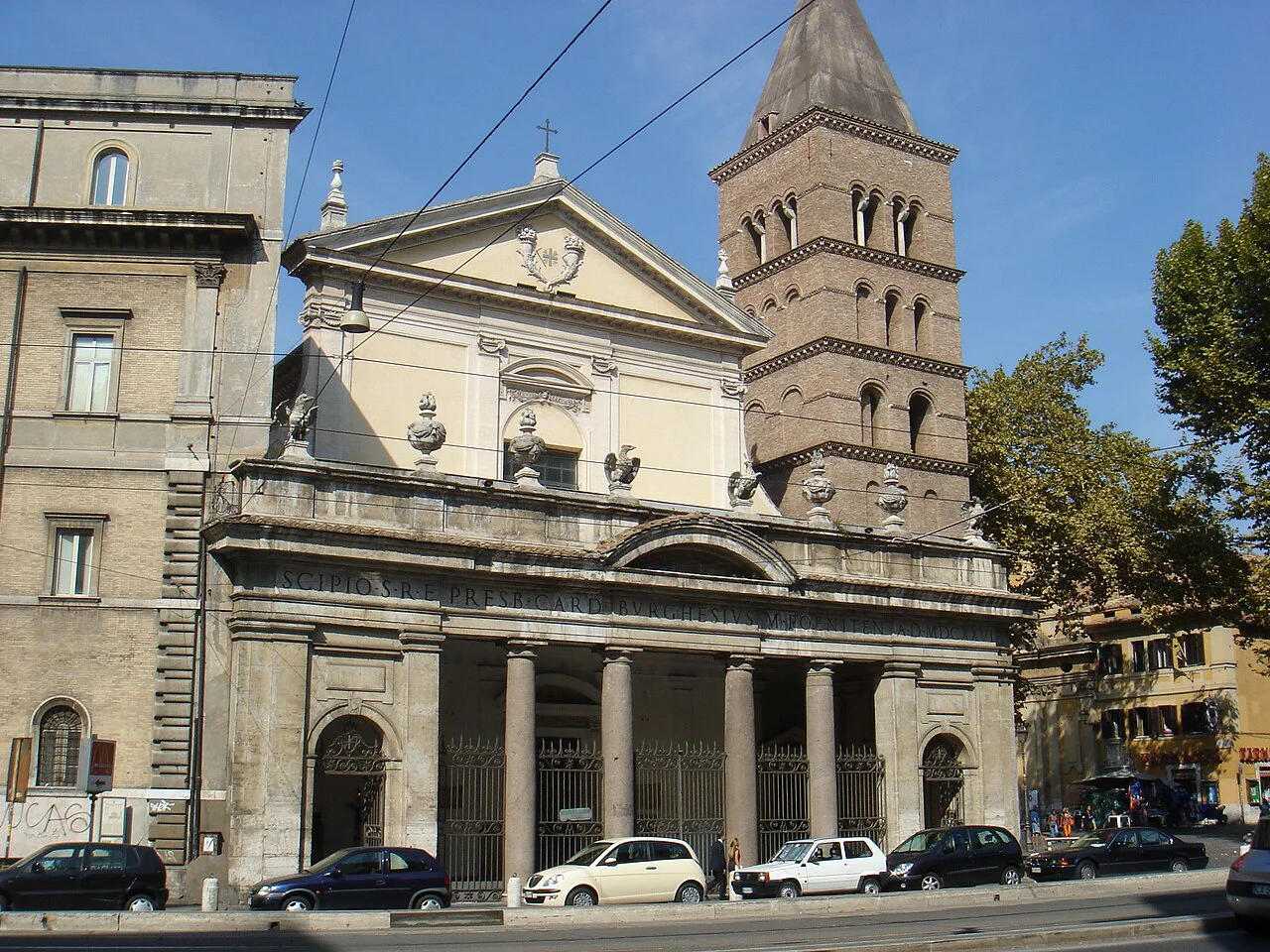
01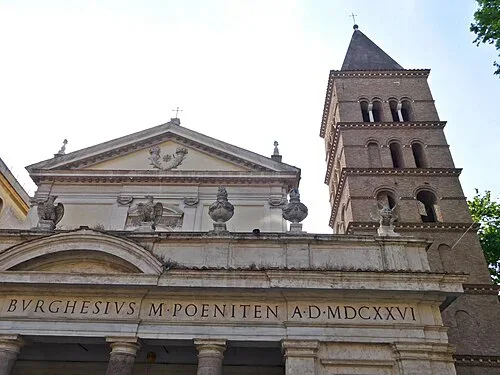 Baroque Facade and Portico
Facade of the Basilica and the 1626 Borghese Inscription
The church in Trastevere takes its name from Saint Chrysogonus. It is one of the oldest parish churches in Rome. Its Baroque face is far newer. The long frieze carries the Borghese name in Latin letters, and the date 1626. Cardinal Scipione Borghese paid for that rebuilding. The architect Giovanni Battista Soria designed it. The Borghese family's eagle appears across the decoration of the church. Stone eagles also sit along the cornice above the entrance, with baskets of flowers beside them.
Photo: Fczarnowski · CC BY-SA 4.0
02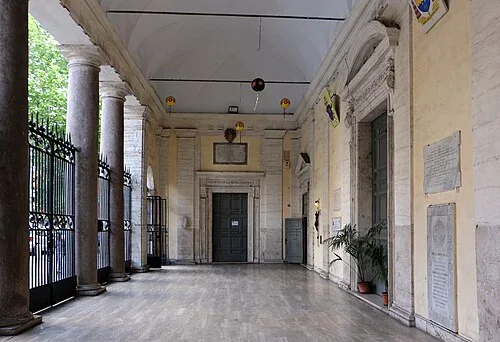 Baroque Facade and Portico
Entrance Portico with Wall Plaques
This colonnaded porch has four plain Tuscan columns at the entrance to the church. For many centuries, the church behind it was the national church of the Sardinians and the Corsicans living in Rome. Starting in the sixteenth century, Corsicans who came to Rome settled on the Tiber Island. They also settled in the part of Trastevere between the Ripa Grande port and this church. The papal Corsican Guard was a militia much like the Swiss Guard, active in Rome between the fifteenth and seventeenth centuries. Several commanders of that guard are buried inside the church.
Photo: Sailko · CC BY 3.0
03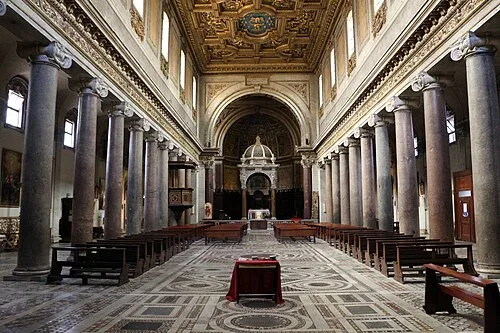 The Nave: Spolia Colonnade, Mosaic Floor, and Gilded Ceiling
Nave with Reused Ancient Columns
Twenty-two granite columns line the nave, and all of them were reused from ancient buildings. The hall itself dates from the seventeenth century, but many of its parts go back to earlier churches. Their capitals are Ionic, with the spiral scrolls called volutes.
Listen in the appPhoto: Sailko · CC BY 3.0
04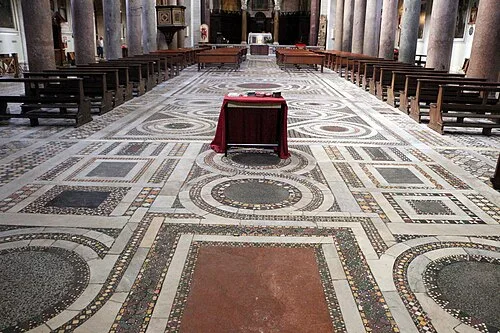 The Nave: Spolia Colonnade, Mosaic Floor, and Gilded Ceiling
Cosmatesque Pavement of the Nave
Cosmatesque is a medieval Roman technique, in which pieces of coloured stone are set into geometric patterns. Here, rings and roundels sit inside rectangular panels, with bands running between them. The church was rebuilt in 1123 by John of Crema. It is not certain that this floor belongs to that rebuilding. Dark and pale stones alternate in the rings and bands.
Listen in the appPhoto: Sailko · CC BY 3.0
05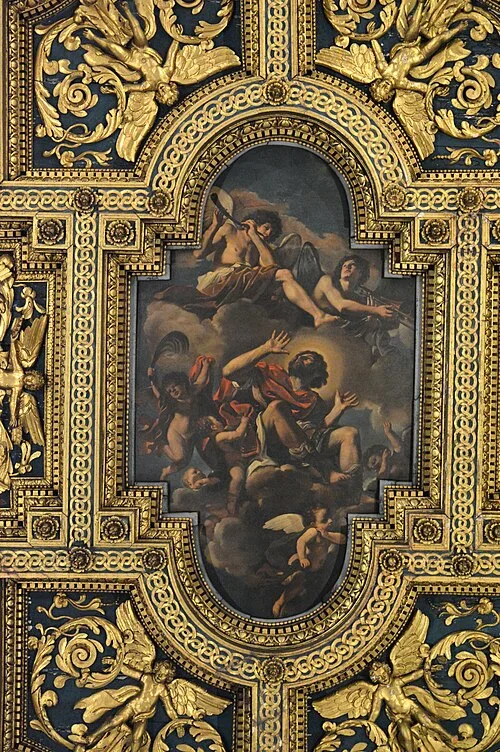 The Nave: Spolia Colonnade, Mosaic Floor, and Gilded Ceiling
The Guercino Ceiling Copy in the Gilded Coffered Ceiling
The central painting is a copy of Guercino's Glory of Saint Chrysogonus. The story goes that the original was sold to an English buyer in the nineteenth century. It is now said to be at Lancaster House in London. Carved gilded scrolls and winged figures frame the painting at its corners. The coffers around it bear the Borghese coats of arms.
Listen in the appPhoto: Rita batacchi · CC BY-SA 4.0
06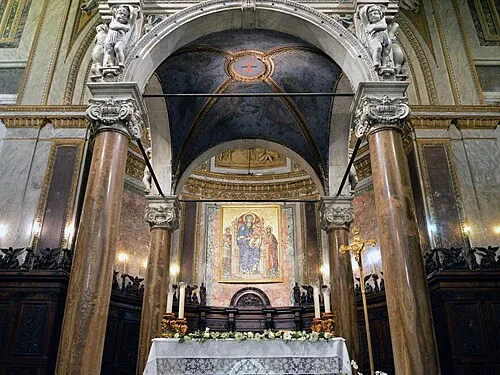 The High Altar and Side Chapels
High Altar Under the Alabaster Canopy
The high altar dates from 1127, but the canopy above it is much later. Soria made that canopy in the seventeenth century, though its exact year is uncertain. Behind the altar, a painting shows the Madonna and Child with saints. It is linked to a school of Pietro Cavallini, though that attribution is uncertain. Four alabaster columns hold up the canopy.
Listen in the appPhoto: Rita batacchi · CC BY-SA 4.0
07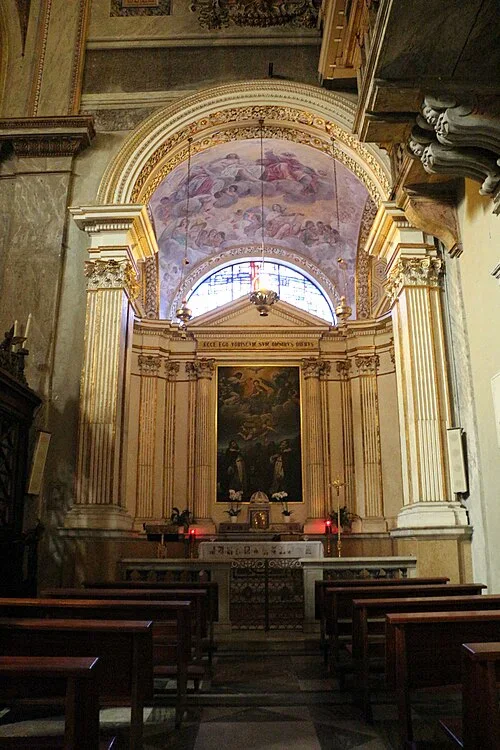 The High Altar and Side Chapels
Chapel of the Blessed Sacrament (Attributed to Bernini)
The chapel of the Blessed Sacrament lies beside the apse. It is attributed to the Baroque sculptor Gian Lorenzo Bernini, which means it is credited to him rather than proven. Its date is uncertain too. Tall paired pilasters with fluted shafts frame the altar. Above them, the vault is painted with clouds and figures, and an arched window sits below. Clouds and figures fill the painting over the altar as well.
Listen in the appPhoto: Sailko · CC BY 3.0
08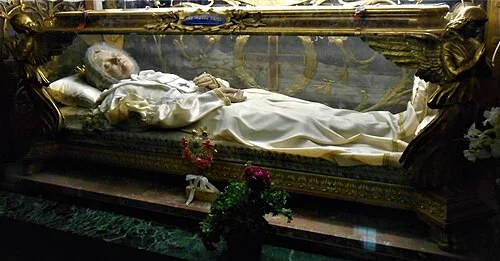 The High Altar and Side Chapels
Shrine of Blessed Anna Maria Taigi
Blessed Anna Maria Taigi lies in a glass-fronted, gilded shrine on the left side of the nave. A Christian mystic, she died in 1837. She was beatified in 1920, a step on the way to sainthood. She is buried wearing the habit of a Trinitarian tertiary, a lay member attached to that order. Flowers have been left at the base of the shrine. Today the basilica is entrusted to members of the Trinitarian Order.
Listen in the appCarlo Raso · Public domain
09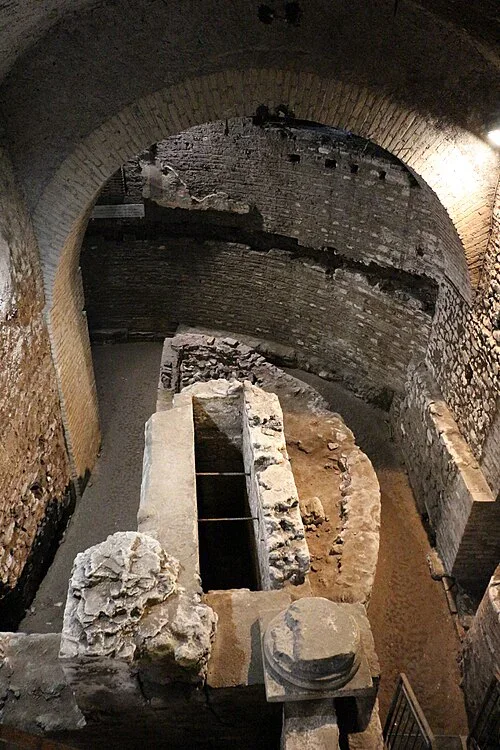 Subterranean 4th-Century Basilica and Crypt Frescoes
Excavated Remains of the Earlier Church
Beneath the Baroque church lies an older one from the fourth century. It was built under Pope Sylvester the First. Its name already appears in the signatures of a Roman synod held in 499. Whether that name honours a founder or the martyr of Aquileia is unclear. The remains came to light in 1907, and a staircase in the sacristy leads down to them. A rounded apse, the curved end of the church, is part of what survives. The early church had a single nave. Earlier Roman houses lie below it. The brickwork around the apse may belong to a fairly grand private house of the second century. Part of that house became a church in the fourth century. The area was a commercial district at the time. On either side of the apse, two rooms held several basins, one cut into the south wall. The basins could mean that a side room was a fullonica, a laundry and dye-house. Others think the basin in the south wall was made for baptism by immersion.
Listen in the appPhoto: Sailko · CC BY 3.0
10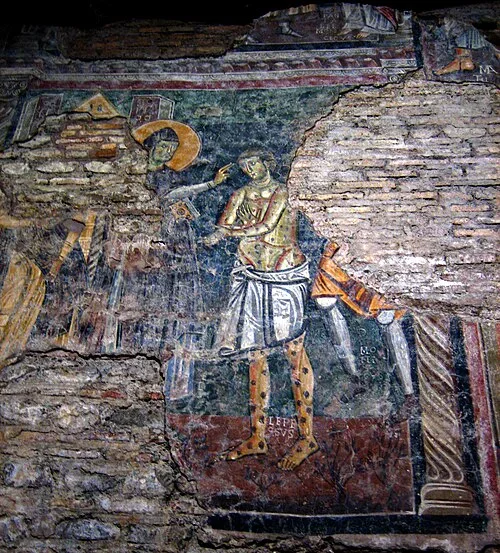 Subterranean 4th-Century Basilica and Crypt Frescoes
Eleventh-Century Fresco of the Leper's Healing
A leper is shown being healed by Saint Benedict of Nursia. The word Leprosus, Latin for leper, is written between his ankles. Pope Gregory the Third restored the church and founded a monastery here. That was in 731. Its first monks followed the Byzantine rite. In the tenth century, Benedictines acquired the premises and added frescoes of Benedict's life. Other paintings in the crypt range from the eighth to the eleventh century. One of them shows Pope Sylvester capturing a dragon. The healing scene is dated to the eleventh century by one account, and to the eighth by another.
Listen in the appAnthony M. from Rome, Italy · CC BY 2.0
- 11
Roman Sea-Procession Sarcophagus in the Crypt
A Roman stone coffin in the crypt, carved with a sea procession around a large central head.
- 12
The Romanesque Brick Campanile
A brick bell tower from the twelfth-century rebuilding, with tiers of arched openings and a pyramid-shaped cap.
Basilica di San Crisogono
Frequently asked questions
How much does the guide cost?
Free app download. Listed guide price: $0.99. Guide price shown in the app. Audio guide only. Venue admission is separate.
Can I listen without internet?
Yes. Download the guide’s audio, images, and maps in the app before your visit. Your downloaded content is then available offline.
Can I listen in my language?
This audio guide is available in 15 languages, including English.
Do I need to follow a schedule?
No. This is a self-guided experience. Choose your stops, pause whenever you like, and return to a story at your own pace.
At your own pace
Explore Basilica di San Crisogono.
Download Stanza, then search for “Basilica di San Crisogono”.
Free app download · Guide price shown in the app
Keep exploring
Nearby audio guides
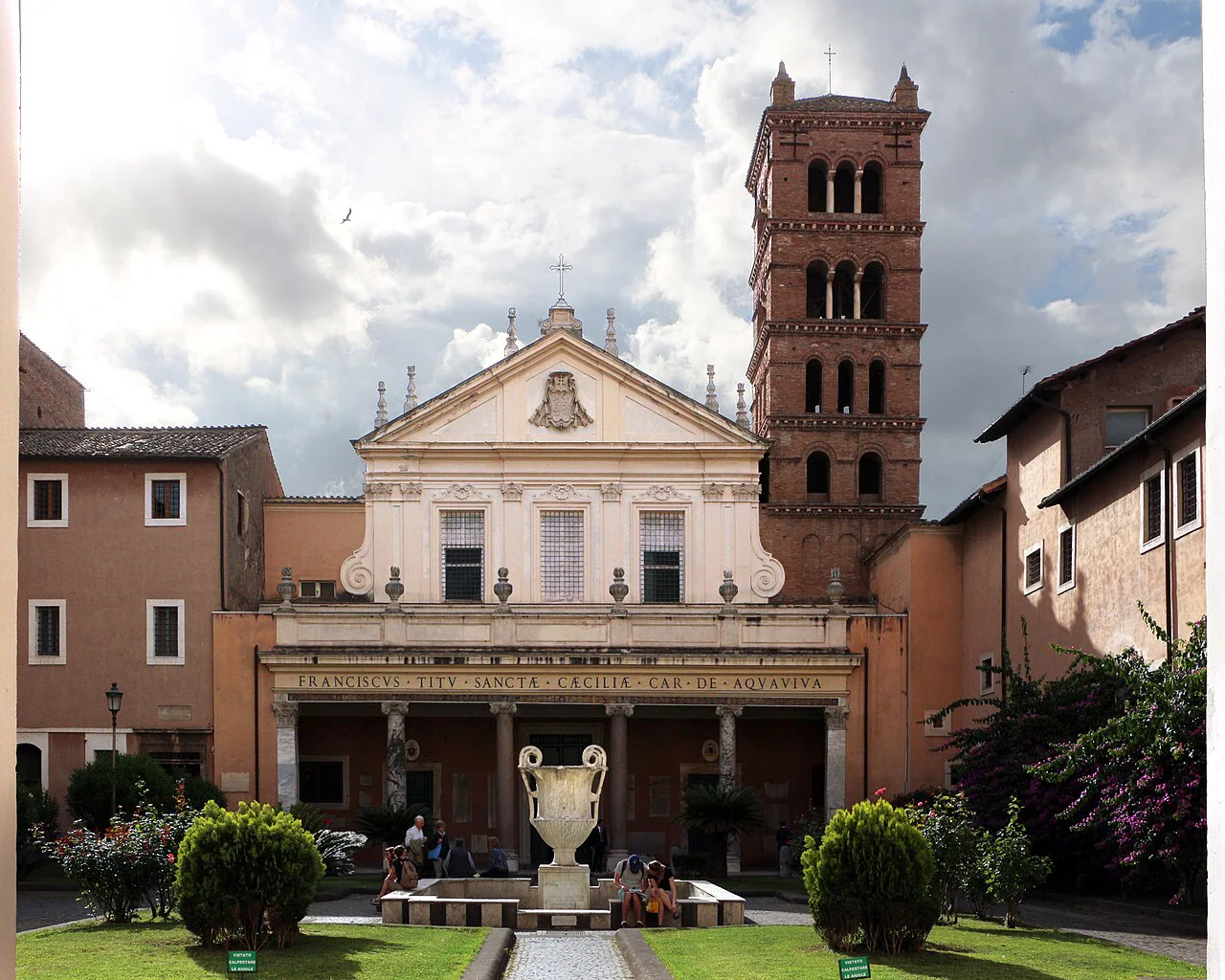
Rome · 1 km
Basilica di Santa Cecilia in Trastevere
Content & sources
Photo: Sailko · CC BY 3.0
Rome · 1 km
Basilica di San Bartolomeo all'Isola
Content & sources
sonofgroucho · CC BY 2.0
Rome · 1 km
Basilica di San Nicola in Carcere
Content & sources
Photo: Ninfamania · CC BY 4.0
Rome · 1 km
Chiesa di San Pietro in Montorio
Content & sources
Photo: PubblicUsername · CC BY 4.0