Stanza · Audio guide
Basilica di San Giovanni Battista dei Fiorentini Audio Guide
A place to remember. A story to take with you.
The Basilica of San Giovanni dei Fiorentini is a minor basilica and a titular church in Rome, Italy. It is located in the Ponte rione of the city.
Download Stanza, then search for “Basilica di San Giovanni Battista dei Fiorentini”.
About the tour
One guide. Your kind of visit.
The Basilica of San Giovanni dei Fiorentini is a minor basilica and a titular church in Rome, Italy. It is located in the Ponte rione of the city.
Ready when you are.
- 01Get the free Stanza app.
iOS & Android
- 02Find your guide.
“Basilica di San Giovanni Battista dei Fiorentini”
- 03Download before you go.
Works offline
Audio guide / 10 narrated stops
Inside the guide
Get to know a few of the stories before you go. Open a stop to read more.
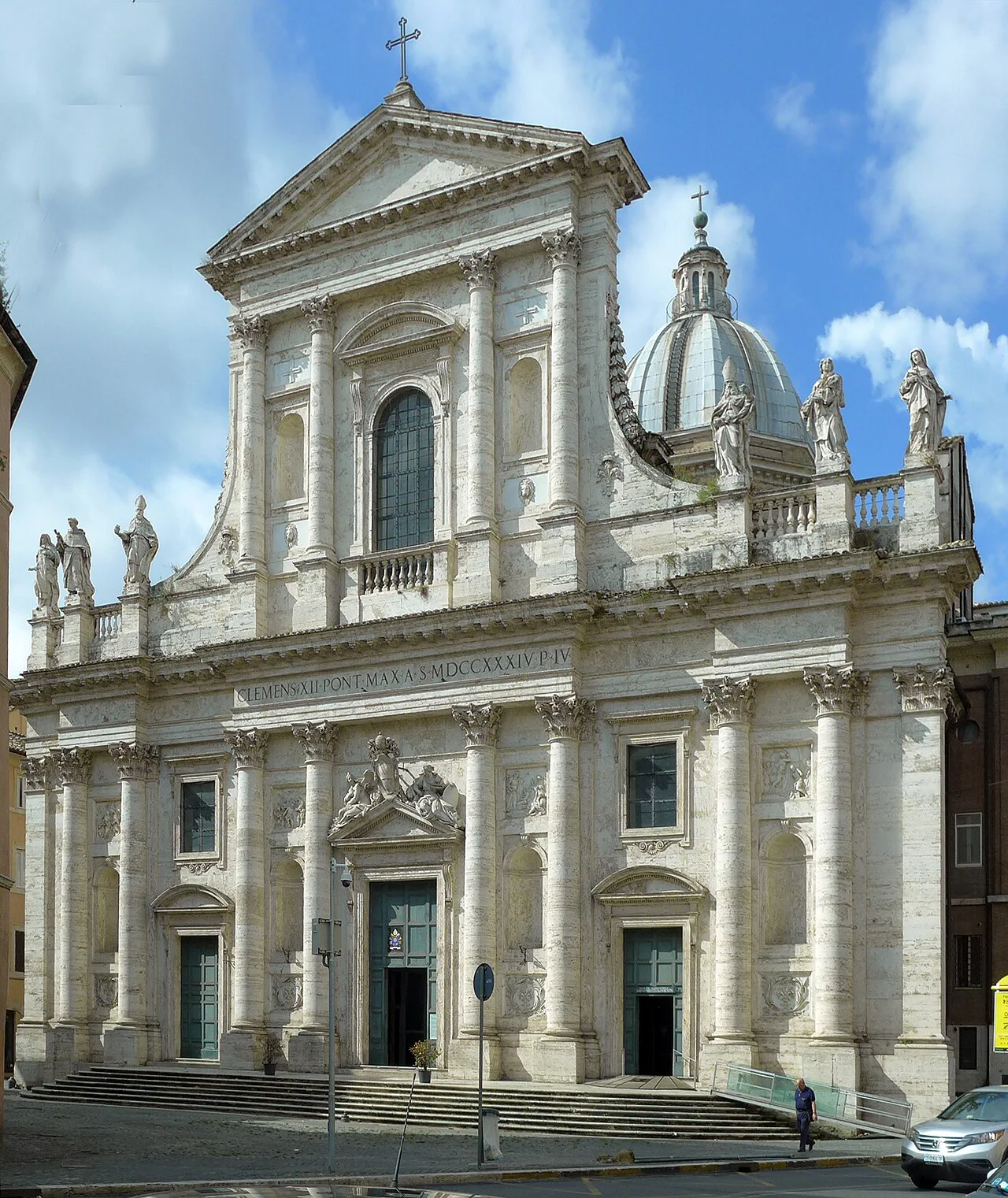
01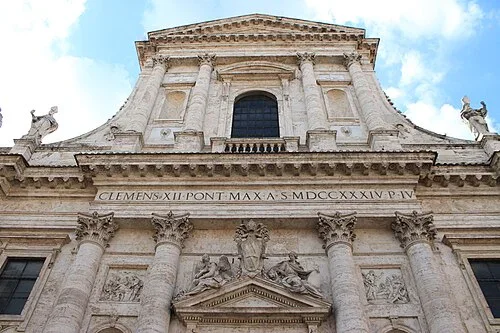 Piazza dell'Oro and the Galilei Façade
The Travertine Façade on Piazza dell'Oro
Welcome to the Basilica of San Giovanni Battista dei Fiorentini, the national church of Florence in Rome. The Florentine community raised it as a monumental statement of their presence in the papal capital, dedicated to John the Baptist, the protector of their city. The pale travertine façade closes the long line of Via Giulia at the piazza dell'Oro. Alessandro Galilei designed that front, and it was finished in 1734 under Pope Clement XII. The Latin inscription across the façade records Clement's name and the date. Galilei himself died only three years later, in 1737. From the first stones to that finished front, the building took roughly two centuries, and some of the greatest architects of the age worked on it along the way.
John Samuel · CC BY-SA 4.0
02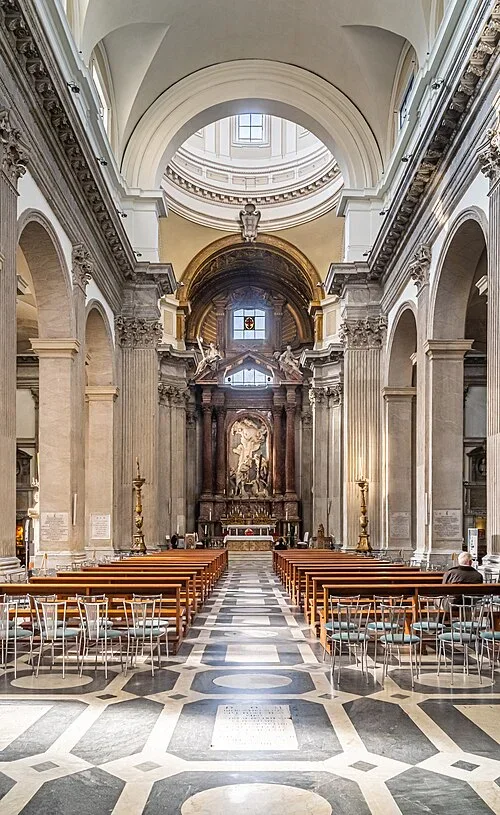 The Central Nave and Architectural Battle
The Central Nave and the Two-Century Build
The nave took the better part of a century, and the trouble began with the ground. In 1518 Pope Leo X, a Florentine of the Medici family, called a competition for a new church here. The entrants read like a roll call of the age: Peruzzi, Sangallo the Younger, even Raphael. Jacopo Sansovino won, and building started in 1519. The plan called for the choir to rise over the bed of the Tiber itself. Builders had to sink massive foundations into the sand of the riverbank, and suspicions about the finances helped push Sansovino out. Antonio da Sangallo the Younger, seasoned by military engineering, took over and solved the substructures. Giacomo della Porta then raised the main body from 1583, a three-aisled church with five chapels on each side. Carlo Maderno finished the job, capping the crossing with a slender brick dome in 1614. Along the sides, the family chapels record who paid.
Krzysztof Golik · CC BY-SA 4.0
03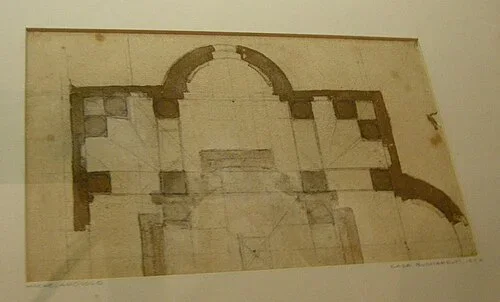 The Central Nave and Architectural Battle
Michelangelo's Unbuilt Design
Even Michelangelo got pulled into this long contest. In 1559 Cosimo the First de' Medici, Duke of Tuscany, asked him to prepare designs for the church. Michelangelo answered with a centralized plan, a compact church arranged around a center rather than a long nave. It was never adopted. The studies connected with the project show that central scheme, and his pupil Tiberio Calcagni even made a wooden model from the drawings. The long Latin cross prevailed instead, and Michelangelo's round church remained on paper.
Listen in the appPhoto: Sailko · CC BY-SA 3.0
04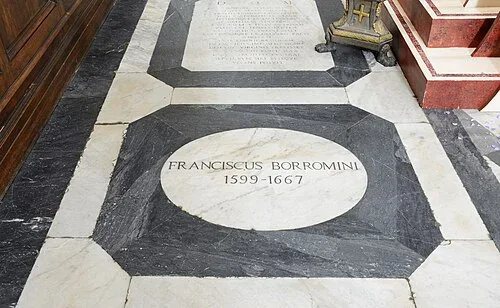 The Crossing and the Maderno-Borromini Tomb
The Tomb of Maderno and Borromini
Under the crossing, the floor carries a simple inscription: Franciscus Borromini, 1599 to 1667. Francesco Borromini, the most inventive and tormented architect of Baroque Rome, is buried here beneath the dome. Beside him lies Carlo Maderno, his mentor and the man who capped this very church with its dome. The story goes that Borromini was granted burial only on condition that the grave stay plain, without a showy epitaph. The modest slab that marks the grave today fits that tradition. For architects and lovers of the Baroque, this floor has become a place of pilgrimage.
Listen in the appPhoto: Livioandronico2013 · CC BY-SA 4.0
05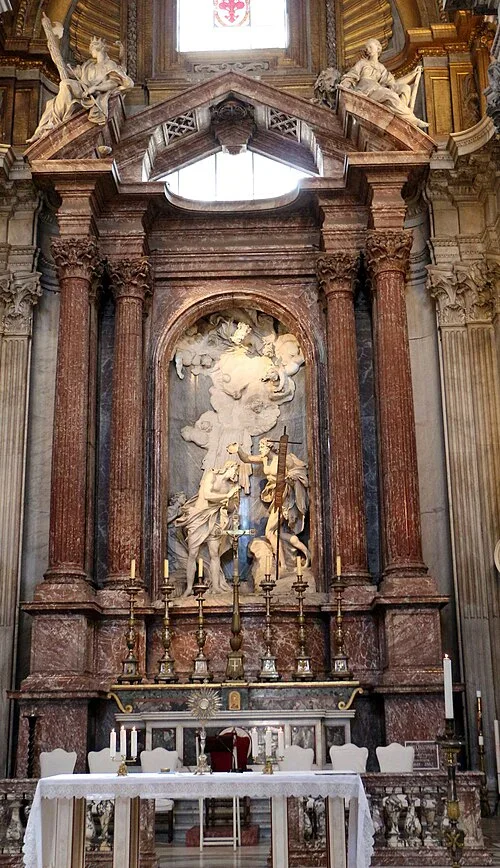 The High Altar and Falconieri Choir
The High Altar and the Baptism of Christ
The high altar is one vast sculpture of the Baptism of Christ, carved in white marble by Antonio Raggi and finished in 1669. For a church dedicated to John the Baptist, the Florentines' own patron, no subject could fit better. The road here was long. In 1634 the nobleman Orazio Falconieri asked the painter and architect Pietro da Cortona to design the high altar. Cortona drew plans and made a model, including a clever trick: windows hidden from the congregation, angled to light the altarpiece alone. Nothing was built. A generation later Falconieri revived the project and handed it to Francesco Borromini, who reworked the design to make room for the tomb of Orazio's brother, Cardinal Lelio Falconieri. After Borromini's death, Cortona returned, and on his death his pupil Ciro Ferri carried the work through. The altar itself glows in deep red marble, French and Cottanello, beneath the white Baptist group.
Listen in the appPhoto: Sailko · CC BY 3.0
06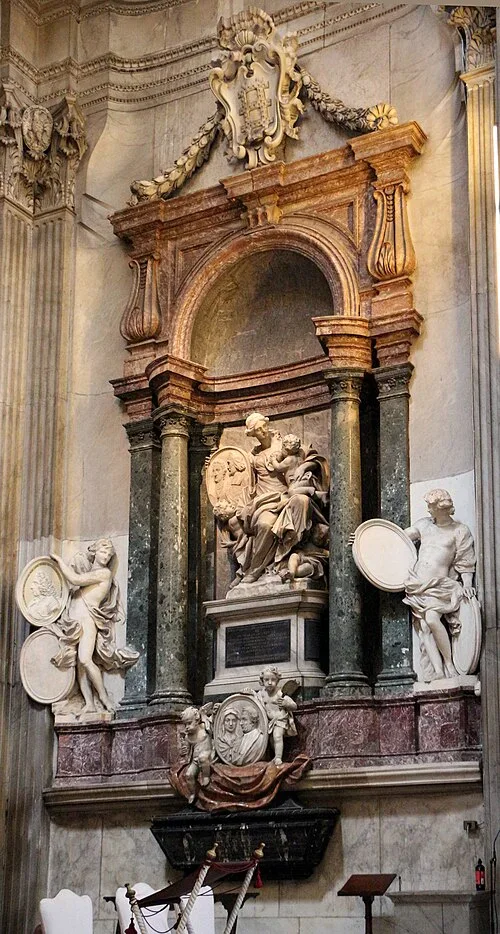 The High Altar and Falconieri Choir
Monument of Orazio Falconieri and Ottavia Sacchetti
The Falconieri family paid for the choir, and they wrote themselves into its walls. Alongside the apse stand the family's sepulchres, with Ercole Ferrata's figure of Faith and Domenico Guidi's Charity, both attended by stucco figures from the same hands. The monument of Orazio Falconieri and Ottavia Sacchetti sits within this ensemble, its figures framed by columns of dark and colored marble. Later, in the eighteenth century, polychrome marble medallions were added, portraits of Falconieri family members, each held up by carved putti. The patrons turned their own dead into part of the setting they had commissioned.
Listen in the appDomenico Guidi · CC BY 3.0
07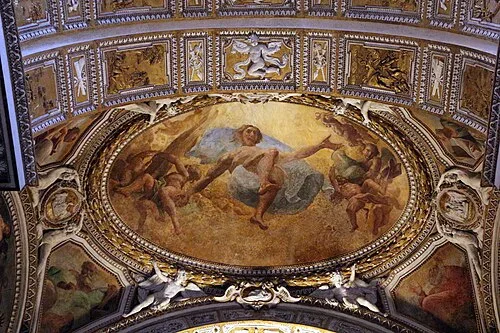 The Sacchetti Chapel
 Frescoes
To the left of the high altar, the Sacchetti Chapel keeps its painted ceiling from the early Baroque. Giovanni Lanfranco frescoed it in 1623 and 1624. In the oval at the center of the vault, Christ rises from the tomb, and the four evangelists fill the compartments around him. The chapel also serves the family that gave it its name. Many members of the marchesi Sacchetti are buried here, close by the high altar. Side chapels like this one were how Rome's great families made a church their own.
Listen in the appPhoto: Sailko · CC BY 3.0
08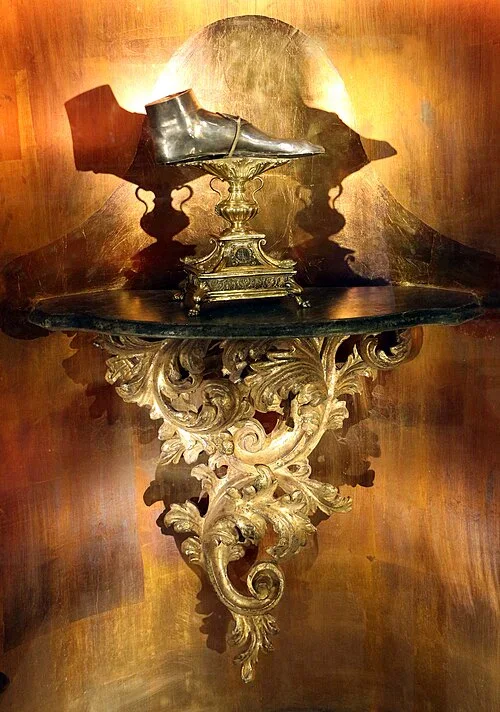 The Relic Chapel of Saint Mary Magdalene
The Reliquary of Saint Mary Magdalene's Foot
One of the strangest treasures in Rome rests in this church: the relic of the left foot of Saint Mary Magdalene. It is shown for the devotion of the faithful, set out on a gilded bracket like a small altar of its own. The reliquary that holds it, worked in silver, bronze and gold, comes from the workshop of Benvenuto Cellini, the celebrated Florentine goldsmith. The tradition the faithful cherish goes further. On the morning of the Resurrection, they say, a woman's foot was the first to step inside the open tomb of Christ, and this is that foot. It remains one of the church's most famous objects of devotion.
Listen in the appPhoto: Sailko · CC BY 3.0
09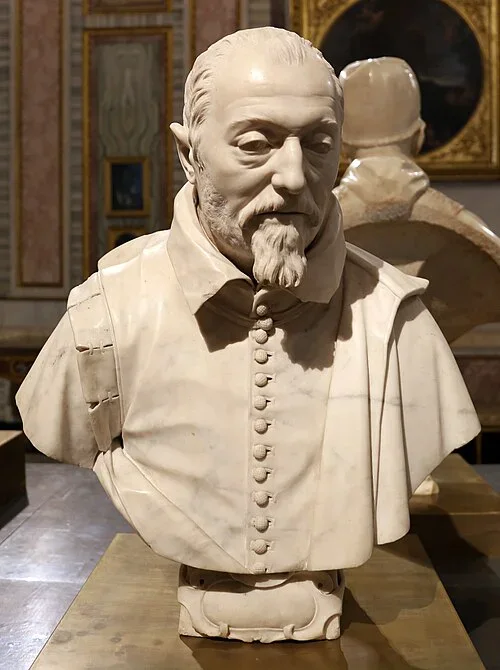 The Museum of Sacred Art
Bust of Antonio Cepparello by Gian Lorenzo Bernini
The museum next to the basilica keeps a marble bust with a startlingly living face. It is Antonio Cepparello, carved by Gian Lorenzo Bernini. Bernini was only in his early twenties, already able to turn stone into skin, beard and heavy eyelids. The sitter belonged to a Florentine family settled in Rome, and the bust was made to keep his memory after death. Portraits like this were how the Florentine nation in Rome honored its own, and they drew in the greatest sculptor of the age while he was still learning his craft.
Listen in the appPhoto: Sailko · CC BY 3.0
10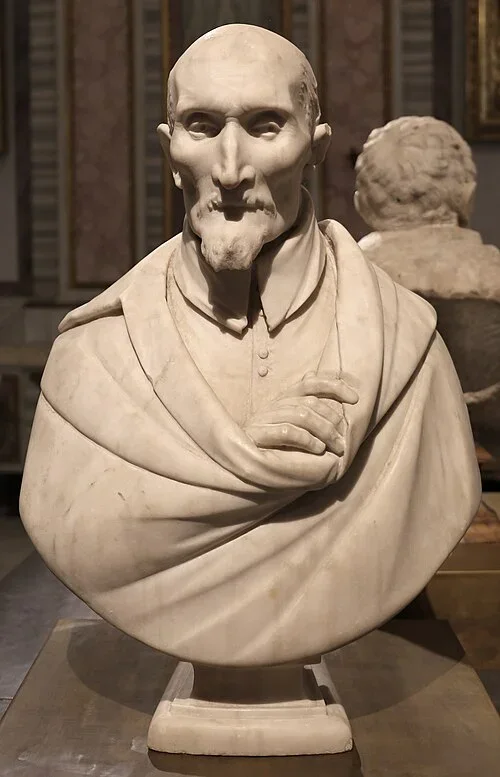 The Museum of Sacred Art
Bust of Antonio Coppola by the Young Bernini
Antonio Coppola stares out of his marble bust with his cloak wrapped tight, carved in 1612 by Gian Lorenzo Bernini, then only about thirteen. A decade later he made the Cepparello portrait nearby, so the two busts bracket the start of his career in Florentine service. The community's archive holds papers going back to the fifteenth century, and among them sits a curious record: the minutes expelling Leonardo da Vinci from the Florentine confraternity, for failing to pay his entrance dues. Even Leonardo, it seems, fell behind on his membership.
Listen in the appPhoto: Sailko · CC BY 3.0
Basilica di San Giovanni Battista dei Fiorentini
Frequently asked questions
How much does the guide cost?
Free app download. Listed guide price: $0.99. Guide price shown in the app. Audio guide only. Venue admission is separate.
Can I listen without internet?
Yes. Download the guide’s audio, images, and maps in the app before your visit. Your downloaded content is then available offline.
Can I listen in my language?
This audio guide is available in 15 languages, including English.
Do I need to follow a schedule?
No. This is a self-guided experience. Choose your stops, pause whenever you like, and return to a story at your own pace.
At your own pace
Explore Basilica di San Giovanni Battista dei Fiorentini.
Download Stanza, then search for “Basilica di San Giovanni Battista dei Fiorentini”.
Free app download · Guide price shown in the app
Keep exploring
Nearby audio guides
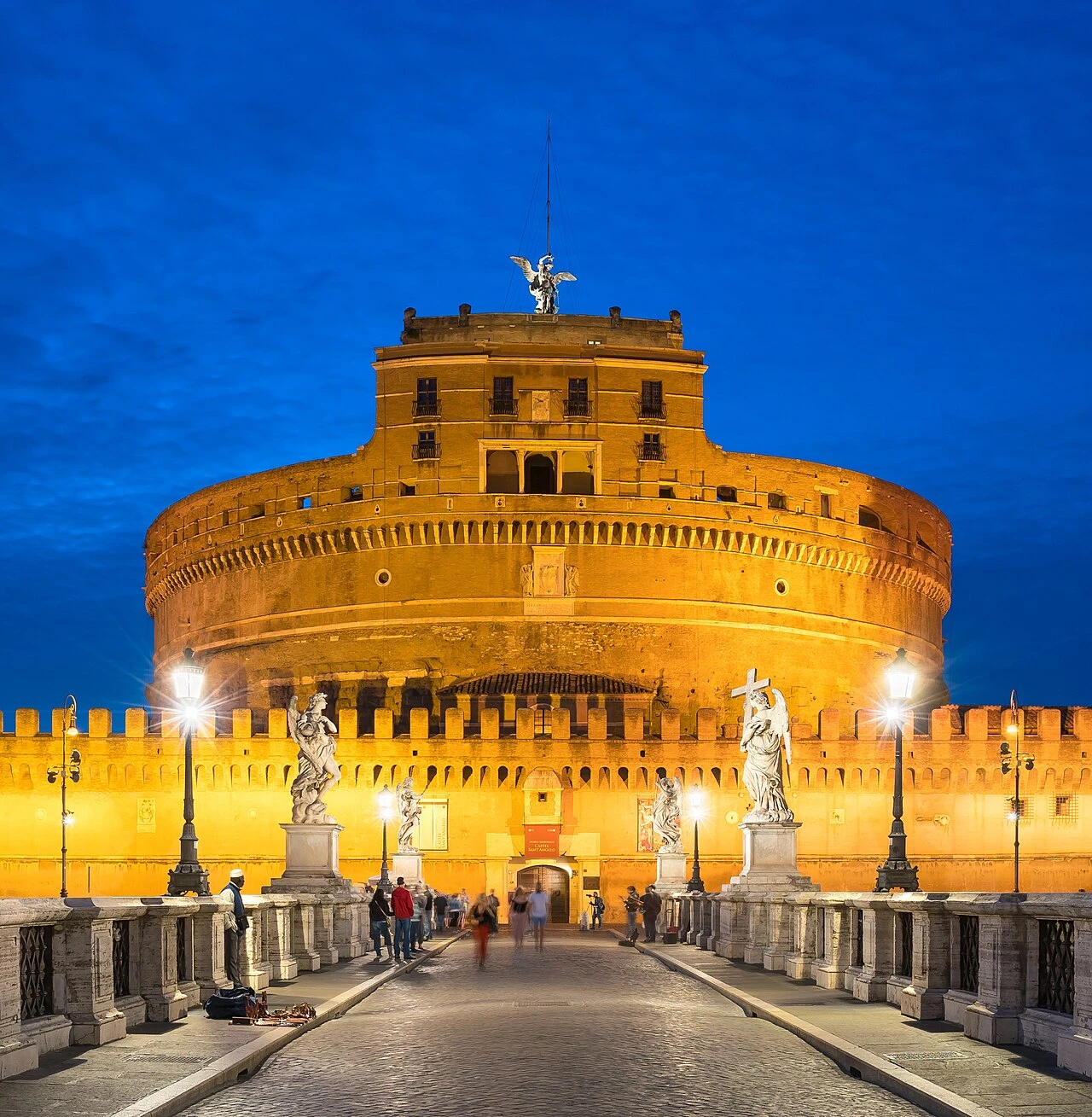
Rome · 1 km
Castel Sant'Angelo
Content & sources
Thomas Wolf, www.foto-tw.de · CC BY-SA 3.0 de
Rome · 1 km
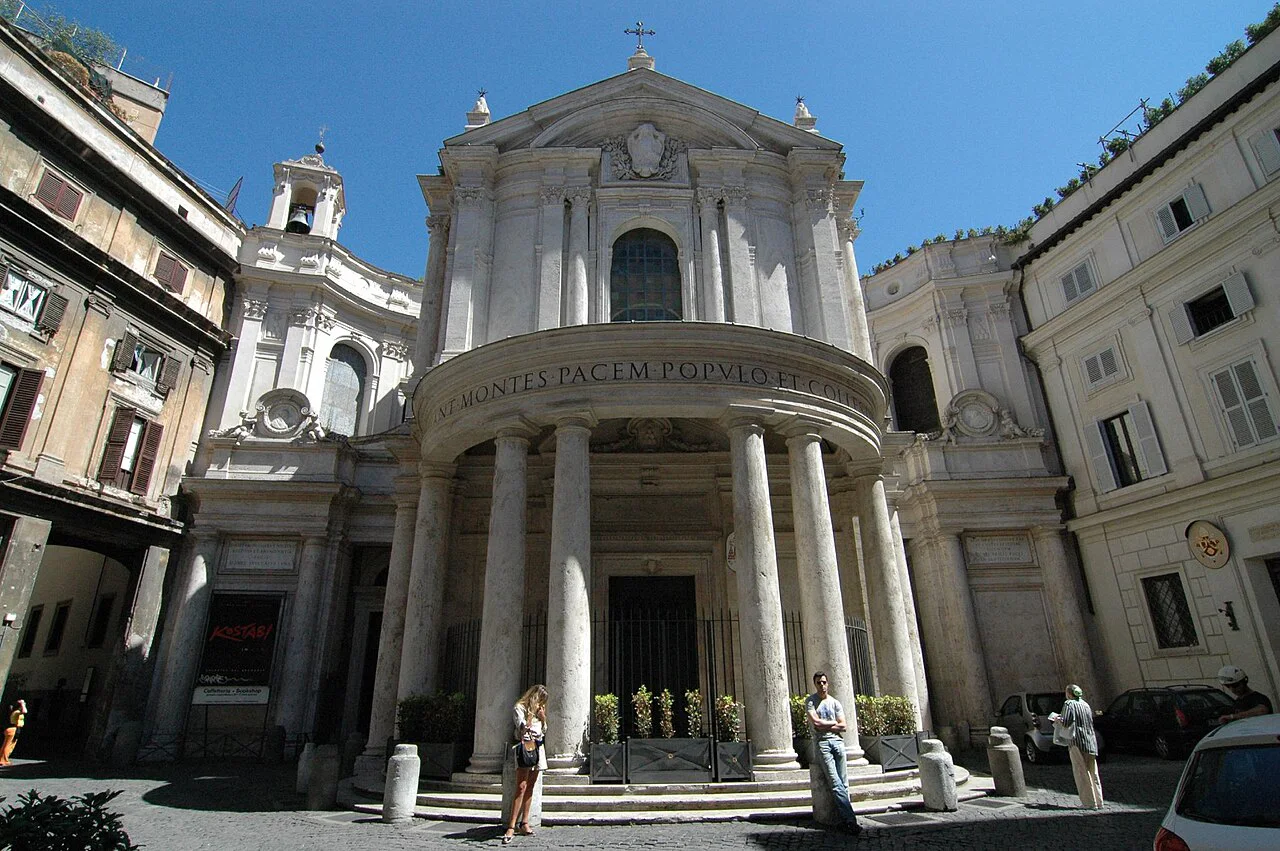
Chiesa di Santa Maria della Pace
Content & sources
gaspa · CC BY 2.0
Rome · 1 km
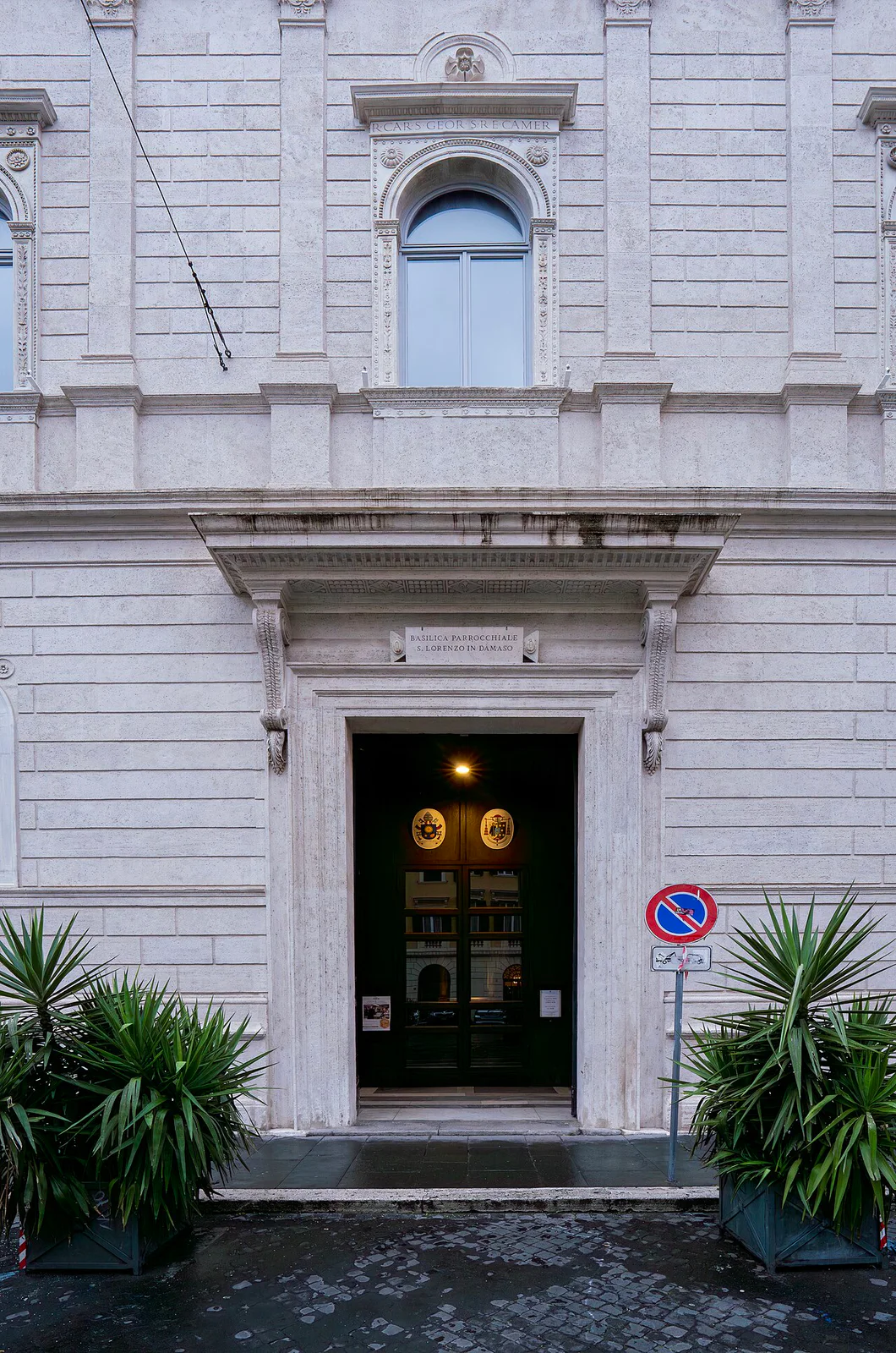
Basilica di San Lorenzo in Damaso
Content & sources
Photo: Fiat 500e · CC BY 4.0
Rome · 1 km
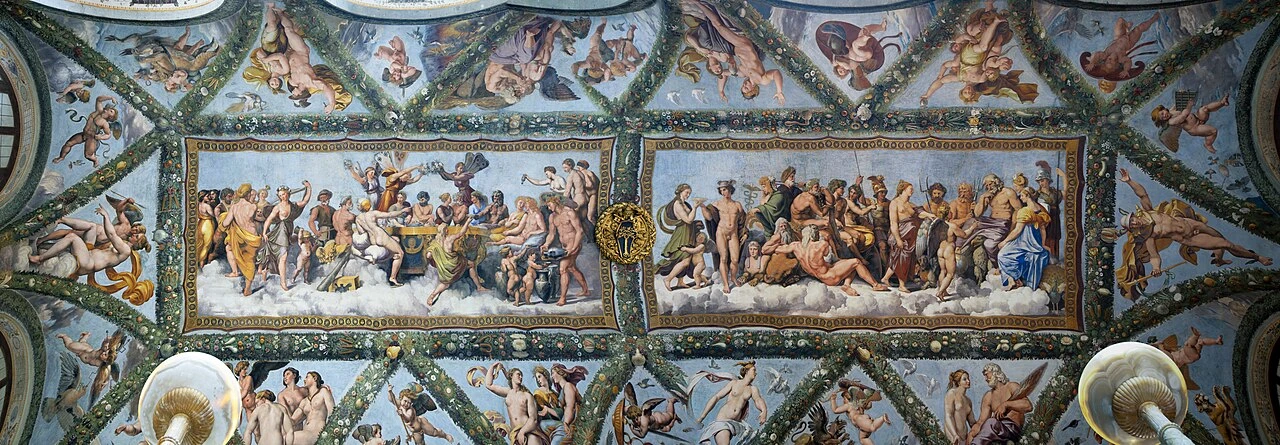
Villa Farnesina
Content & sources
Paris Orlando · CC BY-SA 4.0