Stanza · Audio guide
Basilica di San Sebastiano fuori le mura Audio Guide
A place to remember. A story to take with you.
San Sebastiano fuori le mura is a minor basilica located in Rome, Italy. It was historically one of the Seven Pilgrim Churches of Rome and remains a favored destination for many pilgrims.
Download Stanza, then search for “Basilica di San Sebastiano fuori le mura”.
About the tour
One guide. Your kind of visit.
San Sebastiano fuori le mura is a minor basilica located in Rome, Italy. It was historically one of the Seven Pilgrim Churches of Rome and remains a favored destination for many pilgrims.
Ready when you are.
- 01Get the free Stanza app.
iOS & Android
- 02Find your guide.
“Basilica di San Sebastiano fuori le mura”
- 03Download before you go.
Works offline
Audio guide / 10 narrated stops
Inside the guide
Get to know a few of the stories before you go. Open a stop to read more.
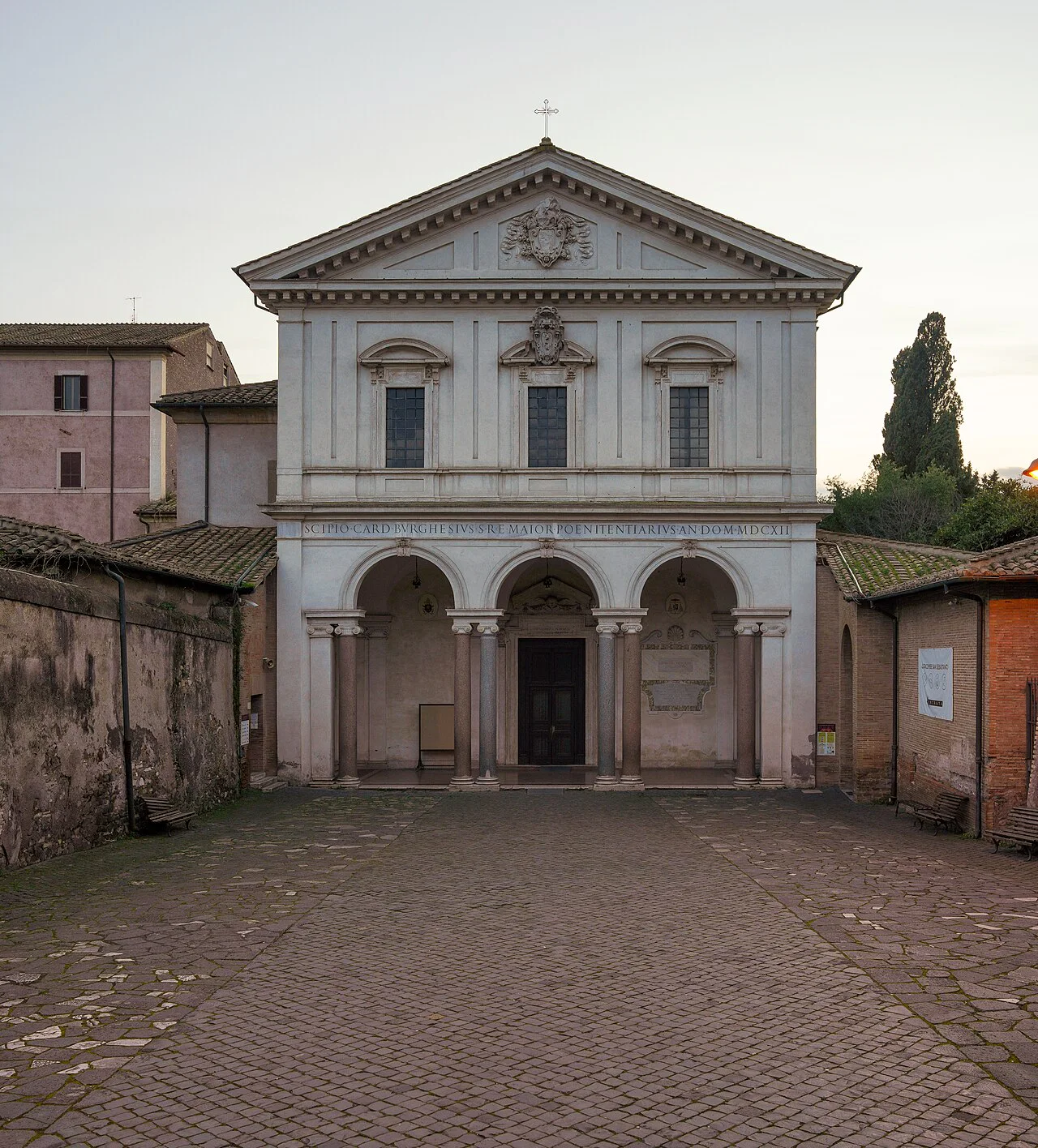
01 Baroque Facade and Constantinian Portico
Facade and Portico on the Appian Way
Welcome to the Basilica of Saint Sebastian Outside the Walls, on the old Appian Way, number 136. The name says exactly where it sits: outside the Aurelian Walls of Rome, which sets it apart from a smaller church of the same saint on the Palatine Hill. The facade belongs to a seventeenth-century rebuilding, paid for by Cardinal Scipione Borghese. He commissioned it in 1609 from the architect Flaminio Ponzio. Ponzio died in 1613, and Giovanni Vasanzio carried the work through to completion. The three arches of the lower portico rest on granite columns that are far older than the church around them. They were salvaged from the great fourth-century basilica that once stood on this spot. That layered past is what this visit follows: a church raised over an apostolic shrine and, deeper still, over catacombs.
Photo: NikonZ7II · CC BY-SA 4.0
02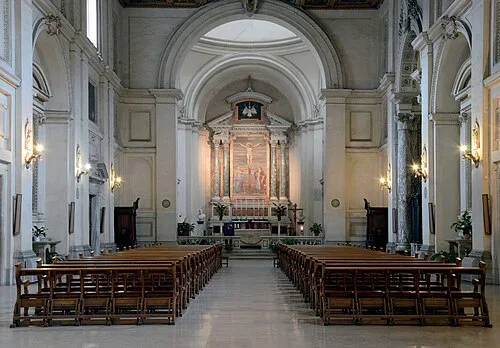 The Main Nave and Carved Wooden Ceiling
The Single Nave and the Basilica of the Apostles
The long single nave stretches toward the altar, but the founding story lies beneath it. In the year 258, during the persecutions of the emperor Valerian, the relics of the apostles Peter and Paul were brought to this ground for safekeeping. That is the founding tradition, and it is the reason a basilica exists here at all. When the danger passed, the apostles' remains went back to their own basilicas, Peter's in the Vatican and Paul's on the road to Ostia. Constantine then built a great hall over the site in the first half of the fourth century. It was called the Basilica Apostolorum, the Basilica of the Apostles. It was far larger than the church you see now, and the present nave was set directly over the central nave of that older building. The exact outline of Constantine's church is a matter of conjecture, but its scale still shapes everything above it.
Photo: Livioandronico2013 · CC BY-SA 4.0
03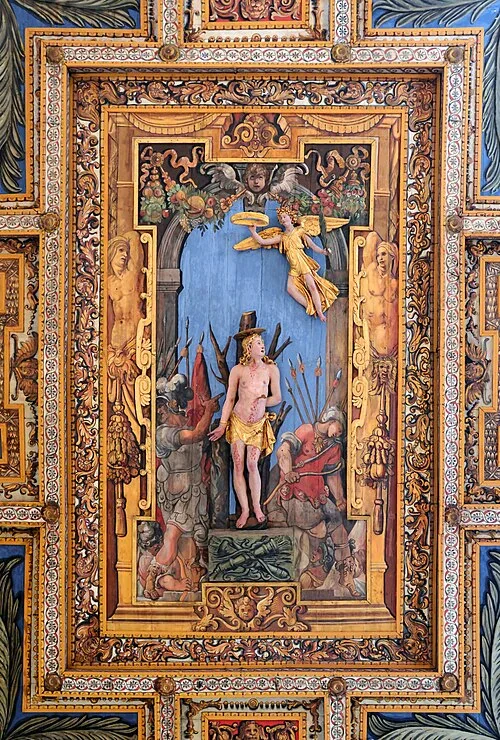 The Main Nave and Carved Wooden Ceiling
Carved Wooden Ceiling: Who Was Sebastian
The ceiling of carved and painted wood shows the saint this church is named for. In the central panel Sebastian stands bound, his body pierced by arrows, while an angel above him holds out a palm, the mark of martyrdom. Sebastian was a popular Roman martyr of the third century. His remains were moved to this site around the year 350, and the catacombs here came to carry his name. The basilica's dedication to him is later still, dating to the ninth century. Look up once more at the framing around the panel: the coats of arms there belong to Cardinal Scipione Borghese and Pope Gregory the Sixteenth, the patrons linked to the building and its decoration. The martyr in the woodwork above is the same one whose tomb, further on, made this place a goal of pilgrims.
Listen in the appPhoto: Livioandronico2013 · CC BY-SA 4.0
04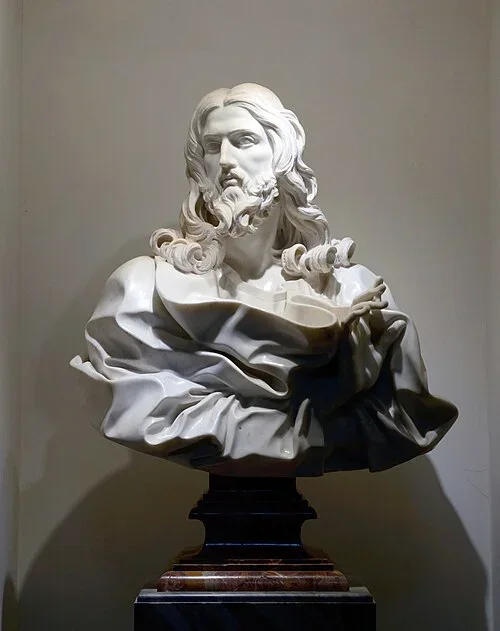 Bernini's Final Masterpiece: Salvator Mundi
Bernini's Last Masterpiece: The Salvator Mundi
In a niche on the right side of the nave stands a marble bust of Christ, the Salvator Mundi. It is the last masterpiece of Gian Lorenzo Bernini, the greatest sculptor of the Roman Baroque. He made it in his final years, a work of personal devotion rather than a public commission. Then it dropped out of sight, and for a long time it was known only by reputation. The bust resurfaced in 2001, found in the convent adjacent to this church. A sculpture by the aged master, hidden for centuries a few steps from his own city's churches, is a quiet kind of discovery. It now stands where visitors can meet it, in a simple niche, without ceremony.
Listen in the appGian Lorenzo Bernini · CC BY-SA 4.0
05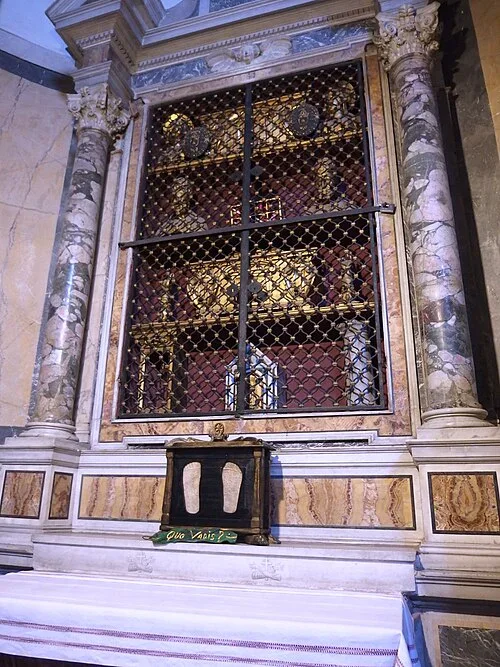 Chapel of Relics and the Quo Vadis Stone
The Chapel of Relics
Directly across the nave from Saint Sebastian's chapel lies the Chapel of Relics, decorated in 1625. Behind the metal grille of its altar the chapel keeps two traces of the martyrdom. One is an arrow that struck Sebastian, one of the shots that wounded him without killing him. The other is part of the column to which he was tied during the ordeal. Both are set among the gilded reliquaries on the grilled altar. They are the kind of relics pilgrims came a long way to see: the instruments of a martyr's suffering, kept close to his tomb. At the foot of this altar rests a small stone with its own story, and that stone comes next.
Listen in the appPhoto: Palickap · CC BY-SA 4.0
06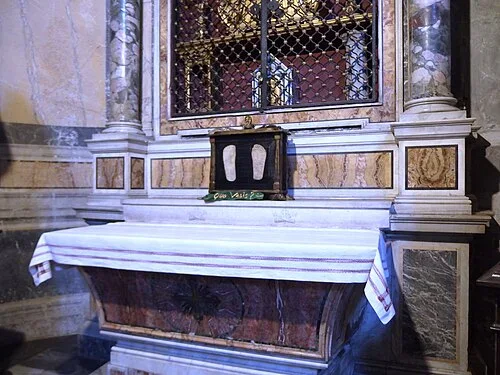 Chapel of Relics and the Quo Vadis Stone
The Quo Vadis Stone
The small stone at the foot of the altar is the most famous relic in this chapel. It is said to bear the footprints of Christ. The story comes from the apocryphal Acts of Peter, an early text the Church never counted among the Gospels. Peter, fleeing persecution in Rome, met Christ on the Appian Way, on the very road outside this basilica. Peter asked him, 'Quo vadis, Domine?' — Lord, where are you going? Christ answered that he was going to Rome, to be crucified a second time in Peter's place. Peter turned back to the city, and to his own death. The stone is preserved here as the mark of that meeting, a matter of devotion and legend rather than proof. The road that gave the legend its geography still runs past the church doors.
Listen in the appPhoto: Palickap · CC BY-SA 4.0
07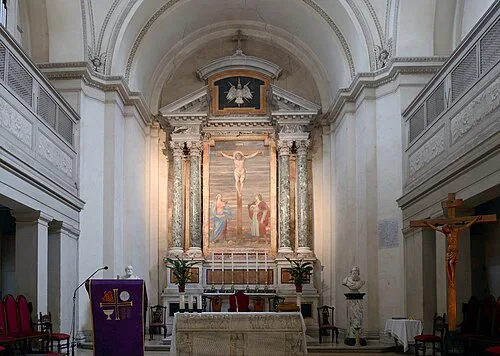 The High Altar and Presbytery
Presbytery and High Altar
The nave ends at the triumphal arch, which opens onto the presbytery, a square room crowned by its own dome. The high altar there was designed by Flaminio Ponzio, the same architect who began the seventeenth-century rebuilding of the church. He composed it as an edicule, a shrine-like frame held by four columns. Within the frame hangs a Crucifixion by Innocenzo Tacconi. At the sides stand busts of Saints Peter and Paul by the sculptor Nicolò Cordier. They are a deliberate echo of the basilica's first dedication to the apostles. The Baroque ensemble gathers the whole nave toward this point, where the old dedication and the new building meet.
Listen in the appPhoto: Livioandronico2013 · CC BY-SA 4.0
08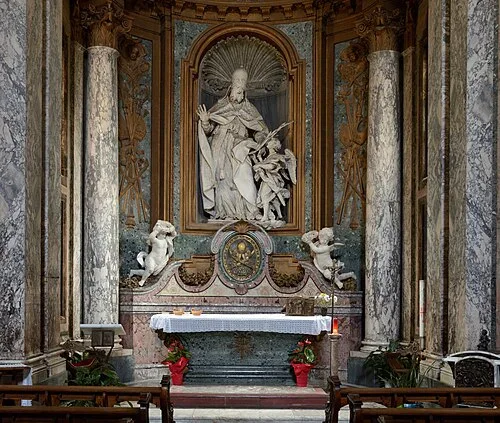 The Albani Chapel
 and Pope Fabian
The Albani Chapel was built for a reigning pope, Clement the Eleventh of the Albani family. Carlo Maratta directed the project, with the architects Alessandro Specchi, Filippo Barigioni and Carlo Fontana collaborating on the work in the early eighteenth century. The chapel is dedicated not to the pope who paid for it, but to Pope Fabian. Fabian had been Bishop of Rome during the persecution of the emperor Decius, and he died for it. The statue at the altar shows Fabian with angels around him. In this way a papal family's monument became a memorial to a persecuted bishop of Rome. Along this stretch of the Appian Way, memories of the persecuted bishops of Rome gathered one beside another.
Listen in the appPhoto: Livioandronico2013 · CC BY-SA 4.0
09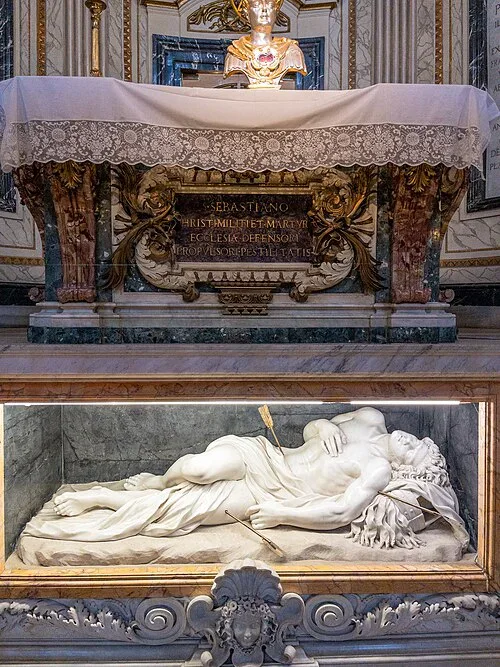 Chapel of Saint Sebastian
The Tomb of Saint Sebastian
The first chapel on the left holds the tomb of the saint himself. Ciro Ferri built the chapel in 1672, and beneath its altar lies the recumbent marble statue by Giuseppe Giorgetti. The wounded martyr lies on his side, an arrow still fixed in the marble, his body slack in death. Here the basilica keeps the relics of Sebastian. This is the tomb that turned a memorial church into a shrine. For centuries pilgrims have come down the Appian Way to stand at this altar, above the martyr who gave the basilica its name.
Listen in the appKent Wang · CC BY-SA 2.0
10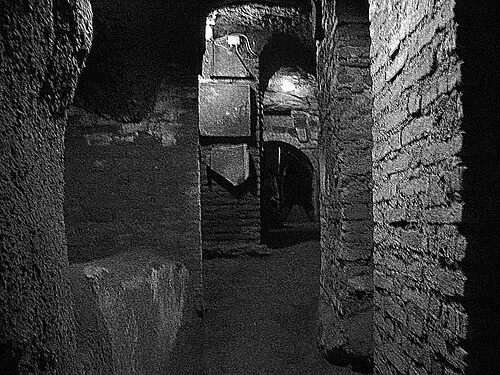 The Catacombs of Saint Sebastian
Into the Catacombs
The deepest layer of this place lies under the church floor. The galleries there are cut into the soft tufa stone, a burial ground where the early Christians of Rome laid their dead. This is the catacomb 'ad catacumbas', the name the basilica itself once carried, and from this spot the word 'catacomb' spread to burial places everywhere. A martyrs' burial ground beside a Roman road became, layer by layer, one of the great goals of Christian pilgrimage. From 1553 it belonged to the Seven Churches Visitation, the one-day pilgrimage that Philip Neri began at Saint Peter's and ended at Saint Mary Major. The street that links this basilica to Saint Paul Outside the Walls is still called the Street of the Seven Churches. Pilgrims still favour the old list, not least because of the catacombs beneath it. From an apostles' refuge to a martyr's tomb to a pilgrim's road, everything above rests on this ground.
Listen in the appPhoto: FlickreviewR · CC BY 2.0
Basilica di San Sebastiano fuori le mura
Frequently asked questions
How much does the guide cost?
Free app download. Listed guide price: $0.99. Guide price shown in the app. Audio guide only. Venue admission is separate.
Can I listen without internet?
Yes. Download the guide’s audio, images, and maps in the app before your visit. Your downloaded content is then available offline.
Can I listen in my language?
This audio guide is available in 15 languages, including English.
Do I need to follow a schedule?
No. This is a self-guided experience. Choose your stops, pause whenever you like, and return to a story at your own pace.
At your own pace
Explore Basilica di San Sebastiano fuori le mura.
Download Stanza, then search for “Basilica di San Sebastiano fuori le mura”.
Free app download · Guide price shown in the app
Keep exploring
Nearby audio guides
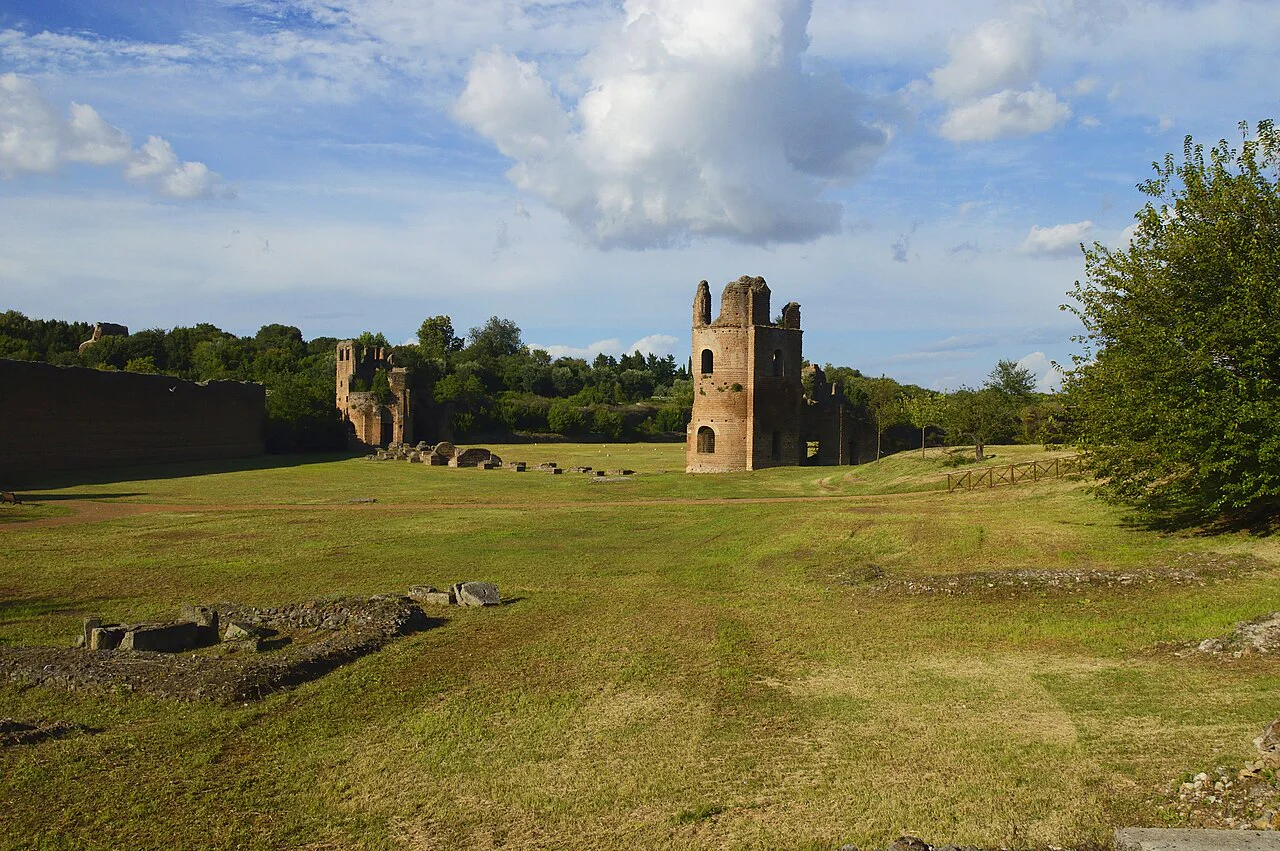
Rome · 1 km
Circo di Massenzio
Content & sources
Photo: Livioandronico2013 · CC BY-SA 4.0
Rome · 1 km
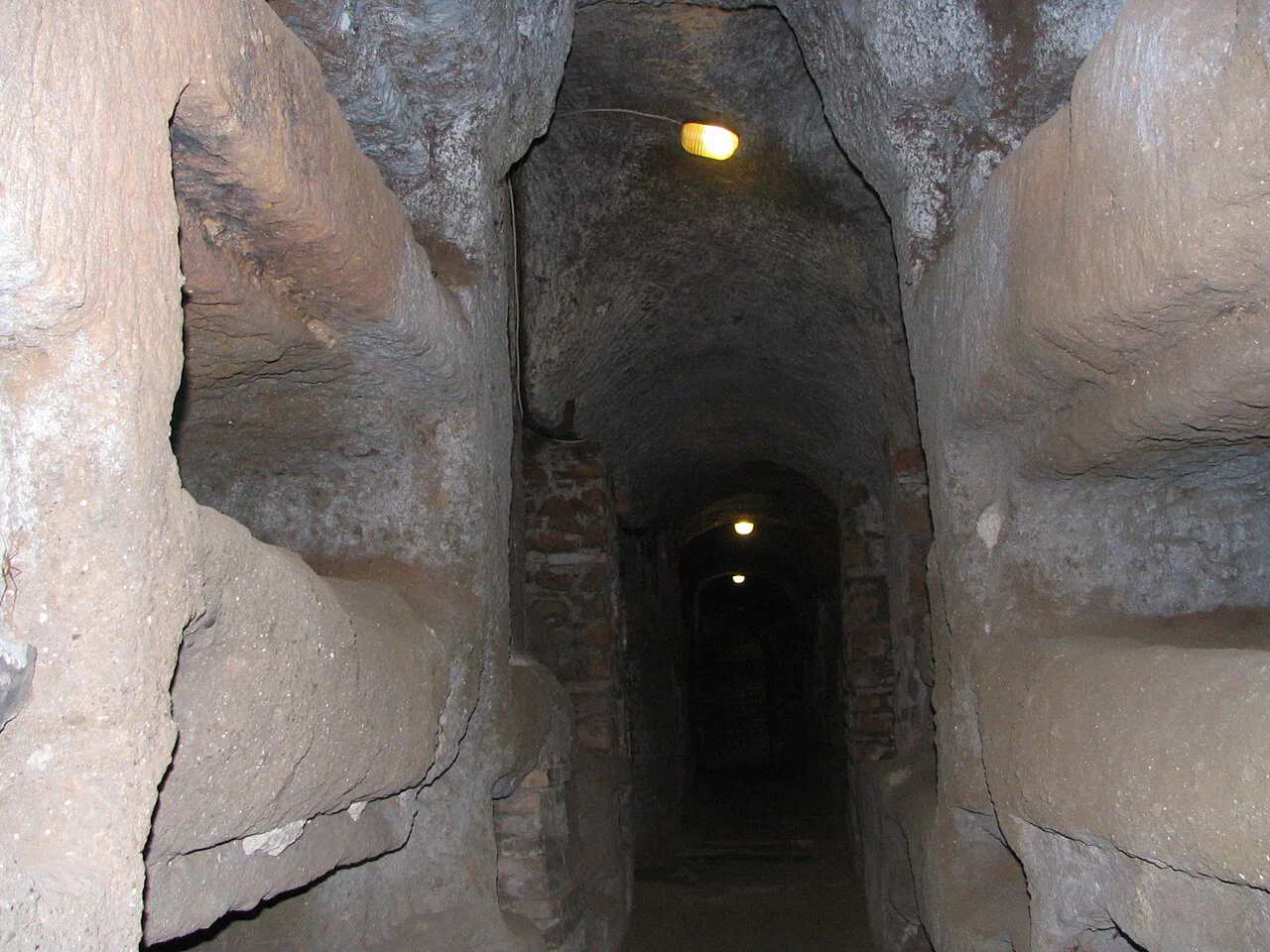
Catacombe di San Callisto
Content & sources
User GerardM on nl.wikipedia · CC BY-SA 3.0
Rome · 1 km
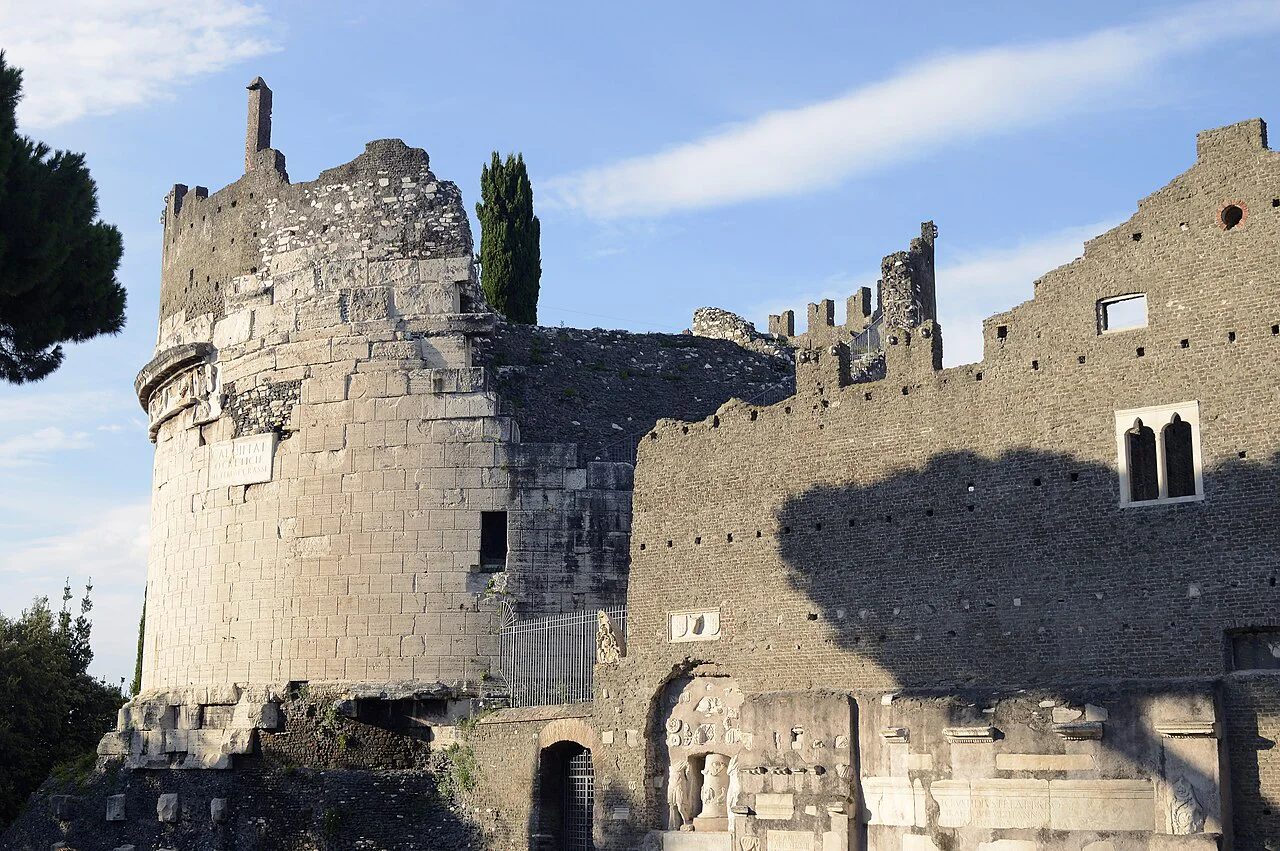
Mausoleo di Cecilia Metella
Content & sources
Photo: Livioandronico2013 · CC BY-SA 4.0
Rome · 3 km
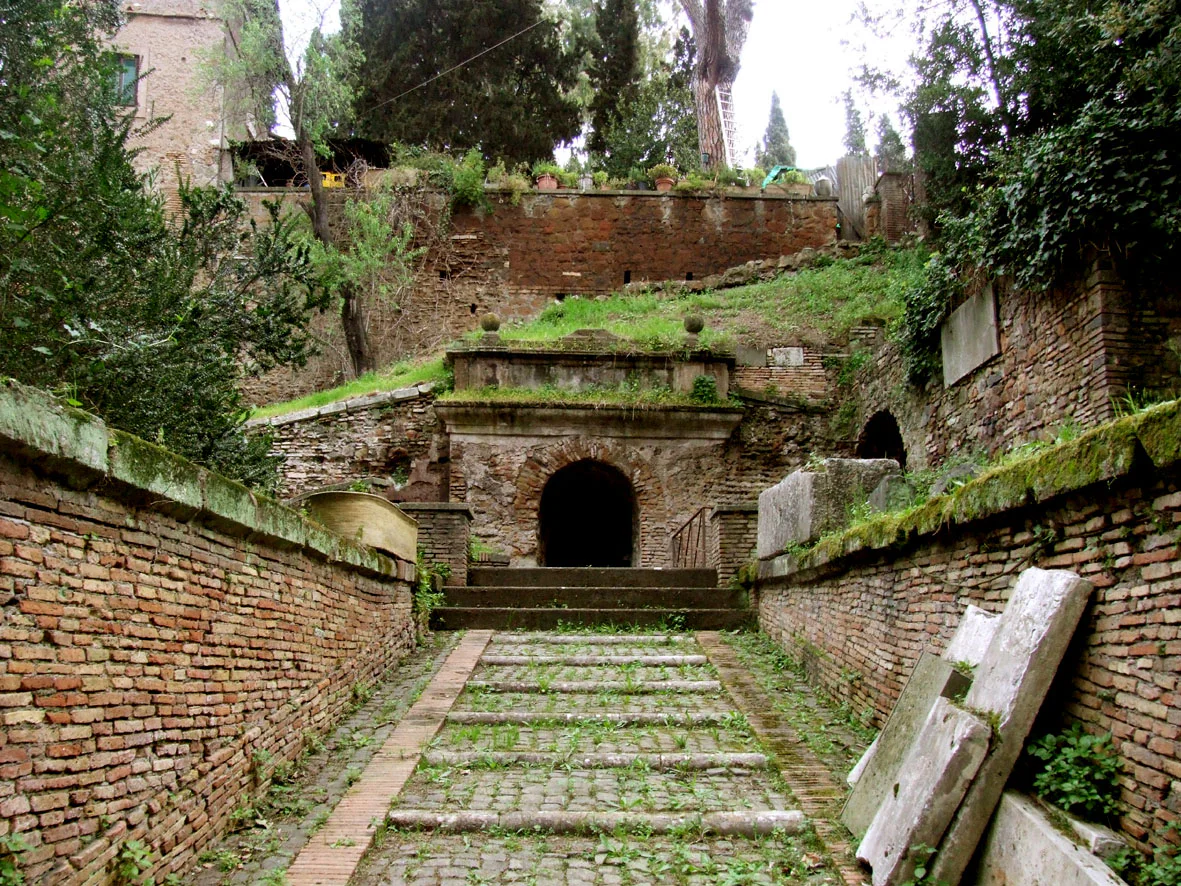
Sepolcro degli Scipioni
Content & sources
Photo: Pippo-b · CC BY-SA 3.0