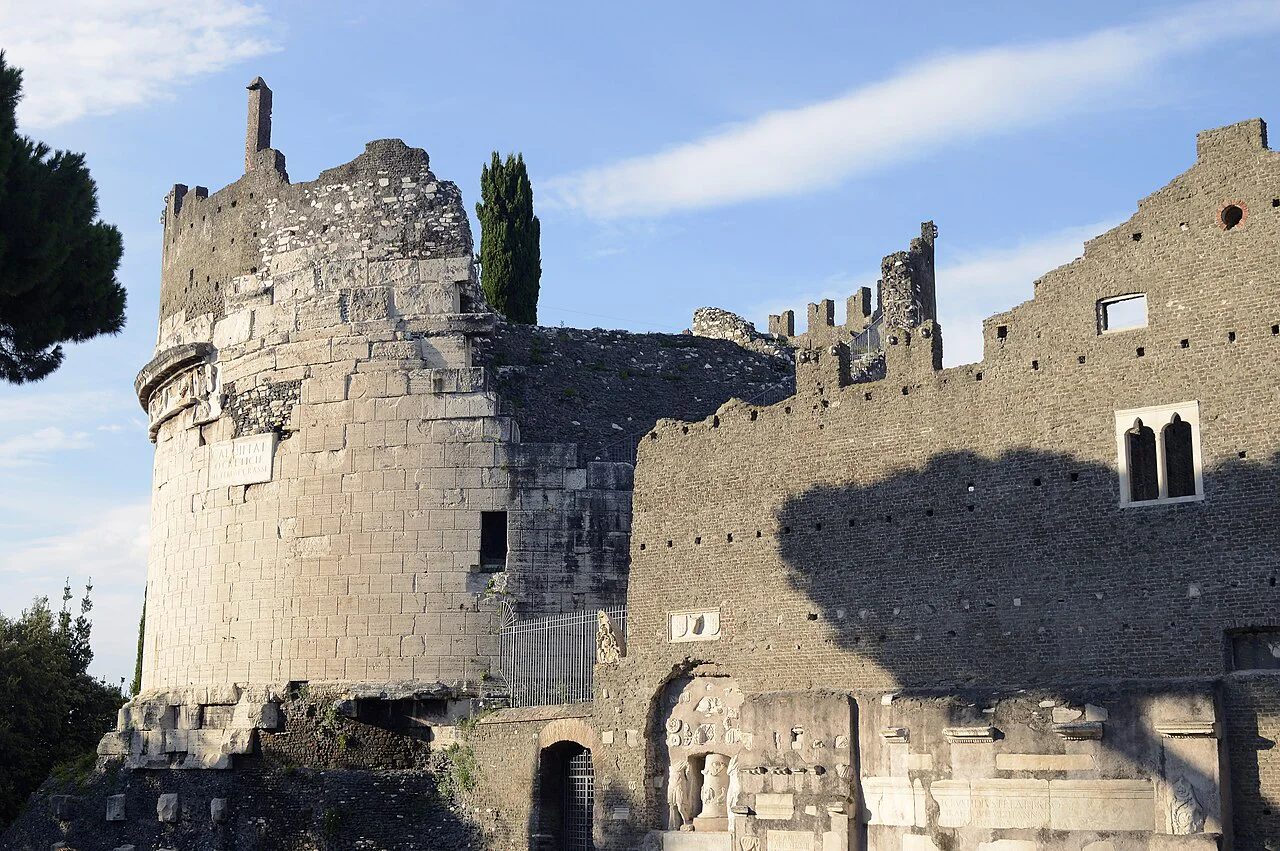
Stanza · Audio guide
Mausoleo di Cecilia Metella Audio Guide
A place to remember. A story to take with you.
The Tomb of Caecilia Metella is a mausoleum located just outside Rome at the three mile marker of the Via Appia. It was built during the 1st century BC to honor Caecilia Metella, the daughter of a consul and…
Download Stanza, then search for “Mausoleo di Cecilia Metella”.
About the tour
One guide. Your kind of visit.
The Tomb of Caecilia Metella is a mausoleum located just outside Rome at the three mile marker of the Via Appia. It was built during the 1st century BC to honor Caecilia Metella, the daughter of a consul and wife of a Roman official.
Ready when you are.
- 01Get the free Stanza app.
iOS & Android
- 02Find your guide.
“Mausoleo di Cecilia Metella”
- 03Download before you go.
Works offline
Audio guide / 8 narrated stops
Inside the guide
Get to know a few of the stories before you go. Open a stop to read more.
01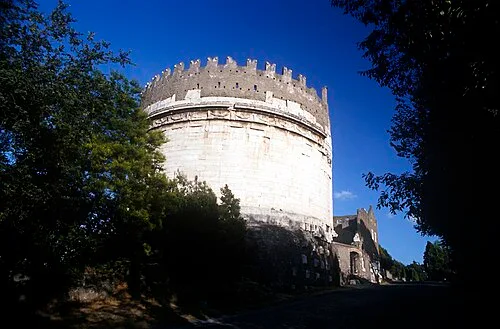 Via Appia Approach and Travertine Drum
The Tomb of Caecilia Metella on the Via Appia
Welcome to the Tomb of Caecilia Metella, on the Appian Way about three miles from the heart of Rome. This great cylinder of travertine is one of the best preserved monuments on the whole road. It sits on a square podium of concrete about eight metres tall, with the round drum rising above it. In all, the monument rises nearly twenty-two metres. The drum measures twenty-nine and a half metres across, which for the builders was exactly one hundred Roman feet. They laid the first stones in the late first century BC, most likely between thirty and ten BC, as the Republic was turning into an Empire. Originally the top was a cone of heaped earth, the shape Romans favoured for tombs like this. That mound is long gone. In its place you can see jagged battlements, put there many centuries later when the tomb became a fortress. That story comes further along.
Photo: Falk2 · CC BY-SA 4.0
02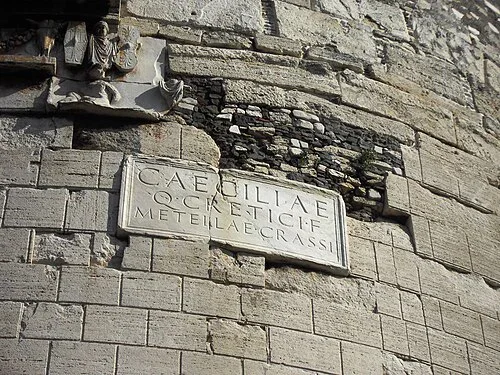 The Marble Dedication Inscription
The Dedication Inscription (CIL VI, 1274)
Set into the drum is a marble plaque with a short Latin dedication: Caeciliae, Q. Cretici F., Metellae Crassi. Read out, it means To Caecilia Metella, daughter of Quintus Creticus, wife of Crassus. Every word on it is a claim to rank. Her father, Quintus Caecilius Metellus Creticus, was consul in 69 BC and won his surname by conquering Crete. Her husband was Marcus Licinius Crassus, son of the famous triumvir; he served under Julius Caesar. The tomb was probably paid for by her son, who bore the same name as his father. Around the inscription, carved war scenes once ran alongside. The Roman sources are blunt about the purpose: the monument celebrated the family's importance far more than the woman buried inside. A private grave became a broadcast of aristocratic power, placed on the busiest road into Rome.
user:Lalupa · Public domain
03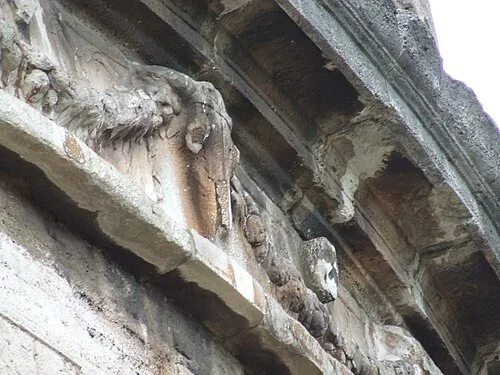 The Bucrania Frieze and Capo di Bove
High on the drum runs a marble frieze of ox skulls and garlands, carved in deep relief. The bull heads echo the animals of Roman sacrifice, a familiar motif on funerary altars and votive offerings. Look closely at the carving and different kinds of skull appear, some still fleshed and covered in skin, and some bare and skeletal. The fashion for the bare skull took hold around thirty BC, so the mix of styles here helps date the monument. The frieze was so striking that it named the whole neighbourhood. The area became known as Capo di Bove, head of the ox. A ninth-century document already calls the monument by a nickname that means much the same: the place of the ox heads.
Listen in the appPhoto: Gianfranco · CC BY-SA 4.0
04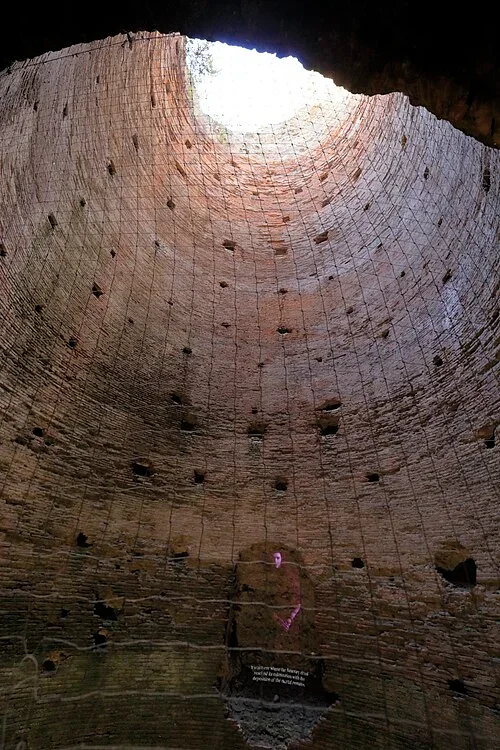 The Interior Burial Chamber
Inside the Burial Chamber (Cella)
Inside, the tomb opens into a tall circular shaft of brick, rising through the full height of podium and drum. The chamber tapers as it climbs, from about six and a half metres across at the floor to under six at the top. At the very top an open oculus lets in daylight, so the chamber is lit from above like the Pantheon. All over the walls are small square cut-outs, more than a hundred and forty of them in a dozen rows. They are putlog holes, where the beams of the builders' scaffolding once rested. No ancient staircase survives inside. A marble sarcophagus now in Palazzo Farnese was long said to have been found in this chamber, holding Caecilia herself. A recent study dates it instead to around AD 180 to 190, nearly two centuries after her death. In her own day, Romans cremated their dead and used urns. Even in 1697, the Farnese records listed it without any provenance. Many historians think it came from somewhere near the tomb, not from within.
Listen in the appPhoto: Falk2 · CC BY-SA 4.0
05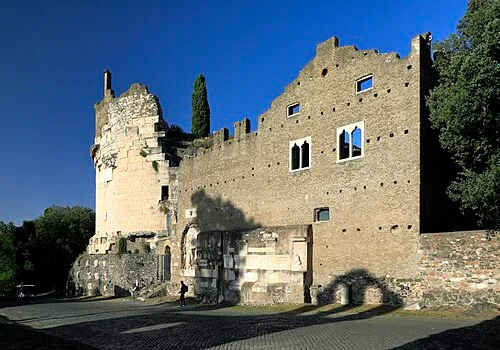 Castrum Caetani Fortress Courtyard
The Caetani Castle (Castrum Caetani)
The tomb did not stay a monument for long. Between 1302 and 1303 the Caetani family, backed by Pope Boniface VIII, bought the whole Capo di Bove estate and built a fortified settlement here, replacing an older building from the eleventh century. The complex had stables, houses, warehouses, a baronial palace and a church. They even crowned the ancient drum with battlements, turning Caecilia's tomb into a defensive tower of their fortress. The point of it all was the road. The Caetani used the fort to control traffic on the Via Appia and squeeze heavy tolls from the merchants and pilgrims travelling to Rome from the south. The two structures sit side by side with a telling contrast in their walls. The Roman drum is concrete up to about seven metres thick. The castle beside it is a thin skin of tufa.
Listen in the appPhoto: Falk2 · CC BY-SA 4.0
06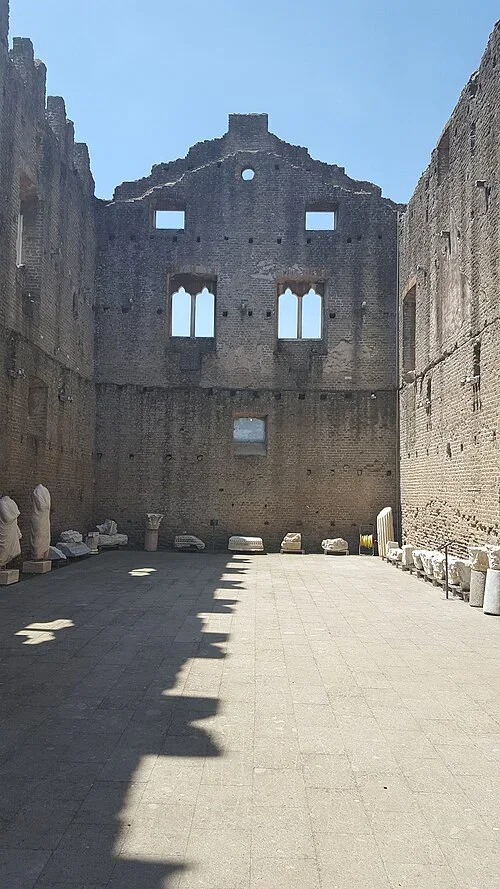 Castrum Caetani Fortress Courtyard
The Castle Courtyard and Baronial Palace
This courtyard belonged to the palace of the Caetani. Sculptural fragments and carved stones now line its walls in the open air. After the Caetani, the castle passed in the fourteenth century to the Savelli, and then to the Orsini, who held it until 1435, when it became property of the Roman Senate. Other great Roman families occupied it in turn, down to the Torlonia, and the monument was reportedly abandoned in 1485. What kept the ruins standing was each other. Stone-robbers attacked the complex for centuries, but the tomb and the castle shielded one another. In the Renaissance the buildings survived because the fortress was still useful. In the Romantic age the tomb's melancholy charm saved the castle in return. Lord Byron came here and gave the tomb its most famous tribute, writing about Caecilia in stanzas of the fourth canto of Childe Harold's Pilgrimage, and lamenting how little the world knew of her.
Listen in the appMumblerJamie · CC BY-SA 2.0
07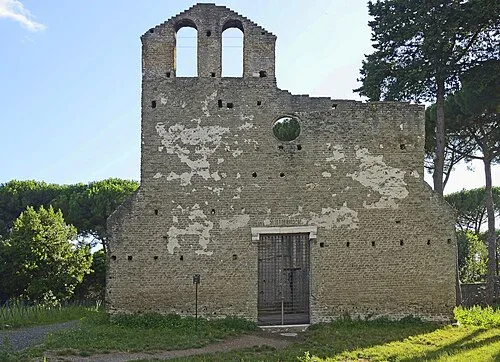 San Nicola a Capo di Bove Ruins
The Church of San Nicola
Within the fortress enclosure stands the shell of a church dedicated to San Nicola di Bari. When the Caetani laid out their fortified settlement, they included a small borgo, and this ample church served it. The building was Gothic, with pointed windows and a tall facade. Today only the masonry walls remain, carefully restored, with the roof entirely gone. The Gothic windows stand open to the sky, and the sun falls straight into the nave. It is a strange pairing: a Christian church raised inside a fortress built around a pagan tomb, the two monuments sharing the same enclosure for seven centuries.
Listen in the appPhoto: Livioandronico2013 · CC BY-SA 4.0
08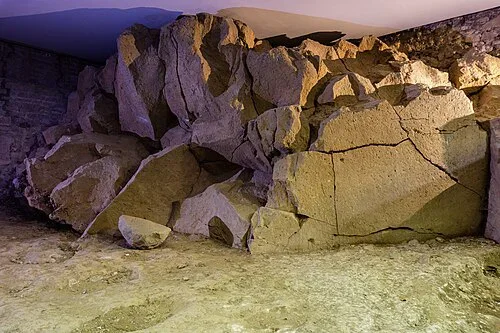 Volcanic Base and Geological Foundation
The Volcanic Lava Foundation
The last piece of the story is underfoot. The tomb's foundation rests partly on tuff and partly on lava, from a flow that ran down from the Alban Hills and covered this ground some 260,000 years ago. The Romans did not merely build on that lava. They quarried it from beneath the monument and ground it into their mortar, using it in place of sand to bind the concrete of the drum above. So the same volcanic stone carries the building and holds it together.
Listen in the appPhoto: Sara Fioravanti · CC BY-SA 4.0
Mausoleo di Cecilia Metella
Frequently asked questions
How much does the guide cost?
Free app download. Listed guide price: $0.99. Guide price shown in the app. Audio guide only. Venue admission is separate.
Can I listen without internet?
Yes. Download the guide’s audio, images, and maps in the app before your visit. Your downloaded content is then available offline.
Can I listen in my language?
This audio guide is available in 15 languages, including English.
Do I need to follow a schedule?
No. This is a self-guided experience. Choose your stops, pause whenever you like, and return to a story at your own pace.
At your own pace
Explore Mausoleo di Cecilia Metella.
Download Stanza, then search for “Mausoleo di Cecilia Metella”.
Free app download · Guide price shown in the app
Keep exploring
Nearby audio guides
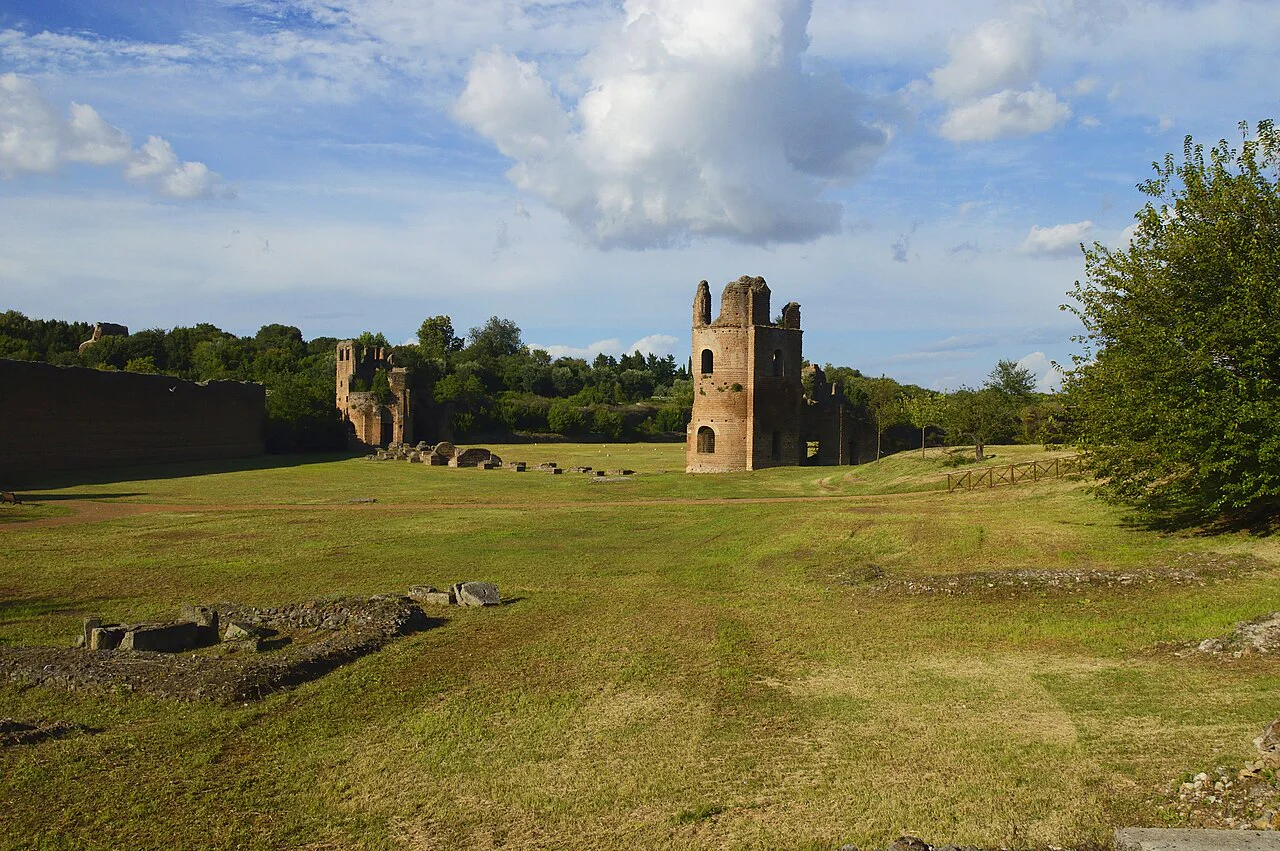
Rome · 1 km
Circo di Massenzio
Content & sources
Photo: Livioandronico2013 · CC BY-SA 4.0
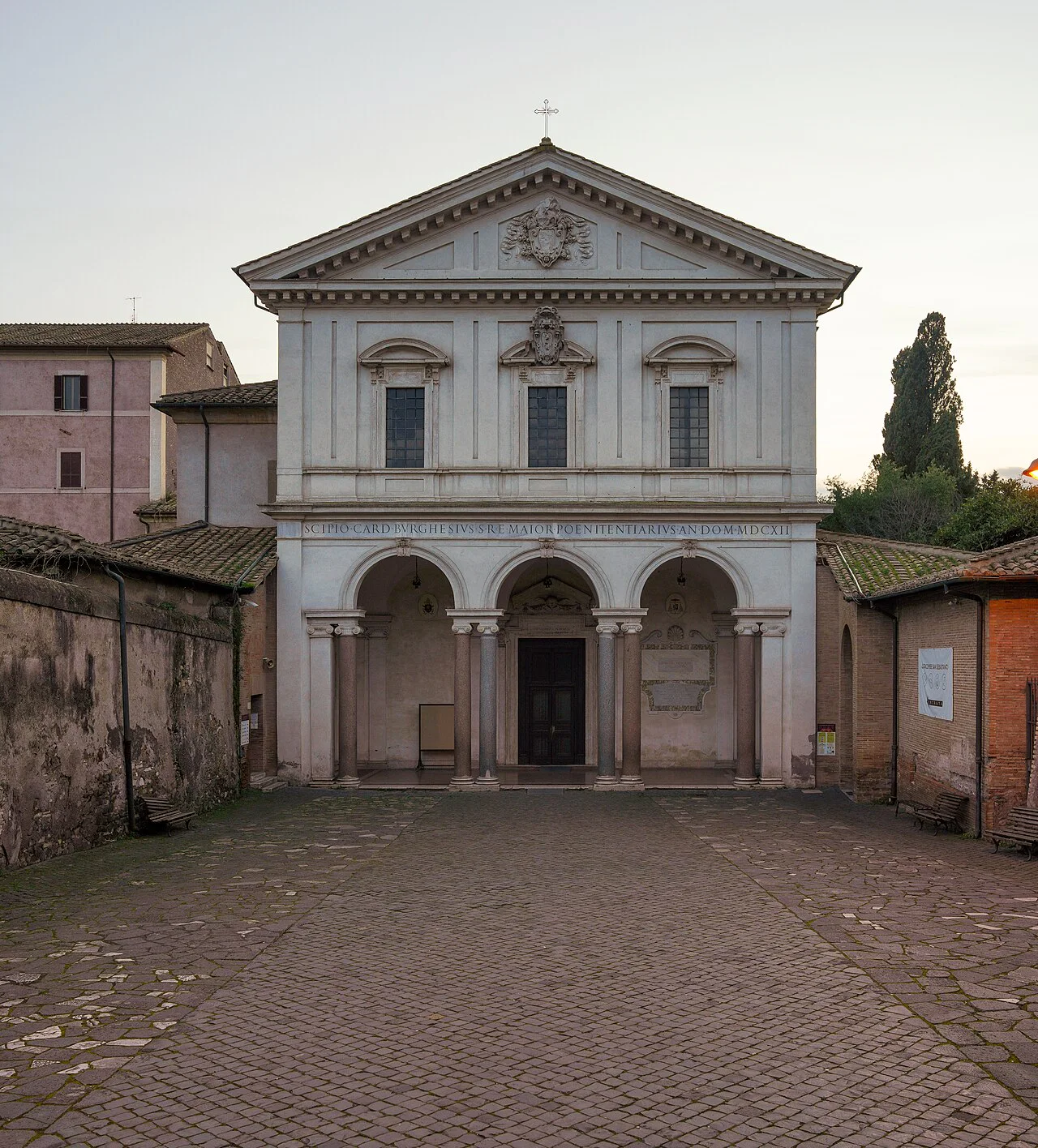
Rome · 1 km
Basilica di San Sebastiano fuori le mura
Content & sources
Photo: NikonZ7II · CC BY-SA 4.0
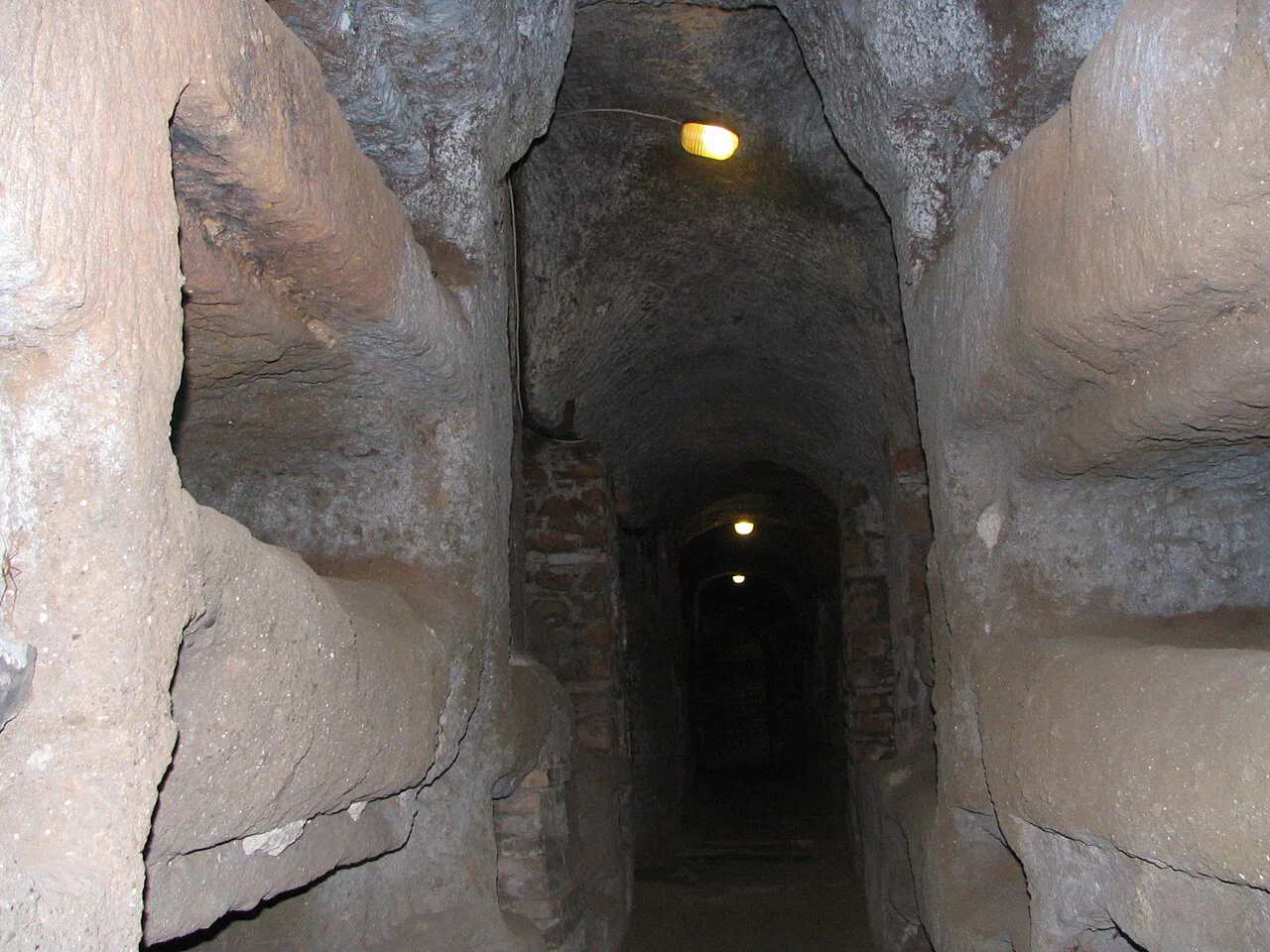
Rome · 1 km
Catacombe di San Callisto
Content & sources
User GerardM on nl.wikipedia · CC BY-SA 3.0
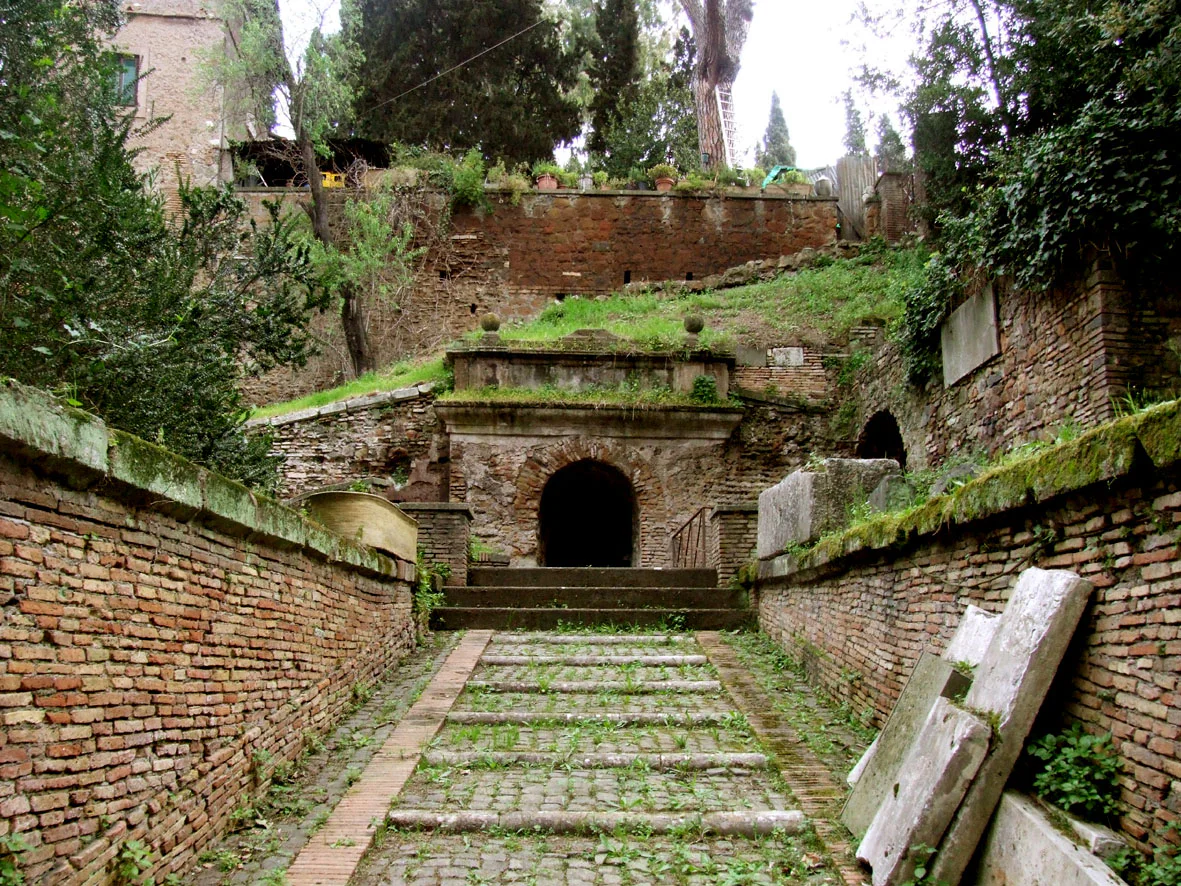
Rome · 3 km
Sepolcro degli Scipioni
Content & sources
Photo: Pippo-b · CC BY-SA 3.0