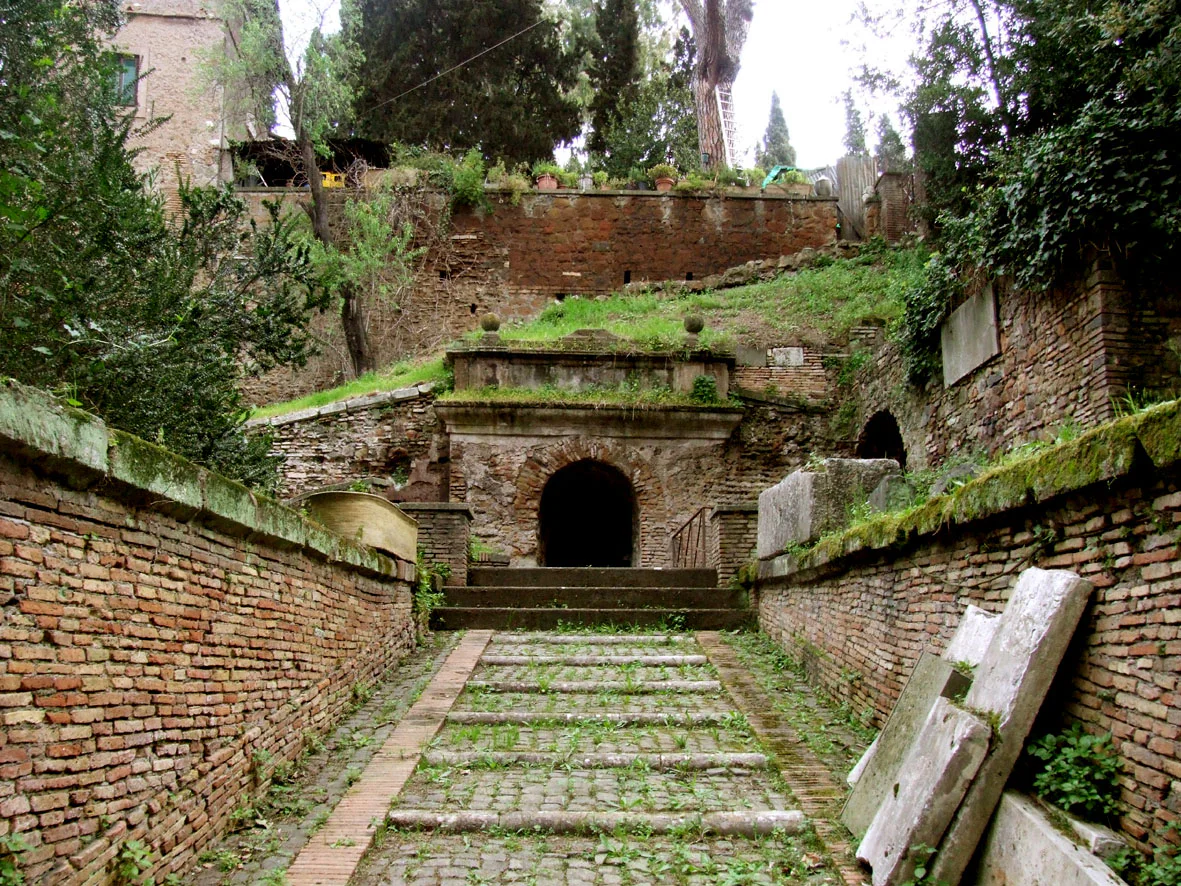
Stanza · Audio guide
Sepolcro degli Scipioni Audio Guide
A place to remember. A story to take with you.
The Tomb of the Scipios was the common tomb of the patrician Scipio family during the Roman Republic. It served as a place for interments between the early 3rd century BC and the early 1st century AD.
Download Stanza, then search for “Sepolcro degli Scipioni”.
About the tour
One guide. Your kind of visit.
The Tomb of the Scipios was the common tomb of the patrician Scipio family during the Roman Republic. It served as a place for interments between the early 3rd century BC and the early 1st century AD.
Ready when you are.
- 01Get the free Stanza app.
iOS & Android
- 02Find your guide.
“Sepolcro degli Scipioni”
- 03Download before you go.
Works offline
Audio guide / 9 narrated stops
Inside the guide
Get to know a few of the stories before you go. Open a stop to read more.
01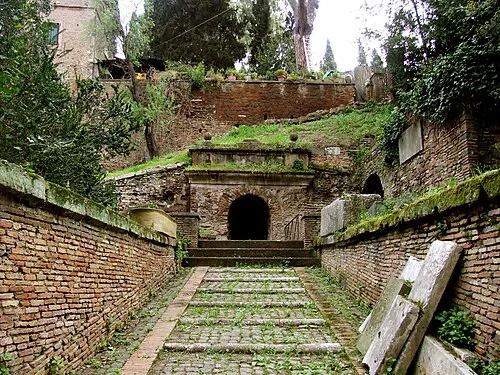 Entrance and the Monumental Facade
Entrance to the Tomb of the Scipios
Welcome to the Tomb of the Scipios, the common burial place of the Cornelii Scipiones, one of the great patrician families of the Roman Republic. The family buried its dead here for generations, from the early third century BC into the first. The tomb was probably founded by the head of the family, Lucius Cornelius Scipio Barbatus, who was consul in 298 BC, soon after the Via Appia opened along this route in 312 BC. He was the earliest known occupant. The arched opening in the hillside is a later entry, not the ancient one. The tomb was actually found twice. Early in the seventeenth century workmen broke into it in a vineyard, and the owner quietly sealed it up again, so its location was lost once more. In 1780 the brothers who then owned the vineyard, the Sassi, broke into it a second time while remodelling their wine cellar, with no idea it was there. They opened it to the leading scholars of the day and handed what they found to the Vatican under Pope Pius VI.
Photo: Pippo-b · CC BY-SA 3.0
02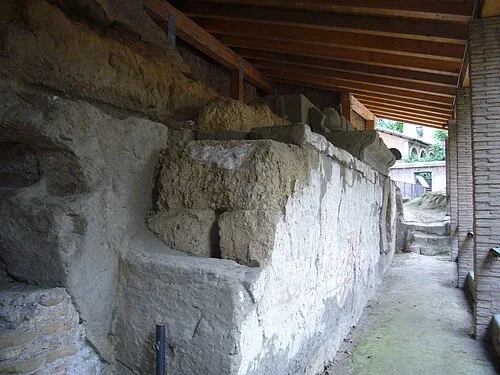 Entrance and the Monumental Facade
The Monumental Facade
The great stone front of the tomb dates to about the middle of the second century BC, and its decoration is credited to Scipio Aemilianus. Only the right-hand end survives, but it shows the scale of the original. A high podium carried three arches of Aniene tuff. The central arch led into the underground tomb, the right-hand one into a new burial room, and the third led nowhere at all; it was pure display. Above rose semicolumns and three niches. According to Livy, these held statues of Scipio Africanus, his brother Asiaticus, and the poet Ennius. At that time the tomb became a kind of family museum, advertising the deeds of its dead to anyone passing on the road. Ennius is worth remembering here. He was the one person buried in this tomb from outside the family, an honoured guest among the Scipios. Cicero says his statue stood inside the tomb, Livy puts it on the facade; the sources differ.
Photo: Lalupa · CC BY-SA 3.0
03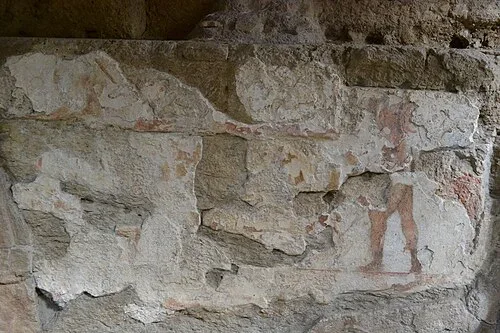 Entrance and the Monumental Facade
Fresco Remains on the Facade
The stone podium of the facade was not left bare. It was covered in frescoes from end to end, and only small patches of the paint survive. Those patches tell a layered story. The two oldest layers date from about the middle of the second century BC, and they carried historical scenes; among the traces, figures of soldiers can still be made out. So before anything else, this wall was a painted record of the family's wars and victories. The latest layer is very different. In the first century AD, someone covered the old scenes with a simple red decoration of stylized waves. The family history faded into abstract ornament.
Listen in the appPhoto: Torquatus · CC BY-SA 4.0
04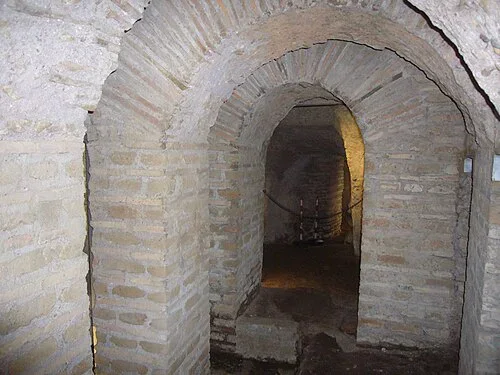 The Rock-Cut Hypogeum Grid
Inside the Rock-Cut Hypogeum
The heart of the tomb lies underground, dug into a ledge of tuff, the soft volcanic stone of this part of Rome. The excavators left four large pillars of rock standing to hold up the ceiling, and they were repaired during modern excavation to keep the chambers from collapsing. Four long galleries run along the sides, and two central galleries cross each other at right angles, giving the whole plan the look of a grid. Burial here took two forms. Some sarcophagi were monolithic, carved each from a single block of tuff. More common were arched recesses sunk into the walls, where the dead were laid and the opening sealed with an inscribed slab, its letters painted red. Those slabs are now in the Vatican. The scholar Coarelli reckons the tomb filled up at about thirty burial places, roughly the number of Scipios living between the third century and the middle of the second BC.
Listen in the appPhoto: Lalupa · CC BY-SA 3.0
05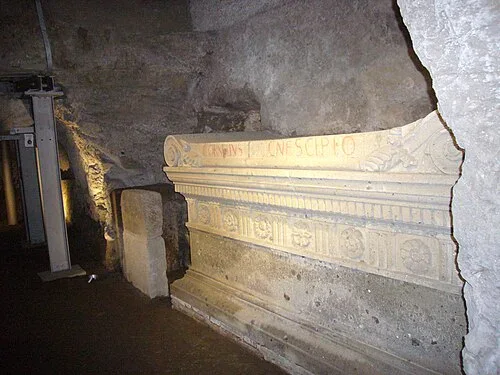 The Rock-Cut Hypogeum Grid
The Sarcophagus of Gnaeus Cornelius Scipio
This sarcophagus, carved from Aniene tuff and set in the tomb's later wing, belonged to a Gnaeus Cornelius Scipio of the family. It leads to the strangest fact about this place. The most famous Scipio of all, Africanus, the general who defeated Hannibal, was not buried here. According to Livy and Seneca, he and the other great names of the family, Asiaticus and Hispanicus, were buried at their villa at Liternum, near Naples. The ancients themselves were unsure. Monuments to Africanus stood in both places, here and at the villa, so the question of where his body actually lay was already open in antiquity. What this tomb holds instead are the earlier and lesser-known generations of the family, the ones who built its name before the great victory. Fame and burial, it turns out, did not go together in the Scipio family.
Listen in the appPhoto: Lalupa · CC BY-SA 3.0
06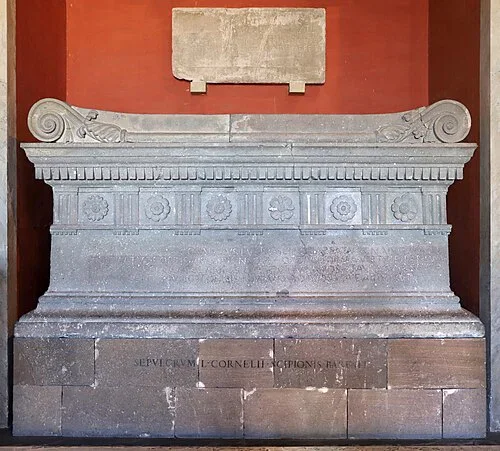 The Sarcophagus and Inscription of Scipio Barbatus
The Sarcophagus of Scipio Barbatus
The founder of the tomb has the place of honour, and his coffin is the only one to have survived intact. It held Lucius Cornelius Scipio Barbatus, and it dates to about 280 BC. The original stands in the Vatican Museums, where it has been on display since 1912, reunited with its inscription. The sarcophagus is conceived as an altar, carved in peperino stone and a little over two metres long. Its chest tapers downward onto base mouldings, and the upper band carries a Doric frieze of dentils and triglyphs, each metope filled with a rosette, no two alike. The lid ends in two cushions, whose side profile echoes the volutes of the Ionic order. It is the only sarcophagus here with elaborate architectural decoration, an early sign of the Scipios' taste for Greek design.
Listen in the appPhoto: Sailko · CC BY 3.0
07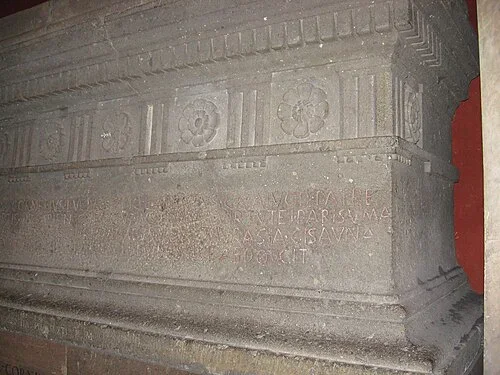 The Sarcophagus and Inscription of Scipio Barbatus
The Epitaph of Barbatus and the Scipionum Elogia
The front of Barbatus's sarcophagus carries his name on the lid and his epitaph below, and the letters were originally painted red. These epitaphs became famous in their own right, as the elogia Scipionum, the collection of verse inscriptions celebrating the victories and virtues of the family. They remain a direct record of early Latin and of aristocratic pride. One example shows how briefly a life could be told. The surviving fragments of the epitaph of a later Lucius Cornelius Scipio, son of Scipio Asiaticus, record that he was quaestor and military tribune, that he died aged thirty-three, and that his father conquered King Antiochus. A career, an early death, and a borrowed glory, in three lines.
Listen in the appPhoto: Bahnmoeller · CC BY-SA 3.0
08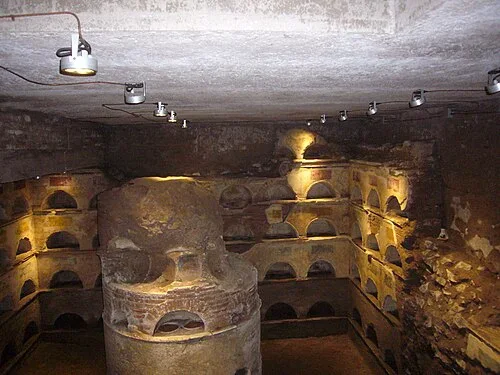 The Columbarium and Overlying Roman House
The Imperial-Era Columbarium
Burial here did not end with the Scipios. In the imperial period, cremation tombs were added by the Cornelii Lentuli, another branch of the Cornelii who apparently inherited the sepulchre after the Scipio line died out. To be buried beside the most celebrated family in Rome was a conspicuous gesture, and scholars read it as a bid for prestige, a claim of descent from the great name. Nearby, excavations in 1927 uncovered a large underground columbarium, a rectangular chamber supported by two circular pillars, of which one survives. Five rows of semicircular niches line the walls and pillars, each holding the urns of the dead after cremation, about four hundred and seventy deceased in all. The niche profiles are edged in stucco, and beneath each one a painted panel in vivid blue, yellow or red, where the names of the dead were written.
Listen in the appPhoto: Lalupa · CC BY-SA 3.0
09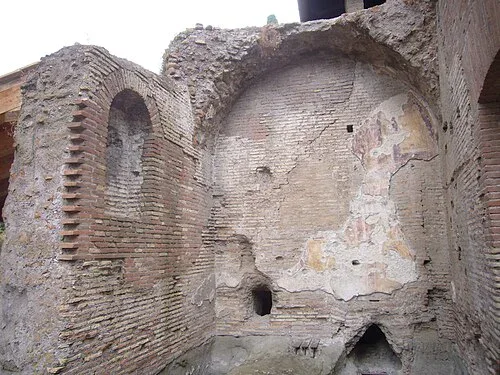 The Columbarium and Overlying Roman House
The Roman House Above the Tomb
These brick ruins are the remains of a Roman house built above the tomb, and they mark the beginning of its long forgetting. After the first century AD, new burials stopped, and within a few hundred years the location of the Scipio tomb was simply lost. Later construction covered the site, and its significance faded from memory. In the Middle Ages, the place was so thoroughly forgotten that a circular lime kiln was cut into its left corner, destroying part of the ancient structure; the great stone was burned to make lime. A small catacomb also lies beside the Roman house. A family that had carved its glory into the hillside for the whole road to see could not keep even its own grave on the map. It took the chance work of vineyard owners, more than a thousand years later, to bring the Scipios back into the light.
Listen in the appPhoto: Lalupa · CC BY-SA 3.0
Sepolcro degli Scipioni
Frequently asked questions
How much does the guide cost?
Free app download. Listed guide price: $0.99. Guide price shown in the app. Audio guide only. Venue admission is separate.
Can I listen without internet?
Yes. Download the guide’s audio, images, and maps in the app before your visit. Your downloaded content is then available offline.
Can I listen in my language?
This audio guide is available in 15 languages, including English.
Do I need to follow a schedule?
No. This is a self-guided experience. Choose your stops, pause whenever you like, and return to a story at your own pace.
At your own pace
Explore Sepolcro degli Scipioni.
Download Stanza, then search for “Sepolcro degli Scipioni”.
Free app download · Guide price shown in the app
Keep exploring
Nearby audio guides
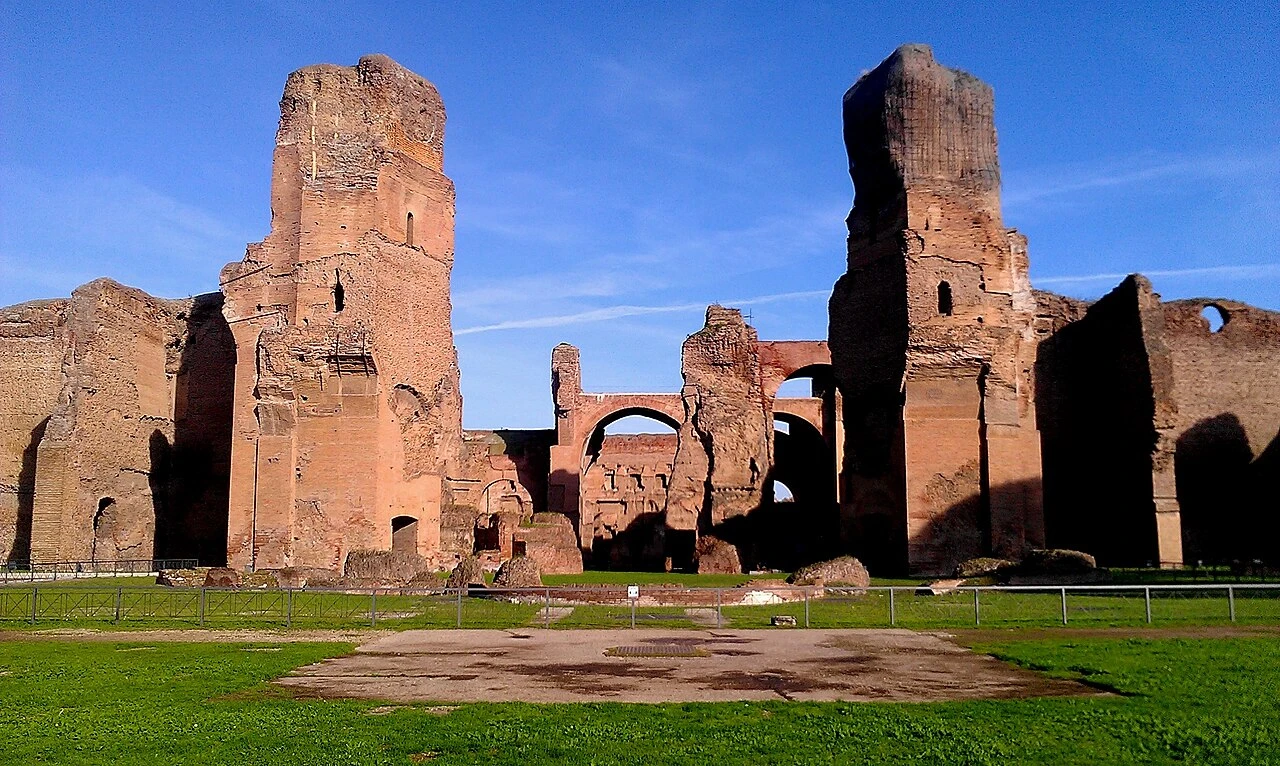
Rome · 1 km
Baths of Caracalla
Content & sources
Ethan Doyle White · CC BY-SA 4.0
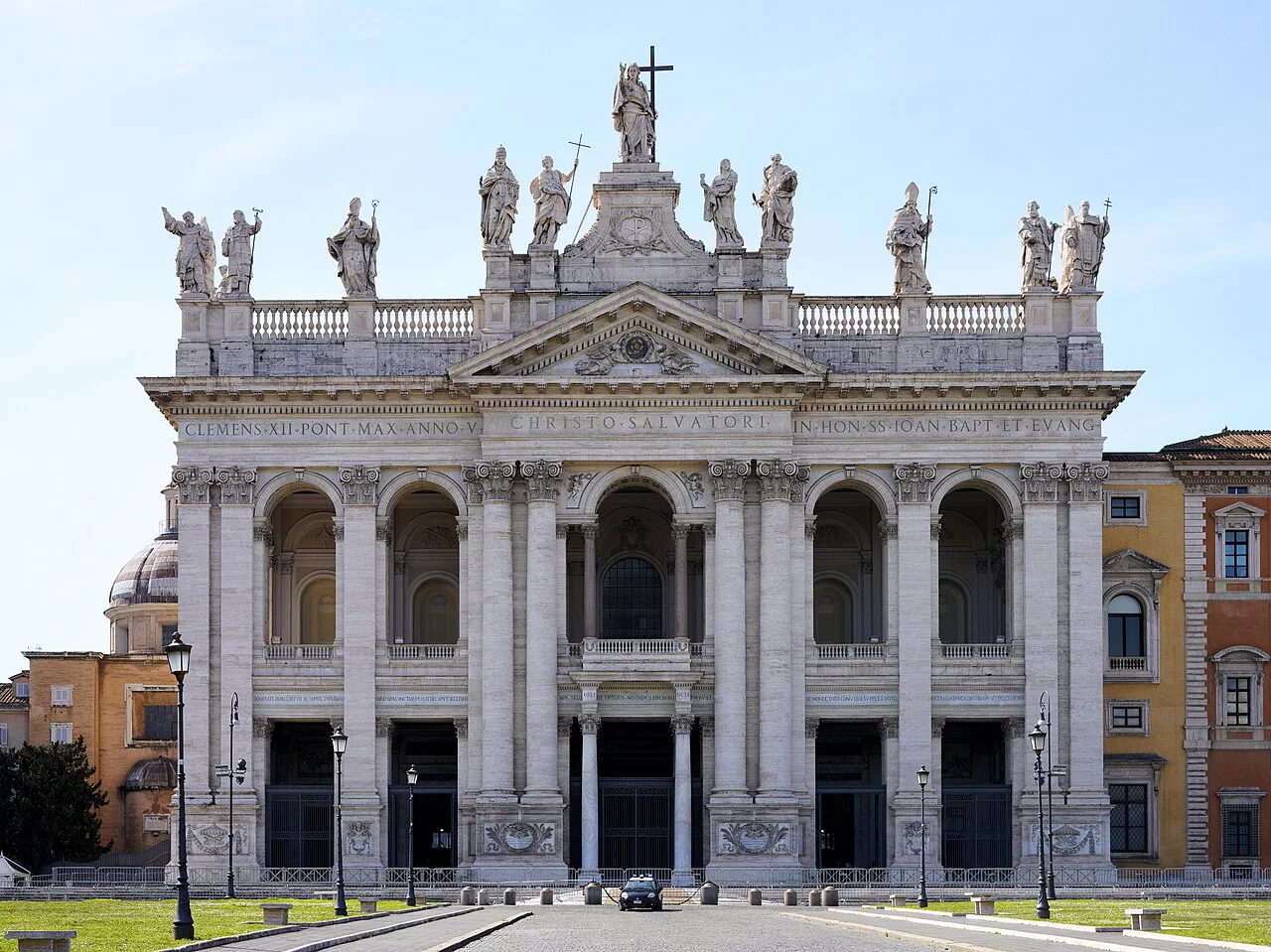
Rome · 1 km
Basilica di San Giovanni in Laterano
Content & sources
Photo: NikonZ7II · CC BY-SA 4.0
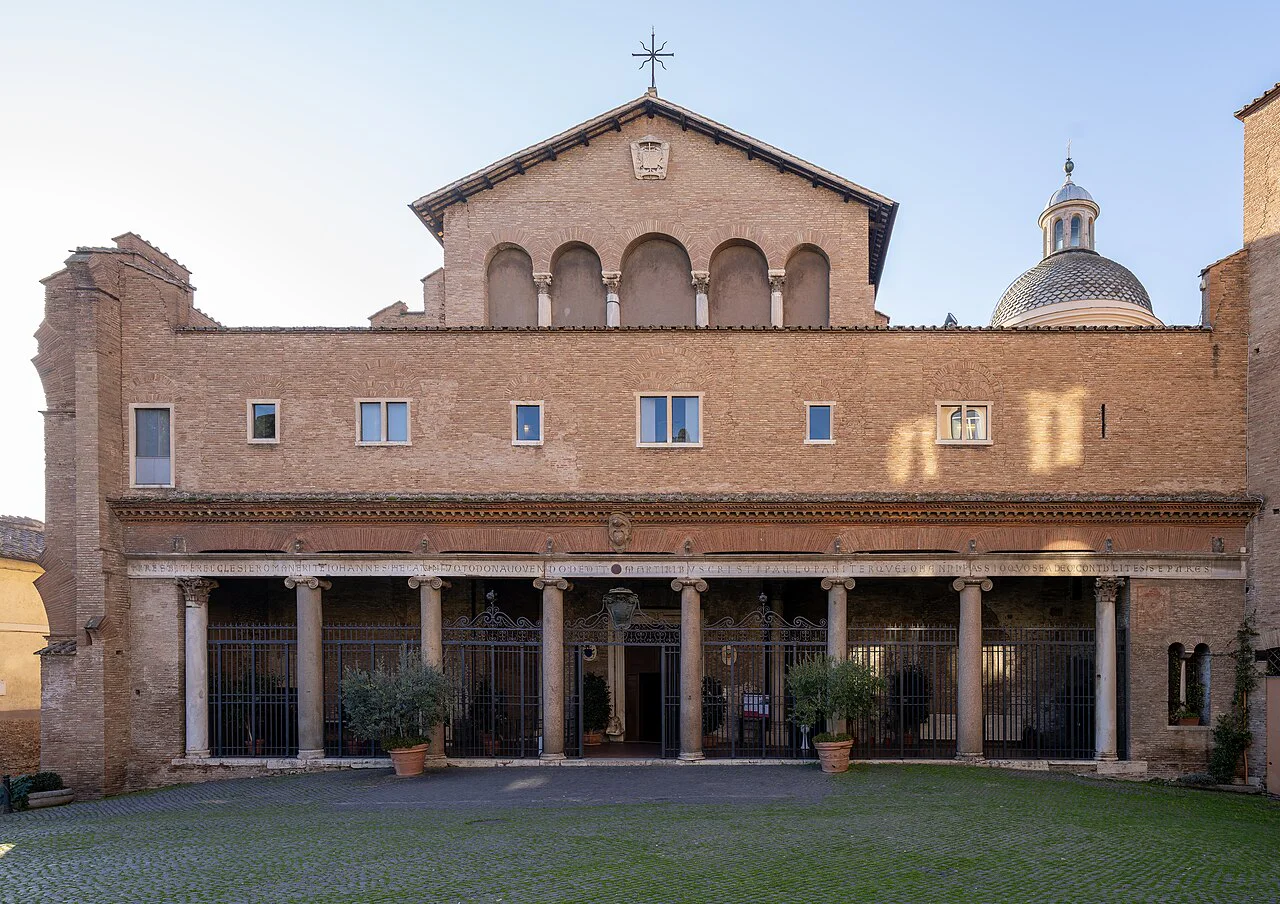
Rome · 1 km
Basilica dei Santi Giovanni e Paolo
Content & sources
Photo: Tyrhénienne · CC BY 4.0
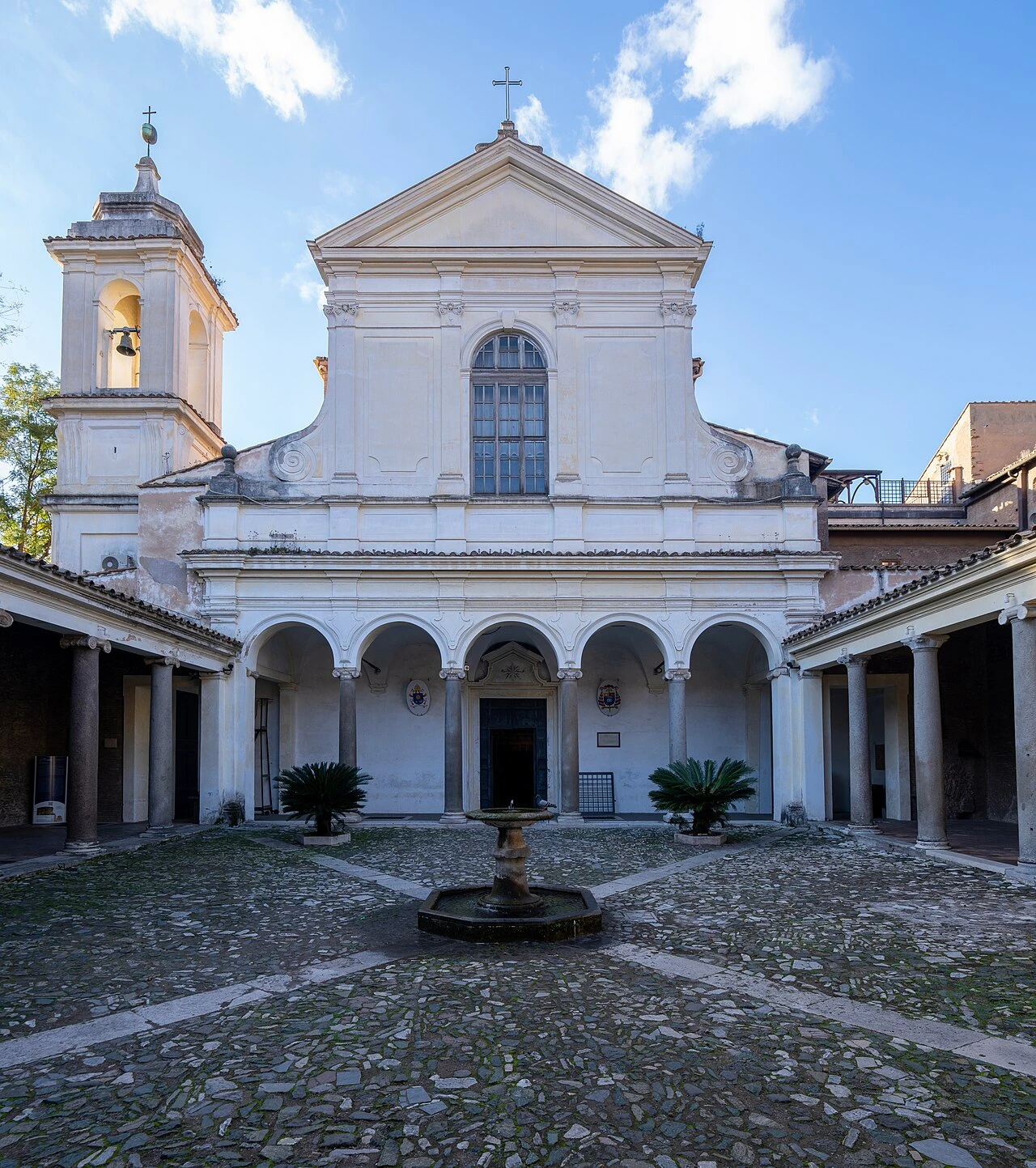
Rome · 2 km
Basilica of San Clemente
Content & sources
Photo: Labicanense · CC BY-SA 4.0