Stanza · Audio guide
Terme di CaracallaAudio guide
A place to remember. A story to take with you.
The Baths of Caracalla were ancient Roman public baths, or thermae, built between AD 212 and 217. Today, they are a vast archaeological site and a significant example of Imperial Roman architecture.
Download Stanza, then search for “Terme di Caracalla”.
About the tour
One guide. Your kind of visit.
The Baths of Caracalla were ancient Roman public baths, or thermae, built between AD 212 and 217. Today, they are a vast archaeological site and a significant example of Imperial Roman architecture.
Ready when you are.
- 01Get the free Stanza app.
iOS & Android
- 02Find your guide.
“Terme di Caracalla”
- 03Download before you go.
Works offline
Audio guide / 13 narrated stops
Inside the guide
Get to know a few of the stories before you go. Open a stop to read more.
01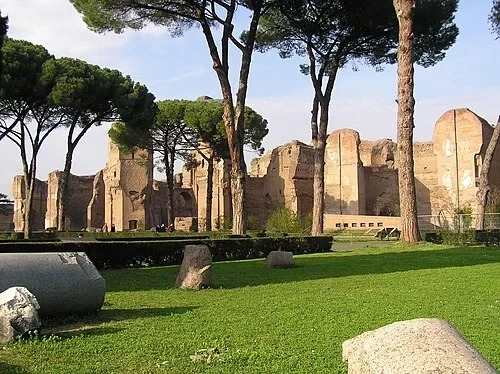 The Grand Arrival and Imperial AmbitionThe Baths of Caracalla
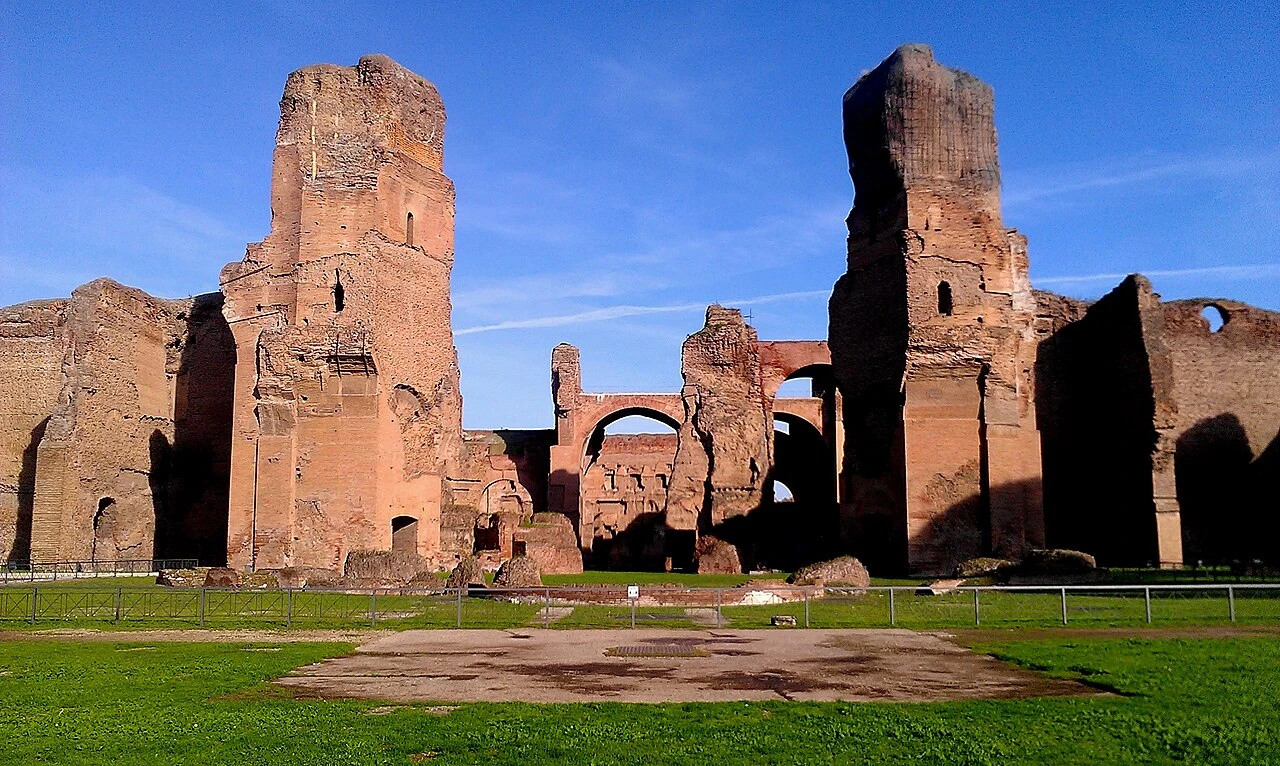
Welcome to one of the most monumental engineering achievements of the Roman Empire. Emperor Caracalla initiated this project around 212 AD, transforming the Roman landscape with a structure of unprecedented scale. To complete the main block in just four to six years, an army of workers had to install more than 2,000 tonnes of material every single day. As you look at the landscape, the sheer volume of brick and concrete is staggering. The massive walls visible in the panorama once reached a height of 44 meters, which is roughly equivalent to a modern 14-story building. This wasn't just a place for hygiene; it was a physical manifestation of imperial power and generosity. The complex served as a social hub for the citizens of Rome, offering a level of architectural grandeur that few other sites could match. While the decorative marble and vibrant statues are mostly gone, the skeleton of the building remains as a record of Roman engineering and the sheer logistical effort required to maintain the lifestyles of the city's inhabitants. This stop sets the stage for a journey through the opulent rooms and hidden secrets that lay within these towering red-brick boundaries.
Photo: Longbow4u · CC BY-SA 3.0
02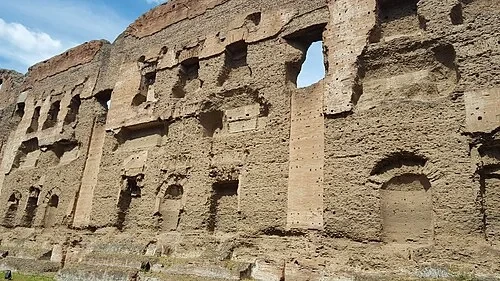 The Natatio: Rome’s Grand Swimming PoolThe Great Swimming Pool
Stepping into the Natatio, ancient bathers encountered a social heart designed for architectural spectacle. This massive open-air pool served as the grand entrance to the interior bathing experience. Notice the high brick facade that still stands today; originally, it was far more than just bare masonry. Those numerous rectangular niches you see carved into the walls were once filled with elaborate statues and decorative marble panels. The pool itself was lined with polished marble that reflected the sky, and massive granite columns stood sentry around the perimeter, creating an atmosphere of overwhelming luxury. Thousands of Romans would gather here daily to swim, exercise, and socialize under the open sky. The interplay of water, sunlight, and polished stone was carefully engineered to impress every visitor. It was a place where the grandeur of the Roman state was made accessible to the public, blending recreation with high art. Today, while the water and marble are long gone, the scale of the facade gives a clear sense of the verticality and ambition that defined this corner of the imperial complex.
MumblerJamie · CC BY-SA 2.0
03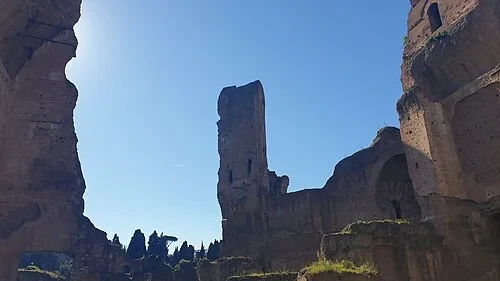 The Frigidarium: The Heart of Social LifeThe Central Cold Room
In the Frigidarium, or central cold room, the architectural genius of the Romans is most evident. This was the largest hall in the complex, a place where citizens from all walks of life met to exchange news and relax. Look at the towering pillars that remain; these once supported three massive groin vaults that spanned the entire space without any internal support. This engineering feat allowed for a wide, open floor plan that felt airy despite the weight of the masonry above. While the walls currently show their rough brick core, they were originally clad in a kaleidoscope of colorful marble from across the empire. Light flooded into the room through massive windows positioned high in the walls, catching the spray from the pools below. The transition from the heat of the other rooms to this cool, grand hall was the highlight of the bathing ritual. The scale of the space was intended to humble the individual while celebrating the collective power of the Roman people. Today, these pillars stand as silent markers of a room that once echoed with the voices of thousands of daily visitors.
Listen in the appMumblerJamie · CC BY-SA 2.0
04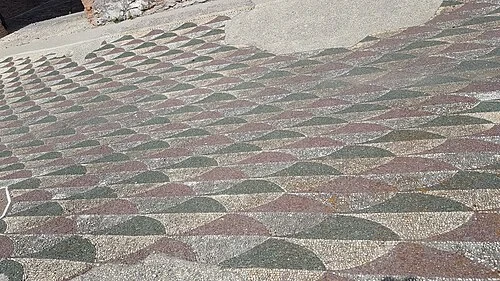 The Palaestrae: Athletics and MosaicsThe Geometric Floor Mosaics
Look down at the floor to see the remarkable preservation of Roman craftsmanship. The intricate 'fan' or 'fish-scale' patterns visible here are formed from thousands of tiny individual stone pieces known as tesserae. This specific area was part of the Palestra, an open-air gymnasium where Roman men gathered for wrestling, weightlifting, and various gymnastics. Because of the heavy physical activity taking place here, the floors needed to be exceptionally tough. The fact that these mosaics have survived nearly 1,800 years while exposed to rain, sun, and frost is evidence of the skill of the ancient artisans who laid them. Each curve of the pattern was meticulously planned to create a sense of movement across the wide surface. Beyond their utility, these floors added another layer of aesthetic beauty to the complex, ensuring that even the most functional spaces were decorated with high-quality art. As you follow the repeating geometric shapes, you are treading on the same surface where ancient athletes once trained for competition and health. These patterns remain as clear today as they were when the baths first opened to the Roman public.
Listen in the appMumblerJamie · CC BY-SA 2.0
05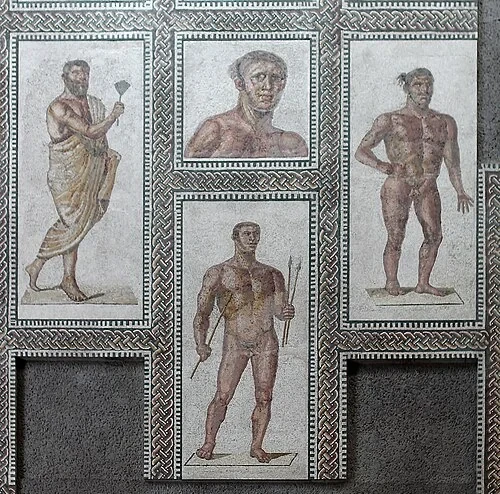 The Palaestrae: Athletics and MosaicsThe Athlete Mosaics
Found originally in the library areas of the baths, these mosaics celebrate the human form and the spirit of competition. The figures show muscular athletes captured in various poses of preparation or triumph, accompanied by a judge wearing a formal toga. These portraits are more than just decoration; they offer a rare window into the tools and rituals of ancient physical culture. For instance, some figures are shown with a strigil—a curved metal tool used for scraping oil and sweat from the skin after a workout. While the originals were moved to the Vatican Museums to ensure their preservation, their presence here highlights how the baths integrated education and physical fitness. The libraries where these mosaics were located provided a space for intellectual pursuit alongside the physical activities of the gymnasiums and pools. By surrounding bathers with images of athletic excellence, the complex promoted a Roman ideal of a healthy mind in a healthy body. The heavy, powerful builds of the men depicted suggest a cultural preference for strength and endurance, reflecting the values of a society built on military and civic discipline.
Listen in the appPhoto: Fabrizio Garrisi · CC BY-SA 4.0
06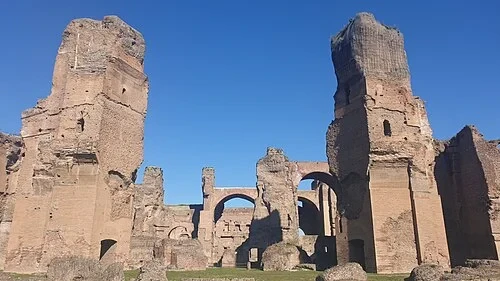 The Caldarium: A Marvel of EngineeringThe Circular Hot Room
At the southern end of the complex lies the Caldarium, the massive circular hot room. This space was designed as the ultimate steam room, topped by a dome nearly as large as that of the Pantheon. Its southern orientation and massive windows were carefully planned to capture the maximum amount of heat from the sun throughout the day. To supplement this natural warmth, the Romans employed a sophisticated hypocaust system. If you look closely at the walls, you can see hollow spaces where hot air from underground furnaces once circulated. This air heated the floors and the walls, creating a humid, intense environment that encouraged deep sweating. Bathers would soak in hot water pools here, completing the cycle that began in the cooler halls. The structural demands of supporting such a large dome while maintaining high temperatures required thick, reinforced masonry. This room was a masterpiece of thermal engineering, demonstrating how the Romans could manipulate the environment to create consistent luxury on a monumental scale. Even in its ruined state, the circular footprint reveals the grand architectural vision required to facilitate this daily ritual for thousands.
Listen in the appMumblerJamie · CC BY-SA 2.0
07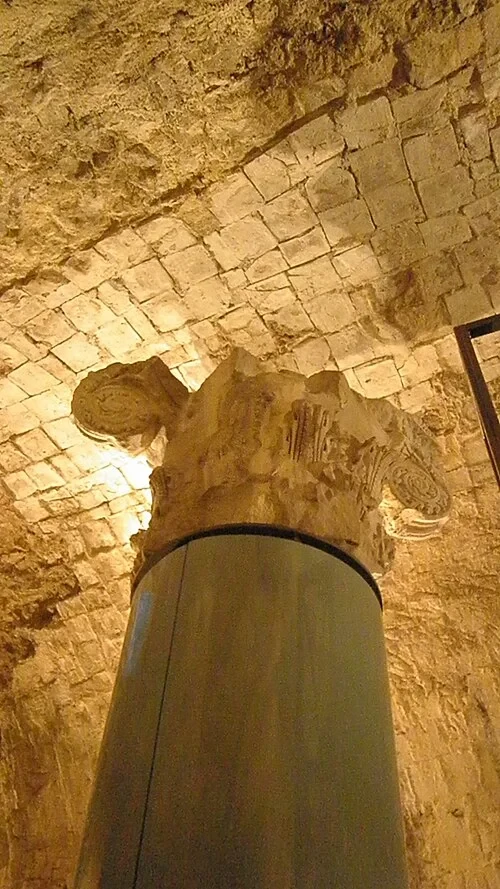 The Service Tunnels: The Hidden EngineThe Hidden Service Tunnels
To understand how the Baths of Caracalla truly functioned, you must look below the surface into the subterranean world. The vaulted service tunnels visible in this image were part of a vast underground network that spanned miles. This was the domain of a hidden army of slaves who worked around the clock to stoke the 50 massive furnaces required to heat the water and rooms above. While the bathers above enjoyed opulent, marble-clad luxury and fresh air, the conditions down here were dark, smoky, and cramped. Slaves transported massive quantities of wood through these corridors to keep the fires burning at a constant intensity. You can still see surviving column fragments and thick masonry that supported the immense weight of the structures overhead. This subterranean infrastructure was the engine of the entire complex, housing everything from water pipes to storage for fuel. The contrast between the two worlds is stark: one was a paradise of public leisure, while the other was a site of grueling, invisible labor that made that luxury possible. These tunnels serve as a reminder of the massive human effort required to sustain the lifestyle of Imperial Rome.
Listen in the appPhoto: Lalupa · CC BY-SA 4.0
08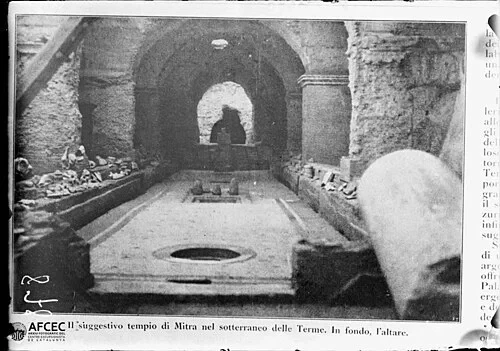 The Mithraeum: Secret Rites UndergroundThe Secret Mithraeum
During excavations of the subterranean levels, researchers discovered this remarkable space: a Mithraeum. It is the largest of its kind found in Rome, tucked away from the public eye in the basement of the bathing complex. The long chamber features benches on either side where followers of the mystery cult of Mithras would sit during their rituals and shared meals. Notice the 'fossa sanguinis,' or ritual pit, which played a central role in their ceremonies. The cult of Mithras was particularly popular among soldiers and bureaucrats, focusing on themes of loyalty and rebirth. It is fascinating to consider that while thousands of citizens were socializing in the pools above, this secret religious community was conducting private rites just a few meters below their feet. The presence of such a significant sanctuary suggests that the baths were more than just a place for swimming; they were a multifaceted center of Roman life where the public and the private, the secular and the sacred, coexisted. The sanctuary was designed to feel like a cave, reflecting the mythology of Mithras, and its somber, torch-lit atmosphere stood in total contrast to the sun-drenched halls above.
Listen in the appJoaquim Morelló · Public domain
09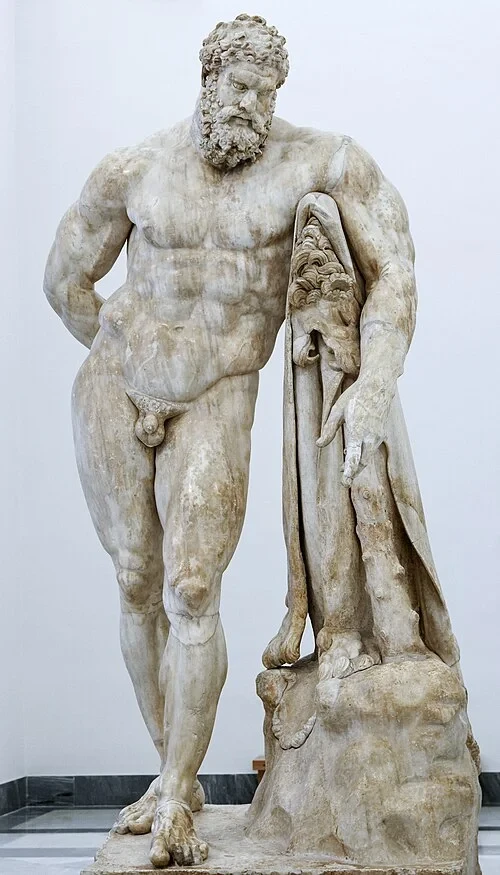 The Farnese Treasures: A Golden LegacyThe Farnese Hercules
This iconic statue, known as the Farnese Hercules, was discovered among the ruins of the baths during 16th-century excavations. Standing nearly ten feet tall, the massive marble figure was originally placed within the complex to inspire the athletes who trained in the nearby gymnasiums. Unlike most depictions of heroes, this one shows a 'tired' Hercules. He leans heavily on his club, which is draped with the skin of the Nemean Lion, his head bowed in exhaustion after completing his final labor. His powerful musculature is rendered with incredible detail, showing both the strength and the fatigue of a demigod. The discovery of such high-quality works transformed the site of the baths into a treasure trove for Renaissance collectors, particularly the powerful Farnese family and various popes. This statue became one of the most famous artworks of antiquity, copied and studied by artists for centuries. Its presence in the baths reminded visitors that even the strongest among them needed rest and recovery—a fitting message for a place dedicated to health and physical well-being. Today, while the original is housed in a museum, it remains synonymous with the grandeur of Caracalla's imperial vision.
Listen in the appGlycon of Athens (copy), Lysippos (original type) · CC BY 2.5
10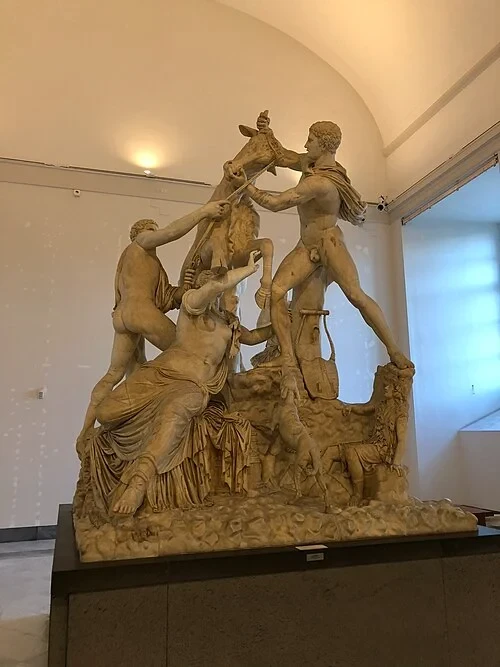 The Farnese Treasures: A Golden LegacyThe Farnese Bull
Recovered from the ruins in 1546 alongside the Hercules, this complex sculptural group is a masterpiece of ancient theatricality. It is the largest single-block marble sculpture known to have survived from the classical world. The scene depicts a dramatic moment from mythology: the sons of Antiope are shown punishing Dirce by tying her to a wild bull. The composition is incredibly dynamic, with figures twisting and straining in every direction around the central animal. This massive work was a centerpiece of the baths' decoration, intended to overwhelm and impress visitors with its technical mastery and narrative intensity. Every detail, from the tensed muscles of the men to the struggling form of Dirce, was carved to be viewed from multiple angles. For the ancient Romans, such sculptures were not just art but a display of wealth and cultural sophistication. The sheer logistics of transporting and installing a piece of this size within the bath complex speak to the unlimited resources of the emperors. It served as a focal point in one of the grand halls, turning a place of daily hygiene into an immersive gallery of imperial power and mythological drama.
Listen in the appPhoto: Akrasia25 · CC BY-SA 4.0
Terme di Caracalla
Frequently asked questions
How much does the guide cost?
Free app download. Listed guide price: $0.99. Guide price shown in the app. Audio guide only. Venue admission is separate.
Can I listen without internet?
Yes. Download the guide’s audio, images, and maps in the app before your visit. Your downloaded content is then available offline.
Can I listen in my language?
Stanza supports 15 languages. Check the app for the languages available for this guide.
Do I need to follow a schedule?
No. This is a self-guided experience. Choose your stops, pause whenever you like, and return to a story at your own pace.
At your own pace
Explore Terme di Caracalla.
Download Stanza, then search for “Terme di Caracalla”.
Free app download · Guide price shown in the app
Keep exploring
Nearby audio guides
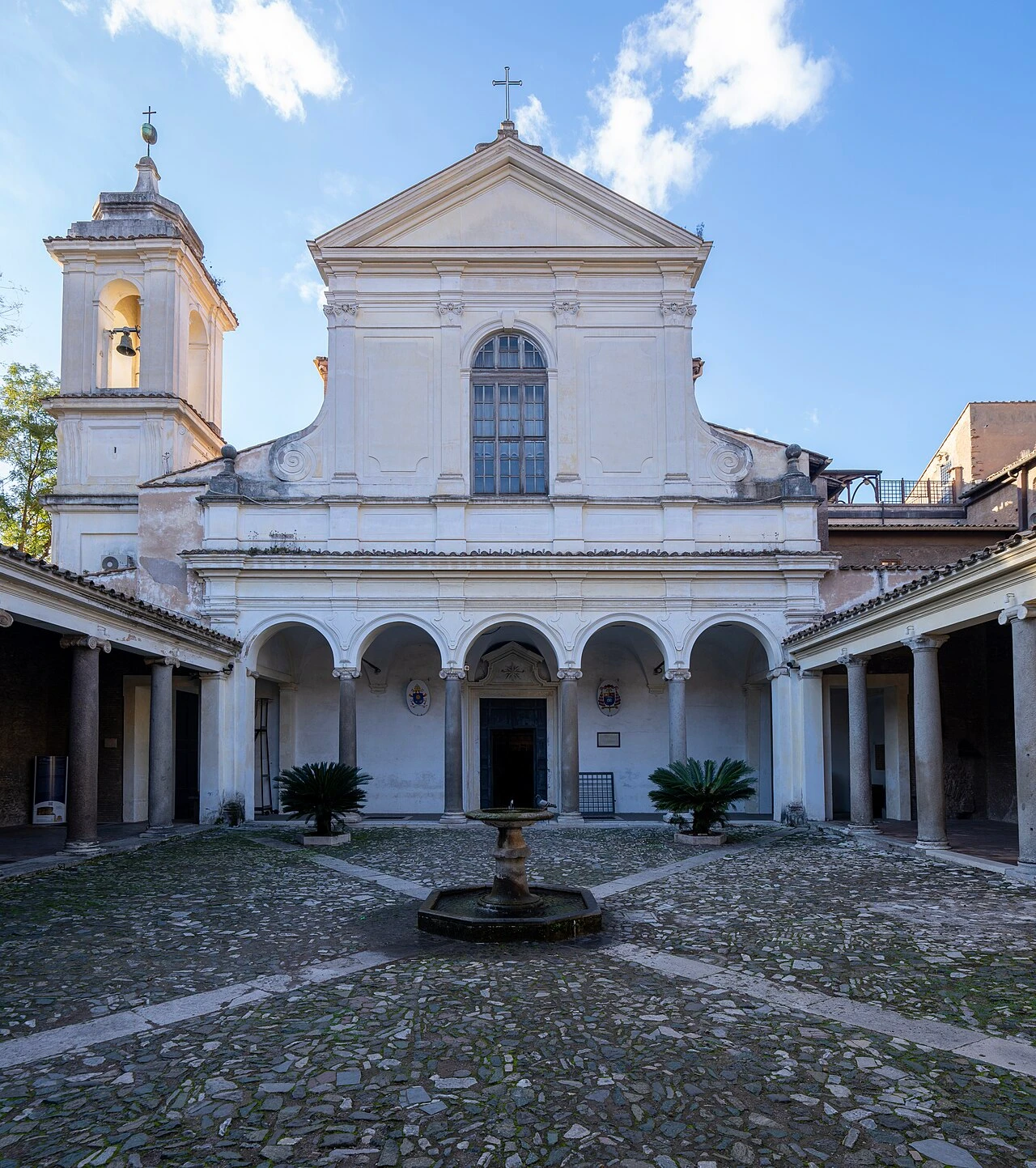
Rome
Basilica di San Clemente
Content & sources
Photo: Labicanense · CC BY-SA 4.0
Rome
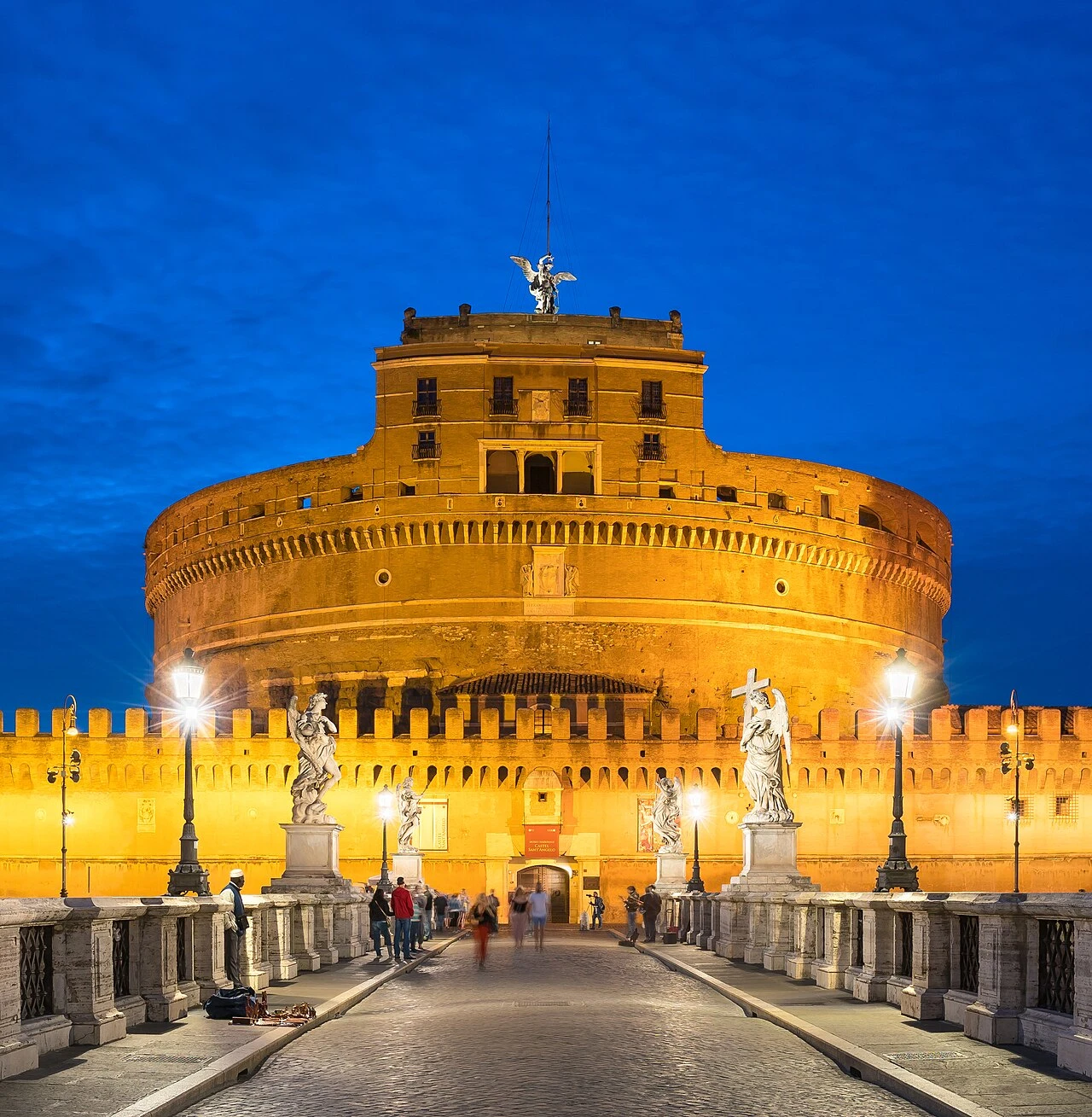
Castel Sant'Angelo
Content & sources
Thomas Wolf, www.foto-tw.de · CC BY-SA 3.0 de
Rome
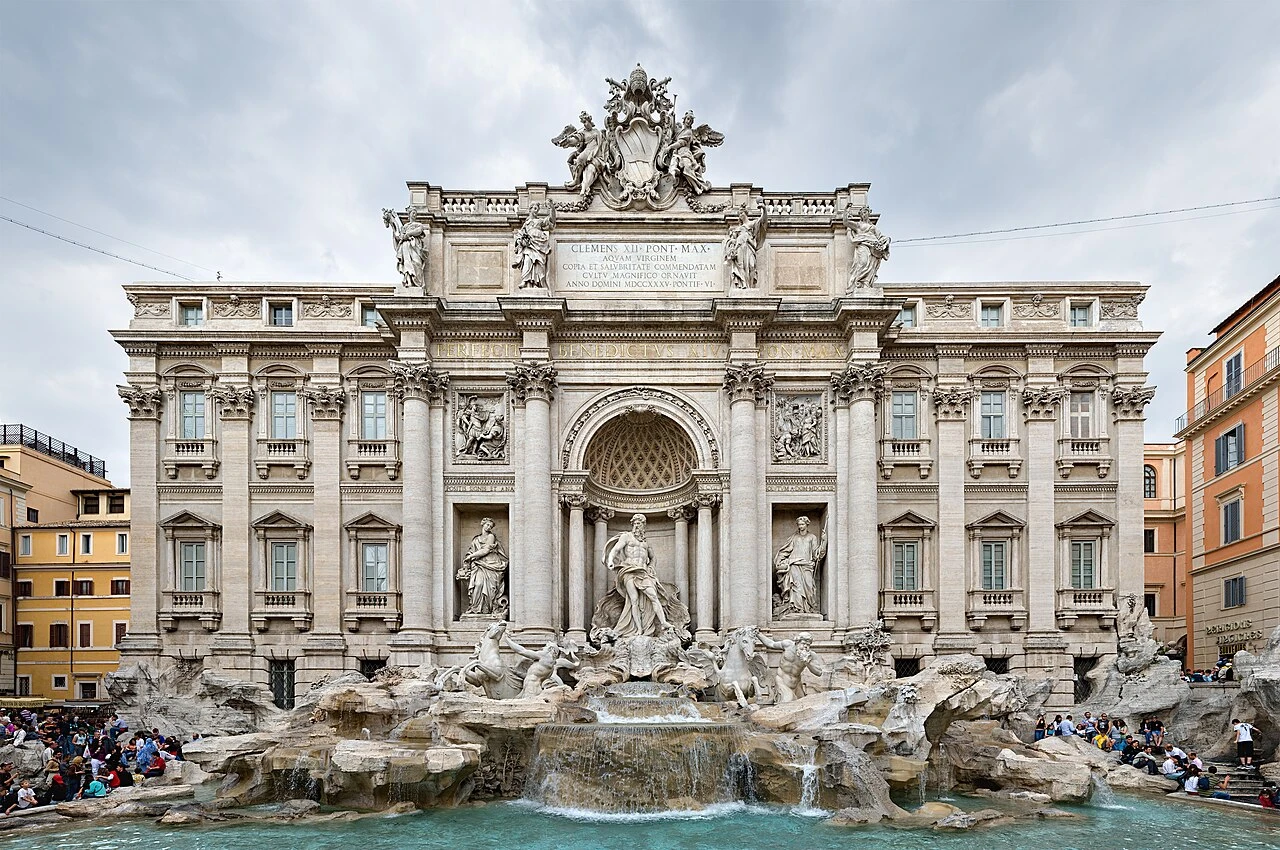
Fontana di Trevi
Content & sources
Photo: Diliff · CC BY 3.0
Rome