Stanza · Audio guide
Basilica di Sant'Agostino in Campo Marzio Audio Guide
A place to remember. A story to take with you.
The Basilica of Saint Augustine of Hippo is a titular church in Rome that serves as the motherhouse of the Order of Saint Augustine. Completed in 1483, the building is notable for its Renaissance architecture…
Download Stanza, then search for “Basilica di Sant'Agostino in Campo Marzio”.
About the tour
One guide. Your kind of visit.
The Basilica of Saint Augustine of Hippo is a titular church in Rome that serves as the motherhouse of the Order of Saint Augustine. Completed in 1483, the building is notable for its Renaissance architecture and artworks by Caravaggio, Raphael, and Guercino.
Ready when you are.
- 01Get the free Stanza app.
iOS & Android
- 02Find your guide.
“Basilica di Sant'Agostino in Campo Marzio”
- 03Download before you go.
Works offline
Audio guide / 12 narrated stops
Inside the guide
Get to know a few of the stories before you go. Open a stop to read more.
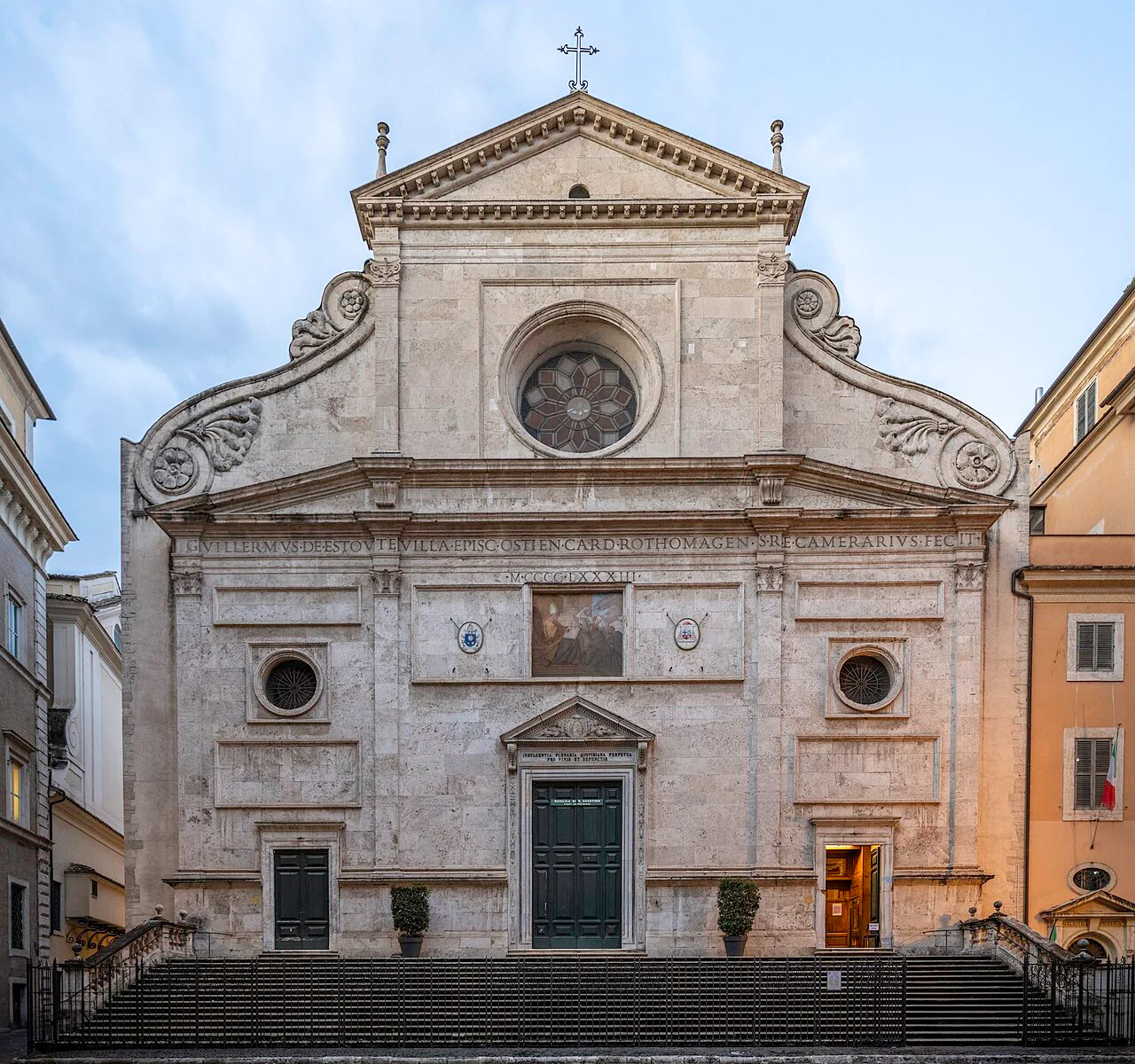
01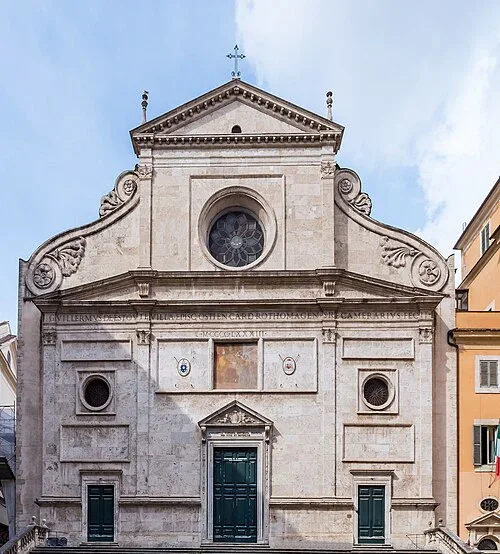 Piazza di Sant'Agostino and the Travertine Façade
Travertine Façade of Sant'Agostino
The stone of this front came from the Colosseum. Builders in the late fifteenth century took travertine from the ruined arena and used it for a new church. Renaissance builders often reused ancient stone in this way. The church is the motherhouse of the Order of Saint Augustine, which means it is the order's main house. An earlier church had stood on the site, built by Augustinian friars. The new building was begun in 1479. Pope Sixtus the Fourth commissioned it. Cardinal Guillaume d'Estouteville paid for the work, and it was finished in 1483. The lettering across the upper front names the cardinal and says he built the church in that year. Its designer is uncertain, but the front is said to be inspired by Santa Maria Novella in Florence. The two scrolls on the upper sides were added much later, in the eighteenth century, by the architect Luigi Vanvitelli. The church was raised to the rank of minor basilica in 1999.
Photo: Labicanense · CC BY 4.0
02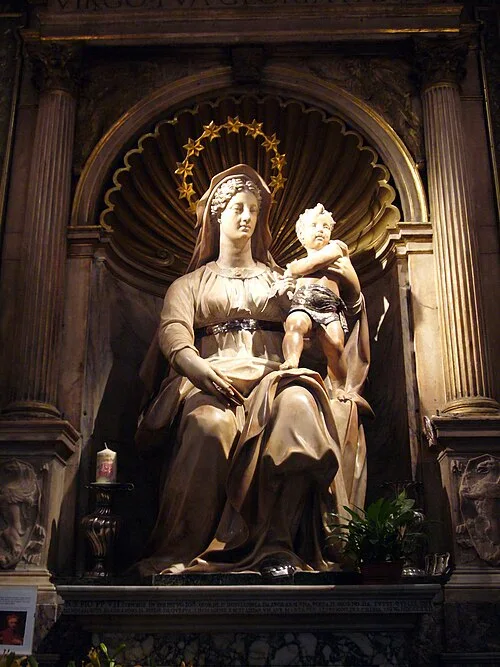 The Counter-Façade: Jacopo Sansovino's Madonna del Parto
Jacopo Sansovino's Madonna del Parto
The Madonna del Parto, Our Lady of Childbirth, sits in a shell-backed niche beside the entrance, under a crown of gilded stars. The infant Christ stands on her lap. For centuries, expectant mothers have come to her for help in childbirth. Thank-offerings of flowers and candles surround the statue. Popular tradition holds that it works miracles. The statue is credited to Jacopo Sansovino and dates from the early sixteenth century. A legend says it was reworked from an ancient statue of the Roman empress Agrippina, shown holding her infant son, Nero. The story is told as legend, not as established history. A Roman poet later wrote an irreverent sonnet about the jewels that crowd the Madonna, among the offerings left for her.
Photo: Lalupa · CC BY-SA 4.0
03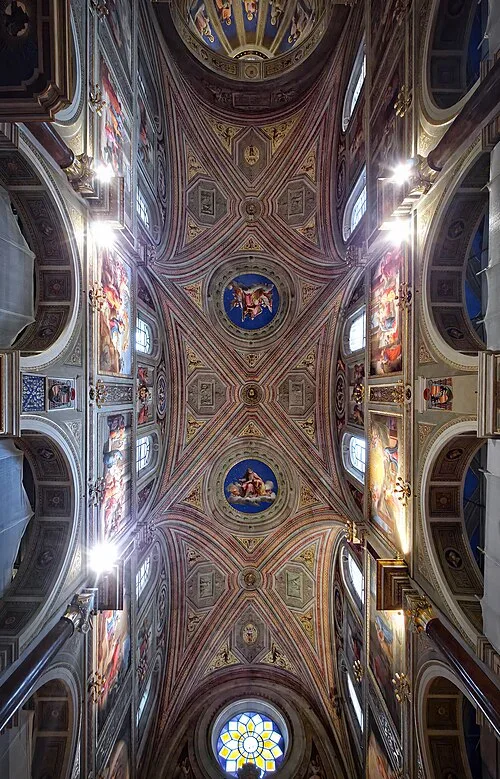 The Central Nave: Vaults, Proportions, and Courtesans' Pews
The Nave and Its Painted Vault
In the Renaissance, many of Rome's courtesans came regularly to this church. They were expected to hear the weekly penitential sermon. That sermon urged repentance, and benches in the front rows were reserved for them. The church also gave them a stage. They arrived in rich gowns, often followed by admirers, maidservants and pages. Not every visit was solemn. On Saint Augustine's feast day in 1497, a public Mass was held here. The celebrant was Pope Alexander the Sixth. The papal master of ceremonies, Johannes Burckard, wrote in his diary that the crowd was in disorder. He described prostitutes and other unruly people standing between the altar and the cardinals. Many famous courtesans were buried in the church. During the Counter-Reformation, those tombs were taken out, and no trace of them remains. The coffered ceiling above, with round panels at its centres, is much later than the Renaissance. The interior was remodelled in the 1850s, and Pietro Gagliardi painted frescoes across the vaults and walls. The nave ceiling was finished in 1868.
Listen in the appPhoto: NateBergin · CC BY 4.0
04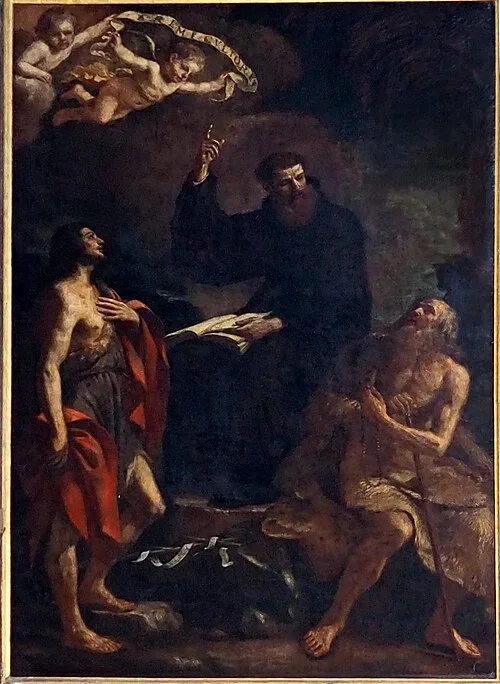 The Right Transept: Guercino's Saint Augustine Altarpiece
Saints Augustine, John the Evangelist and Jerome (Guercino)
The chapel at the end of the right transept is dedicated to Augustine of Hippo, the church's namesake. Its imagery centres on him as a teacher of the Church, and on the Order that carries his name. The altar was consecrated in 1628. The chapel took its present shape from 1636. The altarpiece is by Guercino. Augustine stands in a dark habit, with an open book before him and one hand raised. Above, two small winged children hold a ribbon. On the left, a young man in a red mantle gazes upward. On the right, an old bearded man sits by a rock, leaning on a staff. Accounts differ on the two companions. Some name John the Evangelist and Jerome. Others name John the Baptist and Paul the Hermit. The dark background makes the red mantle and the pale faces stand out.
Listen in the appPhoto: Peter1936F · CC BY-SA 4.0
05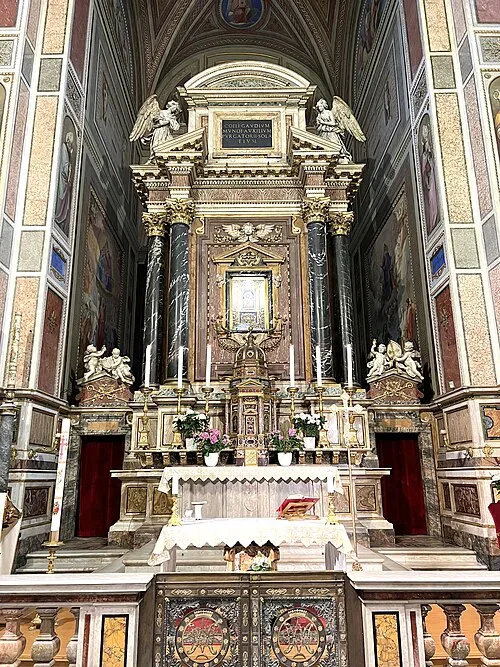 The High Altar: Byzantine Icon and Bernini's Angels
The High Altar and Its Byzantine Hodegetria Icon
The high altar in the apse was designed by Orazio Turriani, the convent's own architect. It was built in the later 1620s. Turriani is now usually credited, though an older view gave the design to Bernini. At the centre, inside a framed shrine, stands a Byzantine icon of the Virgin and Child. It belongs to a type called Hodegetria, a Greek word meaning she who shows the way. An inscription on its back is said to state that the icon came from Hagia Sophia, the great church in Constantinople. A donor named Clemente de Toscanella is said to have brought it to Rome in 1482, after Constantinople was conquered. It may, however, be an Italian work from the fourteenth century.
Listen in the appPhoto: TrevorFisher · CC BY-SA 4.0
06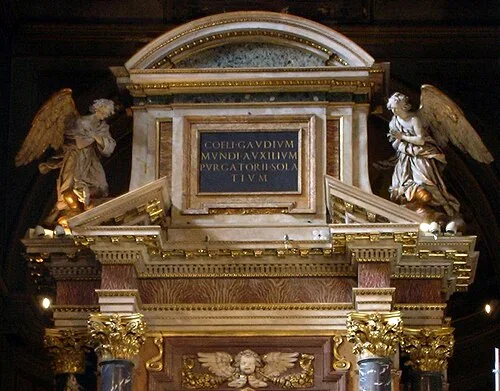 The High Altar: Byzantine Icon and Bernini's Angels
Two Angels of Sant'Agostino
Two winged figures flank the central panel above the high altar, and their maker is harder to pin down. The panel carries a Latin inscription in honour of the Virgin. An early biographer of artists lists them among the works of Gian Lorenzo Bernini. Bernini is also recorded as having been paid for them. The figures are usually dated to the later 1620s. A small terracotta model for them, now in the Ringling Museum of Art in Sarasota, Florida, was once confirmed as Bernini's by an art historian. The museum now says the design is Bernini's, executed by Finelli.
Listen in the appSteO153 · CC BY-SA 3.0
07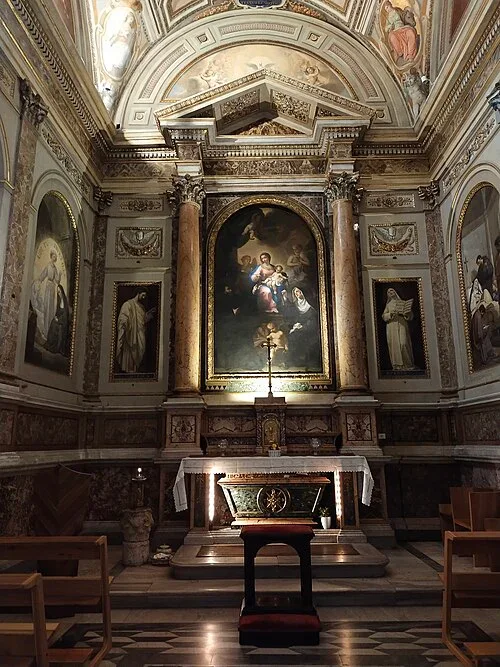 Chapel of Saint Monica: Resting Place of Augustine's Mother
Chapel of Saint Monica
Saint Monica, mother of Augustine of Hippo, died in 387. More than a thousand years later, her remains came to this chapel, which lies to the left of the high altar. The move is called a translation, the formal carrying of a saint's remains to a new resting place. Her remains came from a church at Ostia Antica, near the coast. The move took place on the eleventh of April, 1424. The chapel is dedicated to Monica, and her tomb stands here. Above the altar hangs a painting of the Madonna and Child, with figures gathered around them. Framed saints line the walls, and the vault overhead is painted as well.
Listen in the appPhoto: Luistxo · CC BY-SA 4.0
08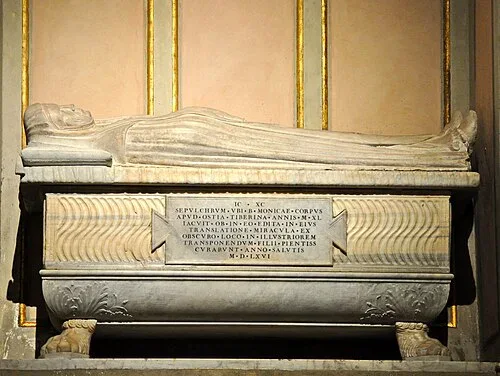 Chapel of Saint Monica: Resting Place of Augustine's Mother
Tomb of Saint Monica by Isaia da Pisa
Isaia da Pisa is credited with this tomb, which is dated to 1455. He was a fifteenth-century sculptor, and the tomb was made about thirty years after Monica's remains reached the church. A stone figure lies stretched out full length on top. A Latin inscription runs across the front, and it seems to refer to Ostia and to the moving of the remains. The tomb is identified with Monica, but it is unclear whether the face is meant as a true likeness. Its front is carved with wave-like bands, and it rests on feet at the corners.
Listen in the appPhoto: Peter1936F · CC BY-SA 4.0
09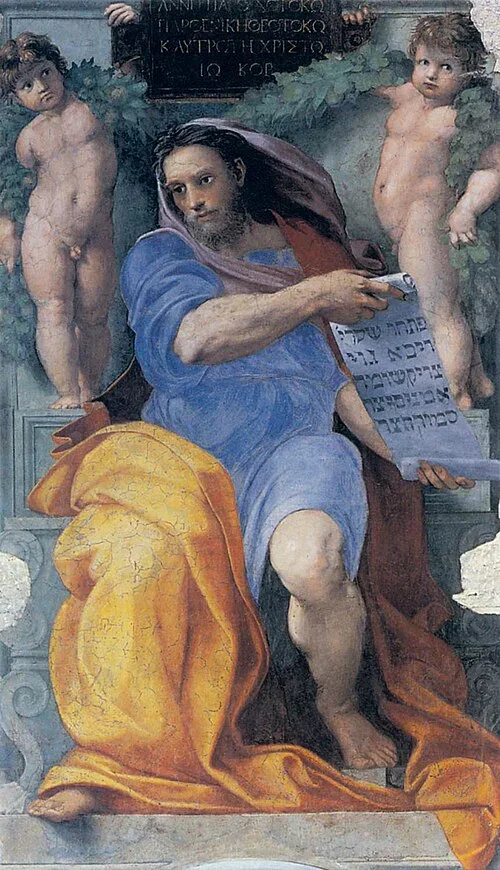 The Third Left Nave Pillar: Raphael's Isaiah and Sansovino's Saint Anne
Raphael's Prophet Isaiah
Raphael painted this prophet Isaiah in 1512, as part of a funerary monument. It was commissioned by Johann of Goritz, a man from Luxembourg who settled in Rome. He had a chapel built in the church, with an altar for his patron saint. The altar was meant to be his tomb. The prophet holds a scroll covered in Hebrew letters. Its words come from chapter twenty-six of Isaiah: 'Open the doors, so that the people who believe may enter.' Later painters retouched the fresco because of wear, and it was last restored in 1998. The story goes that Johann complained to Michelangelo that he had been overcharged. Michelangelo is said to have replied that the knee alone is worth the price demanded.
Listen in the appRaphael · Public domain
10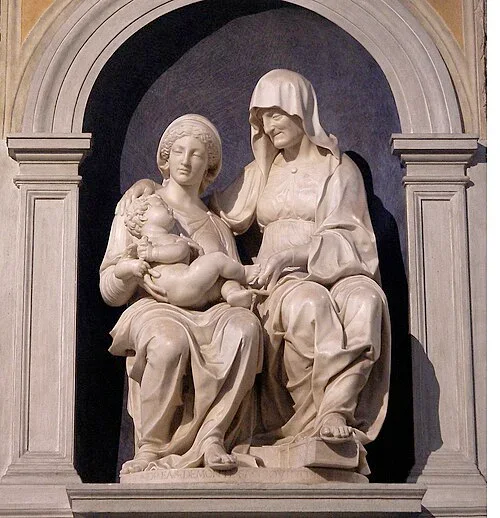 The Third Left Nave Pillar: Raphael's Isaiah and Sansovino's Saint Anne
Andrea Sansovino's Saint Anne and Virgin with Child
Three generations of women are carved in this marble group: Saint Anne, her daughter Mary, and the infant Christ. Andrea Sansovino made it in the early 1510s. He is a different artist from the sculptor of the statue at the entrance. The artist and writer Giorgio Vasari praised the group in his biographies of artists. The name for this type of group is Anna selbdritt, meaning Anne with two others. Mary sits with the Child on her lap. Anne sits behind and to one side, veiled, her head bent toward her daughter. Groups like this were popular for devotion, because they gathered a holy family into one place. The group sits in an arched niche below Raphael's fresco of Isaiah. It had been moved during eighteenth-century renovations, and it returned to the nave in 1981.
Listen in the appUlrich Mayring · CC BY-SA 3.0
- 11
The Cavalletti Chapel
A chapel once called the Pietà chapel, and a family who bought it and changed its altarpiece.
- 12
Caravaggio's Madonna di Loreto (Madonna of the Pilgrims)
A barefoot Virgin in a doorway, two worn pilgrims, and the flight story of the painter who made them.
Basilica di Sant'Agostino in Campo Marzio
Frequently asked questions
How much does the guide cost?
Free app download. Listed guide price: $0.99. Guide price shown in the app. Audio guide only. Venue admission is separate.
Can I listen without internet?
Yes. Download the guide’s audio, images, and maps in the app before your visit. Your downloaded content is then available offline.
Can I listen in my language?
This audio guide is available in 15 languages, including English.
Do I need to follow a schedule?
No. This is a self-guided experience. Choose your stops, pause whenever you like, and return to a story at your own pace.
At your own pace
Explore Basilica di Sant'Agostino in Campo Marzio.
Download Stanza, then search for “Basilica di Sant'Agostino in Campo Marzio”.
Free app download · Guide price shown in the app
Keep exploring
Nearby audio guides
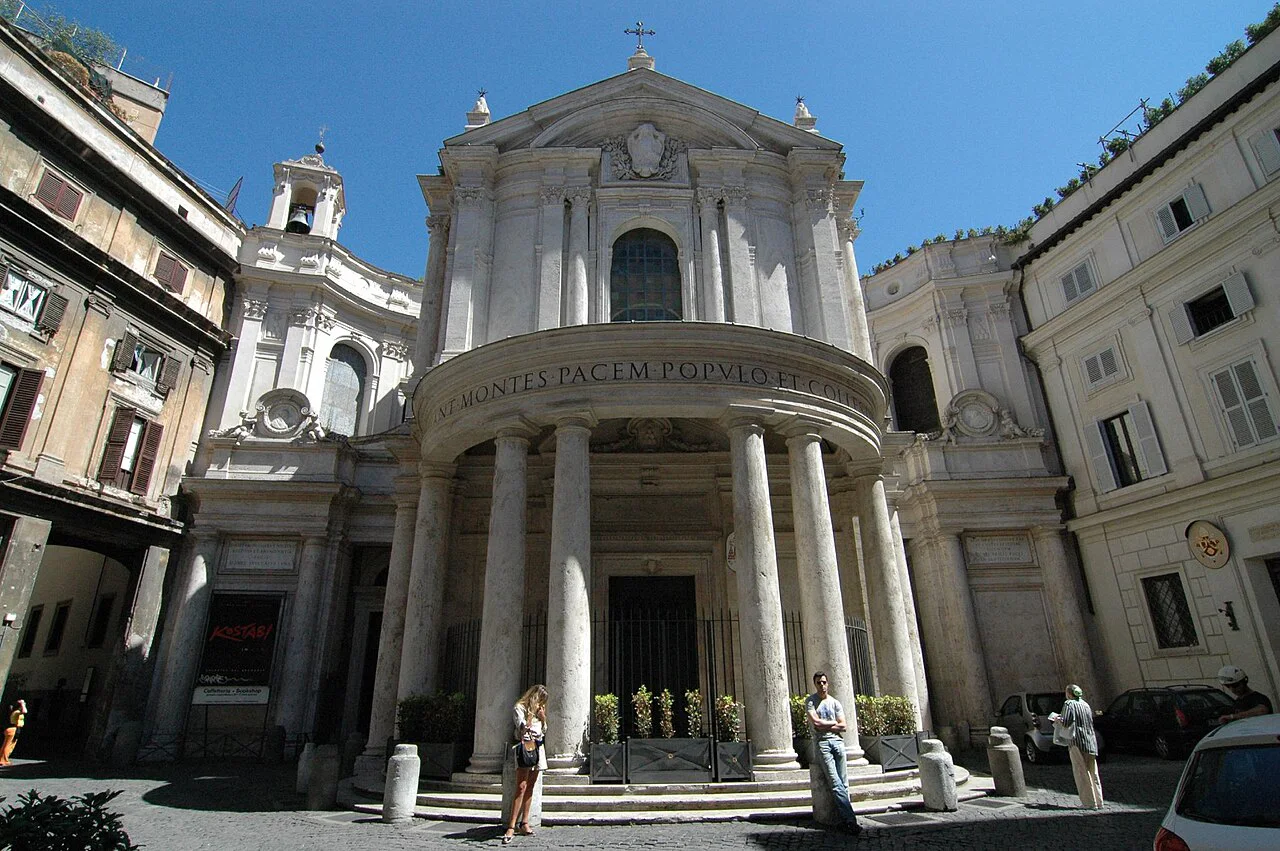
Rome · 1 km
Chiesa di Santa Maria della Pace
Content & sources
gaspa · CC BY 2.0
Rome · 1 km
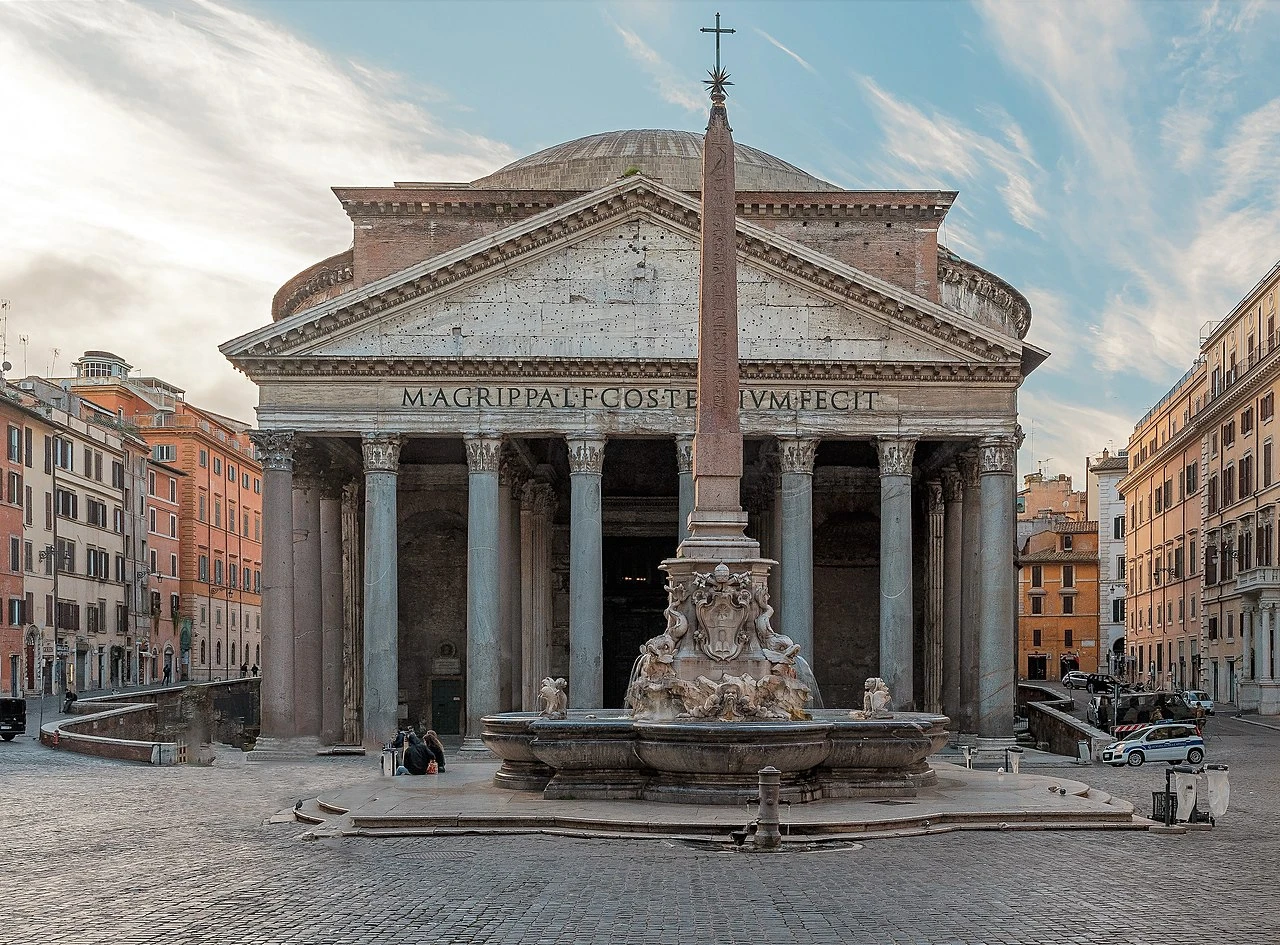
Pantheon
Content & sources
Rabax63 · CC BY-SA 4.0
Rome · 1 km
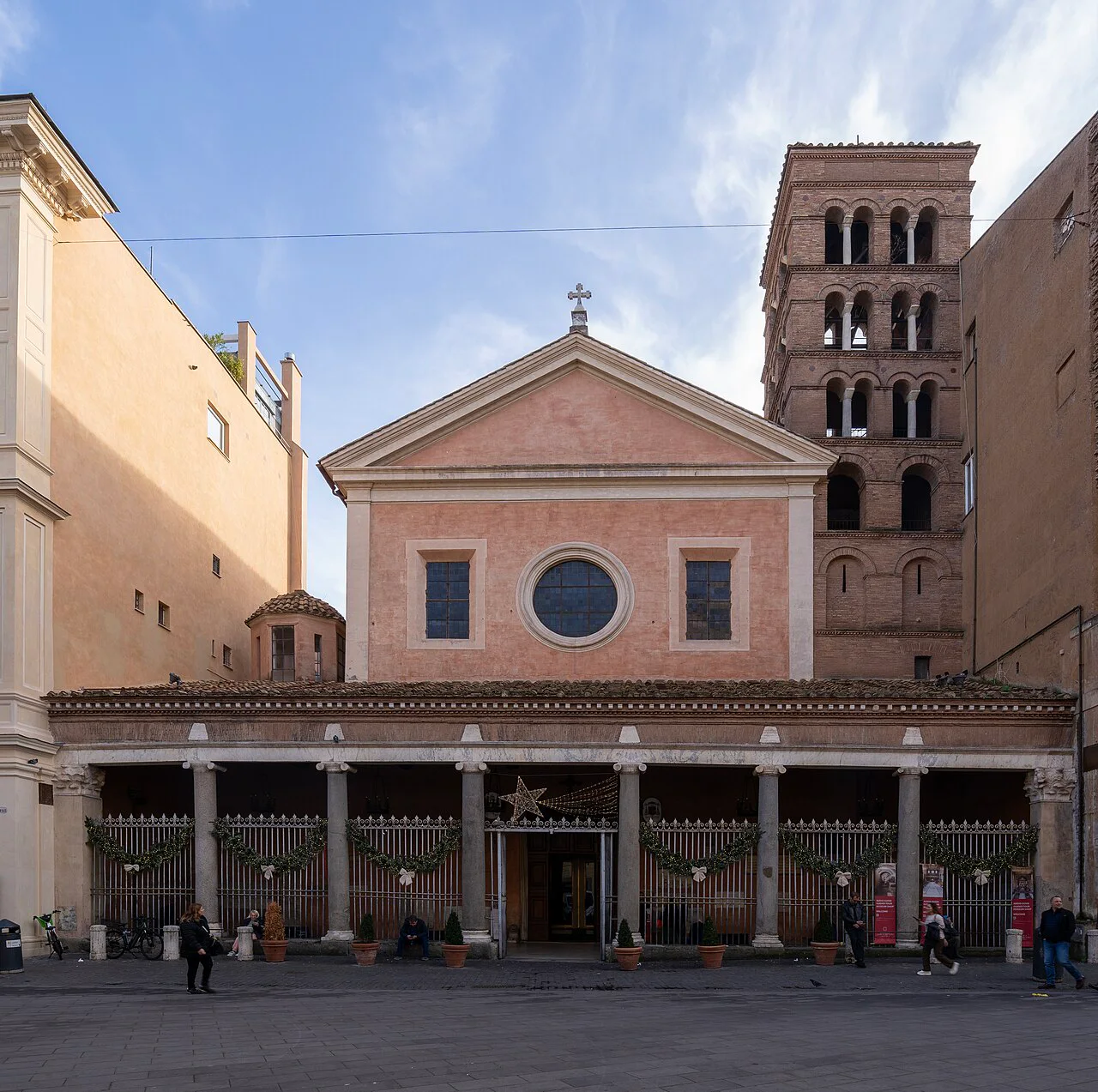
Basilica di San Lorenzo in Lucina
Content & sources
Photo: DellaGherardesca · CC BY 4.0
Rome · 1 km
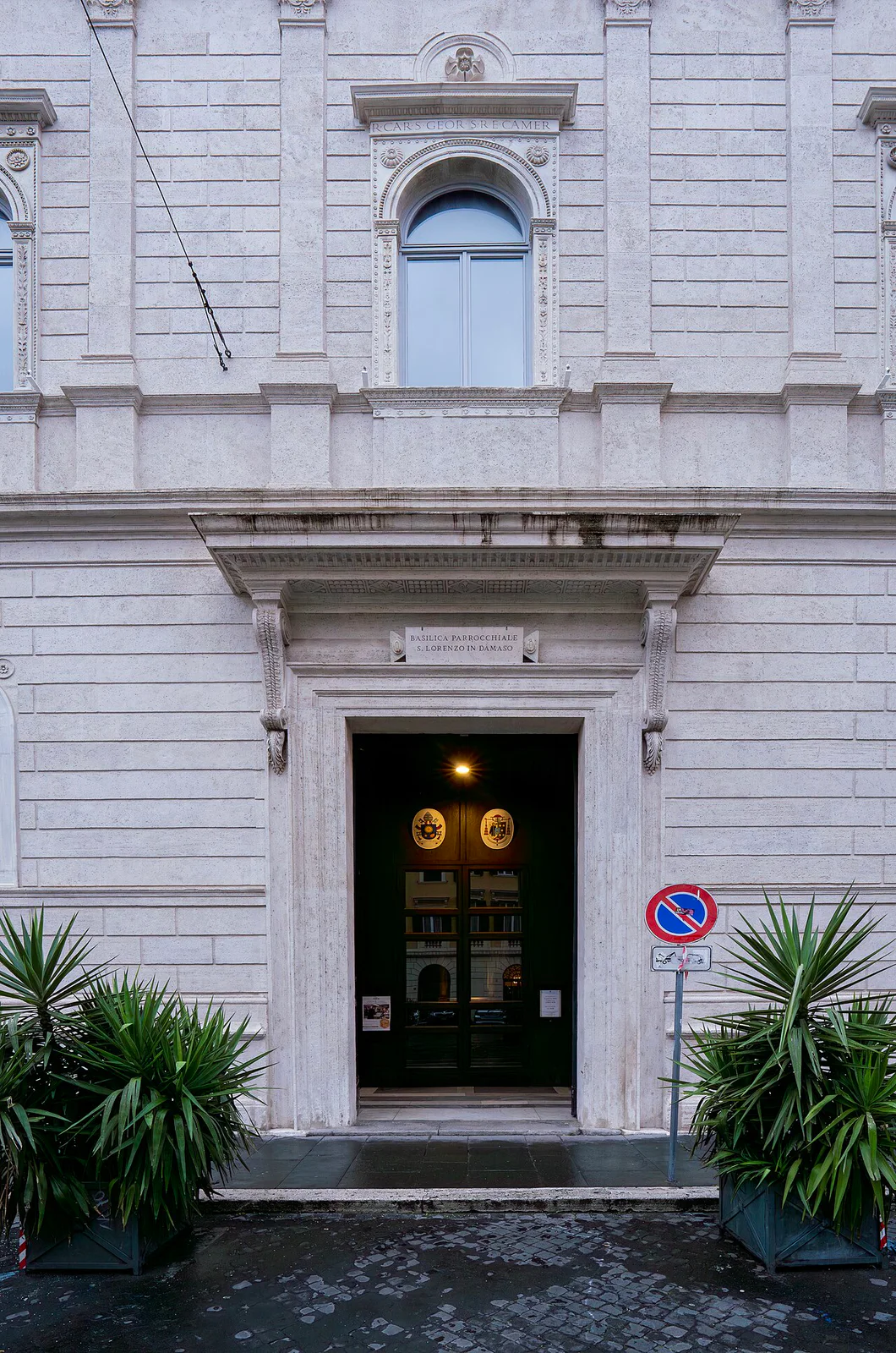
Basilica di San Lorenzo in Damaso
Content & sources
Photo: Fiat 500e · CC BY 4.0