Stanza · Audio guide
Circo Massimo Audio Guide
A place to remember. A story to take with you.
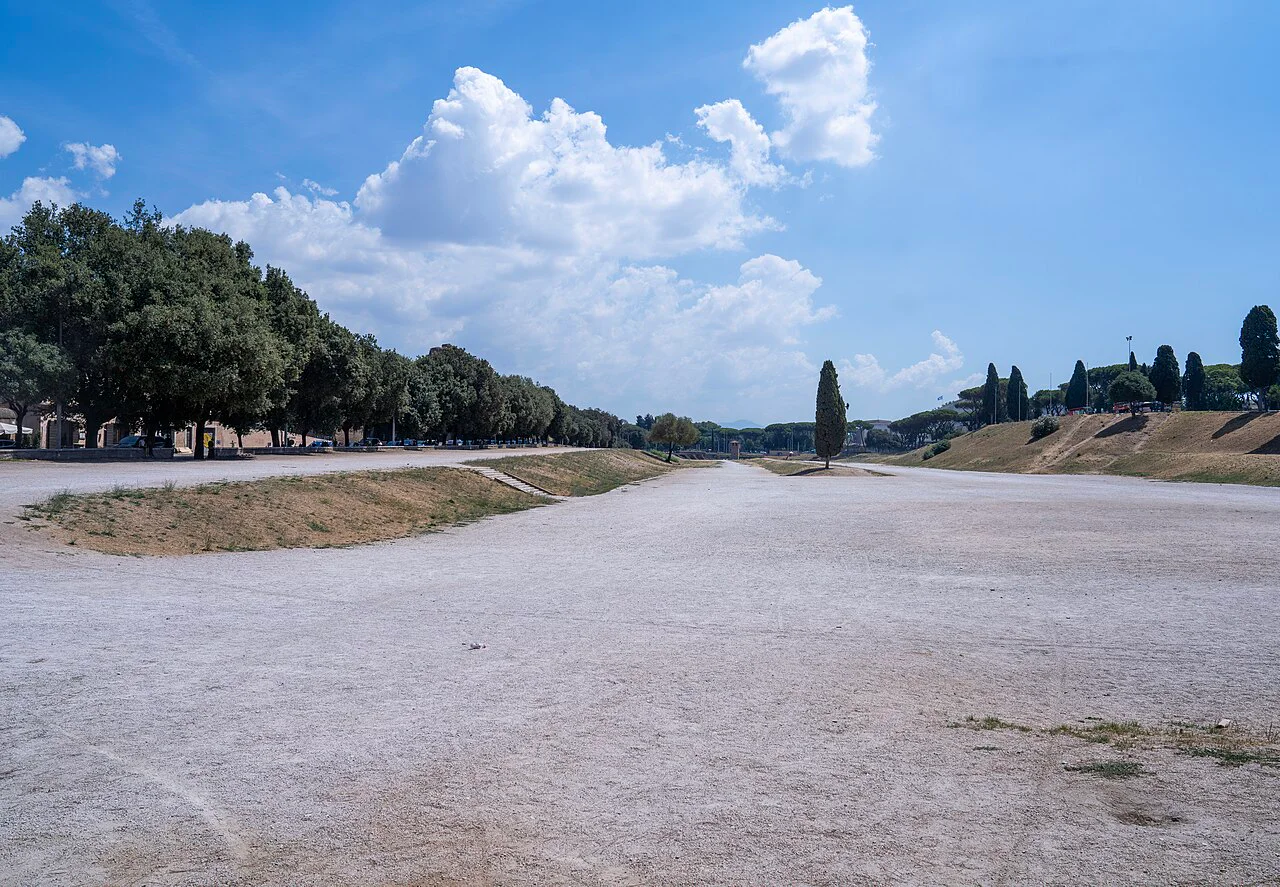
The Circus Maximus is an ancient Roman chariot-racing stadium and mass entertainment venue in Rome, Italy. It was the first and largest stadium in ancient Rome and served as the model for circuses throughout…
Download Stanza, then search for “Circo Massimo”.
About the tour
One guide. Your kind of visit.
The Circus Maximus is an ancient Roman chariot-racing stadium and mass entertainment venue in Rome, Italy. It was the first and largest stadium in ancient Rome and served as the model for circuses throughout the Roman Empire.
Ready when you are.
- 01Get the free Stanza app.
iOS & Android
- 02Find your guide.
“Circo Massimo”
- 03Download before you go.
Works offline
Audio guide / 10 narrated stops
Inside the guide
Get to know a few of the stories before you go. Open a stop to read more.
01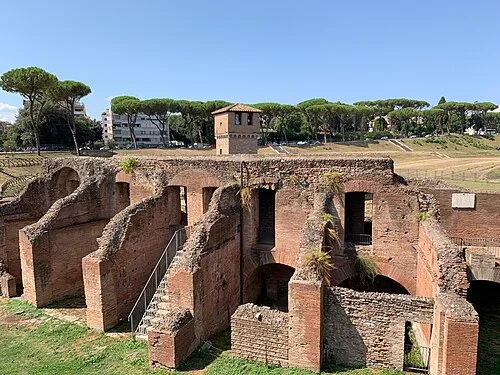 The Eastern Curve and Excavated Arcades
The Excavated Arcades of the Eastern Curve
Welcome to the Circus Maximus, in the valley between Rome's Aventine and Palatine hills. This was the first and largest stadium of ancient Rome, and the model for circuses across the empire. In its finished form it ran 621 metres from end to end, and held over a hundred and fifty thousand spectators. Today the middle of the valley is a grassy park, because the original track lies buried under centuries of flood sediment and debris. The brick arches at this curved eastern end are the excavated substructures of the seating. Each bay was a taberna, a shop, with stairways leading up to the stands. Crowds entered and left through these arcades, and the shops under the seats did steady trade on race days. They were also the circus's greatest danger, because the perimeter stands and workshops were largely wooden. In 64 AD, under Nero, fire broke out at this semi-circular end. It swept through the stands and shops, and went on to destroy much of the city. The games carried on even as the city burned around them. The circus was rebuilt over several years, on exactly the same footprint and design.
Photo: Chabe01 · CC BY-SA 4.0
02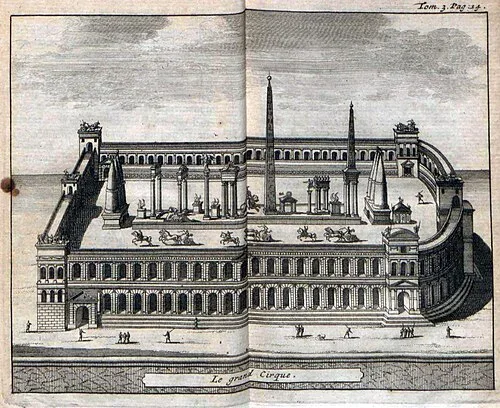 The Eastern Curve and Excavated Arcades
The Grand Circus Imagined: a 1709 Reconstruction
The brick ruins only hint at the finished building. Under the emperor Trajan the whole circus was rebuilt in stone, and the work was complete by 103 AD. That was essentially the last word: later emperors added monuments and made repairs, but the design never changed again. An engraving from 1709, titled Le grand Cirque, shows what later centuries imagined the whole thing looked like. Its arcaded facade, tier upon tier of arches, echoes the ancient writer Dionysius of Halicarnassus, who called the circus one of the most beautiful and admirable structures in Rome. Entrances and ascents for the spectators at every shop, he wrote, so that countless thousands of people could enter and depart without inconvenience. Treat the engraving as an early eighteenth-century dream rather than a survey. Its details are idealised, and they do not match what excavation has found. But it gives a sense of the vanished whole, a stone ring of arcades closing around the track. Most of the remains that survive today date from Trajan's rebuilding.
Alexandre de Rogissart · Public domain
03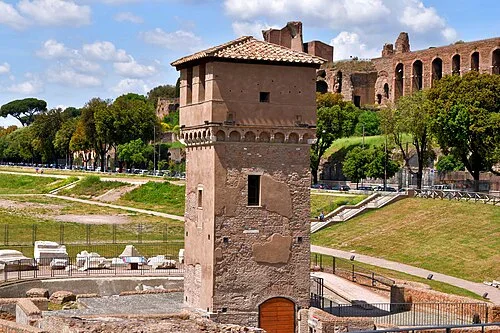 Torre della Moletta and the Arena Panorama
The Torre della Moletta
After antiquity, the valley passed into other hands. On the southern side, among the ruins of the curved seating, stands a squat brick tower known as the Torre della Moletta. It belonged to the Frangipane, one of the noble families that fortified corners of medieval Rome. Where chariots once wheeled around the turn, the family raised a defensive tower in what had become countryside inside the city walls. The tower survives, and its internal staircase climbs to an upper platform. That platform gives the longest view down the track, and it is where the next stop looks out from.
Listen in the appPhoto: Rabax63 · CC BY-SA 4.0
04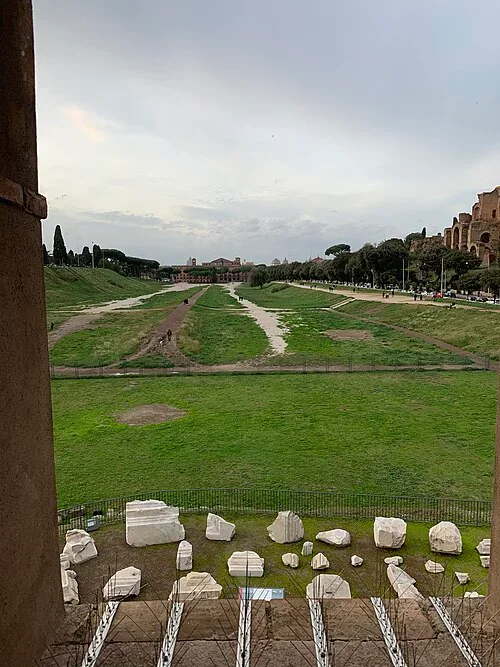 Torre della Moletta and the Arena Panorama
Down the Track: The Chariot Races
From high on the tower, the view runs the whole length of the arena. This was the floor of the premier spectacle of the Roman world, the chariot race. Twelve four-horse chariots, the quadrigae, launched together. They ran seven laps around the central barrier, between the two turning posts. The green floor lies about six metres above the real track. The level the drivers knew rests deep beneath the grass, along with everything that fell or was dropped on race day.
Listen in the appPhoto: LeoAmb5898 · CC BY-SA 4.0
05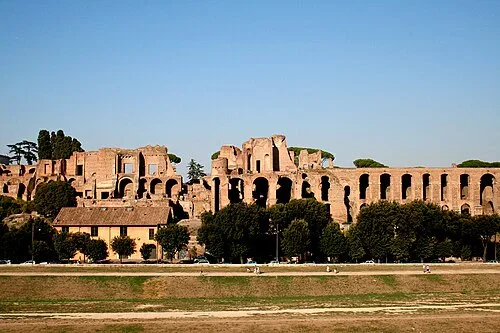 The Palatine Hill and the Imperial Box
The Palatine Palaces and the Imperial Box
Rome's emperors gave themselves the best seat in the house. The ruins rising over the track are the substructures of the great Palatine palaces, and the games were watched from up there. Augustus built the pulvinar, a monumental shrine-platform raised high above the trackside seats. It was a temple as much as a viewing box, and he sometimes watched the games from it, in effect alongside the gods. Occasionally his family joined him there. Later, Domitian built a new multi-storey palace on the hill and connected it to the circus. He likely watched in autocratic style, from high above and barely visible to the crowd below. Here, spectacle and imperial display were engineered together.
Listen in the appPhoto: Jean-Pol GRANDMONT · CC BY 4.0
06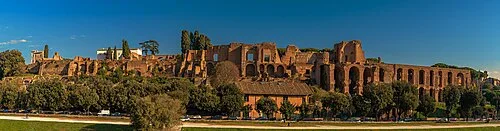 The Palatine Hill and the Imperial Box
The Valley of Murcia and the Oldest Shrines
The valley has an older story than the stadium. The Romans called it the Vallis Murcia, the Valley of Murcia, a floodplain between the two hills where a stream ran down the middle. The southeastern turn of the track ran between two shrines that may predate the circus itself. One, at the outer edge, belonged to Murcia, an obscure goddess of the valley, linked to Venus and the myrtle. The other, at the turning post, was an underground shrine to Consus, a minor god of grain-stores. According to Roman tradition, Romulus discovered this shrine shortly after founding Rome. He invented a festival, the Consualia, with horse races and drinking, as a way of gathering his Sabine neighbours. During the festivities, his men abducted the Sabine daughters as brides. So the famous myth of the Rape of the Sabine Women is set right here, in this valley, at a race meeting.
Listen in the appPhoto: Rabax63 · CC BY-SA 4.0
07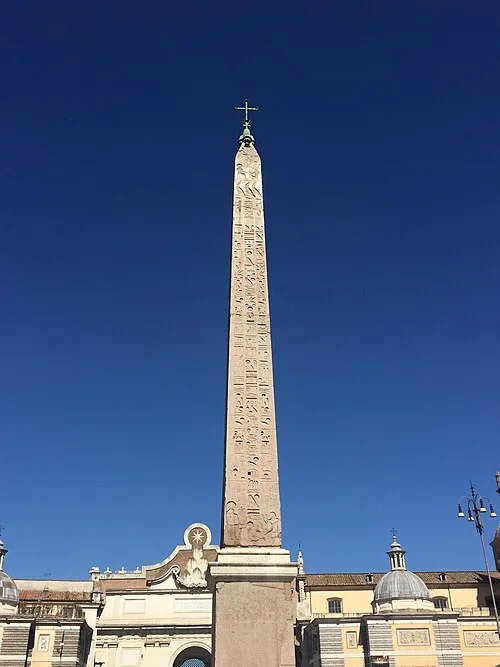 The Central Spina and the Flaminian Obelisk
The Spina: Monuments and Lap Counters
Down the middle of the track ran the spina, the decorated barrier the chariots wheeled around. In its developed form it was a line of water basins, or a single watercourse, open in places and bridged over in others. That gave scope for decorative swagger: temples and statues of deities, fountains, even refuges for the assistants who recovered crash casualties. The spina also carried the race's official instruments. From at least 174 BC, laps were counted with large sculpted eggs, one taken away for each circuit. In 33 BC they were joined by bronze dolphin-shaped counters, raised high above the barrier where the whole crowd could read them. The spina's most famous monument was an obelisk, and it survives across town in the Piazza del Popolo. Its own story comes at the next stop.
Listen in the appPhoto: Isis vasques · CC BY-SA 4.0
08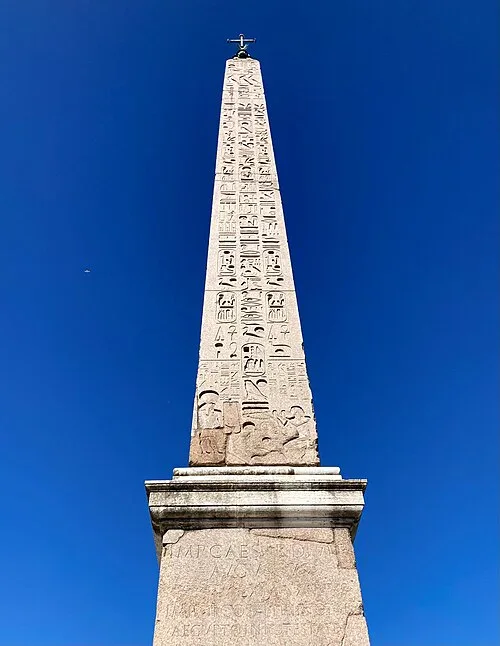 The Central Spina and the Flaminian Obelisk
The Flaminian Obelisk
The obelisk is older than Rome itself. It was quarried in Egypt long before the city existed, and it stood sacred to the Egyptian sun-gods. Augustus brought it from Heliopolis at enormous expense and erected it midway along the circus's dividing barrier. It was Rome's first obelisk, an exotic sacred object in the heart of the city. Augustus also meant it as a message: a permanent reminder of his victory over his Roman foes and their Egyptian allies in the civil wars. Thanks to him, Rome held a lasting peace and a new Egyptian province. The sun-god was the divine patron of the circus and its games. He was imagined as the ultimate charioteer, driving his four-horse chariot through the heavenly circuit from sunrise to sunset. A stone of the sun, set on the track of the sun's earthly imitators, was perfectly at home. It stayed in the valley until 1587, when Pope Sixtus the Fifth had it removed; today it stands in the Piazza del Popolo.
Listen in the appPhoto: Dudva · CC0
09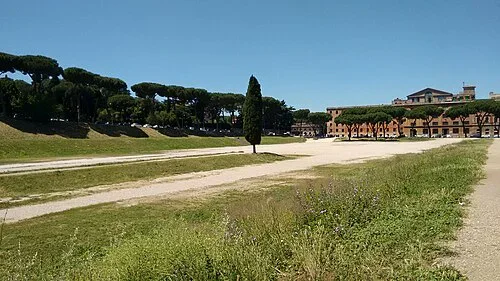 The Western Track and the Starting Gates
The Starting Gates (Carceres)
At the open western end stood the carceres, the starting gates. Permanent wooden starting stalls were built here in 329 BC, gated and brightly painted. They were staggered in an arc, so that every chariot covered the same distance to the central barrier. By the early Empire there were twelve stalls, each fronted by herms that served as stops for spring-loaded gates. When the gates sprang open, twelve lightweight chariots were released onto the track at the same instant. Stalls were allocated by lottery, and the racing teams were known by their colours, the Blues and the Greens above all. The track itself was engineered for the same fairness. The arena measures roughly eighty metres across at the curve. By the gates it has narrowed to about sixty-four, compensating for the different distances each box faced on the run to the first turn. One modern footnote: in 1959 the producers of Ben-Hur asked to film their chariot race here. The heritage authority refused, and the set moved to the Circus of Maxentius on the Appian Way.
Listen in the appPhoto: Marcel Roblin · CC BY-SA 4.0
10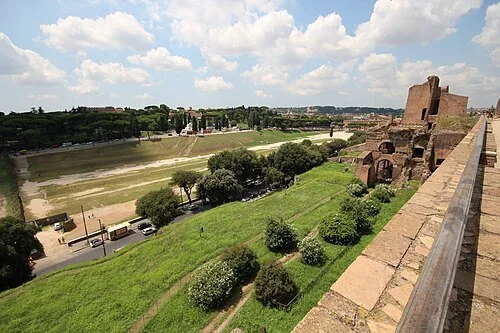 The Western Track and the Starting Gates
The Last Races
The games that filled this valley were called ludi, and they were owed to the gods as much as to the people. Politicians competed to stage them, and the count kept growing. By the late Republic, ludi filled fifty-seven days of the year. Under the Empire, that had grown to a hundred and thirty-five. The greater days at the circus opened with the pompa circensis, a flamboyant parade much like a triumph, which marked the purpose of the games and introduced the participants. The last known beast-hunt here took place in 523. The last races were held in 549, by Totila, the Ostrogoth king. With Christianity the old festivals faded, and when the races stopped, the valley went quiet. The lower levels, always prone to flooding, were slowly buried, and the greatest stadium of Rome disappeared under the grass, until excavation brought parts of it back into the light.
Listen in the appVictor R. Ruiz from Arinaga, Canary Islands, Spain · CC BY-SA 2.0
Circo Massimo
Frequently asked questions
How much does the guide cost?
Free app download. Listed guide price: $1.99. Guide price shown in the app. Audio guide only. Venue admission is separate.
Can I listen without internet?
Yes. Download the guide’s audio, images, and maps in the app before your visit. Your downloaded content is then available offline.
Can I listen in my language?
This audio guide is available in 15 languages, including English.
Do I need to follow a schedule?
No. This is a self-guided experience. Choose your stops, pause whenever you like, and return to a story at your own pace.
At your own pace
Explore Circo Massimo.
Download Stanza, then search for “Circo Massimo”.
Free app download · Guide price shown in the app
Keep exploring
Nearby audio guides
Rome · 1 km
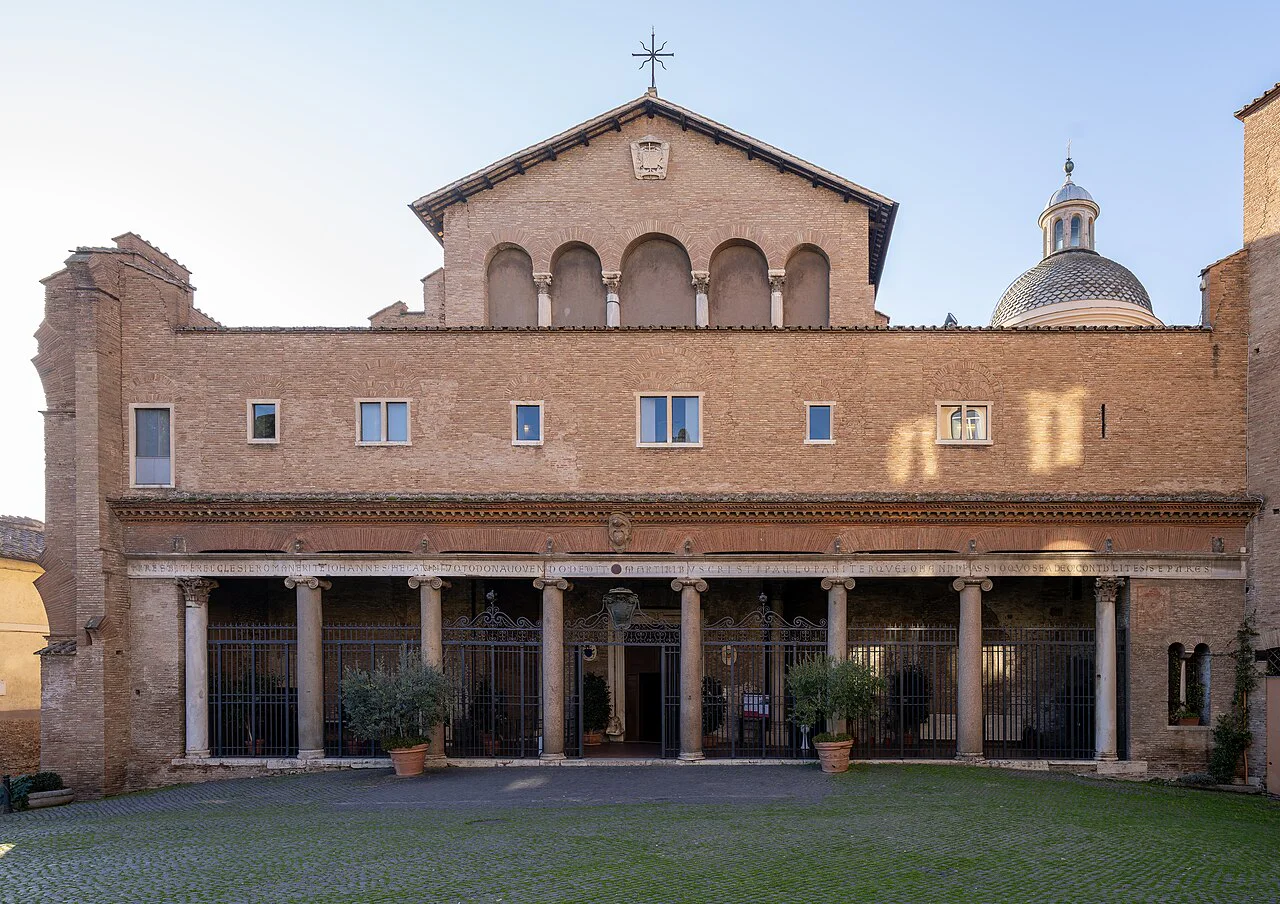
Palatine Hill
Content & sources
Photo: Lil Herodotus · CC BY-SA 4.0
Rome · 1 km
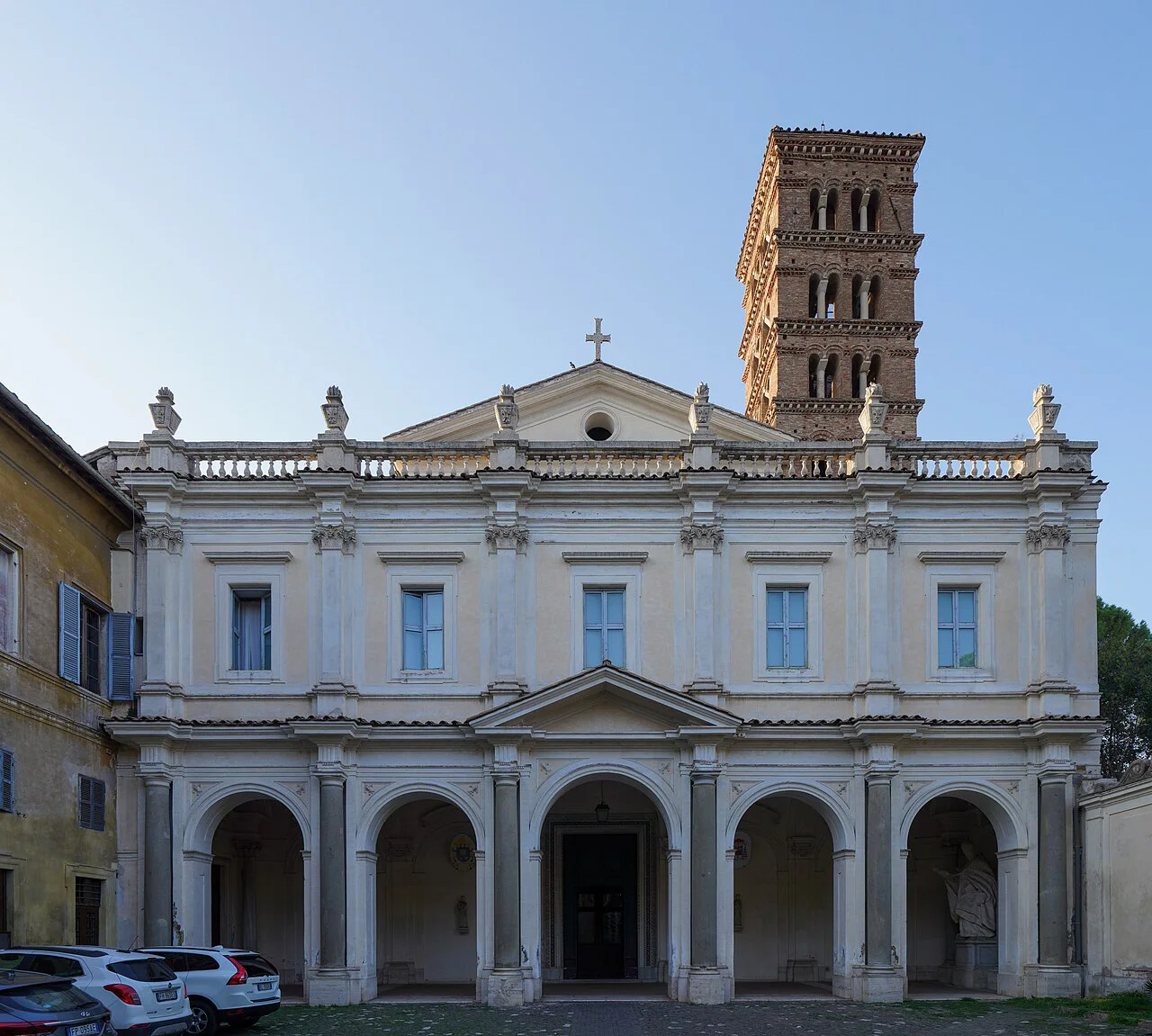
Basilica dei Santi Giovanni e Paolo
Content & sources
Photo: Tyrhénienne · CC BY 4.0
Rome · 1 km
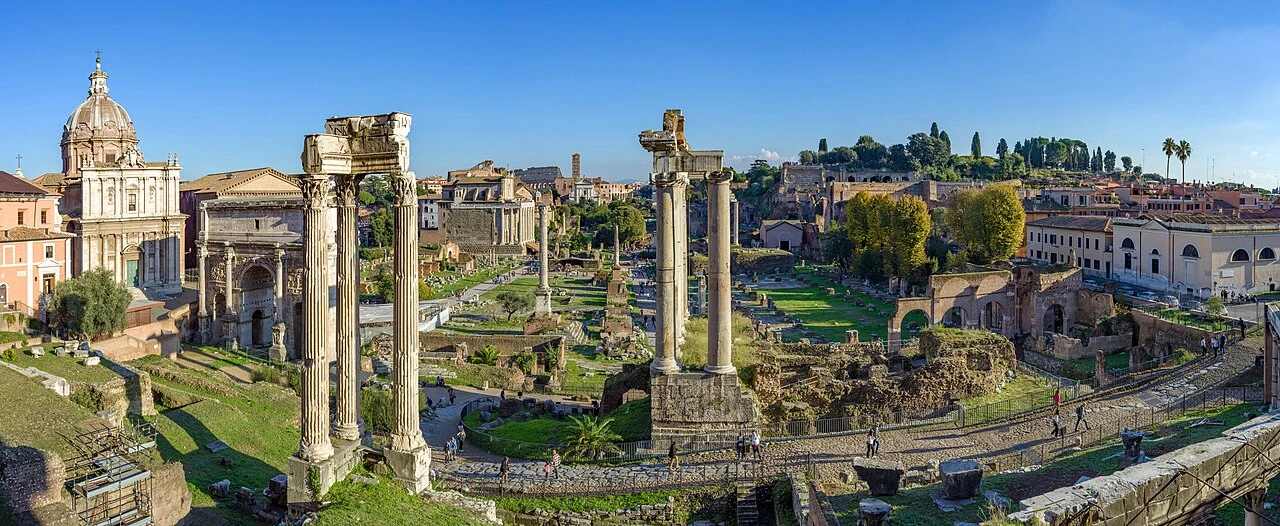
Basilica dei Santi Bonifacio e Alessio
Content & sources
Photo: Merulana · CC BY-SA 4.0
Rome · 1 km