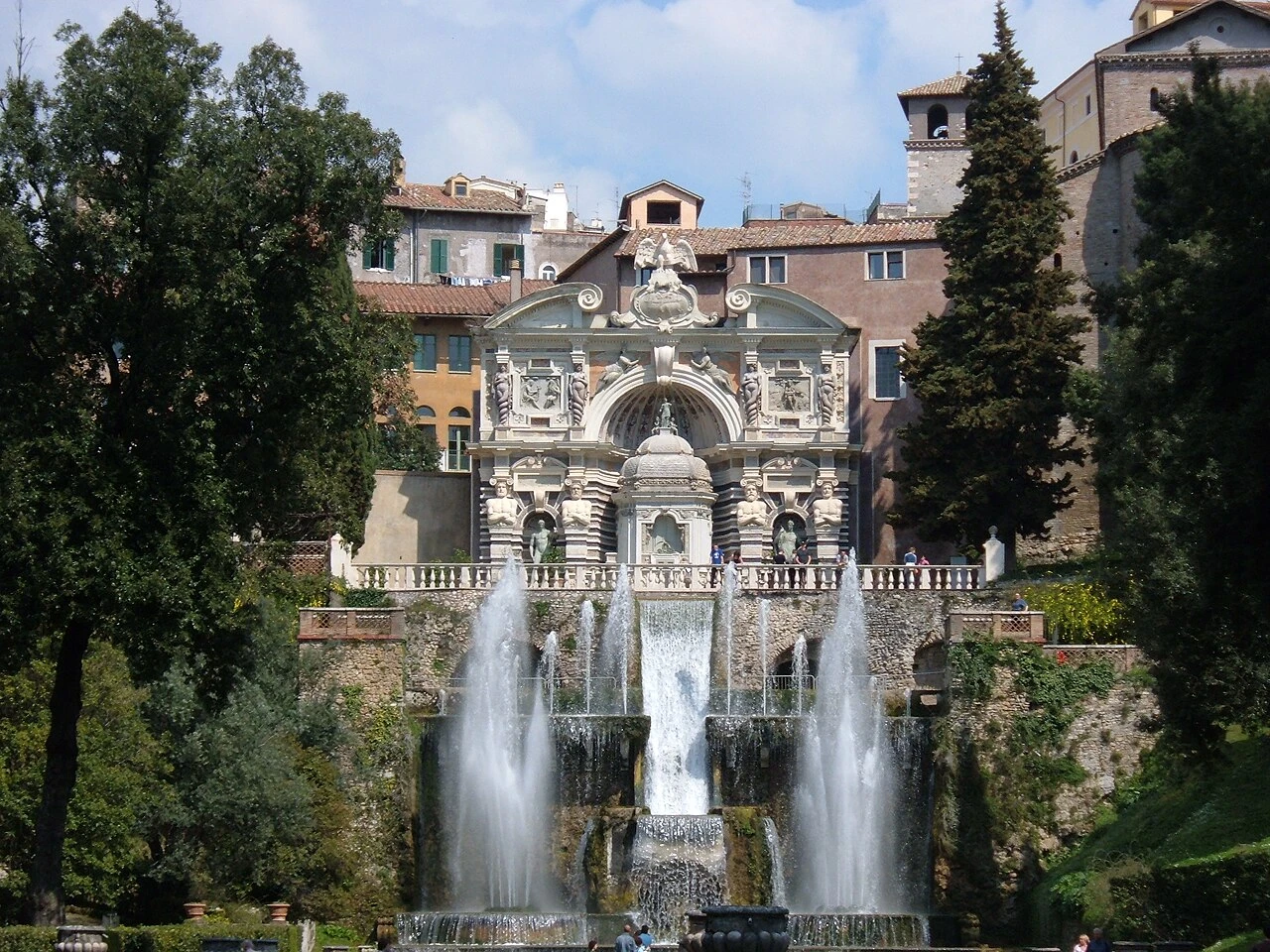
Stanza · Audio guide
Villa d'EsteAudio guide
A place to remember. A story to take with you.
Villa d'Este is a 16th-century Italian Renaissance villa renowned for its impressive gardens and numerous fountains. Located in Tivoli, near Rome, it also functions as a historical park museum.
Download Stanza, then search for “Villa d'Este”.
About the tour
One guide. Your kind of visit.
Villa d'Este is a 16th-century Italian Renaissance villa renowned for its impressive gardens and numerous fountains. Located in Tivoli, near Rome, it also functions as a historical park museum.
Ready when you are.
- 01Get the free Stanza app.
iOS & Android
- 02Find your guide.
“Villa d'Este”
- 03Download before you go.
Works offline
Audio guide / 18 narrated stops
Inside the guide
Get to know a few of the stories before you go. Open a stop to read more.
01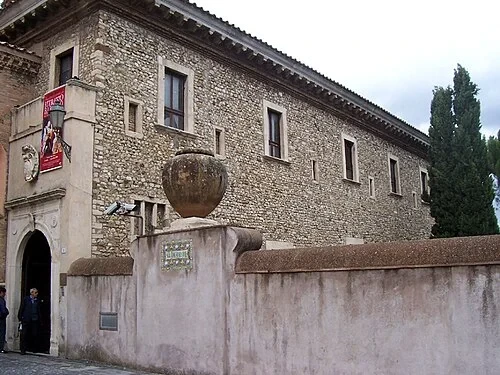 Arrival: The Gateway and Santa Maria MaggioreThe Entrance Portal
Welcome to Villa d'Este, the crowning achievement of Cardinal Ippolito II d'Este. A man of immense ambition and refinement, Ippolito was the son of Lucrezia Borgia and a grandson of Pope Alexander VI. After a period of political exile, his rehabilitation by Pope Pius IV in 1560 allowed him to finally begin construction on this grand estate. You are entering what was originally a 9th-century Benedictine monastery. When Ippolito was appointed Governor of Tivoli, he found the official residence cramped and outdated, leading him to envision a palace that would rival the great villas of Rome. Above the modest entrance portal, look for the d'Este family crest—a carved eagle. This heraldic symbol serves as a quiet announcement of the power and lineage of the man who built this domain. By passing through this threshold, you move from the public life of the town square into the Cardinal's highly orchestrated private world. The structure you see today evolved over decades, blending the austere bones of the former monastery with the lavish architectural tastes of the High Renaissance. This entrance marks the start of a vertical descent into one of Europe's most influential and imitated garden designs.
Photo: MarkusMark · CC BY-SA 3.0
02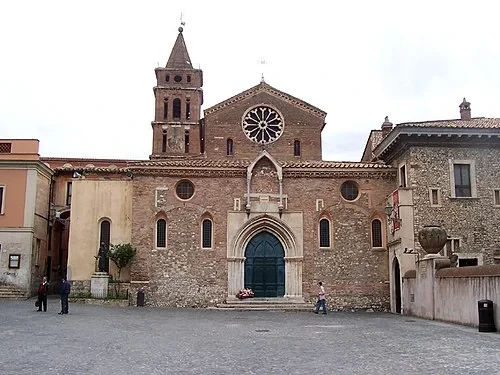 Arrival: The Gateway and Santa Maria MaggioreChurch of Saint Mary Major
The Church of Saint Mary Major stands as a physical reminder of the site's monastic past. When Cardinal Ippolito II d'Este took over the neighboring Benedictine monastery in the mid-16th century, he integrated the existing cloisters and rooms directly into his new palace. This structural connection explains the villa's somewhat irregular layout, as Renaissance architects had to work around the ancient ecclesiastical footprint. Creating the villa's expansive terraces was an immense undertaking that fundamentally altered the local landscape. The Cardinal's vision required the forced demolition of numerous local houses and shops to clear the necessary space. Furthermore, the steep hillside had to be aggressively excavated to create the flat platforms required for the gardens. This process was neither quick nor easy, spanning more than twenty years of constant labor and massive financial investment. Ippolito sought to create a mountain retreat that stood as a symbol of his ability to command both nature and the local community. While the church remains a place of worship, its walls are shared with a palace designed for worldly power and intellectual pursuit, marking a unique convergence of religious history and secular ambition. The stone facade of the church mirrors the rugged, ancient character of the original town.
Photo: MarkusMark · CC BY-SA 3.0
03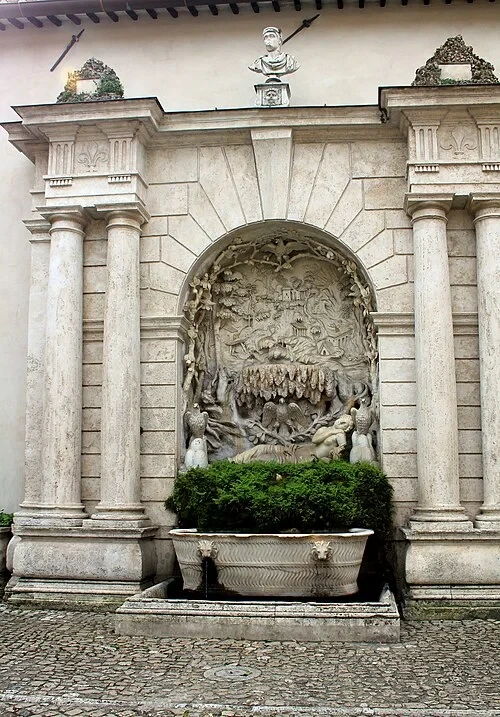 The Historic Cloister and Fountain of VenusFountain of Venus
The Fountain of Venus provides your first introduction to the villa's central theme: the sophisticated harmony between nature and classical mythology. It is situated in the historic cloister courtyard, a space that once served as the heart of the silent Benedictine monastery. Under the direction of architect Pirro Ligorio, this austere religious area was transformed into a refined reception space intended to impress the Cardinal's guests. The focal point is the reclining figure of Venus, the Roman goddess of love and beauty, who rests within a grotto-like niche. This juxtaposition of a pagan deity within a former monastery was a bold statement of the Cardinal's humanist interests and his appreciation for classical antiquity. The fountain's design incorporates rugged, naturalistic rockwork that contrasts with the architectural symmetry of the surrounding courtyard. In the 16th century, visitors would have been greeted by the gentle sound of water here, signaling their transition from the dry town streets into a world defined by hydraulic art. The transformation of this space from a site of monastic meditation to one of Renaissance luxury highlights Ligorio's skill in repurposing old structures for new, grander purposes. Notice how the figure is posed naturally, as if lounging in a private garden, embodying the ideal of the 'vigna' or vineyard retreat.
Listen in the appPhoto: Karelj · CC BY-SA 3.0
04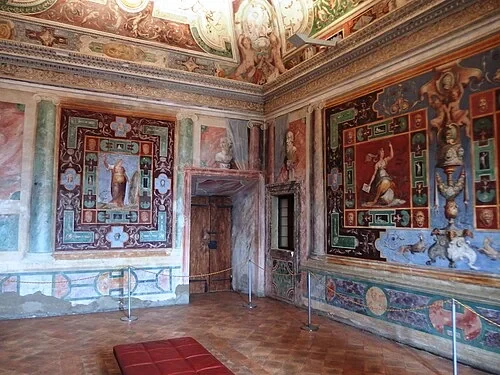 The Cardinal's Private ApartmentsHall of the Nobility
The Hall of the Nobility is a masterclass in Renaissance visual propaganda. Every surface of this room is covered in elaborate frescoes that were meticulously designed to impress visiting dignitaries and political rivals. The central theme revolves around the Cardinal's humanist interests and the prestigious lineage of the d'Este family. These paintings were far more than simple decorations; they functioned as a clear statement of wealth, intellectual power, and social standing. The imagery draws heavily from classical history and mythology, aligning the d'Este family with the virtues of the ancient world. You can see various scenes depicting noble deeds and historical triumphs, all framed by intricate decorative borders. The use of vibrant pigments and complex compositions reflects the high level of craftsmanship available to the Cardinal during the 16th century. This room served as a venue for formal receptions where guests would be surrounded by these visual reminders of the family's importance. By placing himself at the center of such a sophisticated artistic program, Cardinal Ippolito reinforced his identity as a prince of the Church and a refined patron of the arts. The dense layering of symbols and figures requires a careful eye to fully decode the stories of honor and heritage presented throughout the space.
Listen in the appPhoto: Palickap · CC BY-SA 4.0
05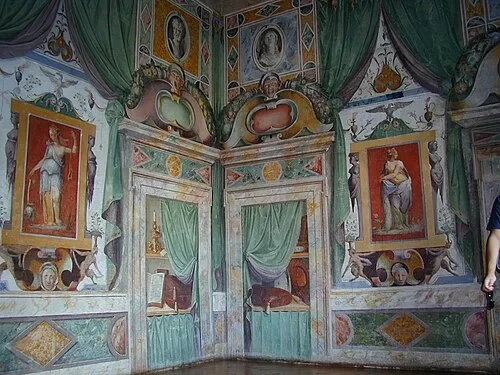 The Cardinal's Private ApartmentsHall of Glory
The Hall of Glory is characterized by its sophisticated use of trompe-l'œil, or trick-of-the-eye, techniques. As you look at the walls, notice how the painted curtains and architectural frames create a convincing illusion of depth, making the flat surfaces appear three-dimensional. These frescoes were commissioned to celebrate the Cardinal’s status and his significant influence within the Church. Interestingly, they also touch upon his missed opportunities, specifically his several unsuccessful attempts to be elected Pope. The room is filled with allegorical figures representing virtues such as Fame, Fortitude, and Justice—qualities the Cardinal believed defined his long legacy. These personifications are often shown in dynamic poses, framed by faux-marble columns and ornate moldings. The ceiling continues this grand narrative, drawing the eye upward toward scenes of celestial triumph. By using these artistic 'tricks,' the painters were able to expand the perceived size of the room, creating an atmosphere of boundless grandeur. The d'Este eagle appears frequently in the decorative details, ensuring the family name is never far from the viewer's mind. This space reflects the intense political life of a 16th-century Cardinal, where even the walls of one's home were utilized to broadcast one's virtues and justify one's worldly ambitions.
Listen in the appUser:Lalupa · Public domain
06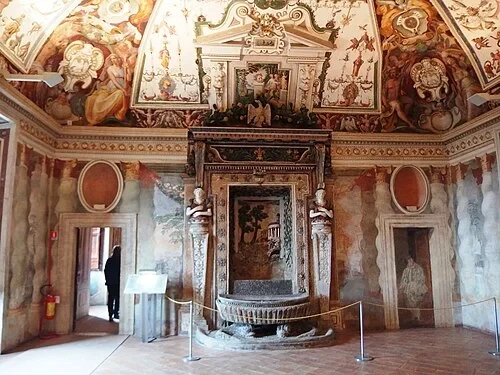 The Hall of the FountainHall of the Fountain
The Hall of the Fountain served as the villa's primary grand reception room, and it contains one of its most unique features: a rare internal wall fountain. This allowed the soothing sound of flowing water—the defining characteristic of the entire estate—to be heard even while guests were indoors. The fountain itself is a sophisticated piece of hydraulic engineering, integrated seamlessly into the wall to provide a cooling effect during the hot Italian summers. Look toward the ceiling to find paintings that depict the villa and its vast gardens. These frescoes were actually painted before the project was finished, serving as a visual 'map' or architectural plan of what the Cardinal envisioned the completed site would look like. They show the terraces, the major fountains, and the dense greenery in their idealized state. This room was the intellectual heart of the villa, where the Cardinal would host his most important guests. The combination of the indoor fountain and the panoramic ceiling paintings created an immersive environment that blurred the line between the interior luxury and the exterior landscape. It reinforced the idea that the villa was a unified work of art, where architecture, painting, and hydraulics worked in perfect tandem. The presence of the fountain indoors was a true luxury, signaling Ippolito's absolute control over the local water supply.
Listen in the appPhoto: Palickap · CC BY-SA 4.0
07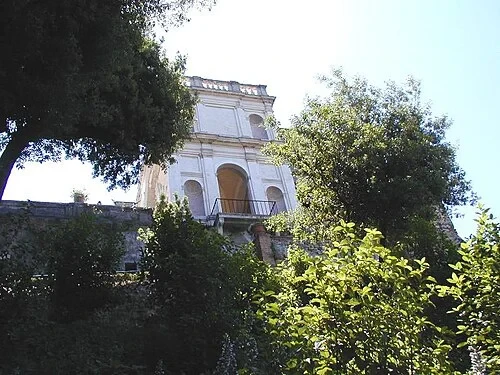 The Vialone Terrace and Gran LoggiaThe Grand Loggia
Standing on the Grand Loggia, you can truly appreciate the staggering scale and verticality of this project. This massive balcony spans the width of the villa and overlooks 4.5 hectares of meticulously terraced land. The garden below descends a dramatic 45 meters, a height equivalent to a modern fifteen-story building. This space was the Cardinal’s primary dining and viewing platform, carefully positioned to catch the prevailing breezes and offer a commanding view of the Roman Campagna stretching out toward the horizon. From here, one can see the town of Tivoli nestled against the hillside below. The loggia acted as a transition zone, connecting the formal interior halls with the wilder, watery world of the gardens. It was designed to showcase Ippolito's mastery over the difficult, steep terrain. Every fountain and path you see below was carved out of the rock or built up with massive retaining walls. In the 16th century, a guest standing here would have been overwhelmed by the synchronized sound of hundreds of fountains rising from the various levels. The architecture of the loggia itself, with its sturdy columns and wide arches, provides a frame for the landscape, turning the garden into a living painting for the Cardinal and his guests to admire while they dined.
Listen in the appPhoto: Lalupa · CC BY-SA 3.0
08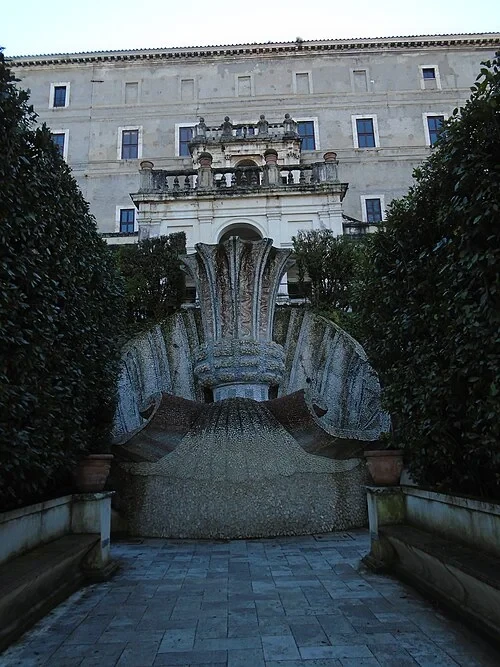 The Fountain of the BicchieroneFountain of the Bicchierone
The Fountain of the Bicchierone, or the 'Great Cup,' is a later addition to the garden, designed in the 17th century by the Baroque master Gian Lorenzo Bernini. You can easily distinguish it from the earlier Renaissance fountains by its fluid, organic form. While the original 16th-century designs tend to be rigid and architectural, Bernini’s shell-shaped basin feels movement-oriented and naturalistic. It was strategically placed to manage the flow of water from the upper terrace down into the main body of the garden. The design features a large, serrated chalice that overflows into a lower basin, creating a graceful, tiered waterfall effect. This fountain acts as a sophisticated transition point, guiding the visitor's eye—and the water—downward toward the more complex features below. Despite being added long after Cardinal Ippolito’s death, it respects the original hydraulic plan while introducing the more emotive and dynamic spirit of the Baroque era. The fountain is relatively simple in its components but achieves a high degree of elegance through its proportions. It demonstrates how subsequent generations of architects continued to enhance the villa, adding new layers of artistic style while maintaining the central theme of water as the primary creative force. The moss and weathering on the stone today only add to its integration into the surrounding greenery.
Listen in the appPhoto: Eugenio Hansen, OFS · CC BY-SA 4.0
09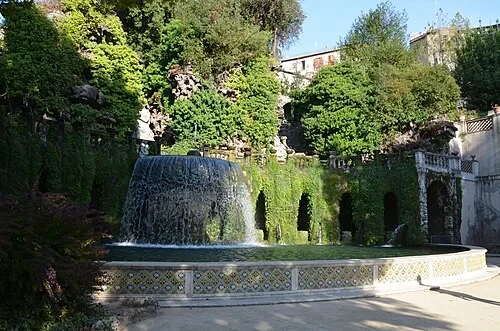 The Oval FountainThe Oval Fountain
Often called the 'Queen of Fountains,' the Oval Fountain is one of the most symbolically significant features in the garden. Its design was intended to represent the local landscape of the Tiburtine mountains and the town of Tivoli itself. Notice the artificial mountain backdrop, complete with statues and greenery, which mimics the rugged terrain surrounding the villa. The fountain is centered around a large semi-circular basin that creates a natural water theater. A walk-through gallery behind the falling water allows you to see the garden through a shimmering, translucent curtain. This fountain was more than just a visual landmark; it served a practical purpose by cooling the air for visitors as they walked along the garden's upper paths. The sound here is immense, created by the large volume of water cascading from the upper rocks into the pool below. Architect Pirro Ligorio designed it to be the centerpiece of the garden’s cross-axis, anchoring the upper levels. The statues in the niches represent the local rivers and nymphs associated with the region's ancient myths. By symbolically bringing the surrounding mountains into the Cardinal's private garden, the fountain emphasized his role as the master of the local territory. The combination of architecture and naturalistic rockwork creates a sense of a grotto discovered within a formal landscape.
Listen in the appCarole Raddato from FRANKFURT, Germany · CC BY-SA 2.0
10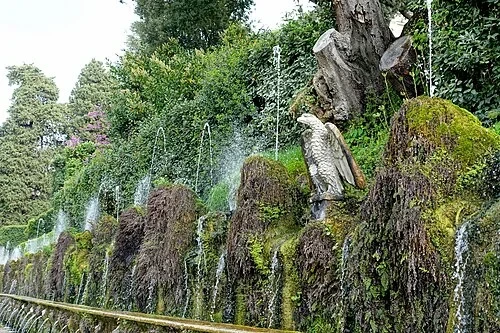 The Hundred FountainsThe Hundred Fountains
The Hundred Fountains is perhaps the most iconic walkway in the garden, stretching for 130 meters along a single terrace. This path is a feat of 16th-century engineering, featuring nearly 300 individual water spouts organized across three distinct tiers. These tiers symbolically represent the three branches of the Aniene River, which provides the water for the entire villa. The system is entirely gravity-fed; an 875-meter network of underground pipes delivers water to these spouts without the use of a single mechanical pump. As you walk along, notice the alternating figures of lilies and eagles that decorate the fountains. These are heraldic symbols representing the French monarchy—a tribute to the Cardinal's political ties—and the d'Este family eagle. The repetitive rhythm of the spouts creates a consistent, white-noise-like sound that accompanies you along the entire length of the terrace. Over the centuries, the stone has become covered in a thick layer of moss and ferns, softening the architectural lines and making the fountains feel like a natural part of the hillside. This long, watery corridor served as a grand promenade for the Cardinal’s guests, offering shade, cool air, and a display of absolute hydraulic mastery. The sheer number of outlets required constant maintenance and a perfect understanding of water pressure to ensure a uniform flow.
Listen in the appPhoto: Daderot · Public domain
Villa d'Este
Frequently asked questions
How much does the guide cost?
Free app download. Listed guide price: $0.99. Guide price shown in the app. Audio guide only. Venue admission is separate.
Can I listen without internet?
Yes. Download the guide’s audio, images, and maps in the app before your visit. Your downloaded content is then available offline.
Can I listen in my language?
Stanza supports 15 languages. Check the app for the languages available for this guide.
Do I need to follow a schedule?
No. This is a self-guided experience. Choose your stops, pause whenever you like, and return to a story at your own pace.
At your own pace
Explore Villa d'Este.
Download Stanza, then search for “Villa d'Este”.
Free app download · Guide price shown in the app
Keep exploring
Nearby audio guides
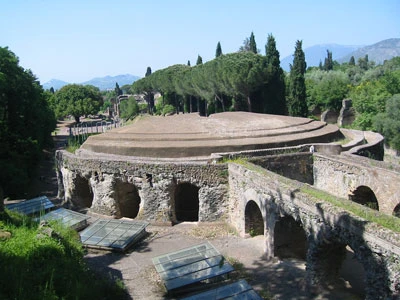
Tivoli
Villa Adriana
Content & sources
Zh0rz at Dutch Wikipedia · CC BY-SA 3.0
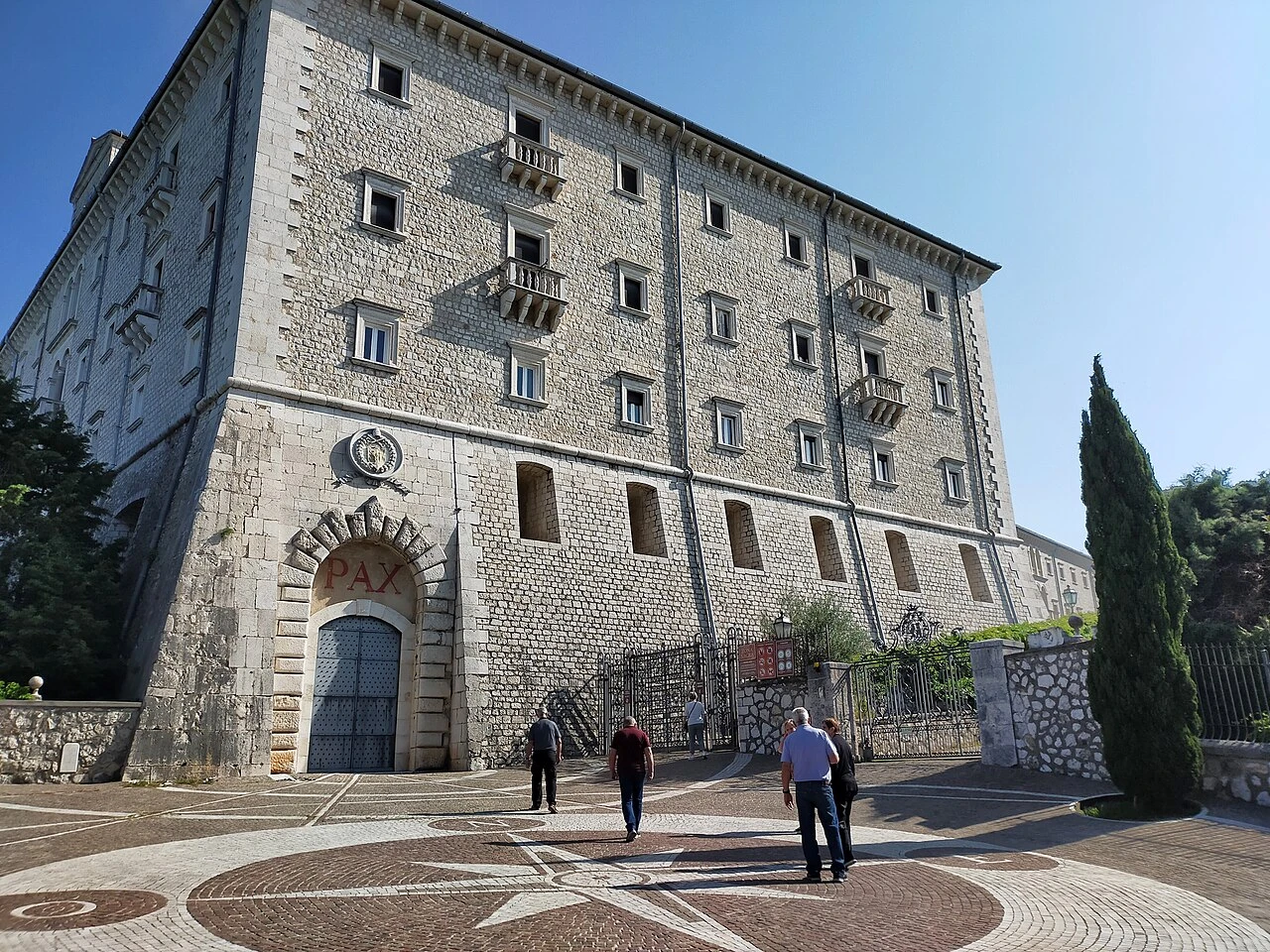
Cassino
Abbey of Monte Cassino
Content & sources
Photo: Marica Massaro · CC BY-SA 4.0
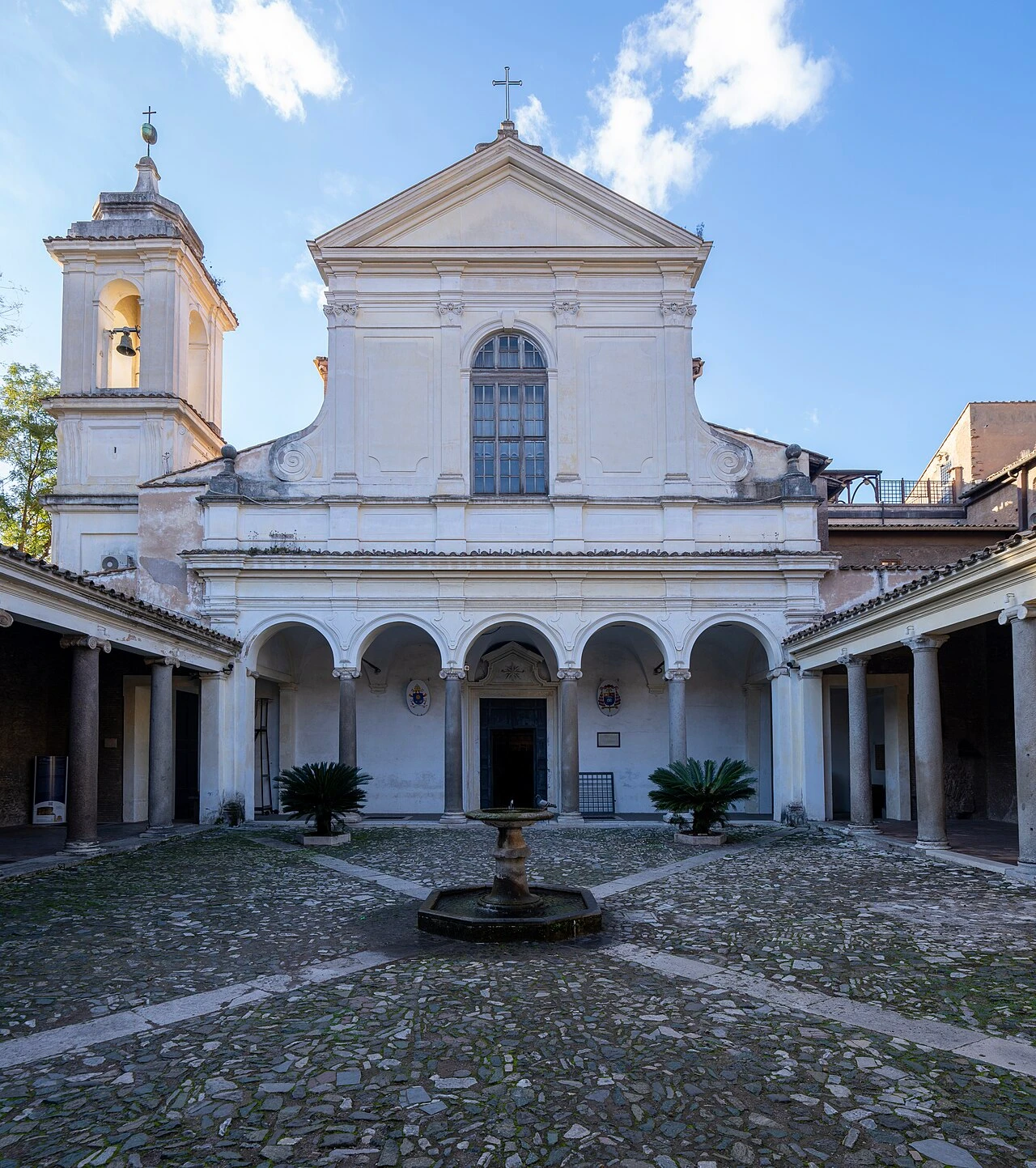
Rome
Basilica di San Clemente
Content & sources
Photo: Labicanense · CC BY-SA 4.0
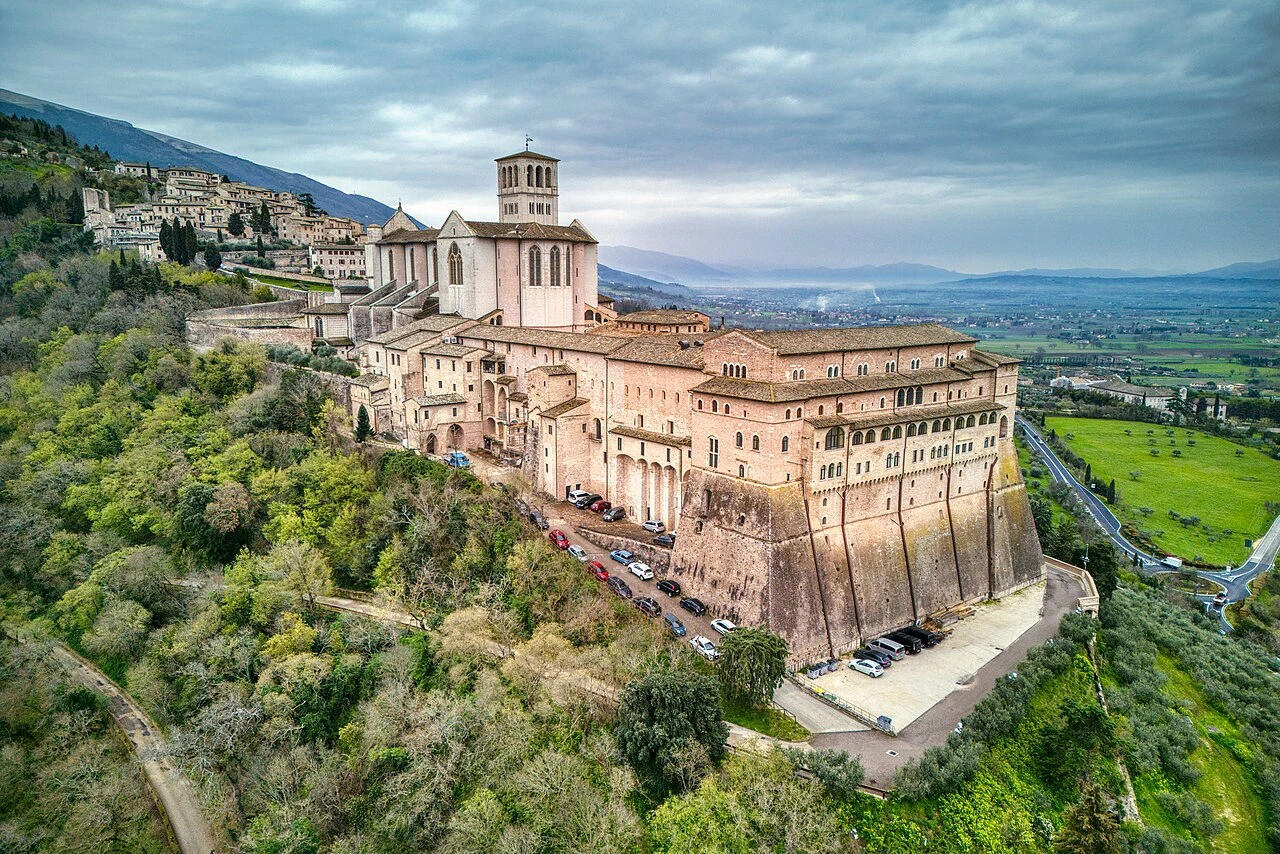
Assisi
Basilica di San Francesco
Content & sources
Hagai Agmon-Snir حچاي اچمون-سنير חגי אגמון-שניר · CC BY-SA 4.0