Languages
15Torre di Pisa Audio Guide
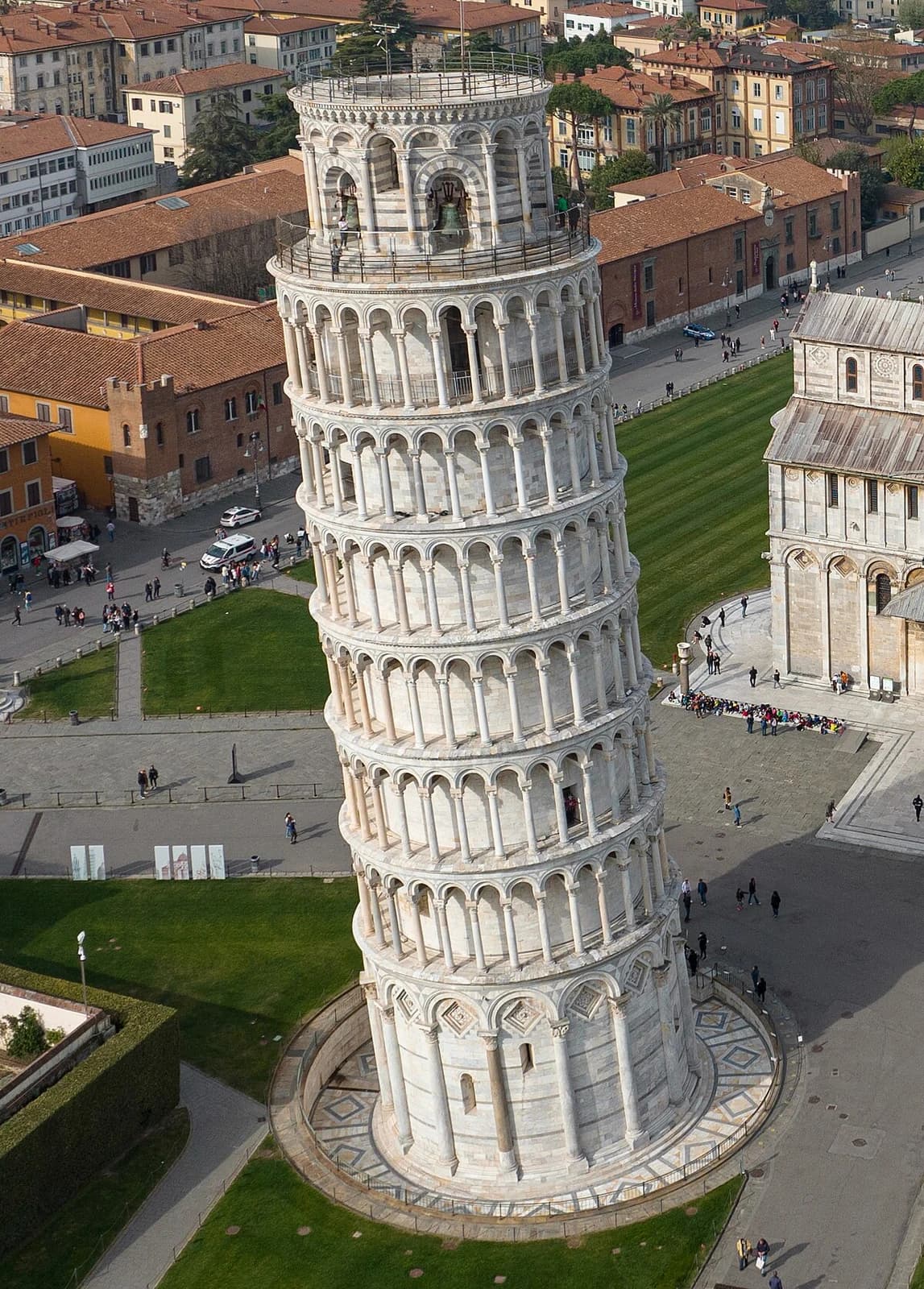
Torre di Pisa is a landmark in an iconic location, Italy. Explore it with Stanza's GPS-triggered offline audio guide — available in 15 languages.
Quick Facts
19
Stops
15
Languages
100%
Offline
About Torre di Pisa
A medieval bell tower in Pisa, Italy, famous for its unintentional tilt.
This self-guided audio tour features 19 narrated stops organized across 4 sections, including The Piazza dei Miracoli: Facing the Tilt, Climbing the Hollow Core, The Bell Chamber and the Bells of Betrayal, The Summit: Galileo's Gravity and the WWII Miracle. As a tower, Torre di Pisa offers a unique cultural experience, Italy.
The Stanza audio guide is available in 15 languages and works entirely offline — download the complete tour including audio narration, maps, and images before your visit. As you walk through Torre di Pisa, GPS-triggered narration plays automatically at each point of interest.
Last updated:
What you will hear
The Piazza dei Miracoli: Facing the Tilt
Welcome to the 'Square of Miracles.' As you approach the Campanile, or bell tower, the first thing you notice is the impossible lean. Construction began on August 9, 1173, but by the time builders reached the second floor in 1178, the tower began to sink. The cause? A shallow three-meter foundation set in unstable subsoil of clay and sand. For nearly 800 years, the tower has defied gravity, currently resting at an angle of 3.97 degrees. Notice how it leans toward the Cathedral; it’s a 14,453-tonne masterpiece of Romanesque architecture that was never meant to be straight.
The Leaning Landmark
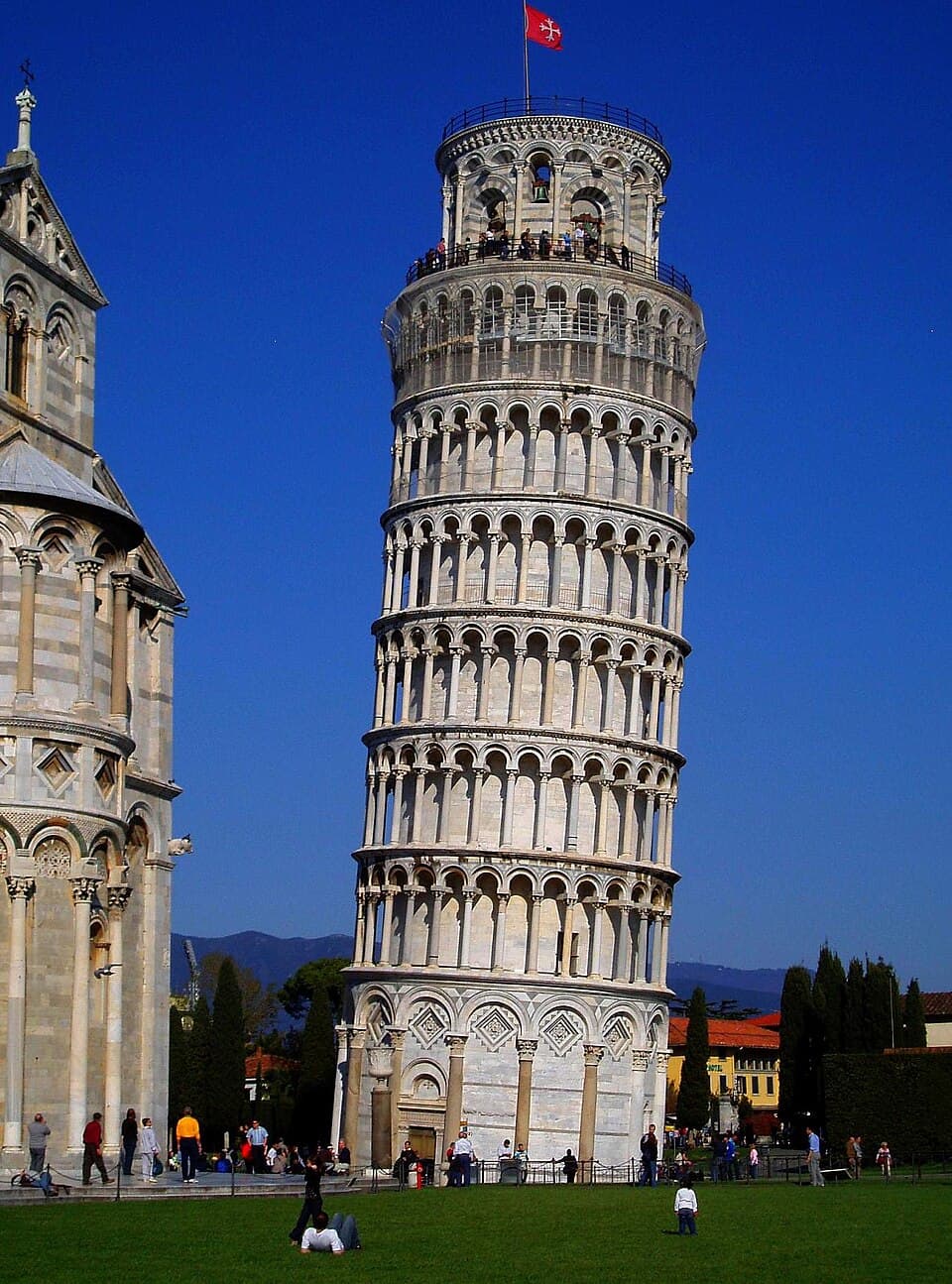
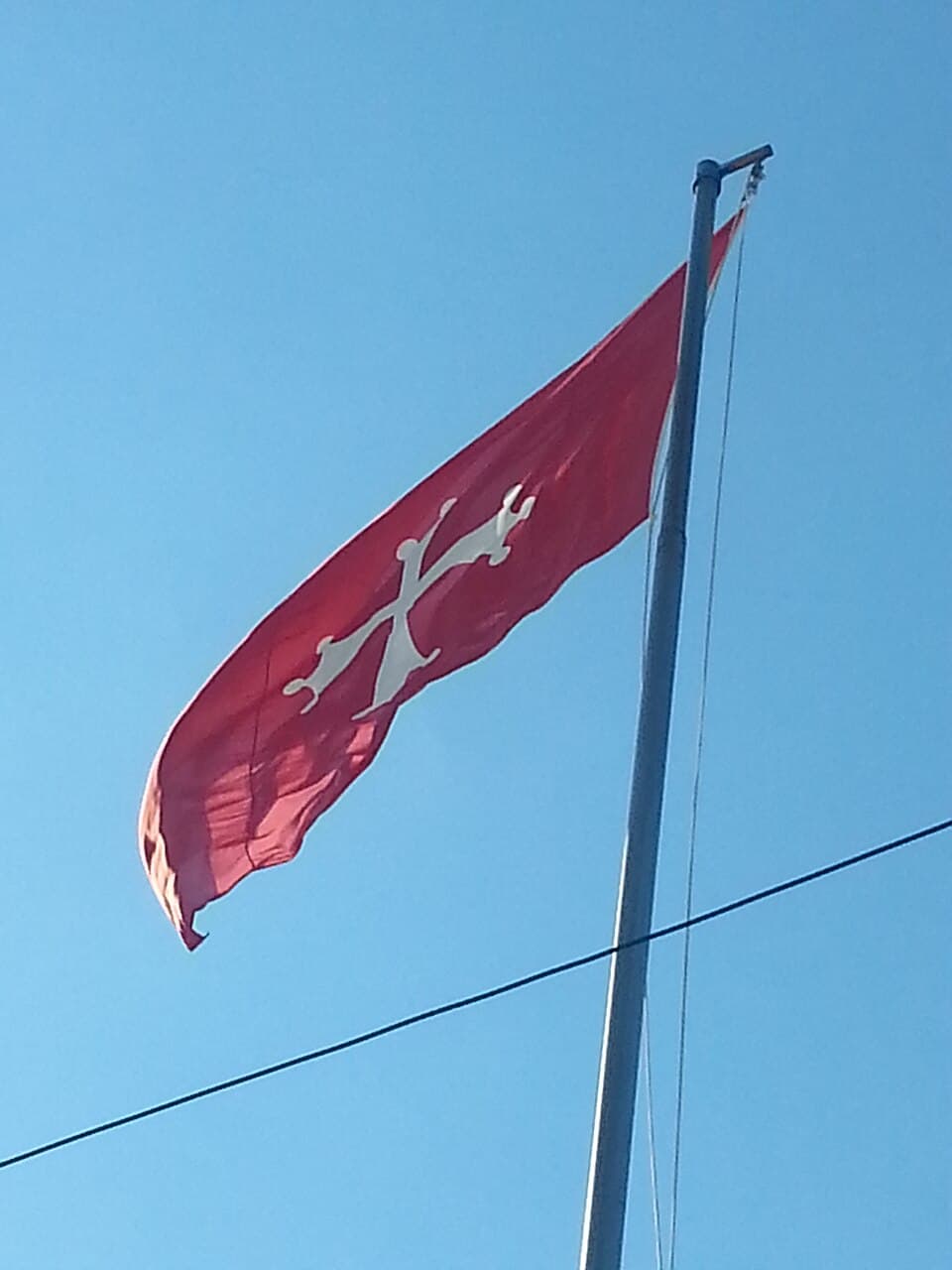
This freestanding bell tower, known simply as the Leaning Tower, stands roughly 56 meters tall and weighs a staggering 14,453 tonnes. It currently tilts at an angle of 3.97 degrees. Construction began on August 9, 1173, and spanned 199 years. The primary cause for the lean lies hidden beneath the grass. The tower was built on a foundation only three meters deep—far too shallow for a structure of this immense weight. Furthermore, it sits on unstable subsoil composed of clay and sand. As the ground shifted over the centuries, the tower began its slow descent. Intricate arches decorate each level, leading up to the bell chamber at the very top. Even today, visitors explore the balconies, while a red flag with a white cross flies from the summit.
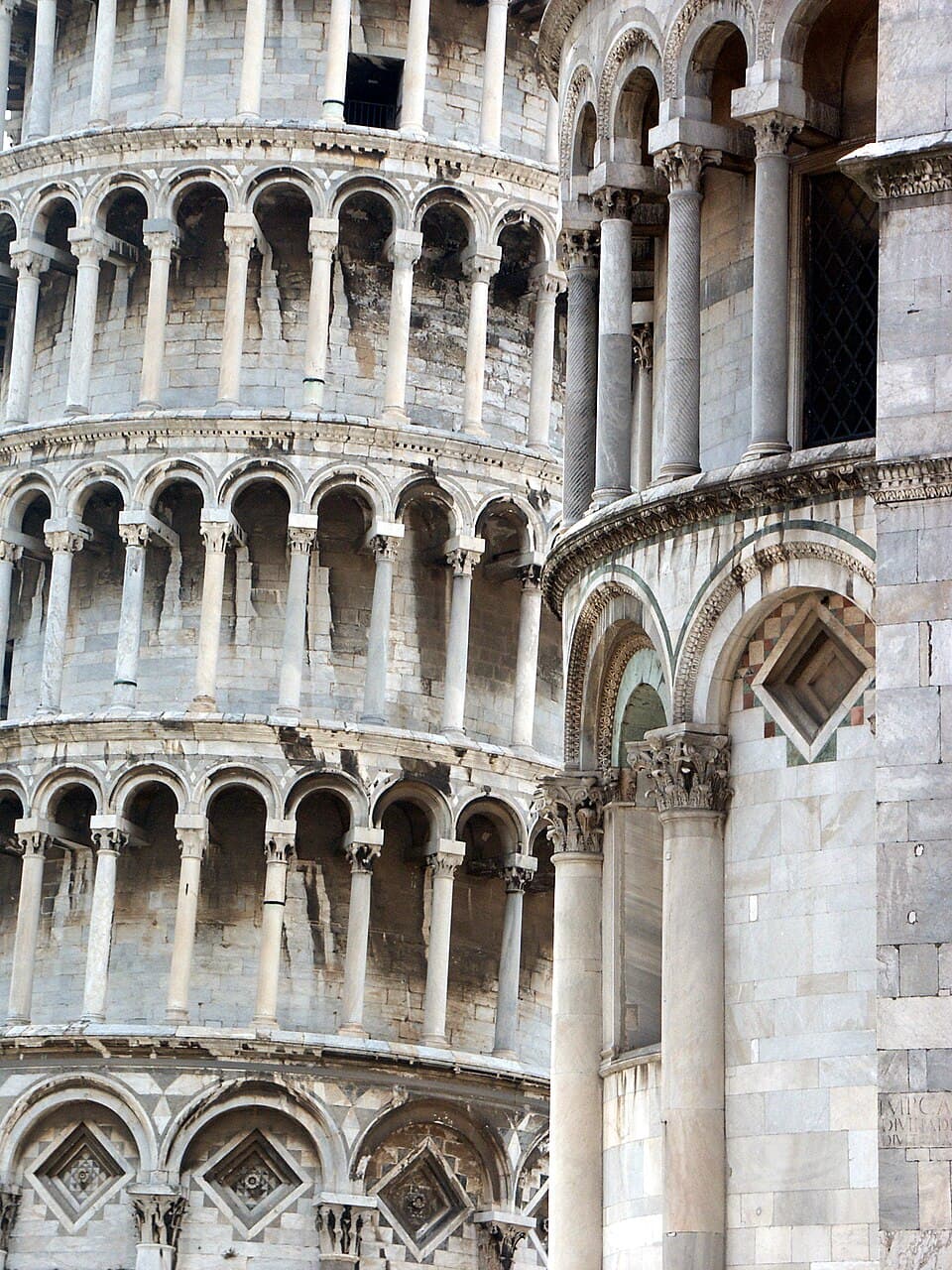
A Study in Slant
From this specific angle, you can truly appreciate the visual drama of one of the world’s most famous architectural accidents. The straight, vertical lines of the neighboring Cathedral provide a stark, rigid frame for the tower’s lean, creating a moment of tension frozen in stone. Historical records suggest that by the time builders reached the second floor in 1178, the structure had already begun its fateful tilt, sinking into the unstable soil beneath. Rather than abandoning the project, the builders continued upward over the following decades. Rhythmic tiers of arches and delicate columns wrap around the exterior, creating a complex play of light and shadow across the weathered surface. Despite the lace-like appearance of these arcades, they bear the immense weight of a structure that appears to be in a perpetual state of falling. The lean feels almost surreal from here, challenging your sense of balance.
Climbing the Hollow Core
Step inside and look straight up. The tower is essentially a hollow cylinder. As you begin the climb up the 296 narrow, worn marble steps, you'll experience a strange, disorienting sensation of 'falling' as the staircase winds toward the leaning side. This is where you can see the 'Banana' curvature. In 1272, engineers tried to compensate for the tilt by building the upper floors with one side taller than the other, resulting in a slightly curved shape. Look for the narrow arrowslits in the thick walls and the modern monitoring cables that keep a constant pulse on the tower's stability.
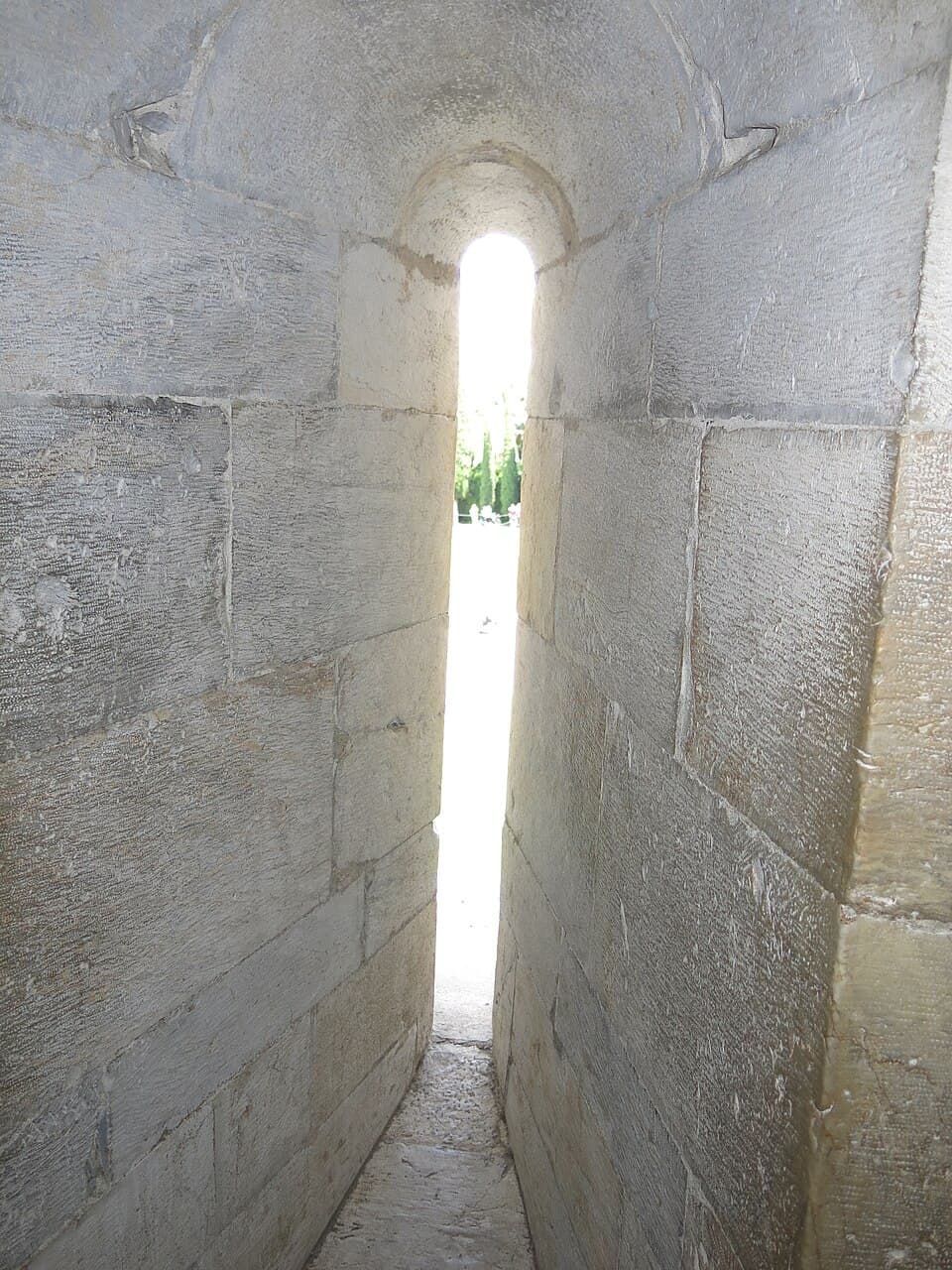
The Arrowslit View
You are looking at a classic piece of medieval military architecture: an arrowslit, also known as a loophole. While the Leaning Tower of Pisa is world-renowned for its iconic tilt and elegant marble colonnades, this feature reminds us that it was also built as a sturdy, defensible structure in an era when security was a primary concern for major public works. Notice how the stone walls angle sharply inward toward the narrow opening. This 'splayed' design was an ingenious defensive tactic; it allowed a guard or archer inside the tower a wide field of vision and a broad range of motion to aim a weapon, while presenting only a tiny, difficult target to any potential attackers outside. The thick, weathered masonry seen here illustrates the sheer mass of the tower’s walls, which are composed of large, textured stone blocks that have stood for centuries. The visual contrast here is striking. On the inside, the stone is cool and shadowed, showing the rough marks of historical craftsmanship. Through the narrow vertical gap, the world outside appears as a bright, vibrant sliver of green foliage and Italian sunlight. It provides a momentary, framed perspective of the surrounding grounds, far removed from the typical panoramic views seen from the top gallery. As you move past this feature, consider the dual nature of this building: it is both a masterpiece of Romanesque art and a functional, fortified structure built to endure through turbulent times.
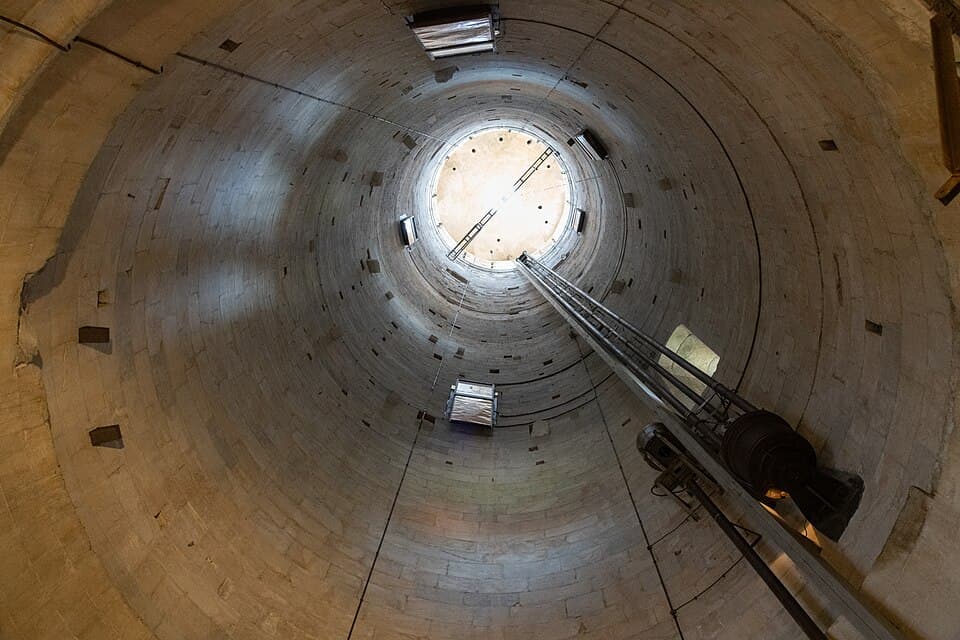
The Hollow Core
Standing here and looking directly upward, you are witnessing the secret interior of one of the world’s most famous landmarks. It is often a surprise to visitors that the Leaning Tower of Pisa is not a series of solid floors, but is essentially a massive, hollow stone cylinder. From this perspective, the architectural drama of its construction becomes visible in a way you can’t see from the outside. As your eyes follow the stone walls up toward the light at the summit, take a moment to look closely at the alignment. You might notice that the tower isn’t actually a straight line leaning over; it possesses a subtle, organic bend known as the 'Banana' curvature. This was a deliberate, if desperate, engineering choice. Around 1272, after a long pause in construction, engineers realized the tower was sinking and tilting dangerously. In an attempt to pull the structure back toward the vertical, they began building the remaining upper floors with one side taller than the other. They hoped that by adding more weight to the side opposite the lean, they could rectify the center of gravity. While it didn't stop the tilting, it resulted in this unique, curved silhouette. This hollow core serves as a vertical timeline of that struggle—a place where you can see medieval problem-solving etched into the very masonry. It’s a reminder that this world-famous tilt wasn't just a mistake, but a challenge that builders spent centuries trying to overcome.
The Bell Chamber and the Bells of Betrayal
You have reached the belfry, the eighth and final floor, completed in 1372. This level is smaller in diameter and houses seven historic bells, each tuned to a different note of the musical scale. The largest is the 'Assunta,' cast in 1654. The most famous, however, is the 'San Ranieri' bell. Originally called 'Justice,' it was the bell rung to announce the execution of traitors—most notably Count Ugolino, whose tragic story was immortalized by Dante. From here, you can step out onto the gallery and see the red flag of Pisa flying above.
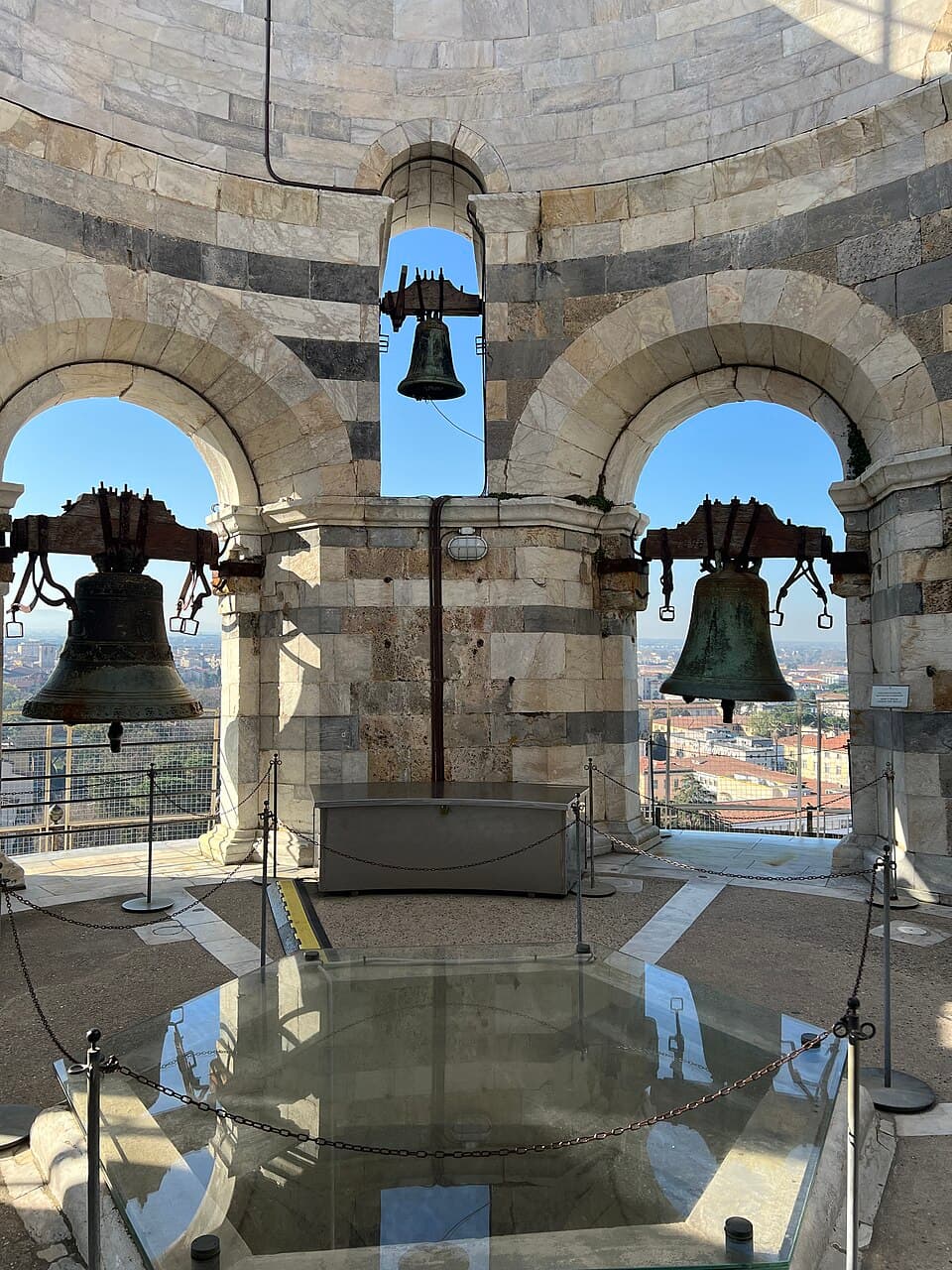
The Bell Chamber
The eighth floor is the very summit of the Leaning Tower, a belfry completed in 1372. Several massive bells are suspended within the open stone arches. There are seven bells in total, each cast to correspond to a specific note on the musical scale. They are made of a dark, weathered bronze, which contrasts with the light and grey-banded stone of the interior walls. For centuries, these heavy instruments swung freely to announce the hours. However, in the 20th century, the practice of swinging the bells was stopped to help preserve the tower’s stability. Engineers discovered that the heavy, rhythmic vibrations and the shifting weight of the swinging metal were worsening the lean. Today, the bells remain stationary and are struck by hammers instead, allowing their voices to be heard without endangering the structure. A glass-covered opening in the center of the floor provides a dizzying perspective straight down the interior of the tower. These bells have stood watch over Pisa for over six hundred years.
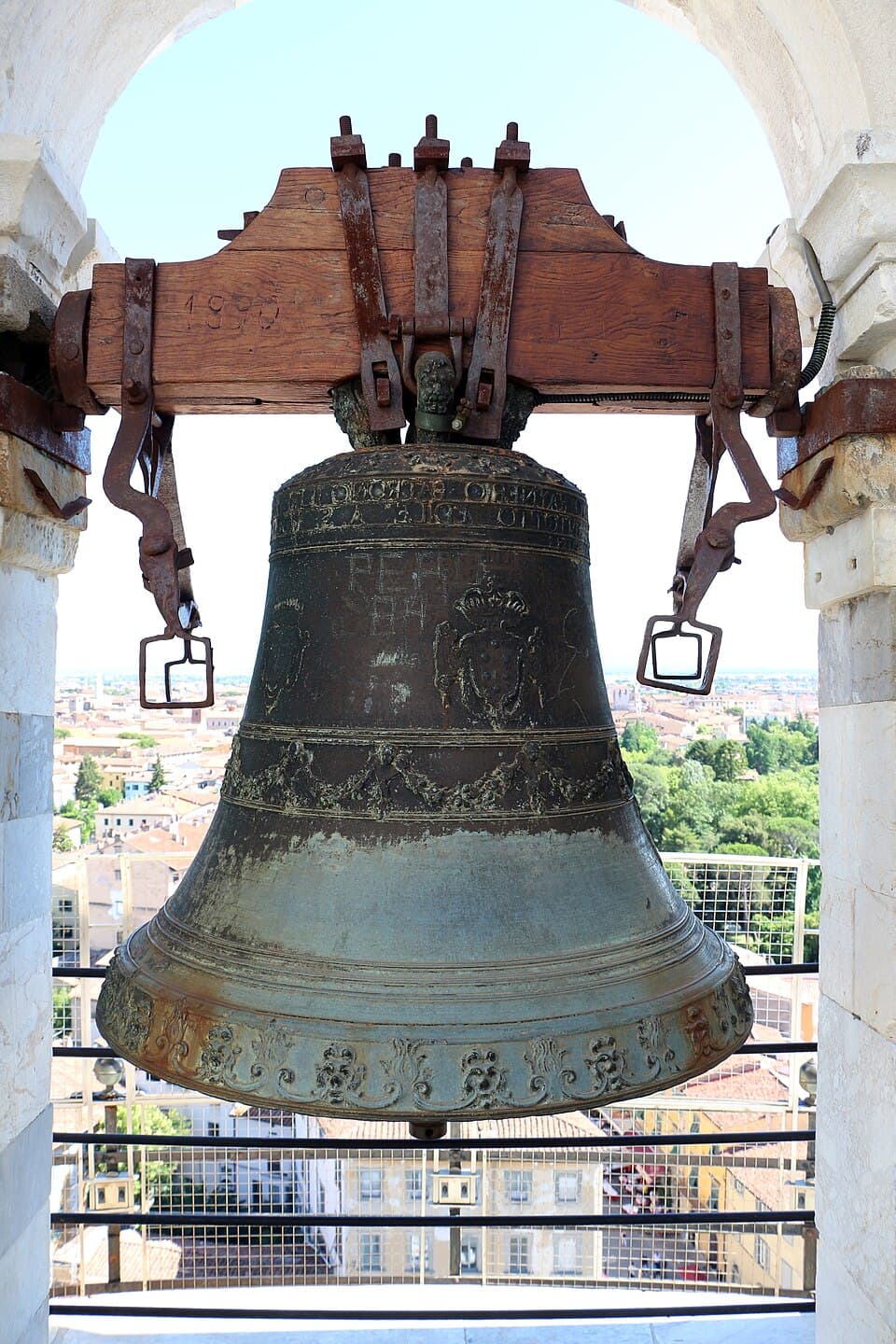
San Ranieri
1735
High above the streets of Pisa, hanging within the open arches of the famous Leaning Tower, sits the San Ranieri bell. Cast in 1735, this bronze instrument is a significant piece of the tower’s history, but it carries a somber reputation that contrasts with the beauty of the view surrounding it. Historically, this bell was known by the chilling nickname 'La Giustizia,' or 'Justice.' Unlike the other bells in the tower that might peal for weddings or religious festivals, the San Ranieri was reserved for a much darker purpose: it was rung only to announce the execution of traitors. The most famous figure associated with this tolling sound was Count Ugolino della Gherardesca. His story is one of the most haunting in Italian history, famously retold by Dante Alighieri in the 'Inferno.' Accused of treason in the 13th century, Ugolino and his family were locked away to starve in the nearby Muda Tower. While this specific bell was cast centuries after Ugolino’s time, it serves as the functional successor to the original bells that signaled such grim sentences. If you look closely at the bell’s surface, you can see the intricate decorative bands and iconography typical of 18th-century craftsmanship. It hangs from a massive, weathered wooden yoke that has supported its weight for nearly three hundred years. Today, the bell remains silent, no longer signaling the end of a life, but instead acting as a powerful witness to Pisa’s complex political past and the literary legends that still haunt the stones of this square.
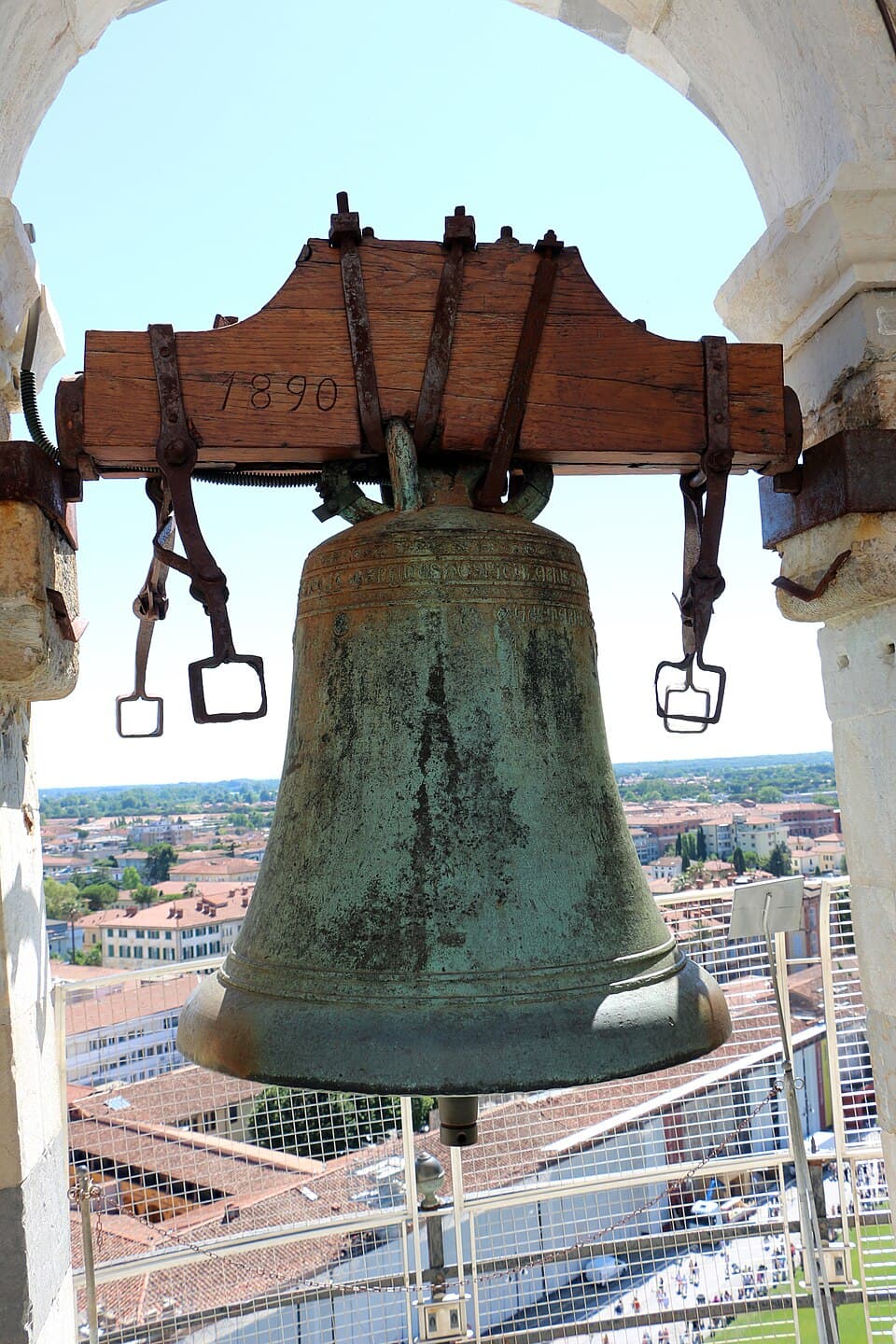
Pasquereccia
Lotteringio di Bartolomeo · 1262
The Pasquereccia is the oldest bell in the tower, cast in 1262 by the founder Lotteringio di Bartolomeo. This bell was already decades old before the tower’s upper levels were even completed. Its name is derived from the Italian word for Easter, 'Pasqua,' reflecting its role in announcing the festivities of Easter and the Pisan New Year, which was historically celebrated on March 25th. A rich, mottled green patina covers the surface—the result of over seven centuries of exposure to the elements. While the bronze bell is a medieval survivor, the sturdy wooden headstock it is attached to is marked with the year '1890,' a record of a later restoration to the mounting hardware. The deep resonance of this bell has drifted over the city for generations. It has remained in place through wars, political upheavals, and the gradual tilting of the tower itself.
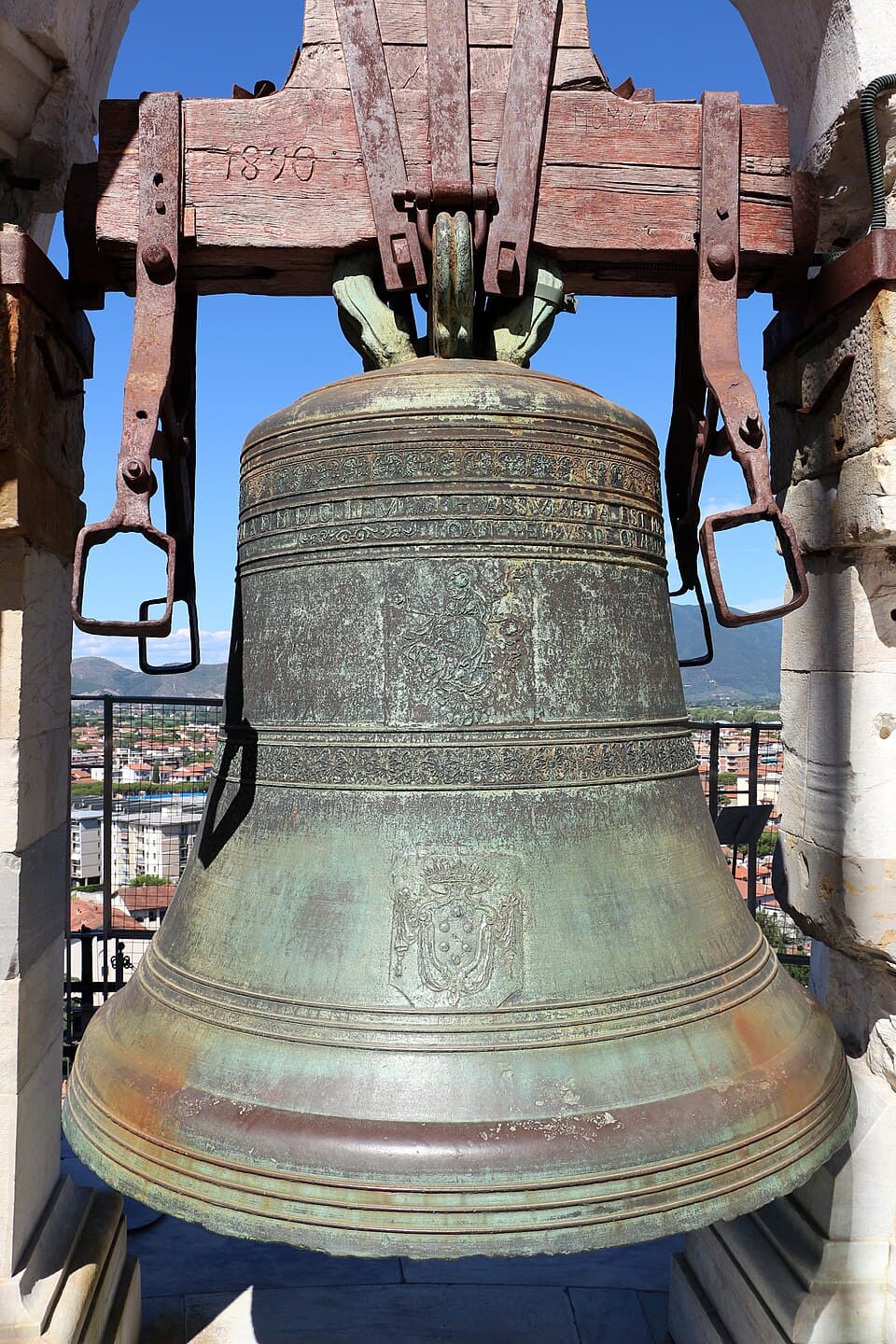
Assunta
Giovanni Pietro Orlandi · 1654
The 'Assunta' is the largest bell housed within the belfry of the Leaning Tower. Cast in 1654 by the founder Giovanni Pietro Orlandi, this massive bronze instrument weighs over 2,600 kilograms—more than two and a half metric tons of metal. The name refers to the Assumption of the Virgin Mary, a central figure in Pisan religious life. Intricate decorative reliefs featuring religious imagery and heraldic symbols are visible on the weathered surface of the bronze. These details showcase the high level of craftsmanship required to create a functional musical instrument of this scale during the mid-17th century. Positioned on the side of the belfry that faces the city, the Assunta was designed to project its deep voice across the urban landscape. In its heyday, the ringing of a bell this size was a communal signal that reached every corner of Pisa, calling residents to prayer or announcing significant civic events. When this bell was installed, the tower had already been leaning for centuries. The sheer force and vibration of this giant sent tremors through the marble structure every time it was swung into motion.
The Summit: Galileo's Gravity and the WWII Miracle
At the very top, you are rewarded with a panoramic view of Pisa. Look down at the lead-covered roof of the Cathedral and the red-tiled roofs of the city. Legend says that Galileo Galilei dropped two cannonballs of different masses from this height to prove that the speed of descent is independent of mass. Near the top, you'll find a plaque dedicated to him. This tower also survived a close call in WWII. U.S. Army Sergeant Leon Weckstein was ordered to call an artillery strike on the tower, suspecting it was a German lookout. He was so moved by its beauty that he hesitated, sparing the monument from destruction. Today, the tower is stable, having been pulled back slightly by 45 centimeters during a massive restoration in the 1990s.
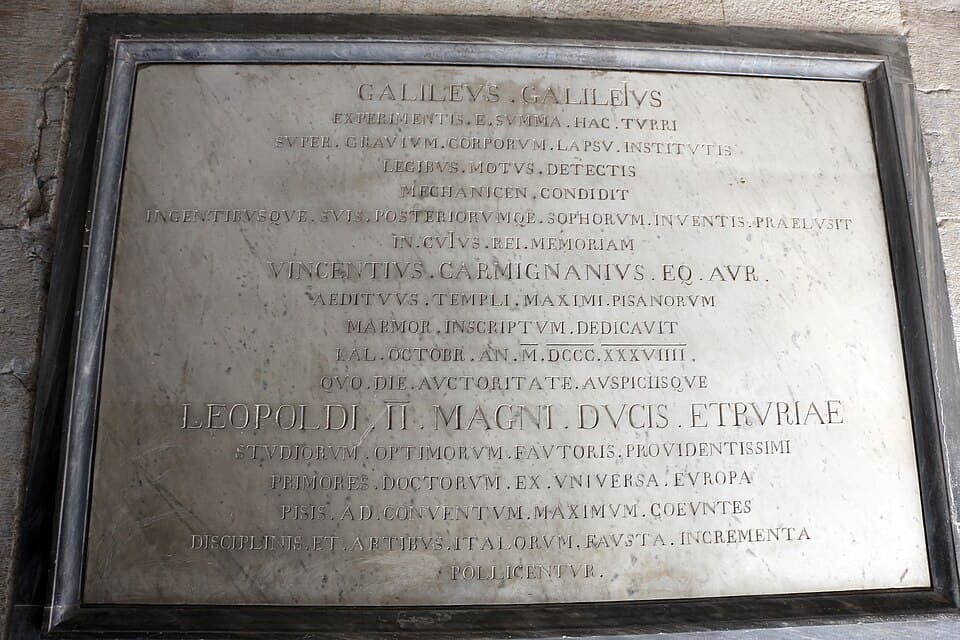
Galileo's Gravity Plaque
You are standing before a stone witness to one of the most famous stories in the history of science. This marble plaque, set within a dark rectangular frame, honors the Pisan-born polymath Galileo Galilei. If you look at the very top line, his name stands out in bold, classical Roman capitals: GALILEVS GALILEIVS. The legend associated with this spot is one of the foundational tales of physics. It is said that Galileo climbed the winding stairs of this very tower to perform a daring experiment. By dropping two cannonballs of different masses simultaneously, he aimed to prove that the speed of descent is independent of an object's weight—successfully challenging the long-held Aristotelian belief that heavier objects fall faster. While some modern historians debate whether this specific event took place exactly on these ledges or if it was primarily a 'thought experiment,' the significance remains unchanged. Galileo was using the Leaning Tower as a vertical laboratory to challenge centuries of dogma, laying the groundwork for our modern understanding of gravity. The plaque itself dates significantly later than Galileo's era. The Latin inscription mentions Leopold II, the Grand Duke of Tuscany, and includes the Roman numerals for 1838, indicating it was placed here as a nineteenth-century tribute to the city's most famous son. As you look at the weathered marble and formal lettering, consider how this piece of stone links a revolutionary scientist back to the unique architecture of his home city.
The Flag of Pisa
Look up to see the vibrant red flag snapping in the breeze. This is the flag of Pisa, featuring the iconic Pisan Cross in brilliant white. If you observe the cross closely, you will notice its unique design: each of its four arms ends in three distinct points, tipped with small circles or spheres. This symbol has represented the city for centuries, harkening back to the era when the Republic of Pisa was a dominant maritime power in the Mediterranean. Seeing this flag flying here, near the world-famous Leaning Tower, offers a moment to reflect on the identity of this historic city beyond its most famous landmark. While the tower is globally recognized for its unintended tilt—what many might initialy see as a structural failure—it actually stands as a remarkable triumph of human engineering and endurance. Much like the spirit represented by this flag, the tower has shown incredible resilience. For over 800 years, this structure has remained standing despite its precarious lean, surviving the passage of time, the ravages of war, and the tremors of numerous earthquakes. The red and white of the flag serve as a reminder that Pisa is more than just a site of a curious architectural accident. It is a city with a deep sense of pride and a long history of achievement. As you conclude your visit today, let this flag be a symbol of that enduring legacy. It reminds us that even something seemingly flawed can become an icon of strength, standing tall against the pull of gravity for nearly a millennium.
Want to hear the rest?
Download the Stanza app to unlock all 19 stops and full GPS-guided navigation.
Frequently Asked Questions
How long does the Torre di Pisa audio tour take?
The Torre di Pisa audio guide includes 19 narrated stops. Most visitors spend 45 minutes to 1.5 hours exploring the complete tour, though you can listen at your own pace and skip or revisit any stop.
Is the Torre di Pisa audio guide available in my language?
Stanza supports 15 languages: English, Spanish, French, German, Italian, Portuguese, Russian, Japanese, Chinese, Korean, Arabic, Hindi, Polish, Dutch, Hebrew. Check the guide in the app to confirm the languages currently available for this tour.
Can I use the audio guide offline at Torre di Pisa?
Yes! Download the complete Torre di Pisa tour — including all audio, maps, and images — before your visit. The Stanza app works completely offline, so you don't need WiFi or mobile data at the venue.
How much does the Torre di Pisa audio guide cost?
The Stanza app is free to download. The current listed price for the Torre di Pisa audio guide is $2.99; app-store region and currency may affect the final price.
How do I use the Stanza audio guide at Torre di Pisa?
Download the free Stanza app, search for "Torre di Pisa", and download the tour. When you arrive at the venue, the app uses GPS to detect your location and automatically plays the relevant narration as you move between points of interest — completely hands-free.
What makes the Stanza audio guide different from other Torre di Pisa tours?
Stanza offers GPS-triggered narration that plays automatically as you walk through Torre di Pisa — no need to manually select stops. The tour is available in 15 languages, works fully offline, and includes 19 expertly narrated stops with images and historical context.