Stanza · Audio guide
Rundāle Palace Audio Guide
A place to remember. A story to take with you.
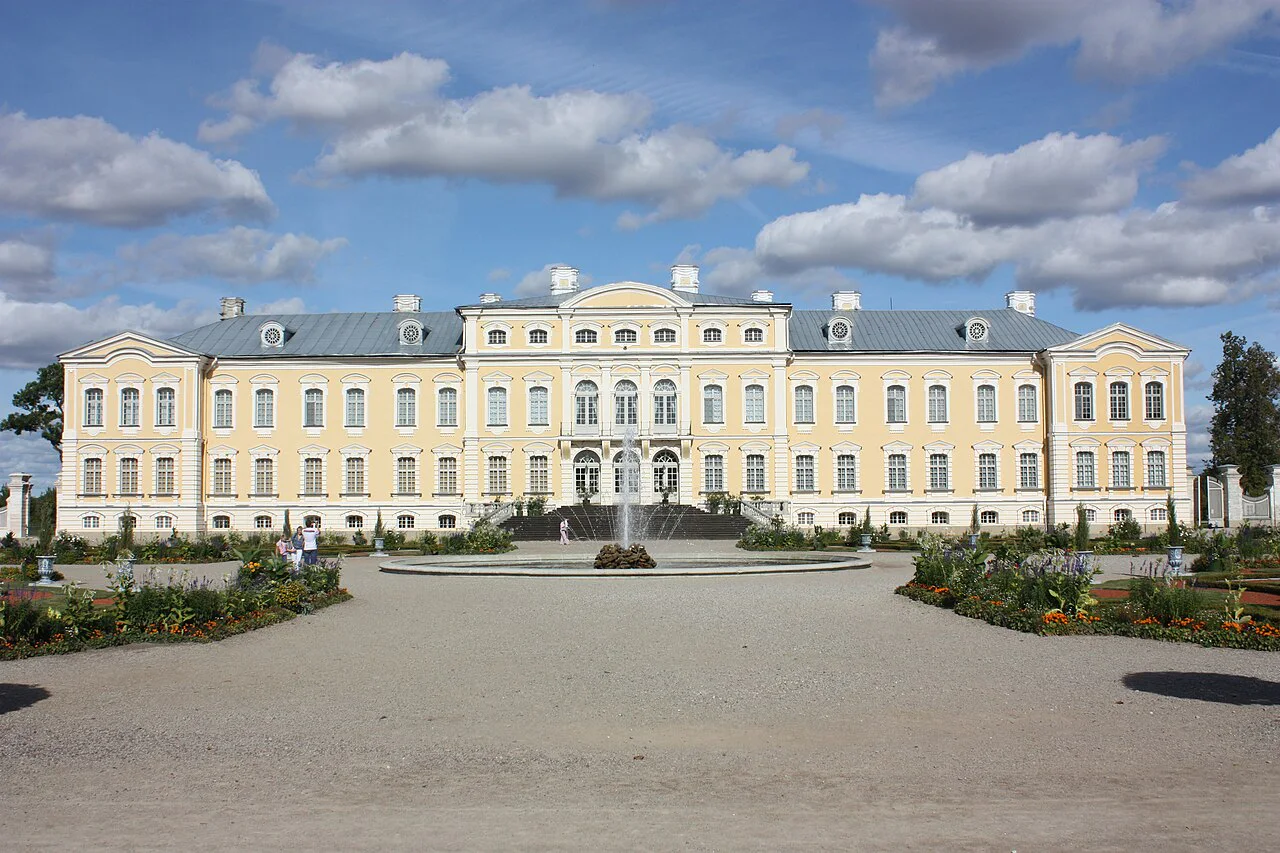
Rundāle Palace is one of the two major baroque palaces built for the Dukes of Courland in Latvia. It was constructed in two periods between 1736 and 1768.
Download Stanza, then search for “Rundāle Palace”.
About the tour
One guide. Your kind of visit.
Rundāle Palace is one of the two major baroque palaces built for the Dukes of Courland in Latvia. It was constructed in two periods between 1736 and 1768.
Ready when you are.
- 01Get the free Stanza app.
iOS & Android
- 02Find your guide.
“Rundāle Palace”
- 03Download before you go.
Works offline
Audio guide / 16 narrated stops
Inside the guide
Get to know a few of the stories before you go. Open a stop to read more.
01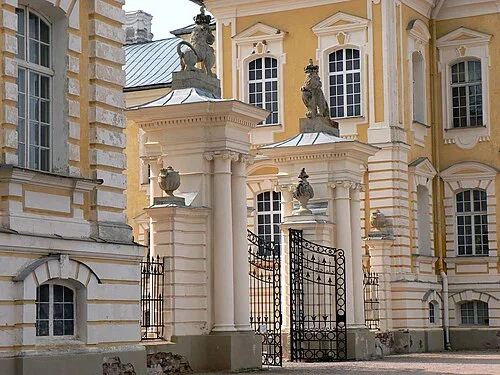 Northern Gates and Carriage Courtyard
Gates to the Duke's Summer Palace
Welcome to Rundāle Palace, the summer dream of a duke. The story starts in 1735, when Ernst Johann von Biron bought this estate with its old manor house for forty-two thousand dalers. The old house came down almost at once. On the twenty-fourth of May, 1736, the foundation stone was laid for something far grander: a summer residence for the ruler of a small duchy. The man he trusted with the design was Bartolomeo Rastrelli, architect to the Russian court. Above the wrought-iron gates, stone lions keep watch over the entrance. People came to call this place the Versailles of the Baltic, and the palace behind these gates was built to earn the name.
Photo: Wojsyl · CC BY-SA 3.0
02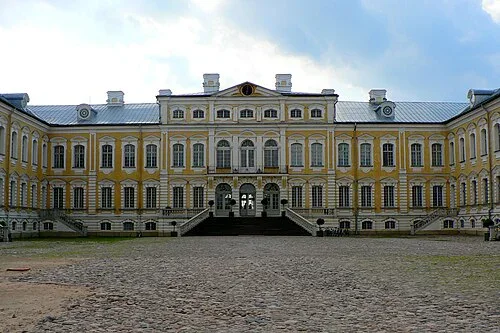 Northern Gates and Carriage Courtyard
The Horseshoe Courtyard and Rastrelli's Facade
From the courtyard, the palace shows its full shape: three wings around a semicircular carriage court, with a hundred and thirty-eight rooms in all. Rastrelli drew up the plans and signed the contracts himself, hiring carpenters, masons and potters. The bricks were fired right here on the estate, in twelve kilns built for the job. One detail caught every eye in the eighteenth century: the roof was covered in tin, something new in Courland, and it shone like silver in the sun. Court gossips liked to say the roofing cost as much as the diamond-studded button on the duke's waistcoat. Whether or not that was true, it tells you what people thought of this kind of spending.
Photo: Wojsyl · CC BY-SA 3.0
03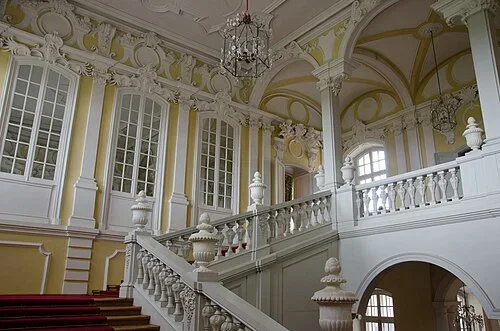 Ground Floor Vestibule and Grand Staircase
The Grand Staircase and the Duke's Fall
This staircase belongs to the palace's first, interrupted life. In 1740, Duke Biron's fortunes peaked: he became regent of the Russian Empire. Weeks later came a coup. He was overthrown, arrested and sent to Siberia, and later moved to Yaroslavl. Here, the work stopped on the ninth of November, 1740. The palace stood unfinished and empty for more than twenty years. Worse than that, what had already been fitted inside was taken away. Doors, wall panelling and parquet flooring were stripped out and carted off to Saint Petersburg for other building projects. The staircase survived all of that, a reminder of the first phase of construction, from 1736 to 1740.
Listen in the appJurijs Nikolajevs · CC BY-SA 4.0
04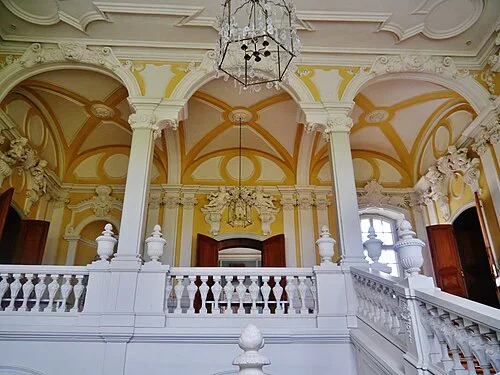 Ground Floor Vestibule and Grand Staircase
The Landing: Resuming Work, 1764-1768
From the upper landing, the doors of the state rooms line up ahead, one after another, exactly as the Baroque intended: a grand arrival, staged step by step. The man who made this possible had waited twenty-three years. Peter the Third and Catherine the Second restored Biron's rights and property, and he came back to Courland with his family in 1763. Building resumed the next year. The ageing Rastrelli was appointed intendant general of the ducal buildings in August 1764, drawing up documents and keeping general oversight. On site, the work passed to Johann Gottfried Seidel, and, from 1766, to the Danish architect Severin Jensen. By 1768, the palace was finished.
Listen in the appPhoto: Zairon · CC BY-SA 4.0
05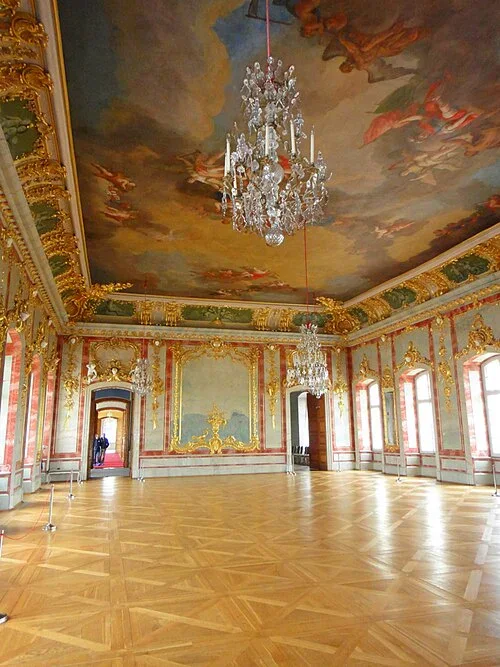 The Gold Hall (Throne Room)
The Gold Hall: Throne Room of Courland
Every court needs a stage for its power, and this was Biron's. The Gold Hall served as the ceremonial and throne room of Courland, where ducal authority was put on display. Gold glitters everywhere, and surfaces imitate marble in the richest fashion. Overhead, the ceiling carries allegorical paintings celebrating the virtues of a ruler. They were the work of two Italian painters, Francesco Martini and Carlo Zucchi, who arrived from Saint Petersburg. Between them, they painted ceilings in eight rooms of the palace. Underfoot, the parquet floor has been restored to the pattern the court would have known.
Listen in the appAinars Brūvelis · CC BY-SA 3.0
06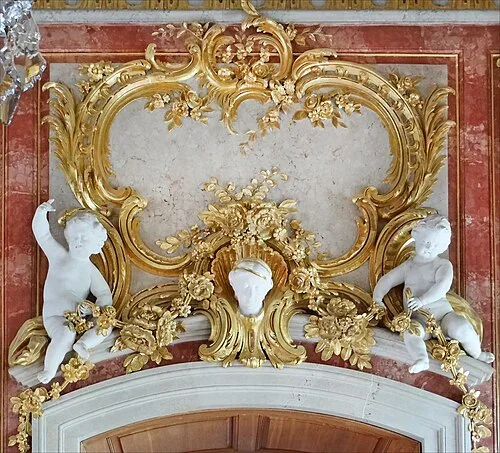 The Gold Hall (Throne Room)
Graff's Gilded Stucco
The gilding here is the work of one workshop. Johann Michael Graff, a sculptor from Berlin, brought the fashion for fine stucco and artificial marble to Rundāle. He came with his brother Josef and two assistants, Bauman and Lanz, and they worked in the palace in 1767 and 1768. Together they decorated twenty-seven rooms, and in two of them they fitted panels of artificial marble. In the Gold Hall, a carved inscription over the door reads 1767, the craftsmen marking their moment. The duke himself first came to live here in April of that year, staying until December. The palace was officially opened in 1768, though the last finishing touches went on until 1770.
Listen in the appJean-Pierre Dalbéra from Paris, France · CC BY 2.0
07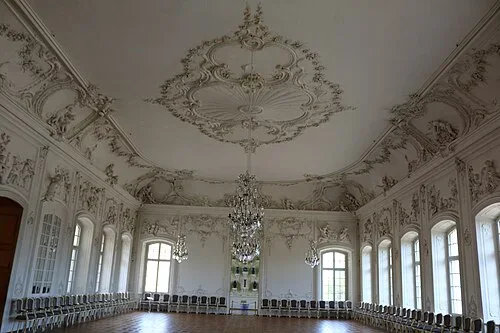 The White Hall (Rococo Ballroom)
The White Hall: From Chapel to Ballroom
This room was meant to be a church. Rastrelli's plan reserved the space for the palace chapel, but during the second phase of building, Severin Jensen changed the purpose. Fashion had moved on from heavy Baroque, and a ballroom served a ducal court better than a chapel. So the space became the White Hall, finished entirely in white stucco, radiant and light. Tall windows line the walls, letting in the light that makes the plasterwork glow. Here the court danced and held its receptions, chairs drawn up along the walls between the windows. What was planned for prayer became a room for music and movement.
Listen in the appPhoto: FrDr · CC BY-SA 4.0
08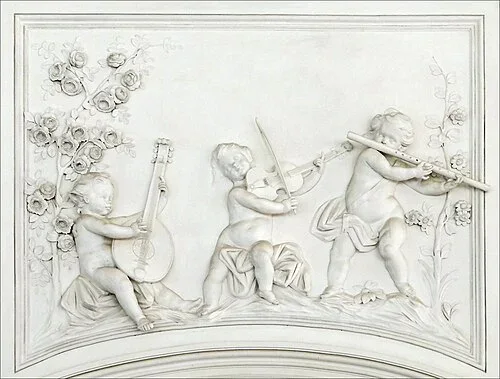 The White Hall (Rococo Ballroom)
White Stucco: Putti and Pastoral Play
Look closely at the white reliefs, and the ballroom's mood comes into focus. Children play instruments: one strums a lute, another bows a violin, a third raises a flute. Roses climb beside them, modelled petal by petal in plaster. These pastoral scenes were the favourite vocabulary of Rococo taste, a world of shepherds, music and ease. In a pleasure palace, that suited the room perfectly, since dancing was the whole point of the hall. Because everything is white, nothing competes with the movement of dancers below. The plasterwork simply plays its own quiet music overhead.
Listen in the appJean-Pierre Dalbéra from Paris, France · CC BY 2.0
09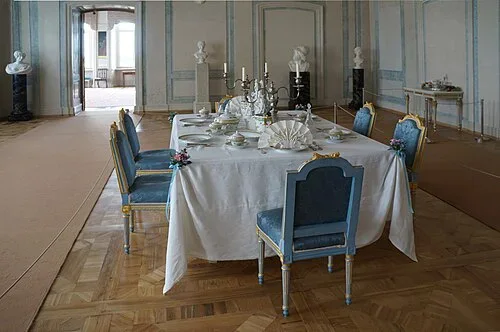 The Duke's Dining Hall and Banqueting Enfilade
The Duke's Dining Hall
Dining at a ducal court was a performance, and the table was its stage. The room is dressed for the part: a long table under white linen, porcelain and silver laid out in strict order, candelabra for the light, and a centrepiece of folded napkins rising like sculpture. Busts on pedestals stand around the walls, faces from antiquity keeping watch over the meal. In the eighteenth century, the duke and duchess dined in public. Courtiers and visitors came to watch, and the service followed rules of rank and ritual as exact as any ceremony of state. Guests reached the table through a succession of grand rooms, each door opening onto the next, so the arrival itself became part of the show. In the second phase of building, five smaller chambers were combined into one parade dining hall, the Grand Gallery, tying the state rooms together.
Listen in the appPhoto: Pierre André Leclercq · CC BY-SA 4.0
10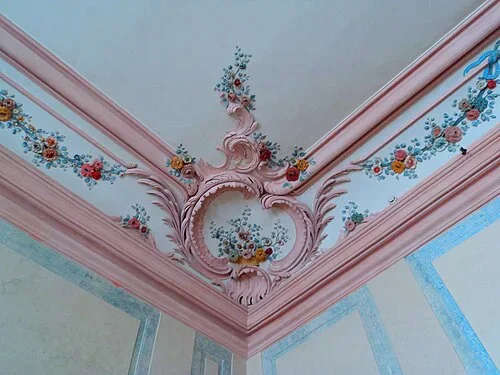 The Duke's Dining Hall and Banqueting Enfilade
Painted Stucco in the Dining Room Ceiling
Overhead, the plasterwork changes character. Instead of the white reliefs of the ballroom, this ceiling is painted: garlands of roses in pink, red and green, ribbons of blue and grey, and an ornament like a curled shell at the corner. Every flower was modelled by hand in plaster, then coloured and gilded brushstroke by brushstroke. This is a third register of the stucco craft in the palace, alongside the gilded halls and the all-white rooms.
Listen in the appPhoto: Nataliza01 · CC BY-SA 4.0
- 11
The Duke's State Bedchamber
A green silk state bed, and the room where a duke was on display even at rest.
- 12
Portrait of Peter von Biron (1781)
The next duke in paint, and the moment Courland's ducal story ended.
- 13
The Duchess's Boudoir
Stucco palm trees and a parasol: the duchess's playful private world.
- 14
The Zubov Era: Balls, Library and Napoleon's Hospital
Twelve hundred guests at a harvest ball, and the night Napoleon's soldiers tore the library apart.
- 15
The French Formal Garden
Ten hectares of clipped geometry, a moat canal, and a forest kept for the hunt.
- 16
Rose Garden and the Palace Reborn
Roses planted in 2005, and the long climb back from fire, schoolrooms and a grain store.
Rundāle Palace
Frequently asked questions
How much does the guide cost?
Free app download. Listed guide price: $0.99. Guide price shown in the app. Audio guide only. Venue admission is separate.
Can I listen without internet?
Yes. Download the guide’s audio, images, and maps in the app before your visit. Your downloaded content is then available offline.
Can I listen in my language?
This audio guide is available in 15 languages, including English.
Do I need to follow a schedule?
No. This is a self-guided experience. Choose your stops, pause whenever you like, and return to a story at your own pace.
At your own pace
Explore Rundāle Palace.
Download Stanza, then search for “Rundāle Palace”.
Free app download · Guide price shown in the app
Keep exploring
Nearby audio guides
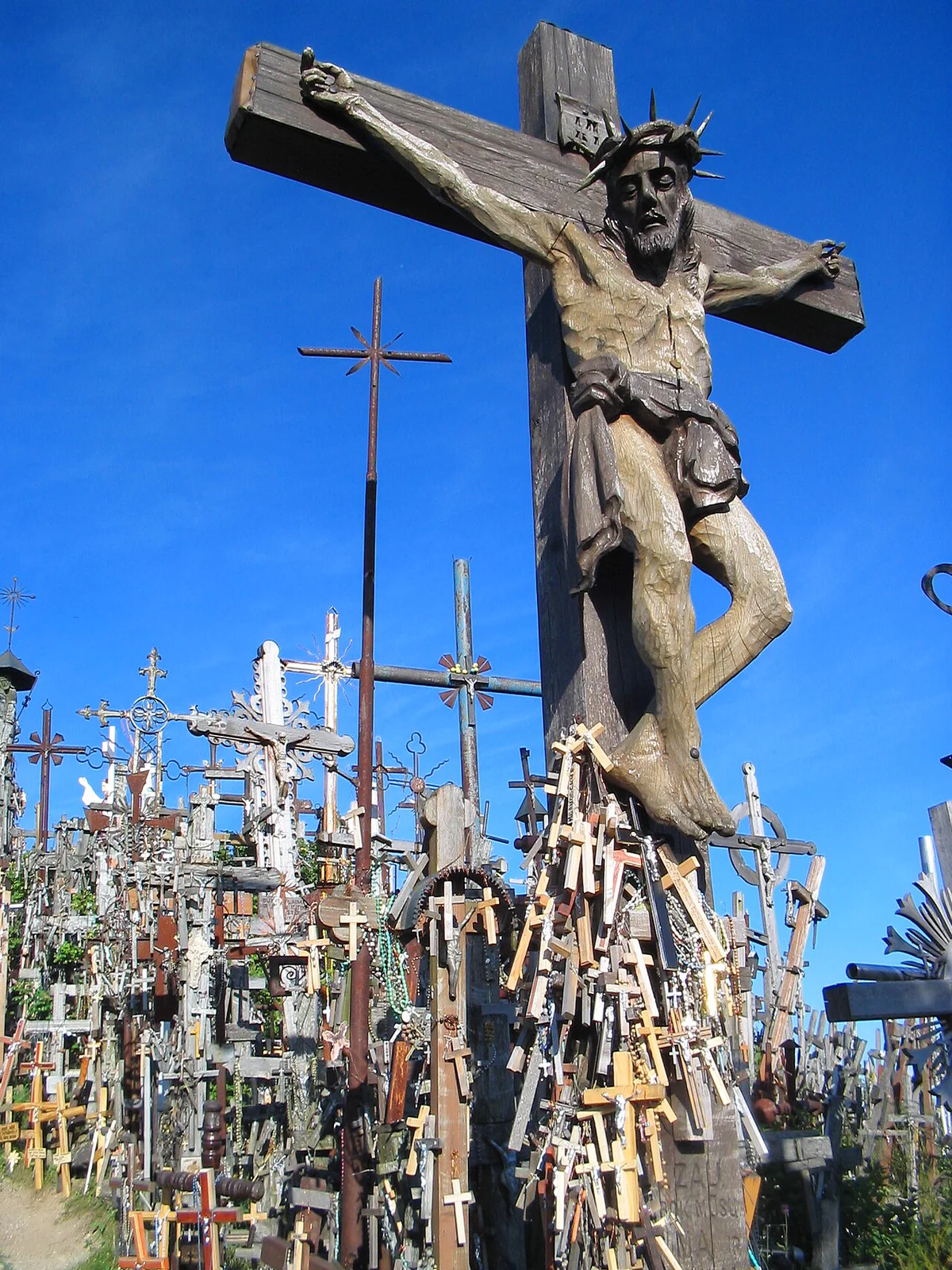
Jurgaičiai · 58 km
Hill of Crosses
Content & sources
Thomas Stegh · CC BY-SA 3.0
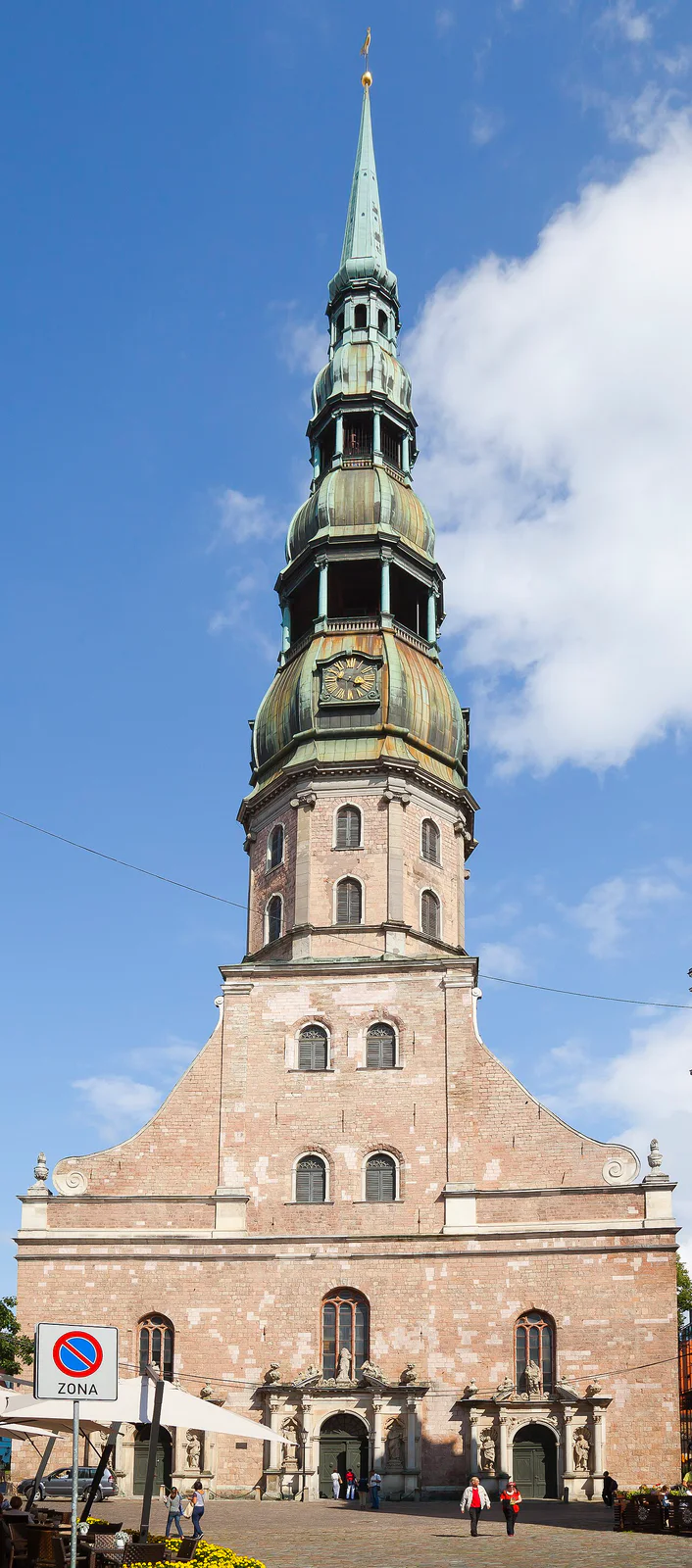
Riga · 60 km
St. Peter's Church, Riga
Content & sources
Diego Delso · CC BY-SA 3.0
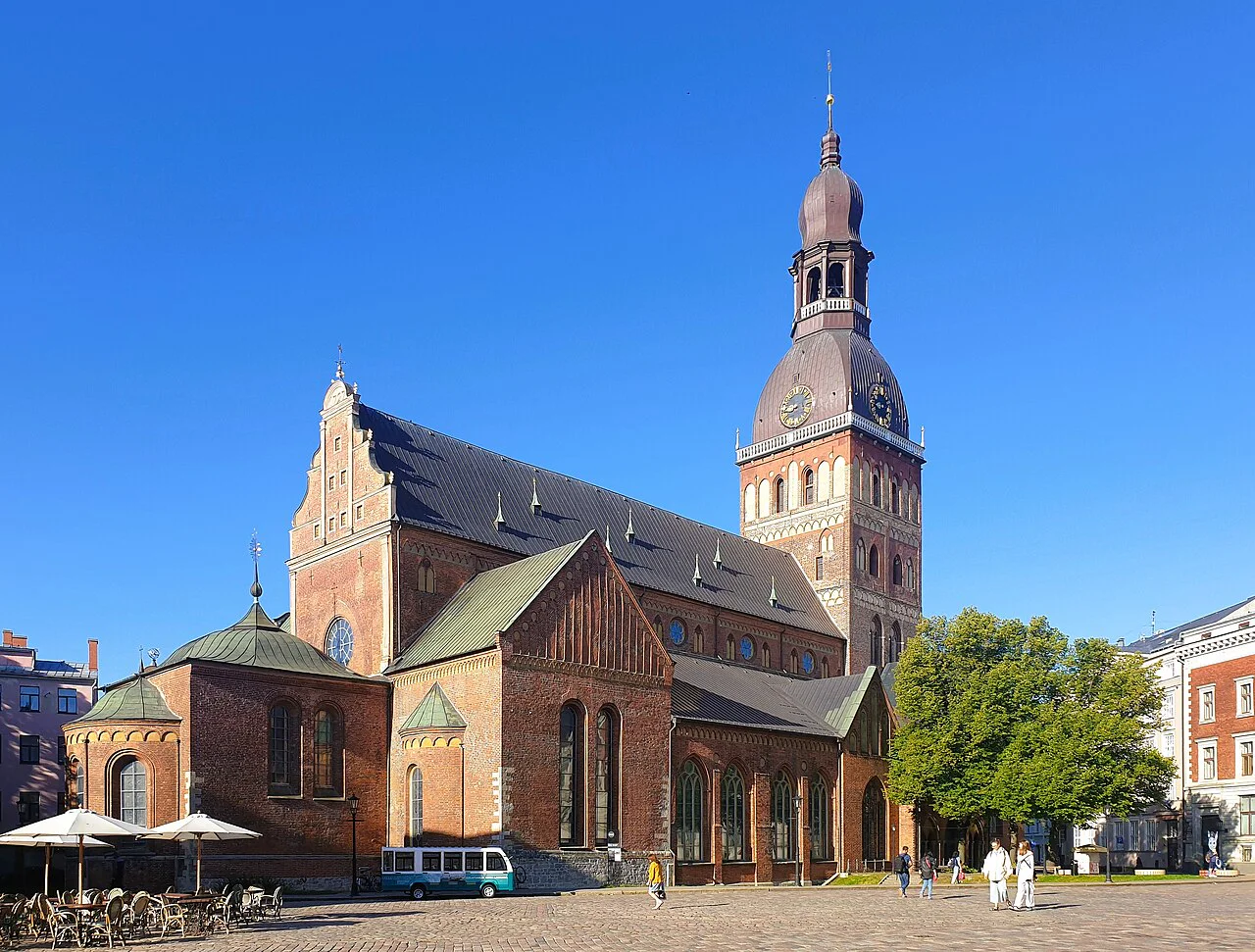
Riga · 60 km
Riga Cathedral
Content & sources
Photo: Chris06 · CC BY-SA 4.0
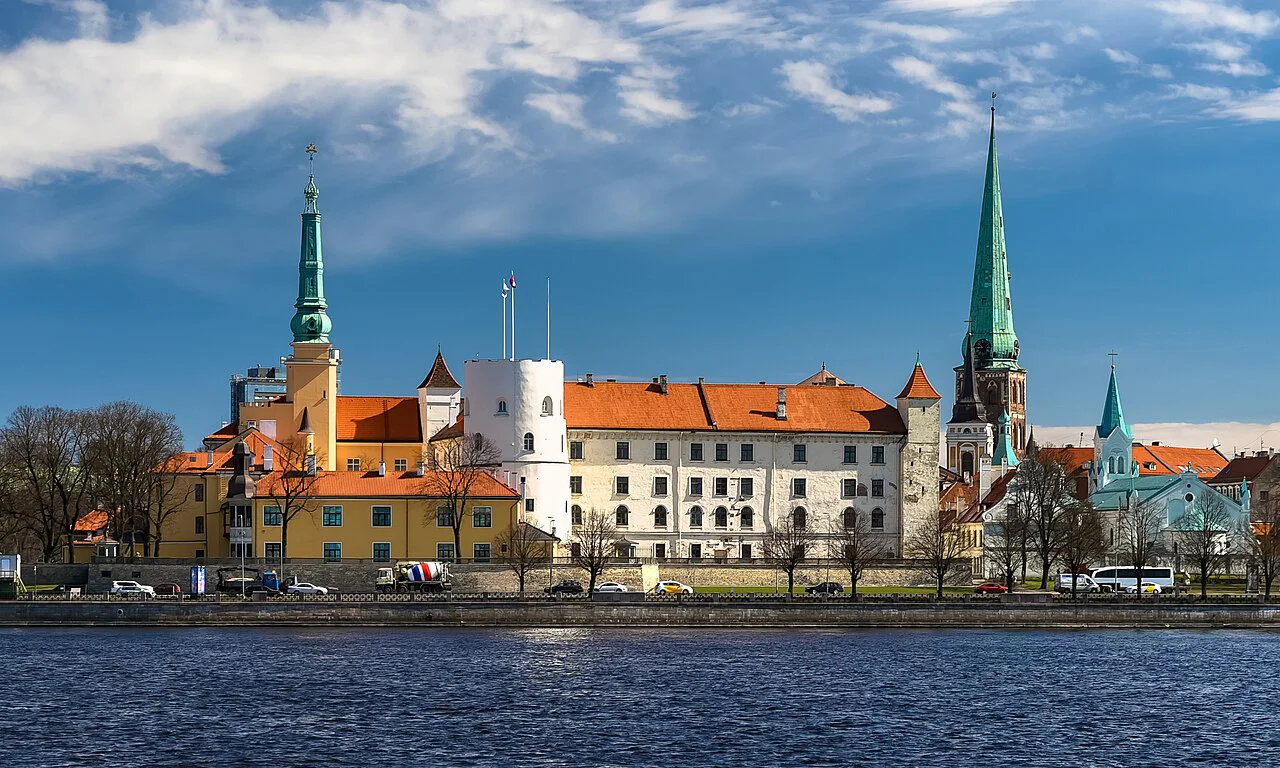
Riga · 60 km
Riga Castle
Content & sources
Jorge Franganillo · CC BY 2.0