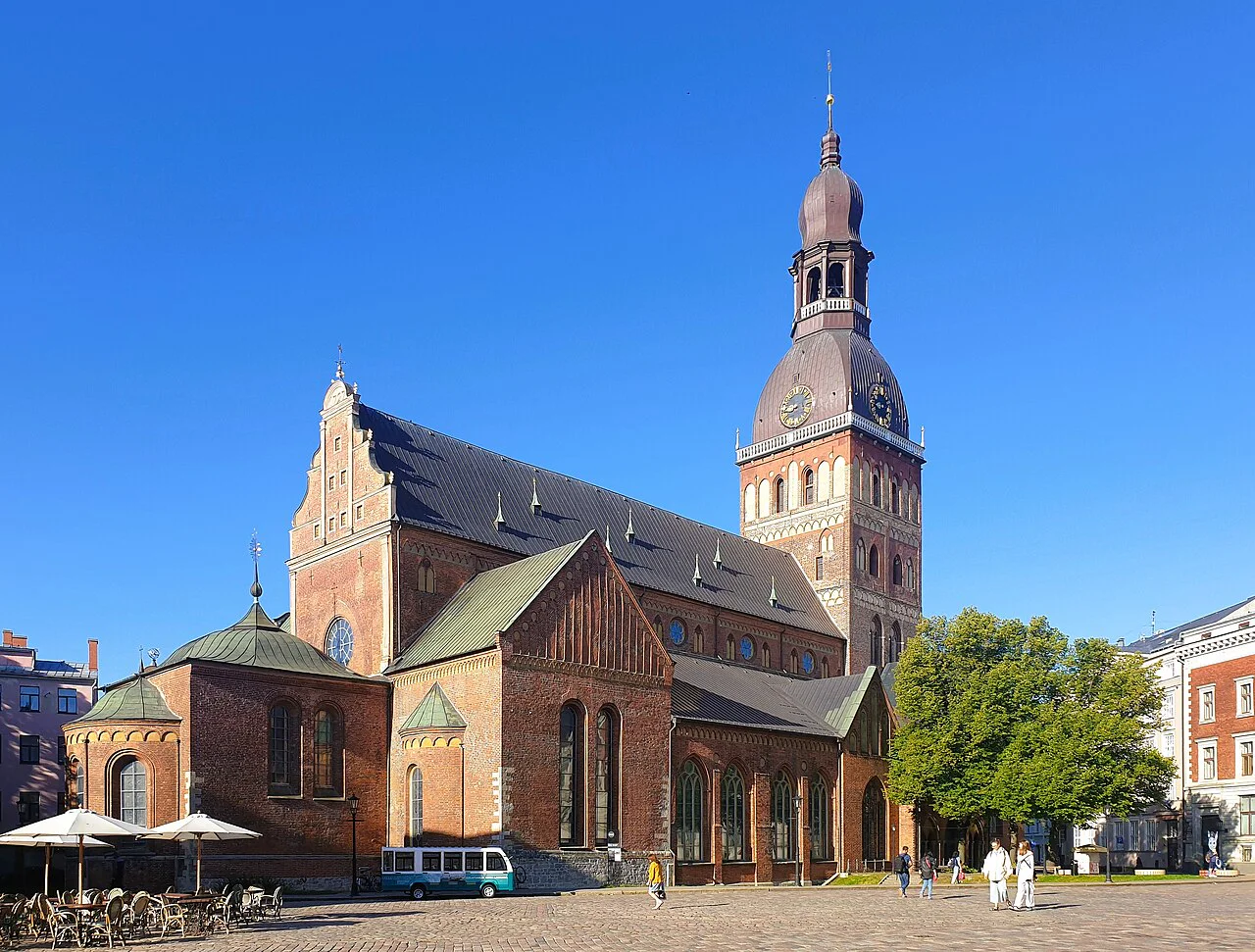
Stanza · Audio guide
Riga Cathedral Audio Guide
A place to remember. A story to take with you.
Riga Cathedral is the Evangelical Lutheran cathedral located in Riga, Latvia. It serves as the seat of the Archbishop of Riga.
Download Stanza, then search for “Riga Cathedral”.
About the tour
One guide. Your kind of visit.
Riga Cathedral is the Evangelical Lutheran cathedral located in Riga, Latvia. It serves as the seat of the Archbishop of Riga.
Ready when you are.
- 01Get the free Stanza app.
iOS & Android
- 02Find your guide.
“Riga Cathedral”
- 03Download before you go.
Works offline
Audio guide / 13 narrated stops
Inside the guide
Get to know a few of the stories before you go. Open a stop to read more.
01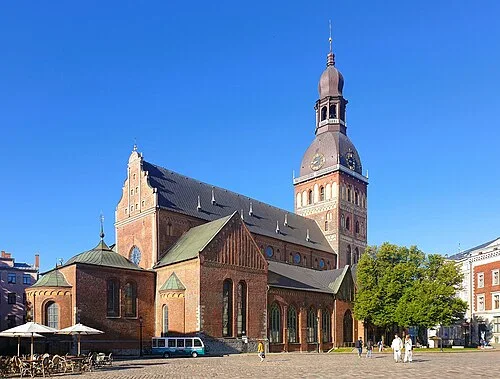 Cathedral Square & Exterior Facade
Riga Cathedral from Cathedral Square
Welcome to Riga Cathedral, the great church that Riga simply calls the Dome. The name catches visitors out: Dom is the German word for cathedral, so Dome Cathedral really says cathedral twice. Formally it is the Cathedral Church of Saint Mary, the Lutheran seat of the Archbishop of Riga. It is counted the largest medieval church in the Baltic states, and the red-brick mass on Cathedral Square bears that out. The tower climbs about ninety metres, crowned by a Baroque spire from 1775, when the city council ordered the old top pulled down and a new one raised. That spire was already a replacement. Around the year 1300 the medieval tower had risen to roughly a hundred and forty metres, towering over every roof in Riga. How that first giant came down is something the building no longer explains. The bronze bishop on the wall and the carved north doorway carry the rest of the story.
Photo: Chris06 · CC BY-SA 4.0
02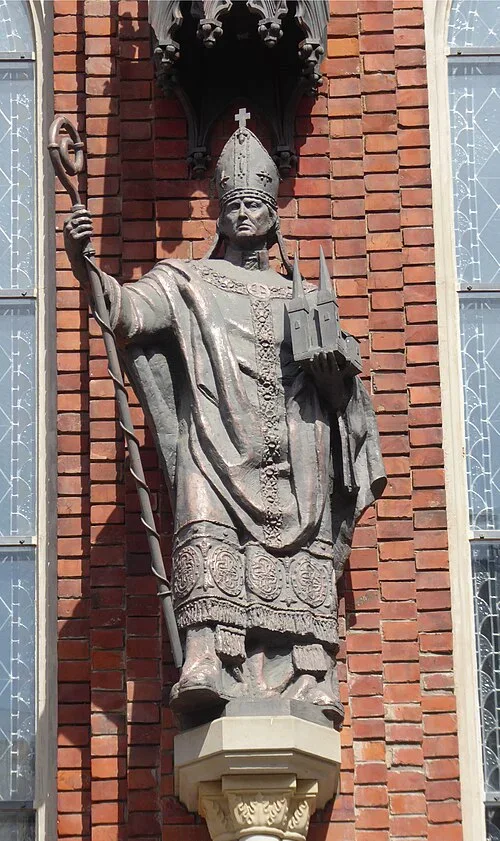 Cathedral Square & Exterior Facade
Statue of Bishop Albert
The bronze figure on the cathedral wall is Bishop Albert, and he holds this whole story in his hands. One hand grips his crozier, the bishop's staff. The other holds a small model of the church he founded. Albert came from Lower Saxony in northwestern Germany, and on the twenty-fifth of July, 1211, he consecrated the foundation stone of a cathedral here. The site was the yard behind the bishop's castle, on ground that had been a Livonian fishing village, close to the River Daugava. A crusader-era bishop needed a cathedral because this was now the seat of the bishopric of Livonia, and a new diocese on the Baltic frontier needed its mother church. Albert brought builders with him, and with them the architecture of Lower Saxony. Of the very first years of construction almost nothing is known; that earliest phase left no account behind. The figure itself is a copy of an original statue by the sculptor Karl Hans Bernewitz.
Photo: Syrio · CC BY-SA 4.0
03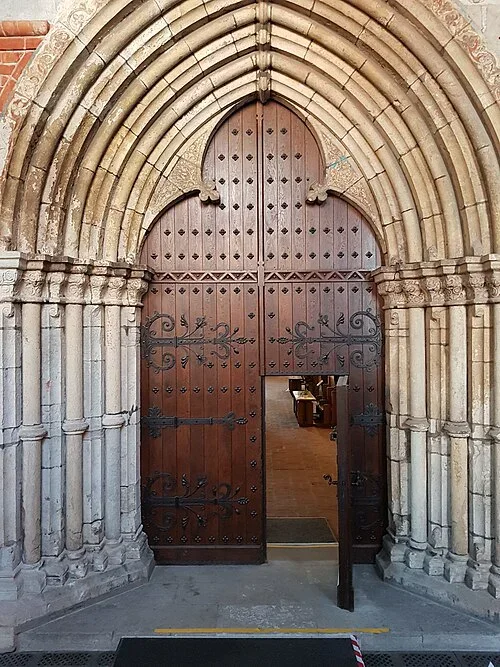 North Portal Entrance
North Portal
The north portal is the doorway where the building tells on itself. Round arches of pale limestone step inward, ring after ring, resting on carved capitals. Then brick takes over around them. In the 1220s, while the church was still rising, the builders changed systems. The Romanesque structure of round arches gave way to Gothic construction, limestone blocks worked together with brick. The change altered the church's proportions and its whole composition. The portal shows it plainly, and so do the two-aisle chapter hall and the nearly square cloister courtyard. This doorway is the way visitors pass from the square into the nave, crossing from one architectural age into the other on a single threshold.
Listen in the appPhoto: VardeCe · CC BY-SA 4.0
04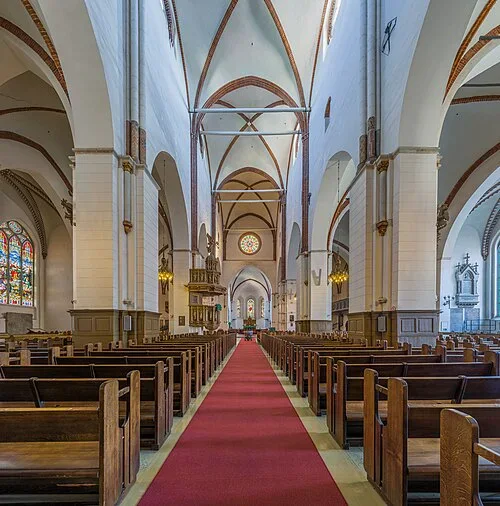 Western Nave & The Walcker Organ
The Nave
The nave runs the length of the building, eighty-seven metres from end to end. Across its nave and side aisles it spans forty-three and a half. This is the hall of the largest medieval church in the Baltics, built for worship and still arranged for it, with long ranks of pews leading the eye to the chancel. But the walls carry a stranger memory. During the war of 1812 the church served as a storehouse for army food supplies, barrels of salted meat among them. Salt from the meat worked deep into the masonry, and it never fully left. Restorers working today still battle the salty bloom that creeps across some of the interior walls, eight centuries of building furred by a few years of wartime storage.
Listen in the appPhoto: Diliff · CC BY-SA 3.0
05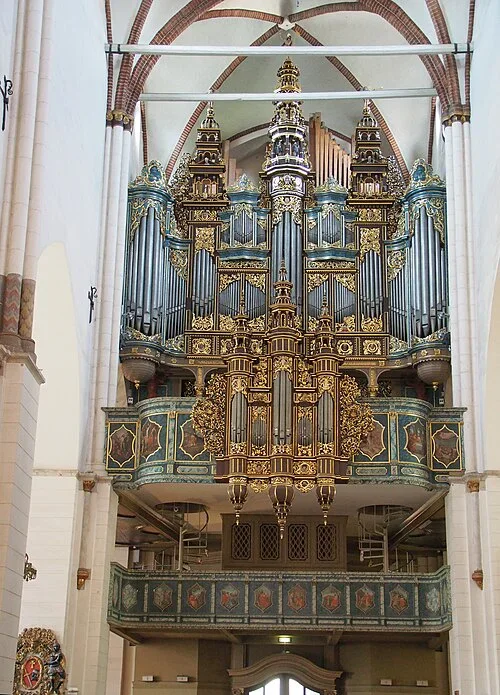 Western Nave & The Walcker Organ
The Walcker Organ
At the west end rises the reason this church is famous far beyond Latvia: the great organ, its facade a towering wall of pipes dressed in gilt and painted panels. The firm Walcker of Ludwigsburg in Germany built it in 1882 and 1883, and it was inaugurated on the thirty-first of January, 1884. At its completion it was the largest organ in the world. The figures behind that facade still stagger. Six thousand seven hundred and eighteen pipes stand ready to speak. A hundred and twenty-four stops shape their voices, played from four manuals for the hands and a pedalboard for the feet. Long before the twentieth century, this single instrument had made the Dome a concert church known across Europe.
Listen in the appPhoto: Hajotthu · CC BY-SA 3.0
06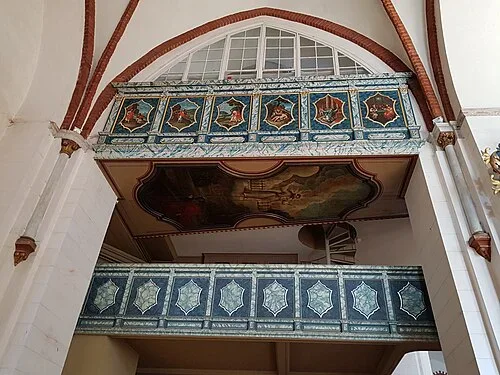 Western Nave & The Walcker Organ
Organ Gallery Paintings
The balcony beneath the great organ carries a row of painted panels, sacred scenes set in deep blues and gold, marking the loft as a place of performance in its own right. From this gallery came one of the most haunting recordings in the cathedral's history. During the Second World War the Latvian composer Lūcija Garūta played her cantata on the great organ, live. The tape caught more than music. From the battle raging near the city, the sound of artillery came through, audible under the pipes. A work of music, performed while war thundered outside, preserved with the guns still sounding inside it.
Listen in the appPhoto: VardeCe · CC BY-SA 4.0
07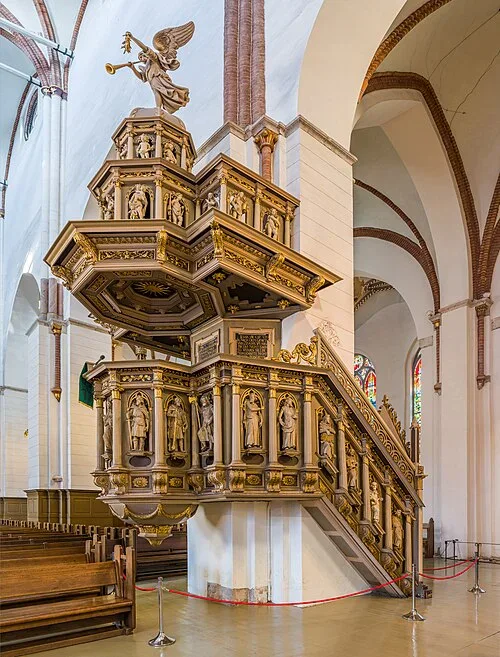 Central Aisle & Historic Pulpit
The Baroque Pulpit
The carved pulpit rises beside the aisle like a wooden tower, its canopy crowned by an angel sounding a trumpet. Every surface carries figures: apostles and saints in gilded niches, reliefs climbing the winding stair. It belongs to the great shift that the Reformation brought to churches like this one. In Lutheran worship the preached word stands at the centre of the service, and the pulpit is its seat. Congregations were gathered so the sermon could be heard, and the pulpit stood where the whole room could listen. Here the carving makes the point visible: a structure built not around an altar alone, but around the voice that explains it.
Listen in the appPhoto: Diliff · CC BY-SA 3.0
08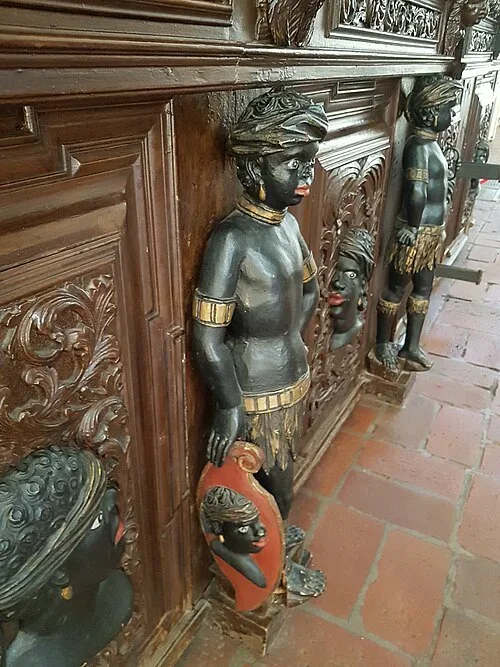 Central Aisle & Historic Pulpit
Blackheads Guild Bench Barriers
The dark carved figures along the bench barriers belong to the Brotherhood of Blackheads, the guild of unmarried foreign merchants in Riga. Their attendants stand in striped skirts with gold earrings, set into richly carved woodwork. From this guild came the storm of 1524. The iconoclasm riots that wrecked Riga's churches began with the Blackheads, who smashed their own altar in St. Peter's Church. Over the following days the destruction spread through the city and reached the Dome, where twenty altars stood. The crowd destroyed them all. They melted down the bronze tomb monument of the former archbishop Jasper Linde and cast it into cannons. The painting of the Virgin Mary from her altar they put to a kind of witch trial, floated on the Daugava, then burned when it floated. The city council used the chaos to ban services at the Dome that November and seize church property. When it was over, the Catholics had been driven from Riga, and the cathedral stood empty.
Listen in the appPhoto: VardeCe · CC BY-SA 4.0
09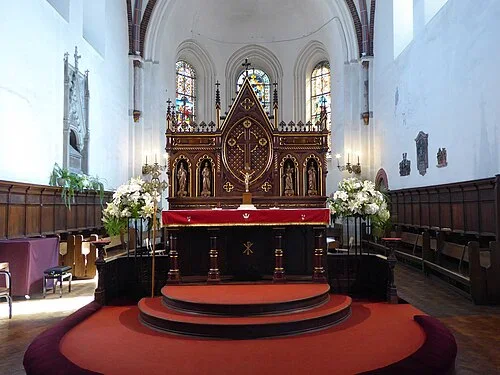 Chancel & High Altar
The High Altar
The wooden altar beneath the east windows marks the sanctuary's return. Between 1959 and 1962, under Soviet rule, the cathedral was closed to worship. The altar was dismantled, and chairs were installed facing the organ, because the building had become a concert hall. The whole complex passed to the museum administration. For three decades the sanctuary of Saint Mary's was a stage. In 1991 the cathedral reopened for worship, and it is once more the seat of the Archbishop of Riga. The altar standing again under the east windows is the plain sign that this room works as a sanctuary again.
Listen in the appPhoto: Syrio · CC BY-SA 4.0
10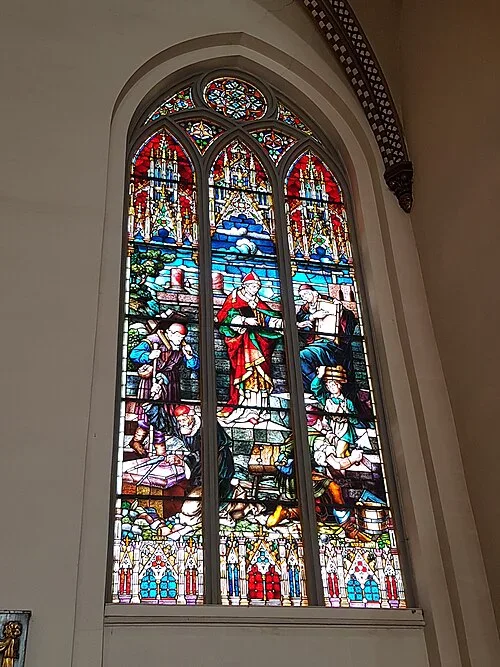 Chancel & High Altar
Stained Glass: Consecration of the Foundation Stone
One window near the chancel shows the cathedral's own birth. Bishop Albert stands consecrating the foundation stone, masons and onlookers gathered around the building site, the moment first met at his statue on the wall outside. The church turned its origin into an image of civic memory, its founding held up in coloured glass for later generations. The glass also guards a tangled later story. After a referendum in 1923, the Lutherans were made to share the cathedral with the Roman Catholic Church. A second referendum, in 1931, reversed that and returned the building to the Lutheran Church. Above the altar, the founding scene keeps watch over both outcomes.
Listen in the appPhoto: VardeCe · CC BY-SA 4.0
- 11
The Gothic Cloister
A hundred and eighteen metres of vaulted early Gothic cloister, one of the finest of its kind in the Baltics.
- 12
Excavated Foundations by the Bishop's Gate
The trench that took the cathedral back to its thirteenth-century bones, and the wooden piles beneath it all.
- 13
Herder Square — Closing
Herder Square, where eight centuries of the cathedral's story settle into quiet.
Riga Cathedral
Frequently asked questions
How much does the guide cost?
Free app download. Listed guide price: $0.99. Guide price shown in the app. Audio guide only. Venue admission is separate.
Can I listen without internet?
Yes. Download the guide’s audio, images, and maps in the app before your visit. Your downloaded content is then available offline.
Can I listen in my language?
This audio guide is available in 15 languages, including English.
Do I need to follow a schedule?
No. This is a self-guided experience. Choose your stops, pause whenever you like, and return to a story at your own pace.
At your own pace
Explore Riga Cathedral.
Download Stanza, then search for “Riga Cathedral”.
Free app download · Guide price shown in the app
Keep exploring
Nearby audio guides
Riga · 1 km
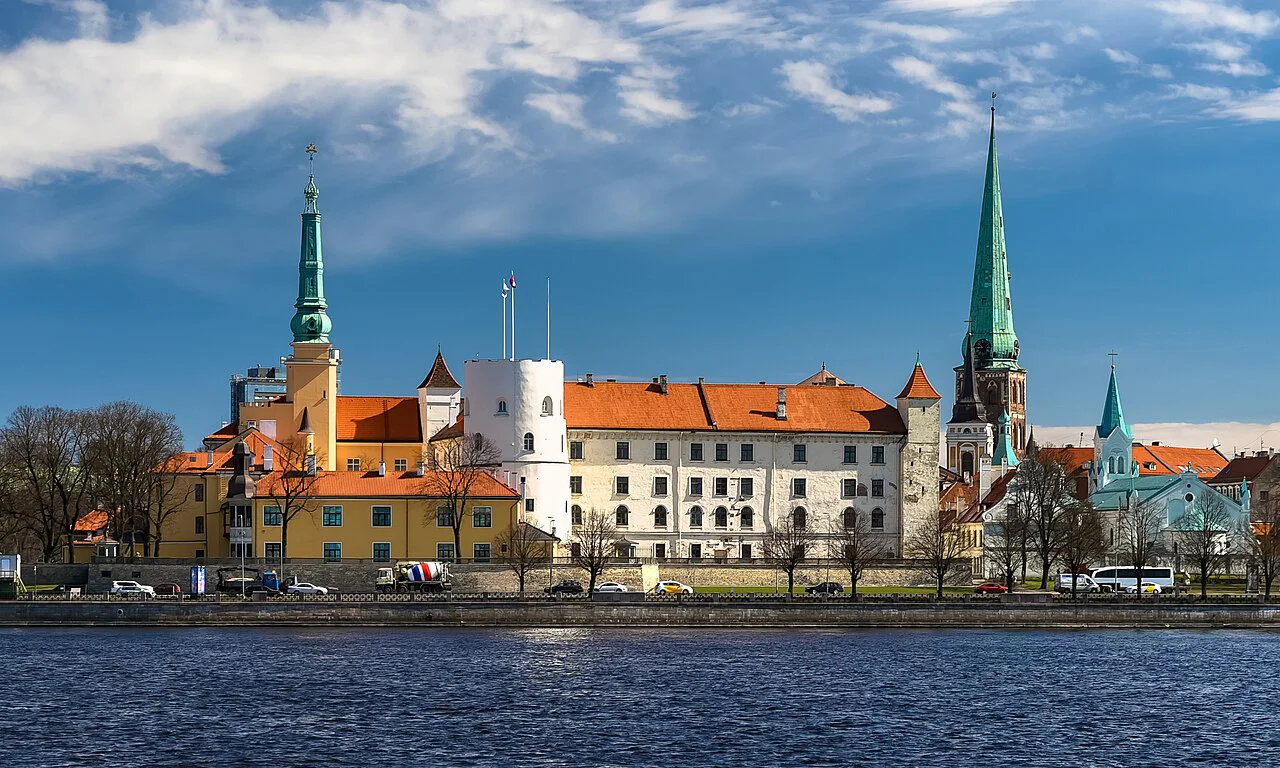
Riga Castle
Content & sources
Jorge Franganillo · CC BY 2.0
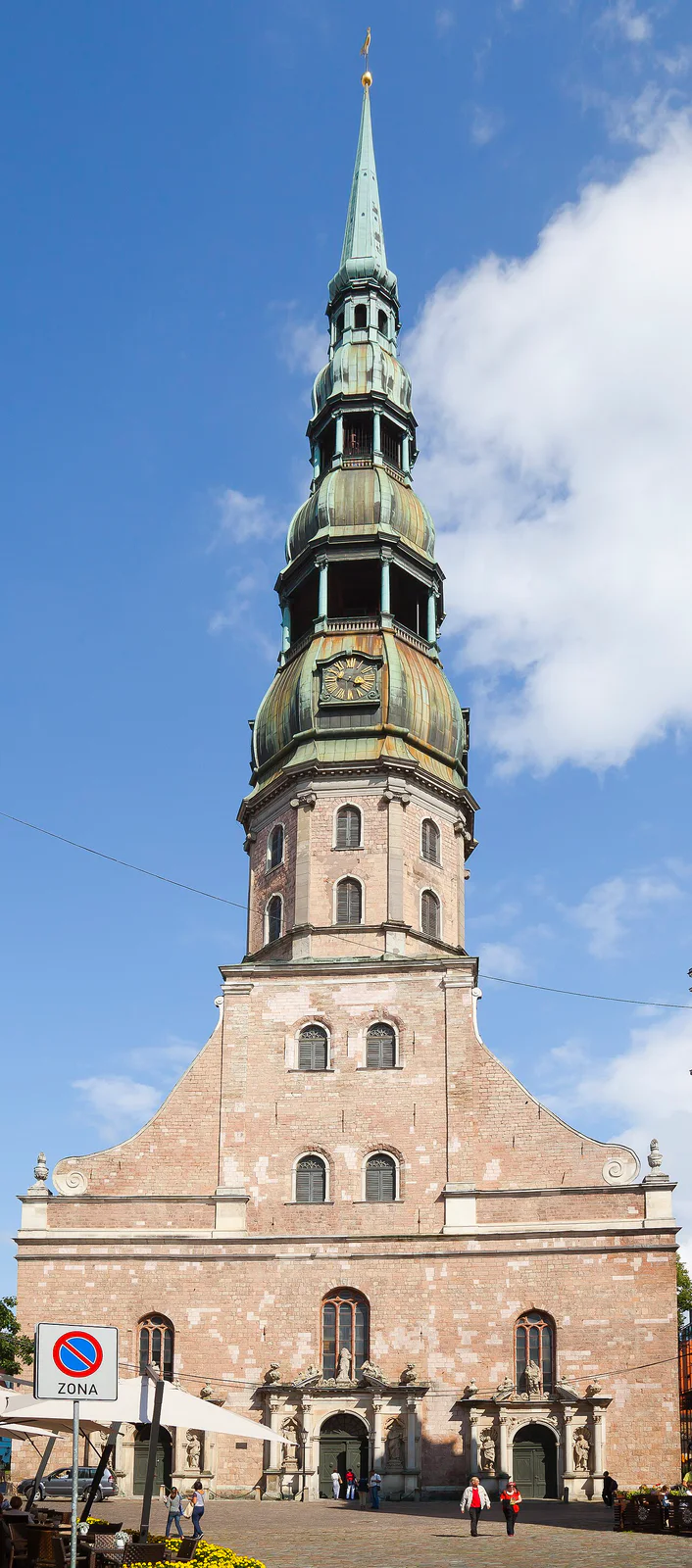
Riga · 1 km
St. Peter's Church, Riga
Content & sources
Diego Delso · CC BY-SA 3.0
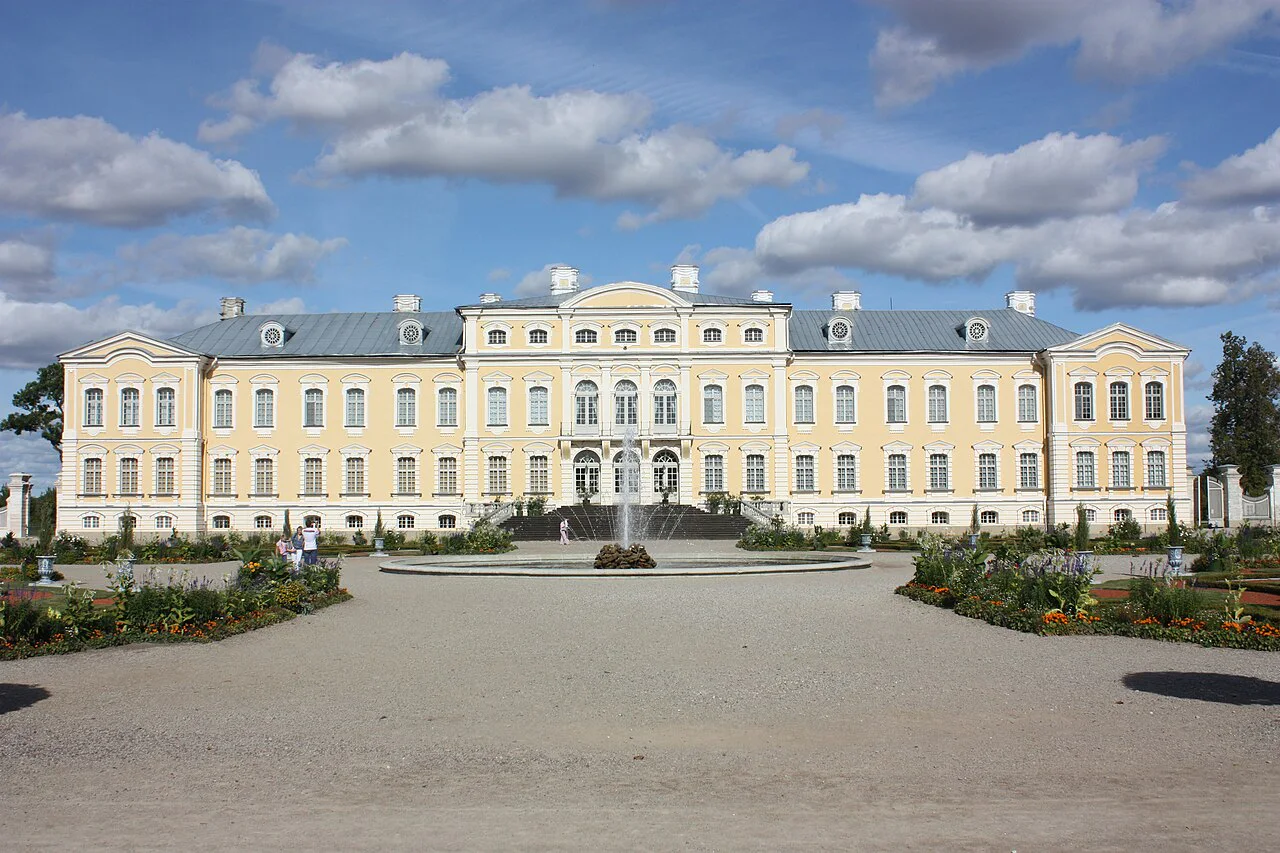
Pilsrundāle · 60 km
Rundāle Palace
Content & sources
Arian Zwegers · CC BY 2.0
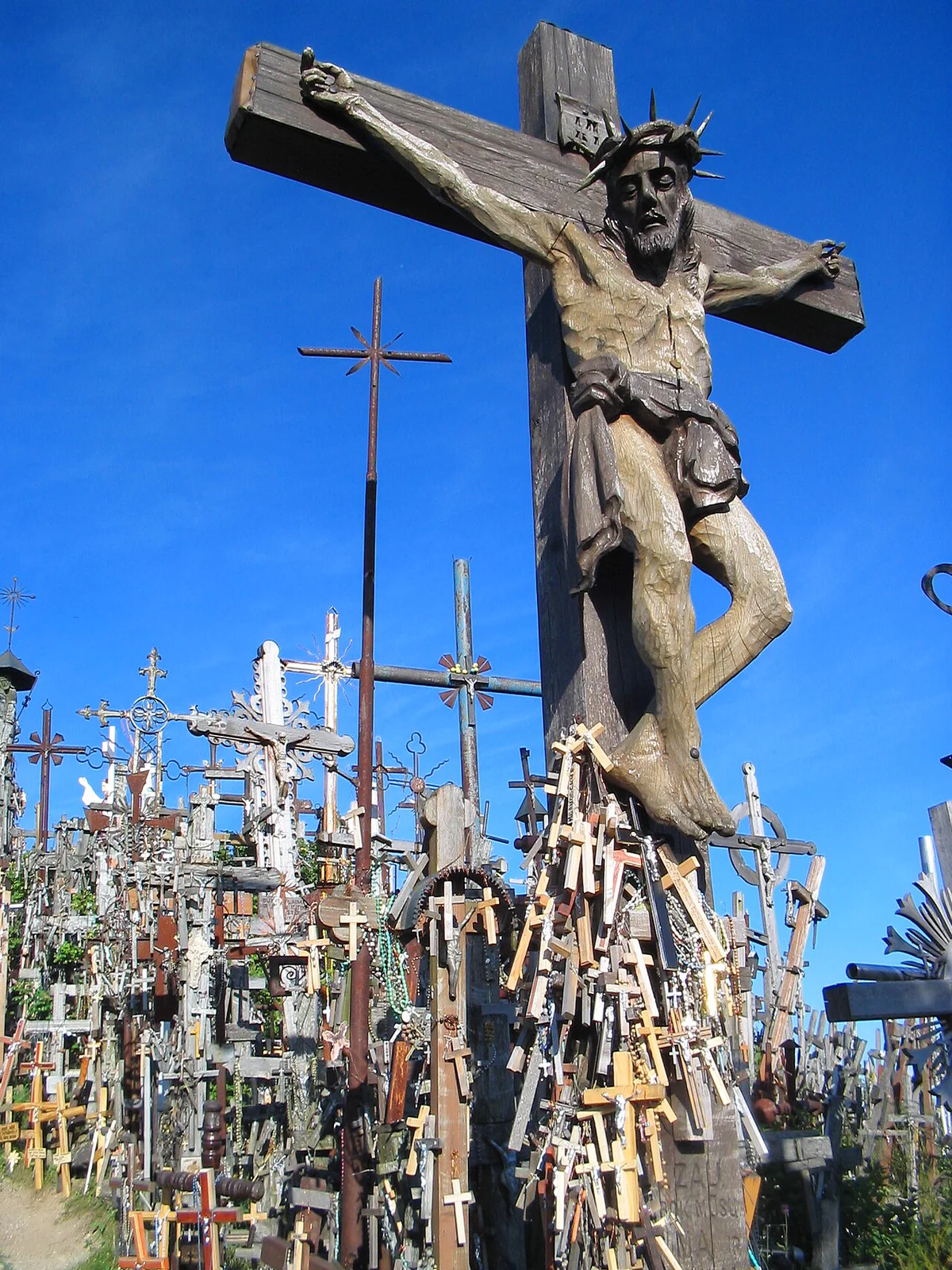
Jurgaičiai · 112 km
Hill of Crosses
Content & sources
Thomas Stegh · CC BY-SA 3.0