Stanza · Audio guide
Riga Castle Audio Guide
A place to remember. A story to take with you.
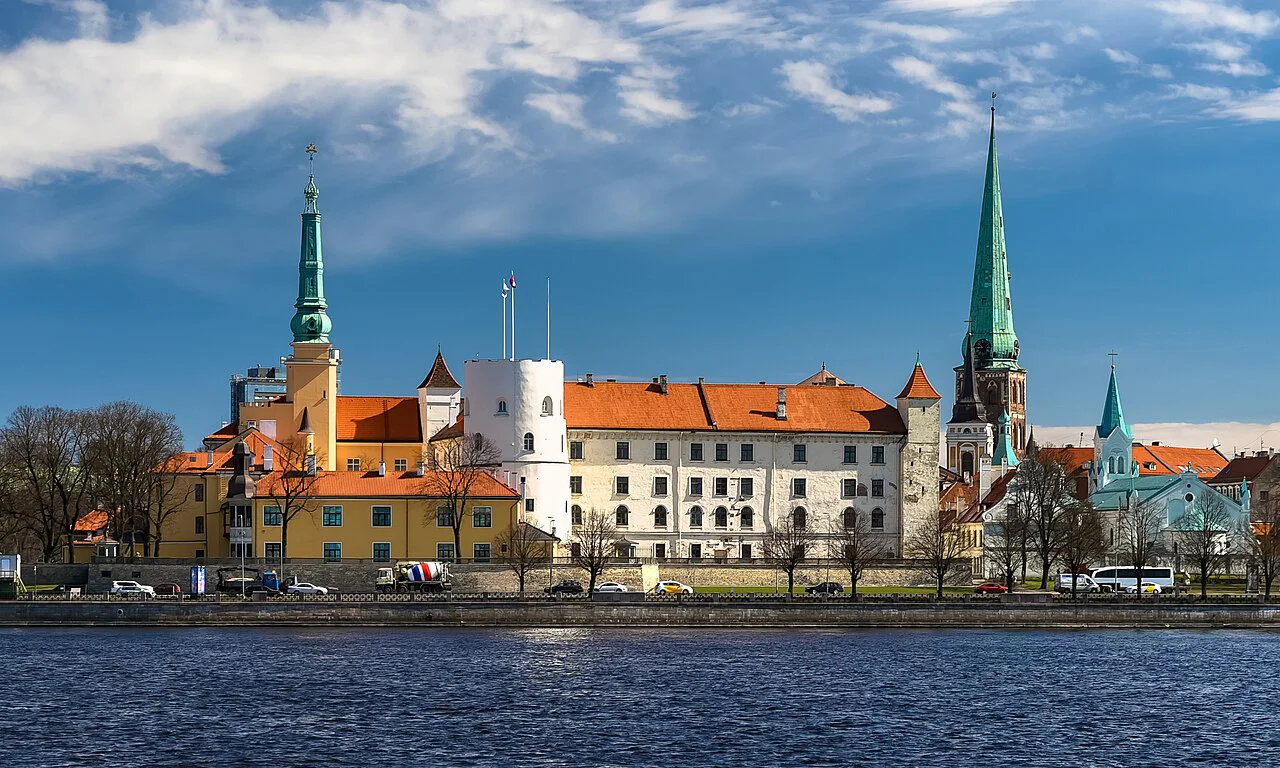
Riga Castle is a castle located on the banks of the River Daugava in Riga. It serves as the official residence of the President of Latvia and houses several museums.
Download Stanza, then search for “Riga Castle”.
About the tour
One guide. Your kind of visit.
Riga Castle is a castle located on the banks of the River Daugava in Riga. It serves as the official residence of the President of Latvia and houses several museums.
Ready when you are.
- 01Get the free Stanza app.
iOS & Android
- 02Find your guide.
“Riga Castle”
- 03Download before you go.
Works offline
Audio guide / 12 narrated stops
Inside the guide
Get to know a few of the stories before you go. Open a stop to read more.
01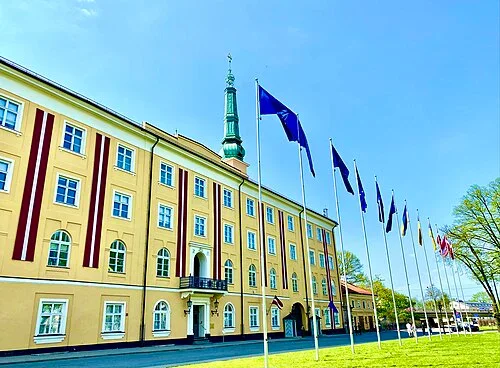 Castle Square and the Eastern Classical Facade
The President's Castle on Pils laukums
Welcome to Riga Castle, the official workplace and residence of the President of Latvia. This long yellow facade on Castle Square is the public face of the country's highest office. The southern wing holds museums, but the rest is a working seat of government, and the flags out front are simply the day's business. Power has sat on this spot for nearly seven hundred years. When Riga fell to the Russian Empire in the early eighteenth century, the castle became the administrative heart of the Riga Governorate. Its courts and offices filled the wings, and the Governors General lived here as the tsar's representatives. In 1818 they gained a grand ballroom, built by Friedrich Christian von Breitkreutz. When Tsar Alexander II came to visit, the room was remodeled between 1860 and 1862 in the classical style. It kept that elegant shape, and in 1938 it took the light color and the name it still carries, the White Hall.
Photo: Steven1991 · CC BY-SA 4.0
02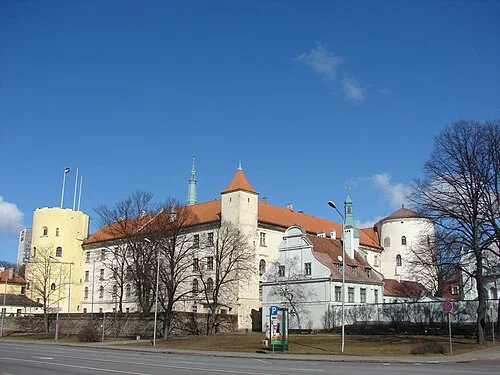 Castle Square and the Eastern Classical Facade
A Fortress of Six Towers
The story here begins with a rebellion. In the thirteenth century the people of Riga rose against the Livonian Order and tore down its castle in the middle of town. Years of conflict followed, until a treaty of 1330 gave the Order ground for a new fortress. Crucially, it stood outside the town walls, where the townspeople could not reach it so easily. The site belonged to the Holy Spirit convent, a hospital and shelter for the poor, and the convent moved into the old castle's empty place. The new building became the residence of the Master of the Livonian Order, the head of the crusading order that ruled these lands. What stands here now is really several castles in one. Around a nearly square medieval courtyard plan rise towers from different epochs, each one marking a rebuilding, a new ruler or a new age of warfare.
M.Strīķis · CC BY-SA 3.0
03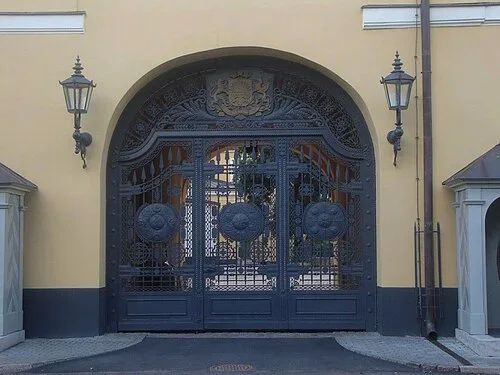 The Presidential Gate and National Ornament
The Ceremonial Gate
Wrought iron, lanterns and a coat of arms set into a yellow wall. A gate like this makes the point quietly. Whoever controls the entrance controls the house, and this house changed hands many times. In 1562 the last Master of the Livonian Order, Gotthard Kettler, stood in the castle's Chapter Hall and handed over the order's regalia to Nikolaus Radziwill, representative of the Polish king. With that act the Livonian Order ceased to exist. The castle became a Polish-Lithuanian stronghold, and the Polish king's representative made it his residence. In 1621 Riga fell to Sweden, and the Swedish administration moved into the building. From the early eighteenth century it was the Russians in turn, with the castle serving the governors who ruled the province in the tsar's name. One address, and behind this threshold, four powers in succession.
Listen in the appPhoto: Egilus · CC BY-SA 4.0
04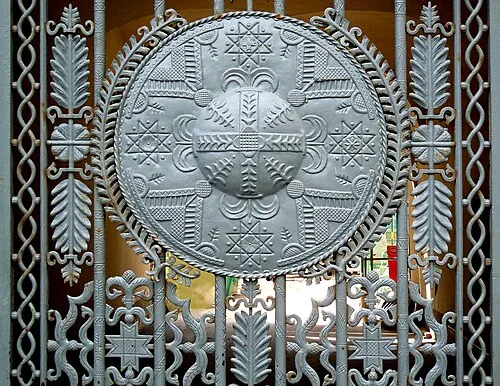 The Presidential Gate and National Ornament
Ansis Cīrulis and Latvian National Ornament
Stars, leaves and a round ornamented shield, worked in metal with the confidence of a young nation's designers. After Latvia won independence, its artists set out to make the castle's interiors speak the country's own visual language. President Jānis Čakste commissioned a state room for receiving foreign ambassadors. The interior was designed by Ansis Cīrulis, one of the leading figures of Latvian art in the interwar years. He built it in the castle's former Great drawing room. The result, the Ambassador Accreditation Hall, is regarded today as the castle's most authentic interior from Latvia's first period of independence, and an original Latvian contribution to Art Deco. It has a place in the Latvian Cultural Canon, the country's list of its most treasured cultural works. The geometric patterns and stylized forms on the castle's ironwork belong to that same interwar language, a decorative art drawn from national roots.
Listen in the appPhoto: Kalnroze · CC BY-SA 4.0
05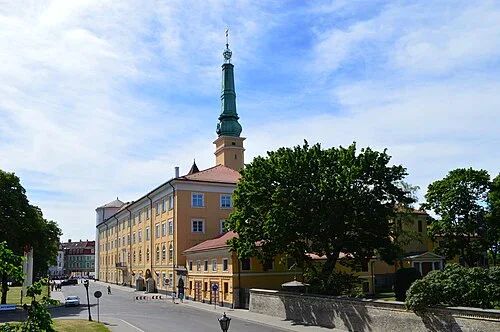 The Tower of the Three Stars
The Three Stars Tower
By the late 1930s, the medieval fortress had one more transformation ahead. Between 1938 and 1939 the architect Eižens Laube worked for President Kārlis Ulmanis to recast the castle as the seat of the Latvian state. He redesigned the president's offices, modernized the entrance vestibule and built the Festival Hall for state occasions. And he raised the castle's tallest tower, the one that anchors its silhouette from Castle Square, with its green spire above the yellow walls. The government had declared the castle its residence that same year, 1938. Laube's rebuilding produced interiors of outstanding Art Deco craftsmanship. One small detail survives from the president's own rooms. The oak doors leading to the president's apartment were brought here from Apriķi manor, a country estate with a past of its own.
Listen in the appPhoto: Scotch Mist · CC BY-SA 4.0
06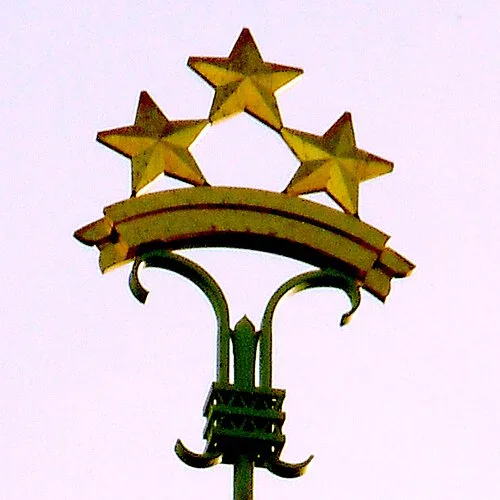 The Tower of the Three Stars
The Three Stars
Three golden five-pointed stars, arranged in a crown above the spire. The Three Stars Tower takes its very name from this finial. The three stars became a national symbol of Latvia in the interwar era, when the young state was building its own emblems and its own identity. Set on the castle's tallest tower, they turn the whole building into a statement of statehood. A fortress that once flew the banners of an order of crusading knights now carries, at its highest point, the mark of independent Latvia.
Listen in the appPhoto: Kalnroze · CC BY-SA 3.0
07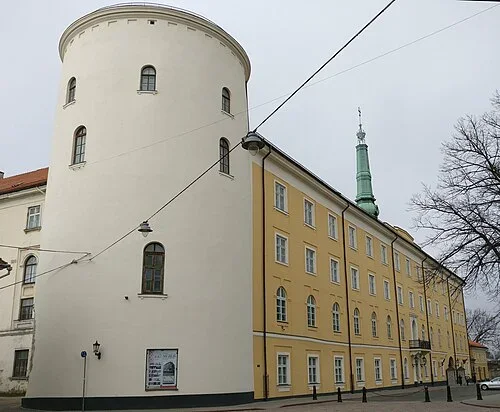 The Medieval Lead Tower and Fortifications
The Round Tower and the Rebuilt Fortress
In 1484 the people of Riga finally won their long fight with the Order. They destroyed its castle and carried off the stones. The victory lasted only until 1491, when the Order regained control of the city. The Rigans were then forced to rebuild the fortress on the very same spot, and the work was completed in 1515 under Master Wolter von Plettenberg. This time the builders answered the age of gunpowder. Two of the towers were replaced with round ones, the shape that best deflects cannon fire, and the walls were raised as much as three meters thick. Above the old main entrance, two carvings from 1515 still mark the Order's triumph. One shows Master von Plettenberg himself, the other the Madonna with Child. The originals have been preserved, and since 2015 copies stand in their place, sheltering the sixteenth-century stones from the weather.
Listen in the appPhoto: Voll · CC BY-SA 4.0
08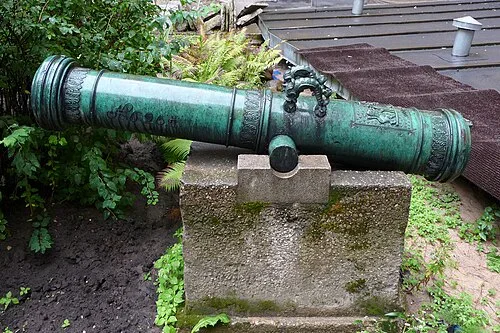 The Medieval Lead Tower and Fortifications
A Bronze Cannon
A bronze cannon, green with age, resting on a stone pedestal among the greenery of the castle grounds. Objects like this one changed the way Europe built fortresses, and they are the reason for the round towers and thick walls you have just heard about. The old gun here has long since fallen silent. It stands now as a quiet piece of hardware from the centuries when this building was first and foremost a fortress.
Listen in the appPhoto: Donato de Bramante · CC BY-SA 4.0
09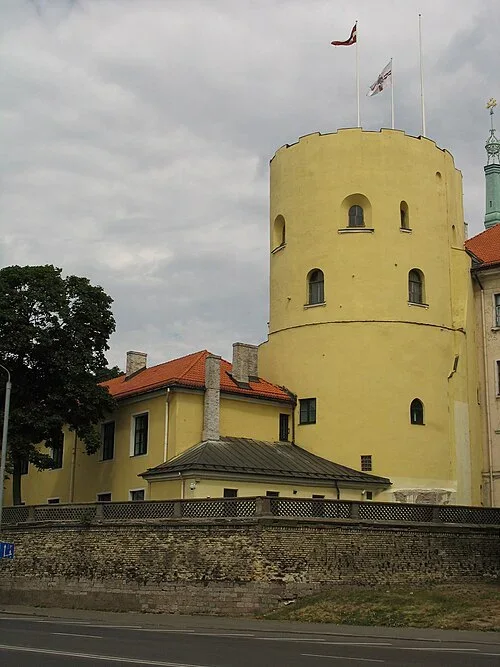 The Holy Spirit Tower and Bastion Perimeter
The Holy Spirit Tower and the Fire of 2013
On the night of 20 June 2013, fire broke out in the castle. Builders working on its reconstruction had gone home hours before, and flames were spotted around ten in the evening. The blaze was visible across the Daugava, and seventy-nine rescuers fought it through the night. Shortly before two in the morning, the roof was engulfed. In the end roughly 3,200 square meters of the castle burned. The Red Hall was almost completely destroyed, and the White Hall was severely damaged. As the fire spread, a military policeman, Corporal Alvis Brūveris, lowered the Latvian flag from the castle to keep it safe. The museum collections housed inside survived, though some pieces suffered water damage. President Andris Bērziņš called it a national tragedy. The repair campaign that followed restored the state halls and the roof, and the castle returned to its working life as the president's seat. This round tower on the river side, the Holy Spirit Tower, carries the medieval form the fortress has kept for centuries.
Listen in the appPhoto: Gragox · CC BY-SA 3.0
10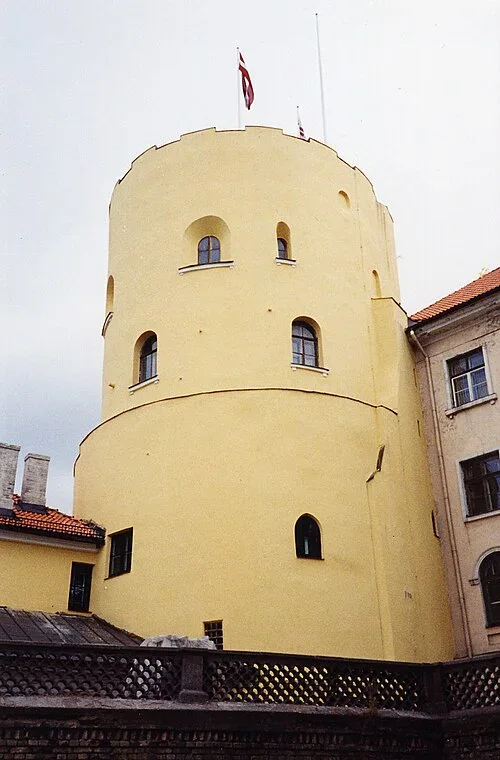 The Holy Spirit Tower and Bastion Perimeter
The Flag over the Tower
The Latvian flag flies over this yellow round tower, and its story here measures the century. In the summer of 1919, during the War of Independence, the flag began to fly from the castle tower. The president's chancellery and the prime minister's offices moved in, and through the first independence period the presidents of Latvia both worked and lived within these walls. Then came the Soviet occupation of 1940. The castle served Soviet institutions, and the Council of People's Commissars of the Soviet republic sat here for a year. From 1941 a Young Pioneers Palace occupied the northern part of the building, and for decades the state rooms echoed with children's clubs instead of government. When independence was restored, the presidency came back to the castle, and the flag returned to the tower where it flies now.
Listen in the appNo machine-readable author provided. Soman assumed (based on copyright claims). · CC BY-SA 2.5
- 11
The Castle and the Daugava
Why the Order planted its fortress on the Daugava bank, and the whole silhouette seen from the water.
- 12
The Castle and the City
Castle, river and city spires together, and the long road from crusader fortress to presidential home.
Riga Castle
Frequently asked questions
How much does the guide cost?
Free app download. Listed guide price: $1.99. Guide price shown in the app. Audio guide only. Venue admission is separate.
Can I listen without internet?
Yes. Download the guide’s audio, images, and maps in the app before your visit. Your downloaded content is then available offline.
Can I listen in my language?
This audio guide is available in 15 languages, including English.
Do I need to follow a schedule?
No. This is a self-guided experience. Choose your stops, pause whenever you like, and return to a story at your own pace.
At your own pace
Explore Riga Castle.
Download Stanza, then search for “Riga Castle”.
Free app download · Guide price shown in the app
Keep exploring
Nearby audio guides
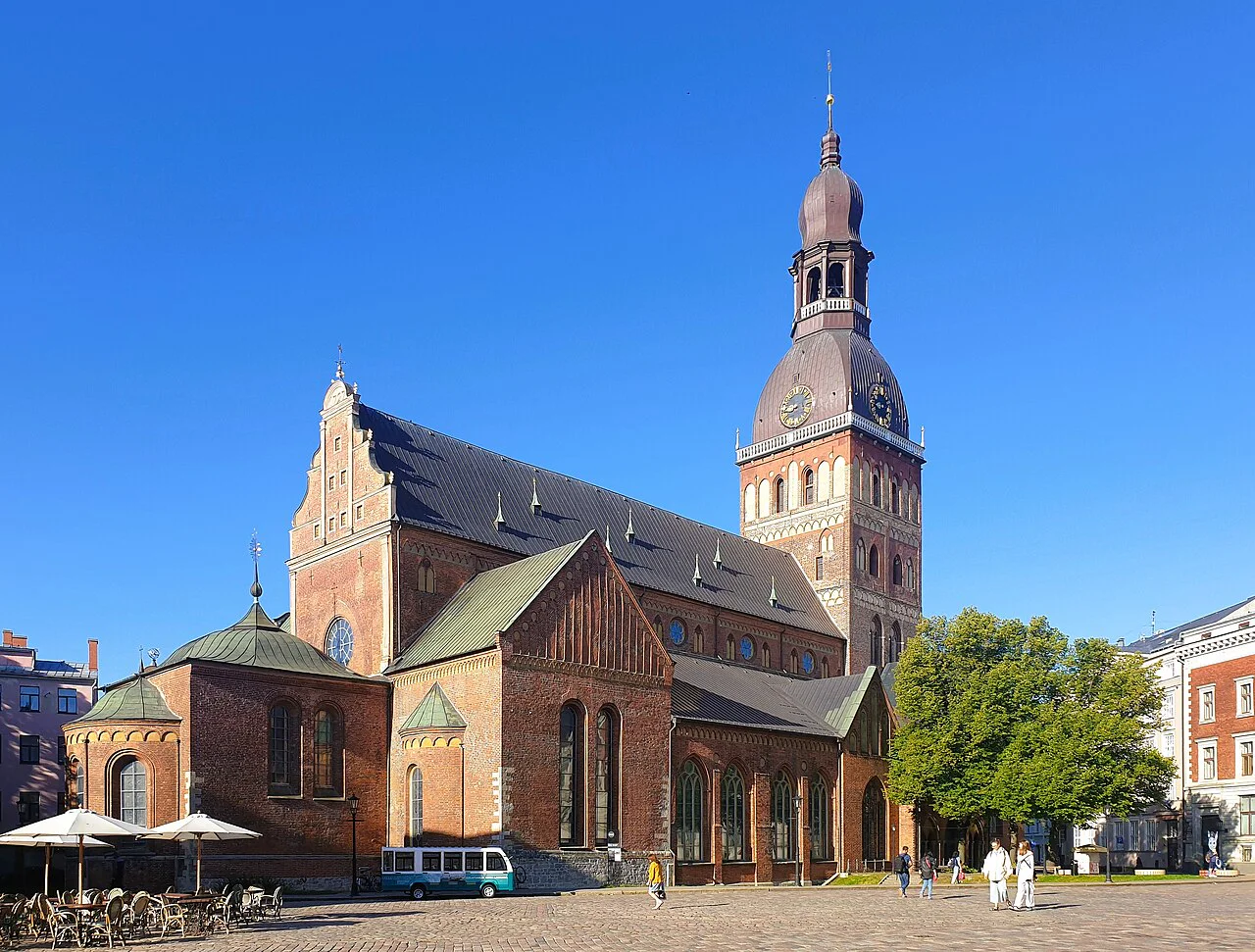
Riga · 1 km
Riga Cathedral
Content & sources
Photo: Chris06 · CC BY-SA 4.0
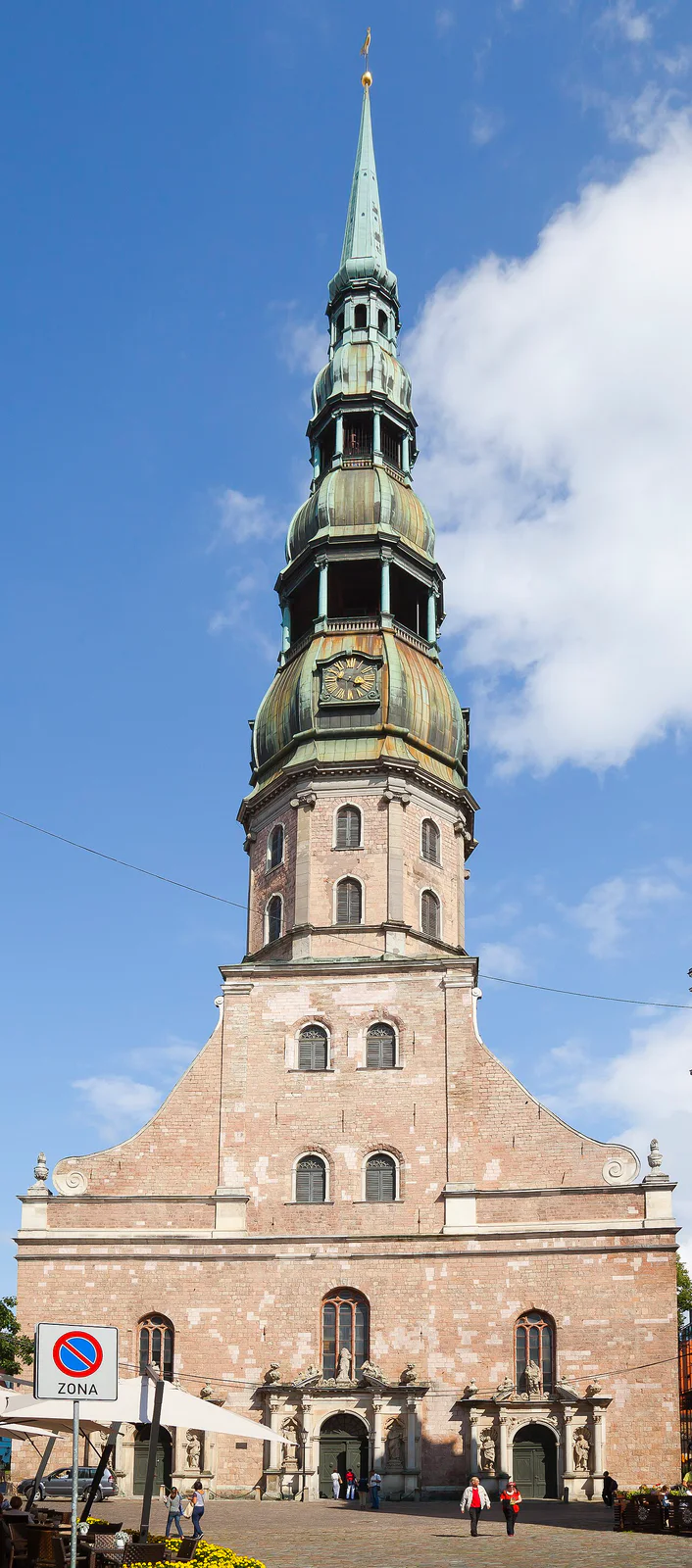
Riga · 1 km
St. Peter's Church, Riga
Content & sources
Diego Delso · CC BY-SA 3.0
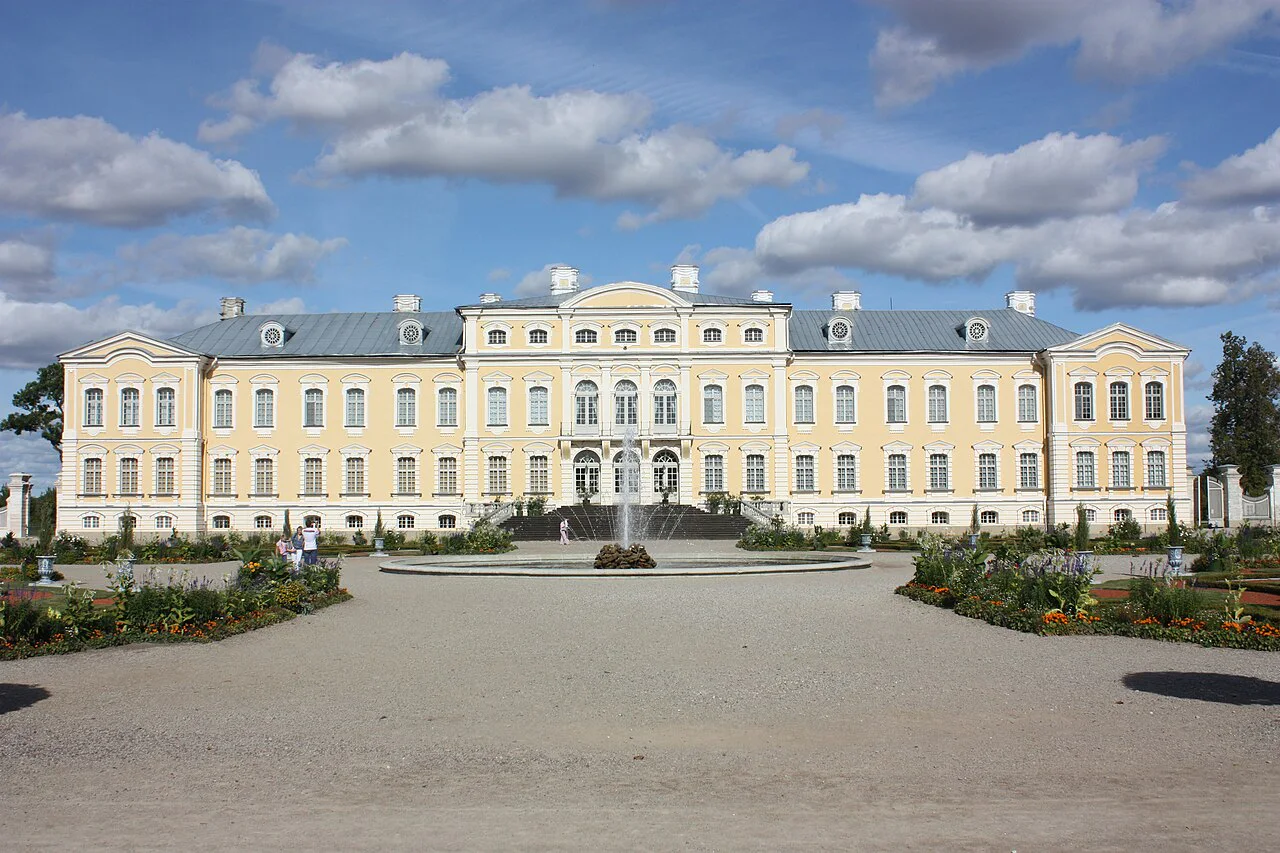
Pilsrundāle · 60 km
Rundāle Palace
Content & sources
Arian Zwegers · CC BY 2.0
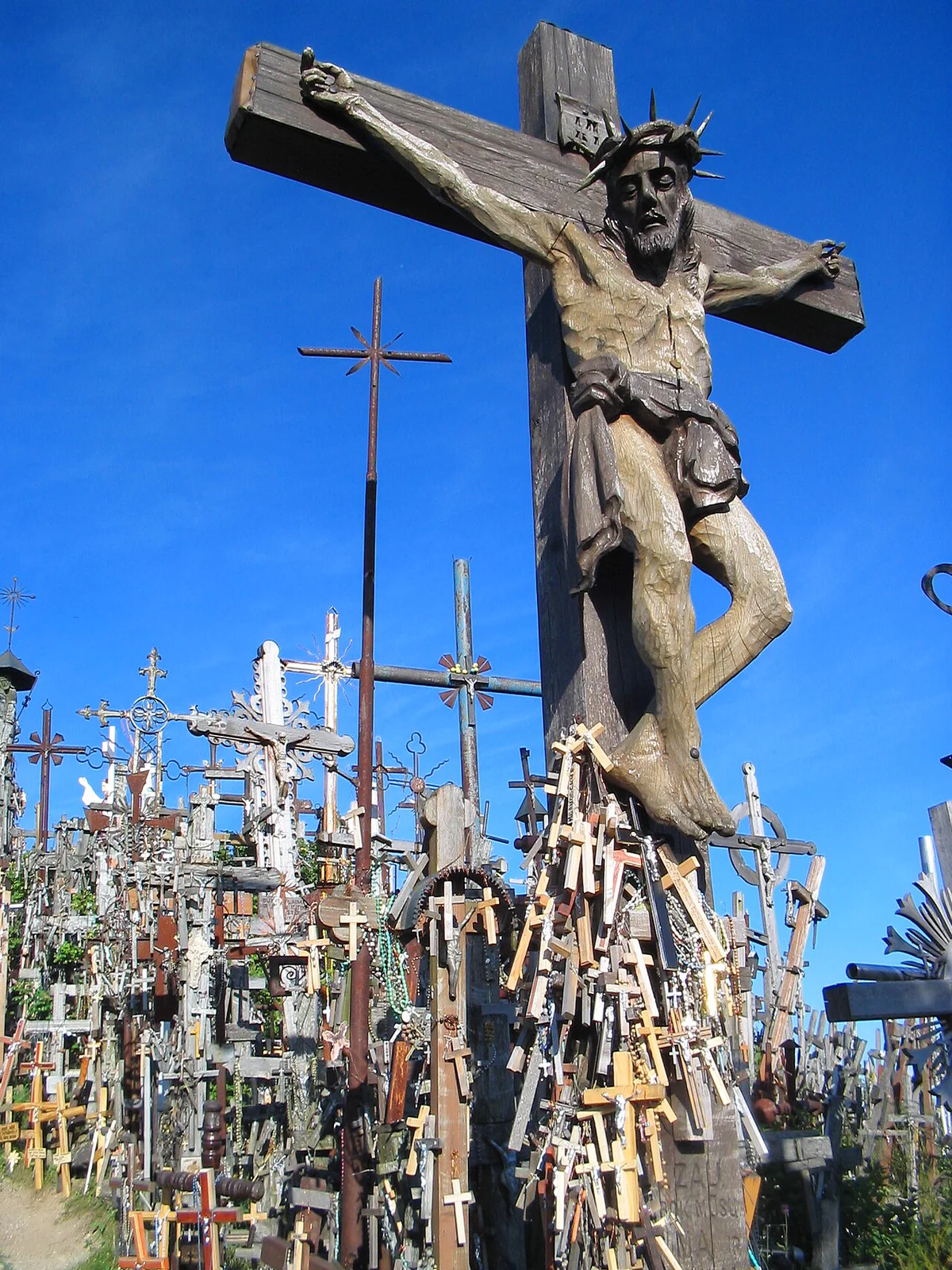
Jurgaičiai · 112 km
Hill of Crosses
Content & sources
Thomas Stegh · CC BY-SA 3.0